How Much Does It Cost to Build a SaaS Startup MVP
Building a Minimum Viable Product (MVP) is the ultimate rite of passage for software entrepreneurs. It bridges your initial creative concept and a fully commercial software-as-a-service enterprise. However, the financial entry point remains shrouded in mystery for most founders. To protect your capital, you must understand the true cost to build saas mvp architectures before writing a single line of software code or hiring an external development team.
Consequently, knowing your upfront financial commitments prevents you from running out of money before your software ever catches the attention of real users. In this extensive guide, we will break down the true saas mvp development cost across different execution paths. We will also analyze the foundational operational requirements, dissect realistic software margins, and map out a lean framework to guide your product directly toward long-term profitability.
The Core Strategic Variables Driving MVP Pricing
An MVP is not a poorly built software application. Rather, it is the leanest possible version of your product that solves one core problem beautifully for a specific target audience. The total capital you spend to get this product to market changes radically based on your technical approach, the complexity of your features, and your choice of engineering talent.
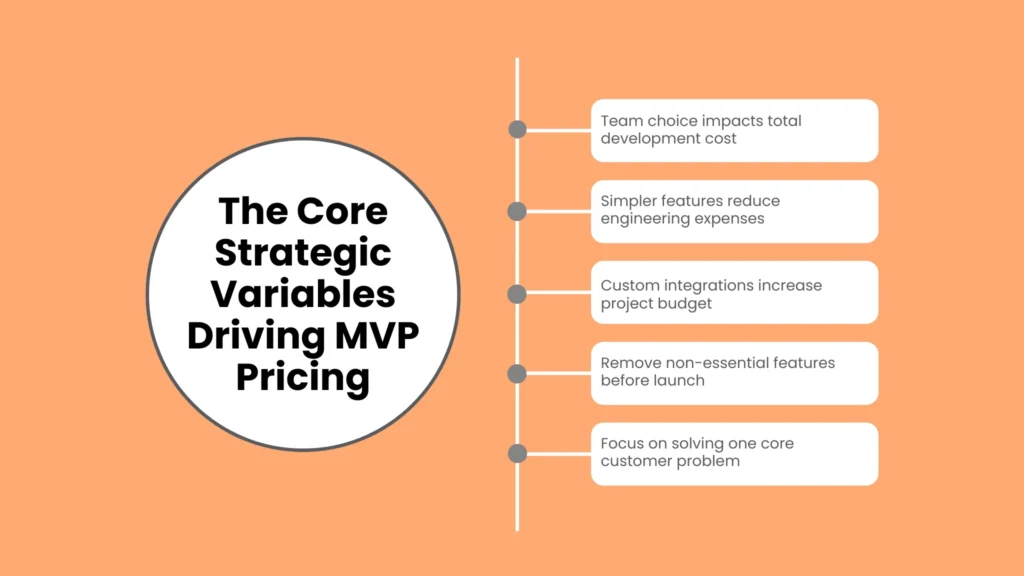
First, your development team structure is the largest variable. If you lack coding skills and hire a premier full-service development agency, your upfront investment will be significantly higher than a founder who handles building the system themselves. Choosing between domestic engineers, offshore developer networks, or visual building specialists changes your immediate budget demands.
Second, the complexity of your application architecture plays a huge role. Simple workflow utilities that only pull data from a single spreadsheet require far less capital than advanced platforms that need real-time data syncs, custom machine learning integrations, or complex multi-tiered user permission levels. Ruthlessly stripping away secondary features during the planning phase is what keeps your initial build budget small.
Foundational Operational SaaS MVP Requirements
To ensure that your development budget is spent efficiently, you must establish a highly structured framework before launching your design and engineering sprints.
Review these essential saas mvp requirements to ensure you build a secure, lightweight, and fully compliant software product:
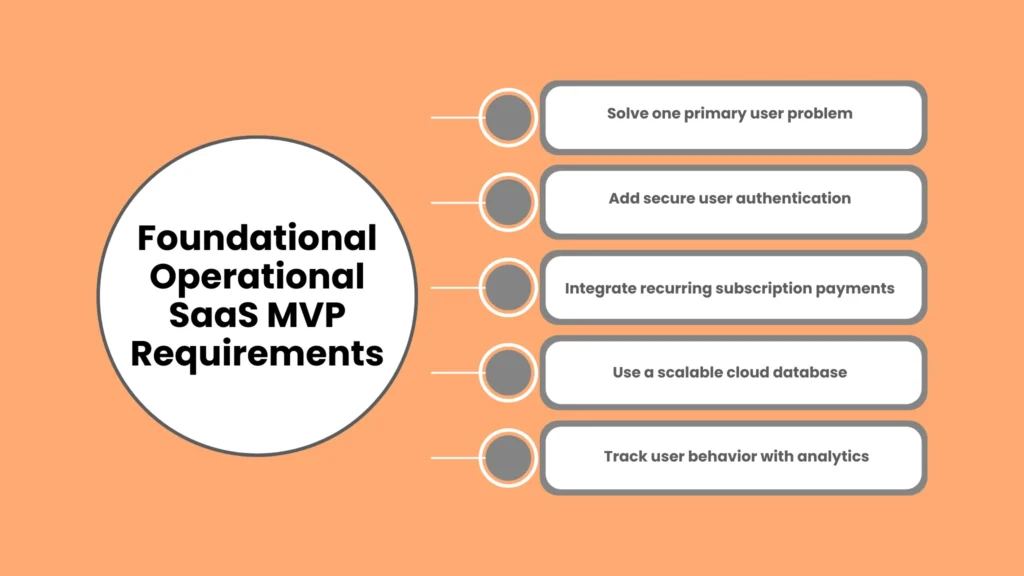
Single Core Problem Focus: Your product must solve one primary workflow frustration exceptionally well, completely ignoring secondary, nice-to-have features.
Secure User Authentication Stack: You need a reliable, pre-built sign-in system to manage user profiles, passwords, and account security safely.
Integrated Recurring Billing Engine: You must embed secure merchant gateways like Stripe to process automated subscriptions and handle global tax compliance.
Lightweight Scalable Database Infrastructure: Use modern cloud databases that expand dynamically as your active user base increases.
Clear User Activity Analytics: Install behavioral tracking tools to watch exactly how users navigate your application so you can optimize your onboarding flow.
Adhering strictly to these foundational parameters keeps your engineering team focused entirely on speed and utility. Thus, you avoid the common trap of feature creep that destroys early-stage tech budgets.
Analyzing the Numbers: Setup Costs vs. Software Profit Margins
The actual capital required to launch your software depends entirely on the build path you select. Understanding these diverse financial options allows you to pick a strategy that matches your personal risk tolerance.
The total saas mvp cost fits into three distinct strategic tiers based on how you build it. If you choose the no-code or low-code visual route and construct the workflow yourself, your expenses are almost entirely limited to software subscriptions, which cost an estimated $100 to $500. If you hire a flexible freelance developer or a visual development agency, the budget typically ranges from an estimated $3,000 to $10,000. However, if your concept requires complex, highly custom backend engineering and you hire a traditional full-service software agency, the investment can easily run from an estimated $25,000 to over $60,000.
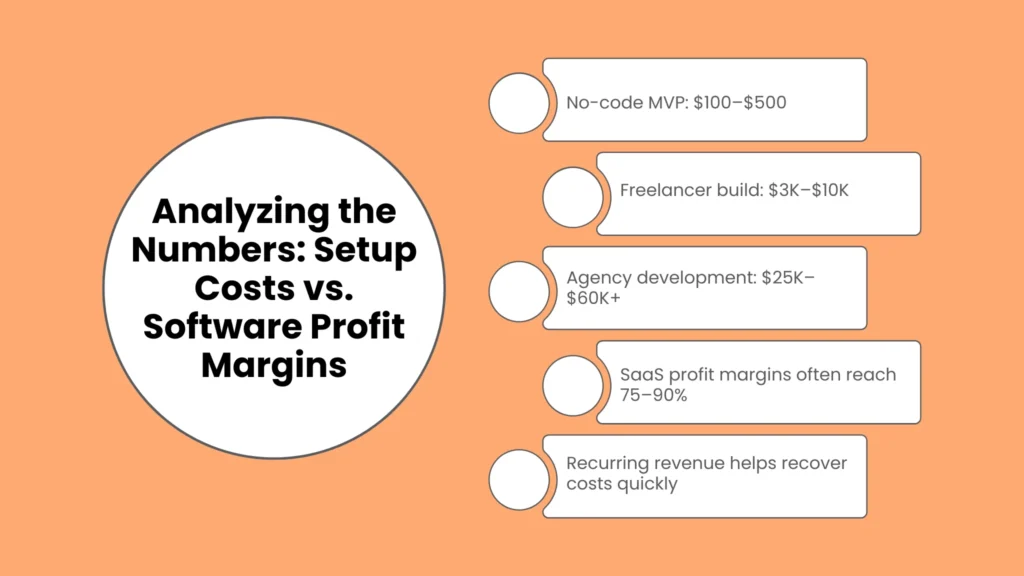
Fortunately, once the application is live, the economic model is spectacularly rewarding. The typical saas mvp profit margin sits comfortably between 75% and 90% at scale. Because software code can be duplicated infinitely across the web with near-zero marginal costs, your recurring expenses are restricted to basic server hosting, customer support, and growth marketing.
So, is saas mvp profitable over the long run? Before committing capital, it’s worth running your concept through a proper validation process for a software startup idea to confirm real demand exists before you build. Based on available industry data, the MVP phase itself functions primarily as a validation tool rather than an immediate massive profit center. However, it acts as the necessary engine that unlocks incredible business profitability down the line. Spending an estimated $5,000 to validate a software concept that captures 200 active users paying a modest $50 per month creates a highly predictable $10,000 monthly recurring revenue stream. This fast return easily clears your initial development costs within the first few months of live operation.
SaaS MVP Development Path Cost Matrix
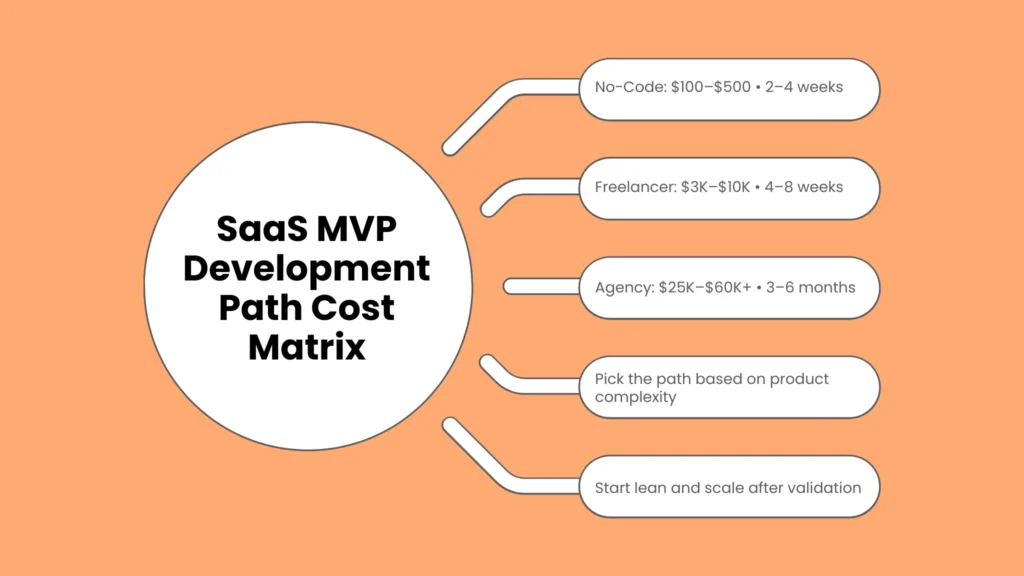
| Selection Development Path | Upfront Capital Investment | Average Time to Launch | Ideal Project Context |
| Solo Founder No-Code Build | $100 to $500 (Software Fees) | 2 to 4 weeks | Simple B2B directories, workflow tools, and simple marketplaces. |
| Freelancer / Visual Agency | $3,000 to $10,000 | 4 to 8 weeks | Polished consumer web apps and specialized vertical SaaS tools. |
| Custom Code Software Agency | $25,000 to $60,000+ | 3 to 6 months | High-security fintech tools, complex AI apps, and deep hardware data links. |
Crucial Tactics to Lower Your MVP Development Costs
If you want to keep your development expenses as low as humanly possible, you must act as a strict curator for your product roadmap. Every single feature you add to your plan introduces extra engineering hours, testing liabilities, and long-term maintenance costs. If your budget is extremely tight, browsing micro-SaaS ideas you can build in a weekend is a great way to scope something achievable from day one.
Utilize Pre-Built Modular Frameworks
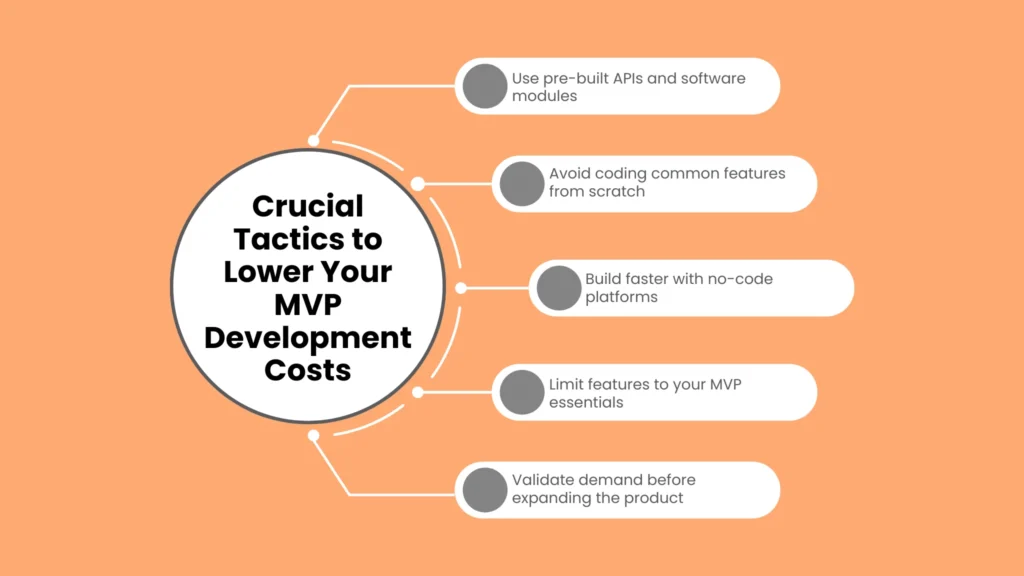
Do not allow your developers to build standard components from scratch. There is absolutely no reason to spend money coding custom user authentication systems, messaging modules, or text notification tools. Instead, require your team to use reliable, pre-built third-party components and APIs. This approach saves hundreds of expensive development hours and lets your team focus entirely on coding the unique value proposition of your application.
Leverage the Speed of Visual No-Code Platforms
Before committing to full-scale custom coding languages, evaluate whether your initial version can be built using modern visual web development systems. These visual environments handle database scaling, security patches, and interface design simultaneously. Consequently, you can ship a beautiful, fully functional web application in a fraction of the time, saving thousands of dollars in upfront engineering salaries. This no-code path is exactly why it’s now realistic for non-technical founders to launch tech startups without ever hiring a developer.
Conclusion
Determining your initial software investment requires a smart balance of lean product scoping, the right choice of building tools, and disciplined financial tracking. By keeping your feature set small, utilizing pre-built software blocks, and validating real-world customer demand early, you position your tech brand for immense long-term growth. If you are looking for step-by-step startup blueprints, interactive budget calculators, and founder toolkits, visit our website at reliablestartup to build and launch your software venture today.
Frequently Asked Questions
Can I build a successful SaaS MVP completely for free?
If you possess technical development skills or use the free trials of modern visual builders, you can build the product for zero labor cost. Your only out-of-pocket expenses will be your domain registration name and basic cloud hosting fees, which usually run an estimated $10 to $30 per month.
How many features should a software MVP contain?
A well-structured MVP should ideally contain only one or two core features. The product needs to do one single thing so incredibly well that your target users are willing to pull out their credit cards to solve that specific pain point immediately.
Should I hire an offshore development agency to save money?
Offshore development can be a highly cost-effective option, but it requires you to have incredibly detailed product specifications and clear communication channels. If you cannot manage technical project scopes tightly, hiring a local freelance developer or a visual agency is often safer.
How long should it take to build a software MVP?
A modern software MVP should ideally take between four to twelve weeks to build and launch. If your development timeline extends beyond three months, your product scope is likely too large, and you risk building features that the market does not actually care about.