Cleaning Businesses in the Gulf: Best Cleaning Business Opportunities and How to Start
The Gulf Cooperation Council (GCC) region spanning the UAE, Saudi Arabia, Qatar, Kuwait, Bahrain, and Oman—is experiencing a major real estate expansion. Rapid urban development, expanding hospitality sectors, and a surge in corporate hubs have made commercial sanitation an essential service. Consequently, starting a cleaning business in Gulf markets presents a lucrative opportunity for ambitious entrepreneurs.
From basic home maid services to specialized industrial work, cleaning businesses in Gulf territories enjoy rapid cash flow and high customer retention. In this comprehensive guide, you will learn about the best cleaning business opportunities, how to establish a licensed cleaning company in Dubai or the broader UAE, how to manage regional labor rules, and how to build a lasting enterprise.
Executive Summary: Gulf Cleaning Market Overview
The demand for cleaning services Gulf countries offer is supported by unique climate and population factors. High dust levels require frequent indoor cleaning, while strict local health standards require organized sanitization across commercial spaces. Furthermore, high disposable income means residential households frequently hire external domestic help.
Entering the Gulf sanitation market gives business owners four main financial advantages:
Predictable Monthly Revenue: Corporate offices, residential complexes, and shopping malls use Annual Maintenance Contracts (AMCs) for ongoing work.
Profitable Extra Services: Companies can easily add high-value solutions like HVAC duct cleaning, window washing, and steam cleaning.
Favorable Tax Frameworks: Setting up a cleaning business in UAE or nearby GCC areas provides foreign business owners with high tax efficiency and easy money transfers.
Constant Real Estate Launches: Continuous building projects create new post-construction and move-in opportunities every month.
Market Landscape: Regional Demand and Growth
The contract cleaning market across the Middle East continues to show steady expansion. In the UAE alone, contract cleaning revenue grows consistently due to commercial expansions in financial centers like Abu Dhabi Global Market (ADGM) and Dubai International Financial Centre (DIFC).
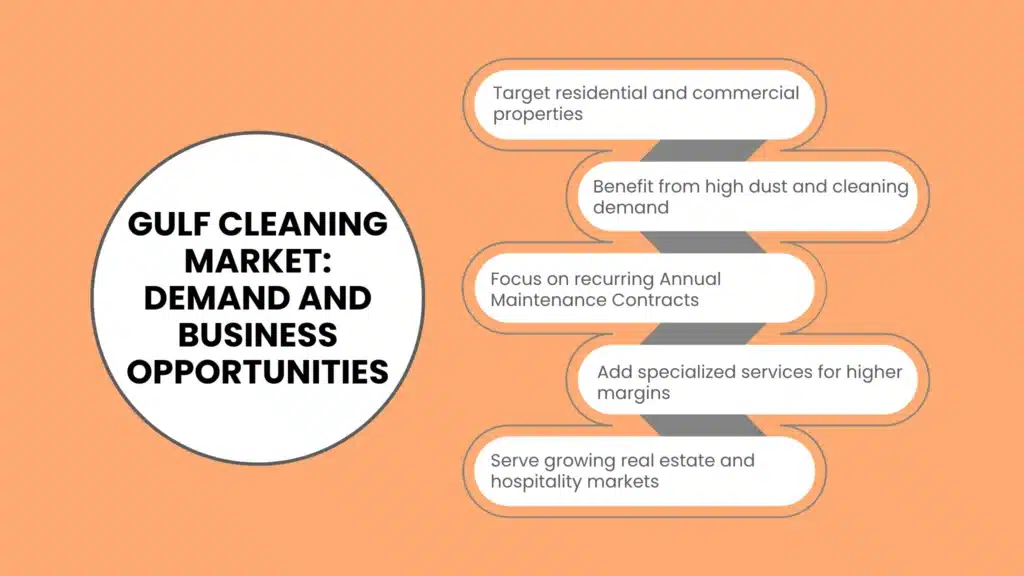
Regional urban plans such as UAE’s Vision 2031 and Saudi Arabia’s Vision 2030—are expanding total commercial floor space. As more global companies set up regional headquarters in Dubai and Riyadh, the need for certified janitorial teams keeps rising.
High-Profit Business Models and Opportunities in the GCC
Focusing on a specific service niche helps you spend money wisely, buy correct gear, and launch direct marketing campaigns.
1. Residential Hourly Cleaning and Maid Services
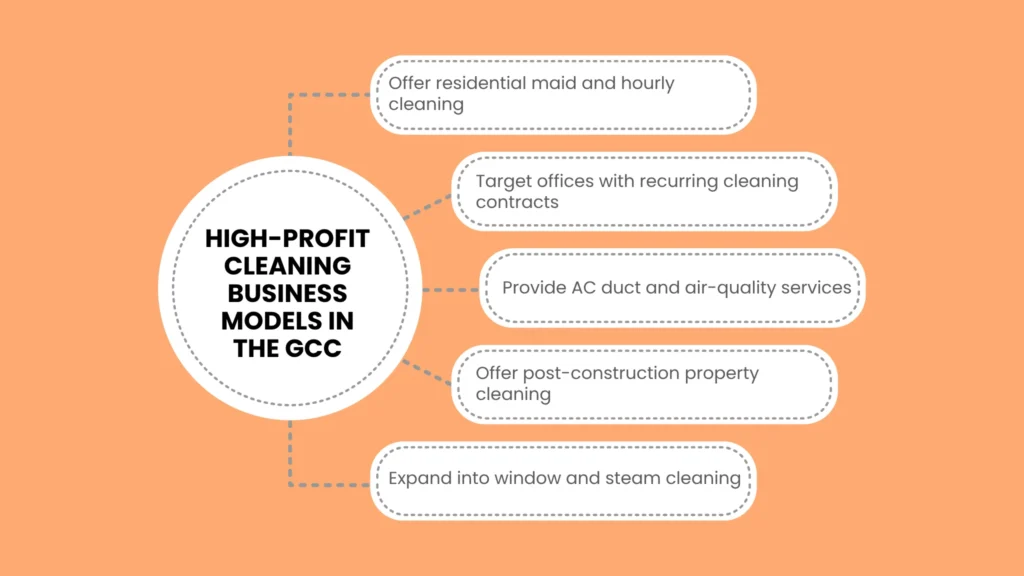
Home cleaning remains one of the most popular cleaning business opportunities. Expat households and local families regularly hire hourly staff for routine chores, laundry, and basic maintenance. Using simple mobile booking platforms allows companies to send field workers to residential towers quickly.
2. Commercial Office Maintenance
Corporate offices need scheduled night cleaning to keep work environments healthy. Securing long-term Annual Maintenance Contracts (AMCs) with corporate hubs provides steady monthly income that covers your core overhead expenses. Securing these long-term AMCs works the same way as structuring solid commercial cleaning contracts anywhere clear scope, defined frequency, and penalty clauses protect both sides.
3. Specialized AC Duct and Air Quality Care
Because of extreme summer heat across the Arabian Peninsula, air conditioning systems run constantly. Dust, humidity, and mold ruin indoor air quality over time. Therefore, specialized AC duct cleaning, coil wash, and mold removal command premium prices and yield high profit margins.
4. Post-Construction Property Cleaning
Due to major real estate handovers occurring every quarter in Dubai, Abu Dhabi, and Riyadh, developers need heavy-duty cleaning teams. These specialized crews clear fine cement dust, paint spots, and chemical marks before final property inspections.
Legal Setup: Licensing a Cleaning Company in Dubai and the UAE
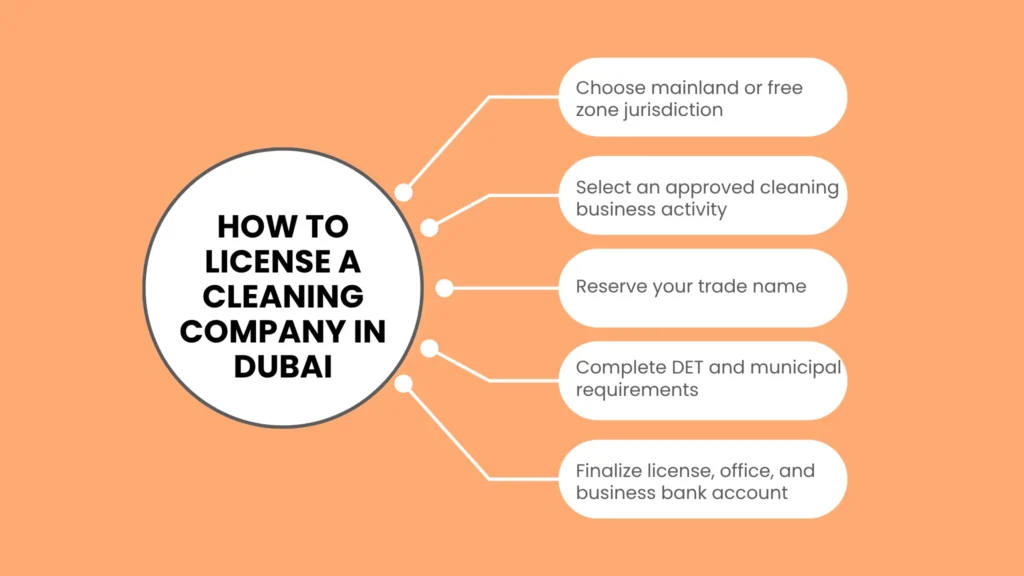
Setting up a business entity in the Gulf requires following simple licensing steps and registering with local government departments. The step-by-step framework below explains how to set up a mainland cleaning company in Dubai through the Department of Economy and Tourism (DET).
Step 1: Select Your Jurisdiction (Mainland vs. Free Zone)
First, to offer cleaning services directly to residential villas and commercial offices anywhere in the city, getting a mainland license from DET is required. Free Zones offer lower cost options for online consulting, but mainland licensing allows your teams to enter client sites across the entire city without restrictions. Furthermore, foreign investors can maintain 100% full company ownership under current UAE business laws.
Step 2: Reserve Your Trade Name and Select Activities
Next, choose an official business activity code (such as General Cleaning Services) and submit your trade name. Your business name must follow local naming rules and avoid restricted terms or informal words.
Step 3: Secure Municipal Clearances
In addition, commercial cleaning teams in Dubai must register with the Dubai Municipality Health and Safety Department. If your company plans to offer specialized work like pest control, grease trap work, or water tank sanitization, you will need extra municipal permits and staff training certificates.
Step 4: Finalize Your License, Office Rent, and Bank Account
Finally, leasing physical office space and getting an Ejari registration contract is necessary to complete your trade license. Once the commercial trade license arrives, you can open a corporate bank account and register for Value Added Tax (VAT) and Corporate Tax.
Navigating Labor Rules, Visas, and Logistics
Running a successful cleaning business in the Gulf requires solid staff management, good transport systems, and strict compliance with local labor rules.
Staff Recruitment and Ministry Compliance
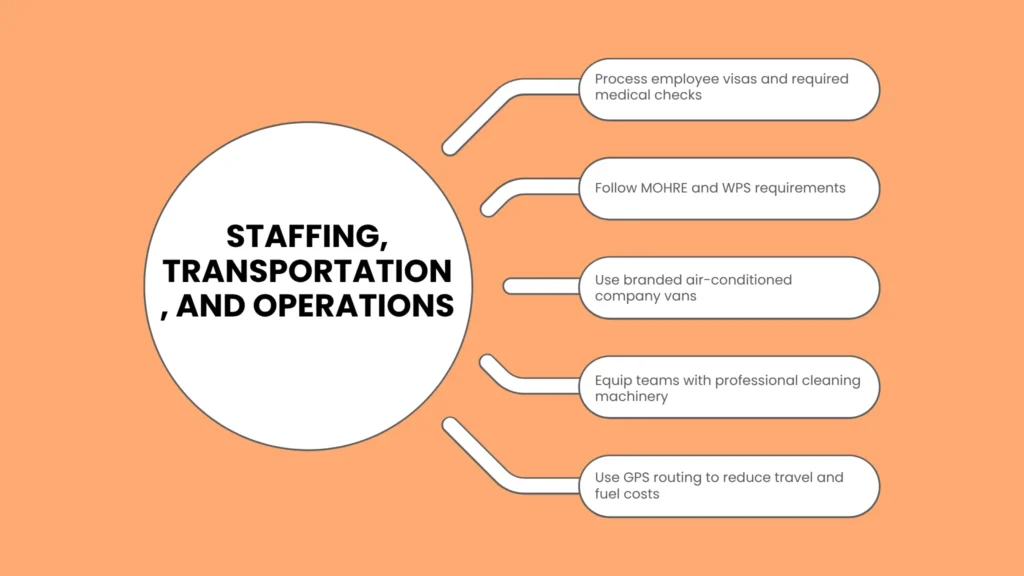
First, field workers must receive official company visas through the Ministry of Human Resources and Emiratisation (MOHRE). Employers provide medical coverage, Emirates IDs, and safe housing facilities. Moreover, using the Wage Protection System (WPS) for monthly salary payments is mandatory to keep your trade license active.
Fleet Management and Routing
Second, because cleaning teams travel between residential neighborhoods and business hubs, buying or leasing branded, air-conditioned vans is essential. Using simple GPS tools helps driver teams avoid traffic jams, which lowers fuel costs and increases daily completed jobs.
Pricing Models and Unit Economics in the Gulf
Setting a fair pricing structure ensures your customer rates cover labor wages, transport expenses, and cleaning chemicals while keeping your profits healthy.
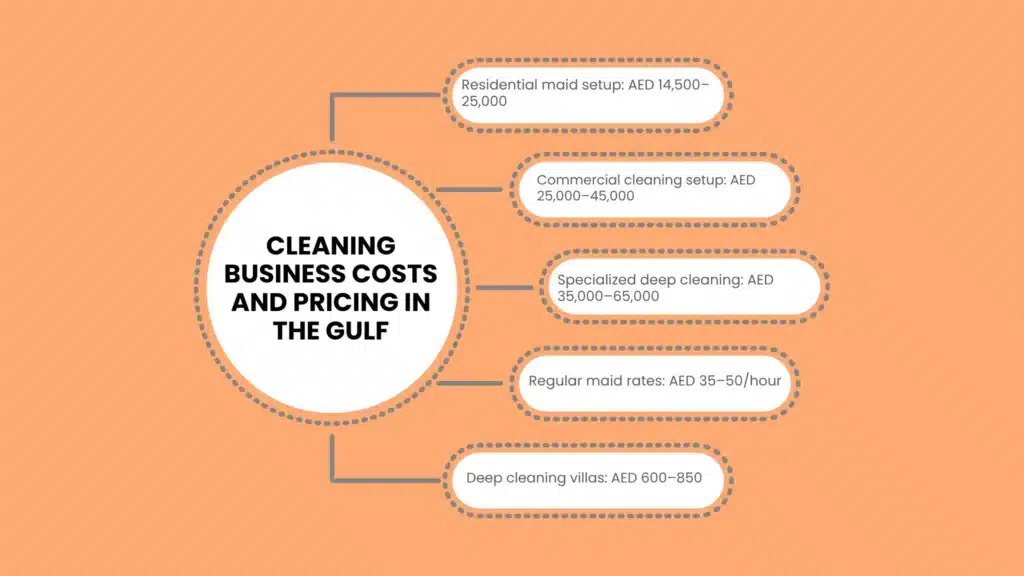
Overall, target a gross margin of 35% to 50% on basic home cleaning, and up to 65% on specialized deep cleaning or upholstery work.
Client Acquisition and Digital Marketing Strategies
Attracting regular clients in active cities like Dubai, Abu Dhabi, or Riyadh requires good search visibility, community involvement, and local real estate partners.
Effective Marketing Channels for GCC Cleaners
Local Search Profiles (Google Maps): Update your online profiles so your company appears near the top of search results for phrases like “home cleaning near me” or “office cleaning services”.
Real Estate Alliances: Build direct relationships with local estate agents, property managers, and holiday home hosts to handle move-out deep cleans automatically.
Service Aggregator Apps: Join popular regional booking apps during your first few months to fill empty worker schedules and bring in immediate cash.
Community Group Outreach: Post helpful updates in local neighborhood groups, building chats, and expat forums while offering special introductory discounts.
Simple 60-Day Step-by-Step Launch Plan
To start your operations without delays, follow a clear 60-day launch schedule.
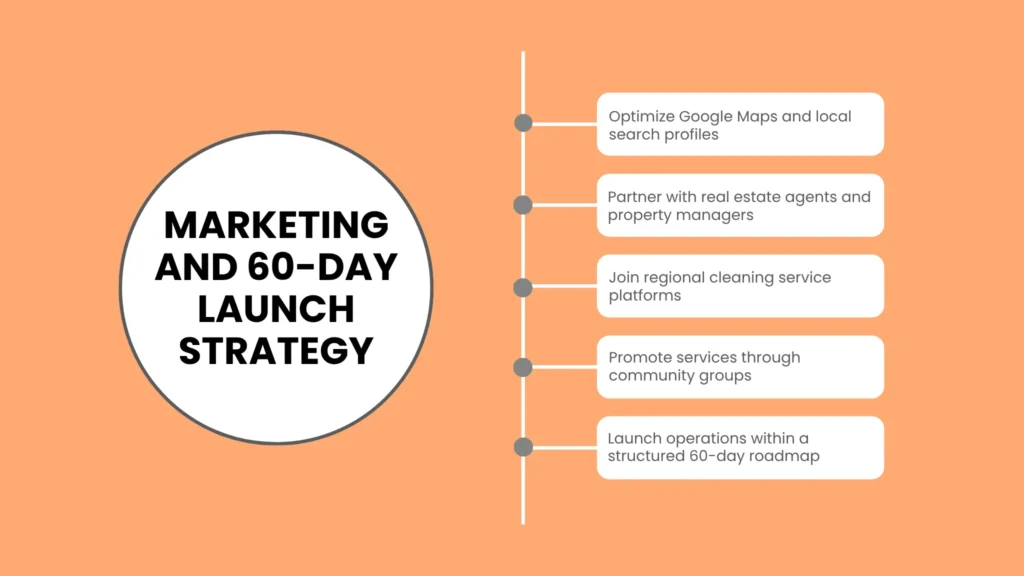
Following a clear step-by-step plan prevents wasting money on gear before your trade license and visa quotas are ready.
Final Thoughts on Starting Your Business
Establishing a cleaning business in Gulf cities provides a solid path toward building recurring revenue, steady cash flow, and long-term commercial growth. By getting proper trade licenses, maintaining high cleaning quality, and using simple digital marketing, you can build a successful local service brand.
Take action today: study your local target market, talk with setup advisors, and build your business plan. To read more operational guides, financial frameworks, and growth strategies, visit reliablestartup.
Frequently Asked Questions
What is the average cost to start a cleaning company in Dubai?
Starting a basic mainland cleaning company in Dubai generally costs between AED 14,500 and AED 25,000 for trade licenses, business registration, and initial municipality approvals. However, you will need extra money for office rent, transport vans, cleaning gear, and staff visa processing.
Can foreign investors own 100% of a cleaning business in the UAE?
Yes! Under updated commercial rules, foreign entrepreneurs can hold 100% full ownership of mainland professional and commercial cleaning licenses without needing a local Emirati sponsor.
What trade license code do I need for a cleaning company in Dubai?
You will register under official Department of Economy and Tourism (DET) activity codes for cleaning services, such as General Cleaning Services. However, specialized tasks like high-rise window work, pest control, or tank cleaning require extra activity add-ons.
What is the difference between mainland and free zone setups for cleaning?
A mainland trade license allows your team to serve clients directly at any apartment, villa, or office across the city. On the other hand, Free Zone setups usually cost less initially, but they restrict your service locations unless you work through local partners.
Is a cleaning business profitable in Gulf countries?
Yes, cleaning companies enjoy strong profit margins due to consistent residential demand, climate factors, and massive real estate growth. As a result, well-managed businesses regularly keep net profit margins between 20% and 35% after paying labor, fuel, and office bills.