Best Tech Startup Ideas for Non-Technical Founders
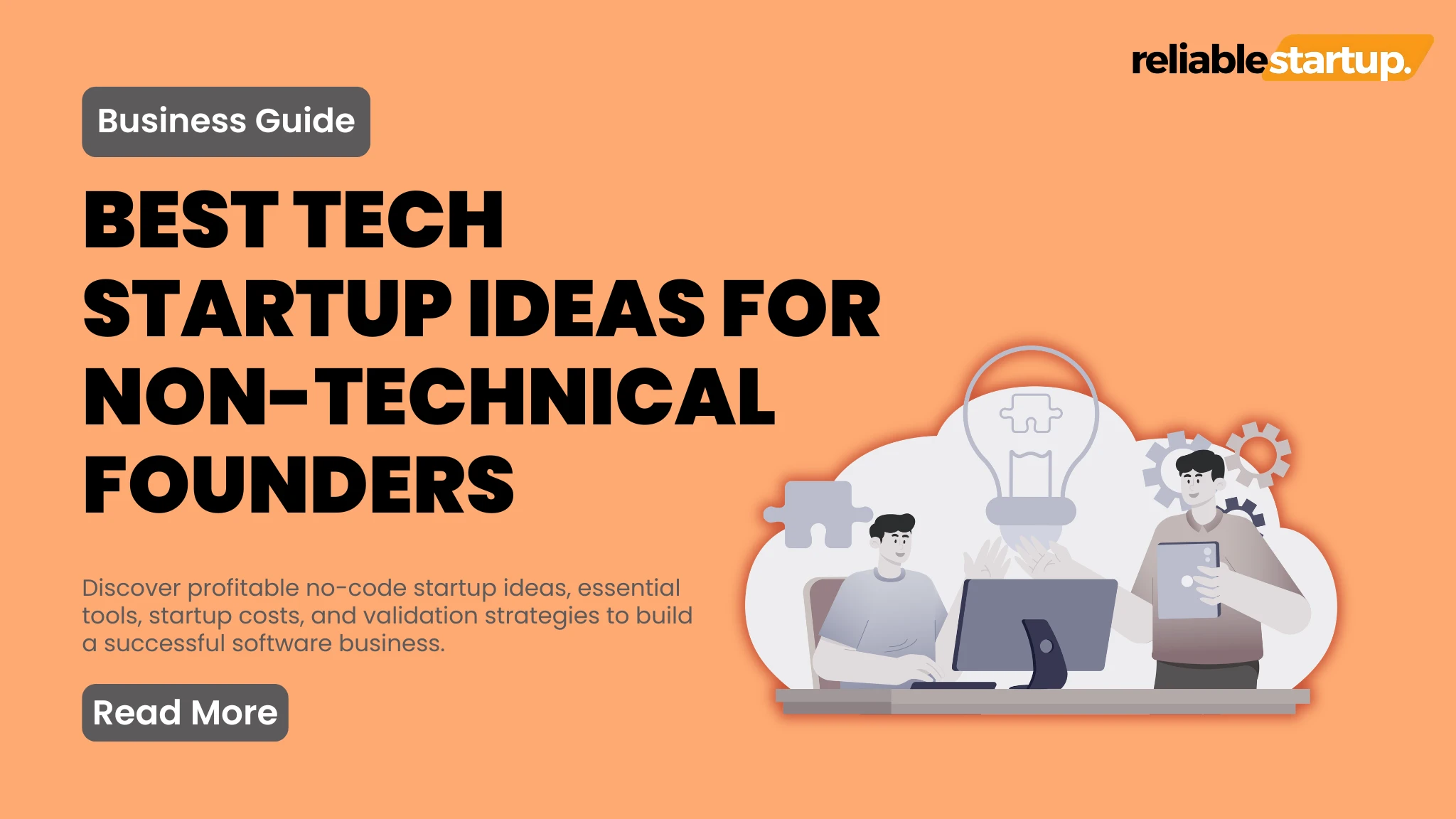
The old myth that you need a computer science degree or millions of dollars in VC funding to build a successful software business is completely dead. In fact, the shift toward visual development has turned the tech landscape upside down. Today, your domain expertise is a far greater competitive advantage than knowing how to write syntax. If you spent a decade working in real estate, logistics, or healthcare, you understand real-world business problems better than any software engineer.
Choosing the right tech startup ideas for non technical founders means focusing entirely on your industry insights while leveraging visual development tools to build the product. You do not need to wait for a technical co-founder to get started. By using modern web ecosystems, you can turn your industry knowledge into a highly functional software platform. This comprehensive guide details the best no code startup ideas 2026 has to offer, operational requirements, clear cost structures, and the immense profitability potential waiting for non-technical creators.
Why Non-Technical Founders Dominate the Modern Tech Landscape
Software engineering has transformed radically over the past few years. Traditional coding is no longer the only way to ship an enterprise-grade application. Visual development platforms handle heavy database management, user authentication, and API integrations automatically. This shift allows you to spend your time focusing on the customer experience and the commercial business model.
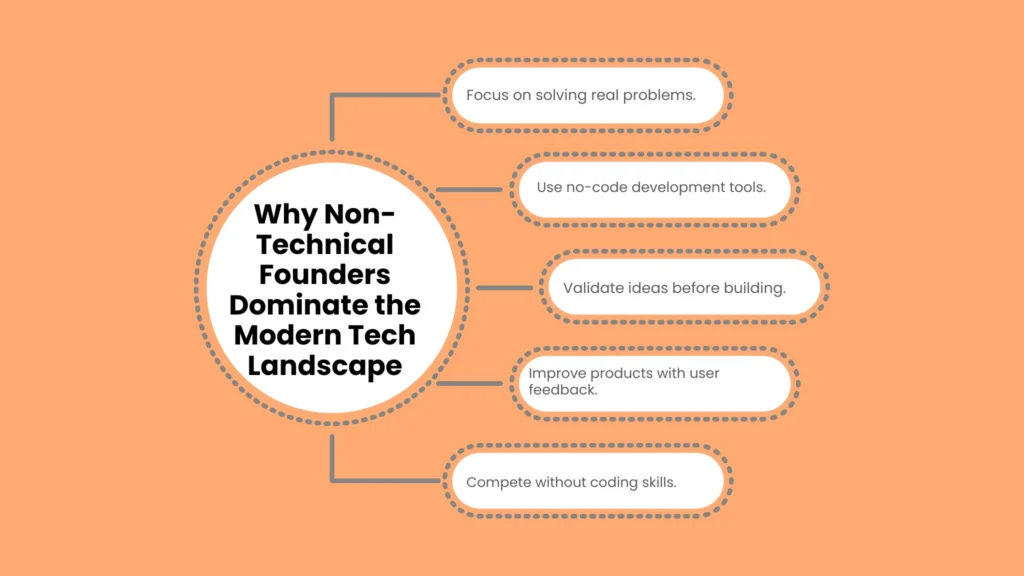
The main reason software products fail is not bad technology. On the contrary, it is building something the market does not want. Technical founders often spend months writing code for features that users completely ignore. Non-technical founders avoid this trap by focusing directly on customer acquisition, user interviews, and market validation. Your ability to speak the customer’s language is what drives actual software sales.
Furthermore, visual development allows you to iterate instantly based on real-world user feedback. If a client requests a workflow change during a morning demo, you can update the interface visually by lunchtime. This insane speed of execution makes lean, non-technical teams highly dangerous competitors to massive, slow-moving corporate engineering departments.
Top Low-Code and No-Code Startup Ideas
The most profitable opportunities live in unglamorous, vertical-specific business markets. Instead of trying to build the next massive social media network, create hyper-focused digital utilities for underserved professional niches.
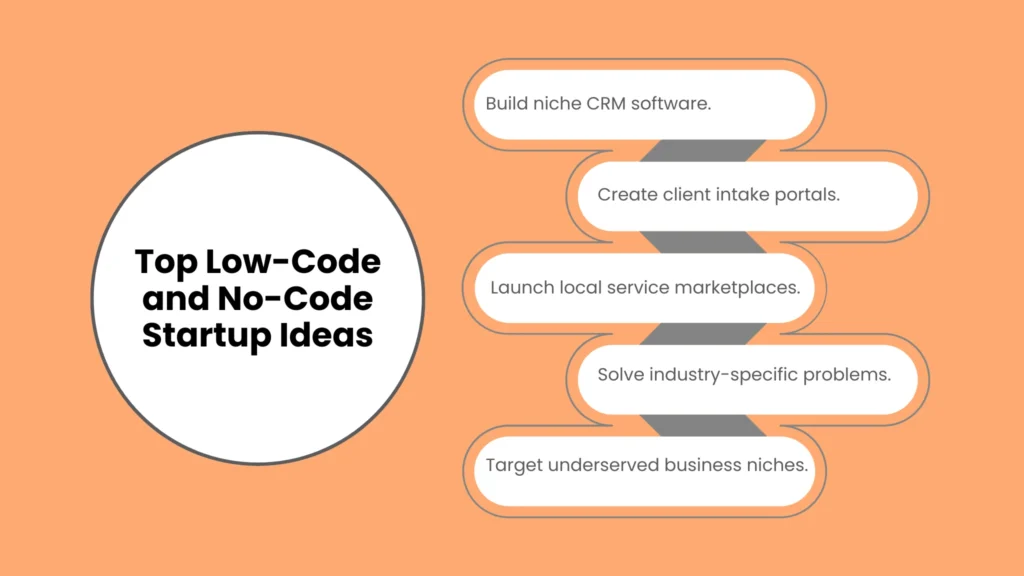
1. Niche Customer Relationship Management Systems
Generic relationship managers like Salesforce are far too bloated and complex for specialized local business operators. You can easily build a focused CRM tailored to a specific vertical, such as tattoo studios, mobile pet groomers, or wedding planners. For example, a CRM built specifically for tattoo artists would feature custom deposit tracking, portfolio galleries, and automated skin-healing text reminders.
2. Client Intake and Document Automation Portals
B2B professional service firms spend hundreds of hours manually collecting onboarding documents and filling out client intake forms. You can create a white-labeled dashboard that automates this entire friction point for law firms, accounting agencies, or corporate recruitment offices. The app routes completed questionnaires, tracks signatures, and securely stores sensitive corporate documents.
3. Hyper-Local Micro-Marketplaces
Two-sided service marketplaces are highly lucrative because they capitalize on natural network effects. You can launch an online marketplace that connects local homeowners with vetted service professionals in highly specific niches, such as luxury boat detailing, mobile dent repair, or neighborhood storage rentals. Visual web builders handle the entire transaction processing, user review system, and scheduling backend seamlessly.
Essential Tech Startup Ideas for Non Technical Founders Requirements
To build a reliable software business without traditional programming skills, you must put together a modern visual development stack. Think of yourself as a product architect who connects pre-built components rather than writing individual lines of code.
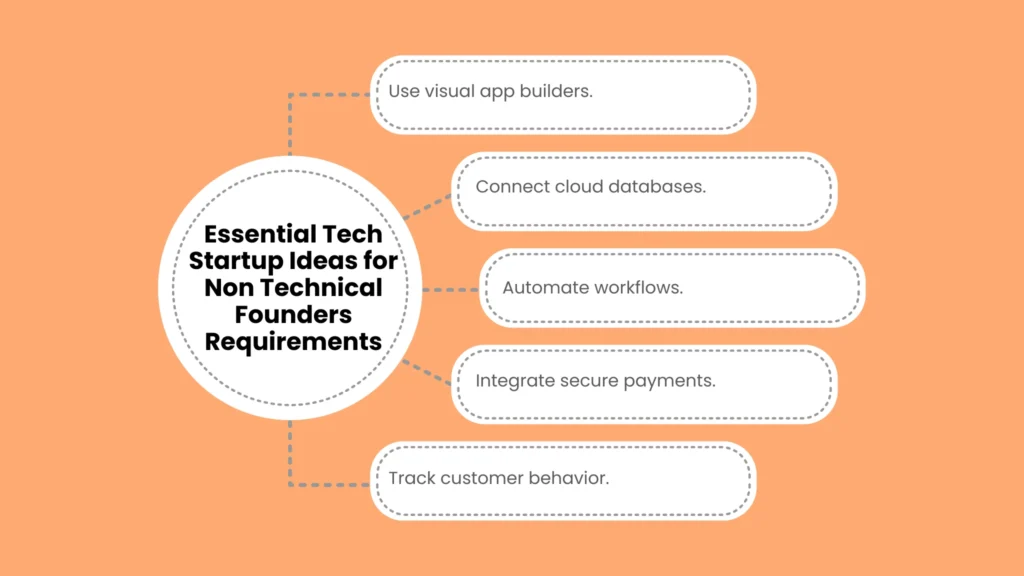
Review these foundational tech startup ideas for non technical founders requirements to construct a highly scalable software architecture:
Visual Web Application Builders: Platforms like Bubble, Softr, or Glide serve as your visual frontend and logic engine.
Relational Cloud Databases: Tools like Airtable or Supabase act as your secure, highly scalable central data warehouse.
Workflow Automation Connectors: Infrastructure like Zapier or Make acts as the digital glue linking your different applications.
Secure Payment Processing Engines: Embed Stripe components directly to handle multi-tier subscriptions, marketplace payouts, or single-invoice transactions.
Behavior Analytics Dashboards: Use tools like Hotjar or Google Analytics to watch real-time customer click paths and eliminate user onboarding friction.
Mastering these visual components allows you to deploy a fully operational Minimum Viable Product (MVP) in less than four weeks. This rapid setup gives you the power to test live market demand without accumulating massive technical debt.
Analyzing the Financials: Development Costs vs. Software Profit Margins
The financial advantage of visual software development is absolutely mind-blowing compared to old-school custom coding paths. By removing the need for a highly paid engineering team early on, you can preserve your equity and keep your capital for growth marketing.
Historically, hiring an agency to build a custom software prototype required an investment of $30,000 to over $100,000 before you ever got a single user signup. Conversely, the upfront tech startup ideas for non technical founders cost using modern visual tools is practically negligible. A robust, secure SaaS application built on visual infrastructure typically costs an estimated $50 to $200 per month for operational software subscriptions. Even if you pay a specialized visual designer to polish your user interface, your total setup expenses will generally remain well under an estimated $2,000.
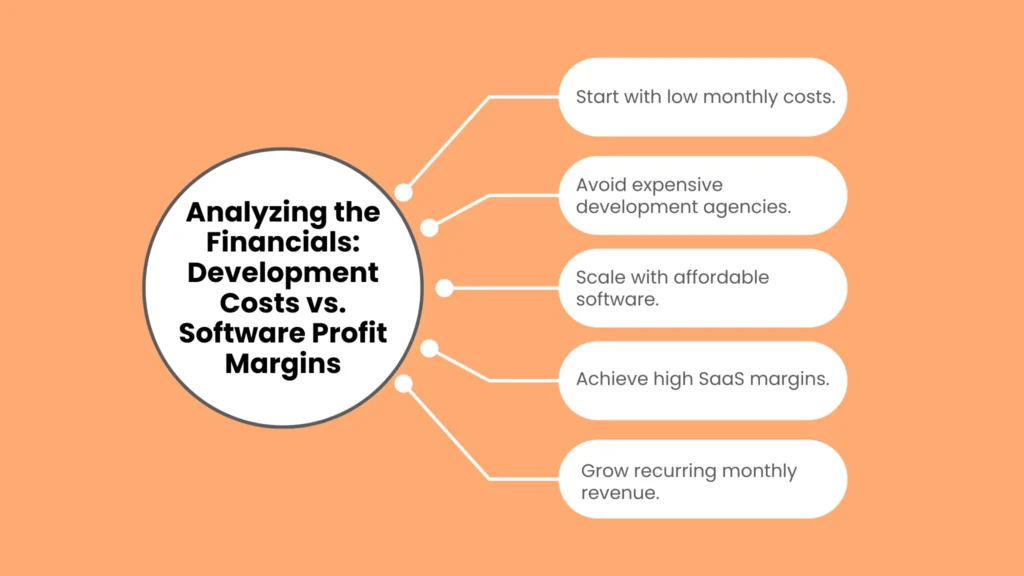
Once your application hits the market, the long-term economics are incredibly attractive. The standard tech startup ideas for non technical founders profit margin ranges between 75% and 85%. Because cloud servers scale dynamically and automated tools require zero manual upkeep, your primary recurring expenses are limited to payment processing fees, cloud hosting, and direct customer support.
So, is tech startup ideas for non technical founders profitable over the long run? Based on available industry data, it is one of the most profitable business models in existence today. For instance, a niche B2B software tool charging a modest $150 per month needs only 60 active business clients to generate a highly stable $9,000 in monthly recurring revenue. At an 80% profit margin, this provides the founder with incredible personal cash flow while building a highly valuable corporate asset that can eventually be sold.
No-Code Software Scaling Cost Projections
| Subscriber Volume Tier | Estimated Monthly Software Cost | Primary Infrastructure Stack | Projected Net Profit Margin |
| Beta Launch (0 to 50 Users) | $50 to $150 per month | Starter Bubble plan + basic Airtable database. | 65% to 75% |
| Growth Phase (50 to 500 Users) | $300 to $600 per month | Professional visual hosting + advanced automation. | 75% to 85% |
| Enterprise Scale (500+ Users) | $1,200 to $2,500+ per month | Dedicated cloud architecture + enterprise security. | 80% to 88% |
How to Validate Your Tech Concept Without Code
Do not make the mistake of building a massive app based purely on your own assumptions. Before configuring your visual databases, you must gather clear behavioral evidence that your target audience will actually pay for your solution.
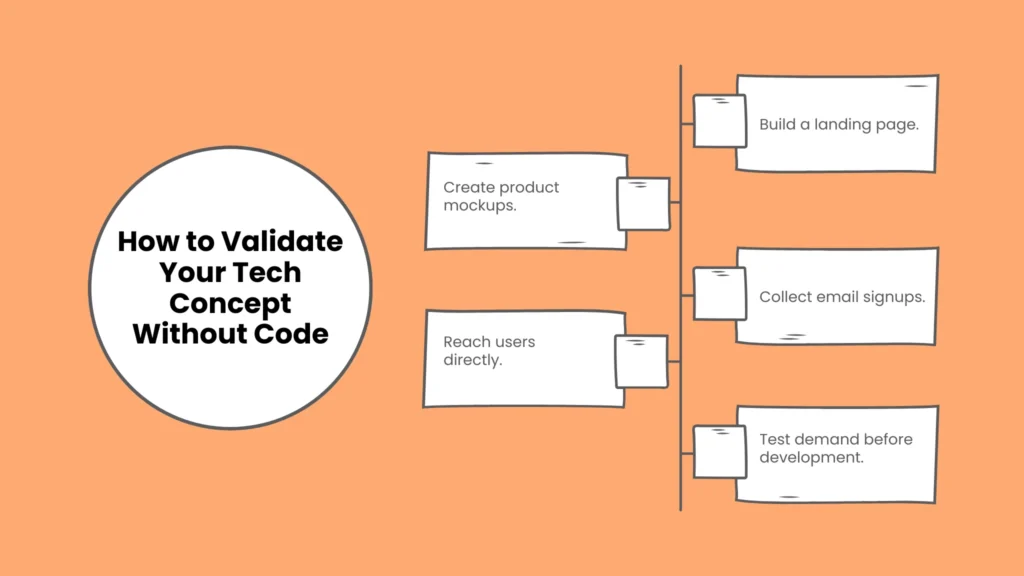
Launch a Highly Specific Smoke Test Landing Page
Build a simple, polished landing page that reads exactly like a finished software product site. Use a compelling headline that calls out your specific audience, outline the core benefits of your solution, and show a mock-up image of your application dashboard. Include a clear call-to-action button that invites visitors to purchase a heavily discounted annual pre-order or join an exclusive, paid priority waitlist.
Drive Targeted Traffic via Direct Outreach
Avoid spending thousands of dollars on broad social media ads early on. Instead, use high-intent channels like LinkedIn direct messaging, niche industry subreddits, or localized business associations to connect with your exact buyer profile. Send personalized messages explaining that you are building a tool to solve their specific workflow frustration. If people willingly click your links and submit their email addresses, you have an incredible validation signal to start building.
Conclusion
The democratization of technology has completely removed the barriers to entry for creative entrepreneurs. By pairing your deep industry insights with powerful visual development tools, you can easily build highly scalable, high-margin software businesses without touching traditional programming languages. If you are looking for step-by-step startup frameworks, interactive no-code tutorials, and founder toolkits, visit our website at reliablestartup to build and launch your tech venture today.
Frequently Asked Questions
Can a non-technical founder scale a software business to millions in revenue?
Yes, absolutely. High-profile companies like Comet and Teal started their journeys as visual no-code applications before scaling to millions in annual revenue and securing substantial venture capital investment.
When should a non-technical founder finally hire an engineer?
You should delay hiring a custom software developer until you have consistent paying customers, clear recurring revenue, and highly specific feature requests that go beyond the logical boundaries of visual building tools.
How do visual platforms handle user data security and compliance?
Top-tier visual development platforms build their infrastructure directly on top of enterprise-grade cloud environments like Amazon Web Services. They include built-in SSL encryption, automated data backups, and full compliance with standard global privacy regulations by default.
How long does it take to learn visual development tools?
While mastering advanced database architecture takes time, an absolute beginner can typically learn to build and deploy a basic functional web application using modern drag-and-drop tools within two to three weeks of focused study.