Fintech Marketing Strategies That Actually Drive Signups
The global landscape of financial technology is moving through a highly competitive customer acquisition phase. Previously, financial software brands could win users simply by offering a sleek interface or a small cash bonus. However, the modern digital marketplace is incredibly crowded, causing paid advertising costs to skyrocket. Consequently, industry executives are actively studying modern fintech marketing strategies to build sustainable acquisition funnels that convert casual web traffic into active depositors.
Crucially, marketing a financial application requires balancing creative consumer promotion with strict data privacy rules. Because you are asking users to trust your platform with their hard-earned money, traditional pushy sales copy will instantly trigger skepticism. Therefore, learning how to market a fintech app successfully requires a transparent framework that establishes deep authority while systematically removing onboarding friction. If you’re still shaping your core product before scaling marketing spend, our guide on fintech startup ideas is a useful starting point.
This comprehensive guide breaks down the exact growth mechanics powering leading financial software companies. We will unpack real campaign costs, evaluate marketing return profiles, and review the structural requirements you must satisfy to scale a highly profitable customer pipeline from scratch.
The Financial Framework of Growth Marketing in Fintech
Before launching multi-channel ad campaigns, you must master the exact unit economics that govern financial technology marketing. In the software space, the primary risk is spending more money to acquire a user than that user ever generates for your business. Because banking systems often monetize via small transaction fees, your customer relationship length must be exceptionally stable.
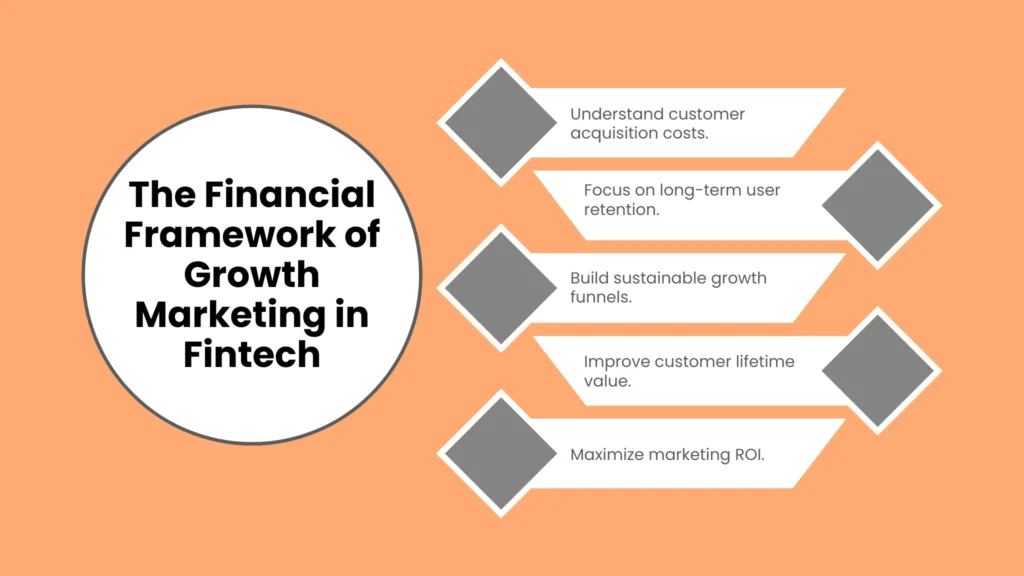
As illustrated by the lifecycle funnel above, driving initial acquisition is only the very first step. To ensure your marketing capital actively builds enterprise equity, your campaign messaging must guide users smoothly from initial download to consistent revenue generation.
| Core Growth Channel | Estimated Fintech Marketing Strategies Cost | Targeted Fintech Marketing Strategies Profit Margin | Primary User Conversion Playbook |
| Educational Content SEO | $3,000 to $8,000 / month | 70% to 85% | Intent-Based Search Articles, Free Financial Tools |
| Hyper-Targeted Performance Ads | $15,000 to $40,000 / month | 45% to 60% | A/B Tested Social Video Ads, Direct App Store Links |
| Viral Referral Engineering | $5,000 to $15,000 / month | 65% to 80% | Double-Sided Cash Incentives, In-App Social Invites |
| Strategic Micro-Creator Seeding | $4,000 to $12,000 / month | 55% to 70% | Authentic Native Walkthroughs, Niche Finance Hubs |
When analyzing the foundational industry question of is fintech marketing strategies profitable, current data confirms that content-driven, organic-first systems yield the most defensive returns. While massive brands exhaust their capital on general awareness billboards, lean startups succeed by targeting specific, high-intent user communities. Consequently, optimizing your fintech marketing strategies profit margin relies entirely on minimizing your blend customer acquisition cost while maximizing your platform retention rates.
5 Steps to Execute Fintech Marketing Strategies That Convert
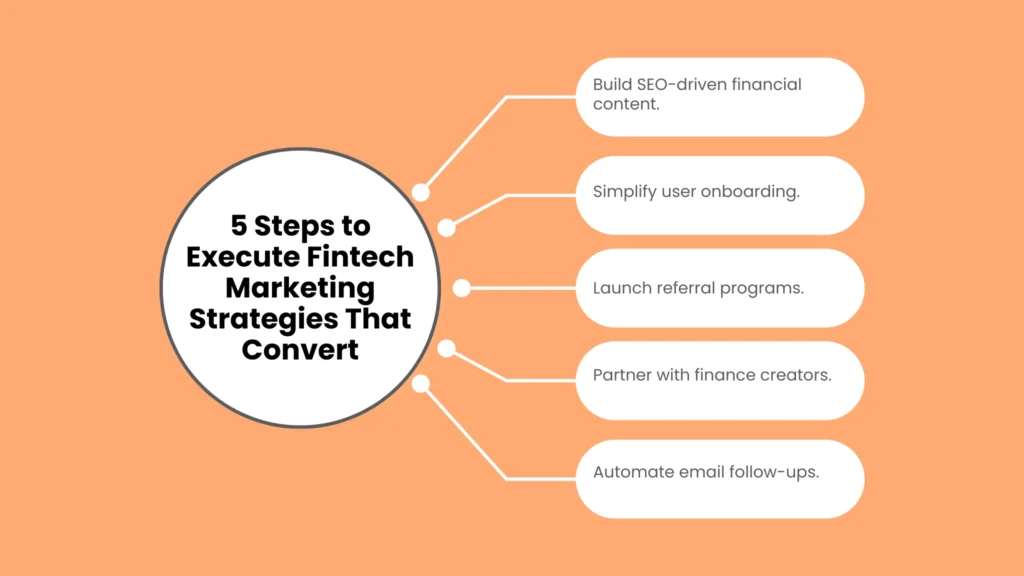
1. Build an Organic Search Authority Engine
The most valuable customers are those who are actively searching for a solution to a specific financial pain point. By creating hyper-focused, educational content, your brand captures these users at the exact moment their intent is highest.
The Channel Strategy: Build comprehensive guides that answer complex financial questions, such as automated tax optimization or micro-investing rules. Ensure your technical terms are explained simply so everyday readers remain engaged.
Conversion Integration: Place clear, contextually relevant signup buttons directly within your educational resources to guide interested readers toward your product. This content-first approach pairs well with our guide on B2B SaaS lead generation, which covers similar organic-intent capture strategies for software products.
2. Streamline the User Onboarding and Activation Loop
You can deploy the most brilliant promotional campaigns in the world, but if your registration process is frustrating, users will abandon your application instantly. Your user interface must feel completely seamless.
The Channel Strategy: As shown in modern UI design best practices, keep early fields incredibly minimal. Allow the user to explore your core dashboard before forcing them to complete complex regulatory identity verification documents.
Conversion Integration: Use progress tracking bars and clear micro-copy to reassure users that their private data is completely protected by institutional-grade encryption.
3. Deploy Double-Sided Gamified Referral Loops
Word-of-mouth remains the most powerful growth accelerator in the financial technology sector. If a user loves your budgeting tool, they are naturally inclined to recommend it to their immediate social circle if the incentive is structured correctly.
The Channel Strategy: Create a system where both the existing user and the newly referred friend receive a meaningful platform reward, such as a cash bonus or premium feature access, upon successful account verification.
Conversion Integration: Embed the referral interface directly into the main application dashboard, allowing users to invite their contact lists with a single tap. Referral-driven growth loops are especially powerful for early-stage teams — our guide on finding your first 10 B2B SaaS customers covers complementary low-cost acquisition tactics.
4. Leverage Trusted Micro-Influencer Partnerships
Modern consumers do not trust traditional corporate actors; instead, they trust real people who share their daily financial journeys transparently on video platforms.
The Channel Strategy: Partner with niche finance creators who maintain highly engaged, tight-knit communities. Provide them with early access to your platform so they can share authentic, unscripted reviews of your product features.
Conversion Integration: Equip each partner creator with a unique promotional link that grants their audience specialized onboarding benefits, allowing you to track individual channel performance precisely.
5. Execute Retargeting and Behavioral Email Journeys
A significant portion of your traffic will download your application but pause before making their initial cash deposit. Your marketing must automatically nurture these warm leads over time.
The Channel Strategy: Set up automated event-driven messaging tracks. If a user drops off during the bank link phase, trigger a helpful email detailing your security credentials and offering live chat support.
Conversion Integration: Keep these messages educational rather than aggressive, focusing entirely on helping the user solve their immediate setup roadblock.
Foundational Fintech Marketing Strategies Requirements
Scaling a modern financial technology audience demands a deep alignment between marketing creativity and technical compliance frameworks. You must satisfy several strict structural parameters to keep your campaigns running smoothly.
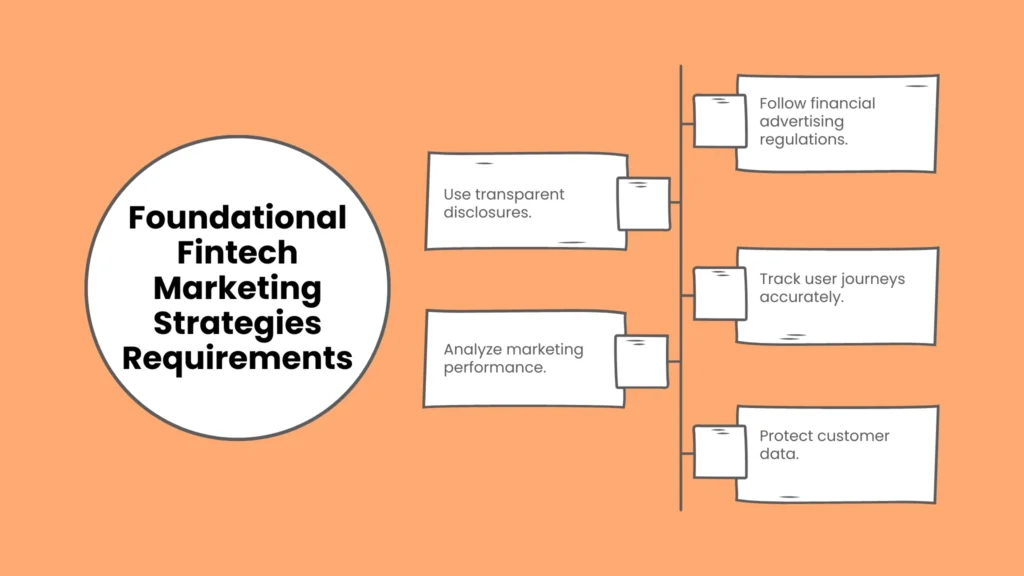
1. Absolute Regulatory and Disclosure Compliance
Unlike standard enterprise software marketing, financial promotions are heavily scrutinized by consumer protection agencies:
Clear Disclosures: Always display mandatory legal text regarding interest rates, investment risks, and partner banking configurations clearly alongside your promotional text.
Truthful Claims: Never promise guaranteed financial returns or use misleading language regarding account fee structures in your ad materials.
This requirement aligns with guidance from the Consumer Financial Protection Bureau, which mandates clear, non-misleading disclosure of fees, rates, and risks in financial product advertising.
2. Advanced Attribution and Data Analytics Infrastructure
To prevent wasting capital on low-quality traffic, your growth team must implement precise tracking mechanisms:
Multi-Touch Attribution Nodes: Deploy data systems that track a user’s entire journey from the first article click down to their final transaction.
Cohort Performance Analysis: Group your users by the exact week and marketing channel they arrived from, allowing you to monitor long-term customer value accurately.
Navigating the Paid Ad Trap: Brand Building vs. Performance Spend
A critical error made by venture-backed teams is relying exclusively on paid social ads to hit short-term signup targets. While pouring cash into performance ads produces an immediate spike in registrations, it creates a dangerous dependency. The moment you reduce your ad spend, your customer acquisition stops completely.
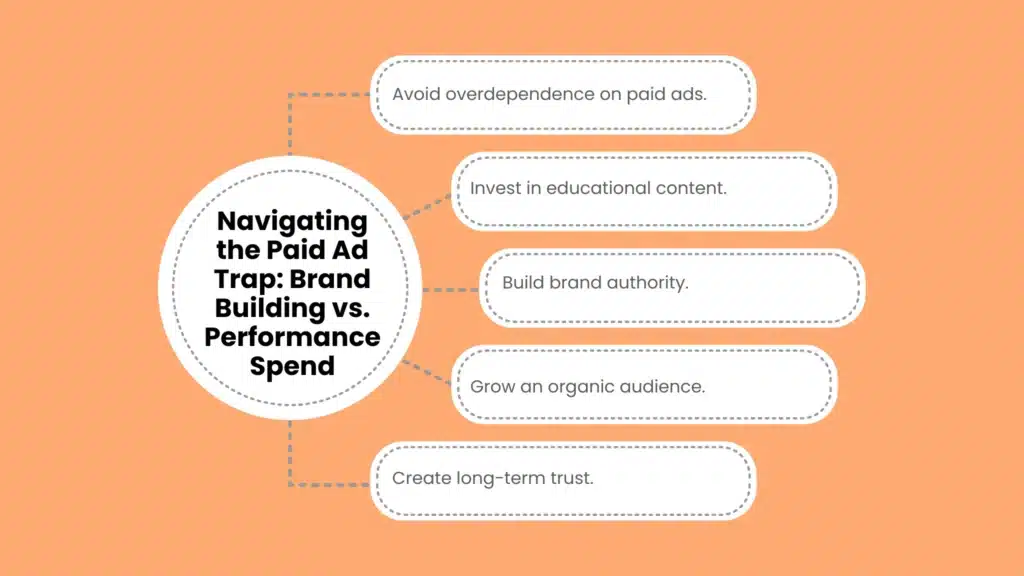
Therefore, sustainable growth requires investing heavily in your owned media ecosystem right from the start. Focus on building a deeply loyal community through long-form video insights, proprietary consumer data reports, and high-value interactive calculators.
By prioritizing authentic brand authority over simple paid clicks, you position your application as a trusted industry utility. This long-term strategic positioning insulates your brand from rising advertising rates and ensures your user base continues to grow organically even during broader market corrections.
Scale Your Growth Funnel Successfully
You do not need an multi-million dollar promotional budget to build a dominant audience in the financial software sector. By maintaining an unwavering focus on educational search authority, optimizing your onboarding screens for maximum speed, and engineering authentic referral loops into your product architecture, you can scale a global consumer community completely on your own terms.
Begin your expansion journey by auditing your current signup pipeline for immediate frictional roadblocks. Remove any unnecessary text fields, publish a series of highly detailed help resources targeting your user’s primary objections, and empower your early community members to act as authentic brand advocates online.
If you are looking for more actionable growth frameworks, high-conversion landing page templates, and step-by-step optimization case studies for modern independent founders, explore our full library of growth resources at reliablestartup.com to accelerate your corporate path.
Frequently Asked Questions
Is fintech marketing strategies profitable for niche platforms?
Yes, it is highly profitable. By avoiding generic mass-market messaging and focusing your campaigns entirely on an underserved demographic, you can maintain incredibly low customer acquisition costs. This disciplined approach ensures your digital business model generates strong net returns quickly.
What is the most common reason a fintech marketing campaign fails to convert?
Most campaigns fail because there is a massive disconnect between the promotional ad copy and the actual app onboarding experience. If your marketing promises a fast, modern setup, but your registration flow forces users through confusing, slow verification loops, your abandonment rate will skyrocket instantly.
How much budget should a young team allocate to early marketing tests?
A lean founding team should start with a small testing budget of $2,000 to $5,000 to validate their messaging channels. Focus these early resources entirely on testing copy variants across organic search and micro-creator networks before attempting to scale capital-heavy paid media plays.
Should our promotional campaigns focus on platform features or user emotions?
Your marketing should always lead with the specific emotional benefit, such as financial peace of mind or systemic time savings, before introducing your technical features. Consumers buy outcomes; they only look at technical specifications to validate the emotional decision they have already made.
How do modern algorithmic data shifts impact customer acquisition costs?
Algorithmic changes make broad, generic targeting strategies completely obsolete. To succeed today, your growth engine must generate highly creative, native content that platform algorithms naturally reward with organic distribution, reducing your reliance on paid distribution loops.