How to Finance a Tyre Recycling Plant: A Complete Guide
AI Overview
Securing tyre recycling plant financing involves leveraging specialized machinery loans, green venture investors, and government sustainability grants. A successful funding strategy balances upfront capital needs with dual revenue streams, tipping fees on incoming waste and sales of processed rubber or fuel outputs. By structuring clear financial projections, plant developers can secure competitive interest rates and scale processing capacity effectively.
Key Takeaways
High capital demands balanced by dual revenue streams
Specialized loan structures tailored for heavy equipment
Equity investors seeking sustainable waste-to-value models
Government grants and subsidies reducing debt burden
Strong business plans driving successful credit approvals
Ever wondered how environmental entrepreneurs turn piles of old scrap rubber into thriving, profitable businesses? Securing proper tyre recycling plant financing is the vital bridge between a green business vision and operational reality.
To secure tyre recycling plant financing, entrepreneurs must combine equipment-backed loans, green equity investors, government grants, and commercial credit structured around a solid business model.
While launching an industrial processing facility requires significant capital, the environmental and economic payouts are substantial. Let us break down everything you need to know about funding your recycling venture without hitting financial roadblocks.
Why Tyre Recycling Plant Financing Deserves Your Focus
Industrial recycling projects require massive initial outlays for heavy-duty shredders, granulators, and site preparations. Without a structured financial roadmap, initial setup costs can quickly derail an ambitious project.
Fortunately, lenders and investors love the waste-to-value business model. Unlike traditional manufacturing, tyre recycling earns money on both ends of the supply chain.
You collect tipping fees when accepting waste tyres, and you earn revenue
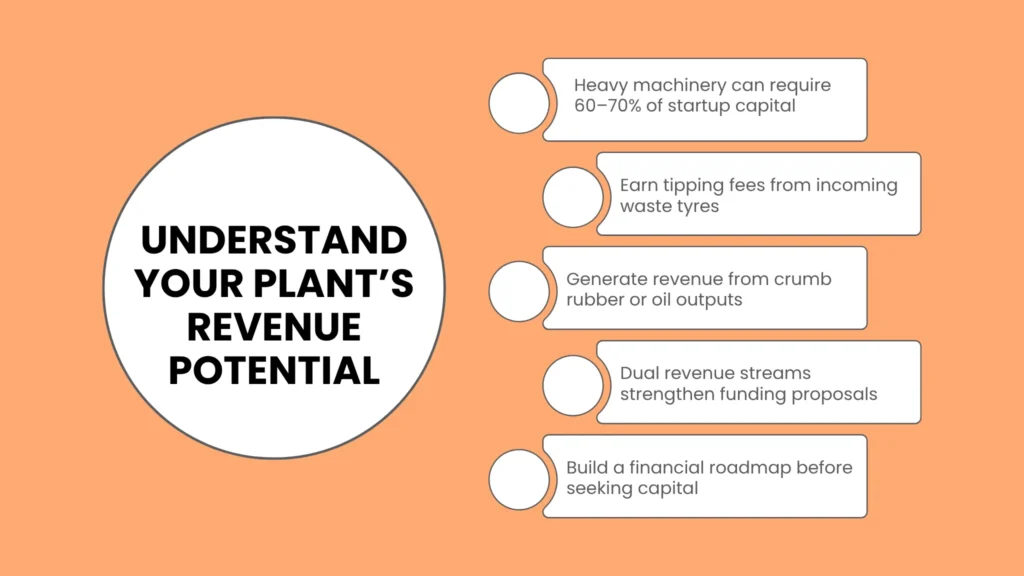
selling crumb rubber or oil outputs. This dual-income advantage makes securing tyre recycling plant financing much easier when pitching to institutional banks.
To explore surrounding business models and operational logistics, reviewing strategic guides on reliablestartup.com can help you refine your early planning phases.
Exploring Primary Tyre Plant Funding Options
Finding the right mix of capital requires looking at multiple financial channels simultaneously. Relying on a single source of capital often leads to high interest rates or excess equity dilution.
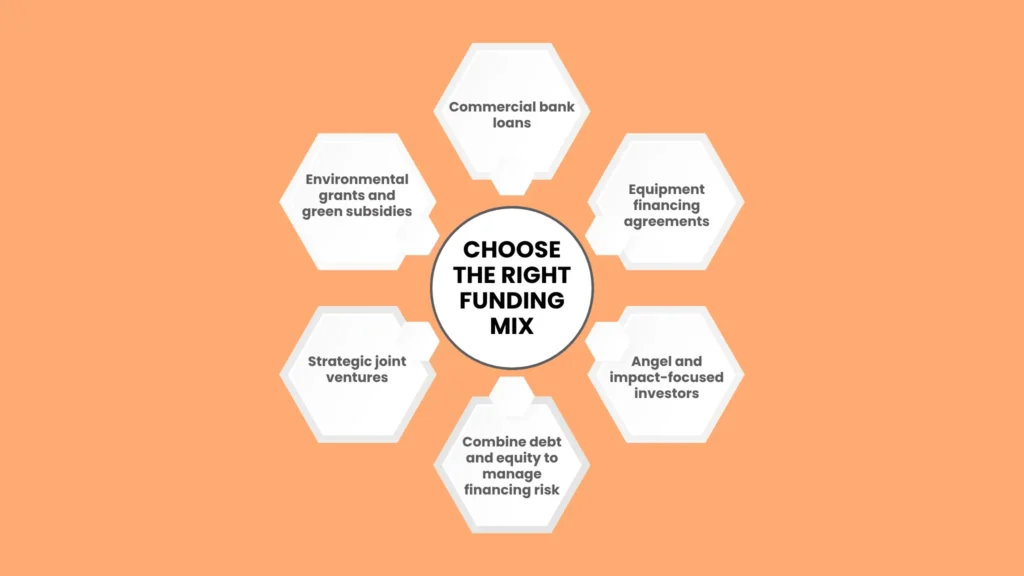
The best approach blends low-cost debt with strategic equity investments.
Top Core Funding Channels
Commercial bank loans backed by government small business guarantees.
Dedicated asset-heavy equipment financing agreements.
Environmental grants and green energy subsidies.
Angel investors and impact-focused venture funds.
Strategic joint ventures with local waste management firms.
Combining these tyre plant funding options ensures you keep debt manageable while maintaining sufficient working capital.
Government environmental grants are particularly valuable because they provide non-dilutive capital that reduces your total debt burden.
Leveraging Tyre Recycling Equipment Loans for Machinery
Heavy machinery consumes sixty to seventy percent of your overall startup capital. Instead of paying cash for expensive shredders, applying for tyre recycling equipment loans keeps your liquidity intact.
With tyre recycling equipment loans, the machinery itself serves as the underlying collateral. This built-in security makes approval easier compared to unsecured corporate lines of credit.
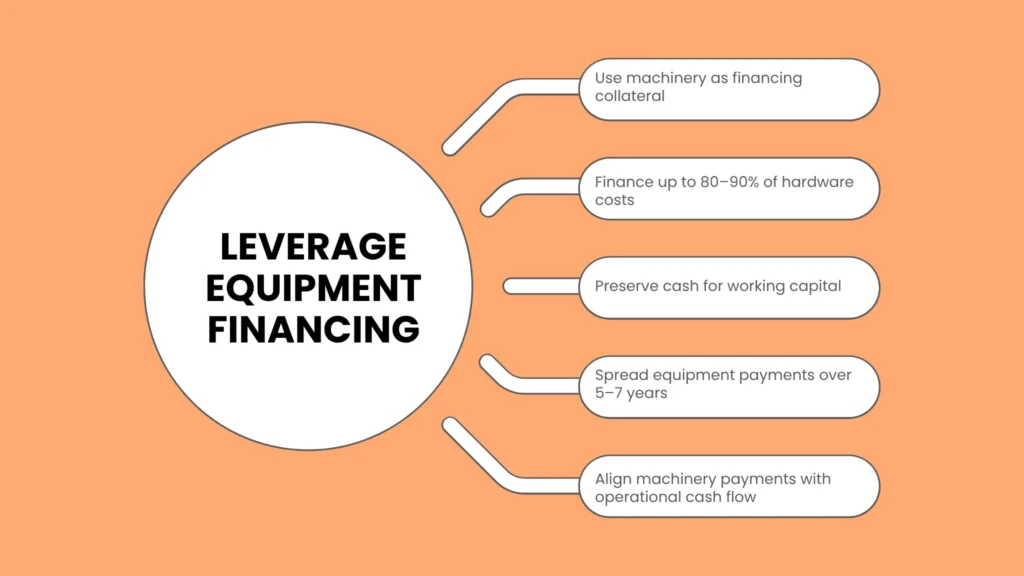
Lenders typically offer flexible tyre recycling equipment loans covering up to eighty or ninety percent of total hardware costs. Spreading equipment costs over five to seven years aligns machinery payments directly with monthly operational cash flow.
Breakdown of Financing Terms Across Capital Sources
Government-backed loans offer low interest rates and extended repayment windows, making them ideal for long-term facility infrastructure.
Equipment lease structures require lower upfront down payments, allowing quick acquisition of essential processing machinery.
Impact investment equity provides substantial capital without monthly debt payments, though founders share equity ownership. Environmental grants deliver non-dilutive funding that requires no repayment, but application timelines are lengthy.
Pitching to Tire Recycling Business Investors
When debt isn’t enough, bringing on equity partners provides the capital boost needed to build at scale. Attracting seasoned tire recycling business investors requires showing a clear path to profitability and risk mitigation.
Modern tire recycling business investors focus heavily on ESG compliance and circular economy metrics. Pitching to tire recycling business investors means demonstrating secured feedstock supply agreements with transport fleets or municipalities.
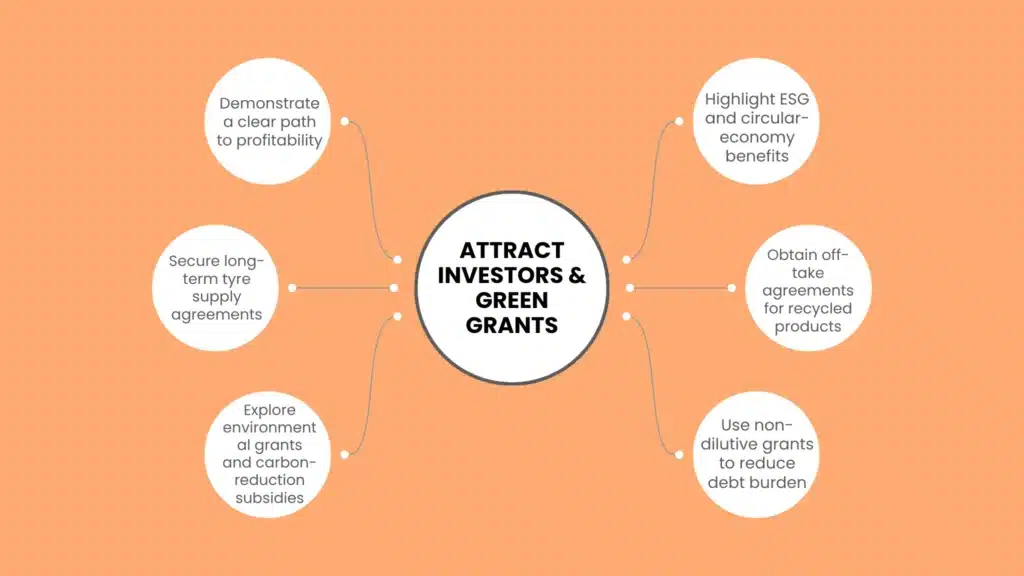
Without long-term supply contracts, tire recycling business investors will view your plant as an unnecessary risk. Show potential partners signed off-take agreements from buyers purchasing your crumb rubber, steel, or pyrolysis oil. Proving demand on both sides of your operation makes your pitch irresistible to impact capital pools.
Navigating Government Grants and Eco-Subsidies
Environmental agencies actively fund technologies that divert waste tyres away from landfills. Exploring regional tyre plant funding options should always start with national and local environmental departments.
Many government programs offer direct grant funding for carbon-reducing technologies and waste diversion infrastructure. Subsidies can also come in the form of tax credits, reduced utility rates, or subsidized land in eco-industrial parks.
Combining government grants with commercial tyre recycling plant financing lowers your blended cost of capital significantly. Work with specialized green consultants to navigate regulatory paperwork and secure max grant allocations.
For detailed insights into corporate structuring and startup execution, visiting reliablestartup.com can provide helpful frameworks.
Building a Bulletproof Financial Plan for Lenders
Banks do not lend money based on good intentions or environmental enthusiasm alone. They demand rigorous financial modeling, sensitivity analyses, and clear debt-service coverage ratios.
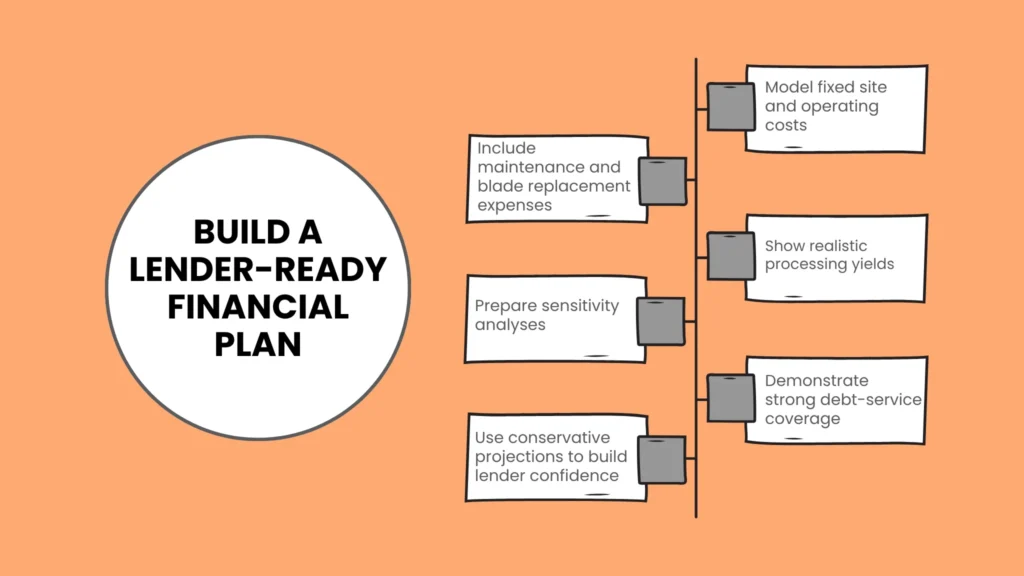
Your financial projections must detail fixed site costs, variable maintenance budgets, and realistic processing yields. Factor in wear-and-tear expenses like blade replacements, as shredding rubber exerts extreme force on machinery.
Underestimating maintenance costs is the fastest way to turn a profitable plant into a cash-strapped operation. Including conservative estimates builds trust with loan underwriters and speeds up formal approval processes.
Step-by-Step Funding Timeline
Securing capital for an industrial recycling facility is a multi-month journey requiring careful organization. Begin by establishing off-take commitments and securing site environmental permits before approaching primary lenders.
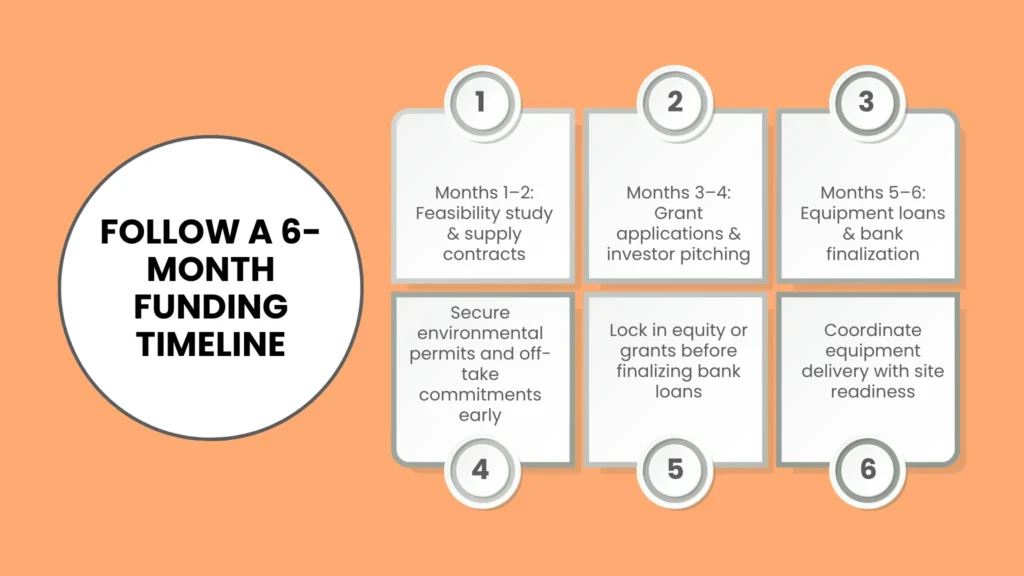
Once preliminary permits are confirmed, submit applications for equipment leases and regional environmental grants simultaneously.
Finalize bank loan documentation only after primary equity or grant commitments are fully locked into place.
Streamlining Operational Setup and Supplier Deals
Once financing arrives, executing equipment orders and facility build-outs demands tight project oversight. Delaying installation drains working capital reserves through ongoing facility lease payments and holding costs.
Negotiate vendor financing terms with machinery manufacturers to defer initial payments until installation is complete. align machinery delivery schedules directly with site electrical and civil engineering readiness.
A synchronized rollout preserves initial cash reserves for post-launch marketing and initial payroll. Additional business structuring templates and growth insights are available at reliablestartup to help manage operational milestones.
Securing Your Plant’s Financial Future
Securing tyre recycling plant financing requires a strategic mix of persistence, clear planning, and balanced funding options. By combining equipment loans, investor equity, and eco-grants, you build a resilient capital structure capable of supporting long-term growth. Focus on securing your supply contracts early, present transparent projections to lenders, and turn scrap rubber into a profitable green enterprise.
Frequently Asked Questions
How much capital is needed for tyre recycling plant financing?
Initial plant capital typically ranges from $500,000 for small processing lines up to $3,000,000+ for high-capacity crumb rubber or pyrolysis facilities.
What collateral is required for tyre recycling equipment loans?
In most cases, the recycling machinery itself serves as primary collateral, though lenders may require additional business asset pledges or personal guarantees.
Are there grants available for starting a tyre recycling plant?
Yes, many federal, state, and local environmental protection agencies offer green grants and carbon-reduction subsidies for waste diversion projects.
How do tipping fees impact tyre plant profitability and financing?
Tipping fees provide immediate, upfront revenue upon accepting waste tyres, giving lenders confidence in your baseline cash flow before product sales occur.