Is a Tire Recycling Business Profitable in 2026? A Complete Guide
Over 1.5 billion scrap tires are generated globally every year, creating a massive environmental challenge and a lucrative industrial opportunity. Auto shops, municipality waste sites, and commercial fleets generate millions of end-of-life tires that cannot simply be dumped into landfills due to strict environmental regulations. If you are evaluating new industrial opportunities in the circular economy, you need to know if entering this sector makes financial sense.
So, is tire recycling business profitable in 2026? Yes, absolutely. A tire recycling business is highly profitable because it operates on a dual revenue model, charging disposal fees to collect scrap tires while simultaneously selling high-value processed materials like crumb rubber, tire-derived fuel, and recovered steel.
Below is an operational breakdown of setup costs, profit margins, equipment requirements, and strategies to build a successful recycling enterprise.
Market Dynamics Driving Tire Recycling Profits
The global waste tire recycling market has expanded significantly. In 2026, the global tire recycling market is estimated at over 8 billion dollars, with forecasts indicating steady growth toward 16 billion dollars over the next decade.
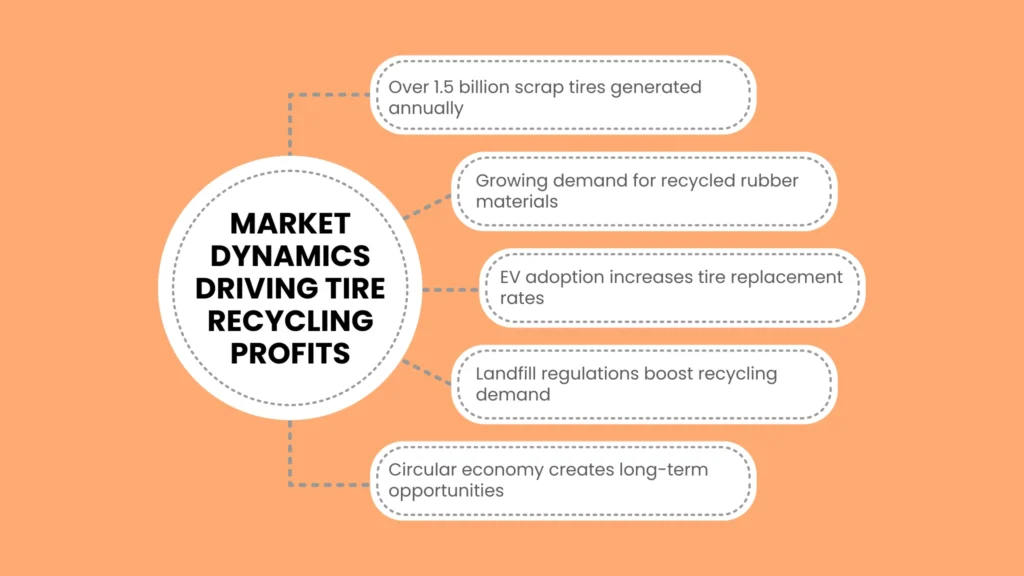
Several key factors are driving demand and protecting profit potential in this sector:
Natural Rubber Supply Deficits: Virgin natural rubber prices have remained high, forcing manufacturers in the automotive and construction industries to seek reliable secondary materials.
Electric Vehicle Growth: Electric vehicles weigh significantly more than traditional internal combustion cars and exert higher torque on tires. As a result, EV tires wear out roughly 20 percent faster, increasing the overall volume of scrap tires entering the supply chain.
Strict Landfill Mandates: State and federal government policies prohibit whole tires in municipal landfills, making certified recycling facilities essential for commercial compliance.
Is Tire Recycling Business Profitable Profitable in 2026?
When analyzing whether is tire recycling business profitable profitable across different business scales, the answer depends on your facility’s processing capability and route density.
Unlike traditional manufacturing businesses that must buy raw materials before turning a profit, tire recycling plants get paid on both sides of the supply chain.
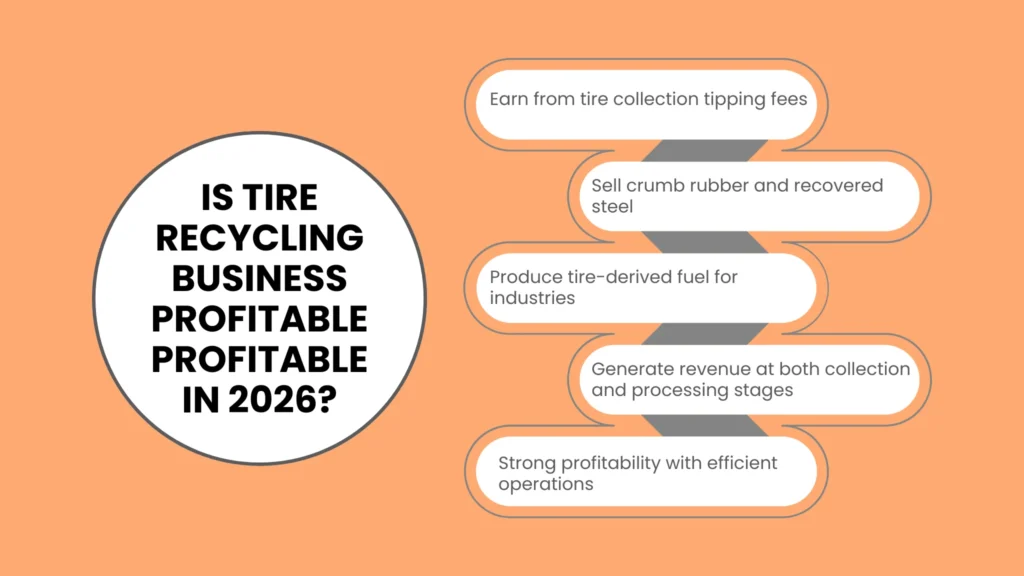
First, you collect tipping fees from auto repair shops, car dealerships, and municipal collection points. Tipping fees typically range from 1.50 dollars to 4.00 dollars per passenger tire collected.
Second, after shredding, granulating, or chemically processing the tires, you sell the outputs to industrial buyers. Crumb rubber is sold to turf fields and asphalt producers, steel wire is sold to scrap metals processors, and tire-derived fuel (TDF) is purchased by cement kilns and paper mills.
Because your primary raw input yields revenue during acquisition, well-managed processing plants enjoy strong gross profitability from day one of consistent operations.
Breakdown of Tire Recycling Business Profit Margin
Understanding your anticipated tire recycling business profit margin is critical for securing bank financing or investor capital.
On average, a baseline tire recycling business profitable profit margin falls between 18 percent and 32 percent net profit after factoring in equipment power, labor, transportation, and maintenance costs.
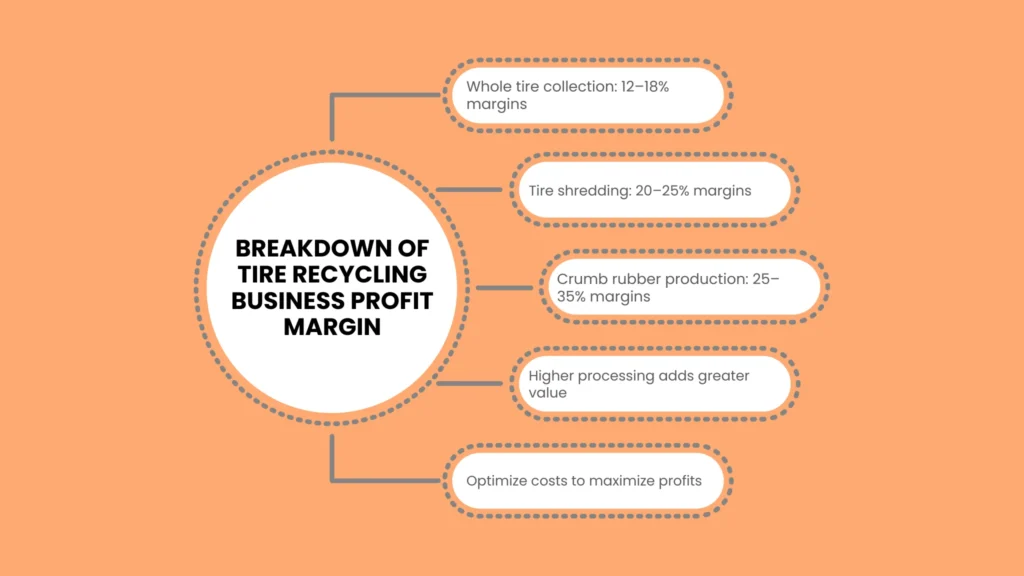
The exact tire recycling business profit margin varies based on how deeply you process the material:
Whole Tire Collection and Baling: Net margins hover around 12 to 18 percent. This low-complexity model relies strictly on route density and tipping fees, selling baled tires to secondary exporters or civil engineering projects.
Primary Shredding (Tire-Derived Fuel & Aggregate): Net margins increase to 20 to 25 percent. Shredding tires into 2-inch chips opens up high-volume industrial fuel contracts.
Crumb Rubber & Fine Powder Production: Net margins reach 25 to 35 percent. Fine rubber powder commands premium pricing in rubberized asphalt, molded matting, and athletic tracks.
Breakdown of Tire Recycling Business Profitable Cost
Your initial capital investment determines your operational capacity and target revenue. Estimating the tire recycling business profitable cost requires separating capital expenditure (machinery and facility setup) from ongoing operational expenditure (fuel, electricity, and blade replacement).
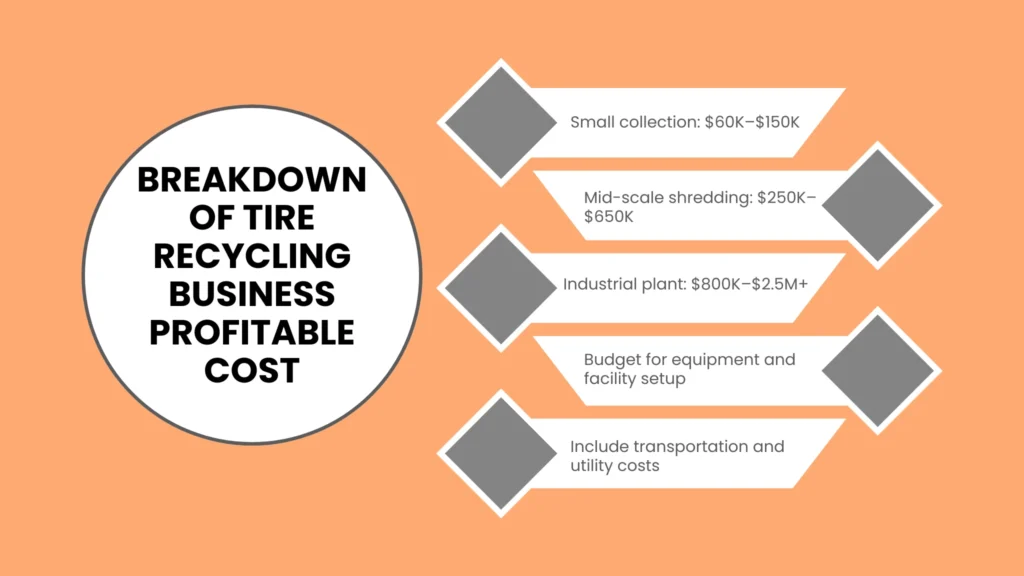
Based on industry benchmark data, here is a detailed breakdown of estimated startup costs across three primary operational models:
| Business Model Tier | Estimated Startup Cost | Processing Capacity | Primary Revenue Outputs | Expected Net Margin Range |
| Tier 1: Small Collection & Baling | $60,000 to $150,000 | 500 to 1,500 tires/day | Tipping fees, civil engineering bales | 12% to 18% |
| Tier 2: Mid-Scale Shredding & TDF | $250,000 to $650,000 | 2,000 to 5,000 tires/day | Tipping fees, 2-inch TDF chips, scrap steel | 20% to 26% |
| Tier 3: Industrial Crumb Rubber Plant | $800,000 to $2,500,000+ | 8,000+ tires/day | Fine rubber powder, clean steel, high-grade TDF | 28% to 35% |
Beyond machinery purchases, your initial setup budget must account for facility leases in zoned industrial areas, heavy-duty electrical drops, wheel loaders, and initial route collection box trucks.
Core Tire Recycling Business Profitable Requirements
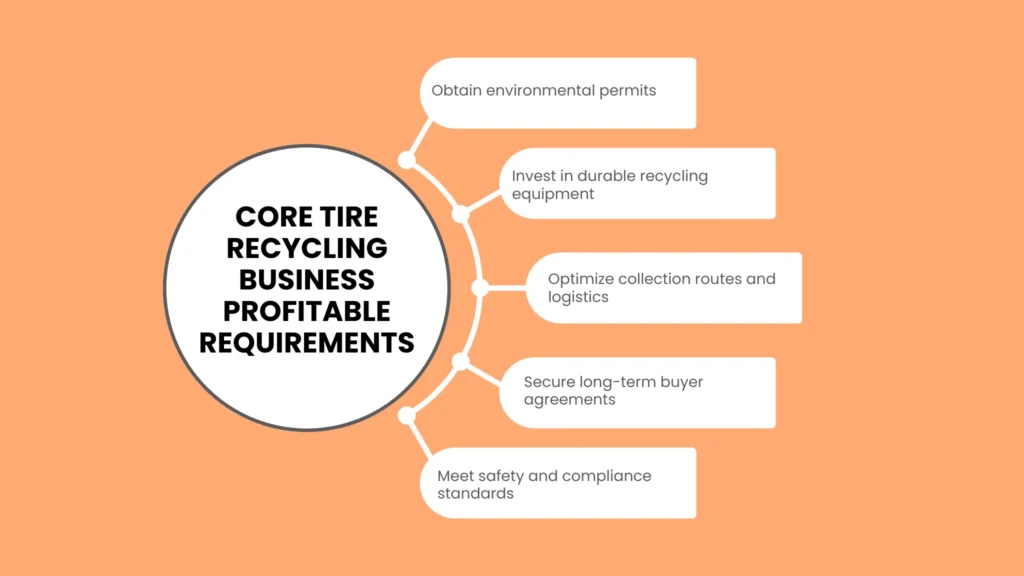
Before launching operations, you must clear several regulatory and operational hurdles. Meeting foundational tire recycling business profitable requirements prevents costly shutdown orders and ensures sustainable long-term processing.
Environmental Permits and Compliance
Waste tires represent a major fire hazard and vector for pests. You must obtain state-level environmental protection agency permits, waste management licenses, and local fire department clearances before storing large volumes of tires on site.
Industrial Machinery Reliability
Tire recycling equipment endures intense wear and tear. Tires contain high-tensile steel beads that quickly dull low-grade blades. Investing in heavy-duty primary shredders with replaceable dual-shaft knives is an absolute operational requirement.
Route Density and Logistics Optimization
Transportation costs can easily swallow your profits if your collection routes are inefficient. Maintaining dedicated box trucks equipped with hydraulic liftgates and structuring dense regional pick-up schedules protects your transport margins.
Long-Term Buyer Contracts
Never build a processing plant without pre-selling your end products. Secure off-take agreements with local asphalt manufacturers, cement plants, or rubber product fabricators to guarantee consistent cash flow for your processed output.
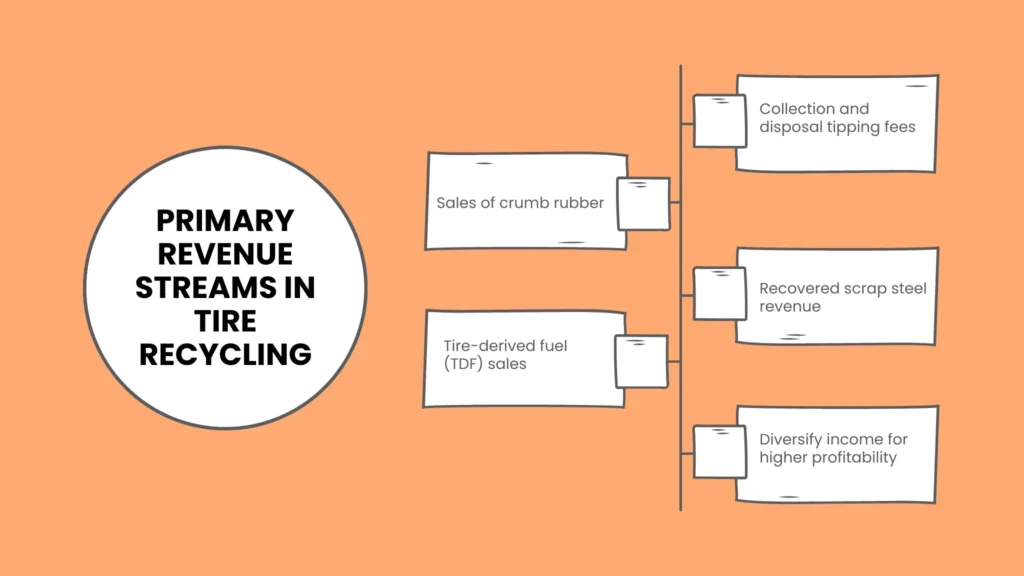
Primary Revenue Streams in Tire Recycling
To maximize profitability, successful operations diversify their revenue streams rather than relying on a single output buyer.
1. Collection and Tipping Fees
Auto repair shops, tire retail chains, and municipal drop-off centers pay recycling facilities to take used tires off their hands. Tipping fees generate upfront cash flow that covers basic route collection costs.
2. Crumb Rubber Sales
Crumb rubber is created by granulating tires and removing the internal steel mesh. It is sold by the ton to manufacturers of athletic turf infill, running tracks, playground surfaces, and rubberized asphalt concrete.
3. Scrap Steel Recovery
Modern radial tires contain significant amounts of high-tensile steel wire. Magnetic separation systems extract this steel during the shredding process, allowing facilities to sell clean scrap steel directly to metal recyclers.
4. Tire-Derived Fuel (TDF)
Shredded tire chips feature a higher BTU heat value than standard coal. Industrial facilities like paper mills, utility boilers, and cement kilns purchase TDF as a cost-effective, high-energy fuel alternative.
Key Steps to Start a Profitable Operation
If you are ready to enter the recycling market, follow this proven sequential framework:
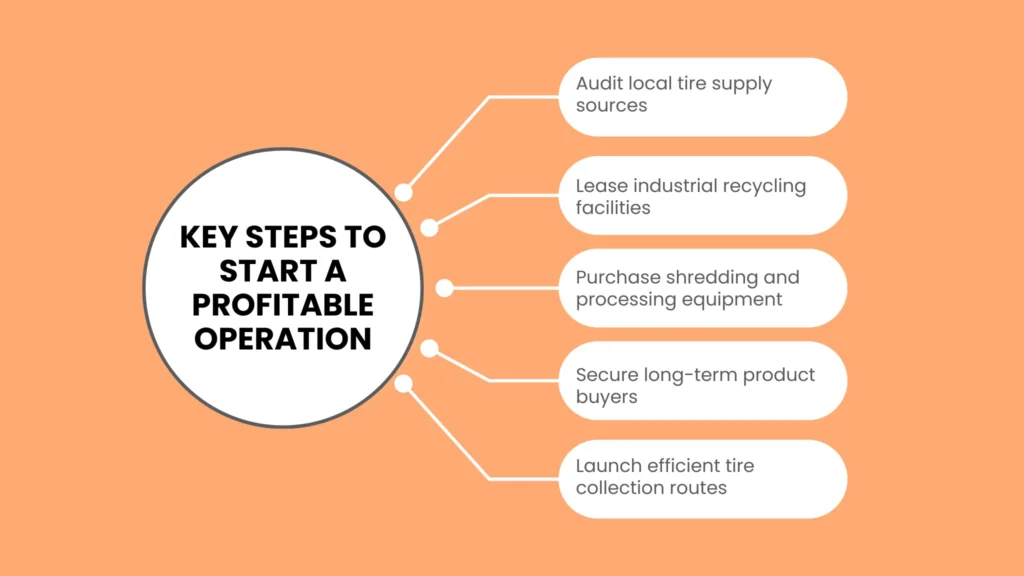
Conduct a Local Supply Audit: Survey local tire dealers, auto mechanics, and commercial fleets to estimate daily scrap tire availability within a 50-mile radius.
Secure Industrial Real Estate: Lease a facility zoned for heavy industrial recycling with adequate outdoor storage yards and high-voltage power connections.
Acquire Primary Processing Equipment: Purchase industrial shredders, granulators, and magnetic separators suited to your target product output.
Lock In Off-Take Agreements: Establish long-term sales contracts with crumb rubber buyers, steel scrap yards, and industrial fuel users.
Launch Collection Routes: Deploy dedicated collection vehicles and branded drop-off containers to nearby auto service centers to lock in recurring tipping fee revenue.
Summary and Next Steps
Building an industrial tire recycling business offers a rare combination of environmental impact and robust financial returns. By collecting tipping fees on the front end and selling valuable processed materials on the back end, clean operations maintain excellent resilience against broader economic downturns.
When you are ready to build, launch, and scale a sustainable industrial enterprise, having clear operational frameworks makes all the difference. For more in-depth blueprints on business models, operational strategies, and startup growth frameworks, explore our practical guides over at reliablestartup.
Frequently Asked Questions
How many tires do I need to collect daily to break even?
For a small shredding facility, breaking even typically requires processing between 1,000 and 1,500 passenger tires per day. Exact breakeven numbers depend on your facility lease rates, local tipping fee averages, and equipment financing terms.
What is the most profitable end product from recycled tires?
Fine-mesh crumb rubber and micro-powders yield the highest price per ton. However, producing fine powder requires multi-stage granulation equipment and higher electricity consumption compared to basic tire-derived fuel chips.
Do I need specialized insurance to run a tire recycling plant?
Yes, recycling facilities require comprehensive commercial liability insurance, environmental pollution coverage, and specific fire insurance policies. Insurance providers require strict indoor and outdoor storage limits to mitigate tire fire risks.
Is pyrolysis better than mechanical shredding for tire recycling?
Pyrolysis breaks down tires thermally in an oxygen-free reactor to produce fuel oil, recovered carbon black, and gas. Pyrolysis offers high profit potential, but mechanical shredding requires far lower initial capital investment and involves simpler regulatory permitting.