Used Tyre Export Business Guide: How to Star
Key Takeaways
High demand in developing markets drives strong profits
Compliance with local and international regulations is mandatory
Quality grading builds long-term buyer trust
Sourcing reliable stock ensures steady business growth
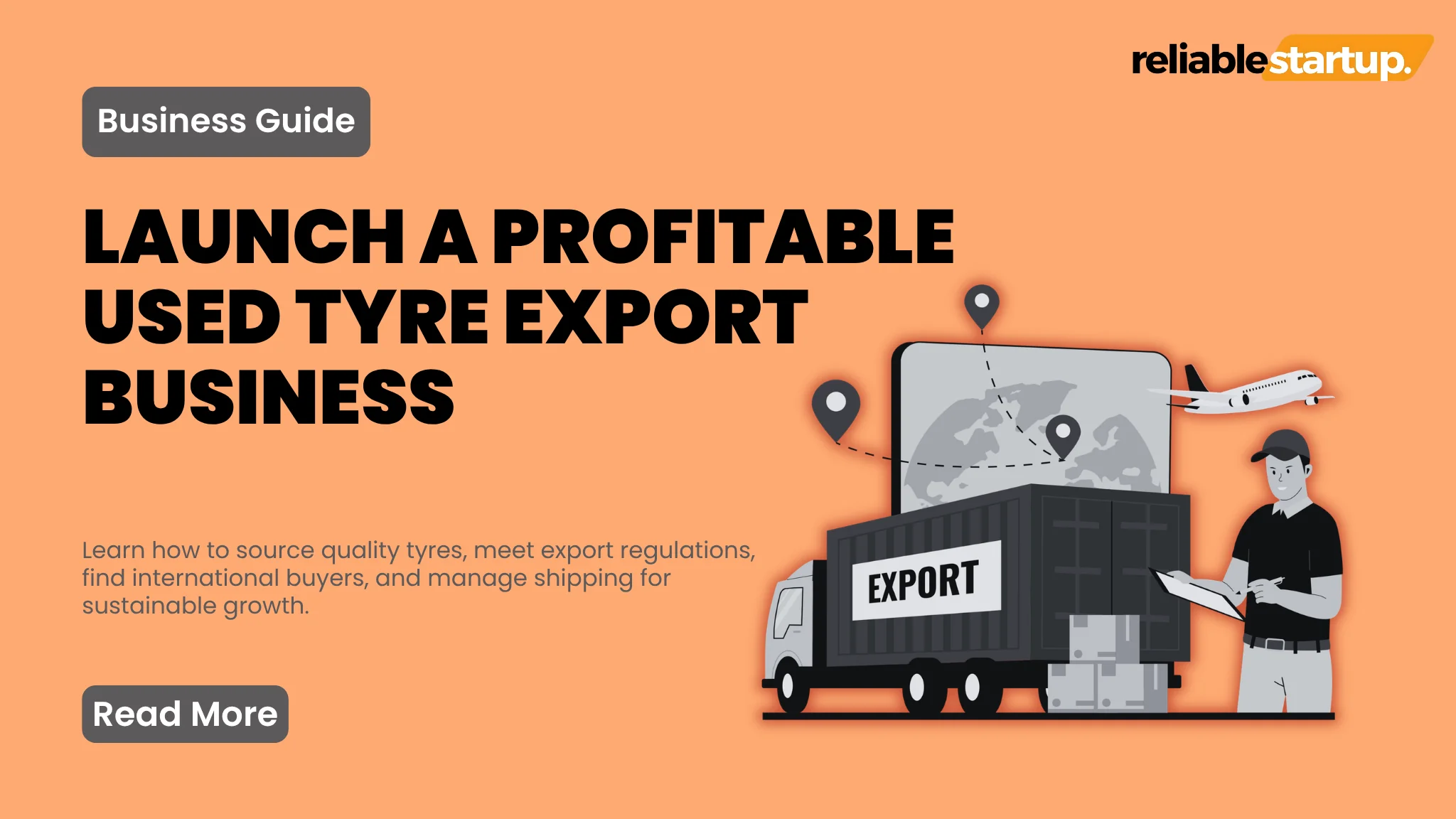
Starting a used tyre export business might sound complex at first. But once you break down the steps, it becomes a very practical venture. The global demand for affordable tread continues to rise, especially in regions where new rubber is too expensive for everyday drivers. If you want to jump into the international tyre trade, this guide walks you through sourcing, compliance, and shipping without any fluff. At reliablestartup.com, we break down these business models so you can build a stable stream of revenue from day one.
AI Overview
The used tyre export business involves sourcing discarded or part-worn tires, inspecting them for safety, and shipping them to overseas buyers. Success requires understanding tyre export regulations, securing steady supplies, and managing international freight efficiently. It offers high profitability for entrepreneurs who maintain strict quality standards and comply with international trading laws.
Why Start a Used Tyre Export Business?
Every single day, thousands of vehicles replace tires that still have plenty of life left in them. In many developed nations, regulations require early replacements for safety during extreme weather like snow or heavy rain.
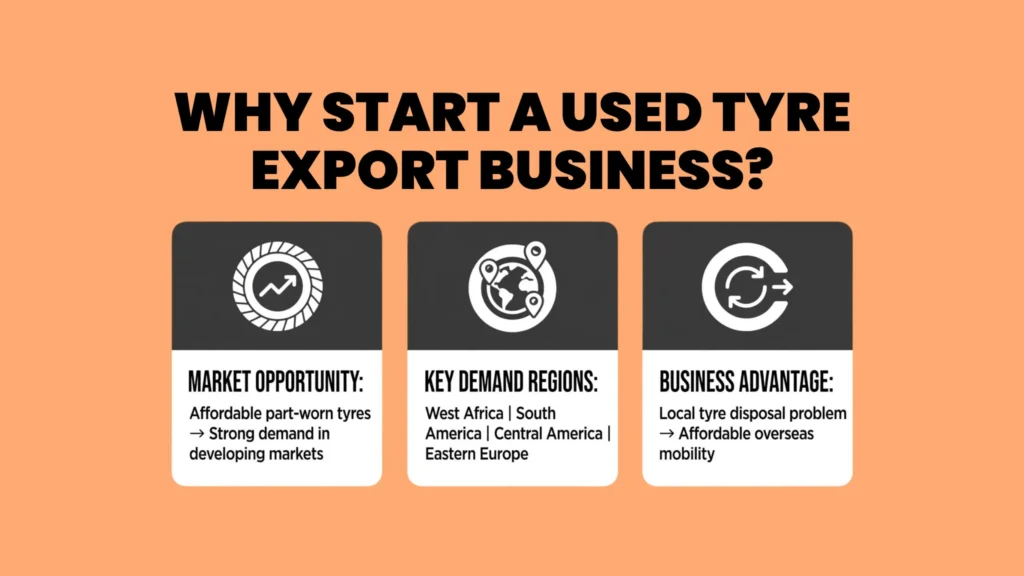
These part-worn casings are perfect for roads in developing countries. Drivers in those regions look for cost-effective alternatives to costly new stock. This gap creates a huge opportunity for anyone looking to enter the used tyre export business. You solve a disposal problem locally while providing affordable mobility overseas.
Understanding the Market Demand
Before shipping your first container, you need to know where the demand lies. Most buyers operating in the international tyre trade want specific sizes that fit popular commercial or passenger vehicles. Target regions often include parts of West Africa, South America, Central America, and Eastern Europe. Vehicle owners in these areas rely heavily on imported rubber to keep daily transportation affordable.
Demand fluctuates based on seasonal driving patterns and local economic conditions. Keeping an eye on global shipping routes helps you price your stock competitively.
Legal Framework and Export Regulations
You cannot simply load up a container and ship it overseas. Navigating tyre export regulations is critical to avoid heavy fines or seized cargo at foreign customs ports.
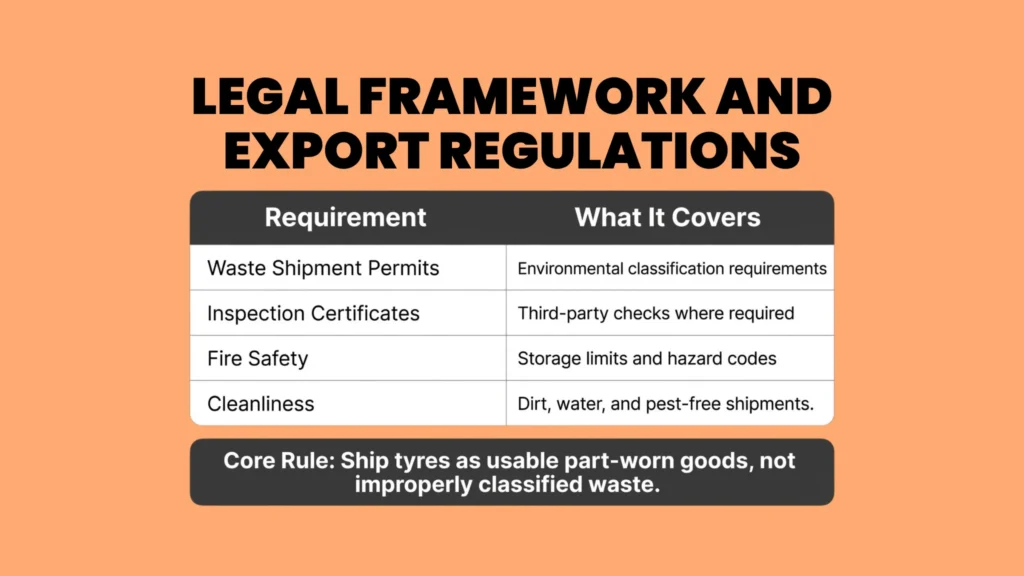
Many countries classify part-worn rubber under environmental or waste management laws. You must ensure your cargo is classified as usable goods rather than hazardous waste. Countries like the UK, United States, and Germany have strict rules regarding how casings are graded, stored, and documented before leaving the port.
Key Regulations to Keep in Mind
Waste shipment permits: Required if tires fall under specific environmental categories in your jurisdiction.
Mandatory inspection certificates: Some importing nations mandate third-party physical inspections before departure.
Fire safety standards: Storing large volumes requires adherence to local fire hazard codes and facility limits.
Cleanliness requirements: Tires must be free of dirt, water, and pests to clear agricultural customs inspections.
Sourcing Your Inventory
Finding a steady supply of quality rubber is the lifeblood of your operation. Without reliable suppliers, your containers will take too long to fill, draining your capital. You can partner with local auto repair shops, fleet operators, salvage yards, and recycling centers. Many of these businesses are eager to clear space and will sell inventory for low prices.
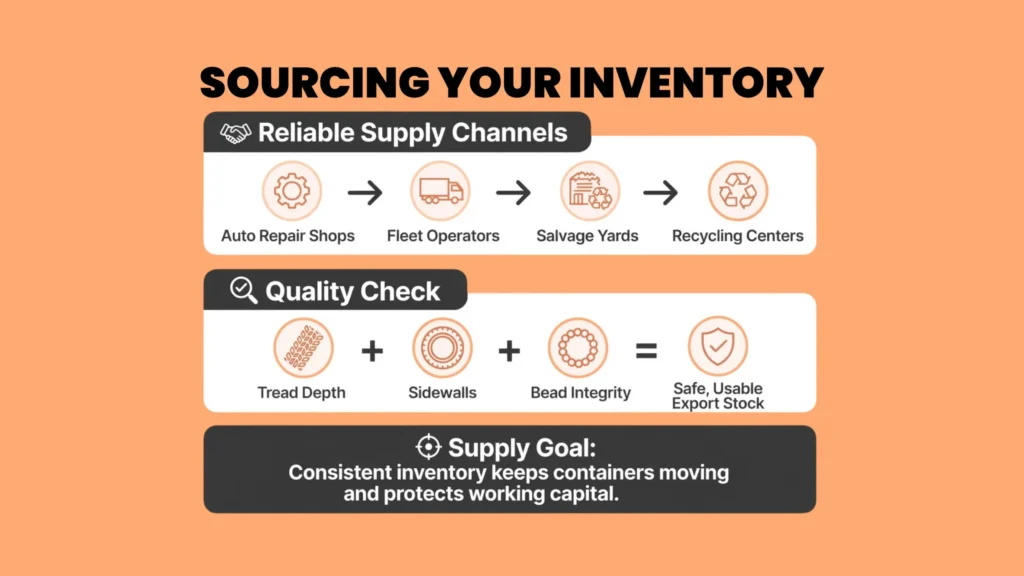
Always inspect casings carefully. Checking tread depth, sidewalls, and bead integrity ensures you only export safe, usable products to your international clients. If you need structured templates to pitch local suppliers, reliablestartup offers easy-to-use business guides designed for early-stage founders.
Grading and Preparing Tires for Export
Not every casing you collect will be suitable for overseas shipment. Establishing a strict quality control process sets top exporters apart from low-quality brokers. Most international buyers categorize inventory by remaining tread depth. Grades generally range from Grade A (5mm+ remaining) to Grade C (around 2mm to 3mm).
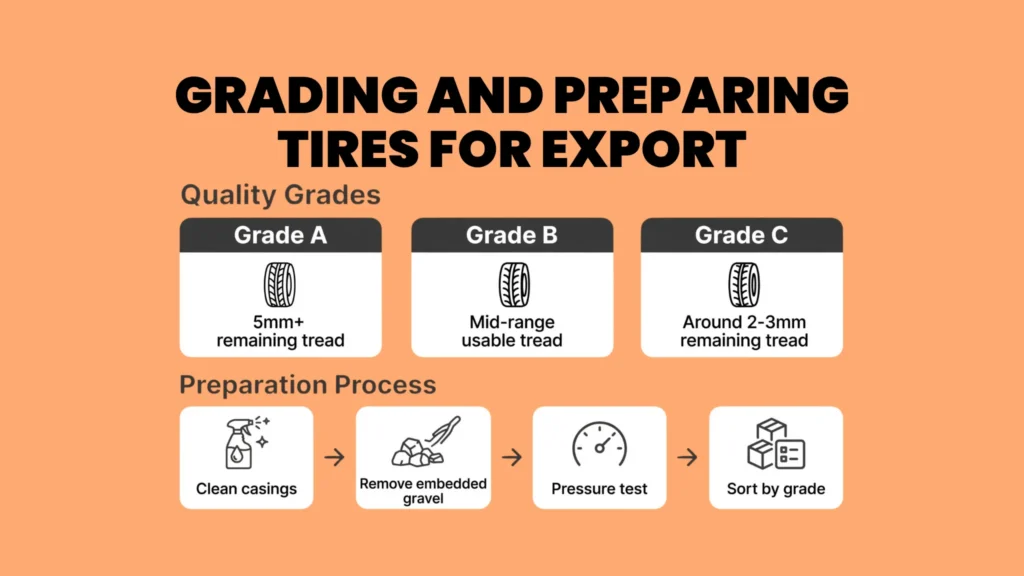
Proper cleaning and pressure testing are vital steps. Removing embedded gravel and washing off mud makes your stock look professional and pass foreign port health checks easily.
Tripling and Baling Techniques
Shipping space is expensive. To maximize profitability in the used tyre export business, exporters often use specialized equipment to fit more units into a standard shipping container.
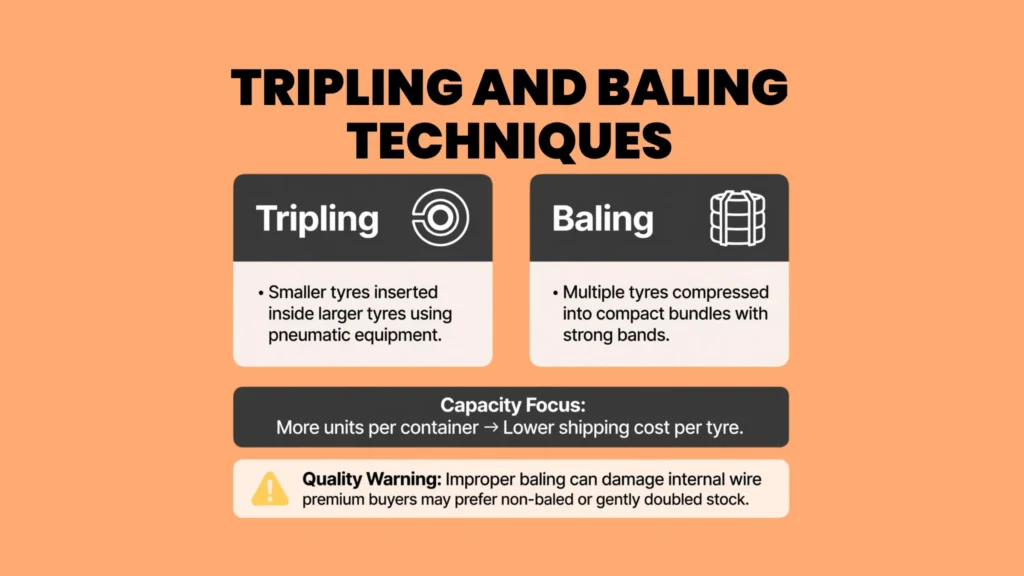
Tripling involves using a pneumatic machine to insert smaller tires inside larger ones. Baling compresses multiple units into tight bundles held together by strong bands. While baling squeezes more units into a container, it can damage internal wire belts if done improperly. Many premium buyers prefer non-baled or gently doubled inventory to protect casing integrity.
International Shipping and Logistics
Managing freight logistics requires clear communication with freight forwarders who understand the international tyre trade. You will typically book standard 40-foot High Cube containers for maximum volume.
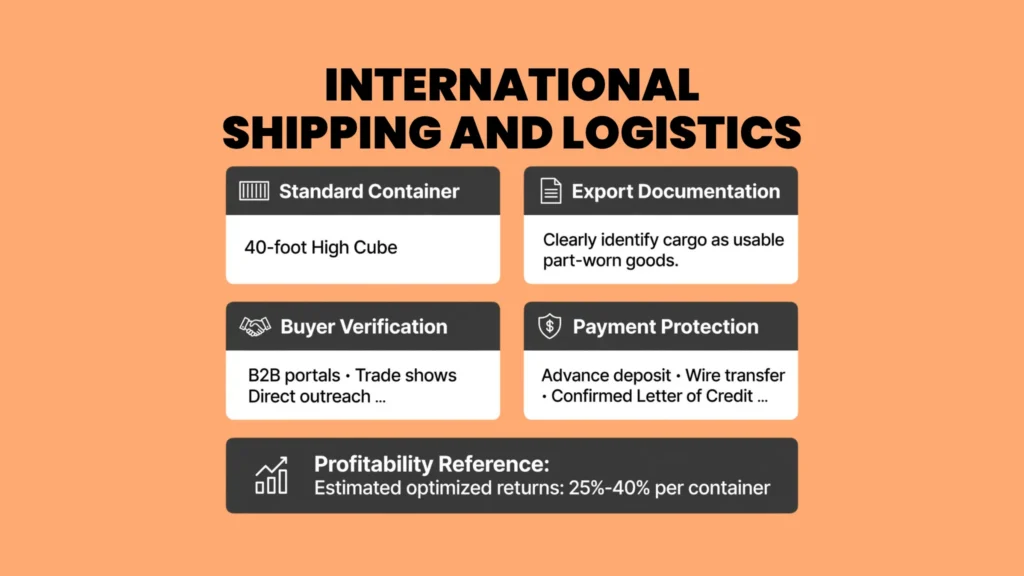
Ensure your shipping paperwork clearly states that the items are usable part-worn goods. Incomplete export documentation often leads to costly storage fees at destination ports. Building strong relationships with shipping lines helps you secure reliable container space even during peak freight seasons.
Finding and Vetting International Buyers
Finding buyers requires persistence and networking. You can connect with overseas importers through B2B trading portals, industry trade shows, and direct outreach.
Always verify buyer credentials before sending cargo. Requesting upfront deposits or using secure payment methods like Letters of Credit protects your business against unpaid shipments.
Clear communication regarding product grades, photos, and video proof of quality builds trust and leads to repeat orders over time.
Financial Planning and Profit Margins
Starting a used tyre export business requires financial planning for initial capital for inventory acquisition, storage space, equipment, and ocean freight costs.
Expenses generally include warehouse lease fees, tripling machines, loading labor, customs brokerage, and maritime insurance.
Margin calculations must account for potential freight rate changes and customs duties. Profitability per container depends heavily on how efficiently you pack your stock.
Is Exporting Used Tires Profitable?
Generally, profit margins in the used tyre export business remain strong due to low acquisition costs for raw inventory. Estimated returns range from 25% to 40% per container when operations are optimized.
At reliablestartup.com, we often point out that operational efficiency is what turns a modest trade business into a highly scalable company.
Common Challenges in the Industry
Like any international commerce business, exporting used tires comes with unique operational hurdles that require planning.
Fluctuating ocean shipping rates can impact your net margins unexpectedly. Having a buffer in your pricing model helps absorb sudden rate spikes.
Navigating changing tyre export regulations in target countries requires staying updated on trade policy updates and environmental laws.
Overcoming Sourcing Shortages
During peak seasons, securing enough Grade A inventory locally can become difficult due to high competition among scrap collectors.
Diversifying your sourcing channels to include regional auction houses and national fleet management firms ensures a steady supply chain year-round.
Maintaining strong relationships with local shop owners prevents competitors from outbidding you on prime part-worn casings.
Conclusion
Launching a used tyre export business offers a proven pathway to building an international trading enterprise. By mastering tyre export regulations, maintaining strict grading standards, and building reliable supplier networks, you can establish a scalable operation in the international tyre trade. Focus on quality, protect your margins, and stay consistent with your market research as you grow your export capacity.
Frequently Asked Questions
Do I need a special license to start a used tyre export business?
In most jurisdictions, general export licenses and local environmental storage permits are required based on local laws.
How many tires fit inside a standard 40ft container?
Using tripling or doubling methods, you can generally fit between 1,500 to 2,800 units depending on tyre sizes.
What is the best way to receive payment from foreign buyers?
Using wire transfers with advance deposits or confirmed Letters of Credit provides the safest transaction security for exporters.
How do tyre export regulations impact my shipping timeline?
Mandatory port inspections or environmental certification processing can add roughly one to two weeks to your dispatch schedule.