Food Packaging Options for Cookie Businesses: Best Packaging Ideas for Selling and Shipping Cookies
Selling freshly baked cookies requires far more than an exceptional recipe and quality ingredients. Your packaging protects delicate treats from crumbling, preserves moisture levels, and serves as your brand’s primary visual handshake with buyers. Consequently, selecting the right food packaging options cookiesforlove business operations need is essential for scaling your commercial sales.
Whether you sell at local farmer’s markets, ship nationwide through e-commerce, or supply wholesale coffee shop accounts, poor packaging destroys customer trust. In this detailed guide, you will learn creative cookie packaging ideas, explore practical bakery packaging ideas, review safe packaging for homemade cookies, and master durable cookie shipping packaging setups that protect your profit margins.
Executive Summary: Packaging as a Growth Engine
Packaging does more than simply hold product; it actively drives sales, protects profit margins, and builds brand loyalty. When managing a growing cookie brand, your choice of materials directly impacts shelf life, shipping durability, and customer reviews.
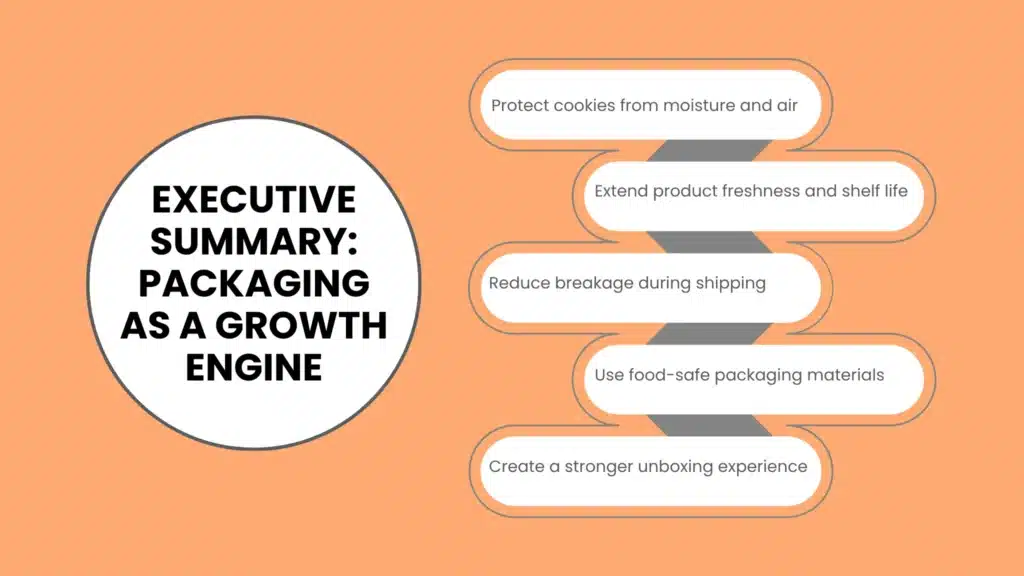
Investing in specialized bakery packaging delivers four main benefits:
Extended Product Freshness: Heat-sealed barrier bags block oxygen and moisture, keeping cookies soft or crispy as intended.
Reduced Shipping Damage: Sturdy boxes and proper padding prevent cookies from cracking during postal transit.
Higher Perceived Value: Premium custom boxes allow you to charge higher prices for gift sets and corporate orders.
Regulatory Compliance: Food-safe materials keep your business fully compliant with local health department rules.
Choosing appropriate packaging materials creates a reliable foundation for long-term brand success and steady business growth.
The Science of Cookie Freshness and Material Choice
Cookies degrade quickly when exposed to air, light, and ambient humidity. Crispy cookies absorb environmental moisture and turn soggy, while soft cookies lose internal moisture and harden like rocks. Therefore, your primary packaging layer must create a protective barrier that seals in quality.
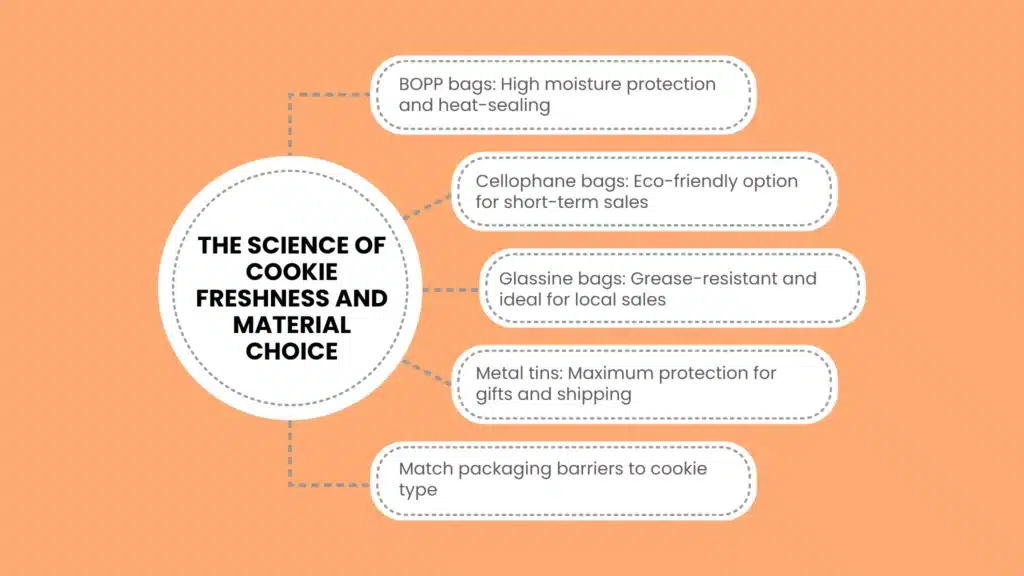
1. Biaxially Oriented Polypropylene (BOPP) Bags
Clear BOPP bags offer outstanding moisture barriers and high visual clarity. They heat-seal effortlessly, making them ideal for individual cookie sales or multi-packs. Furthermore, heat-sealing locks in baked aromas and extends shelf life by several weeks without adding artificial preservatives.
2. Glassine and Cellophane Bags
If your brand prioritizes eco-friendly materials, glassine paper and biodegradable cellophane offer great alternatives. Glassine naturally resists grease, making it perfect for buttery cookies sold at local pop-ups. However, glassine provides lower moisture protection than poly bags, so use it primarily for quick direct counter sales.
3. Food-Grade Metal Tins
Metal tins offer the highest level of physical protection and air tightness available. Consequently, they serve as the industry gold standard for mail-order shipping, holiday gift sets, and premium corporate accounts.
Technical Comparison of Primary Barrier Materials
Selecting the correct plastic or paper polymer determines how long your cookies remain edible on retail shelves. Below is a breakdown of common barrier films used in commercial bakery operations.
Understanding these material properties helps you avoid purchasing cheap bags that look great but allow cookies to go stale within forty-eight hours.
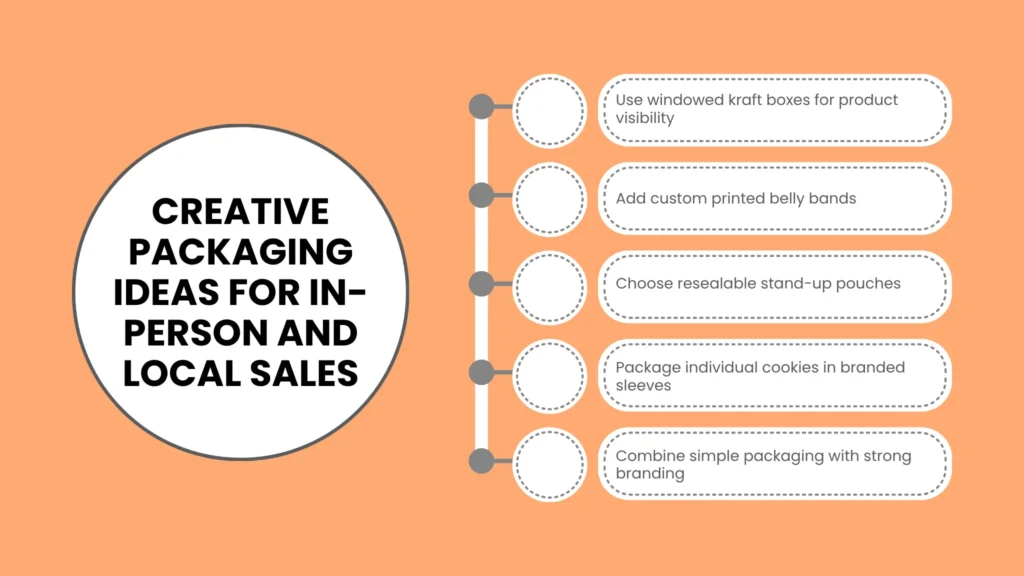
Creative Packaging Ideas for In-Person and Local Sales
When selling at farmers markets, retail counters, or pop-up events, your visual presentation drives impulse buys. Visual appeal must pair with convenience for customers on the move.
Popular Bakery Packaging Ideas
Windowed Kraft Boxes: Classic brown kraft paper boxes featuring clear plant-based windows highlight your products naturally while keeping dust away.
Custom Printed Belly Bands: Instead of buying expensive custom-printed boxes, wrap plain kraft boxes with branded paper sleeves to save money.
Stand-Up Resealable Pouches: Matte black, white, or kraft pouches with clear windows and zipper seals give your cookies a modern, retail-ready look.
Individual Cookie Sleeves: Single-serve heat-sealed bags featuring custom logo stickers work great for coffee shop wholesale orders.
Designing for Customer Unboxing Experiences
Online retail relies heavily on emotional connection. When a customer receives a package in the mail, opening the box serves as their physical interaction with your bakery brand.
Adding custom tissue paper, branded stickers, and a handwritten thank-you note transforms a basic cookie order into a memorable gift experience. Furthermore, including a discount coupon for their next purchase encourages repeat orders and increases customer lifetime value.
Master Class: Shipping Cookies Without Breakage
Mail-order cookie shipping requires robust physical protection. Postal carriers handle packages roughly, so your inner packaging must absorb movement while outer boxes withstand heavy impacts.

Step-by-Step Cookie Shipping Method
Heat-Seal Individual Cookies: Wrap cookies individually or back-to-back in pairs using heat-sealed bags. This prevents cookies from rubbing against each other during transit.
Snug Cushioning: Place wrapped cookies inside a sturdy inner box or tin. Fill empty space with food-safe crinkle paper so items cannot shift when shaken.
Double-Boxing for Fragile Treats: Place your inner gift box inside a larger corrugated shipping box. Leave at least one inch of space on all sides filled with bubble wrap or packing peanuts.
Temperature Control for Chocolate: When shipping in warmer months, include cold ice packs and insulated foil bubble mailers to prevent chocolate chips or icing from melting.
Navigating Seasonal Shipping Weather Challenges
Shipping baked goods across varying climate zones introduces humidity and temperature risks. Warm weather melts icings, while freezing weather alters cookie textures.
Adjusting your transit packaging based on seasonal weather patterns ensures your product arrives looking exactly as it did when it left your oven.
Cost-Effective Options for Homemade Cookie Businesses
Starting a cottage food business means managing your cash flow carefully. Fortunately, you can create professional packaging on a modest budget without sacrificing product safety.
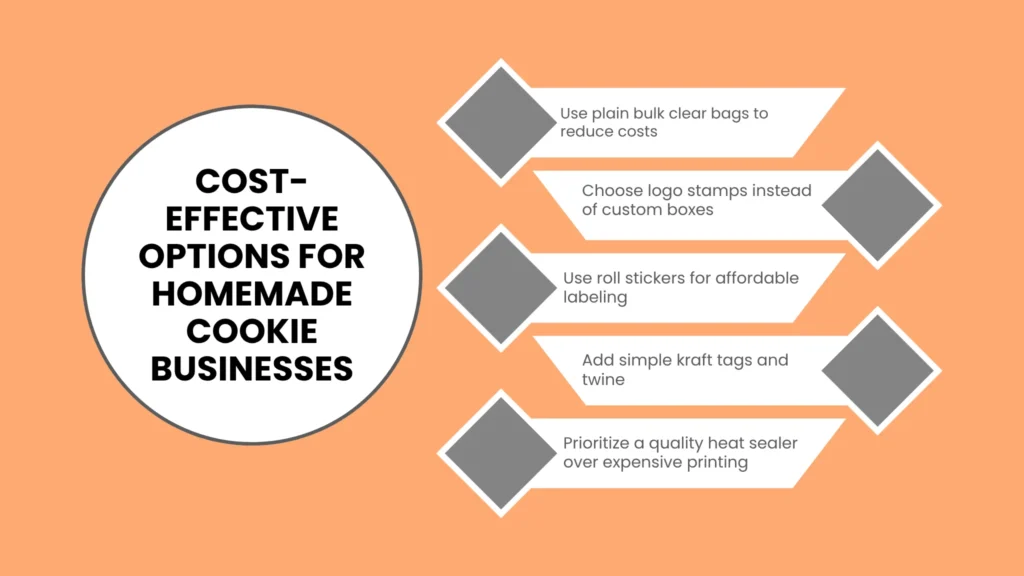
| Packaging Component | Budget Option | Premium Upgrade | Cost Savings Impact |
| Primary Bag | Plain Bulk Clear Bags | Custom Foil Pouches | Save 60% per unit |
| Branding | Custom Logo Rubber Stamp | Hot-Foil Stamping | Save 80% upfront |
| Labeling | Roll Stickers on Sheets | Direct Box Printing | Save 50% on low volumes |
| Box Accents | Twine & Kraft Tag | Custom Satin Ribbon | Save 40% on accents |
Directing your early budget toward high-quality heat sealers rather than pre-printed custom boxes yields better freshness and protects your initial profit margins.
Sustainable and Eco-Friendly Packaging Choices
Modern consumers care deeply about environmental impact. Choosing recyclable or compostable materials positions your cookie brand as an eco-conscious business while appealing to younger demographics.
Using compostable bags made from cornstarch polylactic acid (PLA) allows you to market eco-friendly practices. Additionally, pairing PLA bags with unbleached kraft paper boxes eliminates petroleum-based plastics from your entire supply chain.
Wholesale Packaging Considerations for Retail Distribution
If you plan to sell your cookies through grocery stores, coffee shops, or specialty food boutiques, your packaging needs to meet retail standards.
Retail buyers demand tamper-evident seals to prevent shoplifting and protect consumer safety. Furthermore, adding clear hang holes or sturdy flat bottoms allows store managers to display your items easily on pegs or shelf displays. Once you’re packaging for retail shelves, finding wholesale suppliers for bulk boxes, bags, and labels becomes essential to keep unit costs manageable.
Labeling and Health Department Compliance
Food safety rules require clear product labeling on all packaged baked goods. Meeting local cottage food laws and FDA guidelines protects your business from legal issues. Alongside labeling rules, make sure you’ve secured the correct food safety certifications required to legally sell baked goods from a home or commercial kitchen.
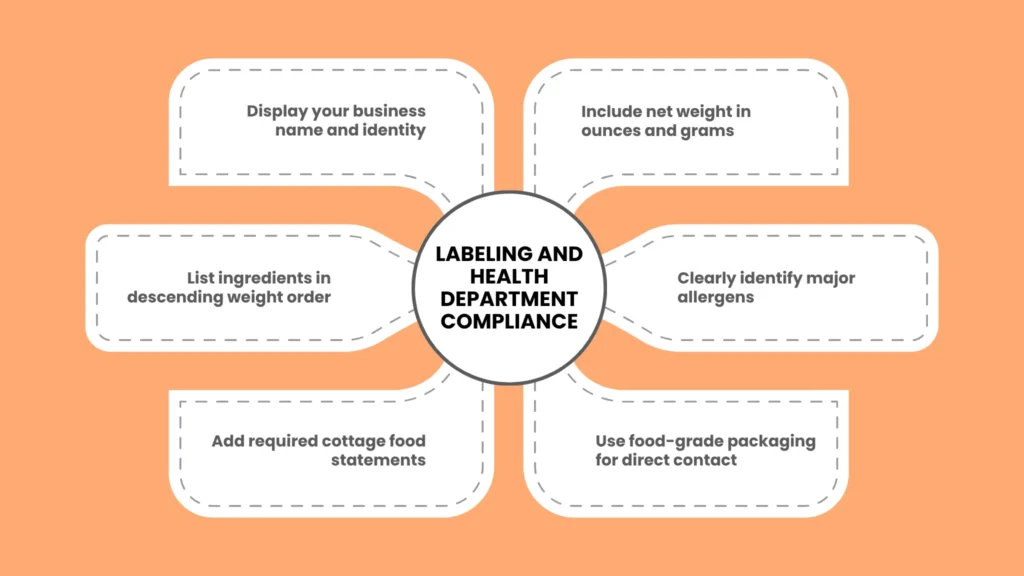
Required Label Elements
Business Identity: Your registered business name, logo, and physical contact address.
Net Weight: Statement of net weight listed in both ounces and grams.
Ingredient List: Complete ingredients listed in descending order by weight.
Allergen Warnings: Bold disclosures for major allergens (milk, eggs, wheat, peanuts, tree nuts, soy, sesame).
Cottage Food Statement: Required local state disclaimers if operating from a home kitchen.
Financial Analysis: Packaging Cost Projections
Managing unit packaging costs ensures your gross profit margin stays healthy as production scales up.
Target keeping your total packaging expense between 8% and 12% of the retail selling price. This balance protects profit margins while delivering an excellent customer experience.
Final Thoughts on Elevating Your Cookie Brand
Choosing the right food packaging options cookiesforlove business operations require transforms ordinary bakes into premium, giftable products. By pairing protective heat-sealed bags with creative visual accents and rigid shipping boxes, you ensure every customer enjoys fresh, unbroken treats.
Take action today: audit your current packaging costs, test sample materials, and elevate your unboxing experience. To explore more operational guidebooks, bakery templates, and business growth tools, visit reliablestartup.
Frequently Asked Questions
What is the best packaging material to keep cookies fresh?
Heat-sealed Biaxially Oriented Polypropylene (BOPP) bags and food-grade metal tins offer the best moisture barriers for long-term freshness.
How do I prevent cookies from breaking during shipping?
Heat-seal cookies individually, pack them tightly inside a rigid inner container using crinkle paper, and double-box with outer padding to eliminate movement.
How much should I spend on cookie packaging?
Aim to keep total packaging costs between 8% and 12% of your retail product selling price to maintain healthy profit margins.
Are clear poly bags safe for direct food contact?
Yes, provided you purchase bags specifically labeled as food-grade, FDA-compliant, and BPA-free.
What equipment do I need to heat-seal cookie bags?
A basic 8-inch or 12-inch impulse heat sealer works best for small businesses. These affordable desktop devices melt bag edges together securely in seconds.