How to Start a Post Construction Cleaning Business
Have you ever walked past a freshly built modern home or a newly renovated commercial office building and wondered who turns that dusty construction zone into a spotless showcase? General contractors focus on build quality, not polishing windows or clearing away drywall grit. That is where high-ticket construction cleanup services come into play.
Starting a post construction cleaning business is one of the most profitable service models in the commercial field today. While regular maid services focus on light dust and organized living, post-renovation crews handle heavy debris, drywall dust, paint overspray, and adhesive residue.
If you want to step into a high-demand service market, you are in the right place. We will walk you through setting up shop, buying the right equipment, land contractor deals, and pricing jobs accurately.
Key Takeaways
Heavy-duty equipment like HEPA vacuums and floor scrubbers are non-negotiable for silica dust control.
Bidding relies on square footage or job complexity, taking post-build safety codes into account.
You need specialized commercial liability insurance before stepping foot on any job site.
Post-construction jobs consist of three phases: rough clean, main clean, and touch-up touch-ups.
AI Overview:
Starting a post construction cleaning business involves securing proper liability coverage, picking heavy-duty HEPA equipment, and setting up three-stage workflows (rough, main, touch-up). Unlike basic residential work, construction cleanup services target general contractors and home renovators for high-margin jobs. Success comes down to setting realistic square-foot rates and maintaining strict site safety.
Why Launch a Post Construction Business?
Building sites are messy. Once construction crews pack up their tools, they leave behind piles of sawdust, sticky protective tape, thick plaster dust, and stray nails.
Builders cannot hand over the keys to a building owner in that state. That is why professional cleaning after renovation is an essential stage of every construction project budget.
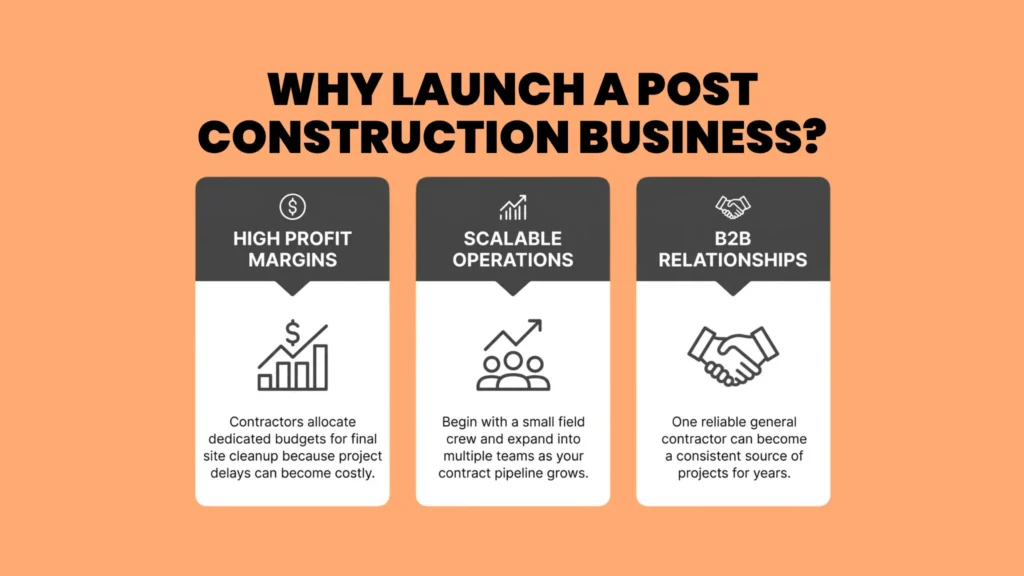
High Profit Margins
Commercial construction projects usually have dedicated budgets for final site cleanups. Contractors pay top dollar to reliable teams because delays cost them penalty fees from clients.
Scalable Operations
You can start out doing hands-on field work with a small crew. As your contract pipeline grows, you can easily scale into managing multiple crews across commercial sites.
B2B Relationships
Unlike standard home cleaning where you market to individual homeowners continuously, one good general contractor can supply you with continuous work for years.
Step 1: Legal Setup, Permits, and Safety Compliance
You cannot just show up to an active job site with a bucket and a mop. Contractors enforce strict site entry rules.
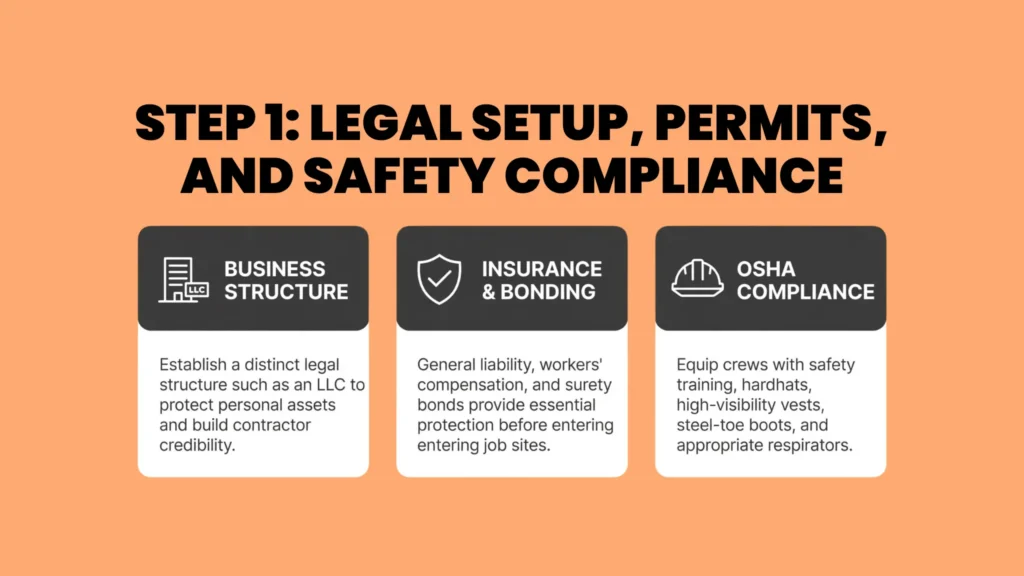
Registering Your Business
To register your business, set up a distinct legal structure such as an LLC (Limited Liability Corporation). This protects your personal savings and establishes credibility with major construction firms. When organizing your back-office paperwork, resources at rekiablestartup can help you structure your operation cleanly.
Insurance and Bonding
General contractors will demand proof of coverage before letting you sign a contract:
General Liability Insurance: Protects against property damage (like scratching expensive custom glass or burning hardwood finishes).
Workers’ Compensation: Mandatory in most regions to cover crew injury on the job.
Surety Bonds: Protects clients against theft or uncompleted work.
OSHA Compliance
Safety standards matter heavily on active construction sites. Ensure your staff has basic safety training, hard hats, high-visibility vests, steel-toe boots, and appropriate respirator masks for fine dust particles.
Step 2: Essential Equipment and Supplies List
Standard household supplies will break down within hours on a construction job site. You need commercial grade machinery designed for heavy dust and industrial waste.
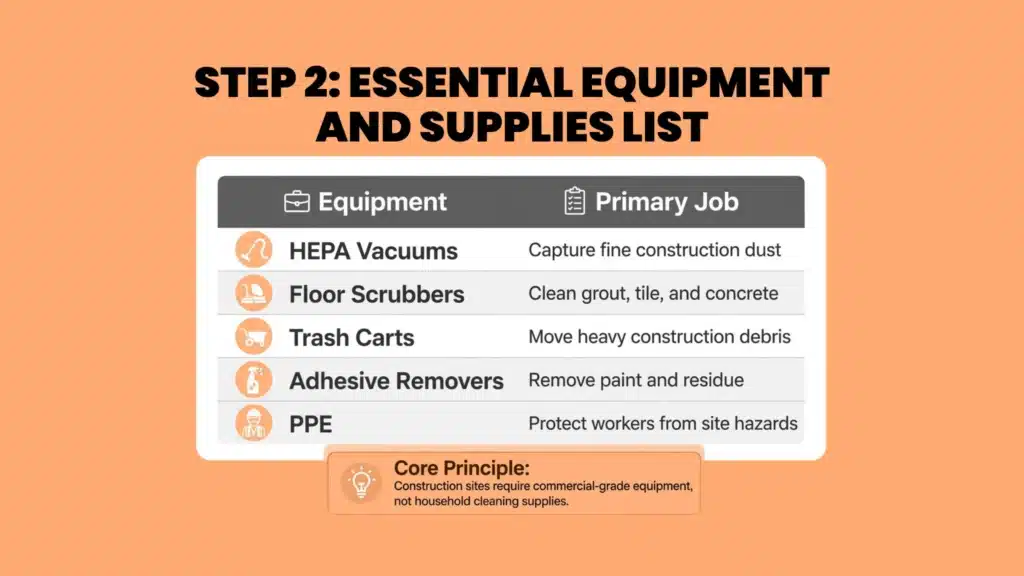
| Tool / Supply Category | Purpose | Typical Estimated Cost |
| HEPA Commercial Vacuums | Traps fine drywall and concrete dust without blowing it back into the room air | $350 – $900 per unit |
| Rotary Floor Buffers / Scrubbers | Strips wax, clears grout haze, and polishes concrete or tile surfaces | $700 – $2,500 |
| Heavy-Duty Trash Carts & Bins | Moving large volumes of debris, wood scraps, and heavy trash offsite | $150 – $400 |
| Solvents & Adhesive Removers | Takes off overspray paint, silicone, tape residue, and protective films | $40 – $100 per jug |
| Safety Gear (PPE) | Hard hats, respirators, cut-resistant gloves, and eye protection | $75 – $150 per worker |
Step 3: Mastering the 3 Phases of Construction Cleanup
Professional cleaning after renovation requires a methodical strategy. You cannot polish glass when workers are still cutting drywall upstairs. Divide your workflow into three clear service phases.
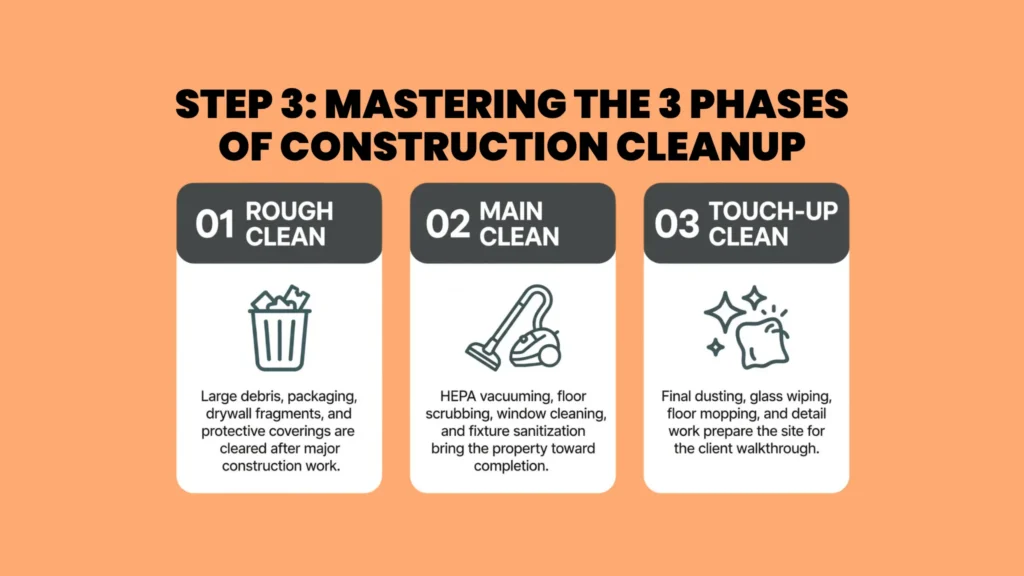
Phase 1: The Rough Clean
This takes place right after the main builders finish frame, plumbing, and electrical work.
Remove large debris, trash, leftover wood, and packaging.
Sweep up thick piles of dust and drywall fragments.
Remove protective plastic coatings on windows and appliances.
Phase 2: The Main (Deep) Clean
This is the most intensive part of your post construction cleaning business workflow.
Deep vacuuming all walls, ceilings, ledges, and vents with HEPA filters.
Scrubbing floors, polishing tiles, and removing grout haze.
Cleaning window glass, frames, sills, and tracks inside and out.
Sanitizing kitchens, bathrooms, fixtures, and interior cabinetry inside and out.
Phase 3: The Touch-Up Clean
Done a day or two before the final client walkthrough to wipe off any settling ambient dust.
Final glass wipe down to remove fingerprints.
Quick floor buff or damp mop.
Dusting light fixtures and switch plates.
Step 4: Structuring a Complete Post Construction Cleaning Checklist
Having a standardized post construction cleaning checklist ensures your crew never misses a single detail. General contractors inspect work with a sharp eye; one missed paint spot on a window track can hold up your final invoice payment.
General Interior Areas
Vacuum all carpets using industrial suction.
Clean light fixtures, ceiling fans, and air registers.
Wipe down doors, trim, baseboards, and door handles.
Remove paint spots and adhesive residue from hard surfaces.
Kitchens & Bathrooms
Scrub tile grout lines clean of installation haze.
Wipe down inside and outside of all new cabinets and drawers.
Polish stainless steel appliances, chrome faucets, and porcelain sinks.
Remove protective tape residues from glass shower enclosures.
Step 5: How to Price Your Services for Profit
Pricing construction cleanup services correctly can be tricky when starting out. Charge too low and labor costs eat your margins; charge too high and general contractors will pick someone else.
Square Foot Pricing Strategy
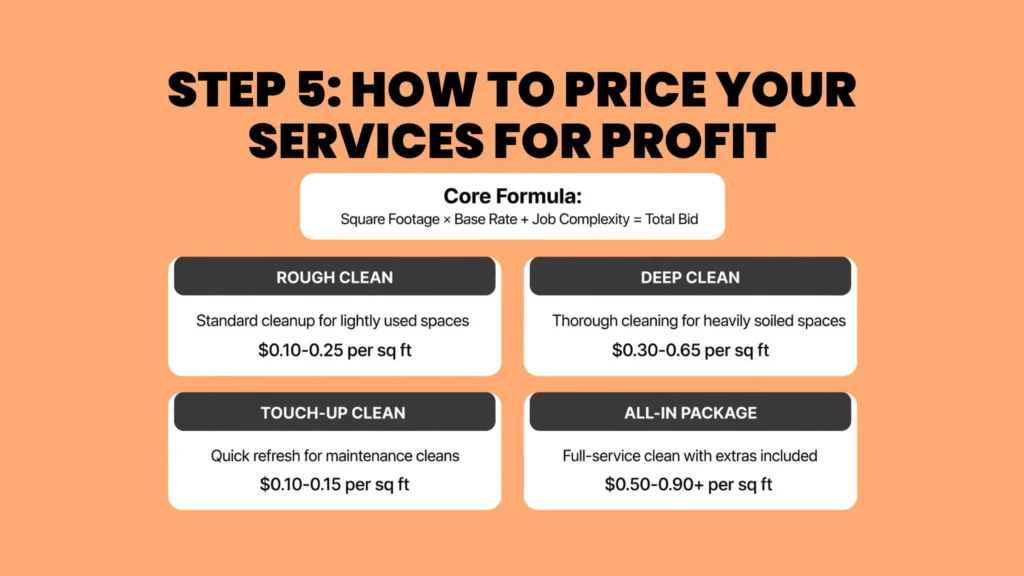
Most commercial jobs bid by the square foot based on which clean phase is requested:
Rough Clean: $0.10 to $0.25 per sq ft.
Deep Clean: $0.30 to $0.65 per sq ft.
Touch-Up Clean: $0.10 to $0.15 per sq ft.
All-in Package (Phases 1-3): $0.50 to $0.90+ per sq ft.
Hourly vs Flat Rate Bidding
Hourly rates ($45 – $80/hour per worker) work well for small residential renovation cleanups where site scope changes frequently. For larger commercial builds, general contractors always prefer flat-rate bids based on blueprint measurements.
Using resource templates from rekiablestartup.com can help you calculate overhead factors like insurance, fuel, site dumping fees, and equipment wear before submitting final project bids.
Step 6: Landing Your First Clients
Getting contract bids accepted requires active outreach. General contractors build continuously, so once you join their vendor list, business flows naturally.
Target the Right Contacts
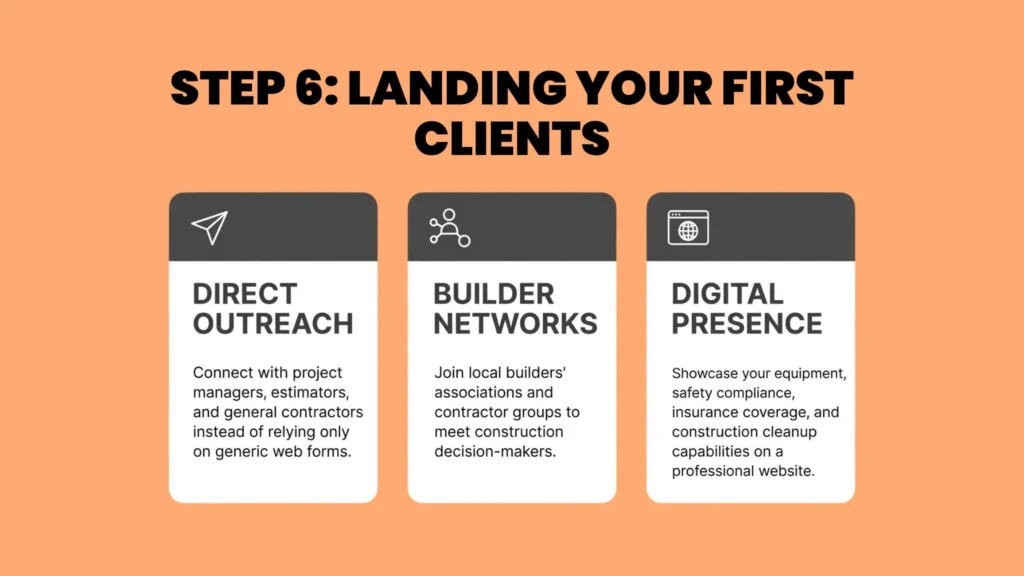
Reach out to project managers, estimators, and general contractors directly rather than submitting general web forms. Visit active job trailers locally with branded business cards and site-ready gear.
Join Local Builders Associations
Become an active member of local home builders chapters and commercial contractor groups. Networking at these local meetups puts you right in front of decision-makers.
Leverage Digital Marketing
Build a straightforward website highlighting your safety compliance, equipment list, and insurance coverage. If you need step-by-step guidance on setting up small business digital assets, rekiablestartup.com provides straightforward guides for local service operators.
Conclusion
Building a successful post construction cleaning business requires hard work, industrial gear, and clear communication with job site managers. By following a structured process, using a solid post construction cleaning checklist, and offering reliable construction cleanup services, you can build strong contractor relationships that deliver steady revenue year after year. Focus on site safety, price your bids accurately, and complete every final walkthrough with perfection!
Frequently Asked Questions
What equipment do I need to start a post-construction cleaning business?
You need commercial HEPA vacuums, heavy-duty trash bins, ladders, floor scrubbers, scrapers, safety gear, and specialized solvents for paint or adhesive removal.
How much should I charge for post-construction cleaning?
Most jobs are priced per square foot, generally ranging from $0.15 to $0.70 per square foot depending on the cleaning phase, surface types, and job complexity.
How is post-construction cleaning different from regular cleaning?
Post-construction work requires removing heavy debris, dangerous silica dust, paint overspray, and adhesive tape from raw materials rather than routine home dusting and tidying.
How do I land contracts with general contractors?
Visit active construction sites, contact local project managers, join builders’ trade associations, show proof of general liability insurance, and submit clear, competitive square-foot bids.