How to Start an Ice Cream Truck Business
Ever dreamed of hearing that familiar chime down your street and owning the machine that brings pure joy to the neighborhood? Starting an ice cream truck business is one of the most accessible ways to step into small business ownership.
To launch a mobile ice cream business, you need to acquire a reliable vehicle, obtain local health permits, source inventory, and map out high-traffic routes. Total startup costs generally range from $10,000 to over $50,000 depending on whether you buy new or used.
At reilablestartup.com, we love low-barrier business models that offer real, day-one cash flow. Let’s walk through every step to get your wheels turning smoothly.
Key Takeaways
Low starting overhead with quick startup timelines
Licensing and health permits are strictly required
Equipment costs depend on new vs. used trucks
High-margin potential with smart route planning
Quick Overview
Starting an ice cream truck business involves securing a commercial vehicle, obtaining local business and health permits, sourcing inventory, and choosing high-margin routes. Most operators spend between $10,000 and $50,000 upfront. Success depends heavily on seasonality, inventory management, and targeting community events, parks, and suburban streets to maximize daily sales volume and profit margins.
Why Launch a Mobile Ice Cream Venture?
Selling sweet treats on wheels is more than just a fun summer gig. It is a legitimate enterprise with low fixed overhead. Unlike traditional brick-and-mortar storefronts, you do not pay expensive commercial rent. If a neighborhood is quiet, you simply drive to a busier park or community event.
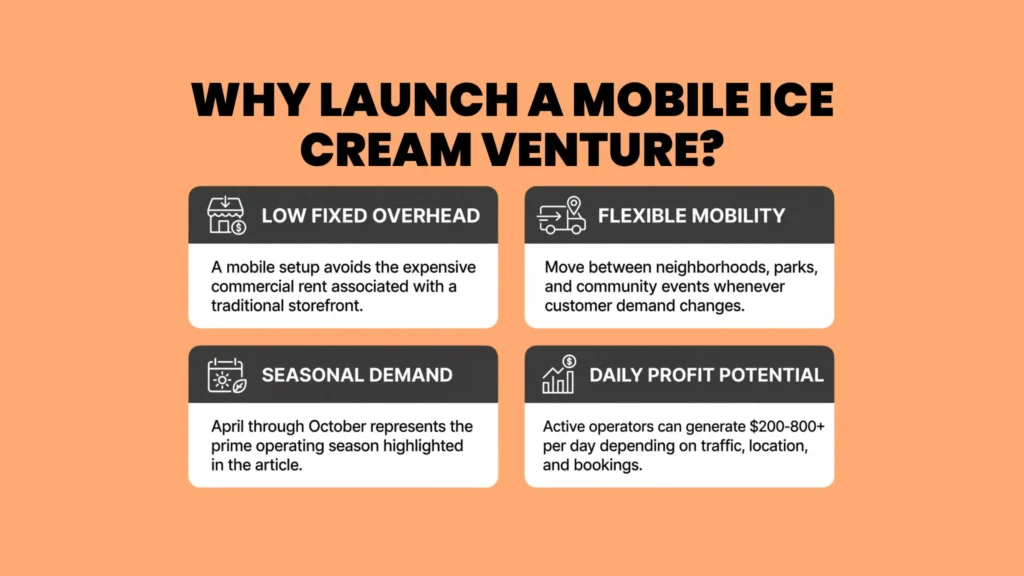
You control your schedule, your inventory, and your routes. That level of flexibility makes a mobile ice cream business ideal for first-time entrepreneurs.
Business Highlights:
Initial Investment Range: $10,000 – $60,000
Average Daily Profit Potential: $200 – $800+ per day
Prime Operating Season: April through October
Primary Expense: Fuel and Inventory
Step 1: Research the Market and Pick Your Niche
Before buying a vehicle, look around your local area. Who is already driving around, and what are they selling? You have two main paths to choose from: pre-packaged novelties or soft-serve ice cream.
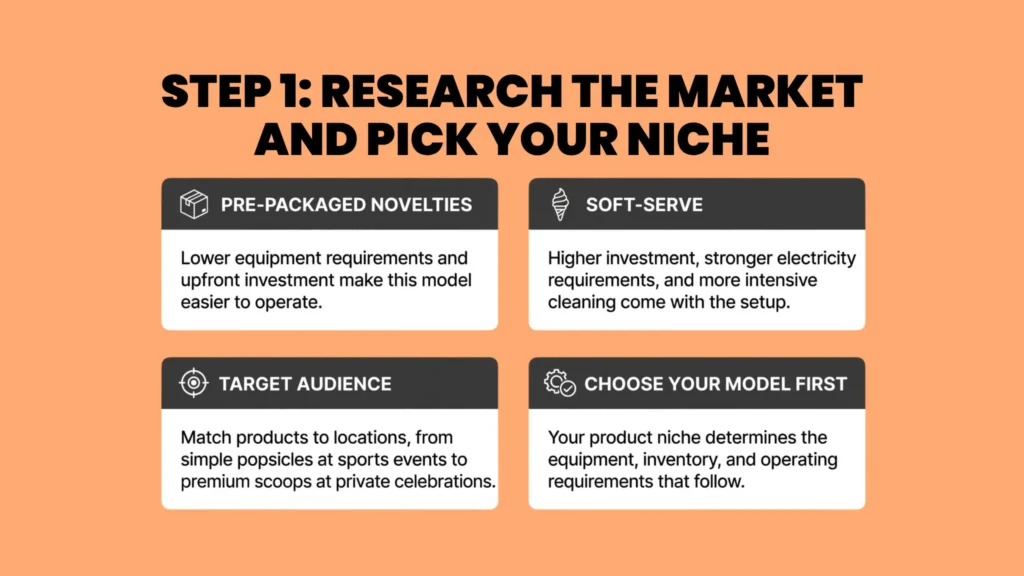
Pre-packaged treats require less equipment and lower upfront cash. Soft-serve machines require higher electricity, heavier cleaning routines, and higher upfront investment. Decide early on what your target audience wants. Families at local soccer games might prefer simple popsicles, while wedding guests love premium artisanal scoops.
Step 2: Understand the Ice Cream Truck Cost
How much does it actually take to open your window for business? Your largest expense is the vehicle itself. A used truck might cost around $10,000, but it could require mechanical repairs.
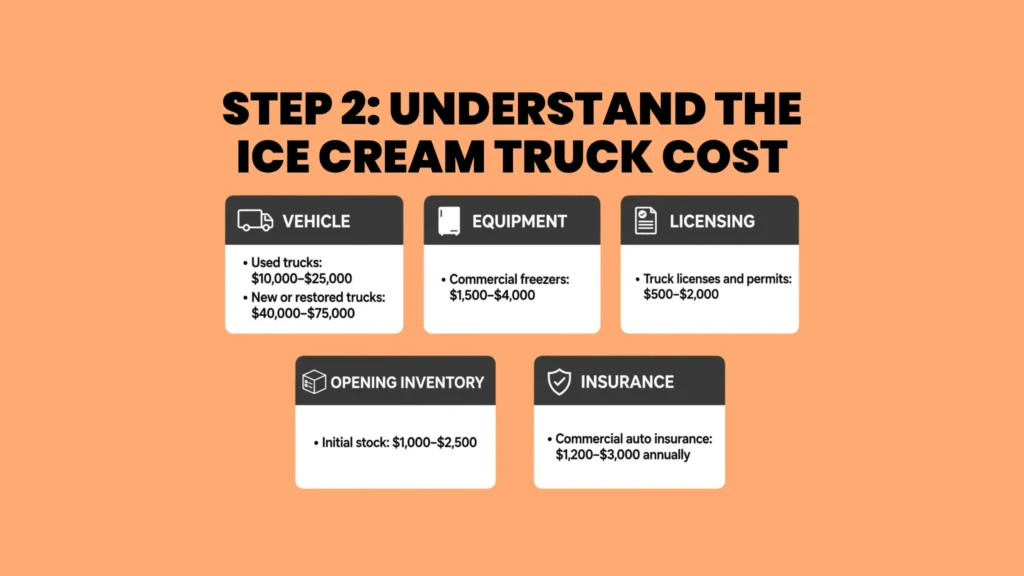
A fully fitted, brand-new custom vehicle can cost over $70,000. You also need to budget for commercial freezers, inventory, fuel, insurance, and local permits.
| Expense Category | Estimated Cost (USD) | Notes |
| Used Truck Purchase | $10,000 – $25,000 | Requires mechanical inspection |
| New or Restored Truck | $40,000 – $75,000 | Turn-key, higher reliability |
| Commercial Freezers | $1,500 – $4,000 | Must hold stable freezing temps |
| Ice Cream Truck License & Permits | $500 – $2,000 | Varies widely by city and state |
| Initial Inventory | $1,000 – $2,500 | Stock pre-packaged novelties or mix |
| Commercial Auto Insurance | $1,200 – $3,000 | Annual premium for mobile vendors |
Understanding your total ice cream truck cost upfront prevents financial surprises down the road. Keep a safety cushion for maintenance.
Step 3: Secure Your Ice Cream Truck License and Permits
You cannot simply turn on the music and start selling. Operating legally requires several layers of permits and licenses. First, register your business structure with your state. An LLC business structure is generally the most popular choice for mobile vendors because it protects personal assets.
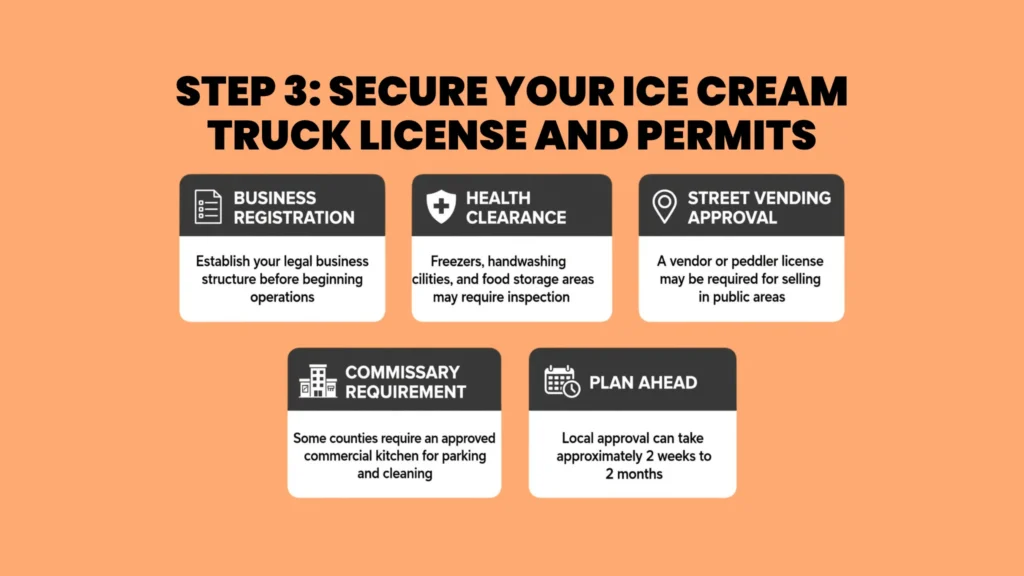
Next, focus on your ice cream truck license requirements. City halls and local health departments set strict guidelines for mobile food vendors.
Business License: General permit from your city or county to operate a business.
Health Department Permit: Requires a physical inspection of your freezers, handwashing sink, and food storage facilities.
Vendor/Peddler License: Grants permission to sell goods on public streets or designated zones.
Driver’s License & Clean Record: Standard valid driver’s license, often accompanied by a background check.
Commissary Agreement: Some counties require you to park and clean your truck at an approved commercial kitchen.
Check your county regulations early. Getting an ice cream truck license approved can take anywhere from two weeks to two months.
Step 4: Buy or Lease Your Vehicle
Finding the right vehicle requires careful shopping. Look for trucks with reliable engines, solid bodywork, and clean interior setups. If you buy used, bring a trusted mechanic to inspect the engine, brakes, and electrical system. Running freezers requires robust power generation.
You will need a generator or an inverter system connected to marine batteries to keep product frozen while parked. Never skimp on cooling power. At reilablestartup, we always advise founders to test all onboard electrical systems under full load before signing a purchase agreement.
Step 5: Sourcing Inventory and Supplies
Where will you buy your product? Most successful owners partner with local wholesale ice cream distributors. Buying bulk novelties reduces your cost per unit, allowing for healthy profit margins. Pre-packaged bars often yield 50% to 70% gross margins.
Keep your menu clear and easy to read from a distance. Too many choices confuse customers and slow down your lines. Display brightly colored photos of your bestsellers on the side of the truck with prices clearly marked.
Step 6: Finding the Best Routes and Locations
Location strategy makes or breaks a mobile ice cream business. You cannot rely on random cruising alone. Target places where crowds naturally gather during warm weather. Parks, sports complexes, beaches, and community pools are prime territory.
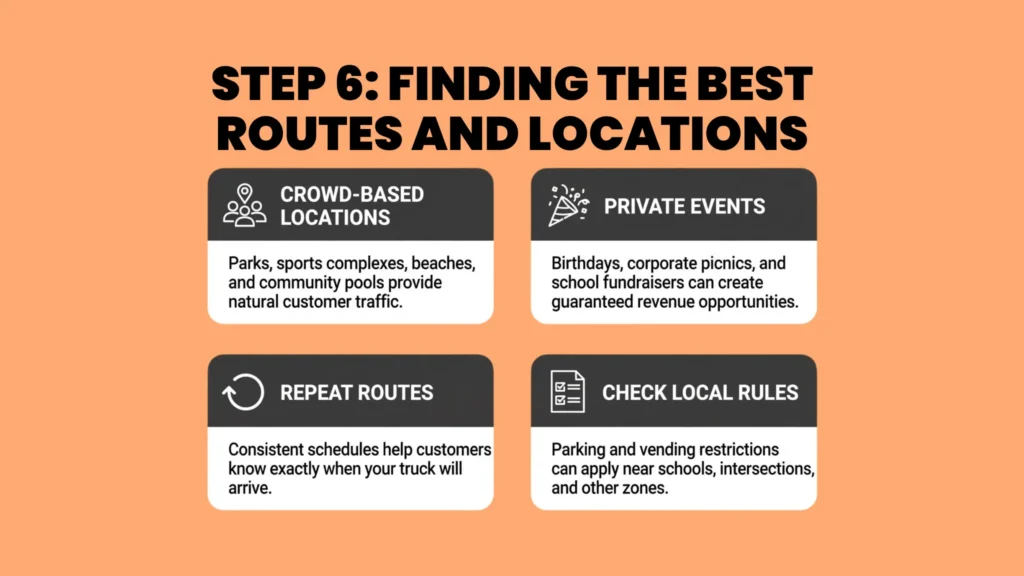
Consider booking private events like birthday parties, corporate picnics, and school fundraisers. Private events offer guaranteed revenue without driving around. Always check local parking laws. Certain zones prohibit commercial vending near schools or busy intersections.
Marketing Your Mobile Ice Cream Venture
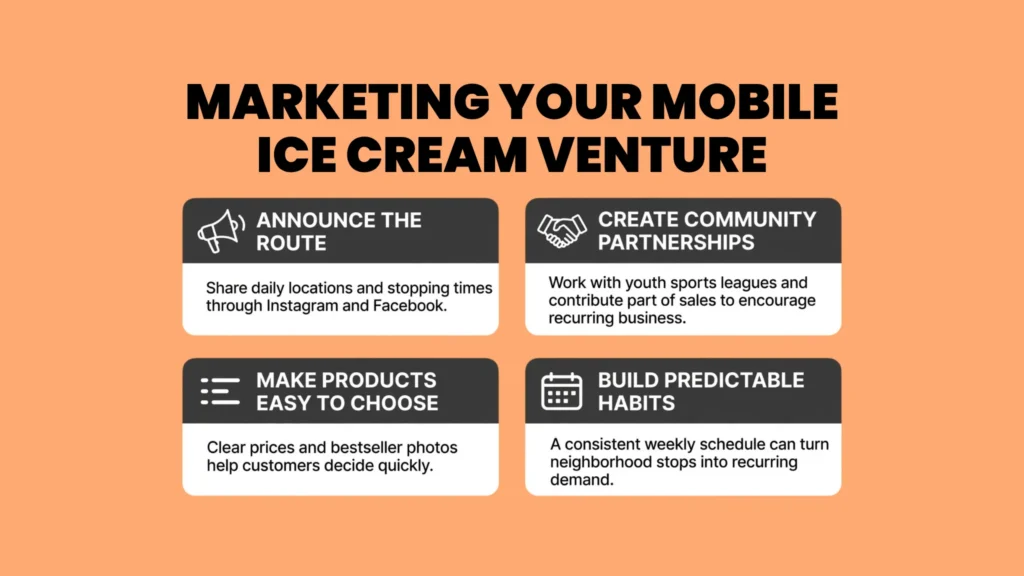
Modern vendors do not rely solely on the chime speaker. Social media plays a massive role in building a loyal fanbase. Post your daily routes and stopping times on Instagram or Facebook. Let parents know exactly when you will hit their neighborhood.
Partner with local youth sports leagues. Offering a portion of sales back to the league creates easy community goodwill and steady sales. Consistent routes build habits. If neighbors know you arrive every Saturday at 3:00 PM, they will wait for you.
Operational Tips for Daily Success
Running an ice cream truck business requires physical energy and daily maintenance routines. Clean your freezers and surfaces daily to pass surprise health inspections easily. Cleanliness builds trust with parents instantly.
Keep track of fuel costs and popular menu items. Stop carrying items that sit in your freezer for weeks without selling.
Always carry extra cash for change, but accept mobile payments and credit cards. Modern card readers increase average order sizes significantly. Guidance on reilablestartup.com stresses the value of tracking your daily sales trends to optimize your driving routes constantly.
Conclusion
Starting a mobile street business offers direct rewards, high cash flow, and community presence. With proper licenses, reliable equipment, and smart routing, your venture will thrive all season long. Prepare your business plan, secure your vehicle, and start serving smiles across your town.
Frequently Asked Questions
How much does it cost to start an ice cream truck business?
In most cases, starting costs range between $10,000 and $50,000 based on vehicle condition, licensing fees, equipment, and initial inventory requirements.
Do I need a special license to drive an ice cream truck?
Generally, a standard driver’s license is sufficient for standard trucks, but you must obtain local vending permits and health department clearances to sell food legally.
How much profit can an ice cream truck make per day?
Based on available data, active owners generally earn between $200 and $800 daily during peak summer weather, depending heavily on location, foot traffic, and event bookings.
What insurance is needed for an ice cream truck?
You need commercial auto insurance along with general liability coverage to protect against vehicular accidents, property damage, and potential product liability claims.