How to Start a Moving Truck Rental Business
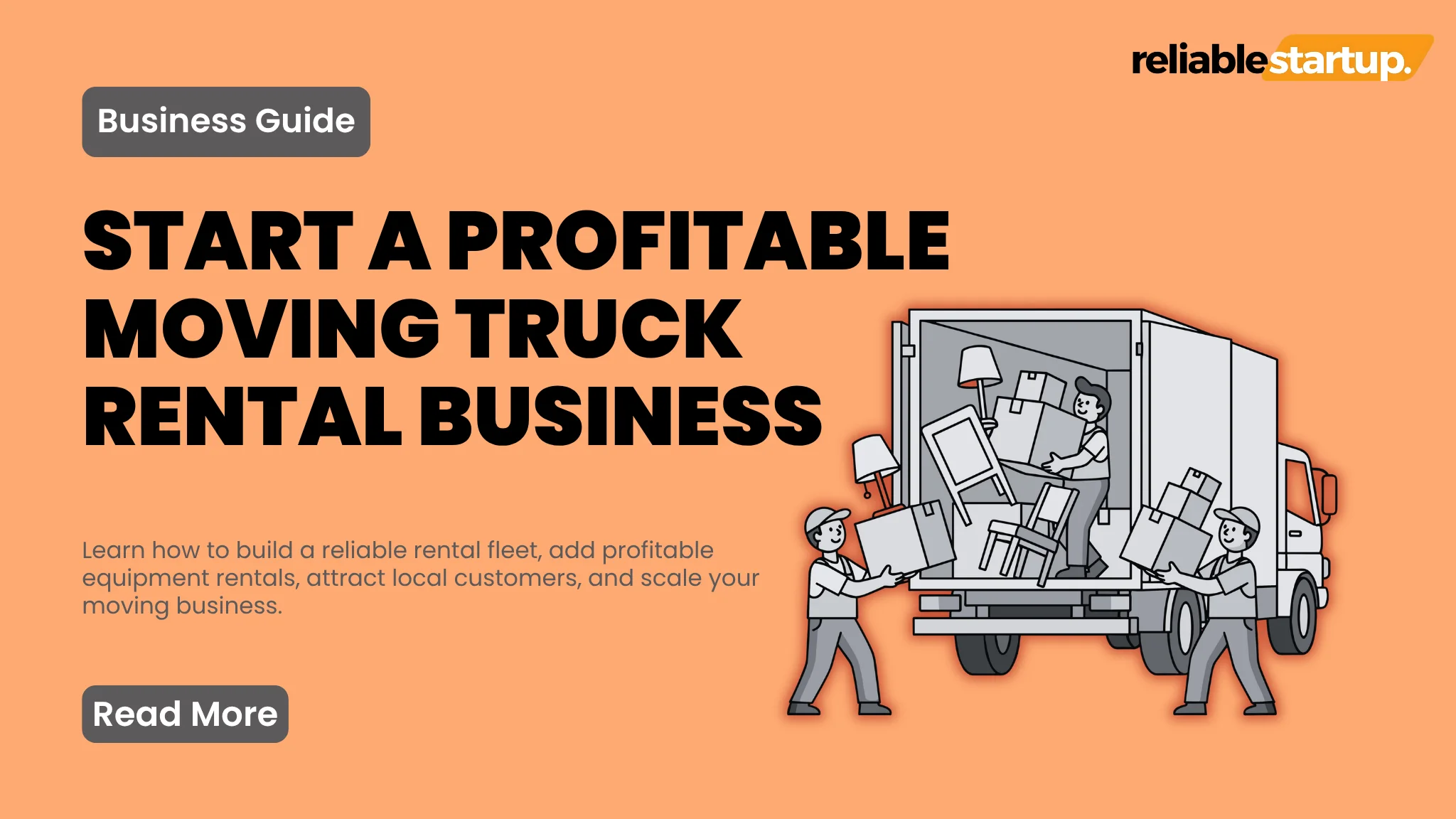
Have you ever tried booking a truck on a busy weekend only to find every lot empty? Starting a moving truck rental business is one of the most practical ways to turn high local moving demand into a steady revenue stream. You buy or lease commercial vehicles, keep them maintained, and rent them out to people or local businesses that need to transport heavy items.
At its core, this business works because millions of people prefer DIY moving over paying thousands to full-service movers. Whether you run a tiny fleet or partner with a major brand, providing reliable wheels when people are on the move is a proven model.
Key Takeaways
High demand for local DIY moves
Flexible model: fleet owner or truck rental franchise
Low starting risk with proper commercial insurance
Easy revenue scaling through moving equipment rental add-ons
Digital booking platforms drive steady customer leads
AI Overview
A moving truck rental business provides short-term vehicle and equipment rentals to individuals and businesses handling local or long-distance moves. To launch one, secure commercial vehicle insurance, choose between an independent fleet or a truck rental franchise, acquire clean box trucks, and offer extra moving equipment rental options like hand trucks and pads to boost daily profit margins.
Why Is the Moving Truck Rental Market Booming Right Now?
People are constantly changing apartments, buying homes, or shifting offices. Full-service moving companies are expensive. When budgets get tight, folks turn to DIY moving. That is where your rental fleet comes in.
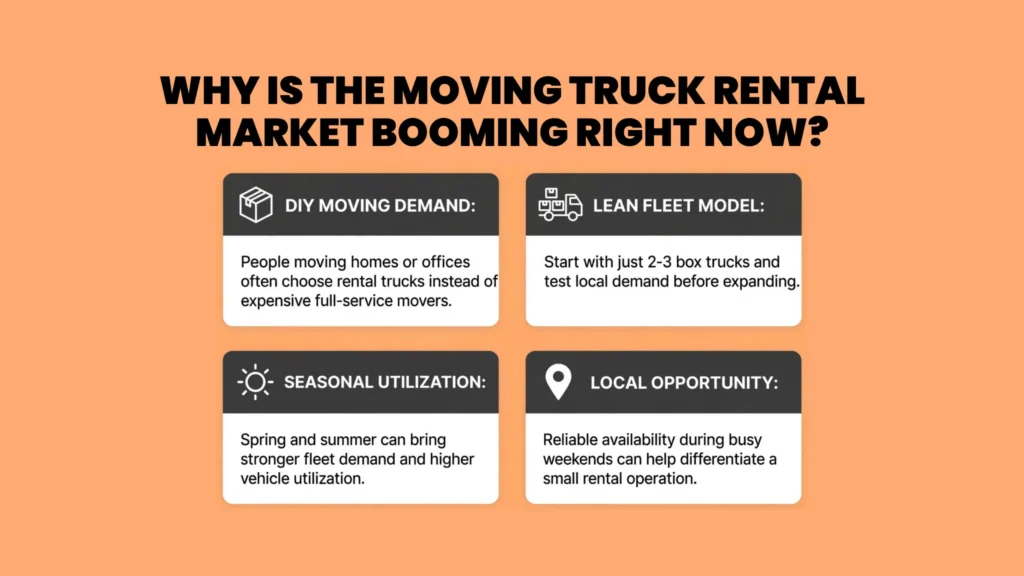
You do not need fifty trucks to begin. Many owners launch with just two or three box trucks parked in a secure commercial lot. Based on available data, small operators can maintain impressive fleet utilization rates during peak spring and summer months.
According to resources on reliablestartup, starting lean lets you test local neighborhood demand before taking on heavy vehicle debt.
Should You Go Independent or Choose a Truck Rental Franchise?
One of your first big choices is decided by your risk comfort level. Do you want total freedom over your fleet branding, or do you prefer instant brand recognition?
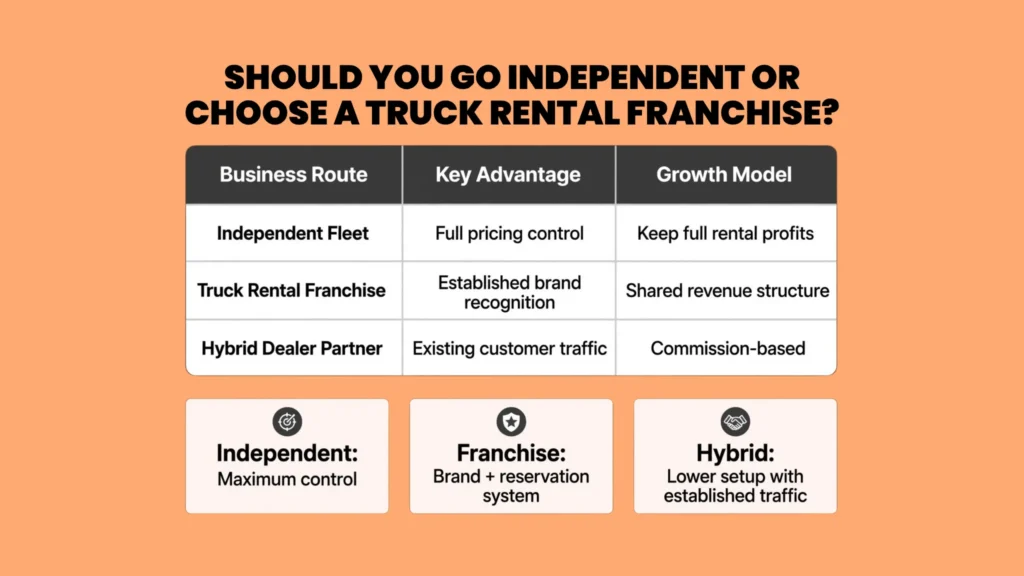
Building your brand from scratch gives you total control over prices and rules. On the flip side, joining a truck rental franchise gives you immediate access to national reservation systems and steady customer trust.
| Business Route | Initial Setup Cost | Brand Recognition | Growth Potential |
| Independent Fleet | Moderate (Vehicle Leases) | Requires Local Marketing | High (Full Profit Retention) |
| Truck Rental Franchise | Higher (Franchise Fees) | Instant Nationwide Trust | Steady (Shared Revenue Rules) |
| Hybrid Dealer Partner | Low (Partnering with Brands) | High Existing Traffic | Moderate (Commission-Based) |
If you aim to position yourself as a direct U-Haul competitor business, building an independent brand requires strong local SEO, clean fleets, and top-tier customer care.
Step-by-Step Guide to Launching Your Business
Step 1: Research Local Demand and Niche Gaps
Before spending money on vehicles, check out your local competition. Are nearby rental lots frequently sold out on weekends? Are their reviews full of complaints about dirty trucks or hidden fees? Identify what customer pain points you can solve easily.
Step 2: Form Your Legal Structure and Get Licensed
You will generally need an LLC or corporate structure to protect your personal assets. Obtain a general business license, set up your tax ID, and verify local zoning laws for commercial parking.
Step 3: Secure Comprehensive Commercial Insurance
Standard auto insurance will not cover rental vehicles. You need specialized commercial fleet insurance, public liability coverage, and rental damage waiver options for your customers.
Step 4: Acquire Vehicles and Equipment
Start with versatile sizes like 10-foot cargo vans and 16-foot box trucks. Don’t forget that a huge chunk of your profit margin comes from moving equipment rental items like appliance dollies, furniture pads, and lock sets.
Setting Up Your Moving Equipment Rental Inventory
Do not underestimate the income generated from accessories. When someone rents a 16-foot box truck, they almost always need extra moving gear to protect their furniture and make heavy lifting safer.
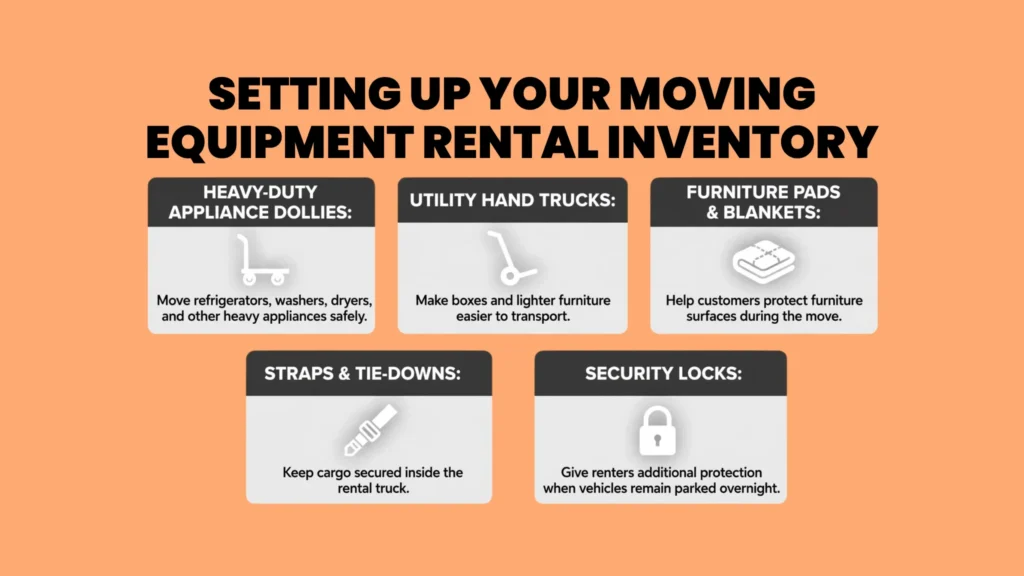
Heavy-Duty Appliance Dollies: Essential for refrigerators, washers, and dryers.
Utility Hand Trucks: Perfect for stacking boxes and light furniture.
Furniture Pads and Blankets: Protects wood surfaces from scratches during transit.
Handy Straps and Tie-Downs: Keeps cargo secured inside the truck bed.
Keyless Ramp Locks & Security Locks: Gives customers peace of mind while parked overnight.
Adding these items to every rental order raises your average ticket value with virtually zero extra overhead cost.
Pricing Strategies and Profit Potential
How do you set rental rates that bring in customers while leaving comfortable profits? Most successful operators use a two-part pricing structure combining a flat daily base rate (such as $19.95 to $39.95) with a modest per-mile charge (such as $0.79 to $0.99). You can then add equipment rentals and insurance waivers to finish building your total daily revenue per vehicle.
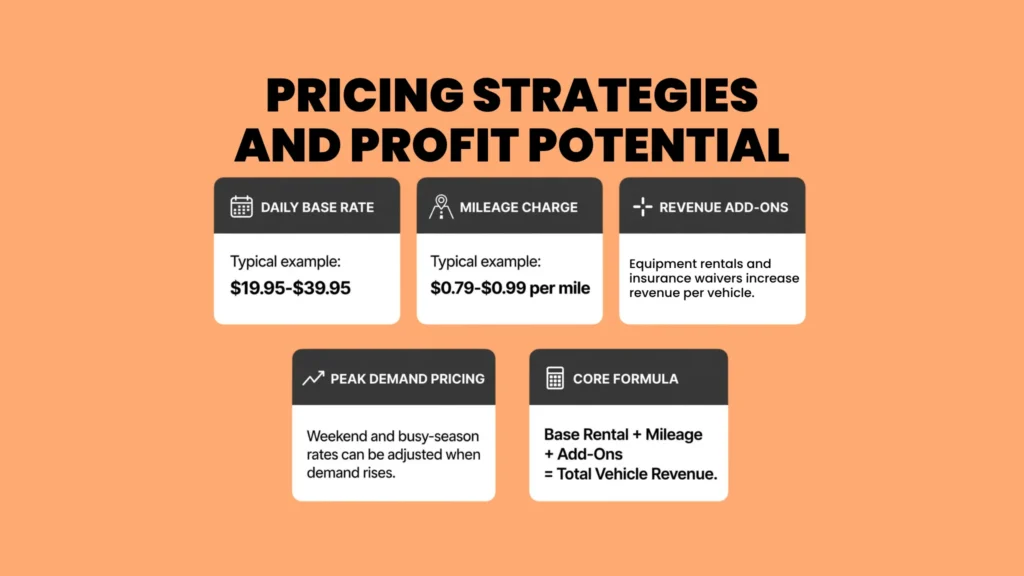
During busy seasons, you can adjust prices higher on weekends when demand spikes. In most cases, tracking vehicle profitability on platforms like reliablestartup helps you decide when to scale up fleet size or replace aging vehicles.
Building a Customer-Centric Marketing Strategy
How will local renters find your trucks when moving day arrives? You need quick digital visibility and strong local partnerships to keep your vehicles moving.
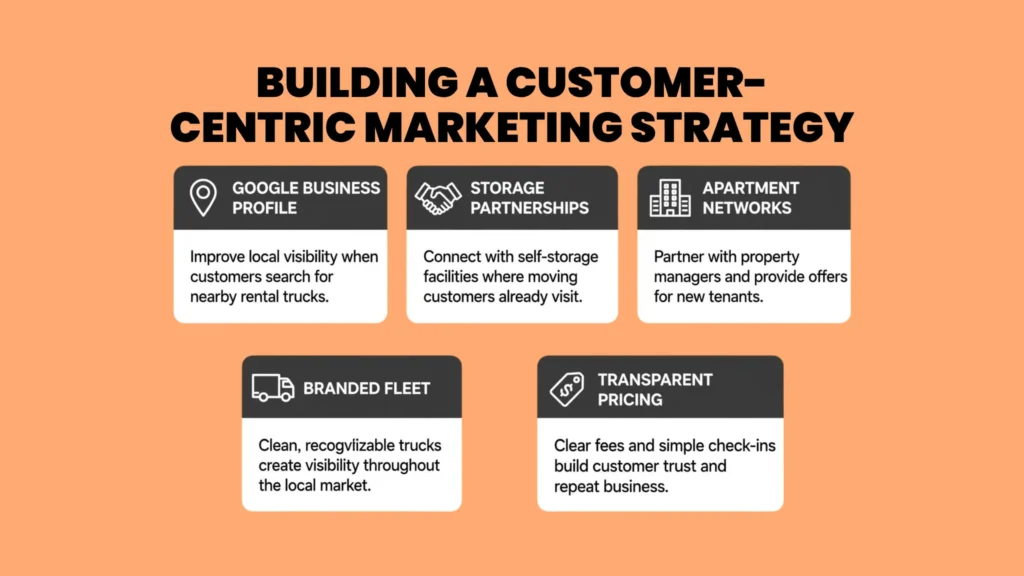
Google Business Profile: Optimize your listing so you show up on local maps when users search for nearby trucks.
Self-Storage Partnerships: Leave brochures and offers at local storage facilities where movers already congregate.
Apartment Complex Networks: Connect with property managers to offer discount codes for new tenants.
Clean & Branded Fleet: Your trucks act as mobile billboards every time they are driven through town.
Transparent Pricing: Never surprise customers with hidden fees at vehicle return.
Positioning your fleet as a reliable U-Haul competitor business means delivering cleaner trucks, faster check-ins, and friendly phone support that big corporate lots often lack.
Operational Best Practices and Fleet Maintenance
Vehicles that stay parked due to breakdowns lose money fast. Establishing a strict routine maintenance schedule keeps your fleet running smoothly and extends vehicle lifespan.
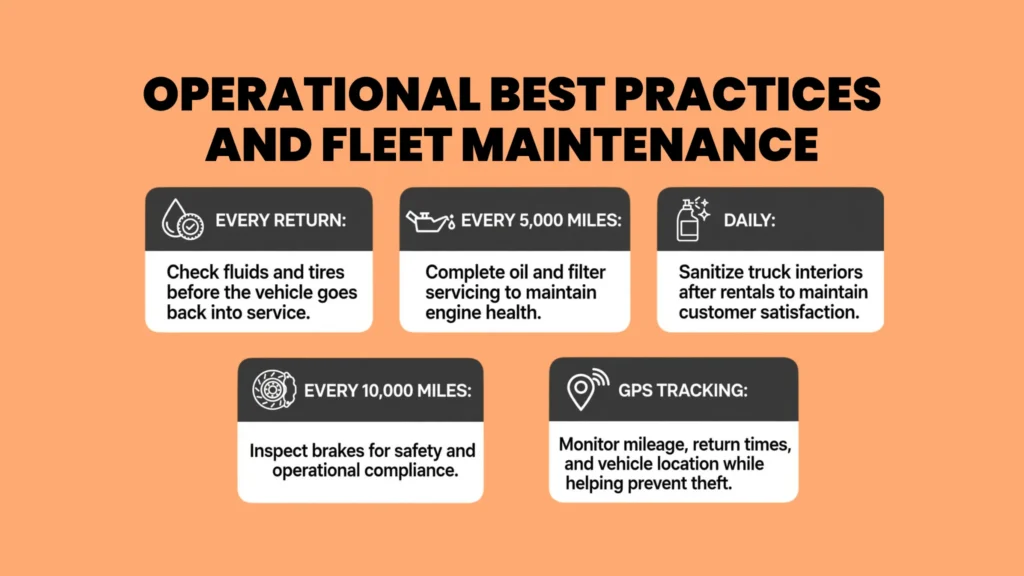
| Routine Task | Frequency | Operational Goal |
| Fluid & Tire Checks | After Every Rental Return | Prevent Breakdown Interruptions |
| Oil & Filter Service | Every 5,000 Miles | Maintain Engine Health |
| Interior Sanitization | Daily / Post-Return | High Customer Satisfaction |
| Brake Inspection | Every 10,000 Miles | Safety Compliance |
Using modern GPS tracking devices allows you to monitor mileage accurately, track return times, and prevent vehicle theft.
Scaling Your Moving Truck Rental Business
Once your initial trucks operate at steady capacity, it is time to expand your footprint. You can reinvest profits into additional vehicle sizes, such as 26-foot box trucks designed for multi-bedroom home moves. Another route is joining a national truck rental franchise network to capture one-way cross-country rental bookings.
By diversifying into commercial cargo van rentals for local contractors, you keep your fleet working even on quiet weekdays. Guides and tools on reliablestartup can help you streamline business expansion smoothly.
Conclusion
Starting a moving truck rental business requires upfront planning, smart fleet investments, and dedicated customer service. By starting lean with a small fleet, offering profitable moving equipment rental items, and keeping pricing completely transparent, you can build a respected brand in your local market. Whether you build an independent fleet or scale as a powerful U-Haul competitor business, focusing on clean vehicles and simple bookings will keep your business moving forward for years to come.
Frequently Asked Questions
What licenses are needed to start a moving truck rental business?
You generally need a general business license, tax registrations, commercial fleet vehicle registrations, and specialized commercial liability insurance policies.
How many trucks should I buy when launching my business?
Starting with 2 to 4 versatile vehicles like cargo vans and 16-foot box trucks helps manage initial capital risk effectively.
Is buying a truck rental franchise better than starting independent?
A franchise brings instant brand trust and reservation systems, while an independent setup gives you full pricing control and higher profit margins.
How much can you earn from moving equipment rental add-ons?
Add-ons like dollies and blankets can boost your daily ticket revenue by 15% to 30% with very low replacement costs.
How do I protect my fleet against vehicle theft or damage?
Install GPS tracking on every truck, mandate security deposits, perform strict ID checks, and sell damage waivers at checkout.