How to Start a Real Estate Startup Without Money in 2026
The traditional path into real estate has always carried a massive financial barrier to entry. For decades, launching a property venture meant securing heavy bank loans, raising millions from private equity, or taking on high-risk physical inventory. However, structural shifts in 2026 have completely leveled the playing field. Driven by the mature integration of AI infrastructure and asset-light property technology (proptech), entrepreneurs can now build highly valuable real estate empires with virtually zero upfront capital. This asset-light shift builds directly on the broader trend we cover in our guide to real estate startups, where digital-first models are replacing traditional property ownership entirely.
Focusing on a real estate startup without money strategy means substituting raw capital with specialized software workflows, digital connection frameworks, or strategic sweat equity. In this 2026 guide, we will break down high-impact, zero-inventory business models, analyze the true setup requirements, dissect realistic software profit margins, and detail how to build an exceptionally profitable real estate business from scratch.
High-Yield, No Money Real Estate Business Ideas
To launch a property business without personal funds, you must stop viewing real estate as a game of physical brick and mortar. Instead, treat it as a game of data, operational efficiency, and transaction facilitation.
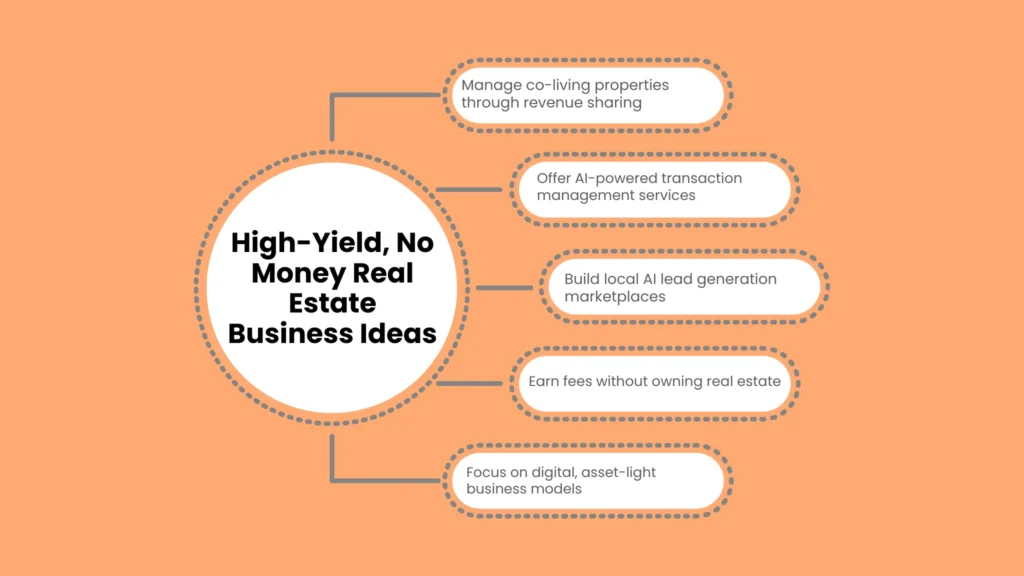
The following no money real estate business ideas leverage digital leverage rather than cash reserves:
Co-Living Management & Fractional Operations
Instead of buying buildings, you partner directly with existing property owners to optimize their assets. By transforming underutilized spaces or large single-family homes into high-density, tech-enabled co-living spaces, you tap into premium rental yields. You charge property owners a percentage management fee or execute a revenue-share agreement, avoiding the liabilities of a traditional lease. This model works especially well when paired with the strategies covered in our affordable housing startups guide, where optimizing underutilized space is the core revenue driver.
AI-Driven Transaction Management Agencies
The compliance side of closing real estate transactions remains notoriously manual. In 2026, intelligent document tools automatically handle e-signatures and extract critical data from complex multi-page disclosures.
The Model: You set up a specialized remote agency that utilizes free or low-cost AI automation tools to manage the entire contract-to-close compliance checklist for busy local brokers. For more ideas on leveraging automation without a technical background, see our roundup of AI small business ideas.
The Pitch: Agents gladly pay a flat fee per successful closing to offload their heavy administrative drag, freeing up their schedule to secure more active listings.
Local AI Answer Engine Optimization (AEO) Lead Marketplaces
The old playbook of buying generic, expensive leads from massive property portals is dead. In 2026, user searches have dramatically shifted from standard search engines to AI answer engines (like ChatGPT and Perplexity).
The Model: You build niche informational databases or community property portals structured specifically to be cited by AI answer models. When high-intent local buyers ask AI tools for specific property insights, your portal serves as the primary source. You capture these hyper-qualified tenant or buyer inquiries and route them straight to active local real estate agents for a premium referral percentage at closing.
Technical and Operational Real Estate Startup Requirements
Building an asset-light property enterprise without upfront cash requires a highly disciplined, professional digital setup to win the trust of established industry players.
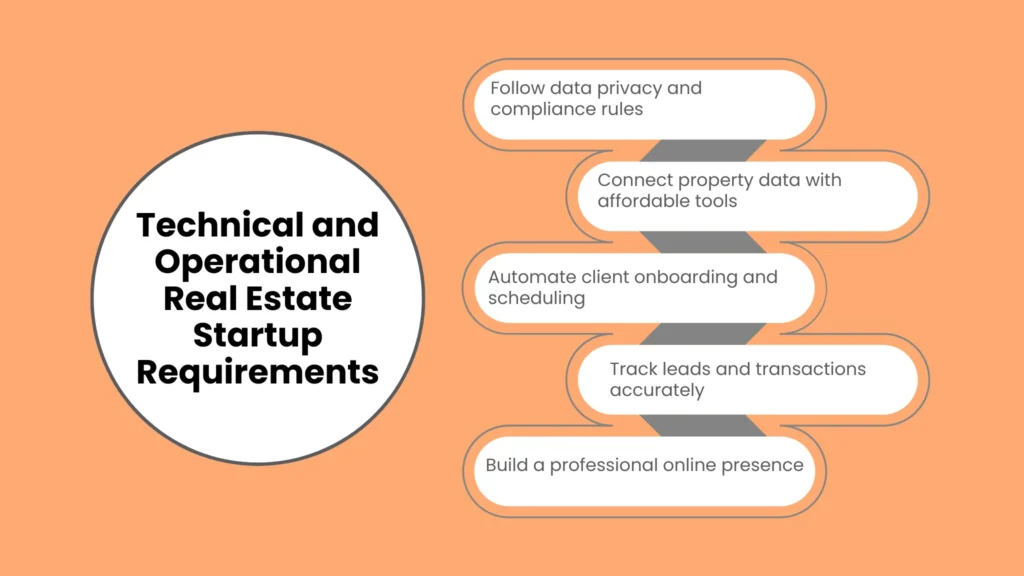
Ensure your bootstrap framework checks all of these critical real estate startup without money requirements:
Flawless Compliance Frameworks: Because you are handling sensitive consumer data, your digital systems must fully align with modern data privacy and local calling regulations.
Unified Data Dashboards: To scale efficiently, your platform must connect your user interface directly with localized property databases via free or low-cost API keys.
Automated Client Onboarding: You need a high-clarity landing page paired with automated scheduling pipelines to process new client intakes seamlessly.
Granular Tracking Metrics: If you manage leads or transactions, you must install clear activity logging to provide absolute billing transparency to your corporate partners.
Financial Analysis: Minimal Setup Costs vs. Software Margins
Steering clear of physical real estate inventory changes your early business dynamics. It trades heavy capital risk for lean digital efficiency.
The True Real Estate Startup Without Money Cost
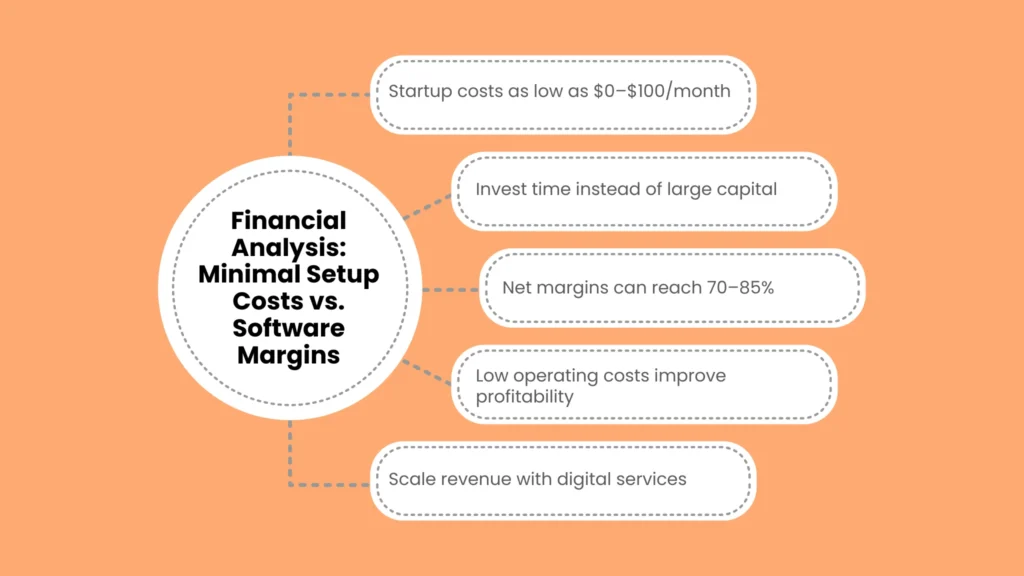
Can you truly start with zero dollars? While you don’t need investment capital, your absolute baseline real estate startup without money cost sits around $0 to $100 per month. This tiny budget covers your custom domain registration, a basic visual landing page builder, and free tiers of AI automation tools. You scale early revenue strictly by investing your personal time and sweat equity to secure your first few clients.
Dissecting the Profit Margin Structure
Because your operational model completely bypasses building maintenance, physical staging, and property taxes, your financial numbers are incredibly rewarding. An asset-light property service or lead marketplace can easily hit a net operating margin of 70% to 85%. Once your initial digital workflows are established, your recurring expenses are restricted to basic software licensing and minimal web hosting.
Is Launching a Real Estate Startup Without Money Profitable?
Yes, bootstrapping an asset-light property tech or service brand is exceptionally lucrative. So, is real estate startup without money profitable over the long run? Absolutely. While asset-heavy landlords struggle with fluctuating interest rates and property valuation dips, your zero-inventory business model remains highly agile. By positioning your business as a software workflow or a premium transaction layer, you generate high-margin fees from market activity regardless of wider macroeconomic real estate corrections.
2026 Bootstrapped Property Models Compared
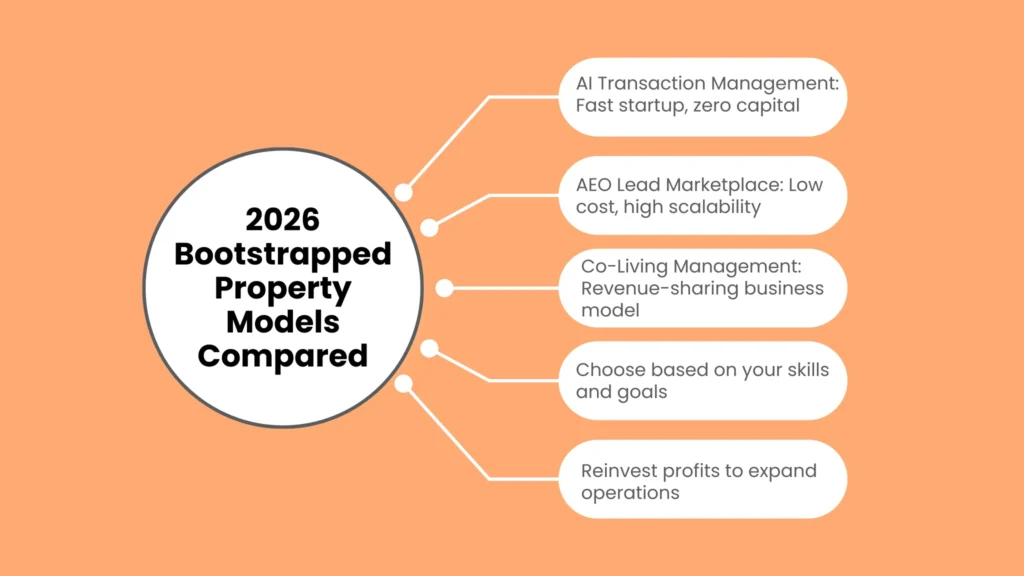
| Business Strategy | Initial Capital Demand | Average Time to Revenue | Long-Term Scale Potential |
| AI Transaction Management | Zero (Uses free AI tools) | Fast (2 to 4 weeks) | Moderate — Can expand into a global remote agency model. |
| AEO Lead Marketplace | Near Zero ($10 to $50) | Moderate (1 to 2 months) | Massive — Scales seamlessly across multiple target cities. |
| Co-Living Asset Management | Zero (Revenue-share model) | Moderate (4 to 6 weeks) | High — Reinvest revenue to license custom management software. |
3 Critical Anti-Patterns to Avoid When Bootstrapping
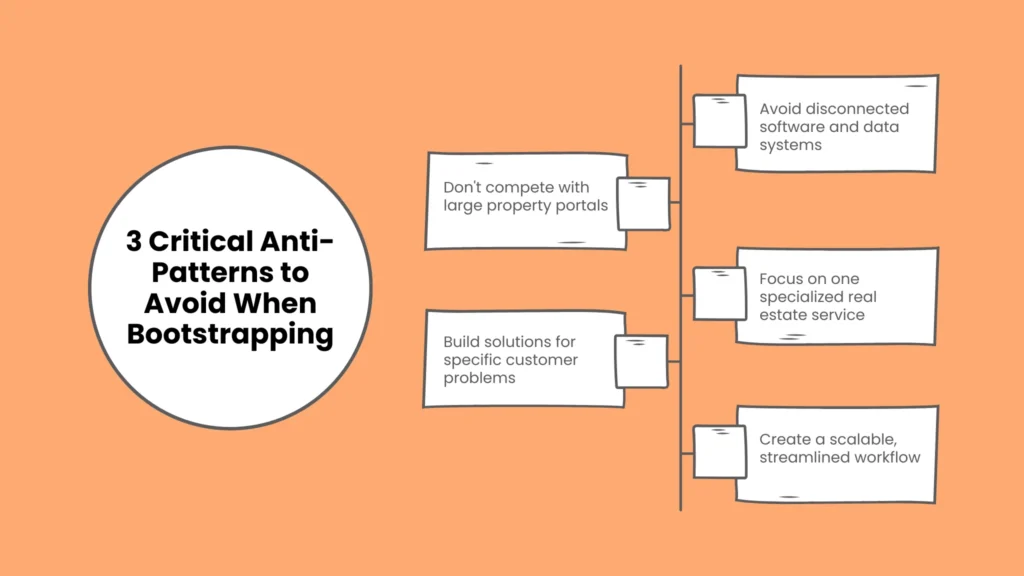
When building a zero-inventory real estate brand, stay clear of these common operational traps that can quickly halt early startup progress:
Avoid Chasing Fragmented, Messy Data Stacks
Do not make the mistake of cobbling together ten different disconnected free software apps. In 2026, top-performing startups prioritize data consolidation. Ensure your website, outreach tracking, and client logs feed into a centralized data pipeline. Messy data creation introduces friction, stalls your automation, and ultimately drives away busy brokers.
Beware of Trying to Compete with Legacy Property Portals
Never try to build a generic property directory designed to compete directly with multi-billion-dollar listing portals. You do not have the marketing capital to challenge them. Instead, focus entirely on hyper-niche workflows—such as local zoning data translation or unique AI virtual staging tools, where deep localization and execution speed beat raw corporate size.
Do Not Offer General Services to Broad Audiences
When targeting your first B2B clients, avoid marketing yourself as a generic “real estate assistant.” This diluted positioning makes it incredibly difficult to close premium deals. Instead, narrow your focus to a hyper-specific pain point (e.g., “Automating 24/7 chat-to-appointment booking pipelines for high-volume commercial leasing brokers”), allowing you to demonstrate instant business value.
Conclusion
Building a successful property venture without upfront cash requires an ongoing balance of smart product scoping, highly disciplined data management, and acute attention to market trends. By focusing on asset-light digital workflows, embracing the power of AI automation, and solving clear operational headaches for active real estate professionals, you position your startup for phenomenal long-term growth. If you are ready to explore step-by-step product playbooks, interactive startup budget sheets, and founder launch tools, visit our primary platform at reliablestartup to build and scale your venture today.
Frequently Asked Questions
Do I need a real estate broker’s license if I don’t own any property?
If your platform focuses exclusively on pure software infrastructure, back-end transaction automation, or digital marketing tools, you generally do not require a real estate license. However, if your business collects direct sales commissions, handles tenant security deposits, or writes binding legal contracts, you must consult local guidelines or partner with a licensed broker.
How do I convince property owners to let me manage their assets without capital?
Focus your entire pitch on their net operating income (NOI). Demonstrate how your specialized AI workflows or co-living setups can slash their vacancy rates, automate their communication, and optimize their property’s energy usage. When you prove you can increase their monthly cash flow with zero risk on their end, owners will happily sign revenue-share agreements.
Can visual no-code tools handle modern 2026 property platforms?
Yes, modern visual builders easily process advanced location filtering, relational property databases, secure user login steps, and dynamic webhook automation. Utilizing no-code tools lets you build and test a beautiful, fully functional proptech platform in a fraction of the time, saving you thousands in engineering salaries.