How to Start a Flooring Business With No Experience: A Complete Guide
The construction and home renovation industry is booming. As residential upgrades and commercial retrofits surge, skilled trade services are in exceptionally high demand. If you want to jump into the contracting world without spent years in an apprenticeship, launching a trade business is one of the most accessible paths available.
Can you start a flooring business without prior technical experience? Yes, absolutely. You do not need to physically lay single luxury vinyl plank or cut tile yourself to build a profitable enterprise. By operating as a business owner who manages sub-contracted labor, sales, customer service, and project management, beginners can successfully establish a thriving flooring company.
Below is a complete breakdown of how to launch your company from scratch, what setup costs to expect, industry profit margins, and how to scale your business quickly.
The Sub-Contracting Business Model Explained
If you lack technical trade experience, trying to install floors yourself on day one is a recipe for expensive mistakes. The secret to running a flooring business for beginners is leveraging the sub-contracting model.
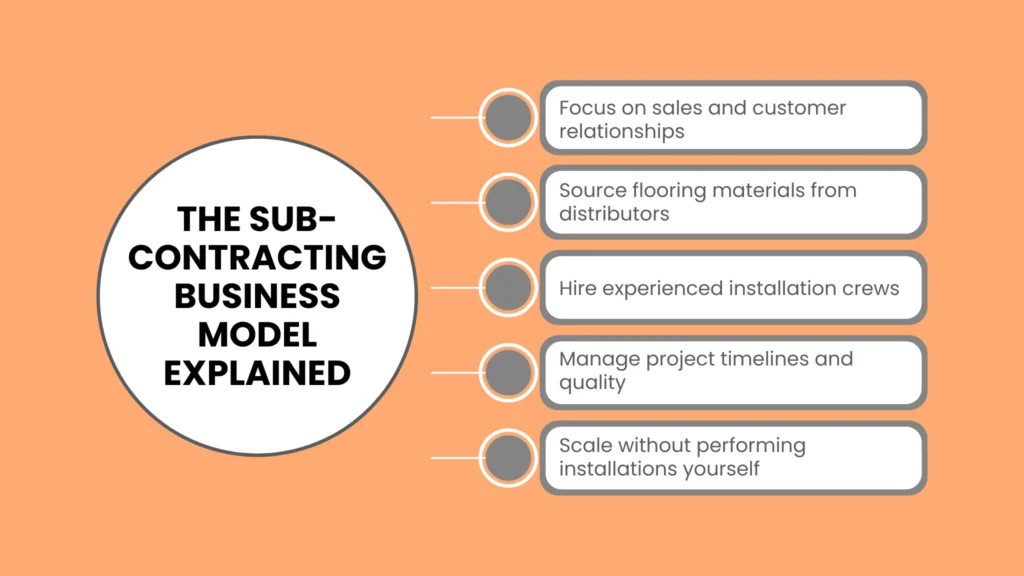
In this structure, your role focuses on business operations:
Sales and Estimating: Meeting with homeowners or commercial clients, measuring spaces, and delivering quotes.
Material Sourcing: Securing bulk pricing from flooring distributors and manufacturers.
Project Management: Hiring experienced, independent flooring installers to execute the labor while you oversee quality control and timelines.
This model lets you leverage the technical skills of seasoned installers while you focus on marketing, branding, and customer relationships.
Is Flooring Business Profitable in 2026?
Before investing your time and capital, you need a clear answer to a foundational financial question: is flooring business profitable enough to justify the effort?
Yes, entering the flooring industry is highly profitable. Demand for home renovation remains strong, and floor covering replacements consistently rank among the top home improvement projects by consumer expenditure.
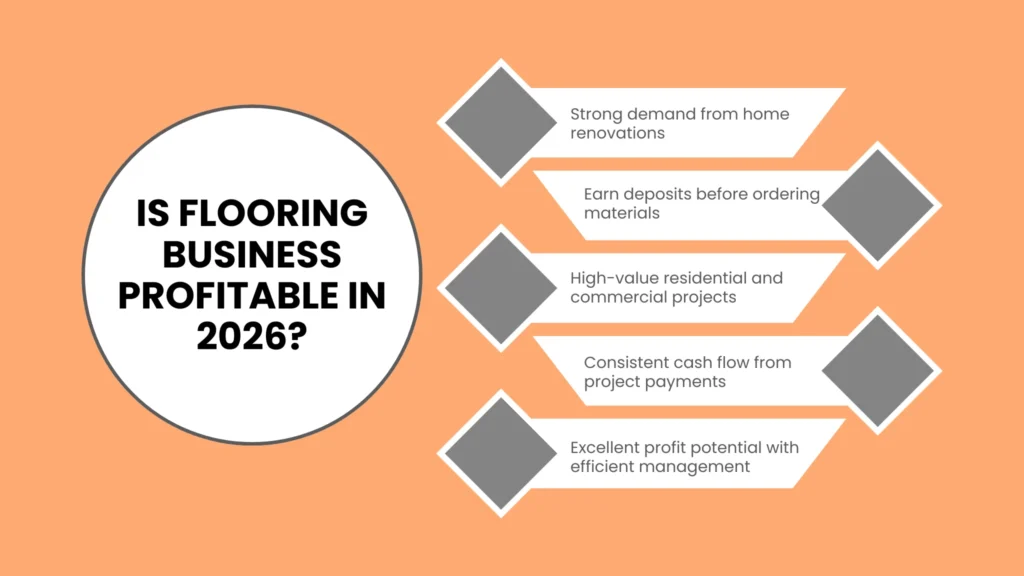
The profitability of a flooring company stems from its strong cash flow dynamics. Homeowners typically pay a 50 percent deposit upfront before materials are ordered, meaning you use the client’s funds to cover job supplies rather than taking on massive debt.
Impact on the Flooring Business Profit Margin
Managing your pricing structure effectively protects your overall flooring business profit margin and keeps your enterprise healthy.
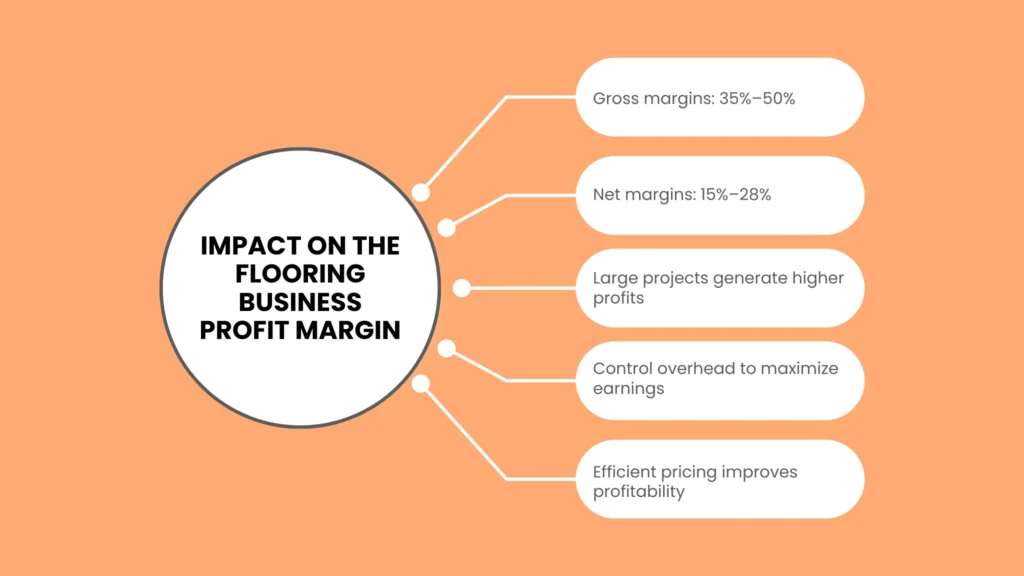
On average, a typical flooring business profit margin breaks down into two distinct levels:
Gross Profit Margin: Ranges from 35 percent to 50 percent. This is the profit left over after paying for materials (hardwood, tile, vinyl, carpet) and direct installer labor.
Net Profit Margin: Ranges from 15 percent to 28 percent. This is your actual take-home profit after accounting for marketing, insurance, software tools, vehicle expenses, and office overhead.
Because flooring installation involves high ticket sizes—a typical residential project often ranges between 3,000 and 10,000 dollars even a modest net margin yields substantial dollar profits per job.
Breakdown of Initial Flooring Business Cost
Compared to heavy civil construction or brick-and-mortar retail, the initial flooring business cost is relatively low, especially if you operate a mobile business without a costly showroom.
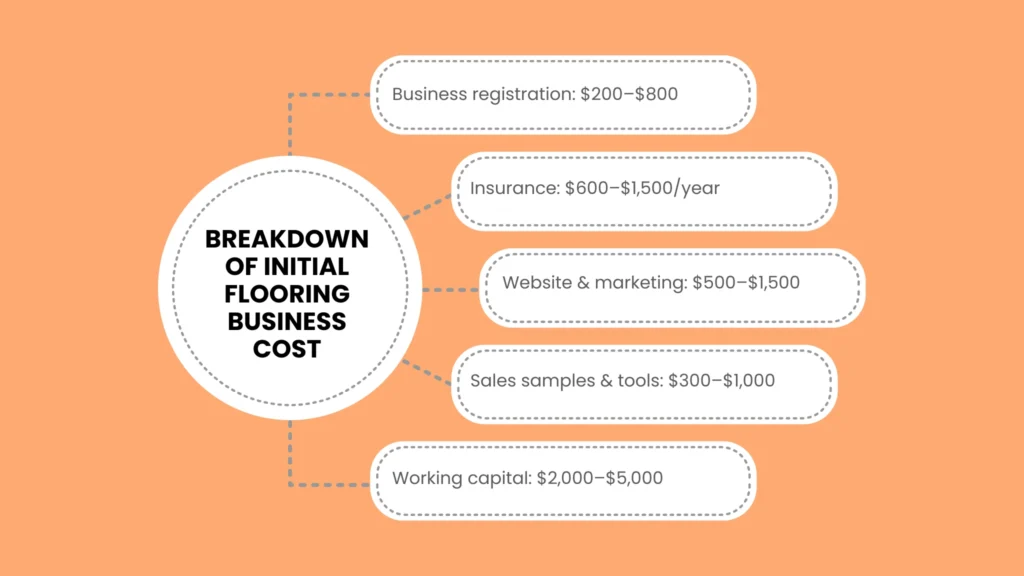
Here is an estimated budget breakdown for launching a mobile flooring installation company:
| Expense Category | Estimated Startup Cost | Primary Purpose | Business Impact Level |
| Business Registration & Licenses | $200 to $800 | LLC formation, local trade licenses, state tax registration. | Mandatory legal foundation. |
| Commercial Liability Insurance | $600 to $1,500 (annual) | Protecting your business against job site damages. | Critical for customer trust. |
| Digital Marketing & Website | $500 to $1,500 | Professional website, local SEO, Google Business Profile, initial ads. | Essential for generating immediate leads. |
| Sales Samples & Estimating Tools | $300 to $1,000 | Purchasing flooring manufacturer sample books, laser measures, and moisture meters. | Primary tool for closing sales. |
| Working Capital Reserve | $2,000 to $5,000 | Buffer for initial cash flow, fuel, software subscriptions, and merchant fees. | High security for operational smooth sailing. |
If you start as a mobile consultation service where you bring floor samples directly to the customer’s living room, your total startup investment can easily stay under 10,000 dollars.
Essential Flooring Business Requirements
Before taking on your first paying client, you must clear several operational milestones. Meeting baseline flooring business requirements ensures you avoid fines, protect your assets, and project instant authority.
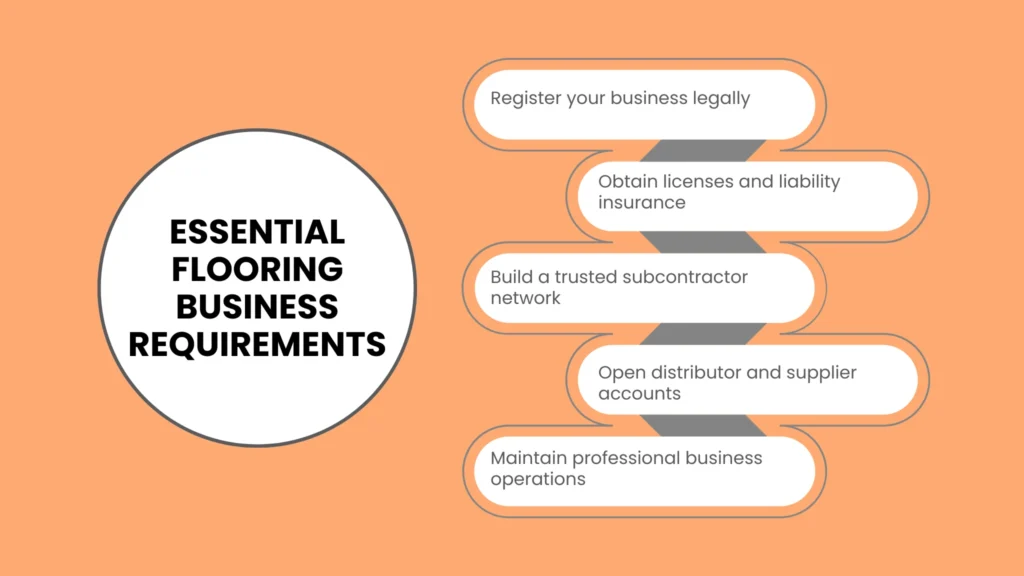
Legal Business Structure
Form an official business entity, such as a Limited Liability Company (LLC). Operating as an LLC separates your personal assets from your business liabilities in case of job site accidents.
Trade Licensing and Insurance
Check your local city and state requirements. While many areas do not require a master contractor license for basic floor coverings, most jurisdictions mandate a general handyman or specialty trade license. You must also carry General Liability Insurance (typically a 1-million-dollar policy) to cover potential property damage.
Reliable Sub-Contractor Network
Because you are not installing the floors yourself, your business reputation relies entirely on your labor force. Vet local installation crews thoroughly. Check their past work, verify their own worker’s compensation insurance, and run small test jobs before assigning them major residential installations.
Manufacturer and Distributor Accounts
Set up pro-tier accounts with local flooring distributors and wholesalers. Securing trade discounts on hard surface materials (like luxury vinyl tile or engineered hardwood) allows you to mark up materials for added profit while keeping client pricing competitive.
Step-by-Step Guide to Getting Started With No Experience
If you are ready to launch your enterprise, follow this straightforward operational roadmap:
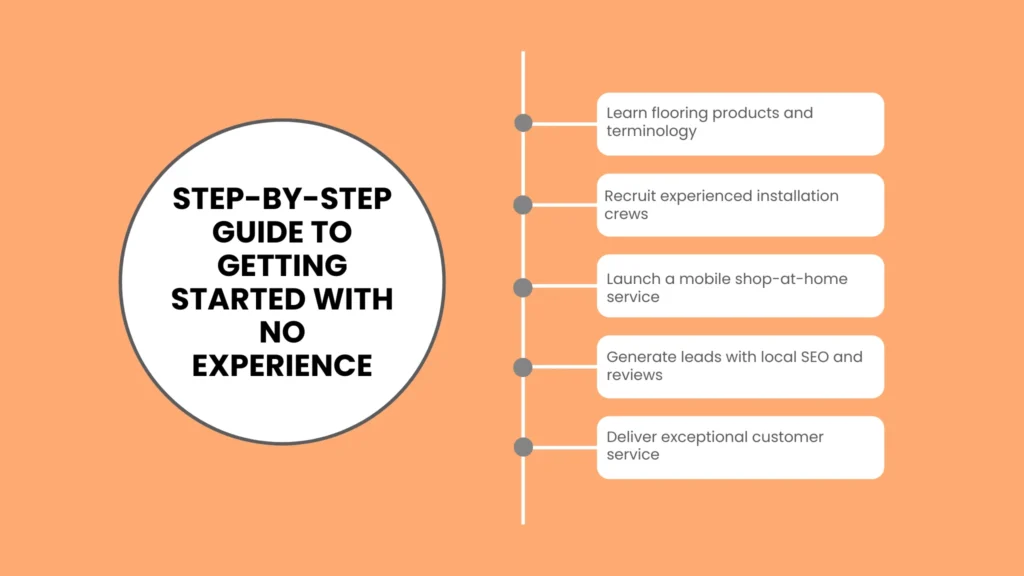
Step 1: Learn the Terminology and Material Basics
You do not need to know how to install tile, but you must know the difference between Solid Hardwood, Engineered Hardwood, Luxury Vinyl Plank (LVP), and Stone Plastic Composite (SPC). Spend a week studying material specs, subfloor preparation requirements, and underlayment options.
Step 2: Build Your Network of Sub-Contractors
Reach out to local independent installers through trade groups or job boards. Offer them consistent, reliable job volume in exchange for quality workmanship and fair labor rates.
Step 3: Establish a Mobile Shop-at-Home Model
Skip expensive commercial real estate leases. Build a mobile showroom by stocking your vehicle with portable sample boards from your wholesale distributors. Homeowners love the convenience of matching floor samples directly against their home lighting and furniture.
Step 4: Master Local Lead Generation
Set up a professional Google Business Profile, create a clean website, and collect reviews aggressively after every completed project. Run targeted local search ads to capture homeowners actively looking for flooring replacement services.
Step 5: Focus on High-Touch Customer Service
Contractors are notoriously known for poor communication, late arrivals, and messy job sites. Outshine your local competition by providing instant estimates, maintaining clear communication, and keeping job sites clean. Superior customer service will drive high-margin referral business.
Summary and Next Steps
Starting a flooring company without technical trade experience is entirely achievable when you approach it as a business strategist rather than a laborer. By building a network of skilled sub-contractors, setting up a mobile sales process, and maintaining strong profit margins, you can build a highly scalable, profitable business.
Building a sustainable service enterprise requires absolute clarity on business operations, financial modeling, and strategic scaling. For deeper blueprints on launching companies, building modern operational frameworks, and mastering local growth strategies, explore our practical guides over at reliablestartup.
Frequently Asked Questions
Do I need a physical showroom to run a successful flooring company?
No, a physical showroom is not required. Many modern flooring entrepreneurs operate highly successful “shop-at-home” mobile models. Bringing high-quality samples directly to the client’s home cuts down on overhead expenses while delivering a better, personalized shopping experience.
How do I accurately estimate flooring jobs if I have no experience?
Use digital estimating software and laser measuring tools to get precise room dimensions. Most floor calculations simply require calculating total square footage and adding a 10 percent waste factor. For labor costs, rely on fixed square-foot quotes provided by your sub-contractors.
What is the most popular flooring material to sell right now?
Luxury Vinyl Plank (LVP) and Stone Plastic Composite (SPC) represent the fastest-growing categories in residential flooring. Homeowners prefer these materials because they are 100 percent waterproof, highly scratch-resistant, affordable, and easy to maintain.
How do I ensure my sub-contractors do quality work?
Inspect every job site in person during installation and immediately after completion before releasing final payment to the crew. Require installers to follow manufacturer installation guidelines, provide client sign-off sheets, and offer a standard 1-year labor warranty on their work.