Cleaning Business Insurance: Complete Coverage Guide
Key Takeaways
Financial protection against property damage and injuries
Crucial requirement for getting a cleaning business license
Boosts trust with clients via bonded and insured cleaning
Covers expensive equipment, lost keys, and stolen items
Flexible coverage options suited for any business size
Starting a cleaning service is an exciting adventure, isn’t it? You get to be your own boss, set your own hours, and transform messy spaces into sparkling fresh rooms. But what happens if a bleach bottle spills on an expensive hardwood floor? Or a team member accidentally breaks a client’s imported crystal vase?
That is where cleaning business insurance saves the day. In simple terms, this coverage acts as your safety net so an unexpected mistake doesn’t wipe out your bank account.
Cleaning business insurance protects your company against financial loss caused by property damage, accidents, and theft. Having general liability cleaning business coverage helps you meet local cleaning business license rules and lets you advertise bonded and insured cleaning services. It builds trust with home and business owners while keeping your hard-earned profits completely safe.
Why Do You Actually Need Cleaning Business Insurance?
Imagine walking into a high-end office to clean their glass windows. You drop a heavy bucket, cracking a custom marble tile underneath. Without coverage, that single mistake could cost thousands out of pocket.
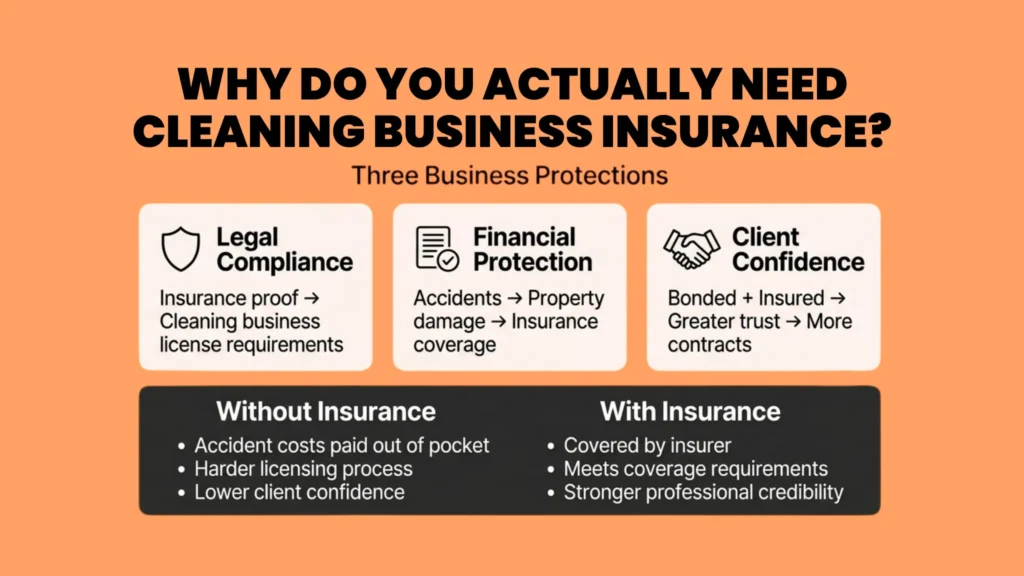
Having a strong general liability cleaning business plan ensures that those accident bills get paid by your insurer, not your savings.
Meeting Legal Rules
Did you know that most cities require proof of coverage before issuing a cleaning business license? It is true. Local governments want to make sure you can pay for any damage caused while working.
If you are just launching your enterprise, checking out guides on reliablestartup.com can help you tackle these early legal requirements smoothly.
Building Client Trust
Clients are naturally cautious about letting strangers into their private homes or offices. When you advertise as a bonded and insured cleaning team, customers feel instant peace of mind. It shows you are serious, professional, and prepared for worst-case scenarios.
| Benefit | Without Insurance | With Insurance |
| Accident Costs | Paid entirely out of pocket | Covered by insurance provider |
| Licensing | Hard to obtain a cleaning business license | Meets local government requirements |
| Client Trust | Harder to win high-paying contracts | Builds immediate trust and confidence |
Essential Types of Coverage for Cleaners
Not all insurance policies do the same job. You usually need a few dynamic layers to stay fully protected.
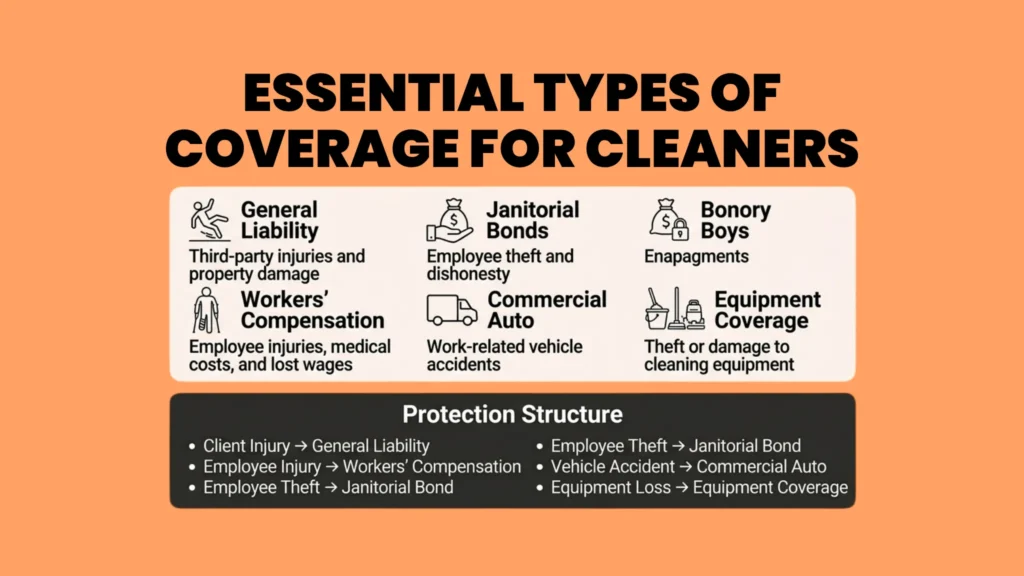
General Liability Insurance
This is the foundational policy for any cleaner. A standard general liability cleaning business policy covers third-party bodily injuries and property damage. For instance, if a homeowner slips on a wet floor you just mopped, this policy handles their medical bills.
General Liability Insurance covers slips, trips, and property damage. Janitorial Bonds cover theft and dishonesty. Workers’ Compensation covers crew injuries and medical costs.
Janitorial Bonds
People love seeing the phrase bonded and insured cleaning on a company flyer. But what does “bonded” actually mean? Bonds protect your client if an employee steals something from their property.
While we all hope to hire honest staff, having a bond reassures your clients that they will be reimbursed if something disappears.
Workers’ Compensation
If you hire a team, most states legally require workers’ comp. Cleaning is physical work, and injuries happen—like pulling a back muscle lifting heavy gear or slipping on stairs.
Workers’ comp pays for your employee’s medical expenses and lost wages while they recover.
Commercial Auto and Equipment Coverage
Do you drive a dedicated van loaded with mops, vacuums, and chemicals? Personal auto policies generally will not cover accidents that occur while driving for work.
Special commercial auto coverage keeps your vehicles on the road, while equipment tools coverage protects your expensive gear against theft or damage.
How Much Does Cleaning Business Insurance Cost?
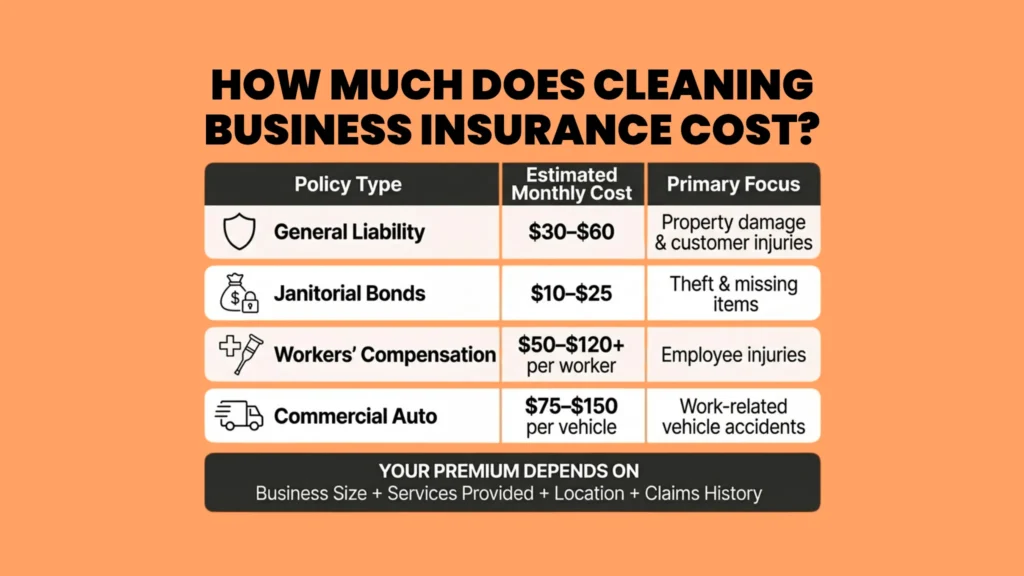
How much money will this actually cost you every month? Generally, small residential cleaning operations pay around $30 to $60 per month for basic liability. Commercial crews handling large office spaces might pay a bit more due to higher risks.
Key Factors Affecting Your Rate
Business Size: More employees increase your overall risk profile.
Services Provided: Cleaning exterior high-rise windows costs more to insure than cleaning residential carpets.
Location: Busy metropolitan areas usually feature higher premium rates.
Claims History: Fewer past claims lead to lower monthly payments.
| Policy Type | Estimated Monthly Cost | Primary Coverage Focus |
| General Liability Cleaning Business | $30 – $60 | Property damage and customer injuries |
| Janitorial Bonds | $10 – $25 | Theft protection and missing items |
| Workers’ Compensation | $50 – $120+ per worker | Employee workplace injuries |
| Commercial Auto | $75 – $150 per vehicle | Vehicle accidents during work hours |
Step-by-Step: How to Get Your Cleaning Business Insured
Getting covered is easier than you might think. You do not need to spend days navigating complicated paperwork.
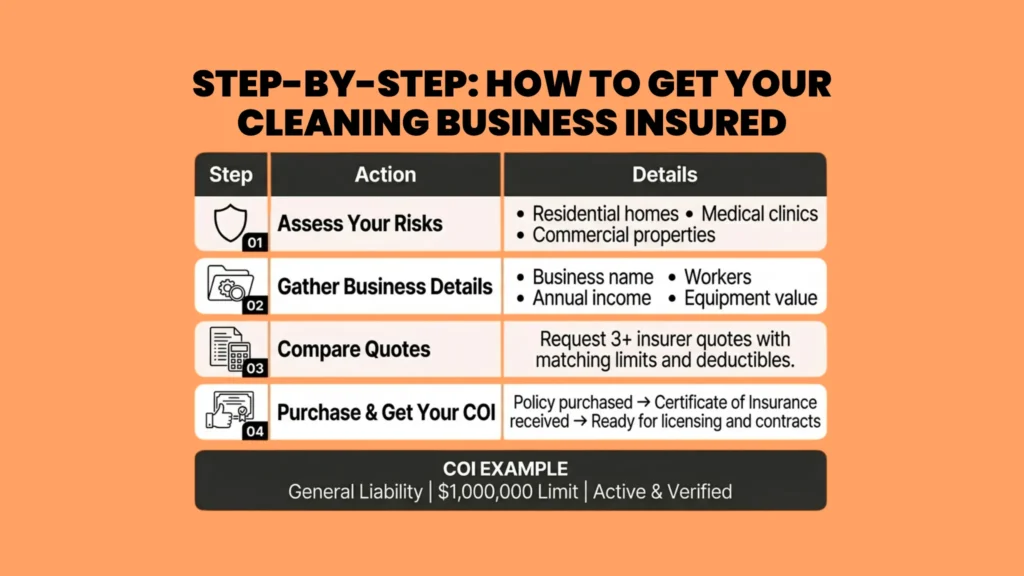
Step 1: Assess Your Business Risks
Take a close look at what your business does daily. Do you clean private homes, medical clinics, or giant commercial spaces? Knowing your scope helps you pick the right coverage without overpaying for things you do not need.
Step 2: Gather Your Business Details
Insurance providers will ask for basic details about your setup. Have your business name, estimated annual income, number of workers, and equipment value ready.
If you are still setting up your company structure, reliablestartup.com offers great resources for organizing your paperwork properly.
Step 3: Compare Quotes Online
Never buy the very first policy you find. Shop around and request quotes from at least three different insurers.
Make sure you are comparing identical coverage limits and deductibles so you get an accurate comparison.
Step 4: Purchase and Get Your Certificate
Once you pick the best policy, pay your initial premium. The insurer will give you a Certificate of Insurance (COI). Keep this document handy—you will need it to obtain your cleaning business license and win prospective client contracts!
Certificate of Liability Insurance details include the Insured Name (Bright Cleaners LLC), Coverage Type (General Liability Cleaning Business), Limit ($1,000,000), and Status (Active & Verified).
Common Mistakes Cleaners Make With Insurance
It is easy to skip reading the fine print when you are busy trying to find new clients. However, making a few common missteps can leave you surprisingly unprotected when you need help most.
Buying Only the Bare Minimum
Getting the cheapest policy might satisfy local rules for a cleaning business license, but it could leave huge gaps. For instance, standard policies might not cover lost client keys or damage to items in your direct care. Always check what exclusions exist in your policy document.
Forgetting to Update Your Policy
Your business will grow over time! If you hire three new employees or start cleaning commercial properties instead of small apartments, tell your insurer immediately. Operating outside your original policy terms can cause claims to be denied.
Real-World Scenarios: How Coverage Saves You
Let’s look at a couple of realistic examples to see how these policies work in real life.
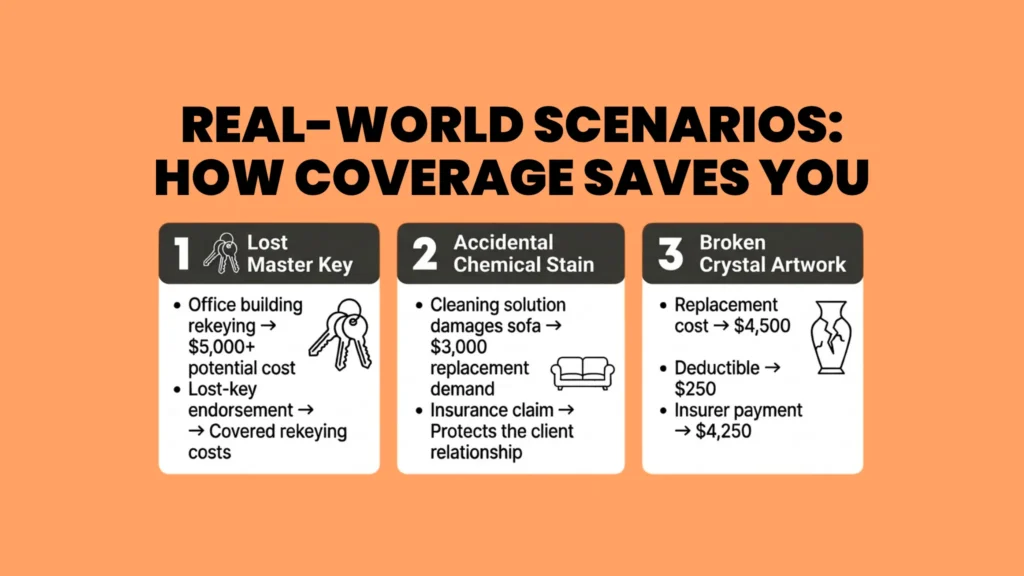
The Lost Master Key
Imagine accidentally losing the master key ring for an entire office building you clean on weekends. Replacing all the physical locks and rekeying the doors can easily run upwards of $5,000.
A standard general liability cleaning business plan with a lost key endorsement covers rekeying costs so you don’t pay out of pocket.
The Accidental Chemical Stain
You are using a specialized cleaning solution on a client’s sofa, but it accidentally strips the fabric’s color. The customer demands a $3,000 replacement couch immediately. Because you operate a bonded and insured cleaning company, your insurer handles the claim smoothly, keeping your client relationship intact.
Scenario: Broken Crystal Artwork
For a total replacement cost of $4,500, having no insurance means paying $4,500 directly out of pocket. With insurance, you only pay a $250 deductible while the insurer pays the remaining $4,250.
How Insurance Helps You Win Better Contracts
Did you know that insurance is actually a powerful marketing tool? Large commercial clients and wealthy homeowners won’t even talk to you unless you show proof of insurance first.
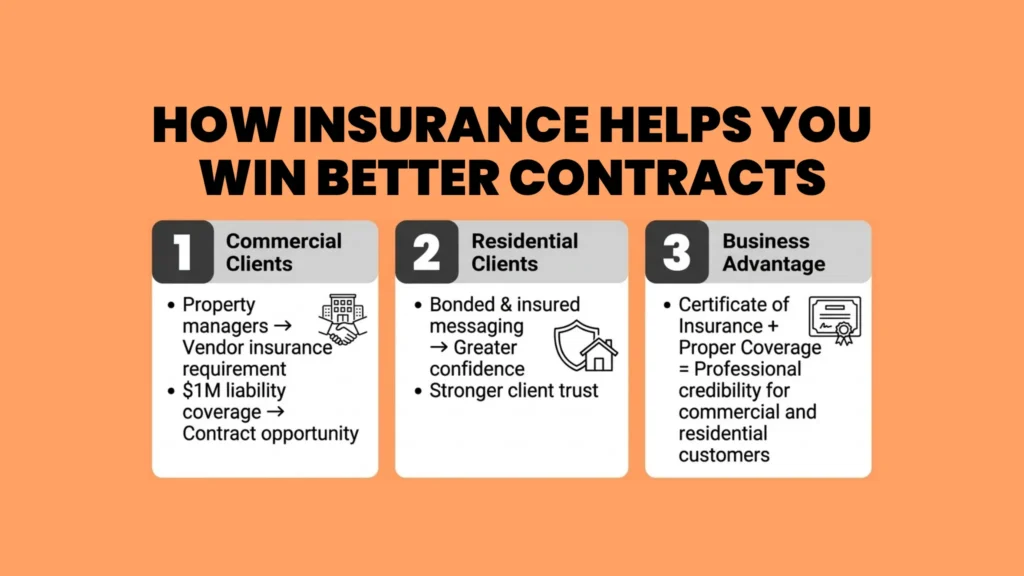
Landing Commercial Accounts
Property managers need to protect their commercial buildings. They typically require every vendor to carry at least $1,000,000 in liability coverage. Having your certificate ready puts you far ahead of informal competitors who skip proper coverage.
Winning Residential Clients
Homeowners want to know their personal property is safe. Displaying that you offer bonded and insured cleaning on your website, business cards, and quotes builds instant confidence.
If you want tips on presenting your brand professionally to clients, check out reliablestartup for startup guides.
Checklist for Maintaining Your Insurance
To keep your business running smoothly, follow this simple routine checklist:
Review your policy limits once every year.
Instantly add new vehicles or big equipment purchases to your policy.
Store physical and digital copies of your Certificate of Insurance.
Promptly report any client accidents or injuries to your insurer.
Keep clean records of employee hiring and safety training efforts.
Final Thoughts
Setting up proper cleaning business insurance isn’t just about following local laws it is about securing your business’s future. Accidents happen to even the most careful cleaners, but having the right policies turns major disasters into minor bumps in the road.
By securing a proper cleaning business license, getting adequate liability coverage, and offering bonded and insured cleaning, you build a stable foundation for long-term business success.
Frequently Asked Questions
What is cleaning business insurance?
Cleaning business insurance is a set of policies that protects your company from financial claims related to property damage, injuries, or theft.
How much does general liability coverage cost for cleaners?
Generally, basic general liability coverage costs between $30 and $60 per month for small residential cleaning companies.
Why do I need to be bonded and insured?
Being bonded and insured protects your clients against theft or property damage, making it much easier to win trust and sign contracts.
Is insurance required for a cleaning business license?
In most cities and states, proof of general liability insurance is mandatory before you can receive an official cleaning business license.
What does janitorial bonding actually cover?
Janitorial bonds specifically protect your clients if an employee steals money, equipment, or personal belongings from their premises.