Software Engineer Jobs at Startups vs Big Tech: What’s Better?
Choosing where to invest your engineering talent is one of the most consequential decisions of your career. In the current technology ecosystem, the choice is no longer just about perks or office locations. The structural differences between building products at an agile, venture-backed company versus an established, public tech giant have widened significantly.
So, which path should you choose? If you are looking for a definitive answer on whether software engineer jobs at startups are better than Big Tech, it comes down to your personal risk tolerance, preferred learning style, and financial goals. For engineers who prioritize rapid career velocity, broad product ownership, and high-upside equity, early-stage companies are the superior choice. For those seeking maximum baseline compensation, structured mentorship, and predictable work hours, Big Tech wins.
Let us unpack the real-world trade-offs between these two career paths, breaking down the financial metrics, baseline requirements, and long-term profitability of each choice.
Defining the Two Paths: Startup Ecosystem vs. Big Tech
To make an accurate comparison, we must define what these environments actually look like today.
A startup typically refers to a pre-revenue, Seed, or Series A to C company funded by venture capital. The team is lean, infrastructure is being built from scratch, and the company is actively chasing product-market fit.
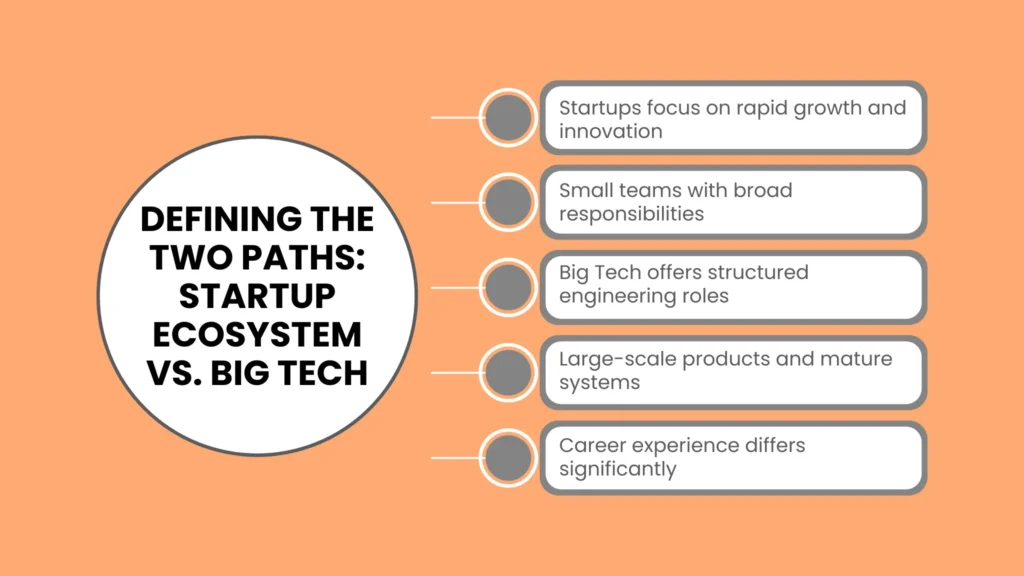
Conversely, Big Tech represents publicly traded giants, often referred to as FAANG (Facebook/Meta, Amazon, Apple, Netflix, Google) or equivalent tier-one enterprises. These organizations operate at massive global scale, feature highly specialized teams, and possess deeply entrenched operational structures.
Is Software Engineer Jobs at Startups Profitable?
When evaluating a career move, you have to ask a foundational wealth question: is software engineer jobs at startups profitable compared to the guaranteed cash flow of an established giant?
The answer hinges entirely on how you value equity. From a pure, short-term cash perspective, public tech giants almost always yield higher immediate profitability for the individual engineer. Big Tech offers liquid stock units that you can convert to cash the moment they vest.
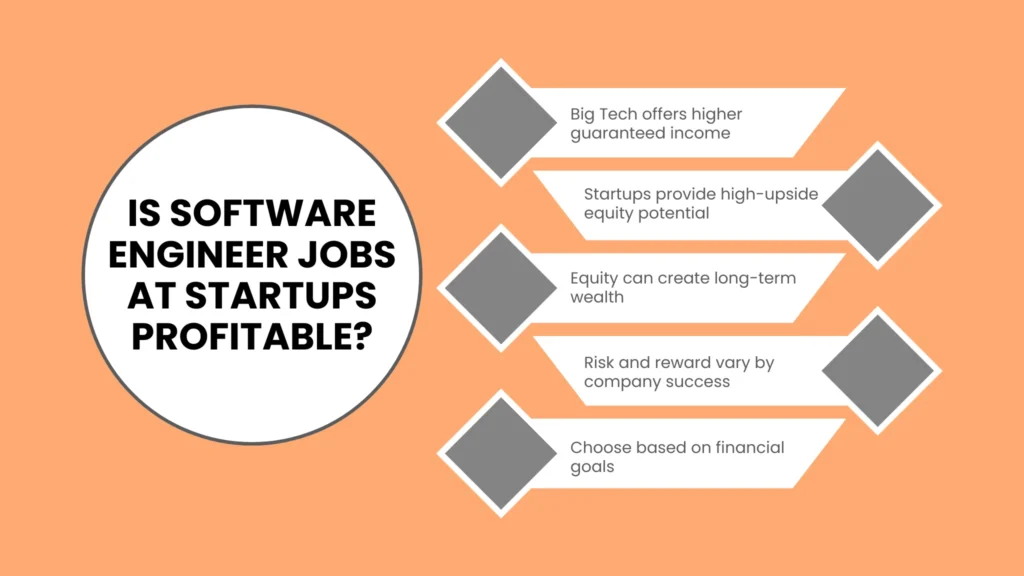
However, software roles at early-stage companies can become astronomically profitable if you join a successful company early. Receiving stock options at a low strike price means that a successful acquisition or public market debut can generate life-changing wealth that standard corporate salaries simply cannot match. It is a classic high-risk, high-reward financial equation.
Impact on the Software Engineer Jobs at Startups Profit Margin
If you treat your career as a business, your personal profit margin is calculated by subtracting your cost of living and professional burnout from your total compensation. The structural differences between these two paths heavily influence this calculation.
At an early-stage company, the software engineer jobs at startups profit margin can sometimes be compressed by the sheer volume of hours required. It is not uncommon for early engineers to work extended hours to hit critical product launch deadlines. If you break down a startup salary on a strict hourly basis, the margin might look lower initially.
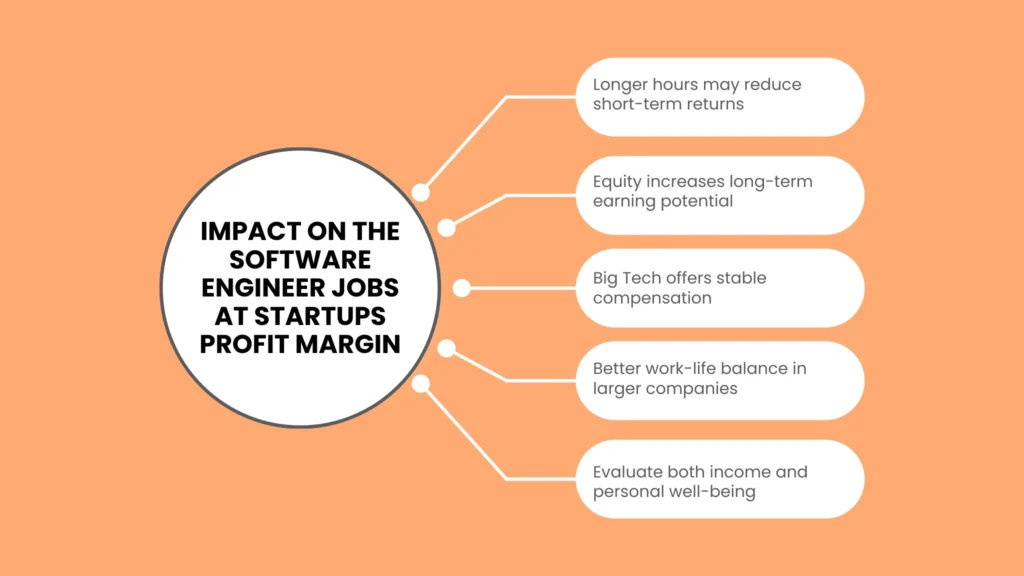
In contrast, Big Tech roles often provide a highly optimized margin. Because these organizations have vast engineering resources, individual developers rarely have to carry an entire infrastructure on their backs. You enjoy clear boundaries, robust benefits, and liquid equity, giving you a highly efficient return on your daily energy investment.
Breakdown of Software Engineer Jobs at Startups Cost
Entering the startup arena comes with an implicit opportunity cost. The software engineer jobs at startups cost is essentially the guaranteed cash compensation you give up by choosing a volatile equity package over a public corporate contract.
Based on available compensation data, here is an estimated breakdown of how total compensation structures compare across different company tiers:
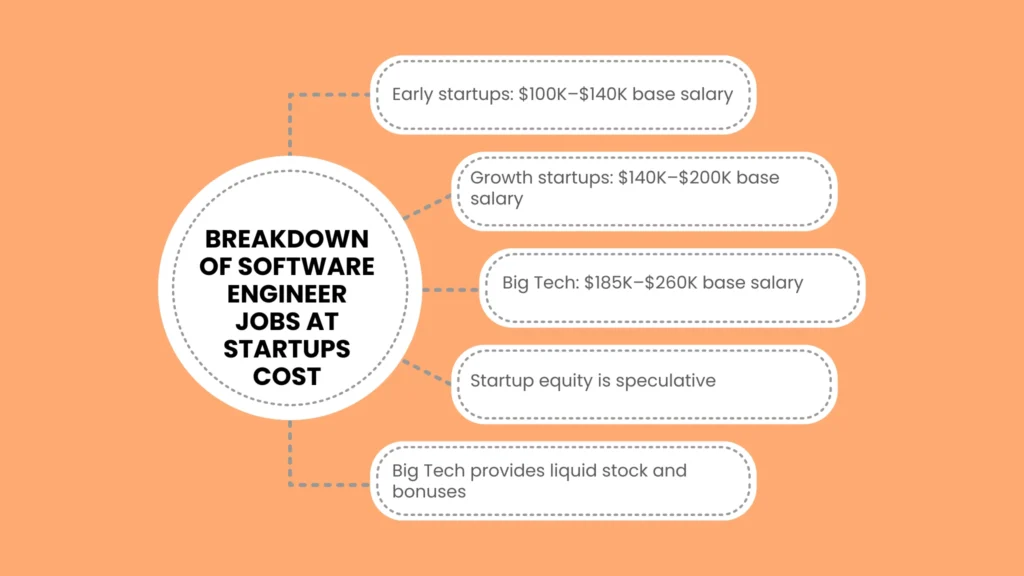
| Company Classification | Estimated Base Salary | Equity Type & Liquidity | Annual Performance Bonus |
| Early-Stage Startup (Seed to Series A) | $100,000 to $140,000 | Stock Options (Highly Illiquid, Speculative Upside) | Generally 0% (Rarely offered) |
| Growth-Stage Startup (Series B to C) | $140,000 to $200,000 | Stock Options / RSUs (Illiquid, Moderate Exit Potential) | 0% to 10% (Tied to milestone targets) |
| Big Tech / FAANG (Mid to Senior Level) | $185,000 to $260,000 | Restricted Stock Units (Highly Liquid, Publicly Traded) | 10% to 20% (Highly predictable cash) |
Choosing a smaller company means accepting a lower cash baseline in exchange for a percentage of the company’s equity pool. If the company fails, that opportunity cost becomes a permanent financial loss. If it succeeds, the upside can dwarf the Big Tech baseline.
Foundational Software Engineer Jobs at Startups Requirements
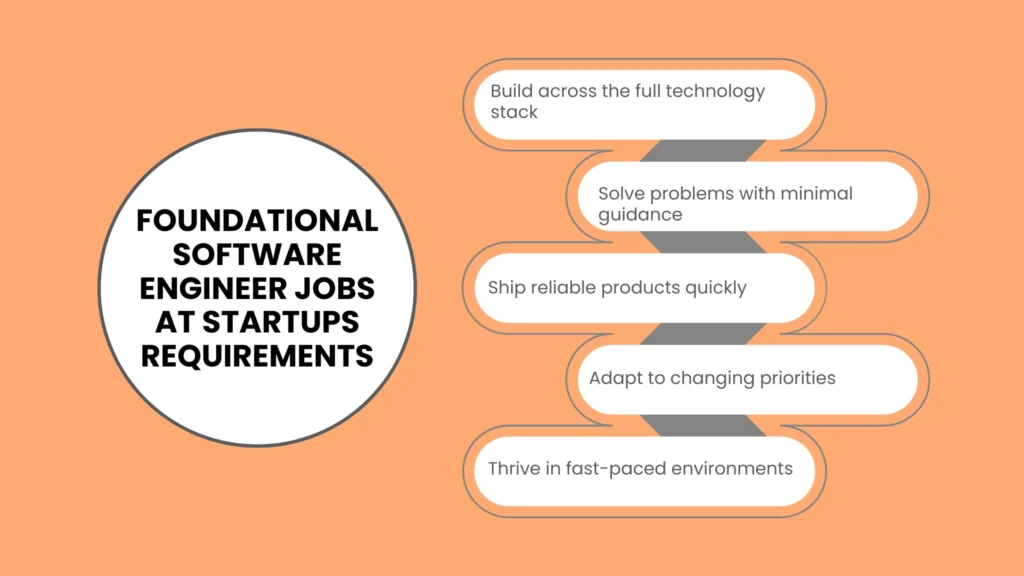
Landing a role at a fast-moving younger company requires a completely different tactical skillset than passing a standardized corporate engineering interview panel. The core software engineer jobs at startups requirements prioritize adaptability over deep specialization.
Radical Technical Generalism
While a large corporation might hire you to optimize a single internal database microservice, a young company needs you to build a frontend interface, configure the cloud hosting environment, and patch a database bug all in the same afternoon. You must be comfortable working across the entire technology stack.
Ambiguity Management
Early companies rarely possess clean documentation, structured onboarding tracks, or dedicated product specifications. A core requirement is the ability to look at a vague business problem, talk directly to a customer, and design a technical solution without waiting for managerial permission.
Rapid Product Execution
At a major corporation, getting a code change pushed to production might require weeks of architectural reviews, security audits, and compliance checks. Startups require speed. You must be capable of shipping functional, reliable code quickly, accepting that shipping a good product today is better than shipping a perfect product next quarter.
Core Advantages of Each Path
To help finalize your career roadmap, let us summarize the defining advantages that each environment offers to technical professionals.
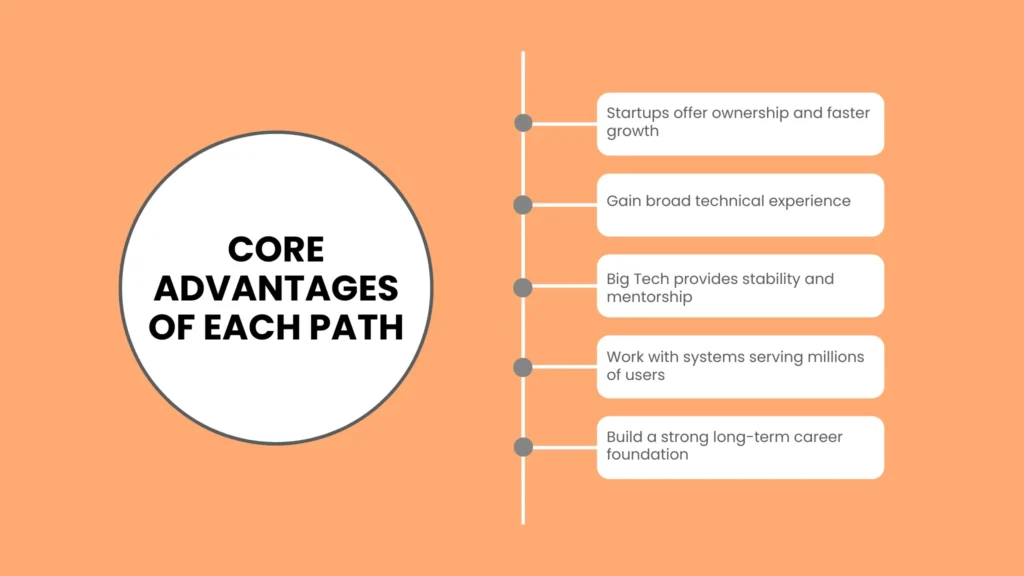
The Startup Advantage: Autonomy and Velocity
Working at a lean company provides an unmatched technical laboratory. Because the engineering team is small, your individual contributions have a massive, visible impact on the business survival. You get to make high-level architectural decisions, play a direct role in product design, and fast-track your path into technical leadership or management positions much faster than traditional corporate promotion ladders allow.
The Big Tech Advantage: Scale and Stability
Public giants offer an unparalleled education in scale. You learn how to write code that serves millions of concurrent users securely and efficiently. Furthermore, having a prestigious corporate brand on your resume acts as a permanent professional credential, making it significantly easier to clear resume screens and secure interviews for the rest of your career.
Choosing Your Ideal Engineering Environment
Ultimately, the choice between these two environments is a reflection of your current career stage and personal lifestyle design. If you are eager to maximize your learning velocity, avoid corporate bureaucracy, and take a calculated bet on building an enterprise from the ground up, joining a lean engineering team is an incredible choice.
Navigating the modern tech ecosystem requires a clear, strategic framework for evaluating opportunities. If you are looking for data-driven playbooks on building software infrastructure, optimizing engineering workflows, or scaling early-stage operational systems, explore our library of building guides at reliablestartup.
Frequently Asked Questions
Which path is better for a junior software engineer right out of college?
Big Tech is generally safer for new graduates because it provides highly structured onboarding, dedicated engineering mentors, and best-in-class infrastructure practices. Startups offer an incredible “sink or swim” learning curve, but a lack of formal mentorship can lead to developing poor architectural habits early on.
How do I evaluate if a startup’s equity offer is actually fair?
Never look at the raw number of options offered. Instead, ask for the total number of outstanding shares so you can calculate your exact percentage ownership of the company. Additionally, clarify the current preferred share valuation, the most recent funding round details, and the company’s remaining cash runway.
Is job security significantly higher in Big Tech compared to early companies?
Historically, yes. Big Tech companies maintain massive cash reserves and diversified product lines, making them highly resilient. However, as market adjustments have shown, no corporate role is completely immune to restructuring. The advantage of a startup is that you always know exactly how much cash is left in the bank.
Can I transition easily from Big Tech back into a startup environment?
Yes, transitioning from a major corporation to a younger company is common. Startups value the disciplined engineering practices and scaling experience that big tech developers bring to the table. The primary challenge is adapting to the lack of specialized infrastructure and learning to move fast without extensive corporate support layers.