How Much Does It Cost to Start a Dump Truck Business With One Truck
Starting a single vehicle hauling operation is one of the most accessible entry points into the commercial transportation industry. The total cost to start a dump truck business with a single rig typically ranges from $15,000 to $45,000 if you finance your truck, or $70,000 to $160,000 if you purchase a reliable pre-owned rig outright. Total startup expenses depend on whether you purchase new or used equipment, state licensing requirements, insurance rates, and your initial working capital reserves.
Understanding your upfront investment helps you avoid cash flow bottlenecks during your first months of operation. This guide breaks down equipment costs, legal compliance fees, monthly operating expenses, profit margins, and essential requirements for launching a single-truck hauling business.
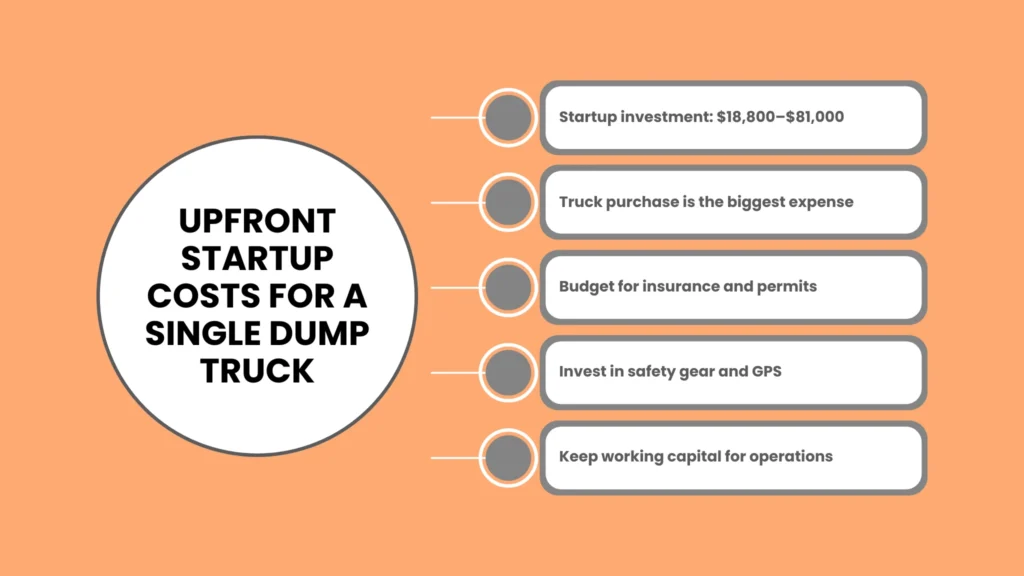
Upfront Startup Costs for a Single Dump Truck
Your initial financial outlay splits into equipment acquisition, legal setup, compliance, and initial cash reserves. Estimating your one truck dump truck business cost accurately ensures you secure adequate financing before taking on your first job.
1. Equipment Acquisition
The vehicle represents your largest single expense. A brand-new heavy-duty Class 8 tri-axle or quad-axle dump truck costs between $150,000 and $250,000. Most first-time owner-operators start with a reliable used truck priced between $40,000 and $90,000.
If you finance the vehicle, commercial lenders generally require a 10% to 20% down payment. For a $60,000 used truck, your initial down payment expectation is $6,000 to $12,000.
2. Commercial Auto Insurance Setup
Insurance costs represent a major part of your overall dump truck business cost. New motor carriers pay higher premiums because they lack an established safety track record.
First-year commercial auto policy premiums range from $8,000 to $14,000 annually per truck. Most insurers demand a down payment of 15% to 20% to activate coverage, which means an initial cash outlay of $1,500 to $2,800.
3. Business Registration and Licensing
Operating legally requires business structure filing and heavy vehicle registrations. Setting up a Limited Liability Company (LLC) costs between $100 and $500 depending on your state.
Additional administrative expenses include Heavy Highway Vehicle Use Tax (HVUT Form 2290), International Registration Plan (IRP) apportioned plates, USDOT registration, and local haulage permits. Budget around $1,000 to $2,500 for total compliance costs.
4. Operational Equipment and Tech
Your vehicle requires regulatory compliance hardware and basic operating tools before hitting job sites. An Electronic Logging Device (ELD) and GPS tracking system cost around $300 to $800 plus installation.
Safety gear including hard hats, high-visibility vests, steel-toe boots, tie-down chains, shovels, and tarps costs roughly $500 to $1,200. Professional door decals or truck wraps add another $500 to $2,000 for local brand presence.
5. Initial Working Capital
Working capital covers fuel, payroll, and unexpected maintenance during your first 30 to 60 days of operation. Construction clients and general contractors often pay on net-30 or net-60 day billing terms.
Carrying at least $5,000 to $10,000 in cash reserve prevents operational halts while waiting for unpaid invoices.
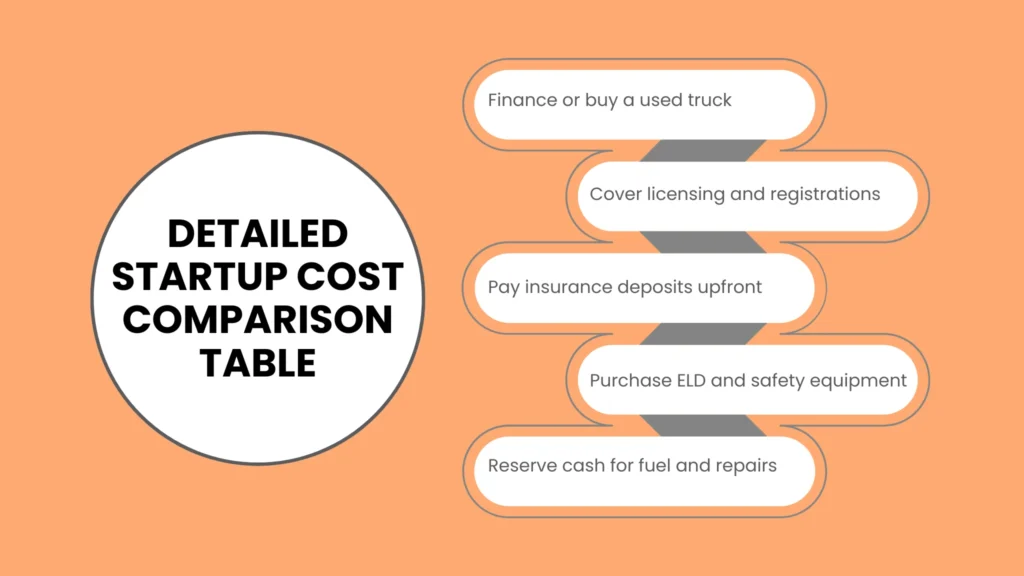
Detailed Startup Cost Comparison Table
The baseline investment changes significantly based on whether you buy your truck with cash or finance through a commercial lender. Here is a comparative cost breakdown for both startup pathways:
| Expense Category | Financed Used Truck Option | Cash Used Truck Option | Description & Notes |
| Truck Purchase / Down Payment | $6,000 – $12,000 | $50,000 – $90,000 | 10%-20% down vs 100% upfront purchase |
| Licensing & Business Setup | $1,000 – $2,000 | $1,000 – $2,000 | LLC, USDOT, MC Number, IRP Plates, HVUT |
| Insurance Down Payment | $1,500 – $2,800 | $1,500 – $2,800 | First month deposit (based on annual policy) |
| ELD, GPS, & Safety Tools | $1,000 – $2,500 | $1,000 – $2,500 | Regulatory hardware, safety gear, tarps |
| Truck Branding / Decals | $500 – $1,500 | $500 – $1,500 | USDOT lettering, business logos, contact info |
| Working Capital Reserve | $6,000 – $10,000 | $6,000 – $10,000 | Buffer for fuel, repairs, and slow payments |
| Total Initial Outlay | $16,000 – $30,800 | $60,000 – $109,800 | Total liquid cash required on launch day |
Ongoing Monthly Operating Expenses
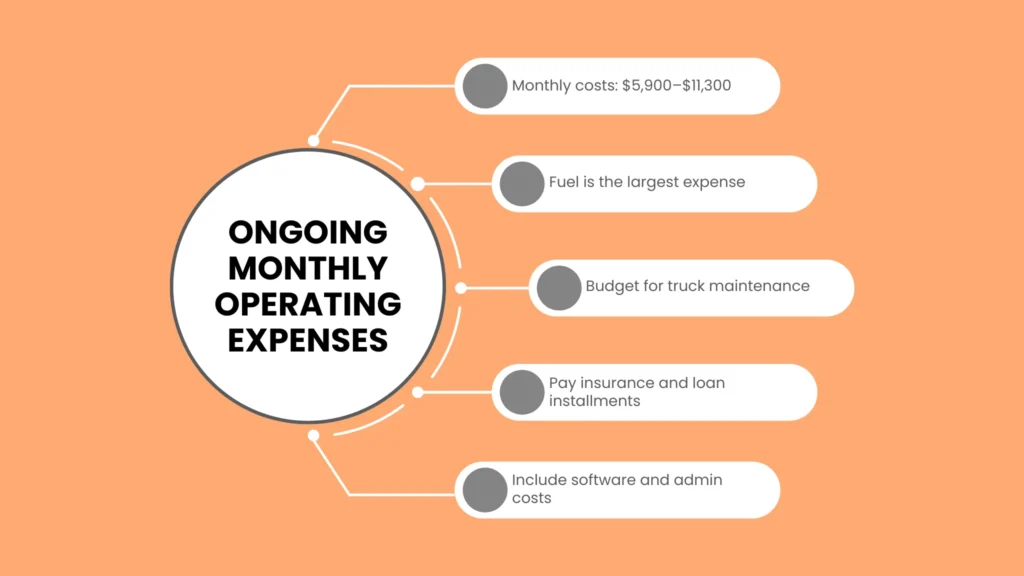
Launching your business is only the first step. Managing daily operating costs determines whether your company stays afloat. Monthly expenses fall into fixed costs and variable costs.
Variable Expenses
Fuel: Diesel fuel is your largest variable cost, taking up 25% to 35% of gross earnings. Expect to spend $3,000 to $5,500 per month depending on miles driven and load weight.
Maintenance and Repairs: Heavy hauling places stress on tires, brakes, hydraulics, and suspensions. Setting aside $0.15 to $0.25 per mile ensures you can cover scheduled oil changes and emergency repairs.
Tires: Replacing commercial dump truck tires costs between $300 and $600 per tire. A set of drive tires needs replacement every 40,000 to 70,000 miles.
Fixed Expenses
Truck Loan Payments: Financing a $50,000 balance over 48 to 60 months produces a monthly payment of $1,000 to $1,600.
Insurance Premiums: Monthly commercial auto policy installments average $700 to $1,200 per truck.
Administrative Costs: Dispatch software, ELD subscription, accounting services, and phone service average $200 to $500 monthly.
Essential Dump Truck Business Requirements
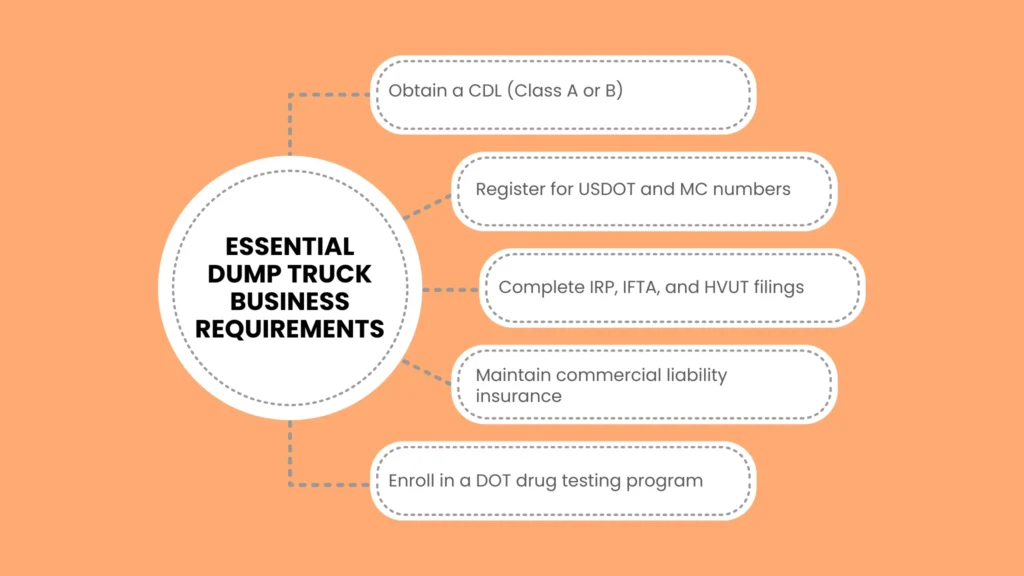
Meeting all regulatory dump truck business requirements before taking on jobs protects your operation from costly fines or groundings.
Commercial Driver’s License (CDL)
Most commercial dump trucks have a Gross Vehicle Weight Rating (GVWR) exceeding 26,000 pounds, requiring a Class A or Class B CDL. Obtaining your CDL costs between $3,000 and $7,000 in tuition if you attend a trucking school.
Federal and State Filings
If you transport materials across state lines or haul interstate freight, you must register for a USDOT number and Operating Authority (MC Number). Local intrastate haulers need state-specific DOT authority and local permits.
Safety and Drug Testing Compliance
Owner-operators must join a DOT random drug and alcohol testing consortium. Enrollment costs between $100 and $300 annually and satisfies mandatory federal transportation rules.
Is a Dump Truck Business Profitable? Revenue and Margins
Many prospective owner-operators ask: is dump truck business profitable with just one vehicle? The answer is yes, provided you manage operating costs, secure consistent contracts, and minimize vehicle downtime.
Revenue Breakdown
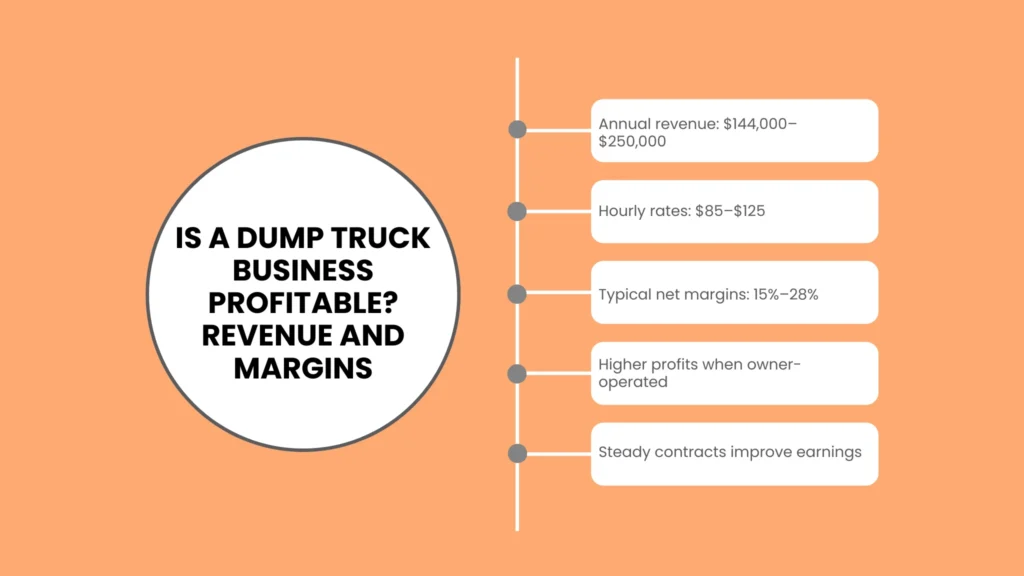
Dump truck operators bill by the hour or by the ton/load. Hourly rates for standard tri-axle dump trucks typically range from $85 to $130 per hour depending on geographic location and demand.
A single truck running 40 billable hours per week generates $3,400 to $5,200 in gross weekly revenue. Operating 48 weeks per year yields an annual gross revenue between $160,000 and $250,000 per truck.
Profit Margins
The average net dump truck business profit margin for an owner-operator who drives their own truck ranges from 15% to 28% after taking into account fuel, maintenance, insurance, and truck payments.
If you drive the vehicle yourself, your take-home pay includes driver wages plus company profit, resulting in total personal earnings of $50,000 to $90,000 per year. Hiring a hired driver reduces profit margins by $40,000 to $60,000 annually in wages and benefits.
Practical Ways to Lower Your Initial Setup Investment
Starting with limited capital requires strategic decision-making during purchase and setup phases.
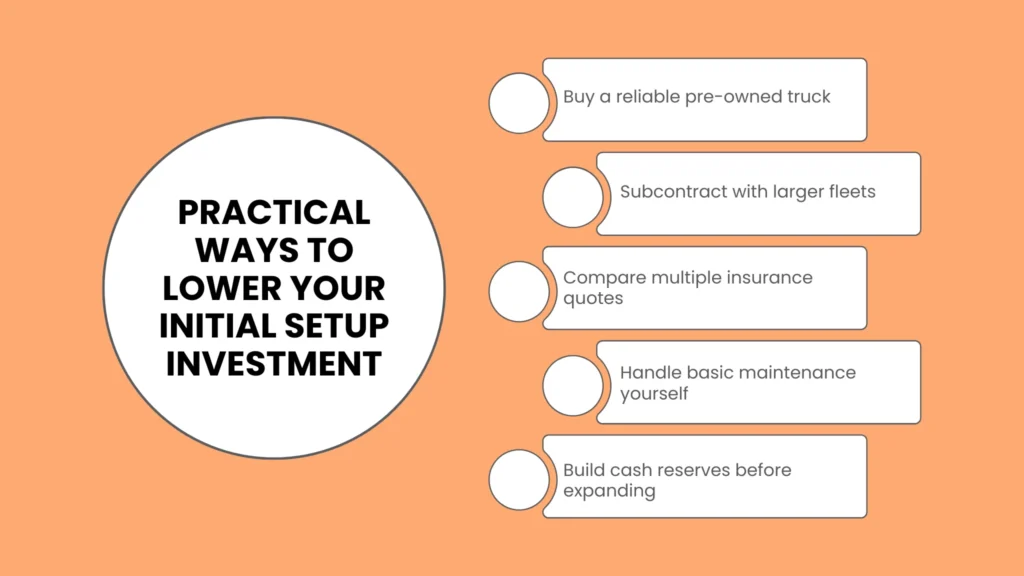
Buy a Quality Pre-Owned Rig: Purchasing a well-maintained 7 to 10-year-old truck reduces your capital requirements compared to buying new. Always invest $300 to $500 in a professional pre-purchase mechanical inspection.
Subcontract for Established Fleets: Building direct relationships with municipal contractors takes time. Subcontracting for larger regional fleet owners guarantees consistent work while you establish your brand.
Compare Commercial Insurance Quotes: Insurance rates vary drastically between providers. Working with an independent commercial transportation broker helps you find competitive rates.
Maintain Your Own Vehicle: Performing basic fluid changes, grease jobs, and filter replacements yourself saves thousands of dollars in shop labor costs over time.
Conclusion
The cost to start a dump truck business with one truck requires an initial cash investment between $16,000 and $35,000 when financing your vehicle. While acquiring equipment, securing insurance, and obtaining licenses demands capital, strong market demand for material hauling provides steady revenue potential for dedicated owner-operators.
Proper planning, controlling monthly fuel costs, and maintaining your truck ensure strong profit margins from year one. For entrepreneurs planning to market their new venture, build a digital presence, or establish modern operational assets, professional design and branding resources at reliablestartup can help position your fleet for long-term growth.
Frequently Asked Questions
How much cash reserve should I keep when starting out?
You should keep $6,000 to $12,000 in dedicated working capital reserve. This cash cushion covers fuel costs, maintenance emergencies, and operating expenses while waiting for invoice payments from contractors.
Do I need a CDL to start a dump truck business?
If your dump truck has a Gross Vehicle Weight Rating over 26,000 pounds, you or your employed driver must hold a valid CDL. Non-CDL light-duty dump trucks exist, but they have smaller payload capacities and lower earning potential.
How long does it take for a single dump truck to break even?
Most owner-operators achieve break-even status within 6 to 12 months of operation. Faster break-even timelines depend on securing steady long-term contracts and controlling variable maintenance costs.
Is it better to buy or lease your first dump truck?
Financing a reliable used truck is generally better for long-term profit because you build equity. Leasing offers lower upfront down payments, but mileage limits and strict wear-and-tear clauses can reduce profitability.