Cost to Start Rental Business in 2026: Numbers and Smart Budgets
The cost to start rental business in the U.S. ranges from $5,000 to over $900,000. That’s a massive spread, and most guides leave you guessing where you actually fit. At Reliable Startup, we cut through the noise.
This guide breaks down rental business startup cost across seven niches, the hidden expenses nobody warns you about, and exactly how much money to start rental business at any budget tier. Whether you’re eyeing a $7K party rental side hustle or a $200K equipment fleet, you’ll know your numbers before you spend a dollar.
The cost to start rental business in 2026 falls between $5,000 and $960,000 depending on the niche. Low cost rental startup options like party rentals or bike rentals start at $5K to $15K. Mid-tier rentals such as cars, tools, or vacation properties need $15K to $75K. Heavy equipment or commercial property rentals push into $75K to $900K territory. The average rental business investment 2026 sits between $15K and $50K for most first-time founders.
Average Cost to Start Rental Business in 2026
The U.S. equipment rental market is projected to hit $16.1 billion in 2026, and demand keeps climbing as more Americans choose access over ownership. So what does that mean for your wallet?
Most first-time founders spend between $15,000 and $50,000 to launch. The average annual revenue for a sole-proprietor equipment rental business sits around $168,007, with a 10% net profit margin. Top performers hit EBITDA margins above 40%.
You’ll typically reach consistent profitability within 12 to 18 months. Industry benchmarks point to a 60-70% utilization rate as the sweet spot for healthy cash flow. Below that, you’re bleeding money on idle inventory.
Rental Business Startup Cost by Type
Here’s what nobody else on Google shows you, a clean side-by-side of every major rental niche so you can pick your lane fast.
| Rental Business Type | Startup Cost Range | Monthly Operating Cost | Profit Margin | Best For |
|---|---|---|---|---|
| Party & Event Rentals | $5,000 – $15,000 | $1,500 – $3,000 | 30–40% | Side hustlers |
| Bike Rentals | $10,000 – $25,000 | $2,000 – $4,000 | 25–35% | Tourist areas |
| Tool Rentals (small) | $15,000 – $40,000 | $3,000 – $5,000 | 20–30% | Suburban markets |
| Car Rentals (small fleet) | $10,000 – $50,000 | $5,000 – $12,000 | 15–25% | Urban hubs |
| Vacation Property | $68,000 – $391,000 | $1,500 – $4,000 | 30–50% | Long-term builders |
| Camera/Photo Equipment | $50,000 – $75,000 | $4,000 – $8,000 | 25–35% | Creative cities |
| Heavy Construction Equipment | $150,000 – $960,000 | $108,000 – $121,000 | 35–45% | Established investors |
The rental business startup cost has shifted in recent years. Cloud-based rental software now starts as low as $29 per month, which means you don’t need a six-figure tech budget anymore. That alone has knocked thousands off entry costs, especially for low cost rental startup founders working from home.
Breakdown of Rental Business Startup Cost Components
Every rental business pays for the same core line items. The numbers shift, but the categories don’t. Here’s where your money actually goes.
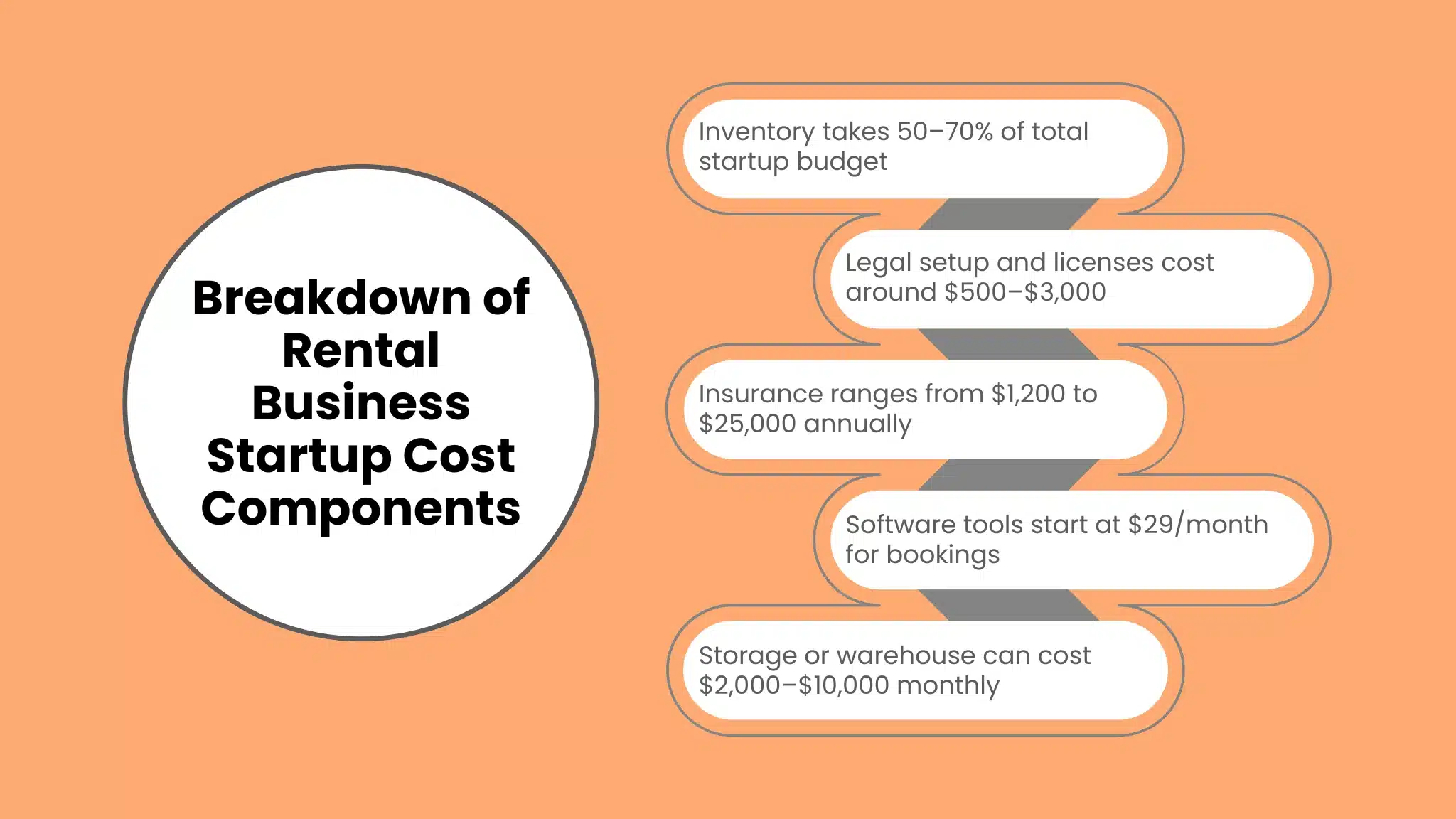
Inventory or Asset Acquisition (50–70% of Total Cost)
This is your biggest expense, no matter what you rent out. You’ve got two paths. Buy outright with cash, or use equipment financing where you put 10-30% down and finance the rest at 5-7% interest over 5-8 years. Used inventory cuts your rental business startup cost by 30-50%, but expect higher maintenance bills down the line.
Business Registration & Legal Fees ($500 – $3,000)
LLC formation runs $50-$500 depending on your state. Add business licenses, permits, and a properly drafted rental agreement template, and you’re looking at $1,000-$2,000 total. Skipping the lawyer here is a common mistake. One bad rental contract can cost you ten times the savings.
Insurance Costs ($1,200 – $25,000/year)
Insurance is non-negotiable for any rental business. You will need general liability, commercial auto for vehicle rentals, and inland marine coverage for items in transit. Property insurance kicks in if you own a warehouse. Annual premiums vary wildly based on niche.
Software & Booking Systems ($29 – $500/month)
A solid booking platform handles inventory, online reservations, and payments. Entry-level plans start at $29/month, and most growing operators settle around $99-$199/month. Skip this and you’ll waste hours on manual scheduling.
Storage, Warehouse, or Facility ($2,000 – $10,000/month)
Industrial space in the U.S. averages $12 per square foot per year. A 5,000 sq ft warehouse runs about $5,000/month, plus a 3-6 month deposit upfront. Many low cost rental startup founders skip this entirely by operating from home garages or shared storage.
Marketing & Website ($500 – $5,000 launch budget)
A clean website, local SEO setup, and a small Google Ads or Facebook budget covers most launches. Don’t pour money into ads before your booking system works smoothly.
Working Capital Reserve (3 months of operating expenses)
Set aside three months of operating costs in cash before you open. Rental businesses bleed through cash in the first six months, and seasonal dips will hit you harder than expected.
Hidden Costs Most Guides Don’t Talk About
Now here’s where most articles drop the ball. Your sticker price isn’t your real price. These are the costs that quietly eat your margins.
- Maintenance reserve. Plan to spend 10-15% of your asset value every year on repairs and upkeep. A $50,000 inventory means $5,000-$7,500 yearly just to keep things working.
- Damage and replacement fund. Customers break things. Period. Set aside 5-8% of your inventory value annually to cover write-offs.
- Seasonal cash flow gaps. Bike rentals die in winter. Party rentals slow in January. If you’re seasonal, you need 4-6 months of reserves, not three.
- Payment processing fees. Stripe and Square take 2.9% + $0.30 per transaction. On $100K in annual rentals, that’s $3,200 gone.
- Late return enforcement. Collections agencies charge 25-40% of recovered amounts. Small claims court filing fees range from $30-$200 per case.
- Software upgrade creep. Most $29 plans cap at 50 bookings per month. Once you grow, you’ll jump to $99 or $199 plans whether you planned for it or not.
- Compliance updates. Insurance premiums climb 5-10% annually. Permit renewals add $200-$1,500 every year.
How Much Money to Start Rental Business at Each Budget Tier
Pick the tier that matches your bank account, then work backward.
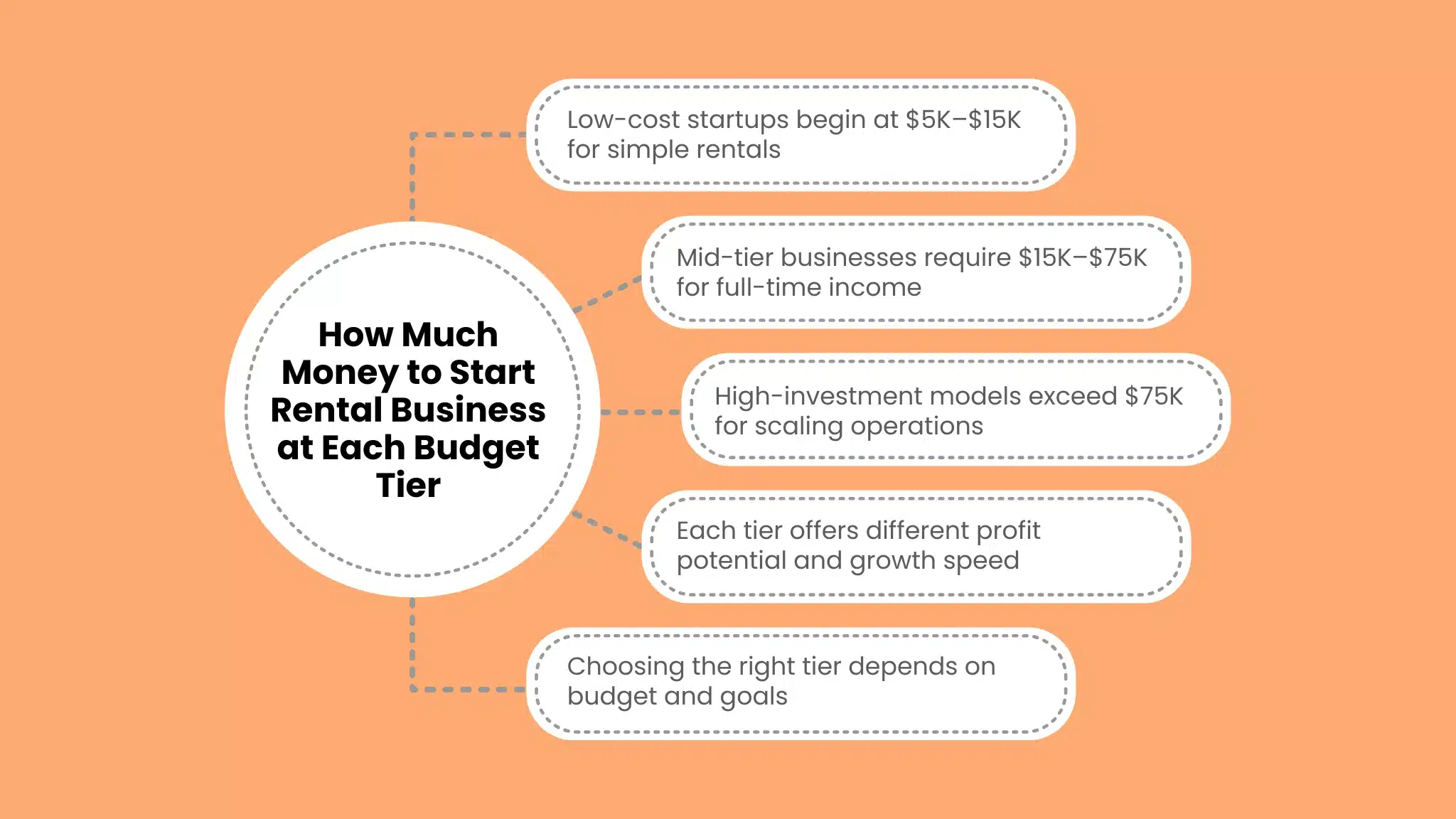
Low Cost Rental Startup ($5,000 – $15,000)
This tier suits side hustlers and weekend operators. Your best niches here are party rentals, bike rentals, baby equipment rentals, and camera gear.
Real example: $8,500 party rental setup
- 10 round tables, 80 chairs, 2 tents: $5,200
- LLC + insurance: $1,400
- Booking software (annual): $350
- Website + local SEO: $850
- Working capital: $700
Baby equipment rentals are one of the hottest niches right now, since traveling parents desperately need cribs, strollers, and car seats at their destination.
Mid-Tier Rental Business ($15,000 – $75,000)
This is the most popular tier for full-time founders. Strong options include car rentals (3-5 cars), tool rentals, photography equipment, and vacation property downpayments.
Real example: $42,000 tool rental setup
- Mixed inventory (50+ items, mostly used): $28,000
- Truck or van for delivery: $8,000
- Insurance + licenses: $2,400
- Software + website: $1,600
- Working capital reserve: $2,000
High-Investment Rental Business ($75,000+)
This tier is for serious investors with capital and a long time horizon. Think heavy construction equipment, multi-property real estate, or luxury vehicle fleets.
Real example: $185,000 small construction rental setup
- 8 pieces of equipment (mix of new and used): $140,000
- Warehouse lease deposit (6 months): $24,000
- Insurance package: $12,000
- Software + office setup: $4,000
- Working capital: $5,000
The rental business investment 2026 at this level usually involves SBA loans or equipment financing rather than pure cash.
Funding Options for Your Rental Business Investment 2026
Your funding strategy can cut your out-of-pocket cost to start rental business by 70% or more. Here’s what actually works in 2026.
- SBA 7(a) loans. Borrow up to $5 million with 10-year terms. Approval takes 60-90 days, and you’ll need decent credit plus a solid business plan.
- Equipment financing. Put 10-30% down, finance the rest at 5-7% interest. The equipment itself serves as collateral, so approval is easier than traditional loans.
- Business credit cards. Best for software subscriptions, marketing, and small inventory purchases. Look for 0% intro APR offers running 12-18 months.
- Personal savings plus family loans. This is still the most common funding source for first-time rental founders. Just put the terms in writing.
- Revenue-based financing. A newer option where you repay as a percentage of monthly revenue. Great for seasonal businesses since payments scale with cash flow.
- Crowdfunding. Works well for community-focused niches like local bike rentals or unique party concepts. Kickstarter and IFundWomen are solid platforms.
How to Reduce Your Cost to Start Rental Business
You do not need to spend the maximum to start strong. These tactics shave thousands off your rental business startup cost without cutting corners.
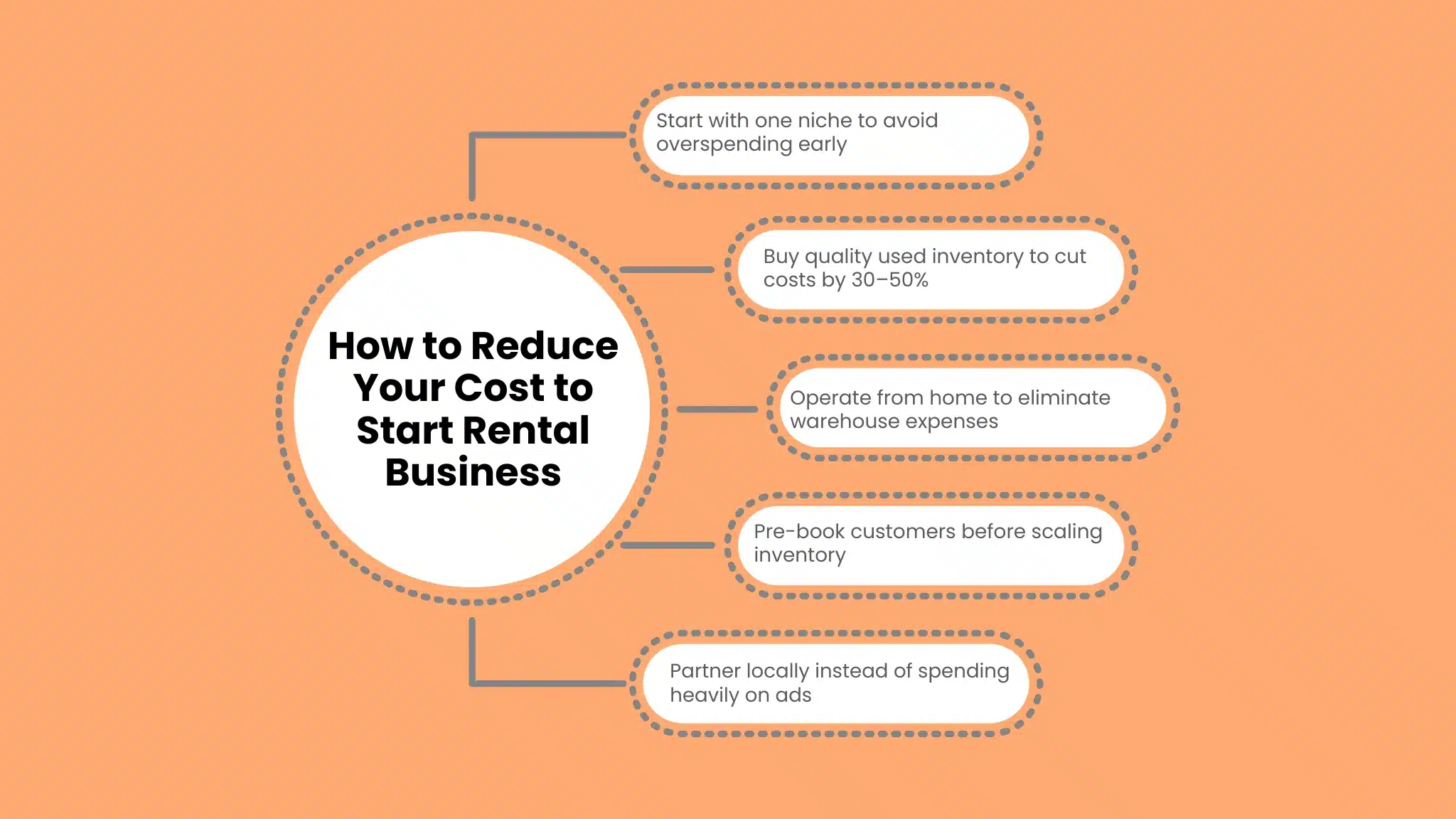
Pick one niche and one product line. Going broad too fast kills cash flow. Buy quality used inventory, especially for tools, cameras, and party equipment. The 30-50% savings compound fast. Test rental software with free trials before committing to annual plans. Most platforms offer 14-30 days at no charge.
Operate from home or use shared storage during your first six months. A garage and a pickup truck work fine for tool or party rentals. Pre-book your first wave of customers before buying full inventory. This validates demand and funds your purchases.
Lease equipment short-term to test the market before you buy. Finally, partner with local venues, photographers, or event planners for cross-promotion instead of burning cash on paid ads.
Final Thoughts on Rental Business Startup Cost
The cost to start rental business depends on three things: your niche, your scale, and your funding strategy. Spend $7,000 wisely on a focused party rental setup and you’ll outperform someone who burns $80,000 on a scattered equipment fleet.
Pick your tier, plan for the hidden costs, and protect your cash reserves like your business depends on it, because it does. For more startup cost breakdowns, niche guides, and practical launch playbooks, explore the rest of Reliable Startup. We’re here to help you build smarter from day one.
Frequently Asked Questions
What is the cheapest rental business to start?
Party rentals and bike rentals are the cheapest, with startup costs between $5,000 and $15,000. Baby equipment rentals fall in the same range and are growing fast in tourist cities.
How much profit do rental businesses make?
Average net profit margin sits at 10% for sole proprietors. Top performers hit EBITDA margins above 40% by maximizing utilization rates and pricing tiers.
How long does it take to recover the cost to start rental business?
Most rental businesses recover their startup costs in 18-36 months, assuming a 60-70% utilization rate and proper pricing. Vacation rentals and heavy equipment can take longer due to higher upfront investment.
Can I start a rental business with no money?
Not really, but you can launch a low cost rental startup for under $1,000 by using free software trials, renting your initial inventory short-term, taking pre-orders, and operating from home until cash flow stabilizes.
What is the most profitable rental business in 2026?
Heavy construction equipment rentals lead on margin (35-45%), but vacation properties and luxury car rentals deliver the strongest blended ROI for first-time founders thanks to asset appreciation plus rental income.