How to Start a Private Driver Business in Your City: Step-by-Step Guide
To start a private driver business in your city, you need a reliable vehicle, a commercial driver’s license or chauffeur endorsement, commercial auto insurance, and the proper local business permits. By targeting high-value niches like corporate executive travel, airport transfers, or luxury event transport, an independent operator can quickly establish a steady revenue stream. Starting with a single vehicle allows you to keep overhead low while building a loyal repeat client base in your local market.
Demand for personalized transportation continues to surge as travelers look for alternatives to unpredictable ride-share apps. Whether you plan to operate as a single chauffeur or scale into a multi-vehicle luxury fleet, this comprehensive private driver business guide covers every step required to build a compliant and profitable business from scratch.
What Is a Private Driver Business?
A private driver business provides pre-arranged, high-end transportation services to individuals, executives, and organizations. Unlike standard ride-sharing drivers who accept random gig requests through a third-party app, private chauffeurs build direct relationships with clients who book trips in advance.
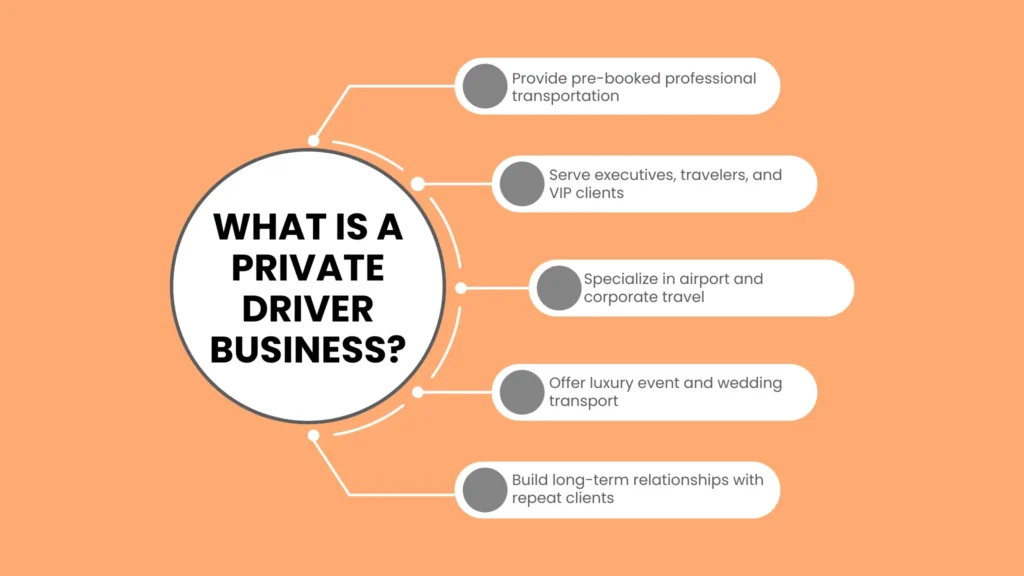
Private driver services typically focus on specialized niches:
Corporate Executive Travel: Driving business executives to meetings, conferences, and corporate offices.
Airport Transfers: Offering punctual, stress-free transfers for frequent business travelers and families.
Special Events & Weddings: Providing elegant transit for wedding parties, anniversaries, or VIP event guests.
Non-Emergency Medical Transit: Transporting seniors or non-emergency patients to scheduled medical appointments.
Personal Chauffeur Contracts: Serving long-term clients on daily or weekly dedicated retainers.
Specializing in one or two primary niches makes marketing more efficient and allows you to command higher hourly rates.
Key Private Driver Business Requirements
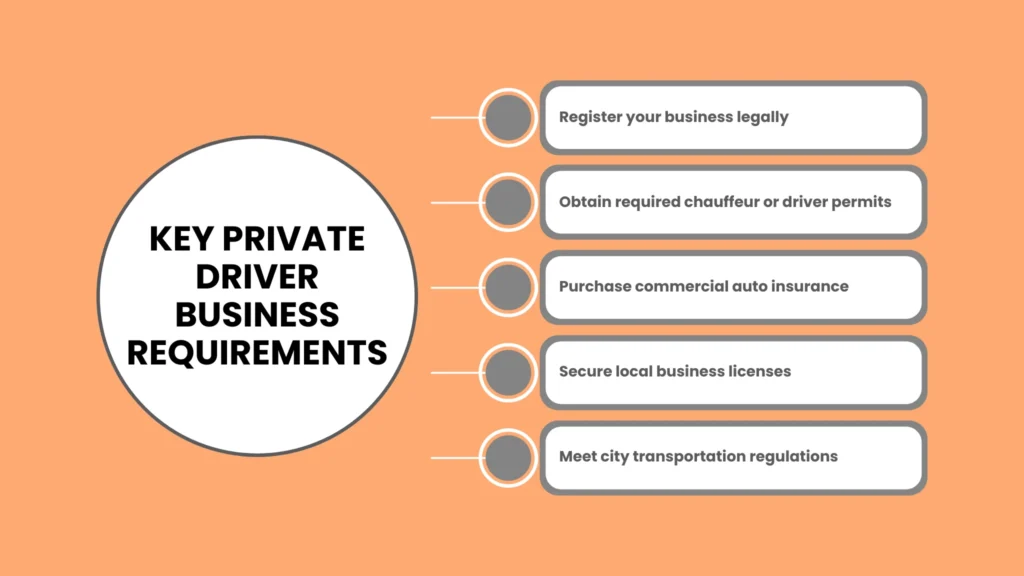
Before you accept your first paying client, you must meet several legal and operational standards. Regulations vary by state and municipality, but the core private driver business requirements remain consistent across most regions.
1. Legal Entity and Business Registration
You need to establish a legal structure for your company. Registering as a Limited Liability Company (LLC) is a popular choice for independent drivers because it separates your personal assets from your business liabilities. You will also need to apply for an Employer Identification Number (EIN) from the IRS for tax filing and business banking.
2. Commercial Driver’s Licensing
Depending on your state and vehicle size, you may need a Chauffeur License, a Commercial Driver’s License (CDL), or a specialized passenger endorsement. Most standard luxury sedans and SUVs do not require a full CDL, but local transportation commissions often require a specific permit or background clearance for charter transport operators.
3. Commercial Vehicle Insurance
Personal auto insurance policies strictly exclude commercial driving activities. You must purchase commercial auto insurance that includes liability coverage, collision coverage, and comprehensive property damage protection. Most municipalities require private hire services to carry a minimum of $1,000,000 in commercial liability coverage.
4. Permits and Local Registration
Local governments typically oversee private hire vehicles. You may need to secure:
A local city business license.
A Limousine or For-Hire Vehicle (FHV) permit.
An airport transport permit if you plan to conduct airport pick-ups and drop-offs.
Private Driver Business Cost Breakdown
Understanding your financial requirements upfront is essential to launching smoothly without running into cash flow bottlenecks. Your total private driver business cost will depend heavily on whether you purchase or lease your initial vehicle.
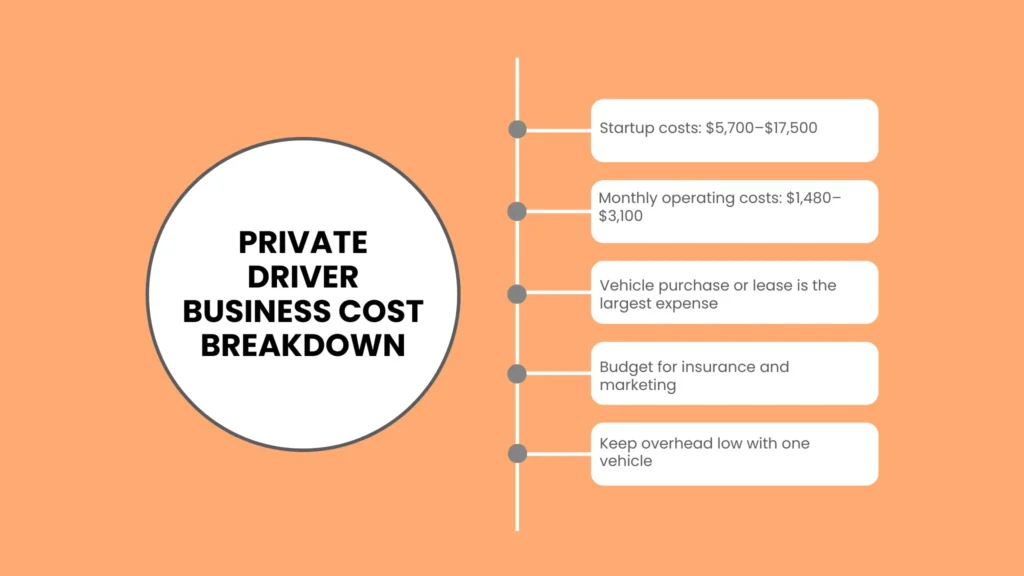
Based on available industry data, the following table outlines estimated startup and recurring operational costs for a single-vehicle private driver business:
| Expense Category | Startup Cost Range (Estimated) | Ongoing Monthly Cost (Estimated) | Notes & Details |
| Vehicle Down Payment / Lease | $3,000 – $10,000 | $600 – $1,200 | Luxury SUV or Sedan (Lease or Loan payment) |
| Commercial Auto Insurance | $1,200 – $2,500 | $350 – $700 | Required liability and property damage policy |
| Business Registration & Licensing | $300 – $1,000 | $0 (Annual renewal) | LLC filing, municipal permits, and background checks |
| Professional Website & Branding | $500 – $2,500 | $30 – $100 | Domain name, hosting, and online booking system |
| Fuel & Maintenance Reserve | $500 – $1,000 | $400 – $800 | Oil changes, tire updates, detailing, and fuel |
| Marketing & Merchant Processing | $200 – $500 | $100 – $300 | Local ads, business cards, payment gateway fees |
| Estimated Totals | $5,700 – $17,500 | $1,480 – $3,100 | Varies by city, vehicle choice, and insurance history |
Starting with a late-model luxury vehicle that you already own can significantly lower your upfront capital needs.
Is a Private Driver Business Profitable?
When evaluating this industry, many aspiring entrepreneurs wonder: is private driver business profitable in today’s competitive transport market?
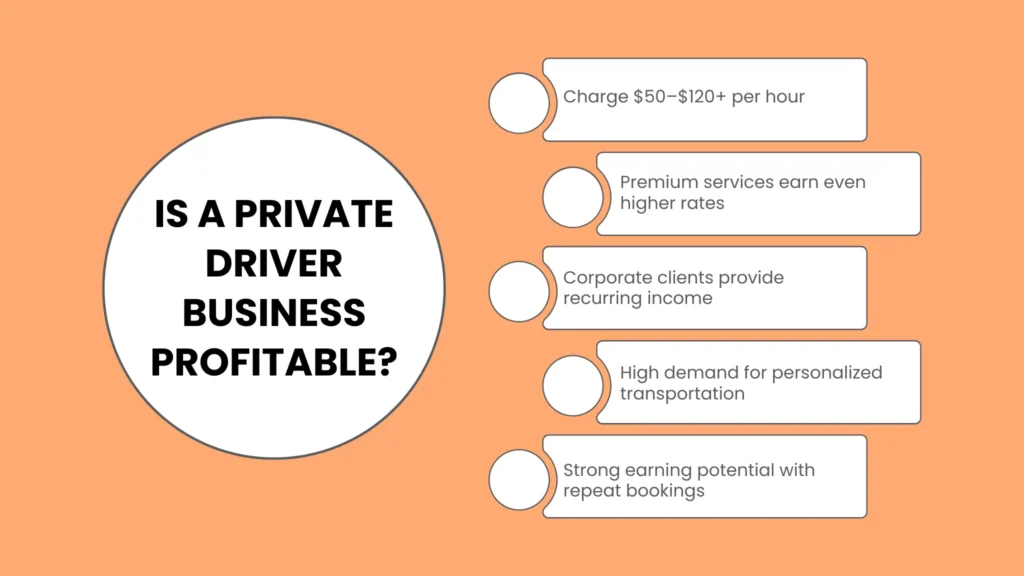
Yes, running a private chauffeur service can be highly lucrative. Private drivers typically charge between $50 and $120 per hour, while specialized executive transit and luxury event rentals can fetch upwards of $150 per hour depending on the city.
Calculating Your Private Driver Business Profit Margin
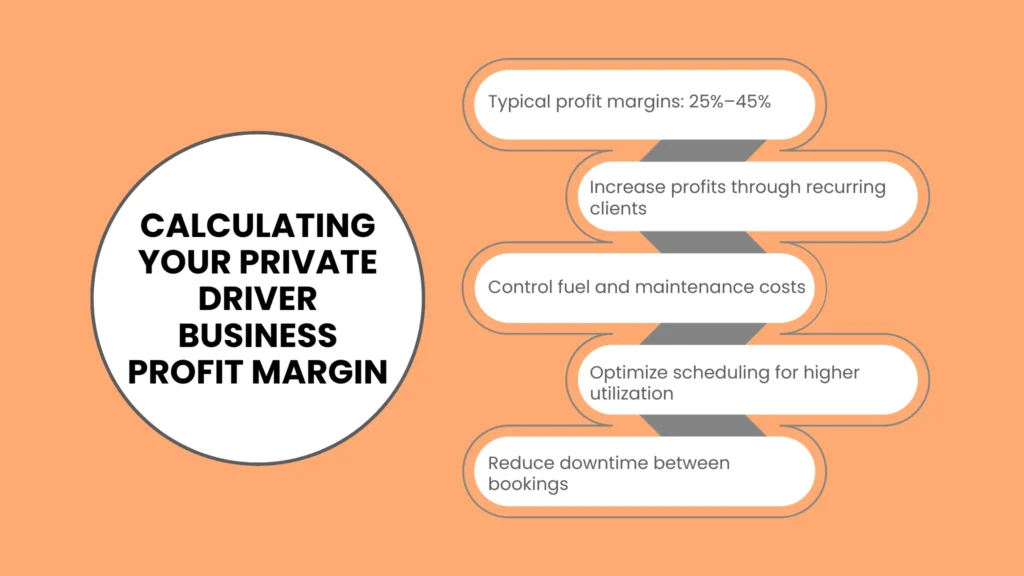
Your private driver business profit margin largely depends on how effectively you manage your fixed overhead costs like vehicle financing and insurance. On average, independent private driver operations maintain an estimated profit margin between 25% and 45% after covering fuel, insurance, maintenance, and taxes.
To illustrate potential earnings, let us review an estimated monthly revenue scenario:
Billable Hours: 30 hours per week (120 hours per month)
Average Rate: $75 per hour
Gross Monthly Revenue: $9,000
Monthly Operating Costs (Fuel, Insurance, Lease, Maintenance): $3,800
Estimated Net Monthly Earnings: $5,200
By building a roster of recurring corporate clients, you stabilize your monthly income and reduce time spent searching for new bookings.
Step-by-Step Plan to Start a Private Driver Business
Launching a successful private transportation company requires careful organization. Follow these core steps to go from concept to your first paying ride.
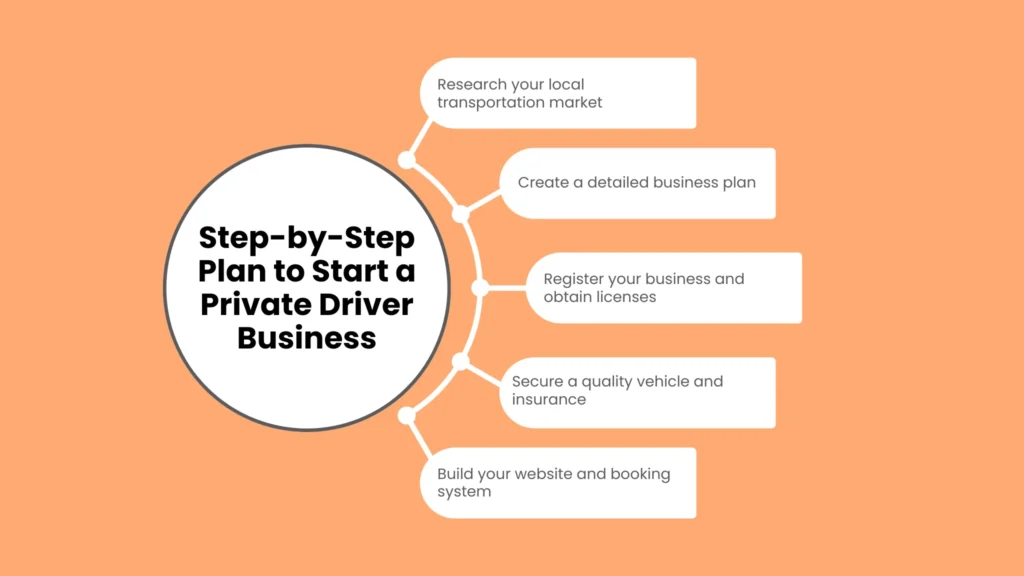
Step 1: Conduct Local Market Research
Examine the transport landscape in your municipality. Identify gaps in existing options. Are local executives complaining about delayed ride-share pickups at the airport? Are local hotel concierges looking for dependable luxury transport partners? Position your service to solve those specific headaches.
Step 2: Write a Clear Business Plan
Outline your service offerings, pricing model, target demographic, and projected monthly expenses. Having a documented plan helps keep your finances organized and serves as a roadmap if you decide to apply for business financing later on.
Step 3: Secure Your Vehicle and Commercial Insurance
Select a vehicle that fits your target niche. Full-size black luxury SUVs and premium sedans are the standard choices for corporate travel and airport transfers. Ensure the vehicle undergoes a thorough safety inspection before obtaining your commercial insurance coverage.
Step 4: Build a Digital Presence
Modern private driver clients expect convenient online scheduling and reliable electronic payment processing. Build a clean website that displays your vehicle options, service areas, transparent rates, and contact details. Make sure your booking form is mobile-friendly so clients can schedule rides from anywhere.
Marketing Strategies to Land High-Paying Clients
To keep your schedule full, you need a mix of direct outreach and digital visibility.
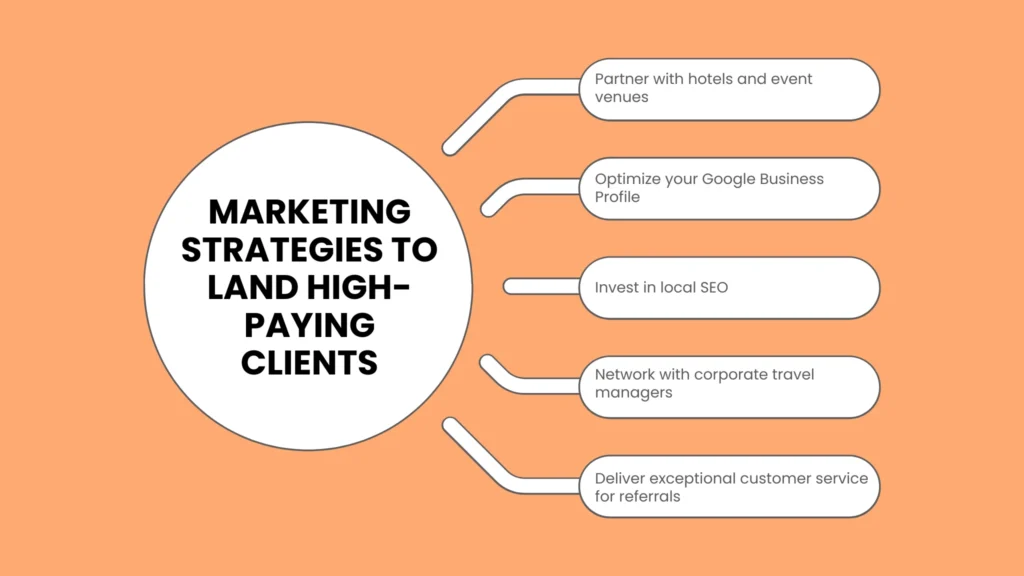
1. Partner with Local Hotels and Event Venues
Visit upscale hotels, boutique resorts, and event planning firms in your area. Leave professional business cards and offer a commission or referral incentive for every client they send your way.
2. Leverage Local Search Engine Optimization (SEO)
When local residents or visiting executives search for “private chauffeur near me” or “airport private driver in [City Name]”, your website should appear near the top of the search results. Claim your Google Business Profile, collect positive customer reviews, and publish relevant local transport content on your site.
3. Connect with Corporate Administrative Assistants
Executive assistants frequently handle travel arrangements for company leaders. Reach out to local businesses and introduce your services directly to corporate travel managers.
Conclusion
When you start a private driver business, you turn a passion for driving and hospitality into a scalable, high-margin enterprise. By meeting local permit requirements, investing in commercial insurance, and focusing on exceptional executive customer service, you can build a stable company that commands premium rates.
As you build your digital presence, having a fast, modern website design is essential for building trust with potential clients. For professional web design and digital branding tailored to growing businesses, visit reliablestartup to launch your online platform with confidence.
Frequently Asked Questions
What type of vehicle is best for starting a private driver business?
Black luxury sedans and full-size luxury SUVs are the most popular choices because they qualify for executive travel, corporate events, and premium airport pickups. Choose a vehicle with excellent safety ratings, ample luggage space, and a clean interior.
Do I need a Commercial Driver’s License (CDL) to start?
In many regions, a standard driver’s license paired with a local chauffeur endorsement or for-hire permit is sufficient for passenger vehicles carrying fewer than 16 people. However, always check with your local Department of Motor Vehicles (DMV) to verify specific regional mandates.
How do private drivers set their rates?
Private drivers usually charge either a flat rate for specific routes (like airport transfers) or an hourly rate for open-ended travel. Be sure your pricing factors in fuel, vehicle wear and tear, commercial insurance costs, and desired profit margins.
How can I make my private driver business stand out from ride-share apps?
Focus on punctuality, pristine vehicle cleanliness, personalized customer service, professional attire, and clear communication. Offering complimentary bottled water, phone chargers, and flexible scheduling builds client loyalty that ride-share apps cannot match.