Medical and Dental Office Cleaning: Compliance and Pricing
Running a medical office cleaning business takes much more than standard janitorial knowledge. Healthcare clinics and dental practices follow strict health laws. Improper cleaning can trigger heavy fines, spread infections, and cancel your service agreements.
Because of these high stakes, healthcare cleaning contracts offer higher profit margins and better client loyalty than standard office accounts.
Medical facility cleaning is also an example of specialized work that can generate premium rates. Explore other high-ticket cleaning services that can help cleaning businesses build recurring revenue.
To win and keep these accounts, you must follow federal safety rules. You also need to price your services to cover special supplies, staff training, and insurance.
Why Healthcare Facilities Need Special Cleaning?
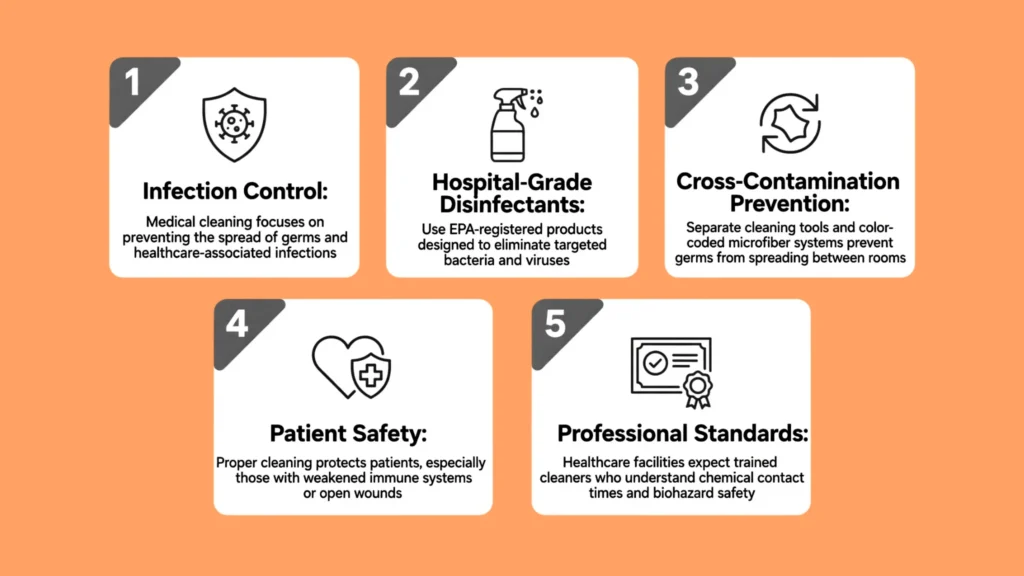
Standard commercial cleaning focuses on basic appearance. Crews vacuum carpets, empty trash bins, and wipe down desks. In contrast, medical and dental office cleaning focuses on infection control and stopping the spread of germs.
Patients visiting an urgent care clinic or dental office often have weak immune systems or open wounds. Germs like MRSA, norovirus, and flu viruses can live on surfaces for days. Only hospital-grade disinfectants kill them. Clinic managers hire vendors who understand patient flow, chemical contact times, and biohazard safety.
Standard Janitorial vs. Medical Office Cleaning
| Feature | Standard Commercial Cleaning | Medical & Dental Office Cleaning |
| Main Goal | Neat appearance and basic tidiness | Infection control and germ removal |
| Disinfectants | All-purpose cleaners and basic sprays | EPA-registered hospital-grade disinfectants |
| Cross-Contamination | One mop or cloth used in many rooms | Color-coded microfiber cloths and single-use wipes |
| Rules and Oversight | Basic workplace safety | OSHA, CDC, EPA, and HIPAA rules |
| Staff Training | Basic tool and machine use | Bloodborne pathogens, PPE, and biohazard safety |
Core Compliance Rules Every Cleaning Business Must Follow
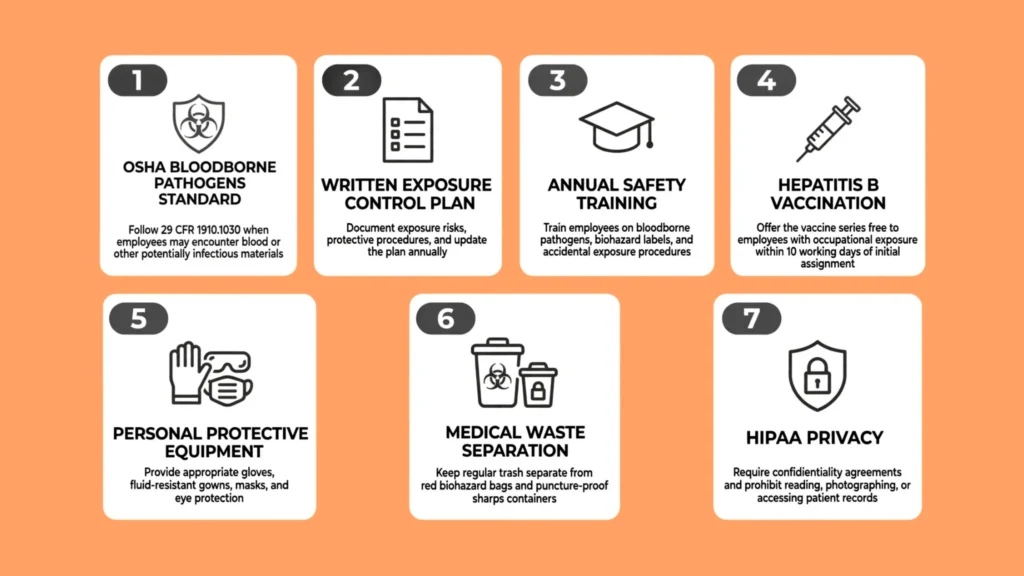
Before bidding on healthcare cleaning contracts, build clear safety rules. You must also train every cleaner who enters a medical building.
The OSHA Bloodborne Pathogens Standard (29 CFR 1910.1030)
The bloodborne pathogen standard is the top rule for healthcare cleaning safety. The Occupational Safety and Health Administration (OSHA) enforces this federal law. It protects workers who may touch blood or other infectious fluids, such as saliva in dental offices.
To follow this rule, a medical office cleaning business must provide:
A Written Exposure Control Plan: This document lists which tasks carry exposure risks and how staff can stay safe. You must review and update this plan every year.
Annual Bloodborne Pathogens Training: All cleaners must take safety training when hired and once a year after that. Training covers how diseases spread, what biohazard labels mean, and how to handle accidental exposure.
Hepatitis B Vaccines: Employers must offer the Hepatitis B vaccine series for free to exposed staff within 10 working days of hire.
Personal Protective Equipment (PPE): Staff must wear proper gear when cleaning risky areas. This gear includes nitrile gloves, fluid-resistant gowns, masks, and eye protection.
Regulated Medical Waste vs. General Trash
Mistakes with trash handling cause many compliance failures. Cleaning crews must know the difference between regular trash and regulated medical waste.
General Waste: Paper towels from public restrooms, breakroom trash, and front-office waste go into standard black or clear bags.
Regulated Medical Waste: Items soaked with blood or body fluids belong in red biohazard bags. Used needles, scalpels, and broken glass go into hard, puncture-proof sharps boxes.
In most states, standard cleaners cannot haul medical waste off-site. State clearly in your contract that clinic staff must seal red biohazard bags and move them to a locked holding area. Your crew handles only regular trash and surface disinfection.
HIPAA and Patient Privacy Rules
Health Insurance Portability and Accountability Act (HIPAA) rules apply to everyone inside a clinic after hours. Cleaners often walk past open files, computer screens, and desks with private patient records.
Have every cleaner sign a privacy agreement. Teach them basic HIPAA habits: never read papers on desks, never open drawers, and never take photos inside the clinic. If a cleaner sees an unlocked file, they should tell a supervisor right away.
Special Needs for Dental Office Cleaning
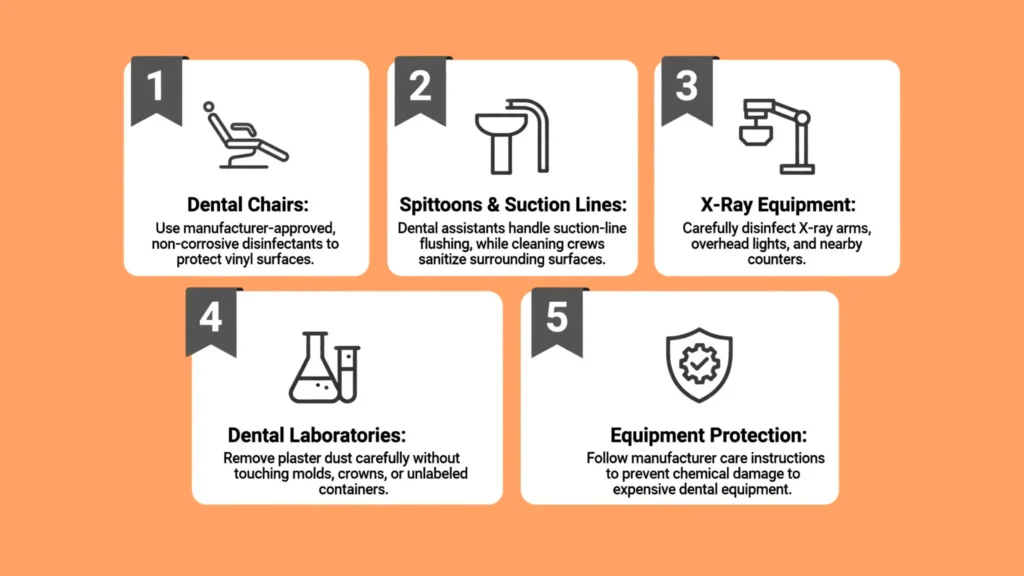
While dental office cleaning shares many rules with medical clinics, dental offices have unique needs. These details change both your labor time and supply costs.
Dental Chairs and Equipment: Dental chairs use soft vinyl that cracks or fades if you spray harsh bleach on them. Cleaners must use gentle, EPA-registered disinfectants approved by the chair maker.
Spittoons and Suction Lines: Dental work creates fine sprays of blood and saliva. Dental assistants flush suction lines between patients, while night crews sanitize nearby counters, x-ray arms, and overhead lights.
Dental Labs: Labs often contain plaster dust, molds, and delicate tools. Tell your staff never to touch dental molds, crowns, or unlabeled jars unless the office manager asks them to.
Essential Tools and Chemical Rules
Using the right supplies helps your clients pass health inspections and prevents costly damage.
EPA-Registered Disinfectants and Dwell Time
Household sprays and basic cleaners do not meet medical standards. Your business must use EPA-registered hospital-grade disinfectants that kill tuberculosis, bloodborne germs, and tough viruses.
You must also follow dwell time (also called contact time). Dwell time is how long a surface must stay visibly wet with disinfectant to kill germs. If a label lists a 3-minute dwell time, wiping the surface dry after 30 seconds fails to sanitize it. Teaching your crew to respect dwell times helps you stand out during sales walkthroughs.
Color-Coded Microfiber Systems
To stop germs from spreading between restrooms, exam rooms, and offices, use color-coded microfiber cloths and mop heads:
Red: Restrooms, toilets, and urinals only.
Yellow: Exam rooms, treatment areas, and clinical sinks.
Blue: Glass, mirrors, and low-risk front-office desks.
Green: Breakrooms and kitchen areas.
Fold each cloth into quarters to create eight clean wiping sides. Wash medical microfiber cloths separately from standard office rags using hot water.
HEPA Filtration Vacuums
Standard vacuums blow fine dust and allergens back into the air. Medical clinics need vacuums with true High-Efficiency Particulate Air (HEPA) filters. These filters trap 99.97% of tiny particles down to 0.3 microns.
How to Price Medical and Dental Office Cleaning Contracts?
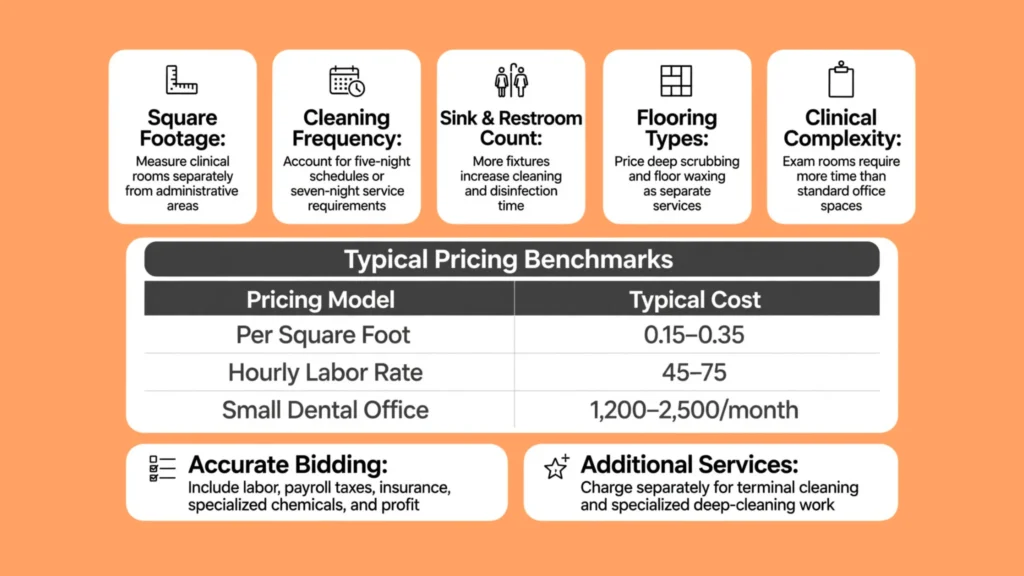
Pricing healthcare accounts too low will quickly drain your profits. Medical cleaning requires slower work, costly chemicals, and higher insurance limits. Your rates must cover all of these expenses.
Key Pricing Factors
When you calculate a bid for a clinic or dental office, check these four details:
Square Footage and Clinical Space: A 5,000-square-foot clinic with 80% exam rooms takes much longer to clean than one with mostly waiting rooms and offices. Always measure clinical rooms separately from administrative spaces.
Cleaning Frequency: Most outpatient clinics and dental offices need cleaning 5 nights a week. Urgent care centers and surgery clinics often need service 7 nights a week.
Sink and Restroom Count: Almost every exam room has a sink, soap dispenser, and paper towel holder. Counting fixtures gives you a much better labor estimate than square footage alone.
Flooring Types: Clinics usually install vinyl composition tile (VCT), luxury vinyl plank (LVP), or sheet vinyl for easy sanitizing. Price deep floor scrubbing and waxing as separate add-on services.
Typical Pricing Benchmarks
While labor costs vary by city, most medical and dental cleaning rates fall into these ranges:
Price Per Square Foot: Rates usually run from $0.15 to $0.35 per square foot for nightly service. Small dental offices under 2,500 square feet usually require a flat monthly minimum instead of square-foot pricing.
Hourly Billing Rates: Most established medical cleaning companies charge $45 to $75 per labor hour. This rate covers wages, payroll taxes, insurance, supplies, and profit.
Small Dental Office Retainers: A typical 3- to 5-chair dental office cleaned 5 nights a week usually pays $1,200 to $2,500 per month.
Insurance Coverage for Healthcare Accounts
Medical groups and dental networks demand strong insurance coverage before you start work. Plan to carry these policies:
Choosing the right coverage is essential for protecting your company against unexpected claims, so review this guide to cleaning business insurance before submitting healthcare cleaning bids.
General Liability Insurance: $1 million per occurrence and $2 million aggregate. Large clinic networks may ask for $5 million in umbrella coverage.
Janitorial Surety Bond: This bond protects the client against theft in spaces that hold prescription pads and costly tools.
Workers’ Compensation Insurance: You need this coverage if you hire staff, especially due to needle-stick and slip risks.
Common Mistakes to Avoid When Bidding Medical Accounts
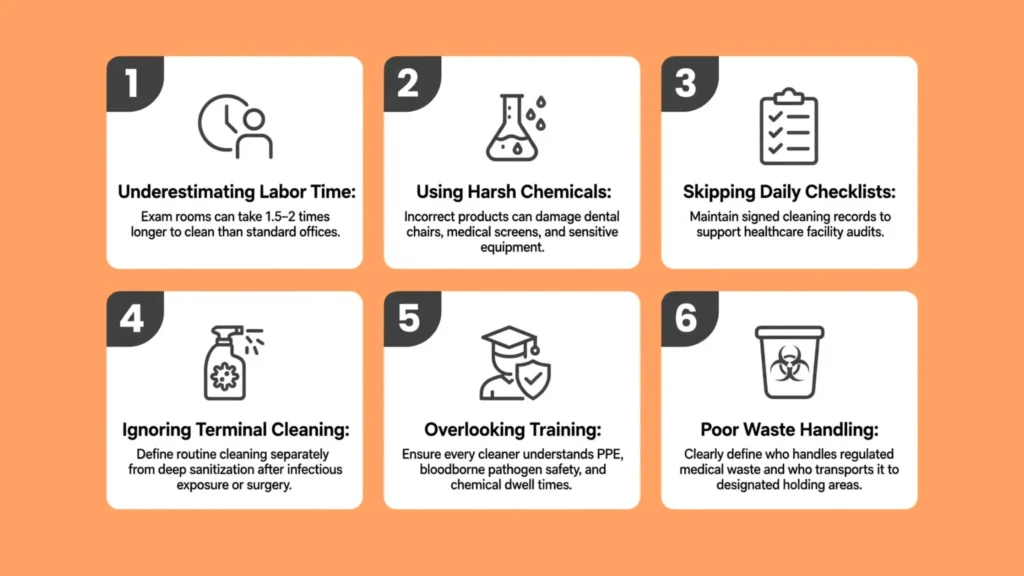
Even experienced cleaning owners make costly errors when they enter the medical market:
Underestimating Labor Time: Cleaning an exam room takes 1.5 to 2 times longer than cleaning a regular office of the same size. Extra sinks and chemical dwell times slow down your crew.
Using Harsh Chemicals: Spraying bleach or strong alcohol on dental chairs, ultrasound probes, or medical screens can ruin expensive gear. Always ask for equipment care guides during your walkthrough.
Skipping Daily Checklists: Clinic managers rely on paper trails for health audits. Digital checklists and automated inspection records can make this process easier to manage, especially when using cleaning business software to coordinate staff and monitor service quality. Leave a laminated daily checklist for your crew to sign each night.
Ignoring Terminal Cleaning Rules: State clearly whether your price covers routine nightly cleaning or “terminal cleaning.” Terminal cleaning is a deep, top-to-bottom sanitization after an infectious outbreak or surgery, and you should bill extra for it.
Frequently Asked Questions
Do you need a special license to clean medical and dental offices?
In most states, you do not need a special medical license for routine cleaning and surface disinfection. You simply need a standard business license, proper insurance, and OSHA compliance. You only need a special permit if your company hauls biohazard waste off-site.
How much does medical office cleaning cost per square foot?
Routine medical and dental office cleaning usually costs between $0.15 and $0.35 per square foot per month for five-day service. Smaller offices under 3,000 square feet often pay a flat monthly minimum starting around $1,000 to $1,500.
What disinfectants do medical and dental clinics require?
Clinics require EPA-registered, hospital-grade disinfectants that kill bloodborne germs, tuberculosis, and common viruses. Dental offices also need non-corrosive formulas so chemicals do not crack vinyl dental chairs.
How do you stop cross-contamination when cleaning a clinic?
Cleaners stop cross-contamination by using color-coded microfiber cloths for separate zones, such as red for restrooms and yellow for exam rooms. Crews also work from clean areas to dirty areas, change gloves between rooms, and follow chemical dwell times.
What is the difference between routine cleaning and terminal cleaning?
Routine cleaning covers daily surface disinfection, restroom care, trash removal, and floor mopping after hours. Terminal cleaning is a top-to-bottom sanitization of every wall, vent, and surface in a surgical or isolation room after an infectious exposure.
Final Thoughts
Building a profitable medical office cleaning business depends on strict safety habits and accurate pricing. Clinic managers rarely pick the cheapest bid. Instead, they hire reliable vendors who prevent infections, follow the bloodborne pathogen standard, and protect patient privacy. When you invest in staff training, hospital-grade supplies, and fair labor estimates, you can win long-term healthcare cleaning contracts with steady monthly revenue.
About The Author