Airbnb Turnover Cleaning: How to Win and Keep Hosts
To win and keep clients in an Airbnb turnover cleaning business, you must operate less like a traditional residential maid service and more like a hospitality logistics partner.
Short-term rental hosts rely on tight, non-negotiable turnaround windows, often just four to five hours between an 11:00 AM checkout and a 4:00 PM check-in, where a single missed hair or late arrival can trigger a bad review and cost them Superhost status.
While residential clients book weekly or biweekly cleanings on flexible schedules, vacation rental operators need same-day reliability, hotel-grade staging, inventory restocking, and real-time property reporting. When you solve these operational headaches consistently, hosts rarely leave for a cheaper competitor.
What Makes Short-Term Rental Cleaning Different?
Understanding the fundamental differences between standard house cleaning and short-term rental cleaning is the first step toward positioning your company as an indispensable asset. In a traditional residential setting, a cleaner is maintaining a lived-in home. In a vacation rental, your team is resetting a commercial hospitality product from scratch for a brand-new paying guest.
For entrepreneurs planning to enter this industry, understanding the fundamentals of a cleaning business startup can help establish the right services, equipment, pricing structure, and customer retention strategy from the beginning.
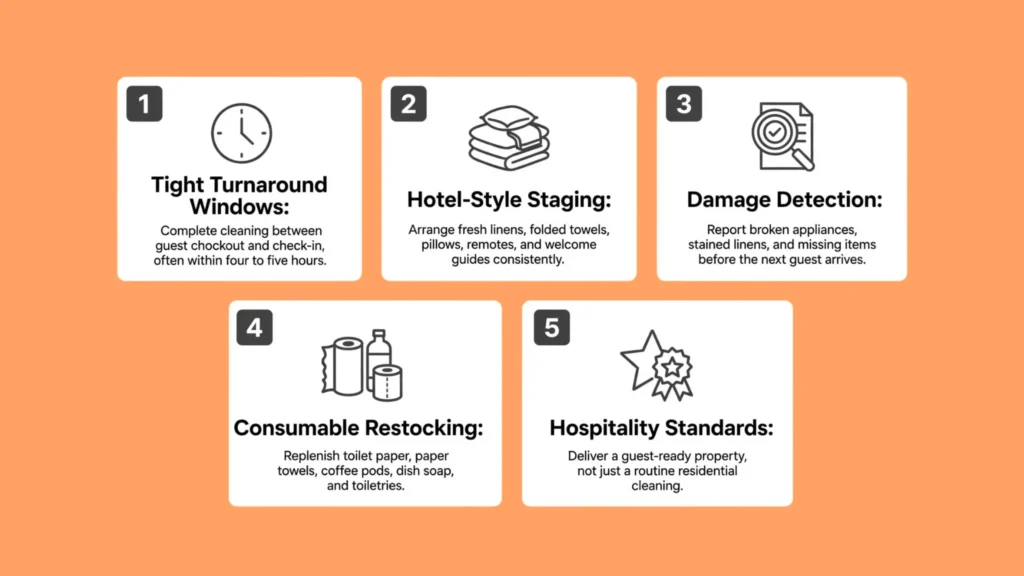
Strict Turnaround Windows: Same-day turnovers leave zero margin for tardiness. If a cleaner arrives late or runs over schedule, incoming guests are left waiting on the porch.
Hotel-Style Staging: Beds must have crisp, wrinkle-free linens, towels must be folded uniformly, and throw pillows, remotes, and welcome guides must be placed in exact positions.
Damage and Maintenance Spotting: Because hosts often manage properties remotely, cleaners serve as their eyes and ears on the ground, reporting broken appliances, stained linens, or missing items before the next guest arrives.
Consumable Restocking: Turnovers typically include replenishing toilet paper, paper towels, coffee pods, dish soap, and toiletries.
How to Structure Your Airbnb Turnover Cleaning Business for Scale
Before pitching property managers or individual hosts, your internal systems need to handle fluctuating bookings and last-minute schedule changes.
A structured house cleaning services business plan can also help you organize startup expenses, define your target market, establish service packages, and prepare for sustainable business growth.
Build Property-Specific Digital Checklists
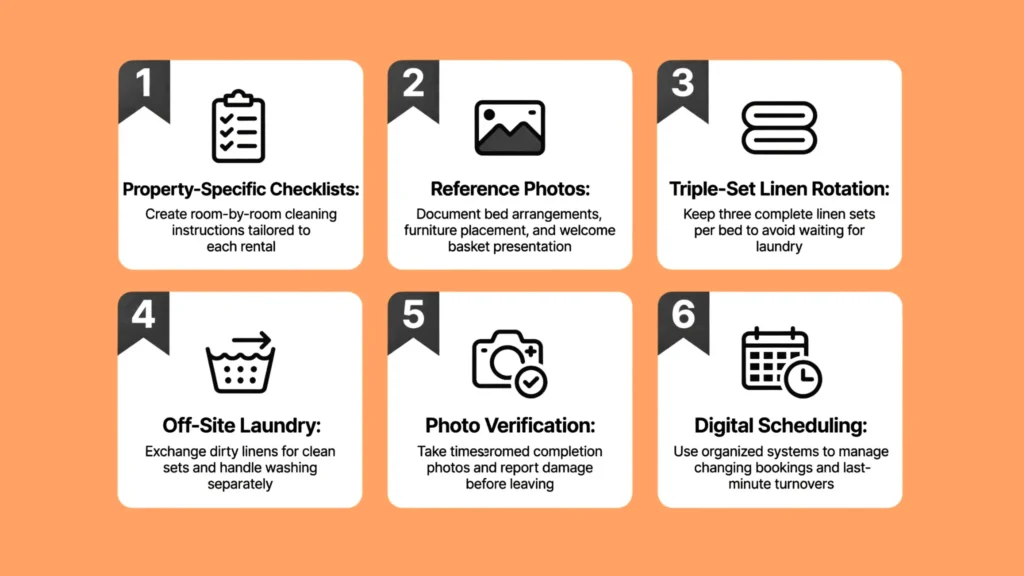
Every vacation rental has unique quirks, from smart lock codes and owner closets to specific appliance settings. Create a standardized baseline checklist covering kitchens, bathrooms, bedrooms, and living areas, then customize an addendum for each property. Include reference photos showing how the host wants the beds styled, the patio furniture arranged, and the welcome basket displayed.
Streamline Laundry Logistics
Laundry is the single biggest bottleneck in short-term rental turnovers. Washing and drying three sets of king sheets and twelve bath towels on-site can take four hours—longer than the actual cleaning.
To keep turnovers fast, adopt one of two systems:
The Triple-Set Rotation: Require hosts to keep three full sets of linens per bed on-site (one on the bed, one in the closet, one in the wash) so your team only runs one load while making beds immediately with spare sets.
Off-Site Wash-and-Fold: Bag dirty linens on-site, replace them with fresh sets brought from your facility, and launder the soiled batch off-site. You can charge an additional per-load or per-bed fee for this convenience.
Implement Photo Verification Systems
Require your cleaners to take timestamped photos of every completed room, inside the refrigerator, inside the oven, and of any guest-inflicted damage before locking up. Sharing a clean photo link with the host immediately after the turnover provides peace of mind and protects your business against false guest complaints.
Setting Profitable Turnover Cleaning Rates
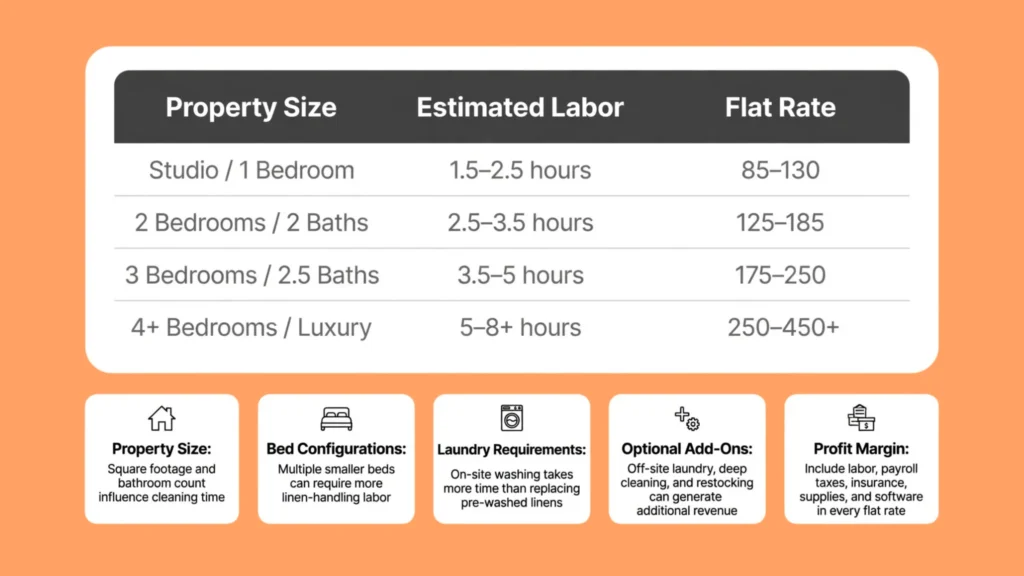
Pricing is where many new operators either undercharge and burn out or overprice without explaining their value. Unlike standard house cleaning, turnover cleaning rates are almost always billed as a flat fee per turnover rather than by the hour. Hosts pass this exact fee directly to guests on booking platforms like Airbnb and Vrbo, so they need predictable, fixed numbers.
Key Factors That Determine Your Pricing
When calculating a flat rate for a property, evaluate:
Square footage and bedroom/bathroom count: Bathrooms and kitchens take the most time to sanitize.
Bed configurations: Two twin beds take longer to strip and make than one king bed.
Laundry requirements: On-site laundering requires more labor time than swapping pre-washed linens.
Outdoor spaces: Sweeping patios, wiping down grills, and checking hot tub covers add time.
Restocking duties: Managing inventory and transporting supplies from an owner’s closet or storage unit.
Typical Rate Benchmarks and Add-On Fees
| Property Size | Estimated Labor Time | Typical Flat Turnover Rate | Common Optional Add-Ons |
| Studio / 1 Bedroom | 1.5 – 2.5 hours | $85 – $130 | Off-site laundry ($20–$35/load) |
| 2 Bedrooms / 2 Baths | 2.5 – 3.5 hours | $125 – $185 | Mid-stay cleanings (60%–75% of base rate) |
| 3 Bedrooms / 2.5 Baths | 3.5 – 5 hours | $175 – $250 | Deep cleaning (1.5x–2x base rate) |
| 4+ Bedrooms / Luxury | 5 – 8+ hours | $250 – $450+ | Restocking supply runs ($25–$50/trip) |
Always price your flat rate so that your effective hourly revenue covers labor, payroll taxes, insurance, supplies, software, and a healthy profit margin—even on days when guests leave the property messier than usual.
How to Pitch and Win Vacation Rental Hosts
Hosts rarely respond well to generic flyers or vague emails saying, “We offer great cleaning services.” To land clients, speak directly to their biggest fears: missed check-ins, bad cleanliness reviews, and unreliable cleaners.
Where to Find High-Value Hosts
Local Real Estate Investors and Co-Hosts: Connect with short-term rental property managers, boutique vacation rental agencies, and local real estate investor meetups. One property manager can hand you 10 to 50 listings at once.
Direct Outreach on Listing Platforms: Browse local listings on Airbnb and Vrbo. Look for properties with high occupancy calendars or recent reviews mentioning minor cleanliness hiccups, then reach out via local host Facebook groups or linked direct-booking websites.
Realtors and Furnishing Designers: Build referral partnerships with agents who specialize in investment properties and interior designers who stage short-term rentals.
Conduct a Structured Walkthrough
Never quote a property sight unseen. During the initial walkthrough, bring a clipboard or tablet, note the condition of the grout and appliances, check the washer and dryer speeds, and ask about the host’s current pain points. Pointing out details a previous cleaner missed such as dust on ceiling fan blades or buildup around faucet bases immediately establishes your expertise.
Securing Long-Term Host Cleaning Contracts
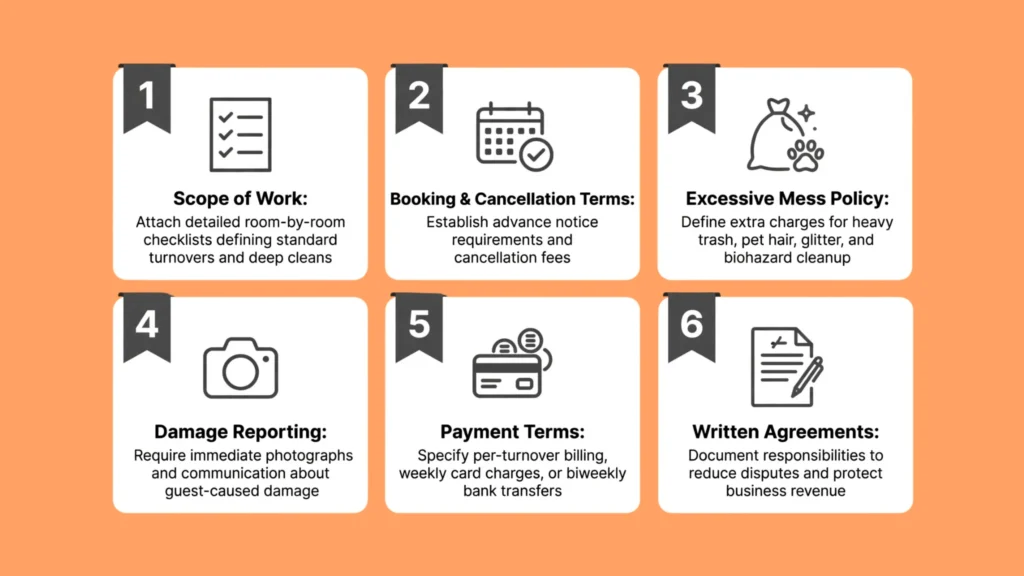
Verbal agreements lead to miscommunication over cancellations, extra mess fees, and last-minute bookings. Formalizing your relationship with clear host cleaning contracts protects both your revenue and your team’s schedule.
Essential Clauses to Include in Your Agreement
Scope of Work: Attach the room-by-room checklist so both parties agree on what is included in a standard turnover versus a quarterly deep clean.
Booking and Cancellation Notice: Specify how far in advance the host must notify you of a new booking (e.g., 48 hours) and what happens if a guest cancels at the last minute. Many cleaners charge a 50% cancellation fee if notified within 24 hours of a scheduled turnover.
Excessive Mess and Biohazard Policy: Define what constitutes normal guest use versus excessive filth (e.g., glitter, pet hair on furniture, bodily fluids, or heavy trash left behind) and outline the hourly surcharge for extra remediation time.
Damage Reporting Protocol: Clarify that your team will photograph and report guest damage immediately, freeing your company from liability for issues caused by departing guests.
Payment Terms: Specify whether you bill per turnover upon completion, weekly via automated card charge, or biweekly via ACH transfer.
How to Keep Hosts Loyal for Years
Acquiring a host takes effort, but keeping them is straightforward when you eliminate friction from their daily operations.
Automate Calendar Syncing: Use turnover scheduling software that syncs directly with the host’s Airbnb, Vrbo, or property management system (PMS) calendar via iCal or API. When a booking changes, your schedule updates automatically without the host needing to text you.
Have a Backup Plan for Emergencies: Cleaners get sick and cars break down. Maintain a float cleaner or cross-trained supervisor who can step in on short notice so a host never experiences a missed turnover.
Schedule Proactive Quarterly Deep Cleans: Over time, baseboards, shower tracks, upholstery, and air vents accumulate grime that quick turnovers cannot address. Propose scheduled quarterly deep cleans during slower booking weeks to keep the property in five-star condition.
Communicate Proactively: Send an automated message when your cleaner checks in, flag any low supplies immediately, and send a completion confirmation with photos as soon as the door is locked.
Common Mistakes That Cost Cleaning Businesses Clients
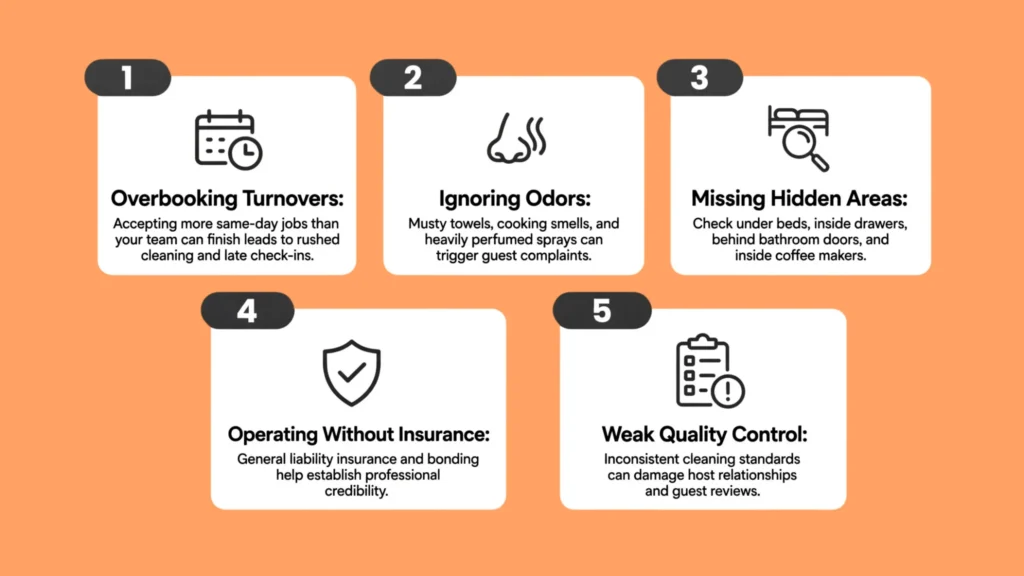
Even hardworking teams lose lucrative accounts due to preventable operational missteps:
Overbooking Same-Day Turnovers: Accepting more 11:00 AM–4:00 PM turnovers than your team can realistically finish leads to rushed work and late check-ins.
Ignoring Subtle Odor Issues: Musty towels, lingering cooking smells, or heavily perfumed sprays can trigger guest complaints. Rely on thorough sanitization, fresh airflow, and neutral, clean scents.
Failing to Check Hidden Areas: Guests frequently look under beds, inside dresser drawers, behind bathroom doors, and inside coffee makers. Missing leftover items or crumbs in these spots ruins an otherwise spotless home.
Operating Without Proper Insurance: Carrying general liability insurance and bonding, and showing proof during your pitch, instantly separates you from informal solo cleaners.
Before accepting recurring property management contracts, review the different types of cleaning business insurance coverage available to protect your company against accidental property damage, employee-related risks, and potential liability claims.
Frequently Asked Questions
How much should I charge for an Airbnb turnover clean?
Most cleaners charge a flat rate ranging from $85 to $130 for a one-bedroom unit, $125 to $185 for a two-bedroom, and $175 to $250+ for a three-bedroom property. Base your exact rate on estimated labor hours, bathroom count, laundry setup, and local market rates so you maintain a healthy profit margin.
How fast does an Airbnb turnover clean need to be completed?
Most short-term rentals have checkout at 10:00 AM or 11:00 AM and check-in at 3:00 PM or 4:00 PM, giving your team a four- to five-hour window. Having spare linen sets on-site or handling laundry off-site is essential to meeting these deadlines.
Who provides the cleaning supplies and guest toiletries?
Typically, the cleaning company provides its own commercial cleaning chemicals, vacuums, and microfiber cloths, while the host supplies guest consumables like toilet paper, paper towels, trash bags, soap, and coffee. Some cleaning companies offer all-inclusive supply restocking for an additional monthly or per-turnover fee.
Do I need special insurance for an Airbnb cleaning business?
Yes. You should carry general liability insurance (typically $1 million to $2 million in coverage) to protect against accidental property damage, along with workers’ compensation if you employ staff. Having proper insurance is also a major selling point when pitching professional property managers.
How do I handle guests who haven’t checked out on time?
Include a late-checkout clause in your host agreement. Instruct cleaners to knock politely, wait outside, and notify you immediately if guests are still inside past checkout time. Contact the host right away so they can message the guest and approve an extended turnaround window or rush-team fee if necessary.
Should I use independent contractors or W-2 employees?
While many businesses start solo or with contractors, W-2 employees give you direct control over training, schedules, uniform standards, and quality checklists—all of which are critical for strict same-day turnovers. Consult a local labor attorney or accountant to ensure compliance with worker classification laws.
Final Thoughts
Building a thriving Airbnb turnover cleaning business comes down to reliability, clear communication, and repeatable systems. Hosts are not simply buying a clean floor; they are buying the confidence that their property will be guest-ready on time, every time, without them having to micromanage the process. By pricing your services sustainably, backing your work with clear contracts, and using checklists and photo reporting to guarantee consistency, you can turn one-off cleanings into long-term, high-retention partnerships.
About The Author