Move Out Cleaning: Checklist, Timings and What to Charge

A thorough move out cleaning checklist covers every surface, appliance, and hidden corner of an empty home so it meets landlord, property manager, or buyer standards. Unlike routine weekly tidying, a proper deposit clean also known as end of tenancy cleaning requires deep scrubbing inside cabinets, appliances, baseboards, and fixtures to return the property to its original move-in condition.
Whether you are a tenant trying to protect your security deposit, a homeowner preparing a house for closing, or a cleaning professional pricing a job, success comes down to three factors: knowing exactly what needs to be cleaned, budgeting enough hours to finish the work, and understanding fair market pricing.
What Is Move Out Cleaning (and How It Differs From Regular Cleaning)?
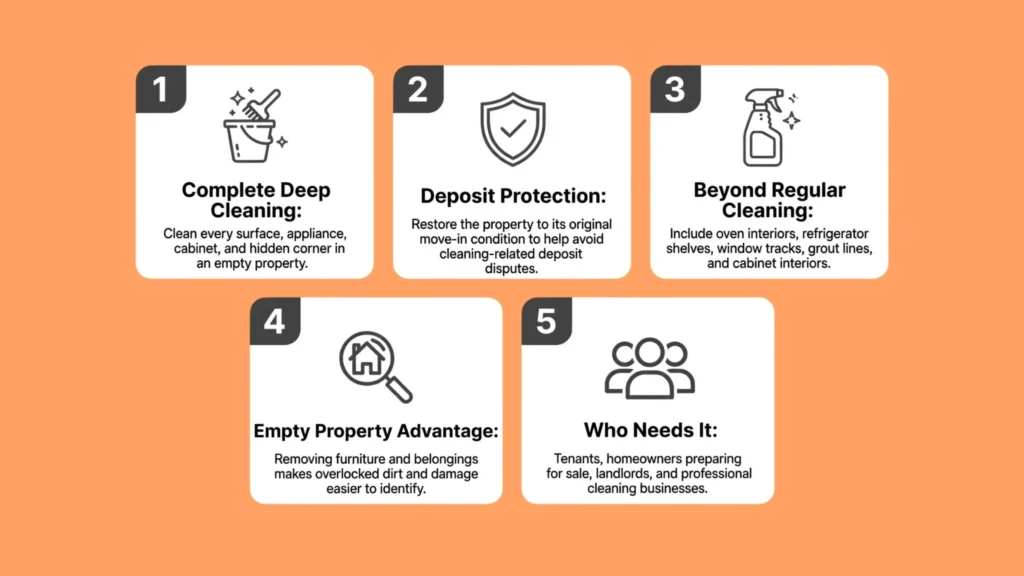
Move out cleaning is a top-to-bottom deep clean performed once all furniture, boxes, and personal belongings have been removed from a residence. Because the space is completely empty, every scuff mark on the baseboards, layer of dust on ceiling fans, and grease buildup inside the oven becomes immediately visible during a final walkthrough.
Standard cleaning focuses on surface-level maintenance around furniture vacuuming open floors, wiping countertops, and sanitizing toilets. End of tenancy cleaning goes much further. It includes detailing window tracks, washing interior windows, scrubbing grout lines, degreasing range hood filters, and sanitizing the inside of refrigerators and drawers.
Move-out cleaning is one of several residential cleaning services that homeowners, tenants, landlords, and property managers may need when preparing a property for its next occupant.
The Ultimate Room-by-Room Move Out Cleaning Checklist
Working systematically from the top of each room down to the floor prevents dust and debris from falling onto areas you have already cleaned. Complete the tasks below once the property is completely vacant.
Kitchen
The kitchen is the most heavily scrutinized room during a deposit clean because grease and food residue accumulate quickly.
Refrigerator and freezer: Remove all shelves and crisper drawers, wash them in warm soapy water, dry thoroughly, and wipe down the interior walls, door seals, and exterior handles. Leave the doors slightly ajar if the power is turned off to prevent mildew.
Oven, stovetop, and range hood: Clean burner grates, drip pans, and control knobs. Degrease the oven interior, glass door, and broiler drawer. Wash or replace the metal mesh filter in the exhaust hood.
Microwave and dishwasher: Steam-clean and wipe the inside and outside of the microwave. Clean the dishwasher filter, wipe the door edges, and run an empty cycle with a dishwasher cleaner or white vinegar.
Cabinets and drawers: Vacuum out crumbs and dust, then wipe all interior shelves, exterior doors, and hardware pulls.
Countertops and backsplash: Scrub, sanitize, and polish all surfaces, paying special attention to grout lines behind the stove and sink.
Sink and garbage disposal: Scrub the basin, polish the faucet, clean the drain stopper, and freshen the disposal with ice cubes and citrus peels or baking soda.
Bathrooms
Landlords and inspectors look closely for soap scum, hard water stains, and mildew in bathrooms.
Shower and bathtub: Descale glass shower doors, scrub tile walls and grout, remove soap scum from the tub basin, and polish showerheads and faucets.
Toilet: Sanitize the bowl, seat, lid, tank, hinges, and the exterior base down to the floor.
Vanity and mirror: Clean the mirror without streaks, scrub the sink basin, polish the faucet, and wipe inside all vanity drawers and medicine cabinets.
Exhaust fan and towel bars: Vacuum dust from the bathroom exhaust fan cover and wipe down towel racks and toilet paper holders.
Bedrooms and Living Areas
Even empty rooms hold hidden dust along trim and architectural features.
Walls and doors: Spot-clean scuff marks, fingerprints around light switches, and smudges on door frames. Check lease guidelines before patching nail holes.
Baseboards and trim: Vacuum along the top edge of all baseboards, then wipe them down with a damp microfiber cloth.
Windows and blinds: Dust window blinds slat by slat, clean interior window glass, and vacuum and wipe window sills and tracks.
Closets: Wipe down shelving, closet rods, and louvered doors, and vacuum the closet floor.
Light fixtures and ceiling fans: Dust ceiling fan blades, wipe light globes or shades, and remove dead insects from fixtures.
Floors, Entryways, and Laundry Areas
Leave floors for the very last step so you do not track dirt across freshly cleaned surfaces.
Hard floors: Sweep or vacuum thoroughly, paying close attention to corners and edges, then mop with an appropriate floor cleaner.
Carpets: Vacuum all carpeted areas slowly in overlapping passes. Many leases require professional steam carpet cleaning with a receipt, especially if pets lived in the home.
Laundry area: Wipe down the tops and fronts of the washer and dryer, clean the rubber door gasket on front-loading machines, and clear the dryer lint trap and exhaust area.
Entryway and patio: Sweep front steps, balconies, or patios, wipe down the front door, and remove cobwebs from exterior light fixtures.
How Long Does a Move Out Clean Take?
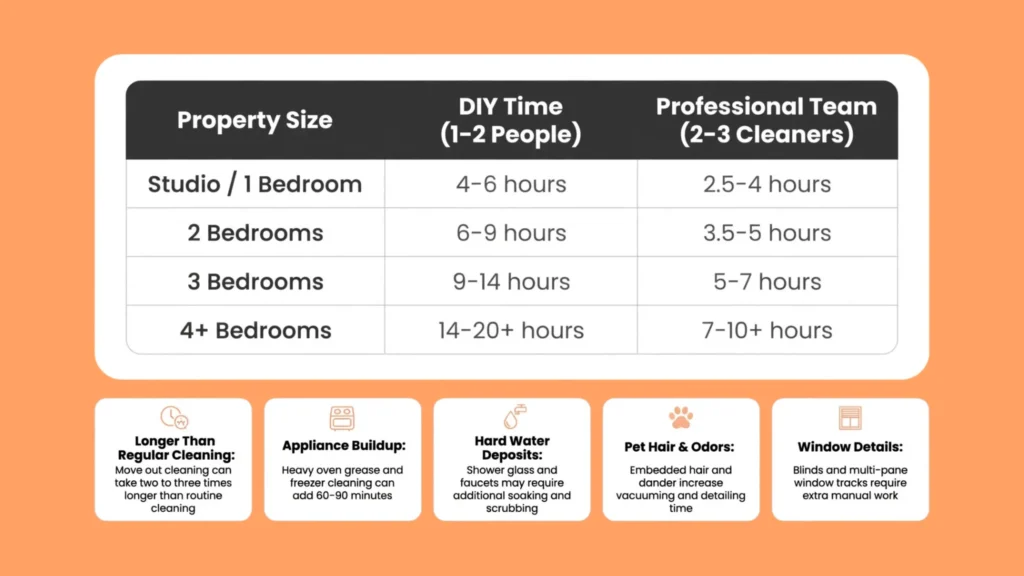
Move out cleaning almost always takes longer than expected—often two to three times longer than a standard cleaning session. Working in an empty home exposes neglected areas that require heavy scrubbing and soak time.
| Property Size | DIY Cleaning Time (1–2 People) | Professional Team Time (2–3 Cleaners) |
| Studio or 1-Bedroom Apartment | 4 to 6 hours | 2.5 to 4 hours |
| 2-Bedroom Apartment or Condo | 6 to 9 hours | 3.5 to 5 hours |
| 3-Bedroom House | 9 to 14 hours | 5 to 7 hours |
| 4+ Bedroom House | 14 to 20+ hours | 7 to 10+ hours |
Several variables can push these timings higher:
Appliance condition: Heavy baked-on oven grease or an uncleaned freezer can add 60 to 90 minutes on their own.
Hard water and grime: Thick mineral deposits on glass shower doors and faucets require dwell time for descaling solutions to work.
Pet hair and odors: Removing embedded pet dander from baseboards, vents, and carpets adds significant vacuuming and detailing time.
Blinds and multi-pane windows: Venetian blinds and older window tracks are notoriously time-consuming to detail by hand.
Move Out Cleaning Price: What to Expect or Charge
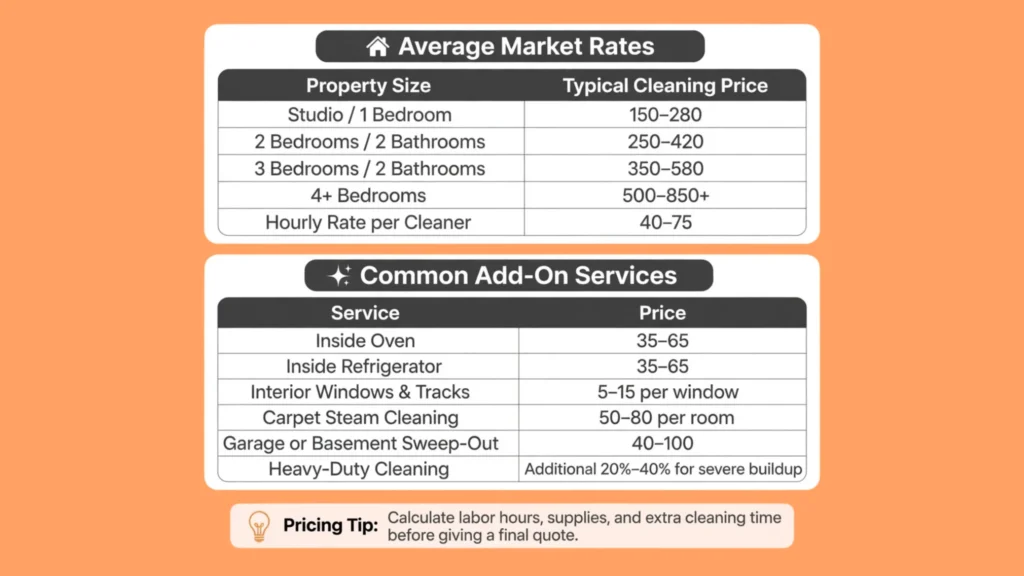
Whether you are hiring a crew or setting rates for your own cleaning business, understanding how move out cleaning prices are structured helps prevent surprises.
Average Market Rates
Most residential cleaning companies price end of tenancy cleaning by square footage, bedroom and bathroom count, or an hourly rate per cleaner.
Studio / 1-Bedroom: $150 to $280
2-Bedroom / 2-Bathroom: $250 to $420
3-Bedroom / 2-Bathroom: $350 to $580
4+ Bedroom Home: $500 to $850+
Hourly Rate (per cleaner): $40 to $75 per hour
Common Add-On Services
Many base quotes cover empty surfaces, floors, and standard bathroom and kitchen exteriors, while deep appliance and specialty tasks are billed separately:
Inside oven cleaning: $35 to $65
Inside refrigerator cleaning: $35 to $65
Interior window and track detailing: $5 to $15 per window
Professional carpet steam cleaning: $50 to $80 per room
Garage or unfinished basement sweep-out: $40 to $100
Heavy-duty surcharge: An additional 20% to 40% for homes with severe buildup, smoke residue, or neglected maintenance
How Cleaners Should Price a Deposit Clean
If you are pricing a move out job as a service provider, avoid quoting a flat fee sight unseen. Walk through the property or request recent photos and videos first. Calculate your estimated labor hours, multiply by your target hourly rate per cleaner, and add buffer time for stubborn appliances and bathrooms.
Always state clearly in writing which items are included in the base quote and which tasks incur add-on fees. Before finalizing your rates, review different cleaning business pricing models to understand how hourly charges, flat rates, and square-foot pricing affect your profitability.
Essential Supplies for a Faster Deposit Clean
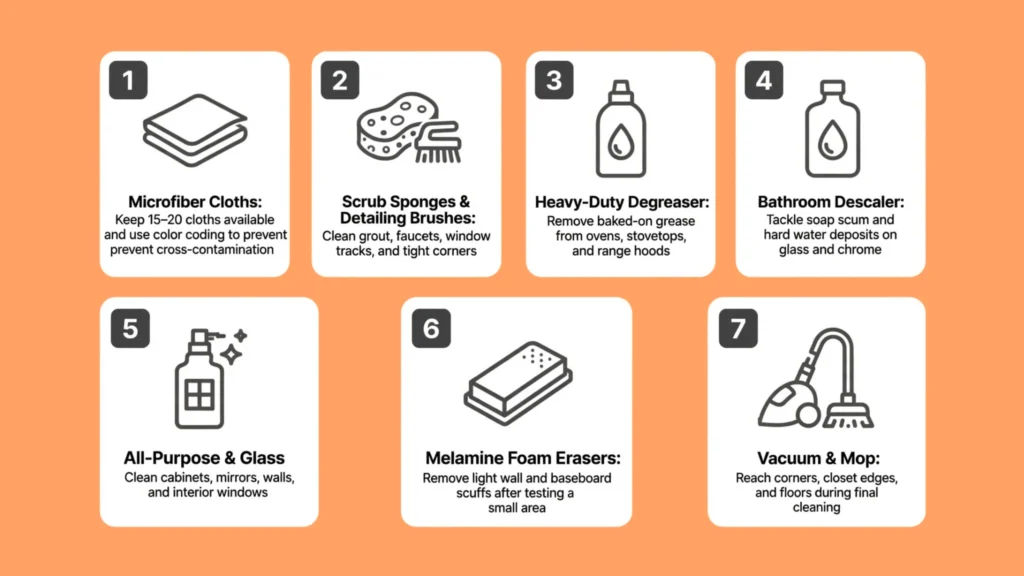
Gathering the right tools before you start saves trips to the store and prevents damage to delicate finishes.
Microfiber cloths (15 to 20): Use color-coded cloths to avoid cross-contaminating bathroom and kitchen surfaces.
Non-abrasive scrub sponges and detailing brushes: Old toothbrushes or grout brushes work well for faucet bases, window tracks, and tile grout.
Heavy-duty degreaser and oven cleaner: Essential for stovetops, range hoods, and baked-on oven spills.
Bathroom descaler or white vinegar solution: Cuts through hard water spots and soap scum on glass and chrome.
All-purpose cleaner and glass cleaner: For cabinets, walls, mirrors, and interior windows.
Melamine foam erasers: Useful for removing light shoe scuffs from painted walls and baseboards (test on a small spot first so you do not dull glossy paint).
Vacuum with crevice attachments and a mop: Necessary for edges, closets, and final floor care.
Common Move Out Cleaning Mistakes to Avoid
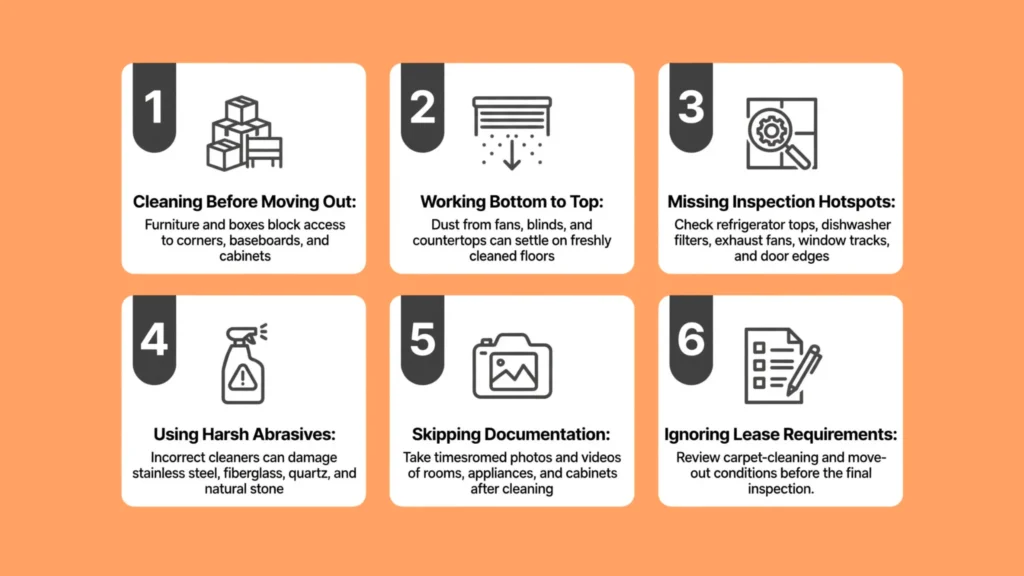
Even diligent cleaners lose points on final inspections because of avoidable oversights. Cleaning companies looking to expand beyond standard residential jobs can explore specialized cleaning business ideas that target specific property types and customers with more demanding cleaning requirements.
Cleaning before moving everything out: Boxes and furniture block access to baseboards, outlets, and closet corners. Always finish moving before starting your deep clean.
Working from the bottom up: Vacuuming and mopping first means dust from ceiling fans, blinds, and countertops will settle onto your clean floors.
Forgetting hidden “inspection hotspots”: Property managers routinely check the tops of refrigerator cabinets, inside the dishwasher filter, bathroom exhaust fans, window tracks, and the top edges of doors.
Using harsh abrasives on delicate surfaces: Steel wool, bleach on natural stone, or gritty powders can permanently scratch stainless steel appliances, fiberglass tubs, and quartz countertops.
Skipping final documentation: Once the home is spotless, take timestamped photos and a short video walkthrough of every room, inside appliances, and inside cabinets to protect yourself in case of a deposit dispute.
Frequently Asked Questions
How is end of tenancy cleaning different from a regular deep clean?
End of tenancy cleaning is performed in an empty property and focuses on passing a strict landlord or buyer inspection. While a regular deep clean works around furniture, a move out clean includes the interiors of all cabinets, closets, drawers, refrigerators, and ovens.
Should I clean before or after the movers leave?
Always clean after the movers have removed every item from the property. Cleaning an empty space is faster, safer, and ensures no dirt or footprints are left behind after furniture is hauled out.
Do landlords require professional move out cleaning?
Many leases require the property to be returned in “broom-clean” or original move-in condition rather than requiring a professional receipt. However, some leases specifically mandate professional carpet steam cleaning, so review your rental agreement carefully.
What do landlords check first during a move out inspection?
Inspectors typically check high-visibility and high-use areas first: inside the oven and refrigerator, under the kitchen sink, bathroom shower glass and grout, baseboards, window sills, and carpet stains.
Is it worth hiring professionals for a deposit clean?
If your security deposit is substantial or you are short on moving-day energy, hiring professionals is often cost-effective. Many end of tenancy cleaning companies offer a 24- to 72-hour re-clean guarantee if a landlord flags a missed item during inspection.
How far in advance should I book a move out cleaning service?
Book your cleaning service at least two to three weeks before your lease ends, especially if you are moving at the end of the month or during peak summer moving season when schedules fill up quickly.
Final Thoughts
A successful move out clean comes down to preparation, sequence, and attention to detail. By waiting until the home is completely empty, following a structured room-by-room move out cleaning checklist from ceiling to floor, and setting aside realistic time or budget for appliances and bathrooms, you can hand over the keys with confidence and maximize your security deposit return.
About The Author