Managing Cash Flow Through a Seasonal Rental Year

Meta Title: Mastering Seasonal Rental Cash Flow: Off-Season Strategy Guide Meta Description: Learn how to balance your seasonal rental cash flow year-round. Master off-season cash management, build cash reserves, and stabilize income. URL Slug: seasonal-rental-cash-flow-management
Operating a seasonal rental property can feel like living in two different financial realities. During peak months, bookings roll in, rates soar, and revenue peaks. But when the off-season arrives, income drops dramatically while fixed operating expenses such as mortgages, property taxes, insurance, and utilities—continue uninterrupted.
Mastering seasonal rental cash flow requires shifting your mindset from monthly earnings to an annual financial strategy. By implementing proactive off-season cash management, structured seasonal business budgeting, and disciplined cash reserve planning, vacation rental owners and real estate operators can smooth out income volatility and keep their business profitable all year long.
Understanding Seasonal Rental Cash Flow Dynamics
Seasonal rental cash flow is the net movement of money into and out of your rental property business over a 12-month period. Unlike year-round residential rentals that yield predictable monthly rent checks, seasonal properties experience dramatic swings in revenue based on weather, school schedules, holidays, and regional tourism trends.
Peak Season vs. Off-Season Realities
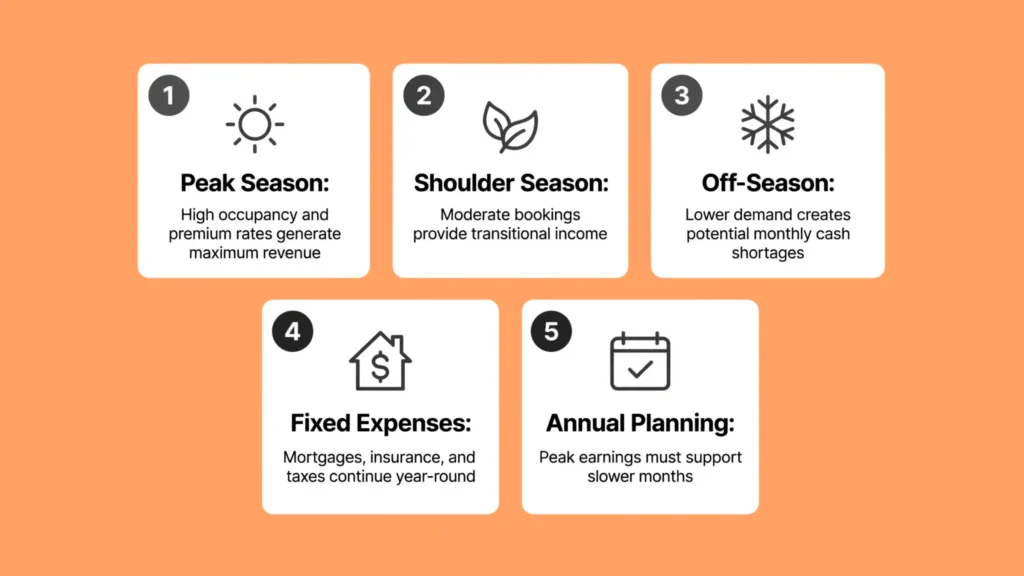
The Peak Season (High Inflow): High occupancy rates allow for premium nightly pricing. Cash inflows surge, often generating 70% to 90% of your annual gross revenue in just a few months.
The Shoulder Season (Transition): Occupancy slows, and nightly rates drop to moderate levels. Income generally covers immediate operating expenses with modest profit margins.
The Off-Season (Low Inflow): Bookings fall sharply. Revenue may drop below the cost of ongoing overhead, resulting in negative monthly cash flow if unmanaged.
The core challenge of managing a seasonal rental is that expenses remain relatively constant throughout the year, even when guest revenue disappears.
5 Essential Strategies for Off-Season Cash Management
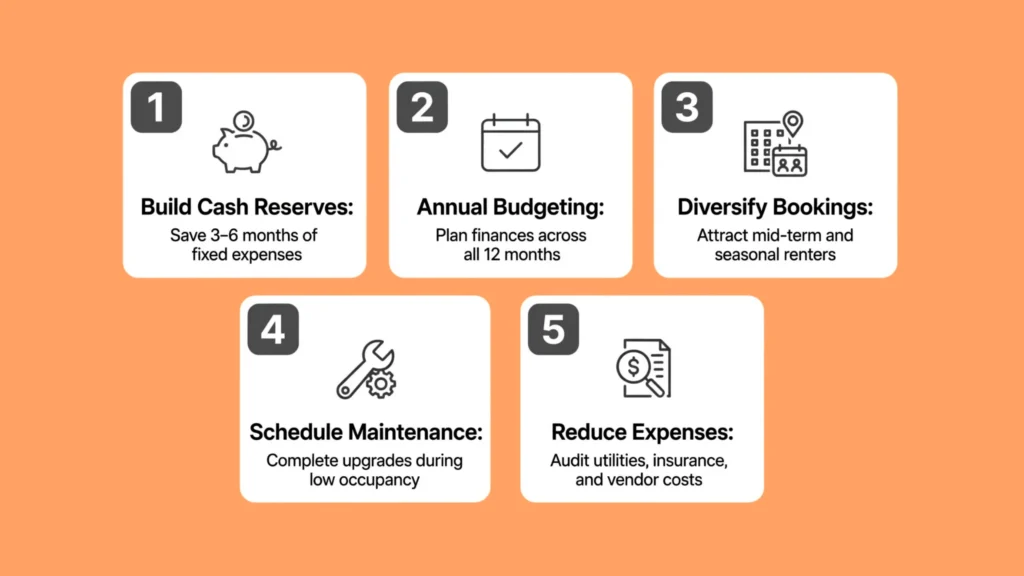
To prevent cash shortages during slow months, top-performing property owners use deliberate financial planning strategies to level out their annual earnings.
1. Build a Dedicated Cash Reserve
Cash reserve planning is the foundation of seasonal business survival, and understanding your initial rental business startup costs helps you determine how much working capital you’ll need to maintain operations during slower months.
A proper reserve acts as a financial cushion during low-occupancy months so you never have to fund operating shortfalls out of pocket.
Calculate Minimum Operating Costs: Determine your exact baseline expenses for the off-season months (mortgage payments, utilities, HOA fees, insurance, basic maintenance, and minimum software/platform fees).
Set a Target Reserve: Aim to accumulate 3 to 6 months of total fixed expenses in a dedicated business savings account during peak season.
Automate Contributions: Treat your cash reserve as a mandatory expense. Transfer a set percentage (e.g., 20% to 30%) of gross earnings into your reserve fund during every high-volume month.
2. Transition to Annual Budgeting
Monthly profit and loss statements can distort your true financial health. An exceptionally high revenue month in July can create a false sense of prosperity, while a quiet November might suggest your business is failing.
Instead, evaluate your business on an annualized budget while tracking your rental business profit margins to understand how seasonal revenue fluctuations affect your overall profitability.
Take your total projected annual expenses and divide by 12 to establish a baseline monthly cost.
Retain surplus peak-season cash in your business account to cover months where revenue falls short of that baseline.
Pay yourself a standardized monthly salary rather than withdrawing cash sporadically when bank balances peak.
3. Diversify Booking Models in the Slow Season
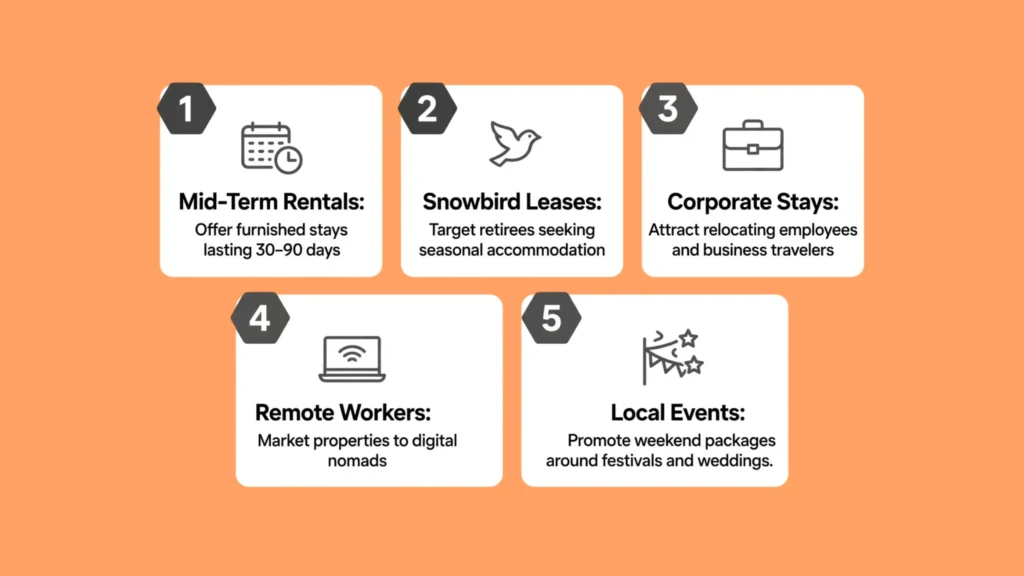
Relying solely on short-term vacationers year-round often leaves properties vacant for extended stretches.
Adapting your booking strategy during low periods helps maintain baseline income, particularly when exploring opportunities to improve RV rental business profitability through longer stays, repeat bookings, and seasonal pricing adjustments.
Mid-Term Rentals (30–90 Days): Target traveling medical professionals, corporate relocations, remote workers, or digital nomads looking for furnished monthly stays.
Snowbird or Sunbird Leases: Offer multi-month winter or summer leases to retirees seeking seasonal weather changes.
Local Event & Weekend Promotions: Partner with local festivals, weddings, or corporate events to capture niche weekend traffic.
4. Optimize Off-Season Maintenance and Upgrades
Major repairs and property upgrades should be timed carefully around your cash flow cycles.
Schedule During Low Occupancy: Conduct deep cleaning, painting, HVAC servicing, and remodeling when guest bookings are sparse to prevent lost booking revenue.
Pay with Peak Earnings: Set aside specific capital expenditure (CapEx) funds during high-revenue months to pay for upgrades upfront rather than taking on short-term debt during the off-season.
5. Audit and Minimize Recurring Expenses
The off-season is the ideal time to perform an expense audit across all vendor contracts and service agreements.
Adjust Utility Plans: Lower thermostat settings on vacant properties and pause non-essential services like premium cable channels or frequent landscaping schedules.
Renegotiate Vendor Agreements: Speak with cleaners, maintenance teams, and property management vendors to establish scaled rates during low-demand periods.
Review Fixed Costs: Compare quotes annually for property insurance and property management software to ensure competitive pricing.
Common Cash Flow Mistakes Seasonal Rental Owners Make
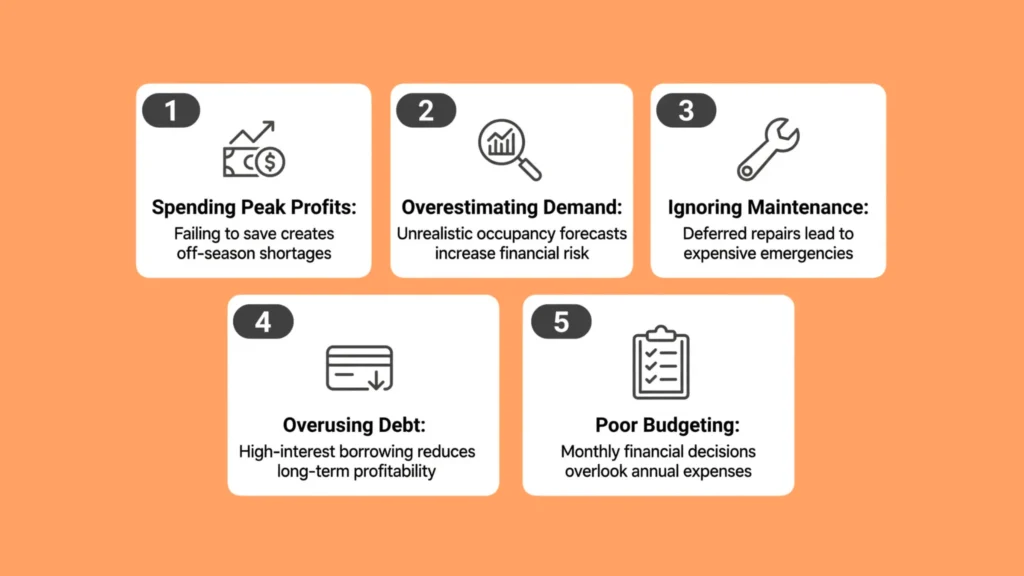
Navigating seasonal income fluctuations requires strict financial discipline. Avoid these common pitfalls to keep your rental investment secure:
Treating Peak Cash as Pure Profit: Withdrawing peak-season revenue without setting aside reserves for off-season overhead leads directly to cash flow shortfalls later in the year.
Overestimating Off-Season Demand: Projecting optimistic off-season occupancy rates can lead to overspending during high months. Always budget based on conservative occupancy estimates.
Ignoring Deferred Maintenance: Skimping on routine maintenance to save cash during quiet months usually leads to costly emergency repairs right when peak season starts.
Over-leveraging Debt: Relying on credit cards or high-interest lines of credit to cover off-season expenses erodes long-term profitability.
Comparison: Year-Round vs. Seasonal Rental Cash Flow
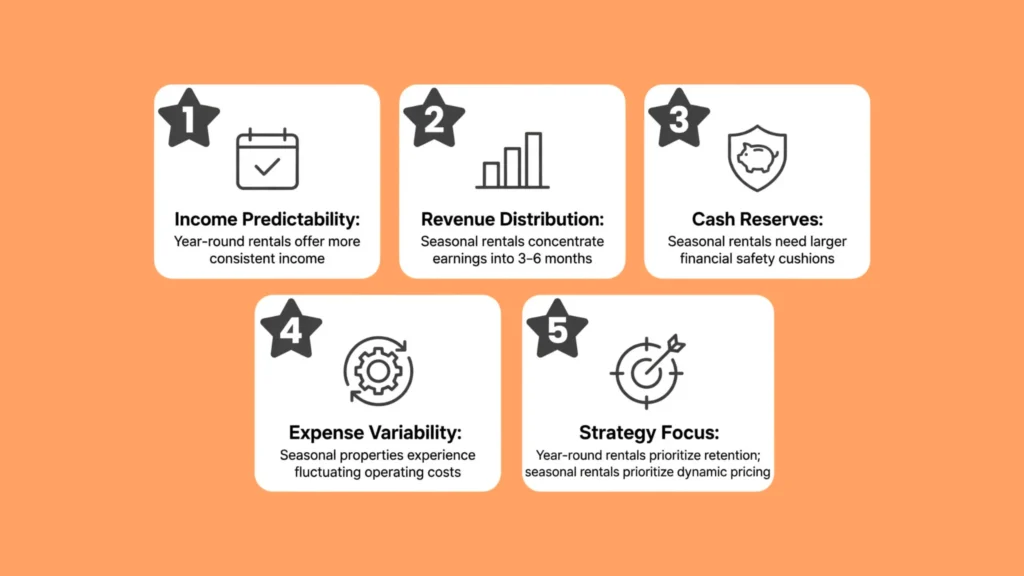
| Financial Metric | Year-Round Residential Rental | Seasonal Vacation Rental |
| Income Predictability | High (fixed monthly rent) | Low (variable daily/weekly rates) |
| Revenue Distribution | Evenly distributed over 12 months | Concentrated in 3–6 months |
| Cash Reserve Needs | Moderate (1–3 months expenses) | High (3–6+ months expenses) |
| Expense Variability | Low, predictable utility/upkeep costs | High, fluctuates with guest turnaround |
| Strategy Focus | Tenant retention & low turnover | Dynamic pricing & seasonal budgeting |
Frequently Asked Questions
How much money should I keep in a cash reserve for a seasonal rental?
Most vacation rental experts recommend saving enough to cover at least 3 to 6 months of fixed baseline expenses (mortgage, property taxes, insurance, utilities, and essential maintenance). If your market experiences near-zero demand in the off-season, aim for 6 to 9 months of reserve coverage.
What is the best way to handle pricing during the off-season?
Implement dynamic pricing tools that automatically adjust your nightly rates based on real-time market demand, local events, and competitor availability. Lowering rates and reducing minimum stay requirements during quiet months helps boost baseline occupancy without diluting your peak-season brand value.
Should I close my seasonal rental completely during the off-season?
Closing completely depends on your location and fixed costs. If lowering your rates still produces enough revenue to cover variable costs (cleaning, utilities, platform fees) and contribute toward fixed costs, keeping the property open is generally beneficial. If market demand drops to zero or hosting costs exceed earnings, closing temporarily may save money.
How do I manage taxes on seasonal rental revenue?
Because seasonal income comes in concentrated bursts, set aside estimated tax payments as the revenue comes in during peak months. Work with a qualified CPA to understand deductible expenses, such as depreciation, utilities, platform fees, and off-season property improvements.
Can mid-term rentals fix off-season cash flow problems?
Yes. Transitioning your short-term vacation rental to a mid-term stay model (30 to 90 days) during the off-season is one of the most effective ways to secure steady, guaranteed cash flow. It reduces guest turnover costs, lowers utility usage, and ensures consistent occupancy during low-demand months.
Final Thoughts
Successfully managing seasonal rental cash flow comes down to anticipation and organization. High-earning months should never be viewed in isolation; they are the financial engine that fuels your property throughout the entire year.
By building strong cash reserves, switching to an annualized budget, auditing off-season overhead, and diversifying your rental strategy, you can eliminate financial stress and build a sustainable, highly profitable rental property business.
About The Author