Software Startup Failure Reasons and How to Avoid Them
Building a modern tech company is one of the most exciting journeys an entrepreneur can take, but the statistical reality is incredibly brutal. According to historical industry data, roughly 90% of all technology ventures collapse within their first few years of operation. If you want your business to survive, you must understand exactly why software startups fail and actively build defenses against those structural vulnerabilities.
Consequently, understanding the root causes of these collapses allows you to protect your capital and make better strategic decisions. In this comprehensive guide, we will break down the most common software startup mistakes, analyze the true economic impact of these failures, and establish an operational framework to guide your team toward long-term profitability.
Why Idea Validation Prevents Expensive Failure
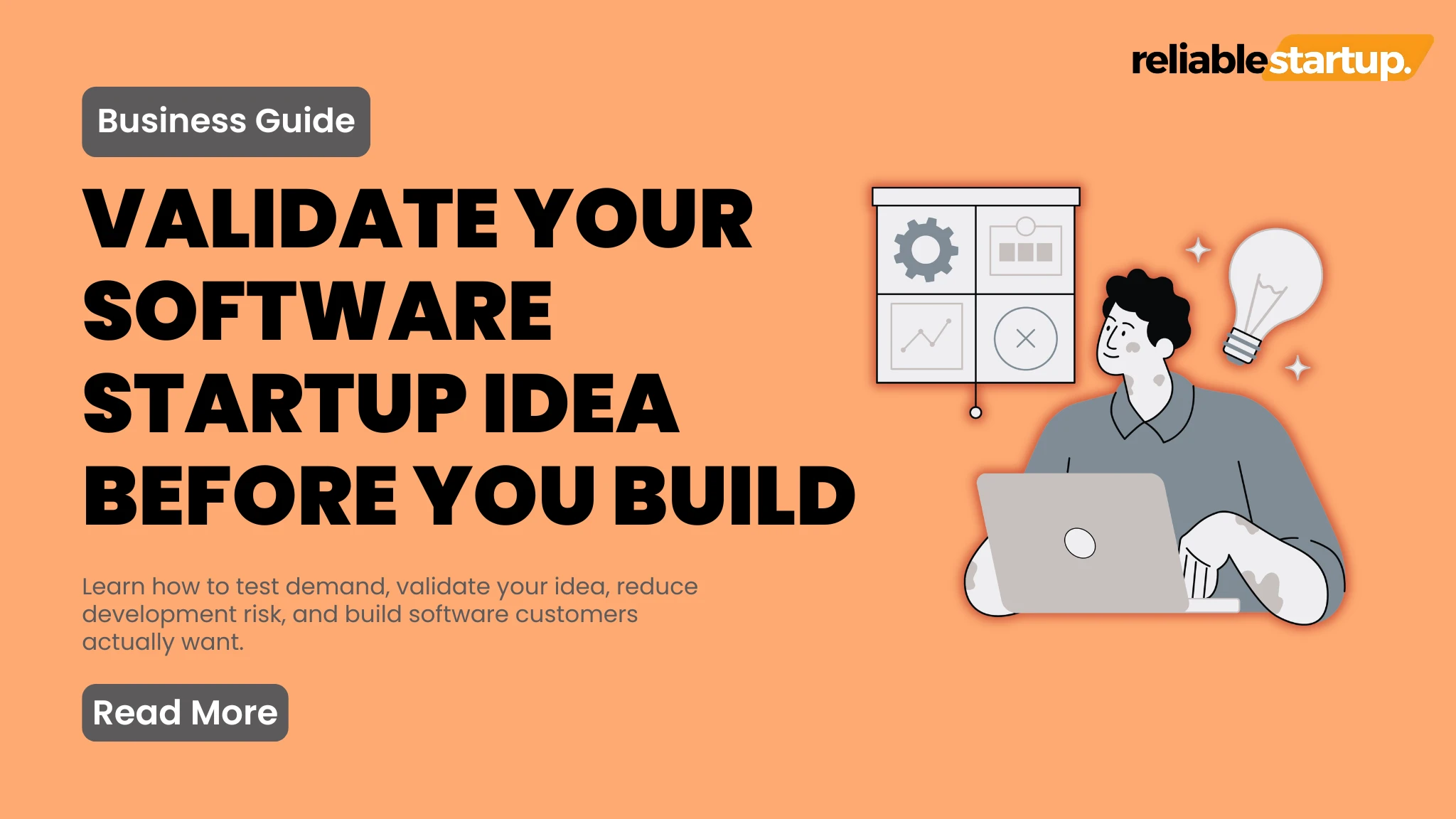
The most significant and heartbreaking reason for failure is building a product that doesn’t solve a real problem or fulfill a genuine market need. It’s easy to get caught up in the excitement of a brilliant idea and assume others will share your enthusiasm. However, why software startups fail often boils down to this fundamental mismatch. You might create a masterpiece of engineering, but if no one is willing to pay for it, your startup will struggle. This highlights the absolute necessity of rigorous idea validation before investing significant resources.
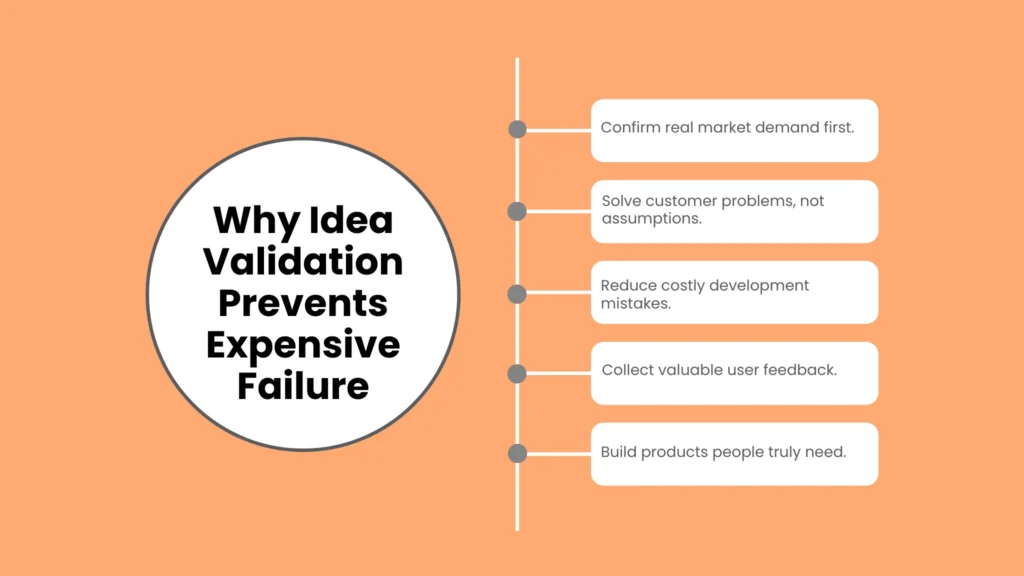
To illustrate this critical point, refer to the flowchart below. This graphic vividly shows how taking the time to validate your idea can prevent the costly mistake of developing a product that fails to find an audience. It emphasizes that validation helps confirm real market demand first, reduces development risks, and gathers crucial feedback – all essential steps in building a product people actually want.
Technical and Operational Validate a Software Startup Idea Requirements
While validation begins with assessing market demand, it must also extend to the technical and operational feasibility of your solution. This is where many entrepreneurs stumble. You can have a validated market problem and a willing customer base, but if your product is impossible to build reliably or costs too much to operate, success will remain elusive.
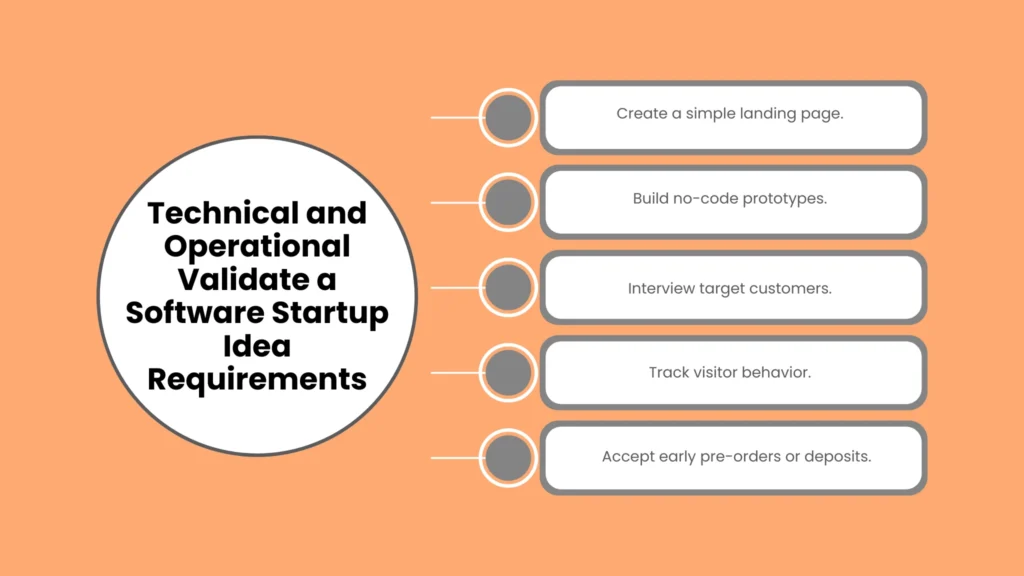
Ensuring you meet specific software startups fail requirements in technical and operational planning is crucial. Can your team actually build the complex features you’ve envisioned? What are the server and infrastructure costs at scale? What tools and processes are needed for continuous deployment and customer support? Ignoring these aspects can lead to performance issues, security vulnerabilities, and an unsustainable business model.
The checklist below outlines key practical requirements that must be addressed, such as building simple landing pages or utilizing no-code prototypes to test functional viability before jumping into full development.
Step-by-Step System for Running Your Validation Test
Validation isn’t a single event but an iterative process. You don’t just “check it off” and move to development. A robust approach involves a systematic method of testing your assumptions, gathering data, and making informed decisions. Why software startups fail is frequently due to skipping these steps or misinterpreting the results.
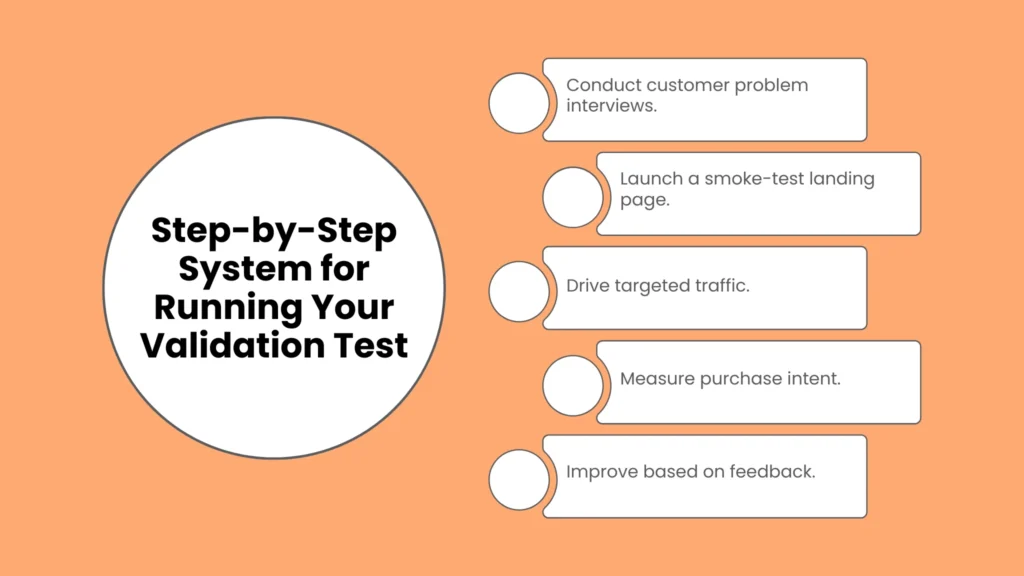
The infographic below offers a practical framework for running a validation test. It details a loop that includes conducting customer problem interviews, launching a smoke-test landing page, driving targeted traffic, and measuring genuine purchase intent. This cycle of building, measuring, and learning is vital for avoiding the costly trap of assumption-based development.
Analyzing the Numbers: Validation Costs vs. Software Profit Margins
A major contributor to software startups fail cost is the misallocation of funds, particularly spending too much too early. Validation is often perceived as an added expense, but in reality, it’s a critical investment that saves money. The cost of running validation tests stays low compared to the potential financial disaster of building a full-featured product that nobody uses.
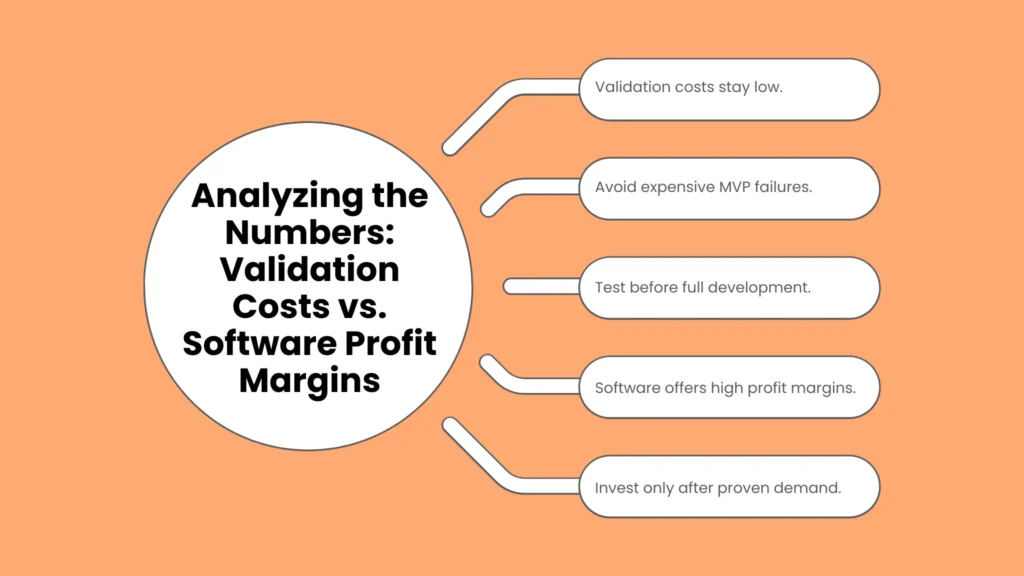
Understanding the relationship between software startups fail profit margin and validation is crucial. While software businesses typically boast exceptionally high profit margins once they scale, achieving profitability is impossible if your initial customer acquisition costs are sky-high due to a poor product-market fit. Early validation helps you refine your marketing message, lowering risks. It enables you to invest your limited capital only after you have proven there is sufficient demand.
The chart below visually reinforces this comparison, directly answering the question: is software startups fail profitable? A well-validated startup avoids expensive MVP failures and preserves those high software profit margins.
The Subtle Signs of True Market Demand
One of the most challenging aspects of validation is interpreting feedback. Many entrepreneurs mistake polite interest for genuine market demand, falling prey to confirmation bias. People might say they “like” your idea, but that’s very different from them saying they will pay for it. Why software startups fail is often linked to this misinterpretation.
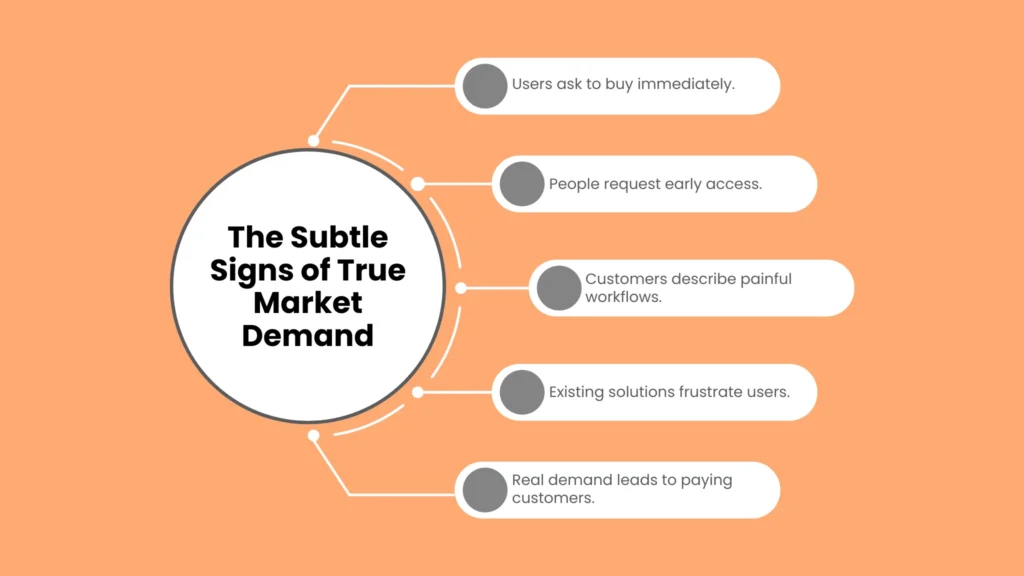
So, what are the genuine indicators of true market demand? Look for subtle yet powerful signs: users asking to buy immediately, people requesting early access, or customers describing incredibly painful workflows with existing solutions. Real demand inevitably leads to paying customers. The graphic below highlights these critical indicators to watch out for during your interview and smoke-testing phases.
Validate Your Software Startup Idea Before You Build
The evidence is overwhelming: the single most effective way to beat the odds and avoid the fate of most software startups is to validate your idea before you write a single line of production code. It’s not just a box to check; it’s a foundational mindset that prioritizes customer feedback and data over assumptions. While it requires discipline and can sometimes deliver humbling feedback, it is the only path that ensures you are building a valuable product.
The final guide summary below serves as a blueprint. Start by identifying a real problem, systematically test your proposed solution, analyze the numbers, and only then proceed to full-scale development. By making validation an integral part of your process, you dramatically reduce your risk and pave the way for a sustainable, impactful, and profitable software business. Don’t let your startup become another statistic on why software startups fail. Embrace validation and build with confidence.
Conclusion
Navigating the competitive technology landscape requires a sharp balance of creative vision and disciplined execution. By recognizing the warning signs of premature scaling, validating your market demand early, and managing your cash flow meticulously, you dramatically increase your chances of becoming a breakout success story. Protecting your startup from common mistakes is a continuous process that requires humility, agility, and a relentless focus on customer satisfaction. If you want more step-by-step business blueprints, engineering frameworks, and growth calculators, visit our website at reliablestartup to build and protect your next venture today.
Frequently Asked Questions
What is the number one reason software startups fail?
The top reason is a complete lack of market need. The majority of failed tech founders build products based entirely on personal assumptions without ever proving that a large audience actually wants to buy what they are creating.
How much financial runway should an early startup maintain?
Your company should ideally maintain an absolute minimum of six to nine months of financial runway at all times. However, maintaining a twelve-month buffer is highly recommended to protect your team against sudden economic shifts or fundraising delays.
Should I build a mobile app or a web app first to reduce risk?
Web applications are almost always faster, cheaper, and easier to validate than native mobile apps. They allow you to deploy instant updates, bypass restrictive app store review processes, and easily track user interactions with minimal friction.
How do I know when it is time to pivot my software product?
If your marketing campaigns are generating consistent website traffic but your actual user registration or retention rates remain completely flat for several months, it is a clear sign that you need to pivot your product strategy.
Is it safe to share my startup idea during customer interviews?
Yes, it is entirely safe. Ideas themselves have almost zero commercial value without execution. Furthermore, focusing your conversations on the customer’s problems rather than your specific software code completely eliminates the risk of anyone stealing your concept.