How to Start a Tyre Retreading Business
Key Takeaways
Low tire retread startup cost with high profit margins
High demand across commercial transport and logistics fleets
Essential retreading equipment needed for factory setup
Step-by-step retread tire business plan guidance
Have you ever looked at a worn-out truck tire and seen a goldmine? Most people just see trash. However, smart entrepreneurs see a massive business opportunity here. Starting a tyre retreading business allows you to take worn tires and put fresh tread on them. Afterward, you can sell them for a handsome profit while saving fleet owners big money.
If you are wondering how to turn this idea into a real, running factory, you are in the right place. Let us walk through everything you need to know step by step. It will feel just like grabbing a cup of coffee and talking shop.
AI OVERVIEW
A tyre retreading business recycles worn tires by replacing their outer tread, giving them a second life at a fraction of the cost. It offers high profit margins, strong demand from commercial transport fleets, and great environmental benefits. With a solid retread tire business plan, the right retreading equipment, and clear startup cost management, you can launch a profitable factory smoothly.
What Is Tyre Retreading and Why Is It So Profitable?
Have you ever wondered why big shipping companies rarely buy brand-new tires for every single truck? The answer is simple. New commercial tires are extremely expensive. Tyre retreading is the process of taking a used tire casing that is still structurally sound. You simply remove the old smooth tread and bond a fresh layer of rubber onto it.
As a result, the tire performs almost like new, but it costs up to 50 percent less to produce. Because commercial trucks burn through rubber constantly, fleet owners actively seek out retread suppliers. They want to keep their daily operating costs as low as possible.
Therefore, that steady, recurring demand is exactly what makes a tyre retreading business so reliable and profitable year after year.
How Much Does a Tire Retread Startup Cost?
Let us get straight to the numbers. Budget is usually the first thing on your mind. Your overall tire retread startup cost will vary. It depends on whether you choose a fully automated line or a manual setup.
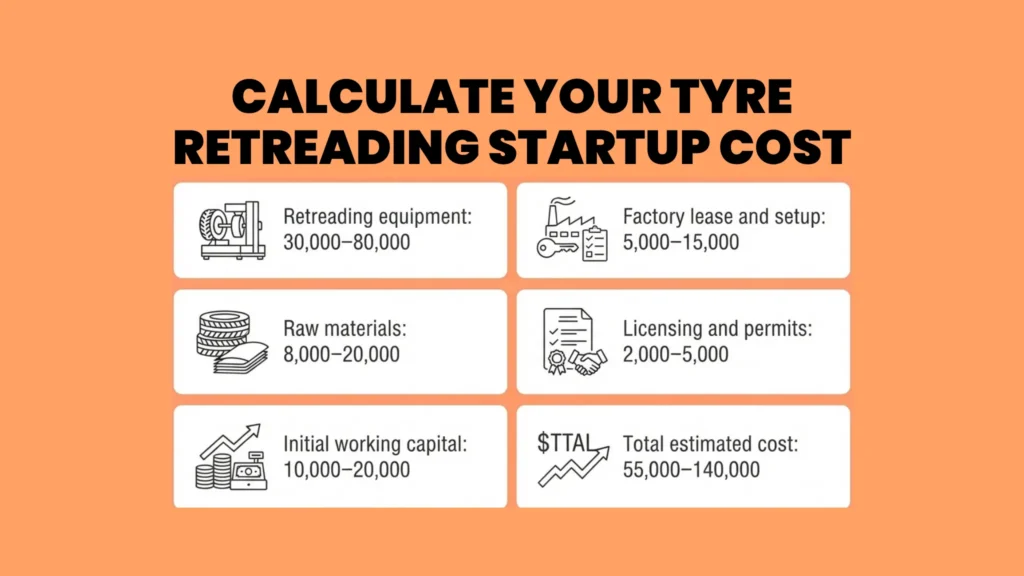
Generally, opening a small-to-medium factory requires business investment for leasing space and purchasing machinery. Furthermore, you must cover raw materials and initial operational expenses. Here is a quick breakdown of a typical budget based on available industry data:
| Cost Category | Estimated Budget Range (USD) | Notes |
| Retreading Equipment | $30,000 to $80,000 | Buffers, tread builders, and curing chambers |
| Factory Lease and Setup | $5,000 to $15,000 | Needs high-voltage power and good ventilation |
| Raw Materials and Inventory | $8,000 to $20,000 | Precured rubber strips, cushion gum, and casings |
| Licensing and Permits | $2,000 to $5,000 | Environmental clearances and local business permits |
| Initial Working Capital | $10,000 to $20,000 | Covers initial utility bills, salaries, and marketing |
| Total Estimated Cost | $55,000 to $140,000 | Varies based on plant size and location |
If you want to keep your tire retread startup cost on the lower end, you can look into reliable refurbished machinery. Alternatively, you can start with a precured cold retreading setup, which is generally cheaper than hot molding.
Building Your Retread Tire Business Plan
You would not build a house without a blueprint, right? Naturally, the same logic applies here. Drafting a practical retread tire business plan is your best roadmap to avoiding costly mistakes.
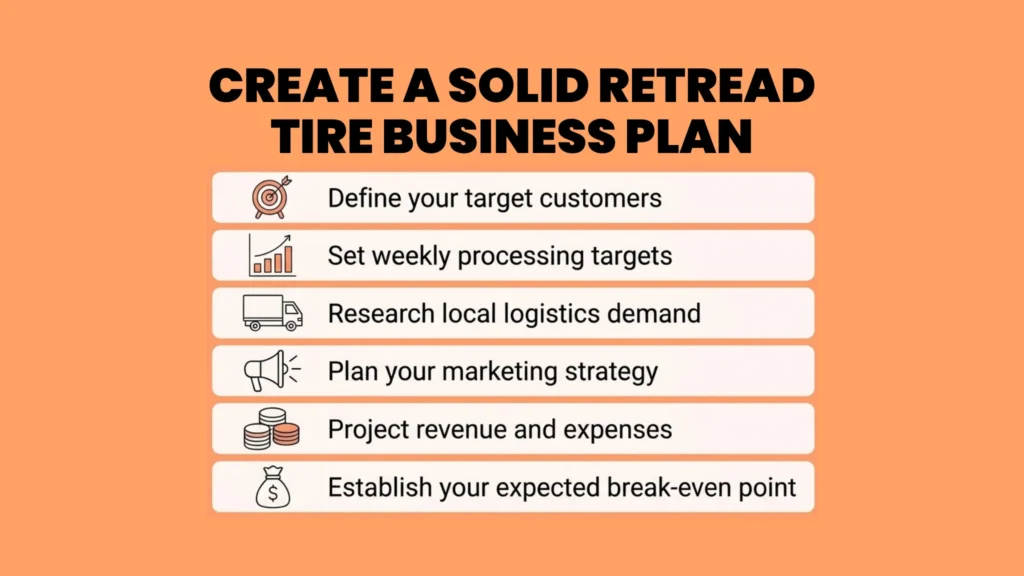
Specifically, your plan needs to spell out who your target customers are. It should outline how many tires you aim to process each week. Additionally, it must show how you will market your service to local logistics companies. It should also include a clear financial projection showing when you expect to break even.
If you feel overwhelmed trying to structure all these operational details from scratch, you can check out startup resources on reliablestartup. This resource can give you a massive head start on drafting a professional plan that bank managers and investors will respect.
Essential Retreading Equipment You Need
To run a smooth production line, you need the proper tools for the job. Investing in quality retreading equipment directly impacts the safety and durability of your finished tires. Here is what a standard cold-retreading production line looks like:
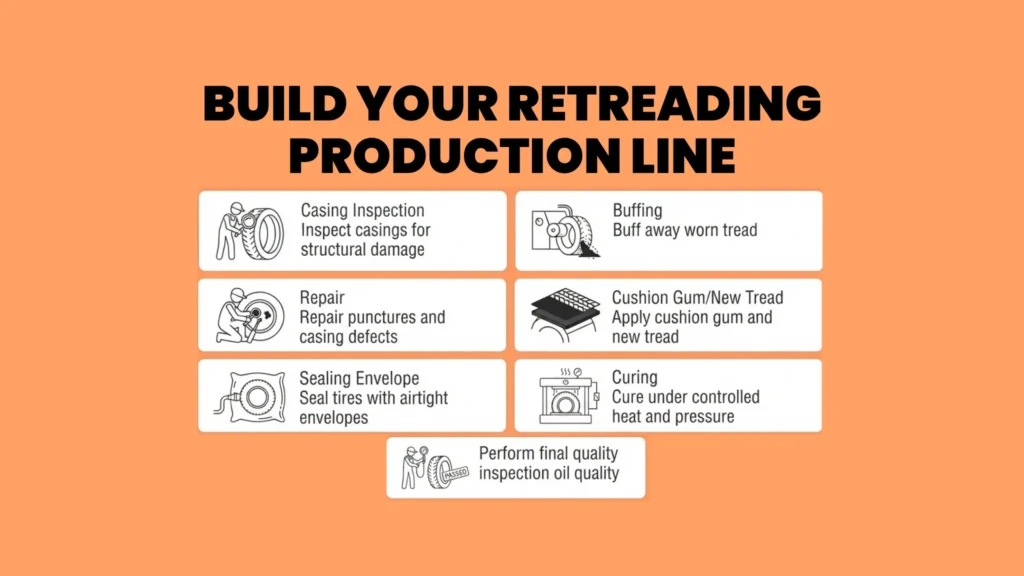
Initial Inspection Station: High-pressure inspection tools and monorails to check used tire casings for structural damage or hidden steel belt breaks.
Buffing Machine: A rotating rasp header that strips off the old, worn tread and creates a precise radius and textured surface for proper bonding.
Skiving and Repair Tools: Handheld pneumatic tools used to clean out minor punctures, remove rusted wire ends, and fill cavities with repair rubber.
Building Machine: Applies cushion gum and wraps the new precured rubber tread evenly around the prepared casing under controlled pressure.
Enveloping System: Seals the newly built tire inside an airtight rubber envelope to prepare it for the heating process.
Curing Chamber (Autoclave): A pressure vessel that applies heat and steam pressure over a set time to permanently vulcanize the tread to the casing.
Final Inspection Machine: Checks the cured retread tire for any air bubbles, tread separation, or surface blemishes before shipping.
Getting durable retreading equipment ensures your factory produces safe tires that pass strict road compliance checks every time.
Step-by-Step Guide to Launching Your Business
Are you ready to get your hands dirty? Let us break down the exact operational steps to launch your tyre retreading business from scratch.
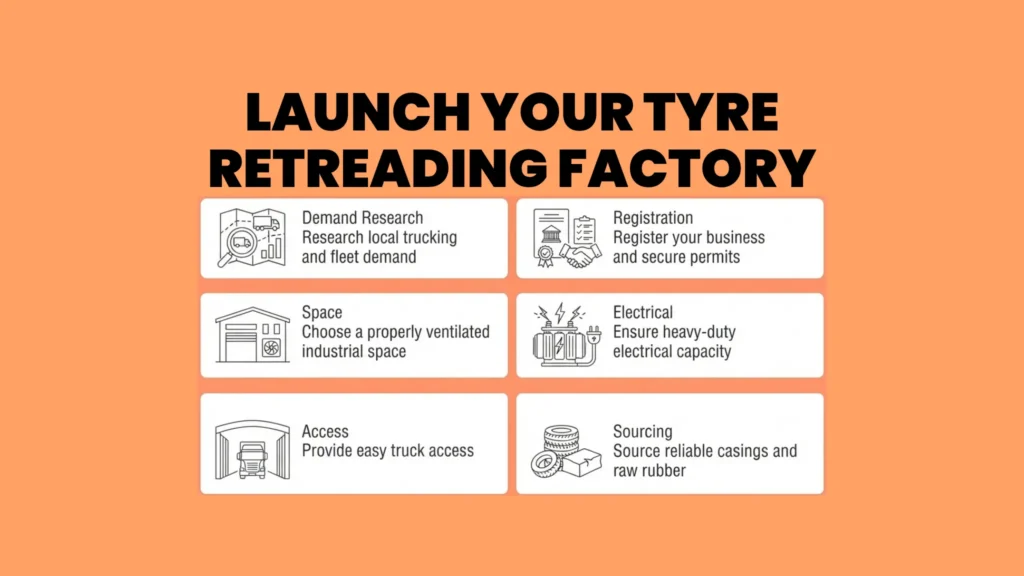
Step 1: Research Your Local Market
First, take a look around your local area. Are there interstate highways nearby? Do you see local trucking fleets, bus depots, or construction firms? In addition, talk directly to fleet managers. Ask them where they currently buy retreads and what pain points they experience with current suppliers.
Step 2: Register Your Business and Secure Permits
Next, choose a solid business structure, such as an LLC or a private limited company. Because tire retreading involves heating rubber and using electrical machinery, you will generally need local industrial permits. Likewise, fire safety clearances and environmental control licenses are required in most areas.
Step 3: Secure an Industrial Space
Afterward, secure an industrial shed with high ceilings, heavy-duty electrical wiring, and proper air ventilation. Moreover, make sure the space offers easy truck access. This allows large delivery trailers to unload heavy casings comfortably.
Step 4: Source Used Casings and Raw Rubber Suppliers
Finally, partner with trusted casing brokers or local tire shops to source reliable worn tires. Equally important is finding a dependable supplier for precured tread rubber and cushion gum. Material quality directly dictates your tire lifespan.
If you ever need step-by-step guides on negotiating with industrial suppliers or setting up supply chains, reliablestartup.com offers plenty of actionable business insights to keep you on the right path.
Hot Retreading vs. Cold Retreading: Which Should You Choose?
When setting up your plant, you will have to choose between two main manufacturing methods. Making the right choice affects your initial capital needs and the types of tires you can service. Here is a simple comparison table to help you decide:
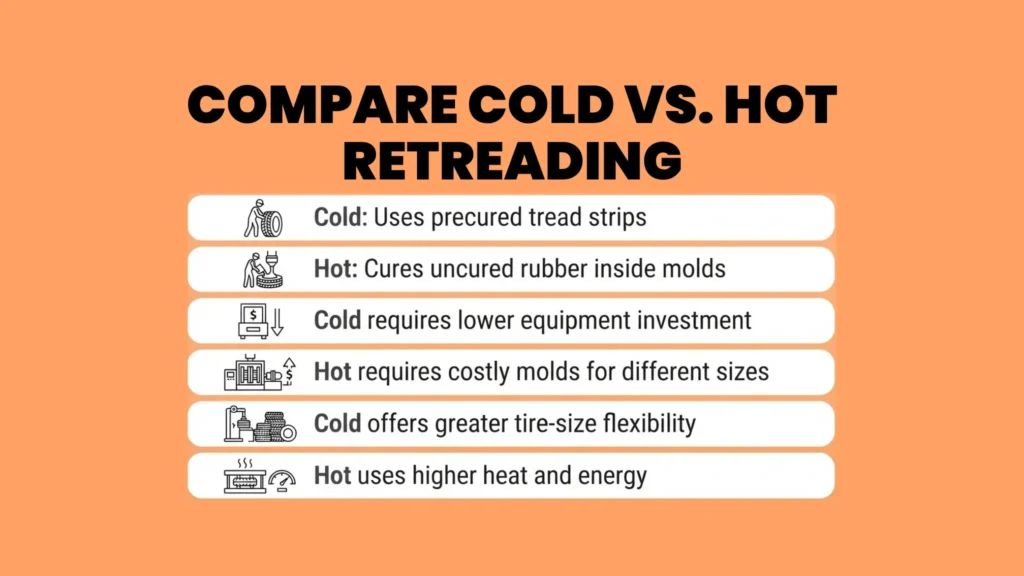
| Feature | Cold Retreading (Precured) | Hot Retreading (Molded) |
| Process Type | Pre-cured tread strip vulcanized to casing | Uncured rubber matrix cured inside a mold |
| Equipment Cost | Generally lower initial investment | Higher investment due to expensive molds |
| Flexibility | Easy to switch between different tire sizes | Requires distinct, costly molds for each size |
| Ideal Market | Commercial trucks, trailers, and buses | Passenger cars, light trucks, and off-road tires |
| Energy Consumption | Moderate | High heat and energy requirements |
For most new entrepreneurs, starting with cold retreading is the smartest move. It keeps your tire retread startup cost manageable. Furthermore, it allows you to service a wide variety of commercial truck tires without buying dozens of expensive molds.
Marketing Your Retread Tires and Finding Customers
Having a great factory means nothing if nobody knows you exist. So, how do you get your first orders? Start by visiting local logistics yards, bus companies, and waste management contractors in person. Offer them a free trial on a few test tires. Consequently, they can see the quality of your work firsthand.
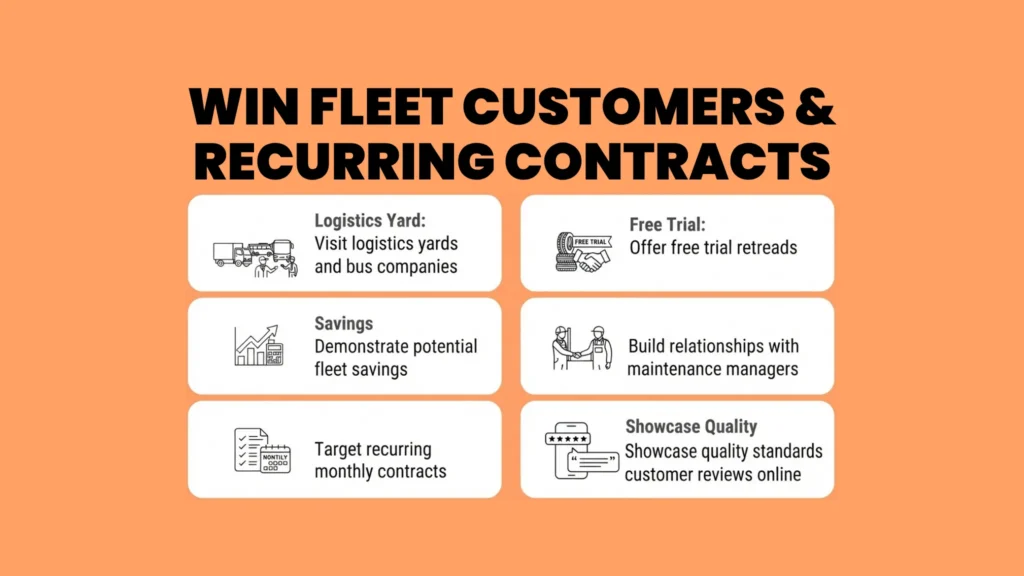
Highlight the financial savings clearly. Show them how buying your retreads will slash their annual fleet tire budget by thousands of dollars. Building strong, personal relationships with fleet maintenance managers is the single best way to secure recurring monthly contracts.
In addition, you can create a clean, professional website showcasing your quality control standards and customer reviews. Whenever you need help structuring your initial pitch decks or refining your operational strategy, reliablestartup.com is a handy resource for modern business advice.
Conclusion
Starting a tyre retreading business is one of the most practical, recession-resistant industrial business ideas you can pursue today. By taking worn casings and transforming them into durable, low-cost commercial tires, you solve a massive problem for local fleet managers. Meanwhile, you build a steady income stream for yourself.
Keep your initial tire retread startup cost under control by choosing the right cold-retreading equipment. Furthermore, draft a clear business strategy and focus heavily on top-tier quality control. With consistency and strong customer service, your retreading shop can quickly become a trusted go-to supplier in your regional transport market.
FAQs
How much does it cost to start a tyre retreading business?
Starting a tyre retreading business generally requires an estimated initial budget, representing a significant business investment, ranging between $55,000 and $140,000, depending on machinery choices and plant scale.
Is a tyre retreading business profitable?
Yes, it is generally very profitable because raw casings are cheap, production costs are manageable, and commercial fleets buy retreads repeatedly to cut operating costs.
What is the most important retreading equipment needed?
The most critical pieces of retreading equipment are the buffer machine, building machine, and the pressure curing chamber (autoclave) which vulcanizes the rubber.
Do I need a retread tire business plan to get a loan?
Yes, banks and investors always require a comprehensive retread tire business plan outlining your machinery costs, target market, financial projections, and break-even timeline.