Selling Crumb Rubber Into the Artificial Turf Infill Market
Selling into the crumb rubber turf infill market requires strict attention to particle size, material purity, and local safety rules. Offering the lowest price per ton is no longer enough to win contracts. For tire recyclers and rubber processors, artificial sports fields offer a large and steady end-use market. However, turf infill buyers will quickly reject loads that fail tight lab checks or lack proper paperwork.
To win share in this sector, you must move away from a basic scrap mindset. Instead, focus on precision manufacturing. When your plant produces clean, uniform, and well-graded sports field rubber, you can secure long-term supply deals with major installers and distributors.
Understanding the Crumb Rubber Turf Infill Market
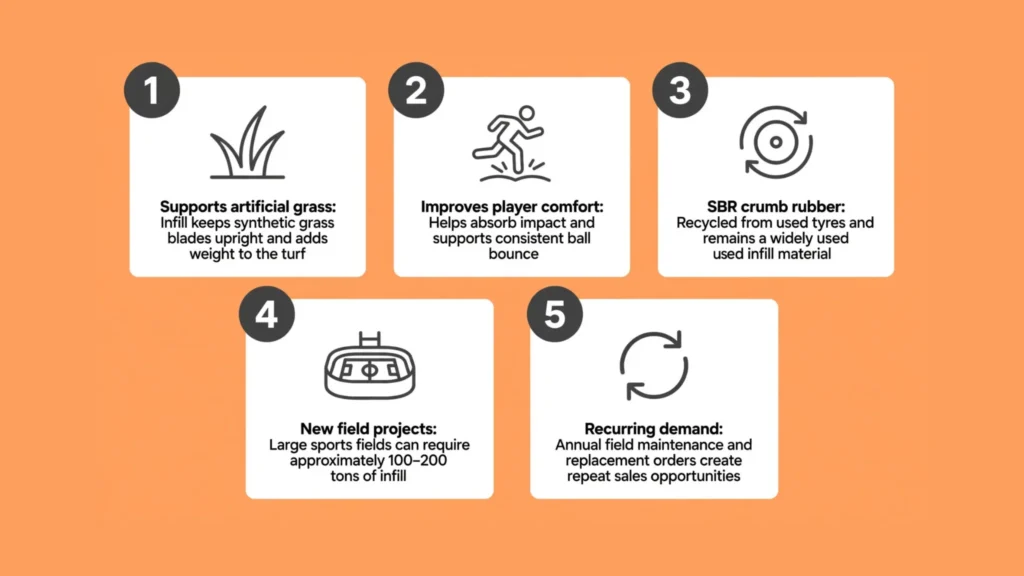
Artificial turf systems rely on infill to mimic the feel of real soil and grass. Infill is the granular material spread between synthetic grass blades. First, it keeps the plastic blades standing upright. Second, it absorbs impact to protect players from injuries. Finally, it adds weight to hold the turf carpet in place and ensures proper ball bounce.
Recycled styrene-butadiene rubber (SBR) comes mainly from used car and truck tires. Today, it remains the most common infill material worldwide. Organic options like cork and wood chips are growing in popularity, and virgin plastics like EPDM also compete for share. Even so, SBR crumb rubber still leads the market because it is durable, handles freeze-thaw cycles well, and costs much less.
Different processing methods also influence the quality and applications of recovered rubber, making it important to understand modern tyre recycling technologies before selecting an end market.
As a result, rubber processors see steady demand across three main areas:
New Field Builds: Large school, city, and pro stadium projects often need 100 to 200 tons of infill per field.
Field Care and Top-Ups: Facility managers place yearly orders to replace infill lost through rain runoff, grooming, and player cleats.
Turf Makers: Direct factory deals allow turf brands to bundle infill with their synthetic grass rolls for complete project bids.
Who Are the Primary Turf Infill Buyers?
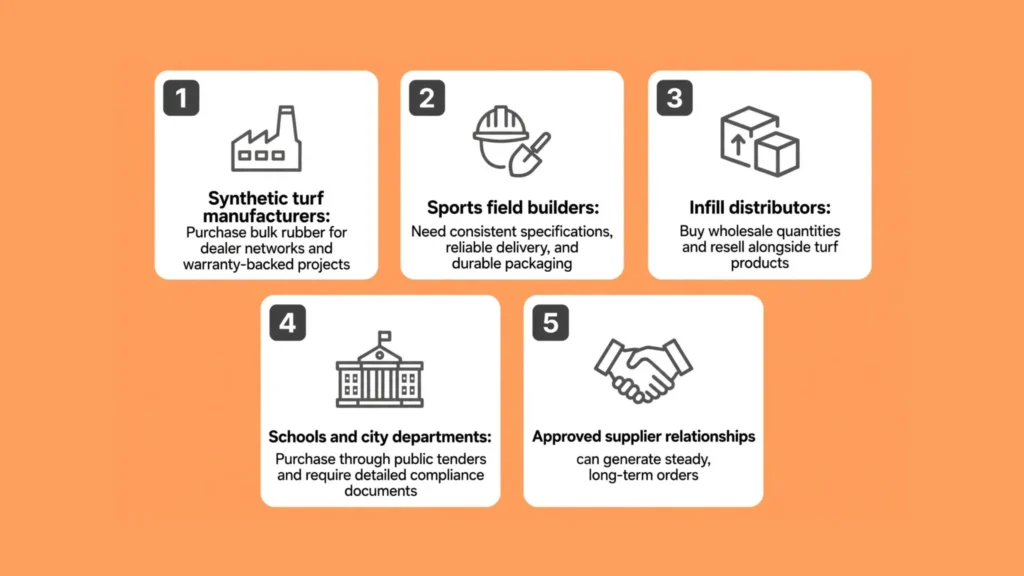
To build a strong sales pipeline, you must understand the people who buy infill. Each group in the supply chain has different goals and pain points.
Synthetic Turf Makers
Major turf brands often buy bulk crumb rubber for their own dealer networks and warranty-backed projects. Therefore, these buyers need high plant output, reliable shipping across regions, and strict quality control. Becoming an approved vendor for a turf maker can bring you steady, year-round orders.
Sports Field Builders and Installers
Field contractors usually buy infill on a project-by-project basis. Above all, they care about on-time job-site delivery, sturdy bags, and full compliance with the project’s infill specification. A late truck can stall an entire work crew. Thus, reliable shipping matters just as much as product quality.
Infill Distributors and Brokers
Regional dealers buy infill in bulk and sell it alongside turf rolls, shock pads, and glue. Selling through dealers lowers your sales costs and credit risks. However, you must offer strong wholesale prices so dealers can still make a healthy profit.
City and School Buying Teams
Public school districts, colleges, and city parks often put field projects out for public bid. To win these tenders, you must provide detailed paperwork. Specifically, buyers will ask for safety data sheets (SDS), lab test results, and proof of liability insurance.
Essential Infill Specifications Buyers Demand
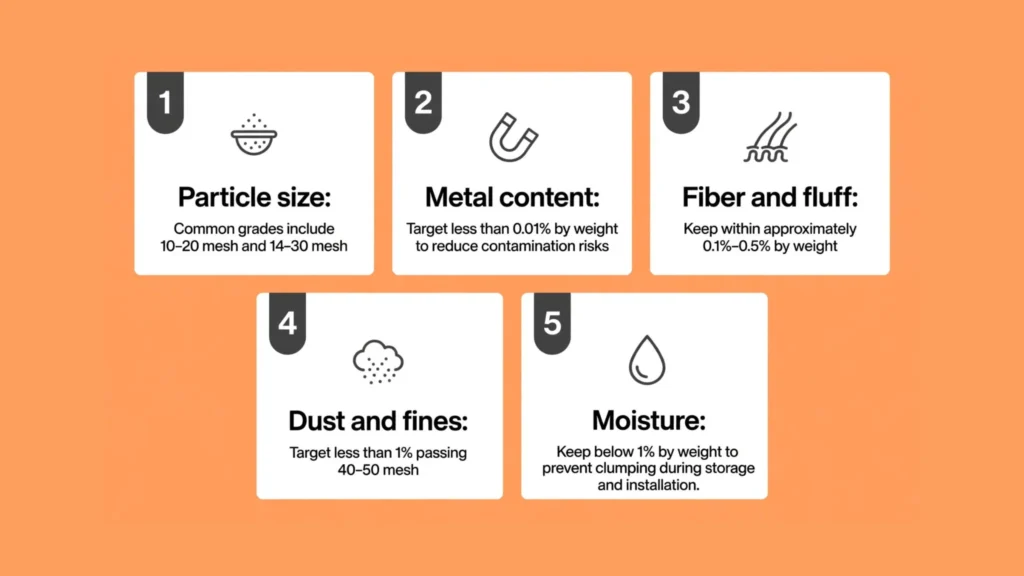
You cannot sell rough, shredded tire scrap into the sports surfacing industry.
Producing consistent granules requires proper shredding, magnetic separation, and fiber removal during commercial crumb rubber processing.
Instead, every field project follows a strict infill specification written by sports architects or groups like FIFA and the Synthetic Turf Council (STC).
| Specification Parameter | Typical Industry Standard | Why It Matters to Buyers |
| Particle Size (Mesh) | 10–20 mesh or 14–30 mesh | Controls water drainage, firmness, and player traction. |
| Metal Content | Less than 0.01% by weight | Prevents player cuts, rust stains, and blade damage. |
| Fiber and Fluff Content | Less than 0.1% to 0.5% by weight | Extra fluff floats to the top, blocks drainage, and holds water. |
| Dust and Fines | Less than 1% passing 40–50 mesh | Cuts down airborne dust during setup and prevents hard spots. |
| Moisture Content | Less than 1% by weight | Stops clumping in bags and keeps spreaders running smoothly. |
| Bulk Density | 26 to 32 lbs per cubic foot | Sets the exact tonnage needed to reach the target infill depth. |
Grinding Methods: Ambient vs. Cryogenic
Buyers often state whether the rubber must come from ambient or cryogenic grinding. Each process gives the rubber grains a distinct shape and feel:
Ambient Crumb Rubber: Plants grind this rubber at room temperature using cracker mills and granulators. Consequently, the grains have rough, jagged edges with a larger surface area. Many builders prefer ambient rubber because the rough edges lock together, which reduces rubber splash during games.
Cryogenic Crumb Rubber: Plants freeze the rubber with liquid nitrogen before shattering it in a hammer mill. As a result, this method creates smooth, cube-shaped grains with very little leftover wire or fiber. Cryogenic rubber flows easily through spreaders, drains fast, and creates less dust. However, its smooth shape can lead to slightly more shifting on the field.
Coated and Colored Crumb Rubber
Some processors coat SBR crumb rubber with polyurethane or acrylic layers. This helps them compete with virgin plastics and address heat or visual concerns. For instance, green or brown coatings lower surface heat and keep black rubber dust off players’ skin and uniforms. Furthermore, the coating seals the grain to cut down on rubber odor. Offering coated sports field rubber lets you charge much higher prices per ton.
Navigating Safety and Environmental Testing
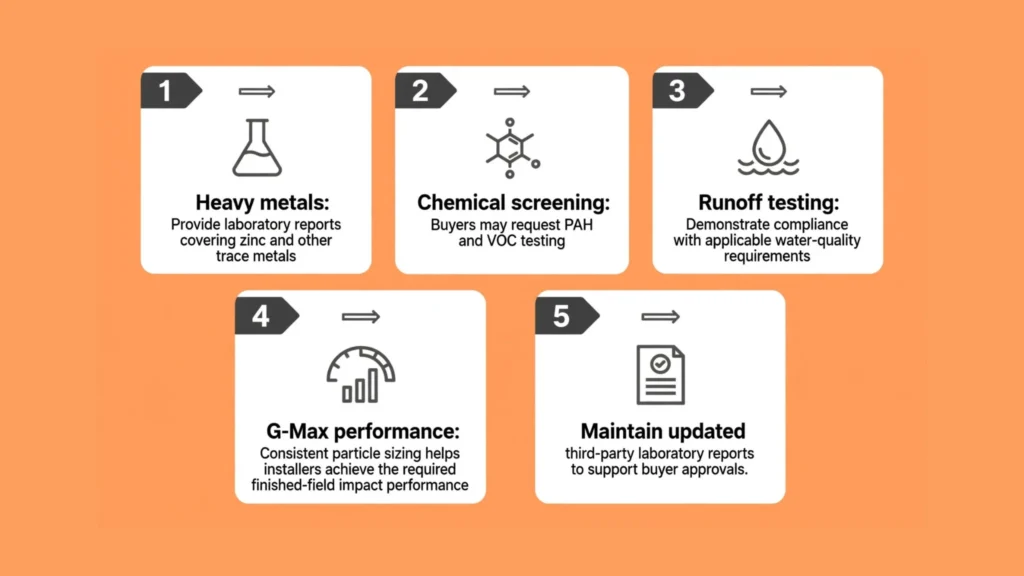
Public rules around tire-derived infill have changed what buyers expect. Even when local laws allow SBR crumb rubber, buyers almost always ask for third-party lab tests before they place an order.
Heavy Metals and Runoff Tests: Buyers often request lab reports showing compliance with standards like EN 71-3 or local water runoff rules for zinc and other trace metals.
Chemical Screening: North American and European buyers frequently ask for tests covering PAHs and VOCs. These reports confirm the rubber meets strict safety and chemical rules.
Impact Absorption (G-Max): Crews test surface hardness, known as G-Max, on the finished field. Even so, steady grain size and bounce in your rubber directly help installers pass that final safety test.
Keeping up-to-date lab reports on file speeds up the sales process. Moreover, it builds immediate trust with cautious buyers.
Packaging, Shipping, and Delivery Expectations
Freight costs make up a large share of the final delivered price of crumb rubber. Because rubber is lighter than sand or gravel, you must pack trailers well and make unloading easy.
Standard Packaging Options
2,000 lb (1-Ton) Super Sacks: These large woven bags are the top choice for field builds. Buyers usually ask for UV-safe bags with bottom spouts so crews can empty them straight into turf spreaders.
50 lb Bags on Pallets: Facility staff use smaller bags mainly for spot repairs, yearly top-ups, and retail sales.
Bulk Pneumatic Tankers: On huge projects, specialized trucks blow infill directly onto the field. This method saves labor and removes the hassle of throwing away empty bags.
Smart Freight Planning
A standard 53-foot trailer usually holds 20 to 22 super sacks, which maxes out legal road weight limits. Therefore, plants located within 300 to 500 miles of major metro areas enjoy a huge shipping cost edge over distant rivals.
Step-by-Step Plan to Win Turf Infill Buyers
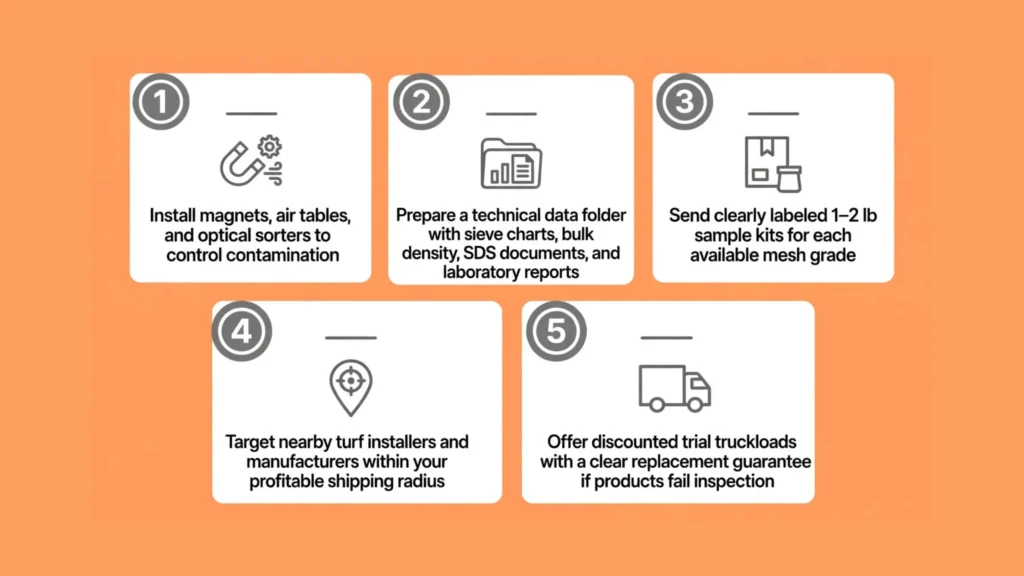
Breaking into the crumb rubber turf infill market takes steady outreach and clear proof of quality. Follow these steps to build your buyer base:
Check Your Quality Controls: Use strong magnets, air tables, and optical sorters to keep metal and fiber levels well below industry limits. Before investing in additional sorting and grinding equipment, processors should evaluate their overall tyre recycling costs to determine whether higher-grade infill production can support profitable margins.
Create a Technical Data Folder: Gather your sieve charts, bulk density numbers, safety data sheets, and third-party lab tests into one clean digital packet.
Send Out Sample Kits: Pack clean, labeled 1-to-2-pound sample jars for every mesh size you make. Buyers will always test physical samples before they approve a new supplier.
Pitch Nearby Installers First: Contact project estimators and buyers at turf companies within your best shipping radius. Highlight your fast lead times, stock levels, and steady grain sizing.
Offer Risk-Free Trial Loads: Many buyers hesitate to switch suppliers. To lower their risk, offer a discounted first truckload backed by a clear replacement guarantee if the load fails inspection.
Common Mistakes That Cost Processors Contracts
Even skilled tire recyclers lose good turf deals when they overlook simple details on the job site:
Shifting Sieve Sizes: Shipping rubber that jumps between coarse and fine batches ruins spreader settings during installation.
Poor Moisture Control: Storing finished bags outside without waterproof covers causes wet clumps that jam field machinery.
Missing the Spring Rush: Field construction booms from late spring through early fall. If you fail to build stock before spring, you will run out of product during peak buying months.
Using Weak Bulk Bags: Cheap bags that rip when lifted by a forklift on a muddy site create major delays. Consequently, angry contractors will quickly look for another supplier.
Frequently Asked Questions
What is the most common mesh size for artificial turf infill?
The 10–20 mesh and 14–30 mesh grades are the most popular sizes for sports fields. Football and rugby fields often use slightly coarser 10–20 mesh rubber for better stability. Meanwhile, soccer fields usually prefer 14–30 mesh rubber for a smoother ball roll.
How much crumb rubber does a standard sports field need?
A full-sized turf soccer or football field covers about 80,000 to 90,000 square feet. Typically, a field of this size needs 120 to 200 tons of crumb rubber infill. The exact amount depends on the grass blade height and whether a sand layer sits underneath.
Why do turf buyers reject crumb rubber loads?
Buyers most often reject loads due to leftover nylon fluff, stray metal wire, or wet clumping. In addition, shipments fail inspection if they contain too much fine dust or fall outside the requested mesh size.
Is coated crumb rubber worth the extra production cost?
Yes, especially if you target schools, cities, or indoor sports centers. Coated infill sells for a much higher price per ton and sets your product apart from standard black rubber. Furthermore, it helps solve buyer complaints about heat, smell, and black dust.
How far can you ship crumb rubber profitably?
Shipping costs make up a big part of the final price. As a result, most suppliers compete best within 300 to 500 miles of their plant. However, higher-priced coated infills can travel farther while still turning a good profit.
Do buyers ask for specific certifications for sports field rubber?
Yes, most school and city projects require proof that the infill meets Synthetic Turf Council (STC) rules and ASTM sizing standards. Buyers also routinely ask for third-party lab tests covering heavy metals and water runoff safety.
Final Thoughts
Winning in the crumb rubber turf infill market comes down to trust, cleanliness, and consistency. Tire recycling starts as a waste recovery business, yet selling to turf infill buyers requires the discipline of a precision manufacturer.
When you maintain tight mesh sizing, remove wire and fluff, keep lab reports ready, and ship dry bags on time, you can build lasting partnerships across the sports turf industry.
About The Author