Scrap Tyre Transporter Permits and Manifests: A Practical Compliance Guide
Moving old tyres from a repair shop or fleet yard to a recycling center requires more than a box truck. In almost every region, anyone hauling more than a few used tyres must hold an active scrap tyre transporter permit. You must also keep detailed tracking records, known as manifests, for every single load.
Lawmakers created these rules to stop illegal dumping, mosquito outbreaks, and dangerous tyre fires. Therefore, understanding transporter registration and manifest requirements protects your business. Good compliance helps you avoid heavy fines, vehicle impoundment, and a revoked operating licence.
What Is a Scrap Tyre Transporter Permit?
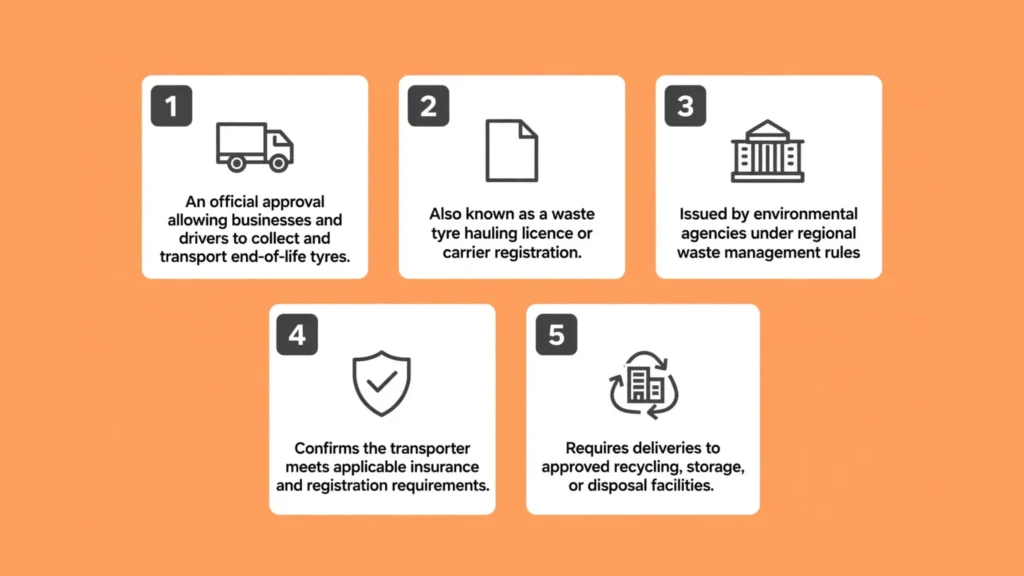
A scrap tyre transporter permit is an official approval from an environmental agency. Many regions also call this document a waste tyre hauling licence or a carrier registration. Ultimately, it gives a business or driver legal permission to collect and haul end-of-life tyres on public roads.
Whole and shredded tyres take up massive space and do not rot. Furthermore, large piles of tyres create severe fire hazards. As a result, environmental regulators treat scrap tyres as a controlled waste stream. Holding a valid permit proves that your business follows state or local laws.
However, operators must also understand the wider challenges in tyre recycling, including collection difficulties, transportation costs, environmental risks, and regulatory compliance. It also shows that you carry proper insurance and deliver loads only to approved recycling or disposal sites.
Who Needs a Waste Tyre Hauling Licence?
While exact rules vary by location, you generally need a permit if you fit into these groups:
Commercial Scrap Tyre Haulers: These are waste carriers that pick up and haul used tyres for auto shops, dealers, or cities.
Tyre Retailers and Service Centers: Shops that haul their own old tyres to a central processor need a permit if the load exceeds local limits.
Auto Salvage Yards: Wrecking yards must hold a licence when they move end-of-life tyres off-site for disposal.
Retreaders and Recyclers: Processing plants that use their own trucks to collect used casings from clients also need registration.
Common Exemptions
Most laws include narrow exemptions so everyday drivers do not face penalties. For instance, you usually do not need a permit in these situations:
Personal Transport: Everyday motorists can typically haul four to ten old tyres from their own cars to a drop-off site.
Farm Use: Farmers may haul a small number of tyres for on-farm tasks, such as holding down silage tarps. However, they must still follow local storage rules.
Retread Delivery: Drivers returning newly retreaded tyres to customers are often exempt, depending on local definitions.
Pass-Through Traffic: Carriers driving through a region without picking up or dropping off tyres usually do not need a local permit. Still, they must obey basic road safety and cargo laws.
Transporter Registration: How the Permitting Process Works
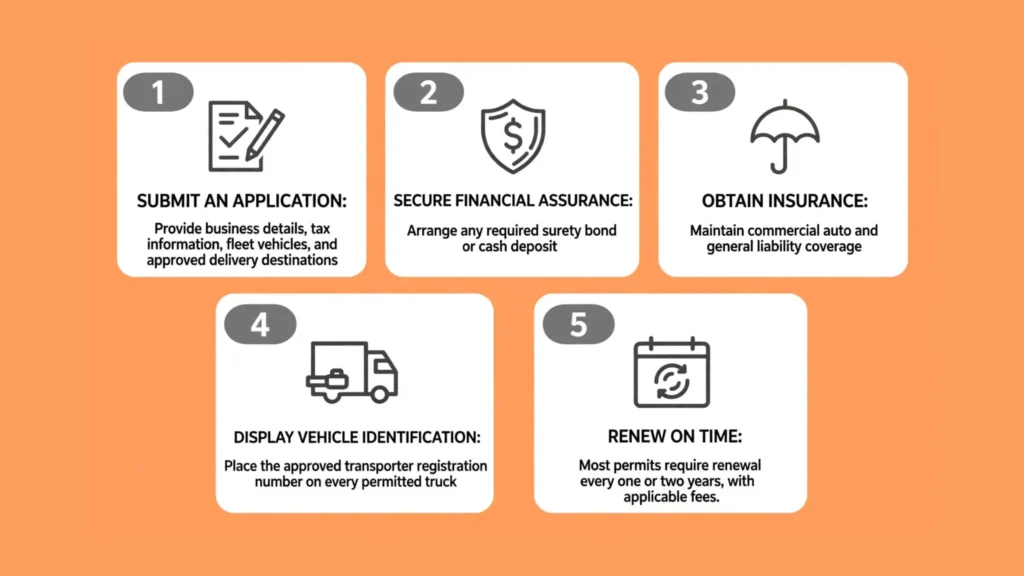
Getting a scrap tyre transporter permit takes careful preparation. Specifically, you must prove to regulators that your trucks are safe, your business is insured, and your drop-off sites are legal.
1. Submit Your Application
First, you must file a registration form with your local environmental department. On this form, you will list your business details, tax numbers, and every truck or trailer in your fleet. In addition, you must name the approved recycling or storage sites where you plan to take the tyres.
2. Secure Financial Assurance and Insurance
Next, many agencies ask haulers to post a surety bond or cash deposit. If a driver abandons a trailer full of tyres on private land, the government uses this money to pay for cleanup. You must also carry standard commercial auto and general liability insurance.
Businesses handling scrap tyres should also evaluate tyre recycling business insurance to understand coverage options for fire damage, environmental liabilities, equipment breakdowns, and third-party claims.
3. Display Vehicle Identification
Once the agency approves your file, they will send you a registration number and vehicle decals. You must place your transporter registration number clearly on the cab or body of every permitted truck. Moreover, the lettering must meet strict size and color rules so inspectors can read it easily during roadside stops.
4. Renew on Time
Permits do not last forever. In most cases, you must renew your registration every one or two years. Along with the renewal form, you will pay a fee based on your company size or truck count.
Understanding Manifest Requirements for Scrap Tyres
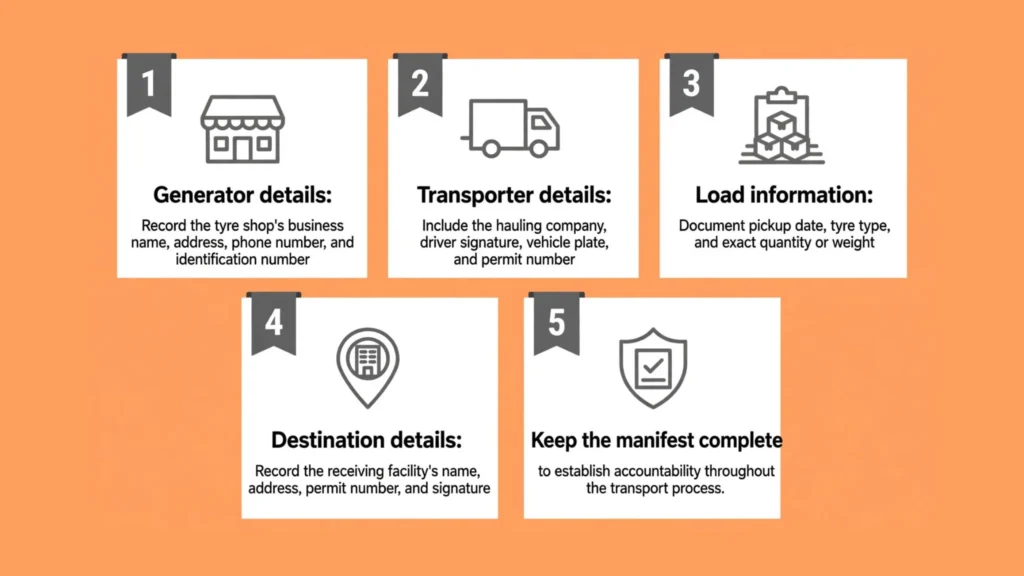
A scrap tyre manifest is a tracking form that follows every load from start to finish. You can use paper forms or a digital portal, depending on local rules. Because this form creates a clear paper trail, investigators can trace illegally dumped tyres right back to the responsible party.
Key Information Required on a Manifest
Although form designs differ by region, standard manifest requirements always ask for four sets of facts:
Generator Details: You need the business name, street address, phone number, and ID number of the shop where you picked up the tyres.
Transporter Details: The form must show your hauling company name, driver signature, truck plate number, and scrap tyre transporter permit number.
Load Facts: You must write down the pickup date, the tyre type, and the exact count or weight of the tyres.
Destination Details: Finally, the form needs the name, address, permit number, and receiving signature of the recycling plant.
How the Chain of Custody Works
The manifest process follows a strict three-step handoff to keep everyone accountable:
At Pickup: First, the shop worker and the driver count or weigh the tyres together. Both parties sign the form, and the shop keeps a copy for its files.
In Transit: Second, the driver keeps the active manifest inside the truck cab during the entire trip. If police or inspectors stop the truck, the driver must show this form right away.
At Delivery: Third, the recycling plant checks the tyre count, signs the form, and keeps a copy. Afterward, the transporter must usually send a final signed copy back to the pickup shop within 30 to 45 days.
Record Retention Rules
Both tyre shops and haulers must save completed manifests for three to five years. During routine audits, inspectors compare shop pickup logs against plant delivery records. Consequently, missing paperwork can lead to immediate fines.
Paper vs. Electronic Manifest Systems
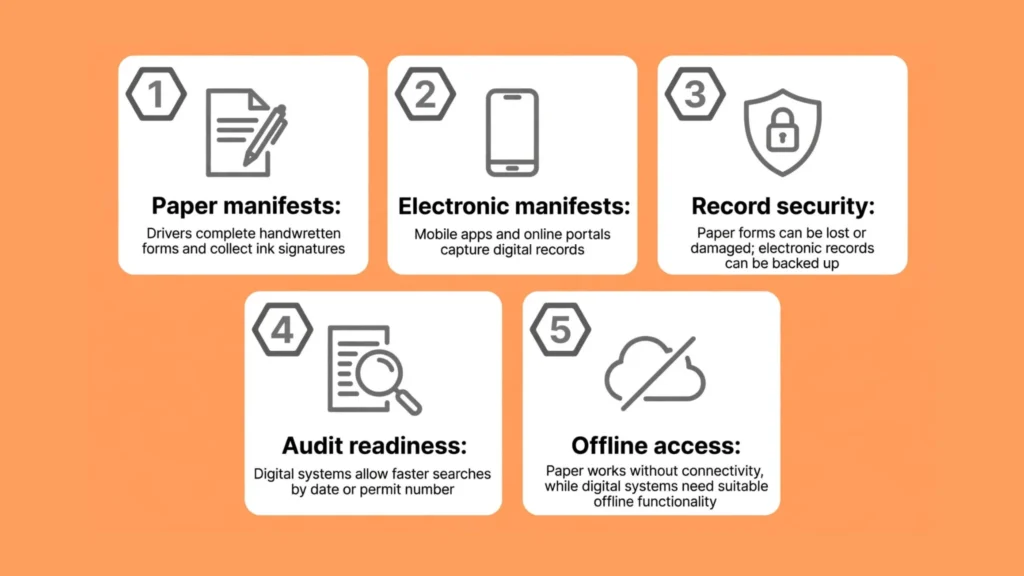
Many environmental agencies now offer online tracking portals alongside traditional paper booklets. Comparing both options helps you keep your fleet organized during audits.
| Feature | Paper Manifests | Electronic Manifests (e-Manifests) |
| Record Entry | Drivers write details by hand at each stop. | Drivers enter data via a mobile app or web portal. |
| Chain-of-Custody Proof | Forms rely on ink signatures on carbon copies. | Systems record digital signatures and GPS timestamps. |
| Risk of Loss | High, because drivers can lose or tear paper slips. | Low, because cloud servers back up files automatically. |
| Audit Readiness | Staff must sort and pull paper files by hand. | Staff can search records by date or permit ID in seconds. |
| Offline Access | Paper works anywhere without a cell signal. | Apps need offline mode when picking up in rural areas. |
Safe Hauling and Preparation Best Practices
Holding a valid permit and filling out forms is only part of the job. Highway patrol officers also check how you load and cover your cargo on the road.
Efficient routing, suitable vehicles, and organized pickup schedules are equally important, making logistics solutions for tyre collection and recycling essential for managing daily hauling operations.
Cover Every Open Load: If you use an open-top trailer or dump truck, secure a heavy-duty tarp or net over the top. Better yet, use enclosed box vans for long highway trips so tyres never bounce onto the road.
Keep Stored Tyres Dry: Always cover staging trailers while they sit in your yard. Otherwise, rainwater collects inside the tyres and attracts mosquitoes within days, which triggers public health fines.
Check Destination Permits First: Never drop off scrap tyres at an unapproved farm, lot, or land-clearing site. Under strict liability laws, courts can force you to pay for cleanup even if the landowner invited you to dump there.
Separate Rim-Mounted Tyres: Many plants refuse tyres that are still attached to steel or alloy wheels. Therefore, check the plant’s rules before you load your truck so you avoid rejected loads or extra fees.
Common Mistakes That Trigger Fines and Permit Suspensions
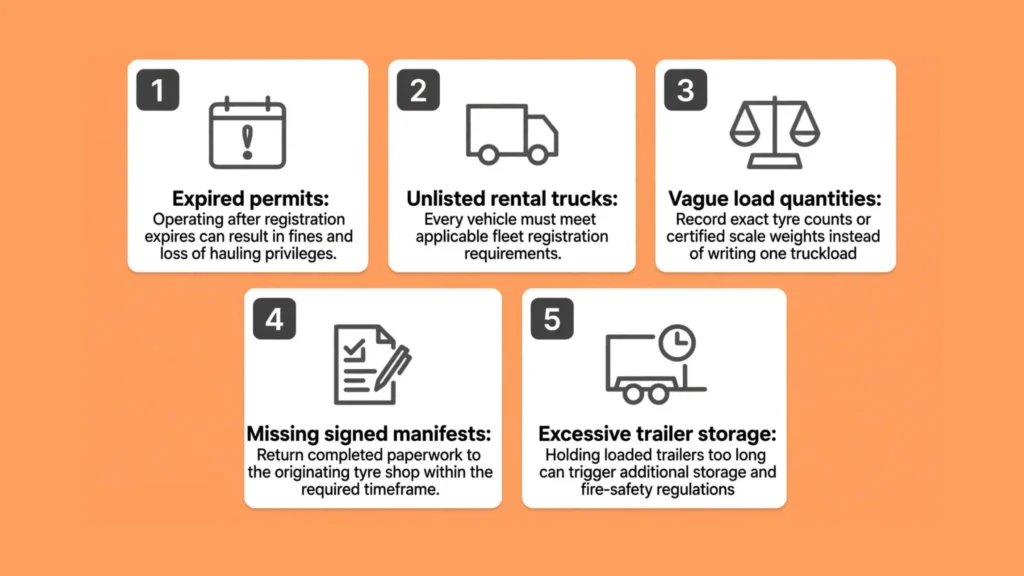
Even experienced haulers make simple mistakes that lead to costly penalties. Watch out for these common errors:
Driving With an Expired Permit: Letting your annual renewal slip by even a few days cancels your legal right to haul. As a result, inspectors can ticket your drivers on the spot.
Using Unlisted Rental Trucks: If your main truck breaks down, do not put a rental truck on the road without updating your fleet list. Hauling in an unpermitted vehicle breaks registration rules.
Writing Vague Load Amounts: Never write “one truckload” on a manifest. Instead, record an exact tyre count or certified scale weight so your numbers match the plant’s records.
Forgetting to Return Signed Forms: Failing to mail or email the final signed manifest back to the tyre shop leaves an incomplete record. Inspectors treat open manifests as a serious violation.
Holding Loaded Trailers Too Long: Parking loaded trailers at your yard for weeks can turn your lot into an illegal storage site. Storage sites face much stricter fire and zoning laws than transport fleets.
Frequently Asked Questions
How many scrap tyres can I haul without a permit?
Exemption limits depend on local laws, but most regions let you haul four to ten scrap tyres at once without a scrap tyre transporter permit. However, if you haul above that limit or charge money for the service, you must register as a commercial carrier.
What happens if I haul scrap tyres without a licence?
Operating without a required waste tyre hauling licence brings serious penalties. Agencies can issue daily fines, charge you per tyre, impound your truck, and force you to pay for site cleanups. In severe cases, prosecutors may even file criminal misdemeanor charges.
Do tyre shops need to keep manifests if they hire a licensed hauler?
Yes, they do. Even when a shop hires a licensed carrier, the law still views the shop as a waste tyre generator. Therefore, shop managers must check the hauler’s permit, sign the manifest at pickup, and save copies for three to five years.
Can I transport scrap tyres across state or provincial lines?
Yes, you can cross borders if you hold active permits in every state or province where you pick up or drop off tyres. For example, if you load tyres in one state and deliver them in another, you must follow the permit and manifest rules for both regions.
How long does it take to get a scrap tyre transporter permit?
Most agencies take two to six weeks to review and approve a new application. To avoid delays, submit your business forms, insurance certificates, and surety bonds well before your first scheduled pickup.
Do shredded tyres or tyre-derived fuel need a manifest?
In most places, yes. Regulators usually track tyre shreds, crumb rubber, and tyre-derived fuel under the same manifest rules until they reach a final end-use plant. Nevertheless, you should always verify local definitions with your environmental office.
Final Thoughts
Following scrap tyre transporter permit rules and manifest requirements protects your company from steep fines and legal trouble.
For entrepreneurs evaluating the financial side of this industry, understanding tyre recycling business profit can also help clarify how transportation, compliance, and operating expenses affect overall returns.
First, confirm your local quantity limits and complete your transporter registration before putting a truck on the road. Next, verify that every drop-off plant holds an active operating licence.
Finally, train your drivers and shop partners to count every load and sign every manifest accurately. Good habits keep your fleet compliant and ensure old tyres reach safe recycling facilities.
About The Author