LLC vs Sole Proprietorship: Which is Best?
Key Takeaways
Instant startup ease
Complete personal asset protection
Flexible taxation choices
Upgraded brand credibility
So, you are ready to start a new venture, but you are stuck on a big question: should you go with an LLC or a sole proprietorship? Picking the right structure can feel overwhelming when you are staring at legal jargon and endless tax options.
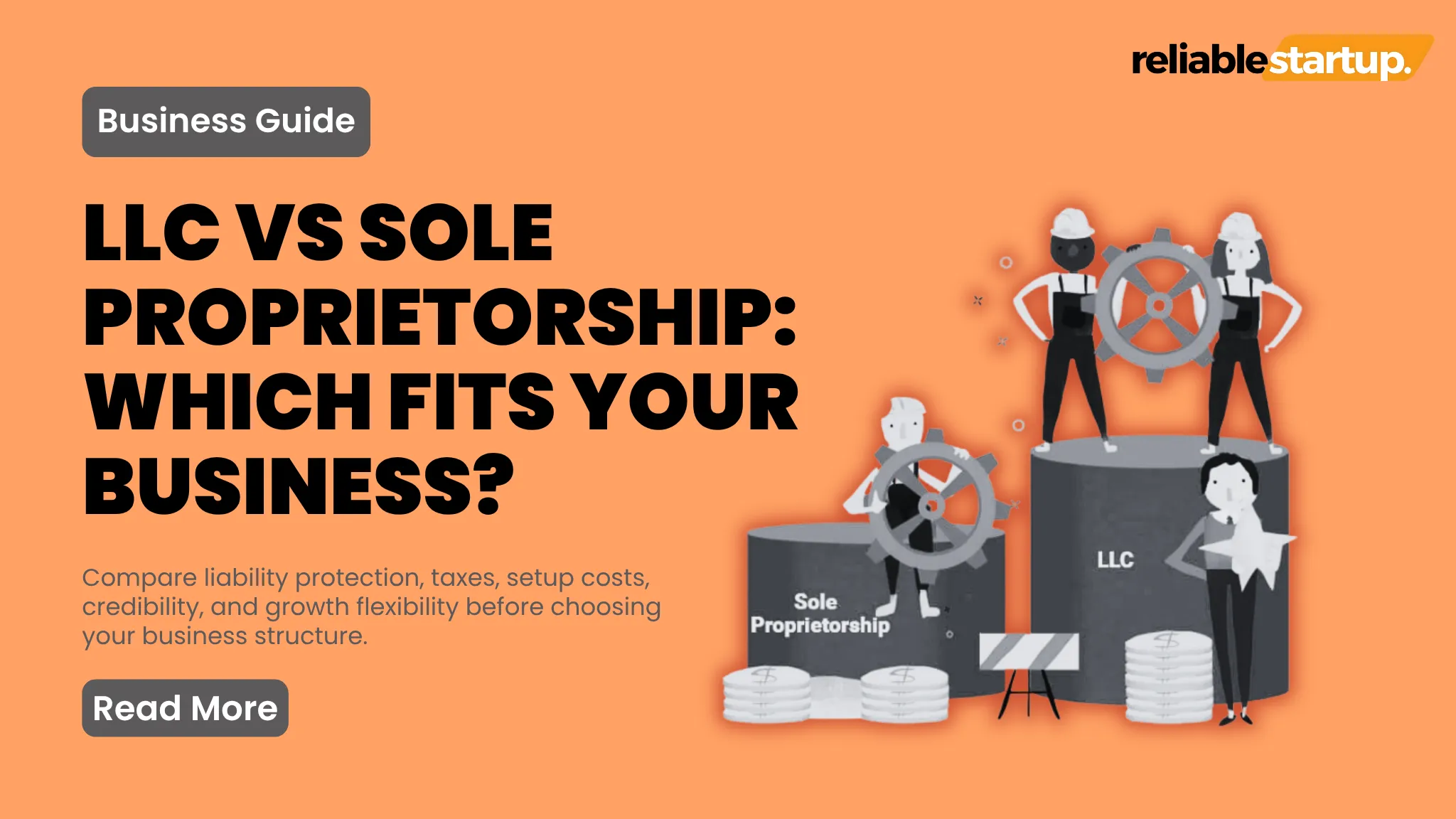
When comparing an llc vs sole proprietorship, an LLC is generally the best choice if you want to protect your personal savings from business risks, while a sole proprietorship works great if you want a simple, zero-cost way to test a business idea.
If you want to set up your business foundation correctly, exploring resources on reliable startup.com can give you the exact steps needed to launch with confidence.
Choosing between an llc vs sole proprietorship comes down to balancing personal risk against daily setup effort. A sole proprietorship requires no formal registration, making it the fastest and cheapest structure to launch, though it leaves your personal assets fully exposed to business debts. In contrast, an LLC creates a distinct legal entity that protects your personal savings and offers flexible tax choices.
Understanding the Fundamental Differences
Choosing the right structure shapes how you pay taxes, handle paperwork, and protect your personal bank account. Let us break down how each entity works in real life so you can make a clear decision for your new journey.
What is a Sole Proprietorship?
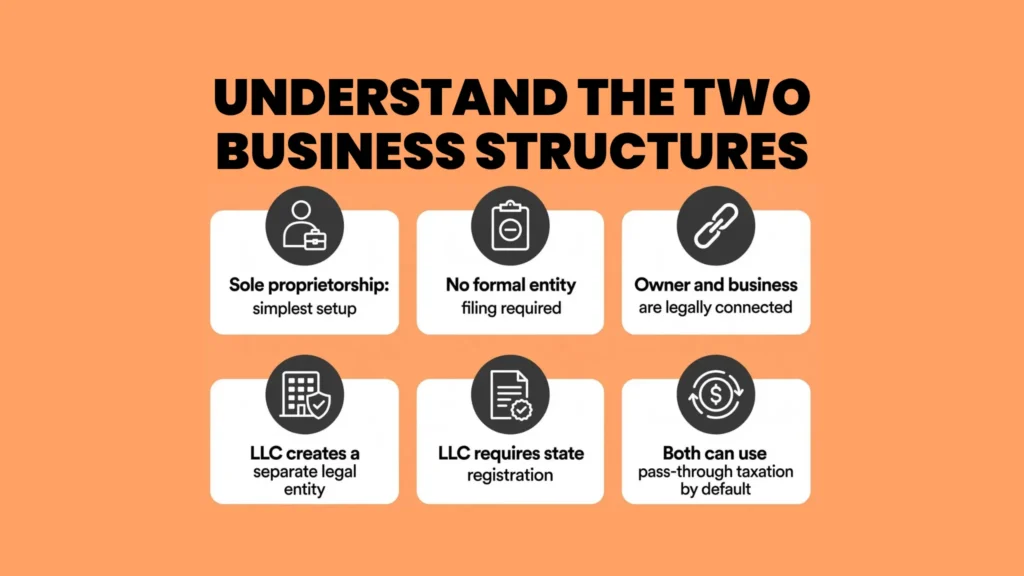
A sole proprietorship is the default setup when you run a business alone without filing formal entity papers. You and your business are treated as the exact same legal unit in the eyes of the law.
If you work as a freelance writer, open a local repair shop, or sell handmade crafts online, you are automatically operating as a sole proprietor. It is incredibly simple, but it means you carry full personal liability for every business debt and lawsuit.
What is a Limited Liability Company (LLC)?
An LLC is a formal legal structure registered with your state to separate your personal life from your business operations. It creates a sturdy legal shield around your private belongings.
When you run an LLC, your company can sign contracts, take on debt, and open bank accounts under its own name. If the business faces a legal claim or debt, your personal home and car generally remain safe.
Comparing Legal Liability and Asset Protection
The biggest contrast between these options is how they treat your personal belongings when things go wrong.
Personal Risk in a Sole Proprietorship
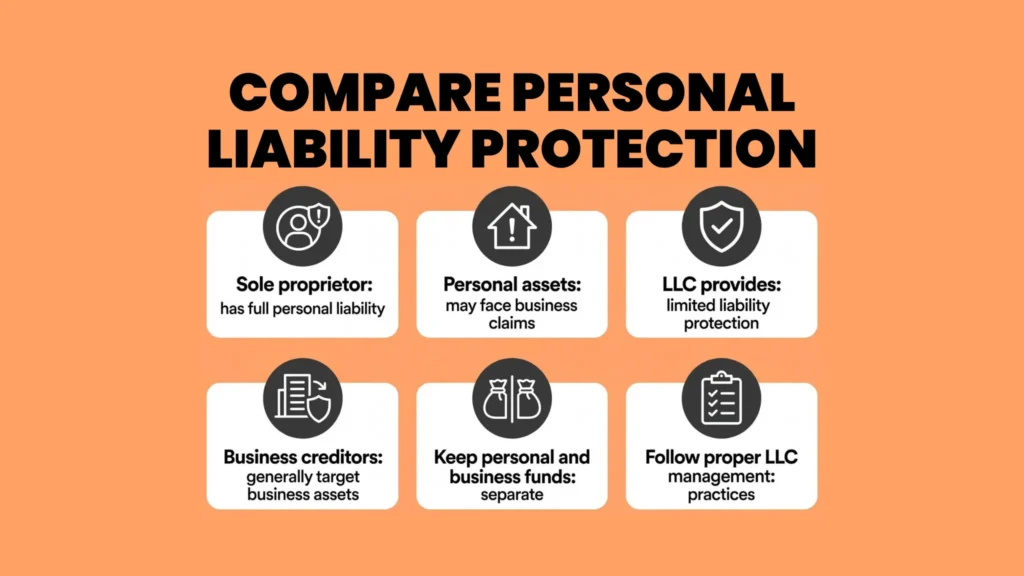
Operating without a formal business structure means your personal checking account, home, and assets are tied directly to your enterprise. If a client sues your business or an unpaid vendor seeks recovery, they can come after your personal wealth.
For example, if you run a small catering service as a sole proprietor and a guest gets sick, a court judgment could target your personal savings. This makes it a higher-risk choice for client-facing operations.
How an LLC Shield Protects You?
Forming an LLC establishes a dedicated legal boundary between your personal finances and commercial activities. In most cases, company creditors can only claim money that belongs directly to the business.
To maintain this protection, you must keep your business funds entirely separate from your personal money. Following proper management steps, like those outlined at reliable startup.com, keeps your corporate shield strong and valid.
Tax Implications and Flexibility
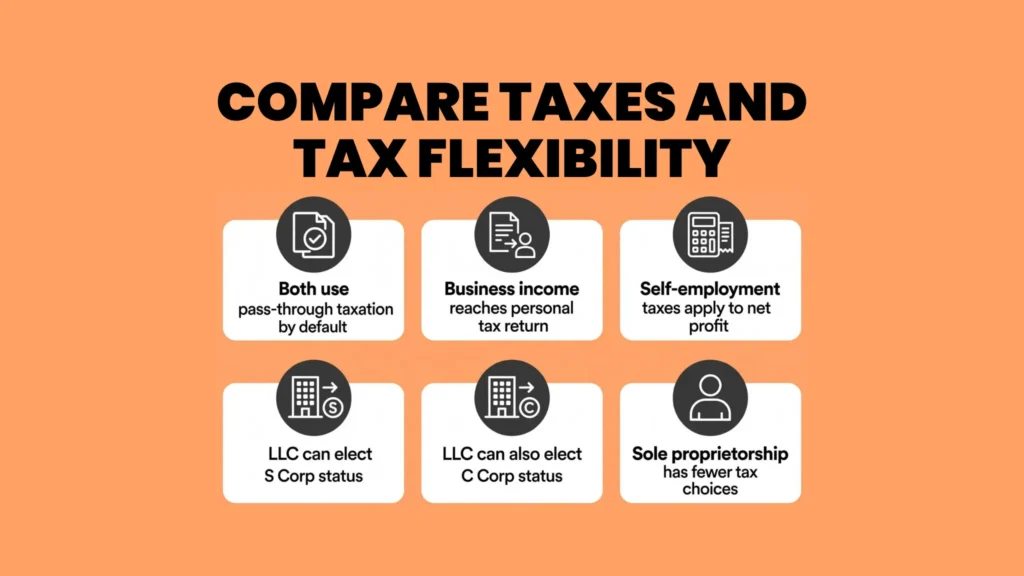
Both options use pass-through taxation by default, but an LLC gives you room to grow as your revenue increases.
Default Pass-Through Tax Treatment
Under default federal rules, both single-member LLCs and sole proprietors report business income directly on their individual income tax returns using Schedule C. The business itself does not pay federal income tax.
Earnings pass directly to your personal tax return
You pay standard self-employment taxes on net profit
State tax rules and local requirements may still apply
Special Tax Elections for Growing Businesses
Unlike a sole proprietorship, an LLC offers the unique llc benefits of choosing S Corporation or C Corporation tax status later on.
Once your profits reach a higher threshold, electing S Corp status can help you save on self-employment taxes by splitting income between a reasonable salary and owner distributions. A sole proprietorship never offers this tax flexibility.
Setup Costs, Maintenance, and Daily Operations
Understanding the setup effort helps you decide which entity fits your current budget and available time.
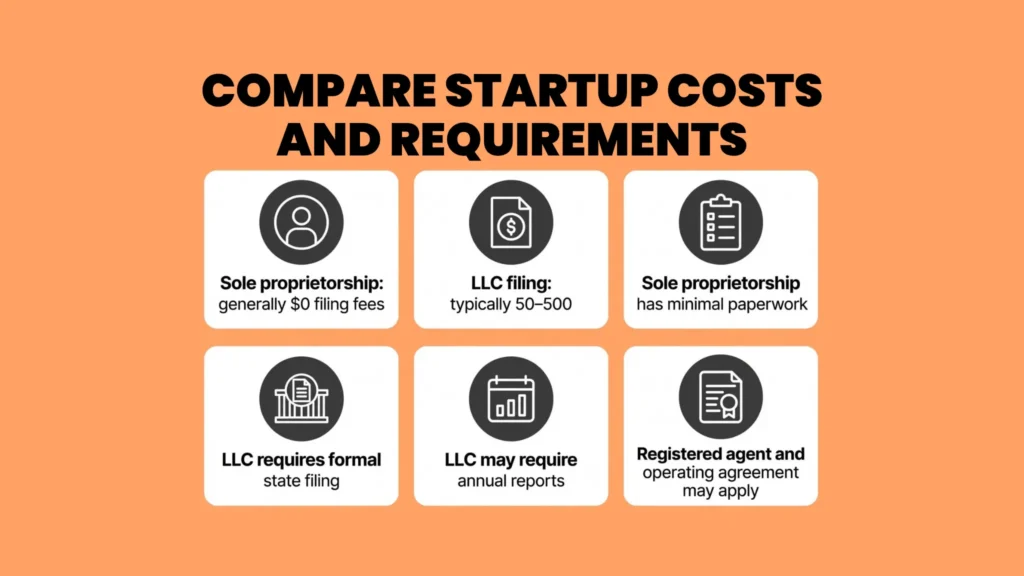
| Feature | Sole Proprietorship | Limited Liability Company (LLC) |
| State Registration | Not required in most cases | Required (Articles of Organization) |
| Upfront Filing Cost | Generally zero fees | Varies by state (typically $50 to $500) |
| Ongoing Compliance | Minimal paperwork | Annual reports and state fees |
| Personal Protection | None | Limited liability protection |
| Banking Setup | Personal checking allowed (though separate is better) | Dedicated business account required |
Minimal Paperwork for Sole Proprietors
Starting as a sole proprietor requires virtually no upfront filings unless you need local permits or a trade name. You can accept payments and start serving clients immediately without paying state registration fees.
Formal Requirements for LLC Owners
To establish an LLC, you file formal paperwork with your state and pay the required filing fees. You must also maintain a registered agent, file periodic reports, and draft an operating agreement.
Credibility, Banking, and Raising Capital
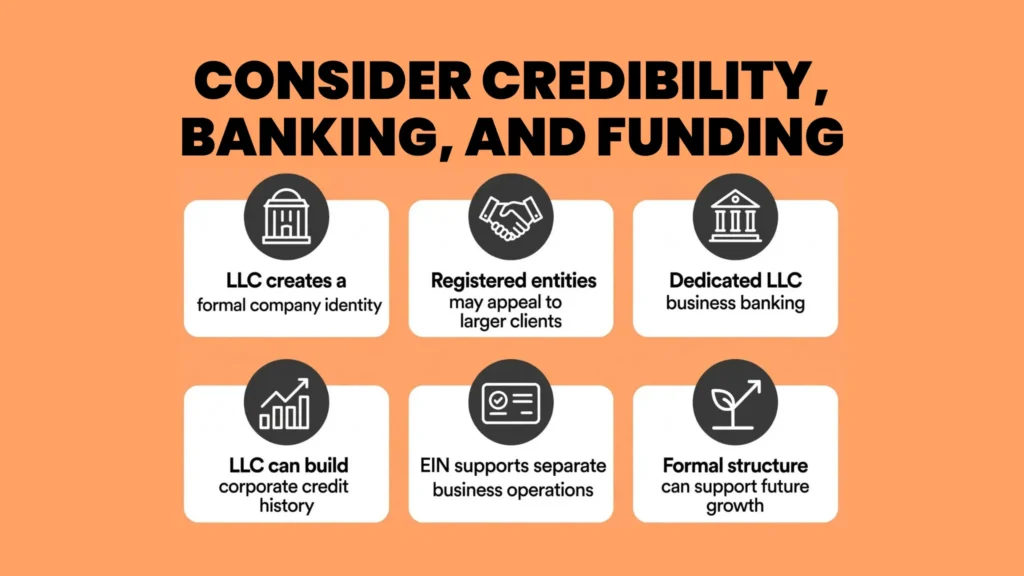
Building trust with clients and funding partners becomes much easier when you operate a formal entity.
Brand Trust and Professional Image
Operating under an official company name gives your business an instant upgrade in professional credibility. Corporate clients and larger vendors often prefer working with registered entities rather than individuals.
Large clients feel more secure signing agreements with an LLC
Banks offer better terms to registered entities
Official business names create stronger market recognition
Accessing Business Credit and Loans
Banks view sole proprietors as higher-risk borrowers, making it tougher to secure dedicated commercial loans. An LLC allows you to build a independent corporate credit history under its own Employer Identification Number (EIN).
If you plan to scale up or seek outside funding, starting an LLC gives you a solid advantage from day one. You can check out step-by-step formation guides over at reliable startup.com to simplify your setup.
Which Option Matches Your Goals?
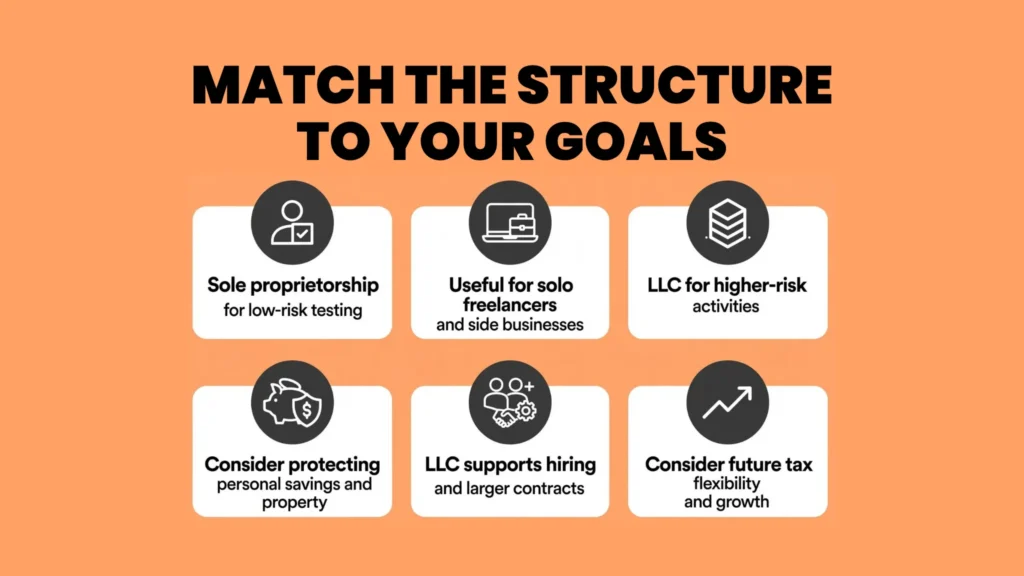
Making the final call between an llc vs sole proprietorship depends on your comfort with risk, your budget, and how fast you plan to grow.
When to Pick a Sole Proprietorship
You are testing a low-risk side business or casual freelancing idea
You have zero budget for state filing fees and legal paperwork
You work alone without employees or physical store locations
You want to start operating immediately without administrative delays
When to Form an LLC
Your work carries potential legal exposure or risk of customer disputes
You have personal savings or a home you need to safeguard
You want the option to choose S Corp tax savings later
You plan to hire team members or sign contracts with enterprise clients
Conclusion
Deciding between an llc vs sole proprietorship comes down to protecting your future versus keeping things simple today. A sole proprietorship offers the easiest path to launch a low-risk idea without filing costs. However, if you want peace of mind, strong personal asset protection, and the ability to grow, forming an LLC is usually the smartest long-term move. Evaluate your risk, set your goals, and choose the business setup that fits your vision.
Frequently Asked Questions
Is an LLC always better than a sole proprietorship?
An LLC is generally better for personal liability protection, but a sole proprietorship works great for low-risk side hustles.
Can I change from a sole proprietorship to an LLC later?
Yes, you can easily transition your sole proprietorship into an LLC as your revenue grows.
Does an LLC cost more to maintain each year?
Yes, LLCs require annual state report fees and registered agent costs, while sole proprietorships cost virtually nothing.
Do I pay less taxes with an LLC?
By default, tax rates are similar, but an LLC allows special corporate tax elections that can lower taxes as income grows.