Tyre Storage Fire Regulations: Fire Risk and Rules Every Yard Must Follow
Tyre storage fire regulations require commercial yards, recycling centres, and dismantlers to cap stack heights, maintain clear fire breaks, secure fences, and keep dedicated firefighting water on site. When rubber catches fire, it releases intense heat and thick black smoke.
As a result, unchecked tyre piles can burn for weeks or even months. Following strict fire safety rules protects workers, nearby buildings, and the local environment.
Operators planning to establish a commercial facility should understand the essential requirements for starting a tire recycling business, including suitable storage space, processing equipment, and safety compliance.
Unlike standard warehouse goods, scrap tyres do not ignite easily from a single stray spark. However, once a stack catches fire, crews struggle to put it out.
The curved shape of a tyre traps oxygen inside the pile, which feeds the flames even when firefighters spray water from the outside. Therefore, following modern storage standards is the best way to stop a small fire from becoming a major disaster.
Why Stored Tyres Pose a Severe Fire Hazard
To follow tyre storage fire regulations well, yard managers must first understand why rubber stacks burn so fiercely. Manufacturers build tyres to survive extreme heat and road friction, so the rubber holds a huge amount of stored energy.
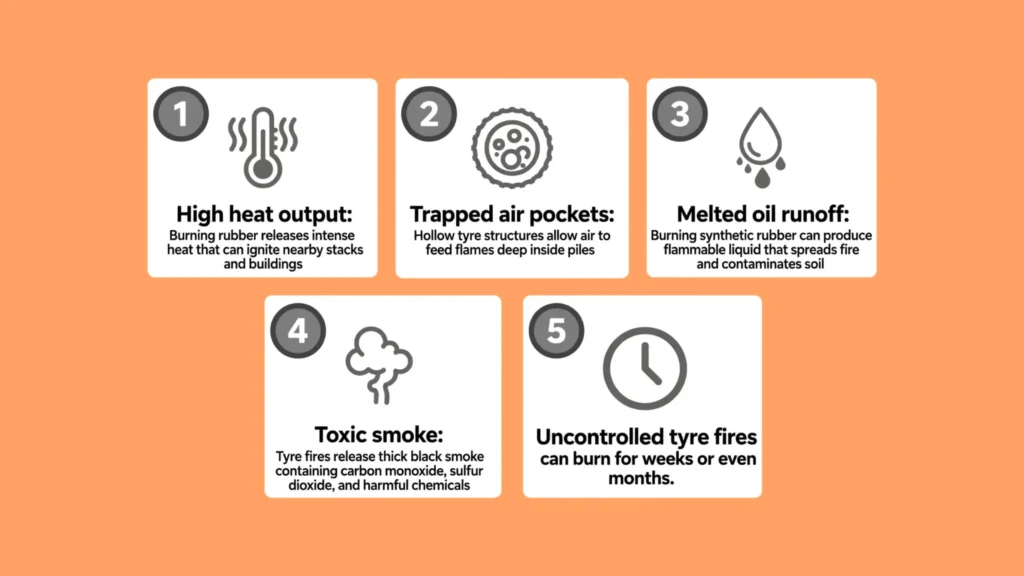
High Heat Output: Rubber produces roughly as much heat per kilogram as coal or heavy fuel oil. Consequently, a burning pile sends out intense radiant heat that quickly ignites nearby stacks, sheds, or dry grass.
Trapped Air Pockets: Whole tyres stacked together form hollow spaces that act like chimneys. Air flows up through the middle of the pile and feeds flames deep inside where water cannot reach.
Melted Oil Runoff: Intense heat melts synthetic rubber into a thick, flammable liquid called pyrolytic oil. This burning oil flows across the yard, spreads flames to other areas, and pollutes local soil and waterways.
Toxic Smoke Clouds: Burning rubber releases heavy black smoke filled with carbon monoxide, sulfur dioxide, and harmful chemicals. Because these smoke clouds travel fast, authorities often evacuate nearby homes and shut down local businesses.
For these reasons, fire departments, environmental agencies, and insurers treat outdoor tyre yards as high-risk sites. When a yard breaks local fire codes, inspectors rarely stop at a simple warning. Instead, operators often face heavy fines, shutdown orders, or cancelled insurance policies.
Core Scrap Tyre Pile Limits and Dimensions
A comprehensive tyre recycling business plan should account for dedicated storage space, facility layout, safety permits, and environmental requirements before operations begin.
Smaller piles keep the total fuel load low. Furthermore, compact stacks let firefighters isolate a blaze before it spreads across the whole yard.
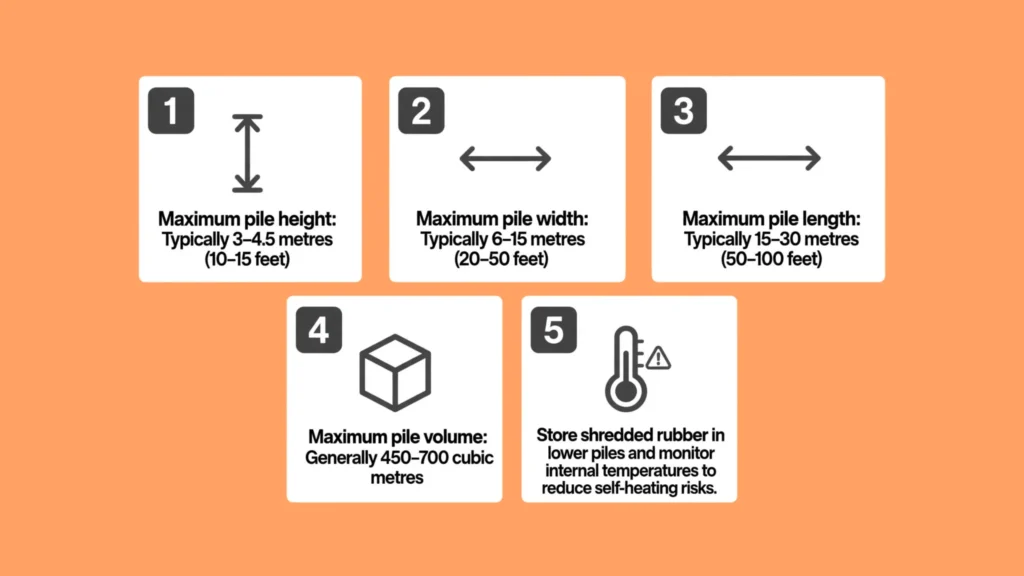
Although exact numbers vary slightly by region, most fire codes enforce similar size caps:
| Storage Rule | Typical Limit | Main Purpose |
| Maximum Pile Height | 3 to 4.5 metres (10 to 15 feet) | Stops stacks from collapsing and lets water hoses reach the top |
| Maximum Pile Width | 6 to 15 metres (20 to 50 feet) | Lets fire crews attack flames from both sides |
| Maximum Pile Length | 15 to 30 metres (50 to 100 feet) | Caps the total rubber volume in one block |
| Maximum Pile Volume | 450 to 700 cubic metres | Limits total heat and smoke output |
Whole Tyres vs. Shredded Tyres
Fire inspectors often apply different rules to whole tyres and shredded rubber. Whole tyres hold more open air, so flames race through their hollow centres quickly.
Modern sustainable tyre recycling technologies also help operators process discarded rubber more efficiently while reducing environmental impacts.
However, deep piles of rubber shreds can trap heat from sunlight or natural decay. Over time, this trapped heat can spark a fire from the inside out.
Therefore, yards that store shredded rubber must check internal pile temperatures often. Operators should also keep shred piles lower than whole-tyre stacks and keep out oil, metal shavings, and wet leaves.
Mandatory Fire Breaks and Separation Distances
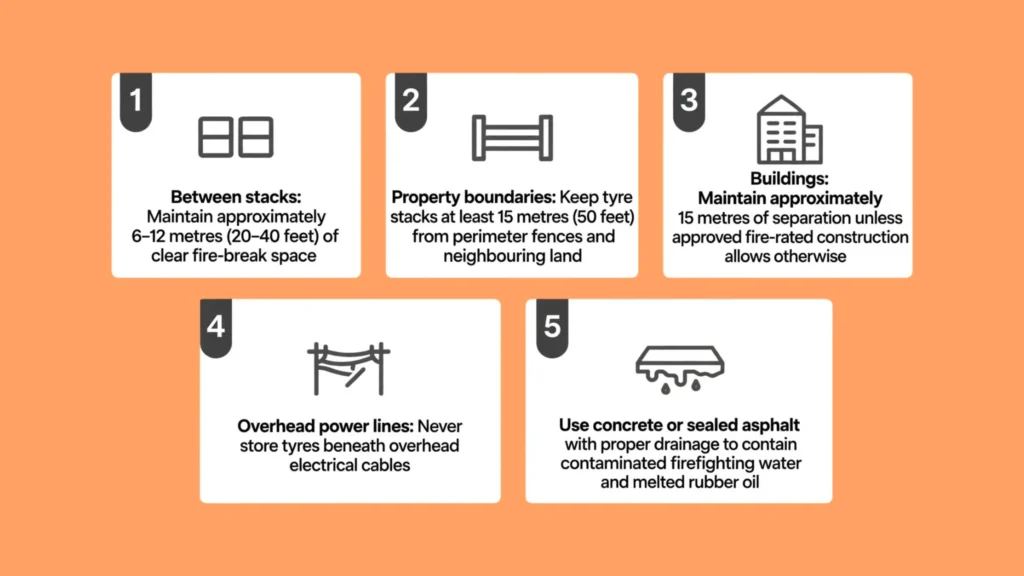
Even properly sized tyre stacks will fail safety checks if they sit too close together. Fire breaks are wide, empty buffer zones between piles. They stop heat from jumping across gaps and give fire trucks room to drive through the yard.
Spacing Between Tyre Stacks
Workers must keep fire breaks completely clear of loose tyres, wooden pallets, weeds, and trash. Most rules require at least 6 to 12 metres (20 to 40 feet) of clear space between stacks, depending on pile height. Taller piles give off more heat, so they need wider gaps.
Clearances from Buildings and Property Lines
Yards must also keep wide buffer zones around buildings and site borders:
Site Borders: Keep stacks at least 15 metres (50 feet) away from perimeter fences and neighbouring land so fire cannot spread off-site.
On-Site Buildings: Place stacks at least 15 metres away from workshops, offices, and sheds unless the building has a certified fire-rated wall with no openings.
Overhead Power Lines: Never stack tyres under overhead power cables. Rising heat can snap live wires, which puts crews in danger and starts new fires across the yard.
Ground Surfaces and Drainage
The ground under a tyre yard matters just as much as stack spacing. Ideally, operators should store tyres on concrete or sealed asphalt rather than bare dirt.
In addition, the yard should slope gently toward a sealed drain system with oil traps or holding tanks. If a fire happens, this setup stops dirty firefighting water and melted rubber oil from flowing into rivers or storm drains.
Indoor vs. Outdoor Tyre Storage Rules
Many tyre shops, fleet depots, and recycling plants store tyres inside warehouses as well as outdoors. While indoor storage blocks sun and trespassers, it creates building fire hazards that need special controls.
| Safety Feature | Outdoor Yard Storage | Indoor Warehouse Storage |
| Fire Barriers | Wide fire breaks and boundary gaps | Fire-rated walls, partitions, and roof vents |
| Firefighting Gear | Yard hydrants, water tanks, and earthmovers | High-output ceiling sprinklers or foam systems |
| Stacking Style | Laced or loose piles within strict volume limits | Metal racks or pallet stacks with wide aisles |
| Smoke Control | Open-air dispersal | Smoke curtains and automatic roof heat vents |
| Site Security | Tall fences, locked gates, and security cameras | Locked doors, safe wiring, and hot-work permits |
Inside a warehouse, workers must never stack tyres near ceiling lights, heaters, or sprinkler heads. Most fire codes require at least 0.9 to 1.5 metres (3 to 5 feet) of open space below sprinklers so water sprays evenly during a fire.
Site Security, Access, and Ignition Control
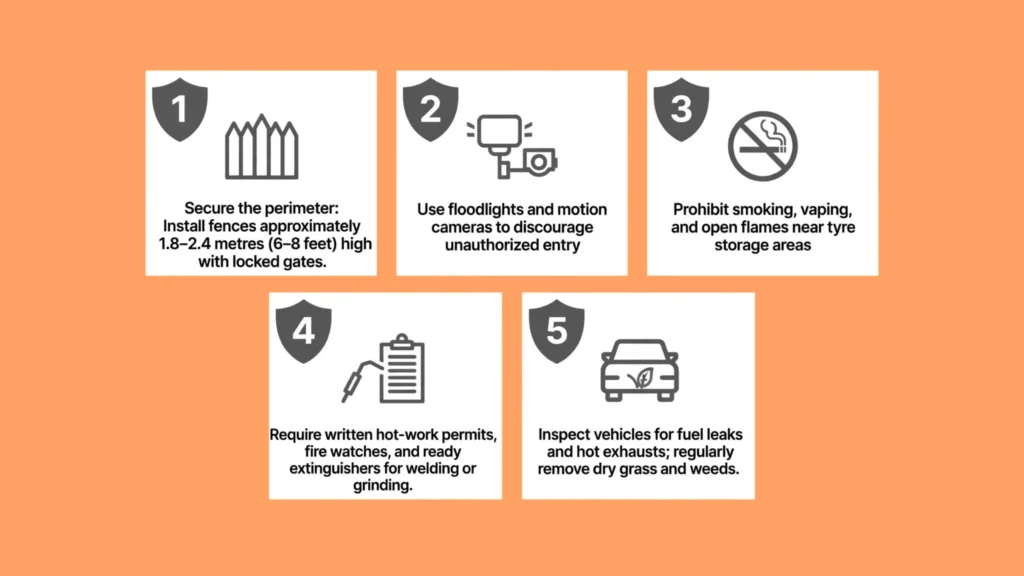
Arson, trespassing, and careless repair work cause a large share of tyre yard fires. As a result, tyre storage fire regulations also cover site security and daily work habits.
Stopping Unauthorized Entry
Because scrap tyres often sit in open yards, they can attract vandals and trespassers. Inspectors expect yards to install sturdy perimeter fences at least 1.8 to 2.4 metres (6 to 8 feet) tall with locked gates. Bright floodlights and motion cameras also deter intruders and alert staff early if smoke appears at night.
Controlling On-Site Ignition Sources
Yard managers must enforce strict rules to remove sparks and flames near storage areas:
Ban Smoking: Prohibit smoking, vaping, and open flames across the entire yard, except inside closed break rooms far from tyre piles.
Require Hot-Work Permits: Never allow welding, grinding, or torch cutting near tyre stacks. If crews must repair equipment on site, use a written hot-work permit with a fire watch and extinguishers ready.
Inspect Yard Vehicles: Check forklifts, loaders, and shredders daily for fuel leaks, oil drips, and hot exhaust pipes. Furthermore, never park vehicles overnight next to tyre stacks.
Clear Dry Plants: Cut grass, pull weeds, and trim low tree branches regularly. Dry plants catch sparks easily and carry flames straight into tyre piles.
Firefighting Water Supply and Emergency Planning
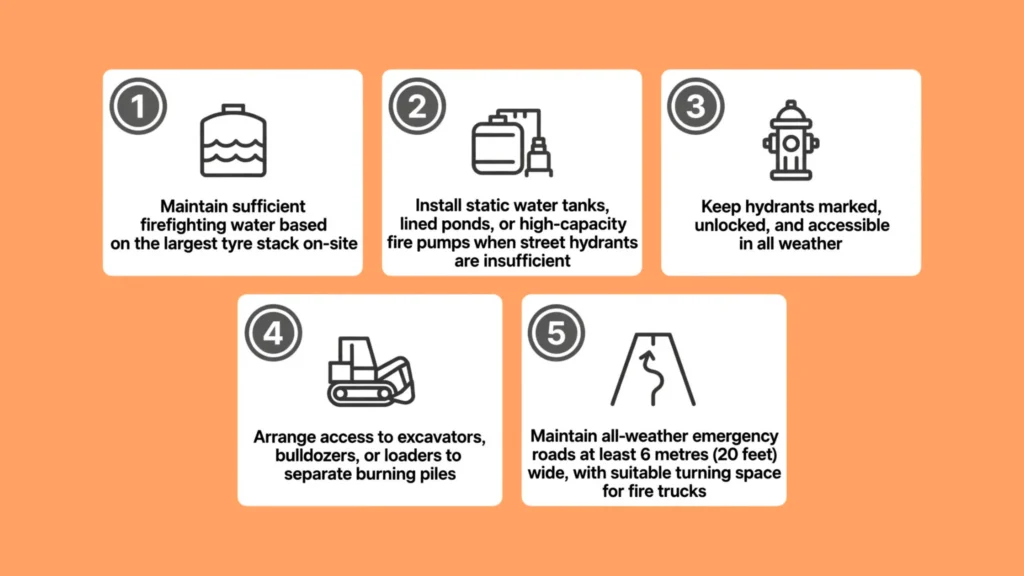
Standard town water pipes rarely deliver enough water to put out a deep tyre fire. Therefore, yards must prove they have enough water, heavy machinery, and emergency plans ready before an accident occurs.
Water Flow and Storage Tanks
Fire codes usually base water needs on the largest tyre stack in the yard. Many sites need a water supply that pumps thousands of litres per minute for several hours.
If local street hydrants cannot supply that volume, the yard must install static water tanks, lined ponds, or high-power fire pumps. Crews must also keep all hydrants clearly marked, unlocked, and easy to reach in all weather.
Heavy Machinery for Fire Control
Water alone struggles to reach flames deep inside a tyre pile. Consequently, fire crews often use excavators, bulldozers, or loaders to pull burning stacks apart and bury hot tyres under soil, sand, or foam. Yards should either keep heavy loaders on site or sign a standby contract with a local contractor for fast emergency dispatch.
Emergency Access Roads
Fire trucks are wide, heavy vehicles that need solid roads and wide turns. Yards must maintain all-weather lanes at least 6 metres (20 feet) wide around every storage block. In addition, layouts should avoid dead ends or provide wide turning circles so trucks never have to reverse through thick smoke.
Common Yard Storage Compliance Mistakes to Avoid
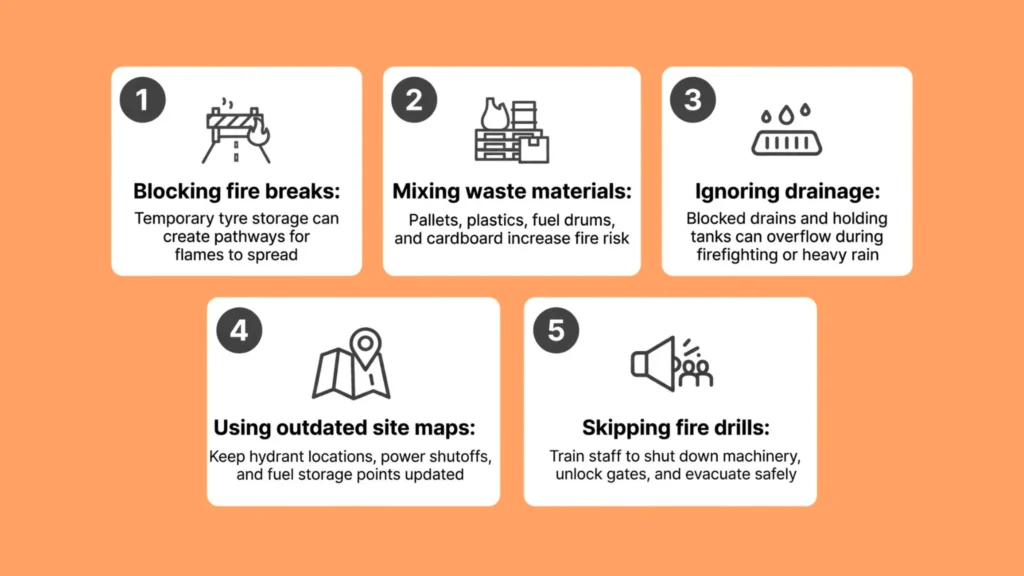
Managing storage capacity and operational expenses is equally important when evaluating tire recycling business profitability, particularly for facilities handling large volumes of scrap tyres. Watching out for these common mistakes keeps your yard safe and ready for inspections:
Filling Up Fire Breaks: When space runs low, staff sometimes drop “temporary” tyres inside fire breaks. However, even a short row of tyres lets flames bridge the gap and engulf the whole yard.
Storing Mixed Waste Together: Keeping wooden pallets, plastic bumpers, fuel drums, or cardboard next to tyres speeds up ignition and makes fires spread faster.
Ignoring Drain Traps: When workers fail to clear mud and rubber crumbs from yard drains, holding tanks can overflow during heavy rain or firefighting.
Using Outdated Site Maps: Fire crews rely on site maps to find hydrants, power shutoffs, and fuel tanks. Whenever you move tyre piles, update your emergency map and send a copy to the local fire station.
Skipping Staff Fire Drills: Water tanks and extinguishers mean little if workers do not know how to shut down machines, unlock gates, and evacuate safely.
Frequently Asked Questions
What is the maximum height allowed for outdoor tyre piles?
Most tyre storage fire regulations cap outdoor scrap tyre piles at 3 to 4.5 metres (10 to 15 feet) high. Staying within this limit stops piles from collapsing during a fire and lets water hoses and loaders reach the top safely.
How wide do fire breaks need to be between tyre stacks?
Fire breaks between tyre stacks usually need at least 6 to 12 metres (20 to 40 feet) of clear space. In addition, yards must keep at least 15 metres (50 feet) of open buffer space from boundary fences and site buildings.
Why are tyre fires so hard to put out with water alone?
Tyres hold high energy and trap air pockets inside their curved walls. While water cools the outside of a stack, trapped heat inside quickly reignites the rubber once spraying stops. Therefore, crews usually combine water and foam with heavy loaders to pull piles apart or cover them with dirt.
Do tyre storage fire regulations apply to small garages and retail shops?
Yes, though exact limits depend on local laws. Small shops storing a few dozen tyres indoors usually follow general shop fire codes rather than bulk yard rules. Still, they must keep tyres away from heaters, clear exit doors, and leave space below ceiling sprinklers.
Can tyres be stored directly on bare soil or grass?
Most fire and environmental rules ban storing commercial tyres on bare dirt or grass. Dry grass catches fire easily, and unsealed ground lets toxic melted oil soak into the soil and pollute groundwater. Concrete or sealed asphalt with proper drainage is the safest choice.
How can a tyre yard reduce the risk of spontaneous combustion?
Self-heating mainly threatens large, deep piles of shredded rubber where internal heat cannot escape. Yards can prevent this hazard by keeping shred piles low, removing oil and organic trash, rotating stock often, and checking pile temperatures.
Final Thoughts
Following tyre storage fire regulations is far more than simple paperwork for safety inspectors. Instead, these rules protect your workers, your property, and your surrounding community from devastating fires.
When you enforce scrap tyre pile limits, keep fire breaks clear, control sparks, and maintain strong water supplies, you cut fire risks dramatically. Regular site checks, clean housekeeping, and close teamwork with local fire crews will keep your yard safe and compliant all year long.
About The Author