Steel Wire Recovery: The Revenue Line Most Plants Underestimate
When tyre recycling operators plan their budgets, rubber crumb and pyrolysis oil usually steal the spotlight. Many plants treat steel as an annoying byproduct. They just pull it out so it does not wreck downstream granulators.
Yet, steel wire recovery from tyres can significantly improve tyre recycling business profitability by creating an additional revenue stream from recovered metal.
You just need the right separation and cleaning tools to capture it.
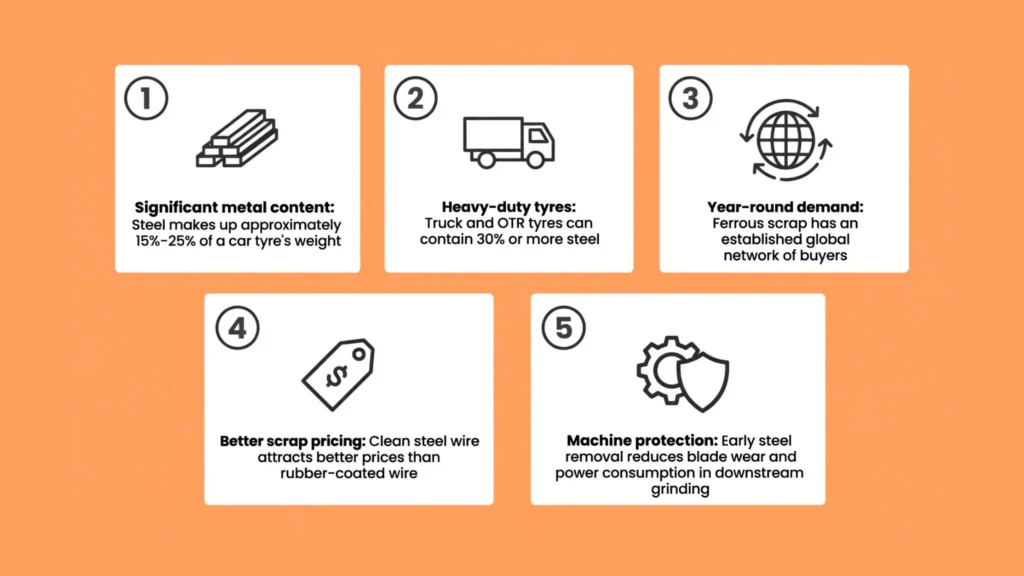
Across the global recycling industry, steel makes up about 15% to 25% of a car tyre’s total weight. In heavy truck and off-the-road (OTR) tyres, that share climbs to 30% or more. Plants that treat this metal as dirty waste pay hauling fees or accept steep price cuts from scrap dealers. However, facilities that invest in clean wire separation turn that same metal into a prized product for steel mills and foundries.
Why Recovered Tyre Steel Holds Overlooked Value
In many plants, operators view steel purely as a maintenance headache. High-strength steel cords endure extreme road forces.
Because they are so tough, steel cords rapidly dull shredder blades, making proper tyre shredder maintenance essential for reducing equipment wear and unexpected downtime.
Operators focus on protecting their rubber machines, so they often dump recovered metal into open bins with heavy rubber still stuck to it.
Scrap metal buyers penalize this rubber residue heavily. Dirty steel often called “rubber-coated wire” forces foundries to do extra processing. It lowers furnace efficiency and adds unwanted sulfur and carbon to the melt. As a result, dirty wire sells at a steep discount. Worse yet, the recycling plant may have to pay someone to haul it away.
When a facility shifts its focus from steel removal to steel recovery, the math changes completely:
Steady Market Demand: Niche rubber markets rise and fall with seasonal construction or turf projects. In contrast, ferrous scrap enjoys an active, global buyer network year-round.
Strong Metal Quality: Tyre makers use high-carbon, high-strength steel for cords. Once you strip away the rubber and fabric, it becomes a clean, reliable feed for steel furnaces.
Better Machine Protection: Pulling steel out early in the line does more than create a sellable product. It also cuts blade wear and lowers power use in later grinding stages.
Types of Steel Found in End-of-Life Tyres
Not all steel inside a tyre behaves the same way during processing. Each type also commands a different price on the scrap market. Knowing the two main forms of tyre steel helps operators design smarter recovery lines.
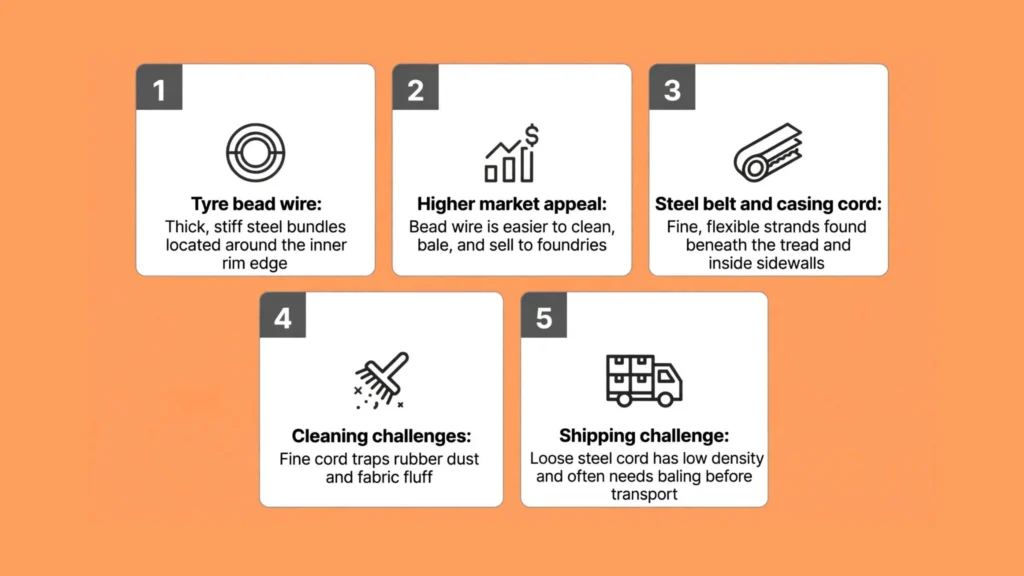
1. Tyre Bead Wire
The bead is a thick bundle of strong steel wires coated in rubber. It locks the tyre tightly onto the wheel rim.
Physical traits: Thick, stiff, circular rings or heavy wire bundles.
Market appeal: High. Bead wire is dense and much easier to clean and bale than fine cord. Tyre bead wire value stays at the top of tyre-derived scrap because foundries can melt it with very little metal loss.
2. Steel Belt and Casing Wire (Cord)
Beneath the tread and inside the sidewalls of radial tyres sits a mesh of ultra-fine steel filaments. Makers twist these thin wires into cords and coat them with brass or bronze.
Physical traits: Thin, springy, tangled strands that easily trap rubber dust and nylon fluff.
Market appeal: Moderate to high, depending on cleanliness. Loose, tangled cord takes up huge space, making shipping costly unless you press it into dense bales.
| Steel Type | Location in Tyre | Physical Form | Cleaning Effort | Main Market Challenge |
| Bead Wire | Inner rim edge | Thick, stiff wire bundles | Low to Moderate | Needs debeading before primary shredding |
| Belt & Casing Cord | Under tread and sidewalls | Fine, flexible twisted strands | High | Traps rubber crumbs; low density if unbaled |
How the Steel Wire Recovery Process Works
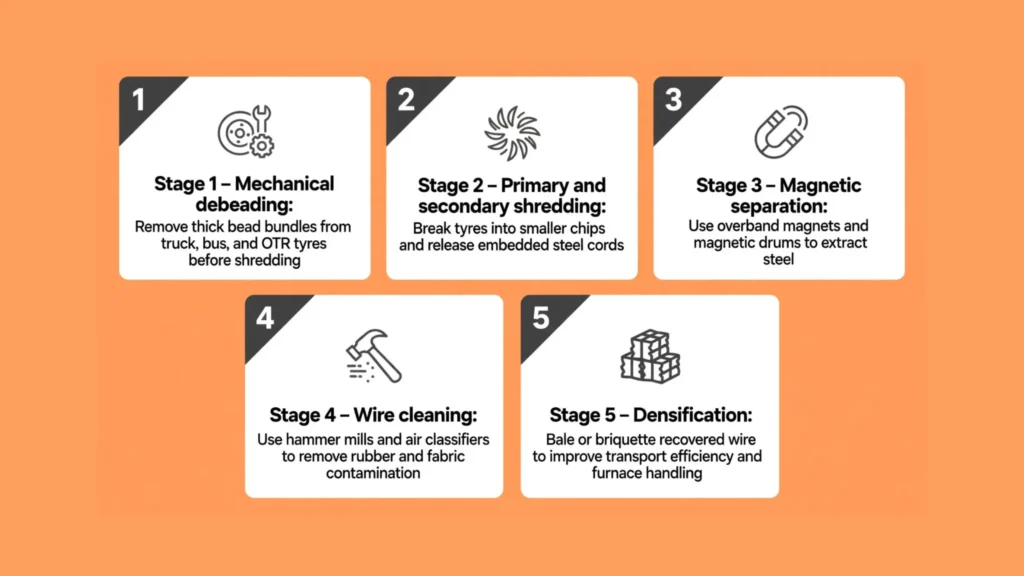
Maximizing scrap steel from tyres requires a step-by-step approach that also helps control overall tyre recycling processing costs. Trying to pull out all the metal in one step rarely works well. It usually leaves too much rubber on the wire, or leaves fine wire inside your rubber crumb.
Stage 1: Mechanical Debeading
For truck, bus, and OTR tyres, recovery starts before the tyre enters a shredder. A hydraulic debeader hooks the bead bundle and pulls it straight out of the tyre casing. Pulling the bead out whole gives you a dense, clean steel ring. It also saves your primary shredder from heavy mechanical shock.
Stage 2: Primary and Secondary Shredding
Whole tyres or debeaded casings enter dual-shaft primary shredders that chop them into rough chips. Next, raspers or secondary shredders break the chips down further. Intense tearing forces pull the fine steel cords free from the tough rubber.
Stage 3: Magnetic Wire Separation
Once the machines free the steel from the rubber, magnets pull the metal out of the mix.
Modern processing facilities, including a modular tyre recycling plant, use magnetic separation systems to recover steel from shredded rubber.
Overband Cross-Belt Magnets: These hang above shaking conveyors and lift large steel pieces away from the rubber chips.
High-Strength Magnetic Drums: These sit at the end of conveyors. They catch smaller, loose wire bits as the rubber drops away.
Stage 4: Wire Cleaning and Liberation
Standard magnets alone rarely produce furnace-ready steel. A magnet will happily lift a piece of steel that still clings to a chunk of rubber. To boost purity, plants send magnetic discharge through wire-cleaning mills, like high-speed hammer mills. Air classifiers then blow away stubborn rubber specks and fabric fluff.
Stage 5: Densification and Baling
Loose, fluffy steel cord fills up a truck trailer fast. A truck hits its space limit long before reaching its legal weight limit. Pressing clean wire into dense bales or briquettes solves this problem. It boosts payload weight, cuts shipping costs per ton, and stops fine wire from burning up too fast in a furnace.
Key Factors That Determine Scrap Steel Value

When you negotiate with scrap brokers or steel mills, pricing comes down to clear physical specs. Plants that track and control these factors earn much better margins.
Rubber Contamination Percentage
This is the single biggest driver of price. Most steel mills set strict limits on non-metal waste. They usually demand purity levels of 95% to 98% steel or higher (meaning under 2% to 5% rubber and fluff). Every point above that limit brings weight penalties or rejected loads.
Bulk Density
Foundries pay by weight, and trucking firms bill by the load. Loose steel cord often weighs under 300 kg per cubic meter, making long-distance shipping too expensive. Hydraulic balers push density above 1,000 to 1,500 kg per cubic meter. That jump turns a local scrap problem into an export-ready product.
Copper Coating Considerations
Tyre makers plate fine steel cord with brass (a mix of copper and zinc) so rubber sticks to it during curing. While total copper levels remain low, certain specialty steel grades cannot handle extra copper. Knowing the exact metal makeup of your wire helps you match your supply to the right buyers, such as rebar mills.
Moisture and Rust
Storing recovered wire outdoors in the rain causes rapid rust, especially in fine casing cords. Rusted steel loses metal yield during melting. Worse, wet scrap can cause dangerous steam explosions inside hot furnaces. Covered storage protects both your safety and your profit margins.
Common Mistakes That Reduce Steel wire Recovery Profits
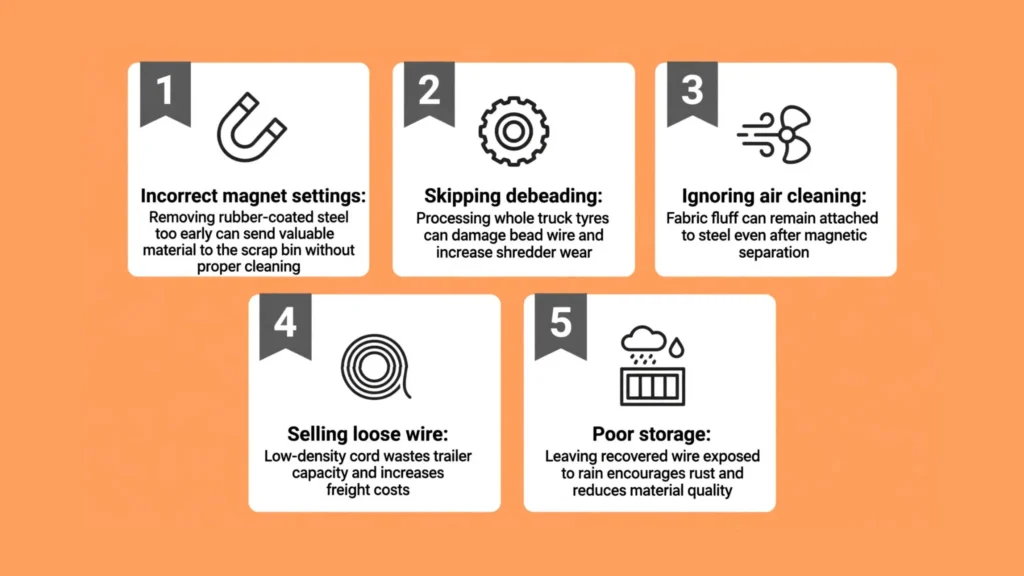
Even well-equipped recycling plants often lose money through simple operational mistakes:
Setting primary magnets too strong: Strong magnets early in the line pull out large chunks of rubber-covered wire. If that mix goes straight to the scrap bin instead of a wire cleaner, you lose both rubber weight and steel purity.
Skipping debeading on truck tyres: Feeding whole truck tyres into a shredder ruins the thick bead wire. It mixes clean, heavy steel with fine, messy cords and wears out shredder blades faster.
Skipping air cleaning: Magnets attract steel, but static and tangles keep fabric fluff stuck to the wire. Simple air hoods over transfer points boost cleanliness at a very low cost.
Selling loose wire instead of baling: Shipping loose wire means paying trucking rates to haul empty air. Over a year, freight savings alone often pay for a wire baler.
Evaluating Equipment Upgrades for Better Wire Separation
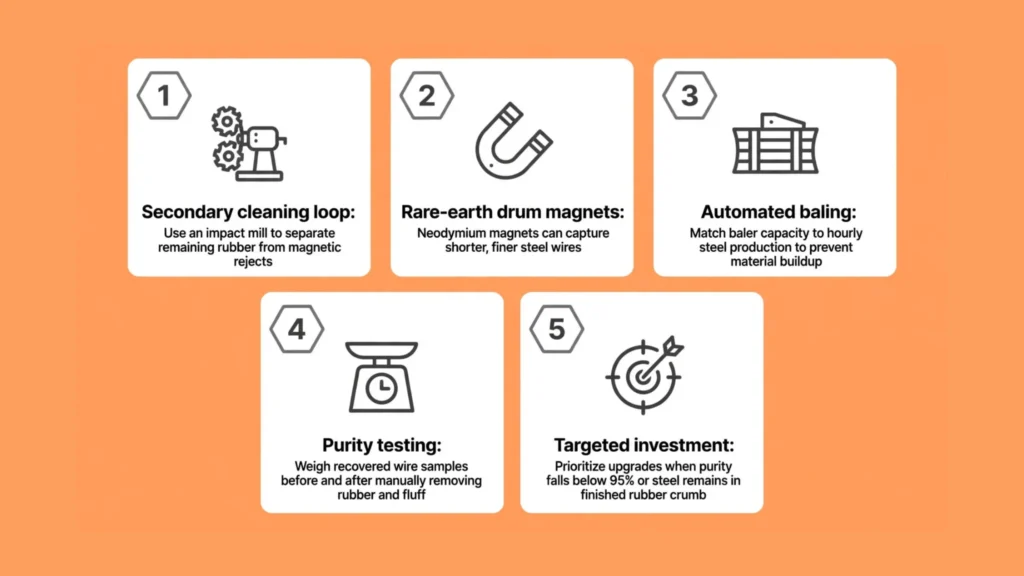
Before buying new machines, audit your current steel output. Weigh a sample of your recovered wire. Next, strip away any remaining rubber and fluff by hand, and weigh the clean metal to find your true purity score.
If your purity sits below 95%, or if metal bits still show up in your rubber crumb, targeted upgrades bring fast returns:
Add a Secondary Cleaning Loop: Send magnetic rejects through a high-speed impact mill. This breaks the bond between rubber and steel without over-grinding clean rubber.
Switch to Rare-Earth Drum Magnets: Older ferrite magnets often lack the pull needed to catch short, fine steel wires. Neodymium rare-earth drums improve both steel recovery and rubber purity at the same time.
Add Automated Baling: Match your baler’s speed to your peak hourly steel output. This prevents wire from piling up on the floor or sitting out in damp air.
Frequently Asked Questions: Steel Wire Recovery
How much steel is in an average scrap tyre?
Passenger car tyres usually contain 15% to 20% steel by weight. Light truck and heavy commercial tyres hold much more—often 25% to 35%—because they use thicker bead bundles and heavy steel belts.
What purity level do steel mills require for recovered tyre wire?
Most mills and foundries require at least 95% to 98% pure metal. That leaves room for less than 2% to 5% rubber, fluff, and moisture. Higher purity prevents price cuts and helps you sell directly to mills instead of brokers.
Why is tyre bead wire worth more than shredded steel cord?
Tyre bead wire uses thick, heavy-gauge strands that separate easily from rubber and pack tightly. Fine steel cord from the tread and sidewalls traps rubber dust, rusts fast, and needs baling before mills can melt it well.
Can mills recycle recovered steel wire from tyres forever?
Yes. Steel recycles 100% without losing its core strength. Once cleaned and baled, mills melt tyre wire in electric arc furnaces to make rebar, structural steel, wire rod, and cast iron parts.
Does pyrolysis produce cleaner steel than mechanical shredding?
Pyrolysis uses heat without oxygen to break down rubber, leaving behind steel wire and carbon black. While it removes bonded rubber, the heat often makes the wire brittle and dusty. Plants still need to separate, clean, and bale pyrolysis wire before selling it.
How can a plant keep fine steel wire out of rubber crumb?
Stopping wire carryover takes multi-stage magnets paired with good cleaning mills. Use overband magnets after primary shredding, rare-earth drum magnets after granulation, and final screens to keep rubber crumb metal-free.
Final Thoughts: Steel Wire Recovery
Treating steel as an afterthought in tyre recycling hurts profits in two ways. It lowers your scrap metal revenue while adding wear and contamination to your rubber line. When you view steel wire recovery from tyres as a core profit center, an annoying waste stream turns into steady income.
Success comes down to clean liberation, smart wire separation, dry storage, and tight baling. Once your steel hits mill-grade purity and density, scrap buyers stop charging disposal fees—and start competing for your supply.
About The Author