Ghost Kitchen Business Model Explained: A Simple Guide
Key Takeaways
Low upfront setup costs
Delivery-only operational structure
Rapid menu and brand testing
Shared equipment and kitchen spaces
Data-driven customer targeting
Have you ever ordered a delicious meal on a food delivery app, only to realize the restaurant doesn’t actually exist on any street corner? That is the ghost kitchen business model in action.
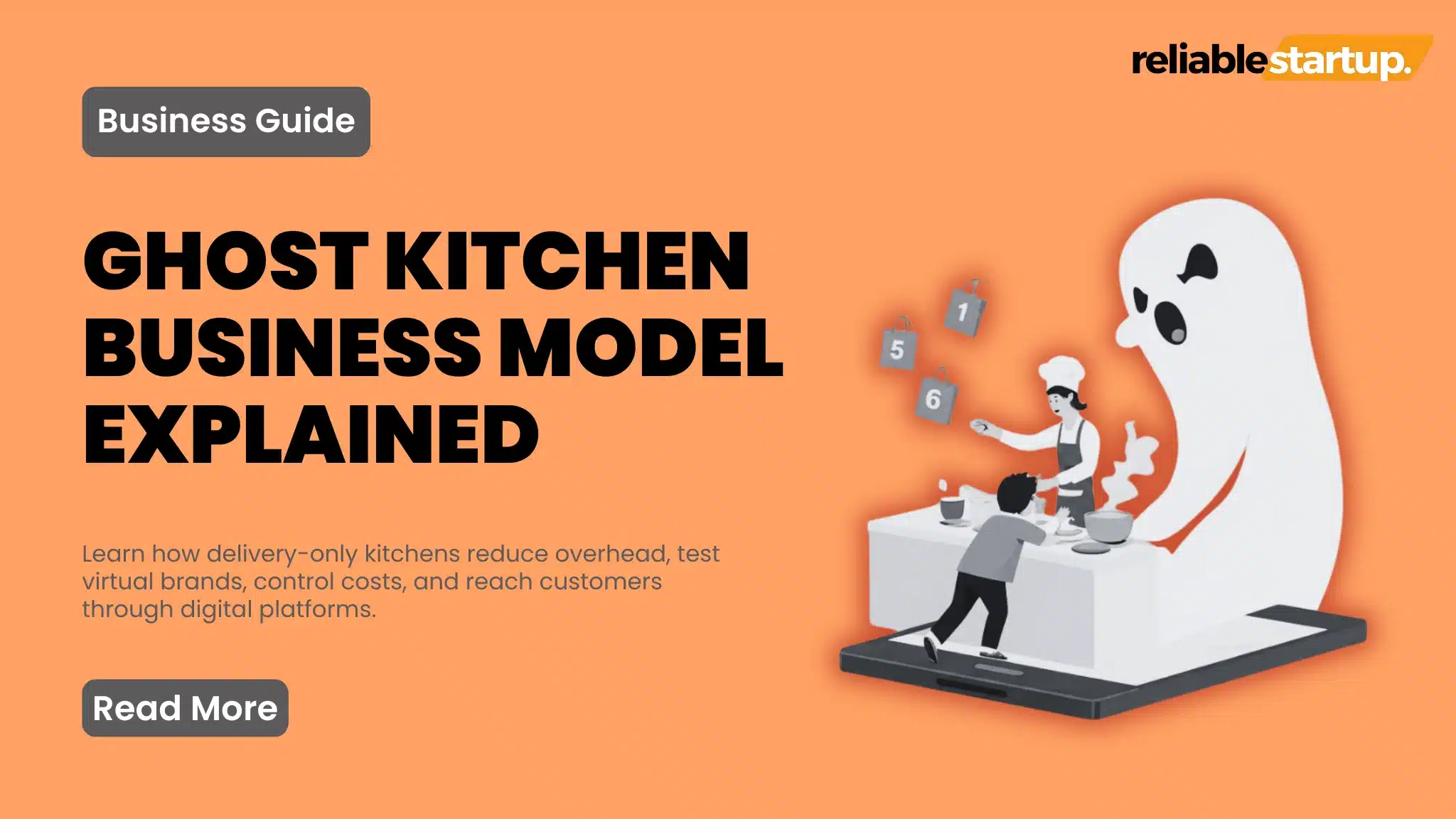
Simply put, a ghost kitchen is a professional commercial kitchen space dedicated entirely to preparing food for delivery and pickup. There are no dining rooms, no waitstaff, and no expensive main-street storefronts.
The ghost kitchen business model focuses purely on off-premise dining. Operators rent or buy kitchen space to make food specifically for online ordering apps, cutting overhead expenses like rent and front-of-house staff by up to 60%.
If you have been thinking about launching a virtual restaurant startup, understanding how this model operates is the first step toward building a lean, profitable food business. At reliablestartup.com, we regularly see how removing traditional dining room overhead gives entrepreneurs a faster, lower-risk path to market.
The ghost kitchen business model is an off-premise food production system where meals are cooked exclusively for delivery and pickup. By eliminating dine-in seating, servers, and high street rents, ghost kitchens drastically lower overhead. Operators can run multiple virtual restaurant startup brands out of a single kitchen space, relying on online ordering platforms and real-time order data to maximize profits.
How the Delivery-Only Kitchen Model Operates Daily
Think of a ghost kitchen as a fulfillment center, but built entirely for fresh food. In a traditional restaurant, you pay for a dining area, decor, tables, chairs, and hosts. In a ghost kitchen, every single square foot goes toward cooking and packaging meals for delivery drivers.
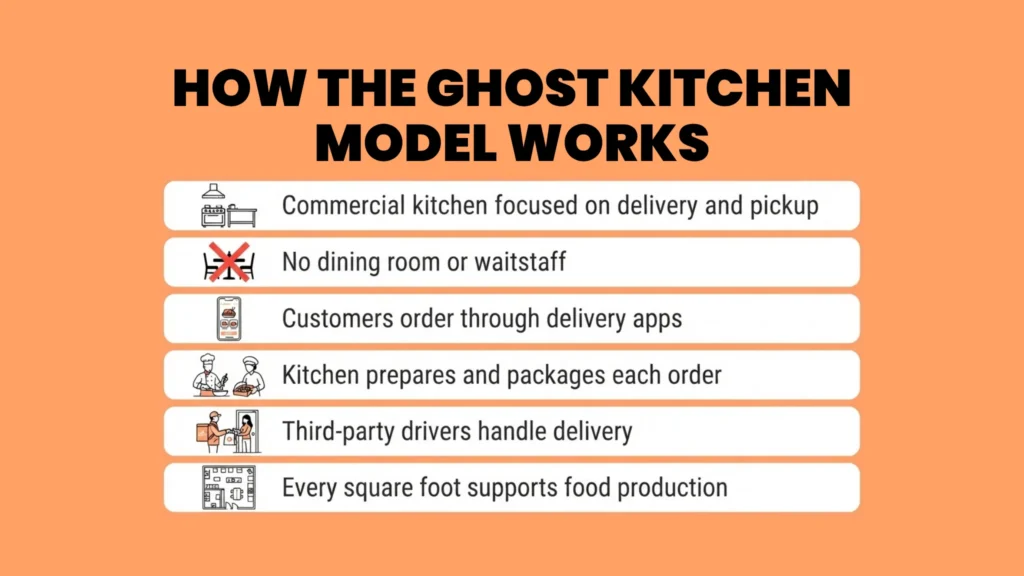
Traditional restaurants rent space, serve dine-in customers, manage waitstaff, and handle delivery. In contrast, ghost kitchens rent commercial kitchen space and prepare food for delivery only.
The Daily Operational Flow
The Customer Orders: A hungry user opens an app like DoorDash or UberEats and chooses a meal.
The Kitchen Receives: The order prints directly on a screen inside the shared or dedicated cooking hub.
The Kitchen Prepares: Chefs cook the order quickly using optimized production lines.
The Runner Packages: Staff pack the order in tamper-evident packaging.
The Driver Delivers: A third-party delivery driver picks up the order at a staging window and delivers it.
This stripped-down process is why so many culinary entrepreneurs prefer this path over traditional brick-and-mortar setups.
Cloud Kitchen vs Ghost Kitchen: Clearing Up the Confusion
People often ask us about the difference between a cloud kitchen vs ghost kitchen. Are they completely different concepts, or just fancy industry jargon? Generally, the terms are used interchangeably in daily conversation. However, based on available data, subtle differences exist depending on business structure and setup.
Traditional restaurants require full dining rooms, rely on high foot-traffic street locations, and incur very high upfront capital ranging from $250,000 to over $800,000. Their primary revenue comes from a mix of dine-in and takeout, with low ability to run multiple brands.
Ghost kitchens and cloud kitchens eliminate dine-in areas entirely and focus on digital delivery and pickup. Located in lower-rent or industrial areas, their upfront capital is moderate, generally estimated between $30,000 and $100,000. They offer high to extremely high flexibility for running multiple virtual brands from one location.
When comparing a cloud kitchen vs ghost kitchen, think of “cloud kitchen” as the overall tech-driven ecosystem, while a “ghost kitchen” often refers to the physical delivery-only space itself. Both let you run a virtual restaurant startup with significantly reduced startup risks.
Understanding Ghost Kitchen Costs and Overhead
How much capital do you actually need to get started? Calculating your ghost kitchen cost is much easier than estimating a standard restaurant budget. Since you do not need plush seating or expensive interior design, your primary focus stays strictly on equipment and kitchen space.
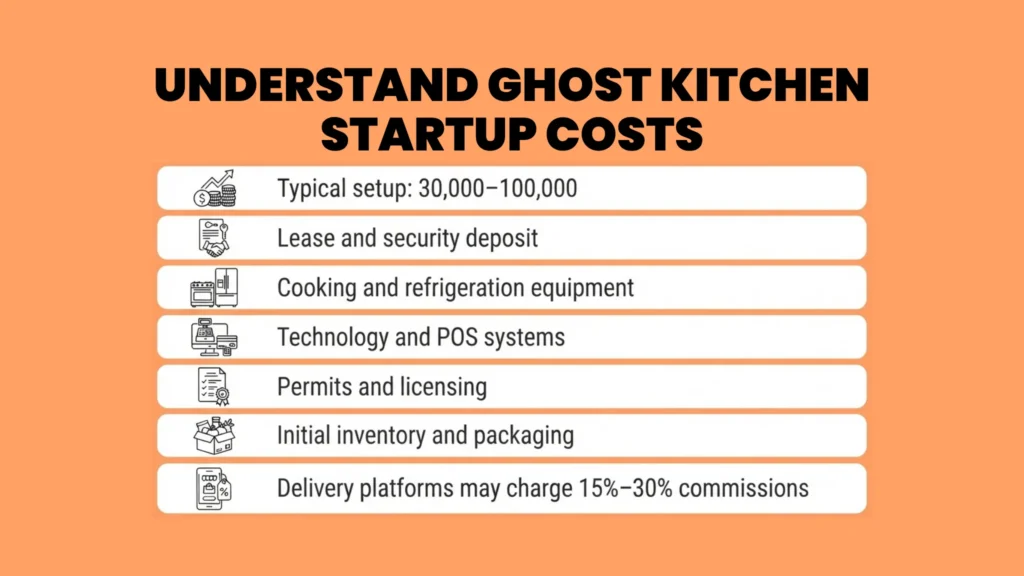
Initial Startup Costs
Lease & Security Deposit: Renting a commercial stall usually requires lower deposits than standard commercial properties.
Cooking & Refrigeration Equipment: Ovens, fryers, prep tables, and walk-in coolers.
Technology & POS Systems: Order aggregators, tablets, and kitchen display screens.
Permits & Licensing: Health department approval, food handler permits, and local business registration.
Initial Inventory & Packaging: Ingredients along with branded, high-quality delivery boxes.
Estimated setup costs generally range between $30,000 and $100,000, depending on whether you lease a turn-key shared facility or fit out an empty commercial space.
Monthly Operating Expenses
Managing ongoing operational expenses is vital for staying profitable. Rent and utilities represent fixed or shared space costs. Platform commissions typically take 15% to 30% per delivery order. Additional recurring costs include ingredients and supplies, kitchen staff wages, and digital marketing across search and social channels.
Because your ghost kitchen cost structure eliminates front-of-house staff, your primary variable costs focus heavily on ingredient costs, app commission fees, and digital marketing.
Types of Ghost Kitchen Business Models
Not every delivery-only business operates the same way. You can choose from several structural approaches based on your goals and budget.
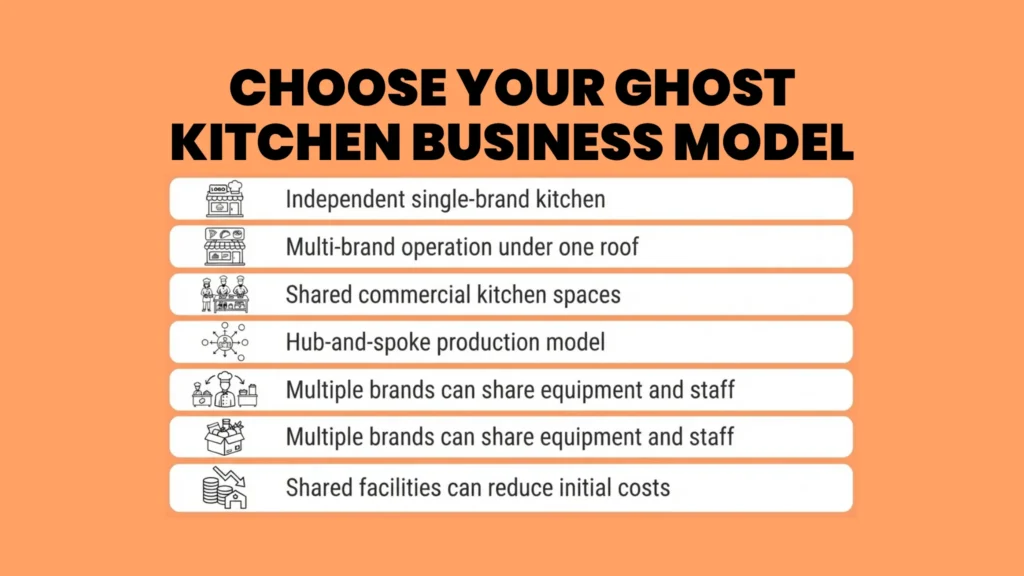
1. The Independent / Single-Brand Model
In this setup, a single business operates one specific digital menu out of a small rented commercial kitchen. It is ideal for local chefs who want to focus on a single specialty, like artisanal burgers or gourmet tacos.
2. The Multi-Brand Concept
This is where the ghost kitchen business model really shines. Under one roof, using the exact same kitchen equipment and staff, you can run three or four distinct delivery concepts.
For instance, your kitchen staff can cook:
A wings brand using the deep fryers
A salad brand using the cold prep station
A wrap brand using the flat-top grill
By running multiple brands from one kitchen, you maximize labor and equipment efficiency.
3. Shared Commercial Kitchen Spaces
Companies rent out fully equipped, health-inspected kitchen pods to multiple food businesses under one roof. This option keeps your initial ghost kitchen cost as low as possible because equipment and facility maintenance are shared among tenants.
4. Hub-and-Spoke Model
A central production facility prepares bulk prep work, then distributes prepped ingredients to smaller regional ghost kitchens located close to densely populated delivery zones.
Advantages of Launching a Virtual Restaurant Startup
Why are so many entrepreneurs choosing a virtual restaurant startup over a traditional eatery?
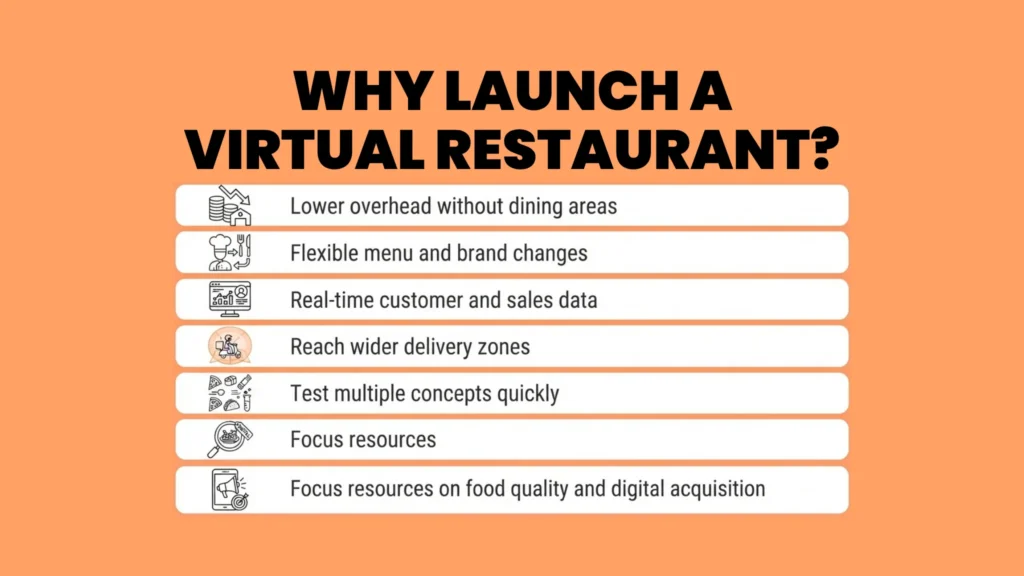
Major Benefits
Dramatically Lower Overhead: You do not pay for servers, hosts, dishwashers for dining plates, or expensive prime retail leases.
Flexibility to Pivot: If a menu concept fails to catch on, you can change your branding and menu online overnight without replacing expensive outdoor signage.
Data-Driven Operations: Delivery apps give you real-time data showing exactly what customers order, when they order, and what items deliver the highest profit margins.
Broader Regional Reach: You can place your kitchen in a lower-cost industrial neighborhood while still serving customers across an entire city center.
When structured properly, the ghost kitchen business model lets you focus entirely on food quality, speed, and digital customer acquisition.
Challenges to Keep in Mind
While the benefits sound incredible, it is equally important to discuss the realistic challenges of running a delivery-focused kitchen.
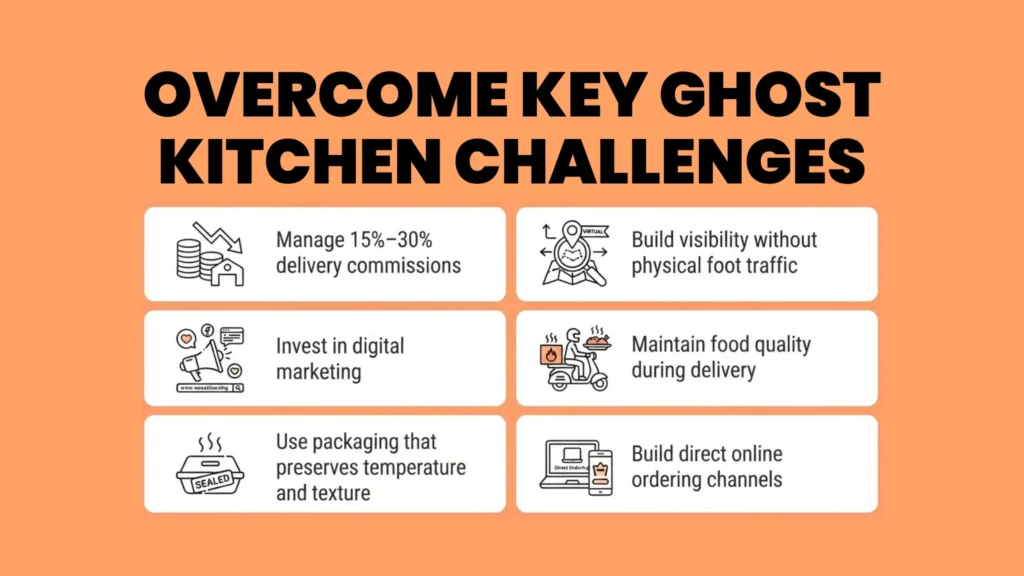
High Third-Party Commissions
Delivery platforms like UberEats, DoorDash, and Grubhub charge commissions that generally range from 15% to 30% per order. You must price your menu items carefully to keep your margins healthy.
Zero Direct Foot Traffic
Traditional restaurants benefit from people walking by and noticing their storefront. A delivery kitchen is completely invisible to physical passersby. If you do not market your brand digitally, no one will know your menu exists.
Consistency and Packaging Quality
Food needs to taste as fresh at the customer’s dining table as it did when it left the kitchen line. Finding the right ventilated packaging to keep fried items crispy and hot items warm is an absolute necessity.
At reliablestartup.com, we always encourage founders to build direct online ordering channels alongside delivery apps. This strategy helps protect profit margins and builds direct relationships with loyal customers.
How to Start a Successful Ghost Kitchen in 5 Steps
Launching a delivery brand requires careful planning and smart execution.
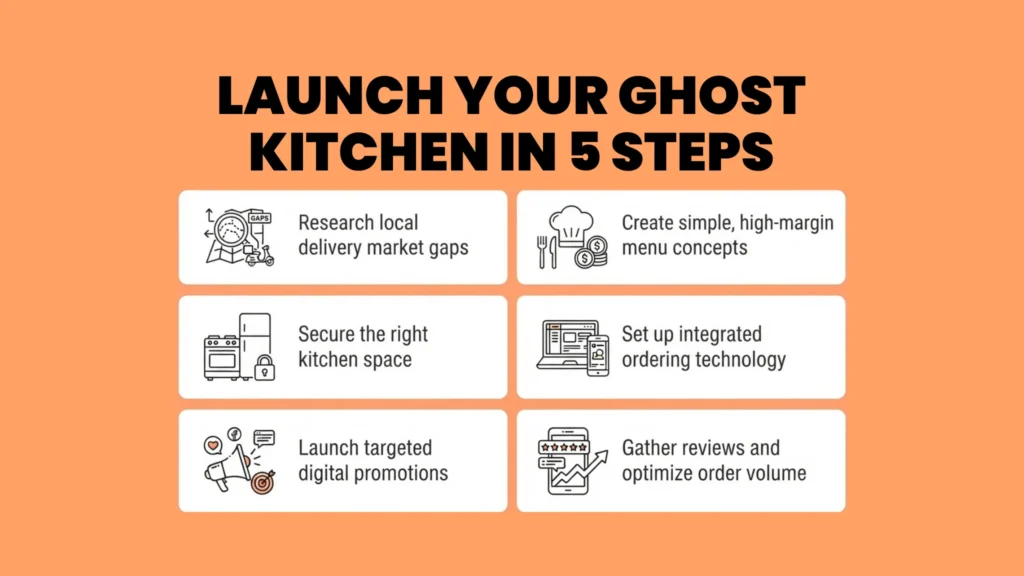
Step 1: Research Local Market Demand
Use delivery apps in your target area to see what cuisine types are missing. Is there an overload of pizza places but a shortage of healthy lunch bowls? Look for empty niches in your local delivery market.
Step 2: Formulate Your Brand Concepts
Design simple, high-margin menus that travel well. Avoid fragile dishes that go soggy quickly during a 20-minute ride in a delivery bag.
Step 3: Secure Your Kitchen Space
Decide whether you will rent space in a dedicated shared facility or fit out a low-cost commercial property. Compare each facility’s monthly rent against your projected ghost kitchen cost budget.
Step 4: Set Up Tech and Operations
Install order aggregation systems that unify multiple delivery app tablets into a single kitchen display printer. Streamlined technology prevents missed orders during busy dinner rushes.
Step 5: Launch Targeted Marketing
Run digital promotions, run localized social media ads, and offer launch discounts on food delivery apps to kickstart your initial order volume and gather customer reviews.
Is the Ghost Kitchen Business Model Right for You?
The ghost kitchen business model offers an extraordinary shortcut for culinary entrepreneurs looking to launch with minimal risk. By eliminating the heavy financial burden of traditional brick-and-mortar dining, you can test culinary concepts rapidly, operate multiple virtual brands, and optimize your margins using real-time delivery data.
Whether you choose a shared cooking space or build out a dedicated hub, success comes down to simple food, smart digital marketing, and tight control over your operating costs.
Frequently Asked Questions
How much does a ghost kitchen cost to start?
Setup costs generally range from $30,000 to $100,000, depending on equipment and kitchen space leasing options.
What is the main difference in a cloud kitchen vs ghost kitchen?
Both refer to delivery-only kitchens, but cloud kitchens usually place a stronger emphasis on tech-integrated operations.
Can I run multiple brands in one ghost kitchen?
Yes, running multiple virtual concepts from one single kitchen space is common and highly cost-effective.
Is a virtual restaurant startup profitable?
Yes, lower overhead costs generally make profitability easier to achieve if delivery app commissions are managed carefully.
How do ghost kitchens get customers without foot traffic?
They rely heavily on food delivery app placement, digital advertising, local social media, and search marketing.