How to Write a Business Plan Step by Step
Key Takeaways
Clear roadmap for your startup journey
Simple structure for quick execution
Core sections investors look for
Financial estimates made simple
Built for real-world growth
Ever feel like starting a business is like building furniture without the manual? You have a great idea, endless energy, and a vision in your head. But putting it down on paper feels completely overwhelming.
Learning how to write a business plan does not have to be scary or complicated. In simple terms, a business plan is just a written guide that explains what your business does, who your customers are, and how you will make money.
Whether you need to secure funding or just want a clear path forward, drafting a plan keeps your goals on track and saves you from costly mistakes down the line.
Learning how to write a business plan helps founders turn big ideas into structured, profitable companies. A solid plan covers your executive summary, market research, business structure, product lines, marketing strategy, and financial estimates. Using a proven business plan template saves time, attracts potential investors, and gives your team a clear roadmap for long-term growth.
Why Every Startup Needs a Clear Plan?
Why do so many new businesses fail in their first few years? In most cases, it comes down to a lack of planning. Starting out without a map is a risky gamble. A well-crafted plan acts as your north star when things get tough.
First, write down your executive summary to frame the vision. Next, perform thorough market research to know your target audience. After that, outline your products and services. Then, build out your marketing and sales plans. Finally, establish your financial model to ensure sustainability.
When you understand how to write a business plan, you gain clarity on your numbers and your target audience. It stops you from spending money on things that do not move the needle. It also gives potential investors confidence that you know what you are doing.
At reliabalestartup.com, we generally see founders succeed much faster when they write down their strategy instead of winging it. A good business plan for startup success acts like a bridge between a dream and a real, working company.
Choosing the Right Business Plan Format
Not every company needs a fifty-page document. Depending on your goals, you can choose a format that fits your immediate needs.
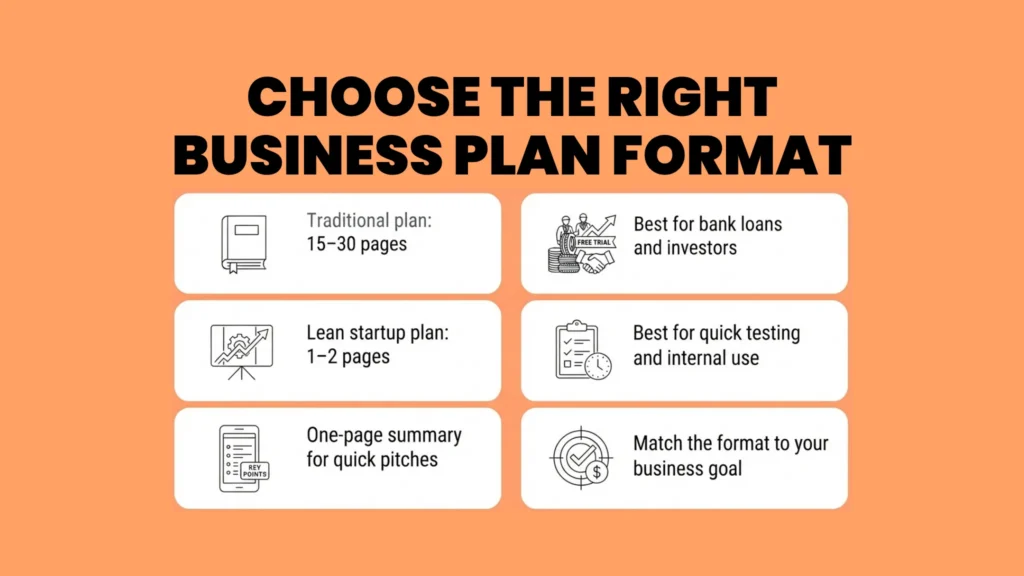
| Plan Type | Best Used For | Typical Length | Key Focus |
| Traditional Plan | Bank loans, investors, deep analysis | 15–30 pages | Detailed financials, market breakdown, full operations |
| Lean Startup Plan | Quick testing, internal focus, fast changes | 1–2 pages | Value proposition, key partnerships, basic costs |
| One-Page Summary | Pitching partners, quick overviews | 1 page | Core mission, high-level goals, quick facts |
If you are seeking bank loans or major investors, a traditional plan works best. If you are testing a small idea, a simple lean plan is often all you need.
7 Core Steps to Write Your Business Plan
Ready to dive in? Let us break this down step by step so you can build your plan effortlessly.
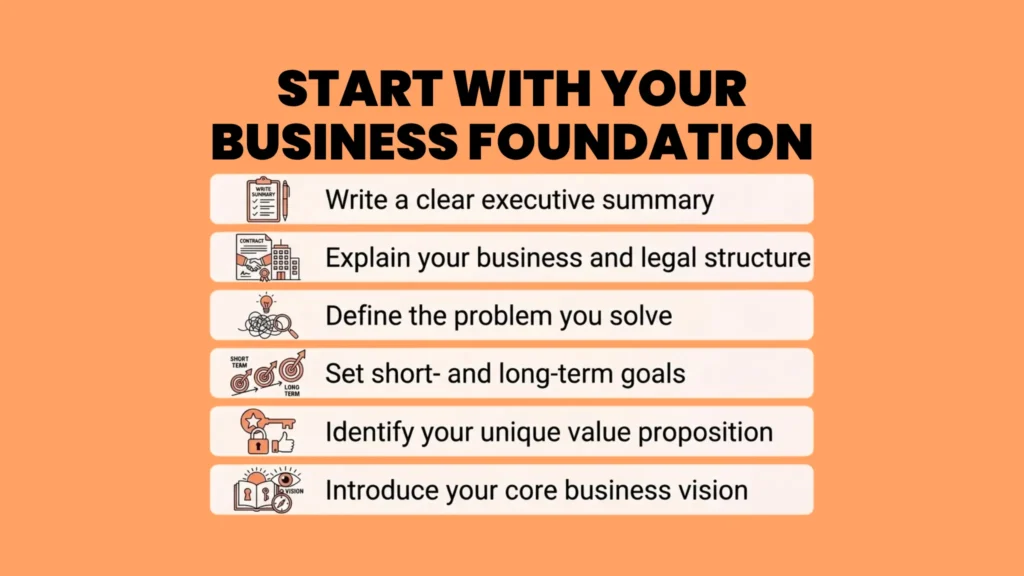
Step 1: Write an Engaging Executive Summary
Your executive summary is the hook of your entire document. Even though it appears at the front, it helps to write this section last after working out all the details. Keep it punchy, clear, and focused on what makes your offer unique. Explain what problem you solve and why your team is the right one to solve it. If an investor only reads this single page, they should still understand your core vision.
Step 2: Describe Your Company and Structure
This section outlines what your business actually is and how it operates legally. State your business name, location, legal structure, and core mission. Are you a sole proprietorship, an LLC, or a corporation? Explain the exact problem your business solves for your customers. Share your short-term goals alongside your long-term vision.
Step 3: Conduct Market and Competitor Analysis
You cannot sell to everyone, so who is your ideal customer? Market analysis requires looking closely at industry trends, target demographics, and direct competitors.

Identify Demographics: Define your ideal buyer by age, location, income level, and buying habits.
Analyze Competitors: Find out what your direct rivals do well and where they fall short.
Spot Industry Trends: Look at market size and whether demand for your product is growing based on available data.
Find Your Niche: Pinpoint the exact gap in the market that your company fills better than anyone else.
Knowing your audience deeply saves you thousands of dollars in wasted advertising down the road.
Step 4: Outline Your Products or Services
What are you actually selling, and why should people buy it from you? Describe your product line or service offerings in plain language without heavy jargon. Focus on the benefits to the customer rather than just listing tech features.
Explain pricing strategies, production costs, and intellectual property if you hold patents. If you offer a service, explain your service delivery process step by step.
Step 5: Detail Your Marketing and Sales Strategy
A fantastic product means nothing if nobody knows it exists. How will you attract, convert, and retain paying customers? Outline your sales channels, social media strategies, paid ads, and promo plans here.
At reliabalestartup.com, we always recommend testing small marketing runs before committing to big budgets. Showing a clear, realistic path to user acquisition builds massive credibility with prospective partners.
Step 6: Define Your Management and Operations Plan
Investors fund great people, not just great ideas. Introduce your core management team and highlight their relevant experience. Outline daily operational tasks, equipment needs, facility costs, and logistics.
Who handles supply chain details? Who manages customer service? Showing how the daily work gets done proves your business can operate smoothly without constant chaos.
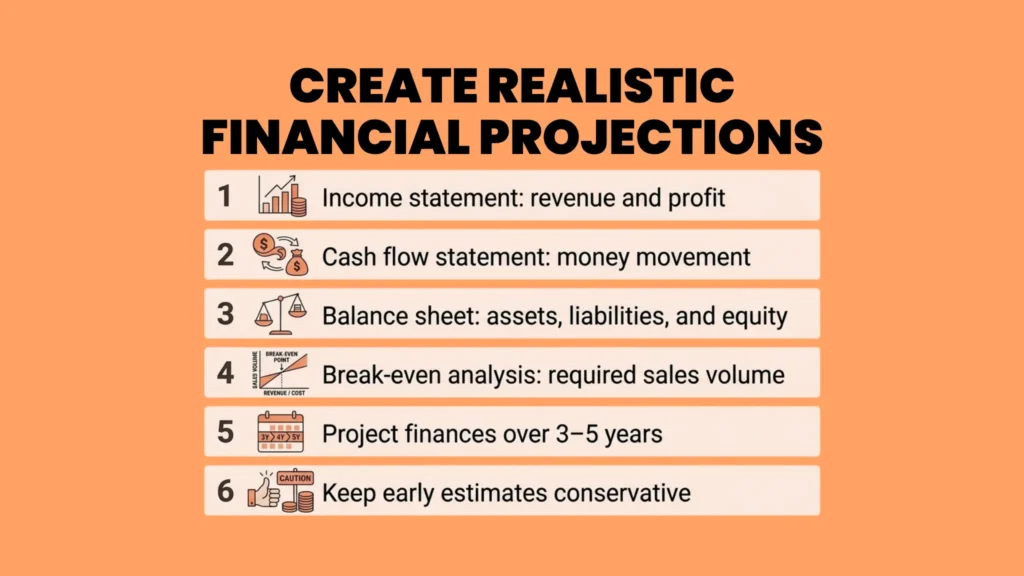
Step 7: Build Your Financial Projections
Numbers can be intimidating, but this step is crucial for proving viability. Financial projections help you figure out how much startup capital you actually need to reach profitability.
Income Statement: Estimate your revenue, cost of goods sold, and net profit over a 3- to 5-year period.
Cash Flow Statement: Track how money moves in and out to ensure you do not run out of operational cash.
Balance Sheet: List your expected assets, liabilities, and equity to display total net worth.
Break-Even Analysis: Calculate the exact sales volume needed to cover all fixed and variable costs.
When learning how to write a business plan, keep your initial financial projections conservative. Overestimating early revenue is one of the easiest ways to lose investor trust.
Free Business Plan Template and Examples
Using a structured business plan template saves hours of formatting stress. It keeps your thoughts organized and ensures you do not forget critical sections.
Practical Business Plan Example
Imagine you are launching a specialty coffee shop called Daily Grind. Instead of writing “We sell coffee,” your plan describes your unique value proposition. You offer locally roasted, fair-trade coffee paired with a quiet work space for remote workers.
Your business plan for startup funding shows exact equipment costs, lease terms, and staffing projections for year one. Seeing a real business plan example helps turn abstract business concepts into actionable steps. Using resources at reliabalestartup.com gives founders access to proven templates that speed up the writing process.
Common Mistakes to Avoid When Writing Your Plan
Even smart founders make simple errors when drafting their initial plans. Here are a few quick traps to watch out for as you write:
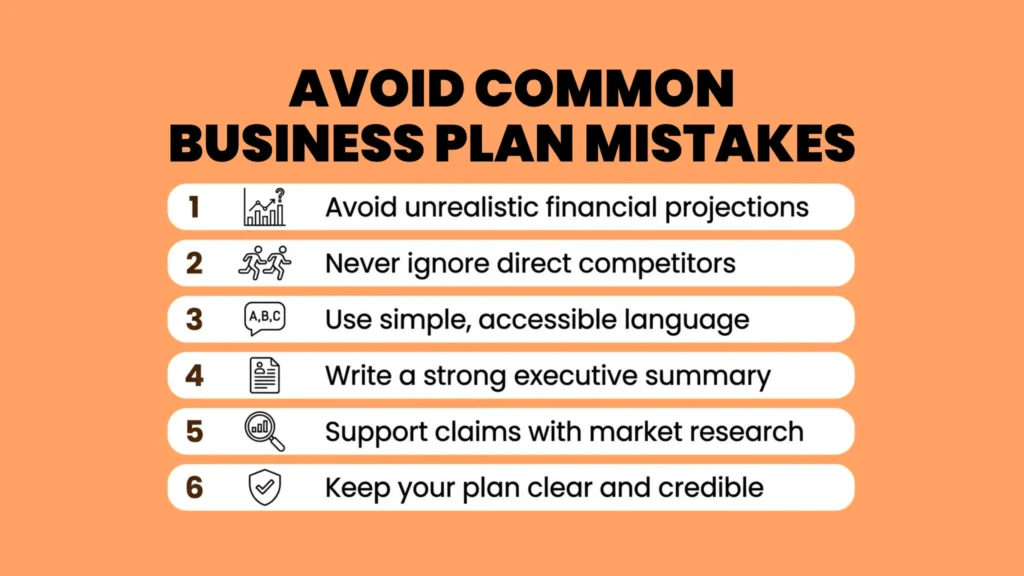
Unrealistic Financial Projections: Promising massive profits in month one without data lowers credibility.
Ignoring Competitors: Claiming you have “no competition” usually just means you skipped market research.
Overly Complex Language: Keep descriptions simple so anyone can understand your model quickly.
Skipping the Executive Summary: Leaving out a strong summary means busy readers might skip your plan entirely.
Checking for these common slips ensures your business document stays sharp and persuasive.
Conclusion
Learning how to write a business plan is about turning a great vision into an actionable strategy. By outlining your market research, product lines, marketing efforts, and realistic financial projections, you create a solid roadmap for growth.
Remember to keep your language clear, update your numbers as you learn, and choose a format that fits your current needs. Take it one section at a time, use a reliable business plan template, and watch your ideas transform into a thriving business.
Frequently Asked Questions
What is the main purpose of a business plan?
A business plan clarifies your company strategy, guides daily decisions, and helps secure funding from banks or investors.
How long should a startup business plan be?
Most startup plans range between 15 to 25 pages, while lean summary versions stay around 1 to 2 pages.
Do I need financial history to write a plan?
No, new businesses use estimated financial projections based on industry averages and realistic market research instead of past data.
How often should I update my business plan?
Update your plan at least once a year or whenever your company undergoes significant shifts in strategy or funding needs.