How to Start a Tent Rental Business
Have you ever looked at a crowded backyard wedding, a lively neighborhood festival, or a weekend corporate retreat and wondered who supplied all those massive canvas canopies? Someone picked up the phone, loaded a truck, set up the gear, and walked away with a solid paycheck.
Starting a tent rental business is one of the most practical, high-margin service models you can launch today. If you want to build a hands-on company with steady local demand, launching a tent rental business lets you turn basic equipment into recurring income.
Key Takeaways
Low entry barrier with high recurring event demand
Practical setup steps from gear to local permits
Smart pricing models to maximize profit margins
Proven marketing tactics for local community reach
Long-term growth tips supported by reliablestartup.com
AI Overview
A tent rental business purchases commercial event tents and rents them to clients for weddings, parties, and corporate functions.
Starting one involves choosing inventory, securing local licenses, setting competitive rates, and organizing transport.
With reasonable startup costs and high local demand, it offers strong profit margins for hands-on entrepreneurs who value active work.
Why Is an Event Tent Rental Startup a Smart Move?
Ever noticed how outdoor events never seem to go out of style? People always need cover from sudden rain or scorching summer sun. Building an event tent rental startup allows you to tap into a market that stays active all year round.
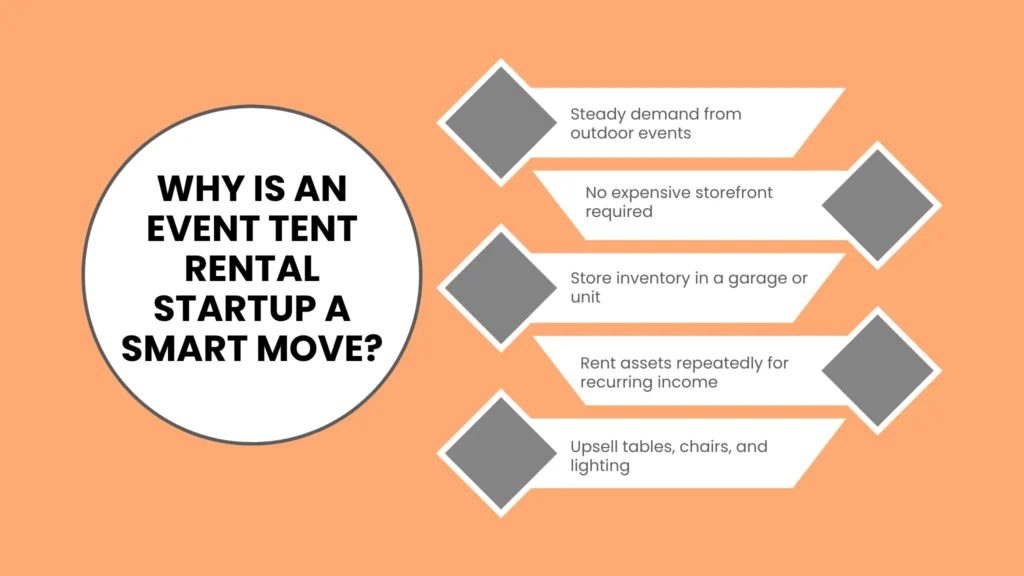
Unlike retail stores, you do not need an expensive storefront on day one. You can literally store your initial inventory in a clean garage or a small rented storage unit. The business model relies on physical assets that you buy once and rent out dozens of times.
Each job builds cash flow that you can roll directly into buying more inventory. Plus, most clients who rent a canopy also need tables, chairs, lighting, and dance floors. That means every phone call brings opportunities to upsell and boost your average order value.
If you follow realistic launch advice on platforms like reliablestartup.com, you can keep your overhead minimal while testing your local market.
Step 1: Researching Your Local Event Market
Before spending cash on gear, look around your local city or county. Who is currently hosting outdoor gatherings in your area? Are there local wedding planners, party venue hosts, or festival organizers looking for dependable suppliers?
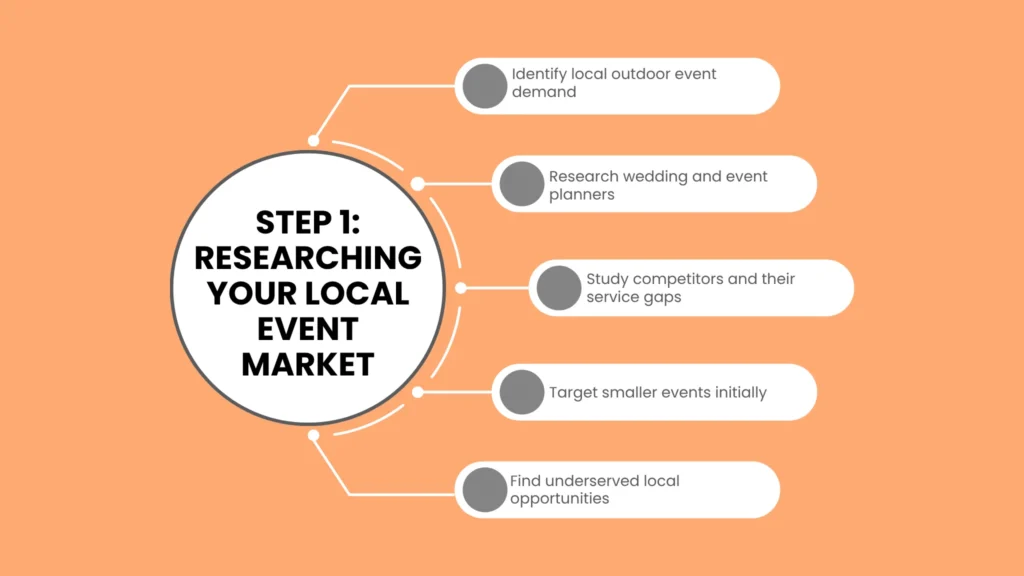
Call a few local operators to see what gear they offer and where they fall short. Do they lack high-peak frame options, or do they refuse small backyard birthday jobs? Finding these small gaps helps your event tent rental startup stand out right away.
Targeting smaller, stress-free residential events first lets you hone your crew’s setup skills before tackling massive 200-guest wedding receptions.
Step 2: Understanding Equipment Types and Setup Needs
Not all event canopies are built the same way. Understanding the differences helps you purchase the right inventory for your target market.
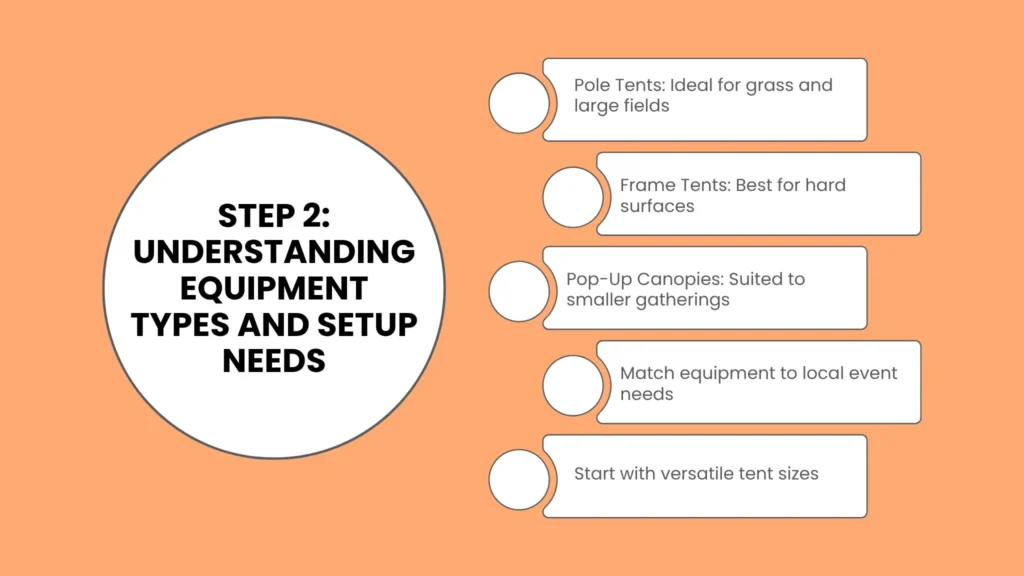
| Tent Type | Best Used For | Pros | Cons |
| Pole Tents | Large grass fields, outdoor weddings | High peaks, elegant look, cost-effective | Must be staked into soil or grass |
| Frame Tents | Patios, driveways, asphalt surfaces | No center poles, free-standing layout | Heavier frames, higher upfront cost |
| Pop-up Canopies | Backyard tailgates, small shade stops | Quick setup, low weight, cheap | Not built for heavy wind or rain |
Pole options rely on tension and heavy stakes driven directly into grass or soil. Frame designs use rigid aluminum pipes, making them perfect for concrete driveways or hard surfaces where stakes cannot go.
Starting with a mix of versatile sizes—like 20×20 and 20×40 frame models—gives you flexibility for most small-to-medium gatherings.
Step 3: Calculating Equipment Cost and Initial Investment
Let us break down the cash required to launch your operations. Your initial tent rental equipment cost will form the largest part of your upfront budget. You need commercial-grade vinyl topped with fire-retardant coatings, not cheap tailgating canopies from a general department store.
A solid commercial setup usually costs anywhere from $1,500 to $4,000 per canopy package depending on frame thickness and vinyl quality. You also need heavy-duty anchoring straps, ratchets, drop cloths, side walls, and heavy steel stakes.
Factor in transport needs as part of your overall tent rental equipment cost. A sturdy utility trailer connected to your existing truck works great at first. As your order volume grows, you can invest in dedicated box trucks with lift gates.
Keeping track of these early expenditures is crucial, and resources at reliablestartup.com can help you manage startup capital wisely.
Step 4: Establishing Your Pricing Strategy
How much should you actually charge your clients? Establishing a clear tent rental pricing strategy ensures you cover labor, fuel, wear-and-tear, and still walk away with a healthy profit.
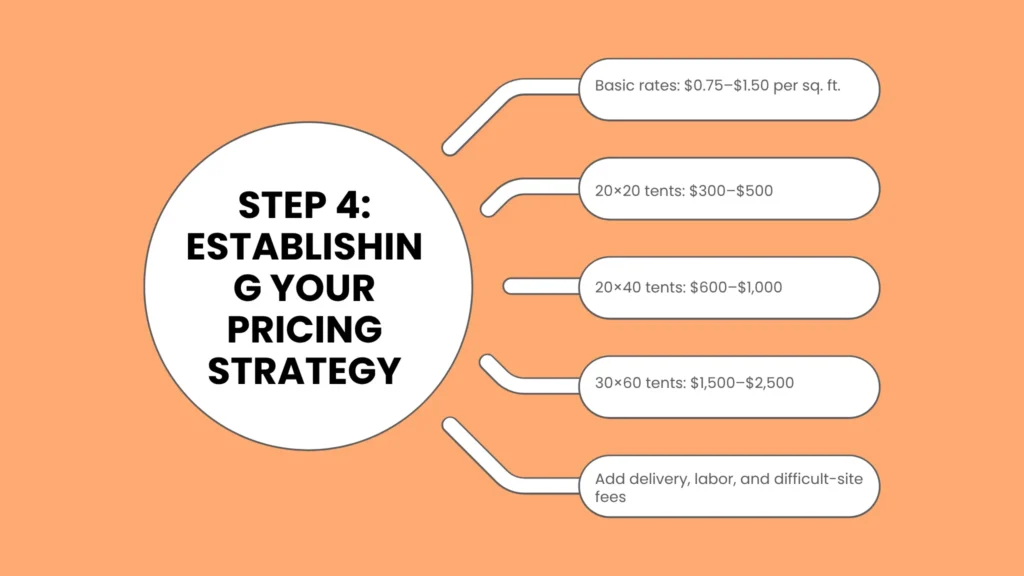
Generally, party rental operators charge around $0.75 to $1.50 per square foot for basic canopy setups. A standard 20×20 model provides 400 square feet of cover, which typically translates to a $300 to $500 weekend base rate.
| Canopy Dimensions | Coverage | Average Base Rate | Recommended Upsells |
| 20 x 20 ft | 400 sq ft | $300 – $500 | 4 Tables, 30 Chairs, Bistro Lights |
| 20 x 40 ft | 800 sq ft | $600 – $1,000 | Sidewalls, Dance Floor, Heaters |
| 30 x 60 ft | 1,800 sq ft | $1,500 – $2,500 | Perimeter Lighting, Drapery, Stage |
When calculating tent rental pricing, always factor in setup difficulty and site access. Will your crew need to carry heavy gear up three flights of stairs or haul loads across 200 yards of soft sand?
Charge extra delivery and labor fees for difficult terrain or tight installation windows. Offering packaged deals like bundling a 20×20 canopy with 40 chairs and 5 banquet tables helps raise total ticket prices while making decisions easy for your clients.
Step 5: Handling Legalities, Insurance, and Safety
You cannot run a heavy equipment setup business without proper safety precautions. Tents act like giant sails in high winds if they are not staked or weighted down properly. Always secure comprehensive general liability insurance before placing a single stake in the ground.
Most commercial venues will ask for a Certificate of Insurance listing them as an additional insured party. Always call local utility locate services before driving 36-inch steel stakes into any yard. Hitting an underground power line or water pipe will ruin your day and destroy your business reputation fast.
Include clear weather clauses in your contracts so clients know exactly when high winds force an emergency teardown for safety.
Step 6: Marketing Your Event Tent Rental Startup
Once your inventory sits ready in the garage, how do you get the phone to ring? Marketing an event tent rental startup works best when you focus heavily on hyper-local outreach.
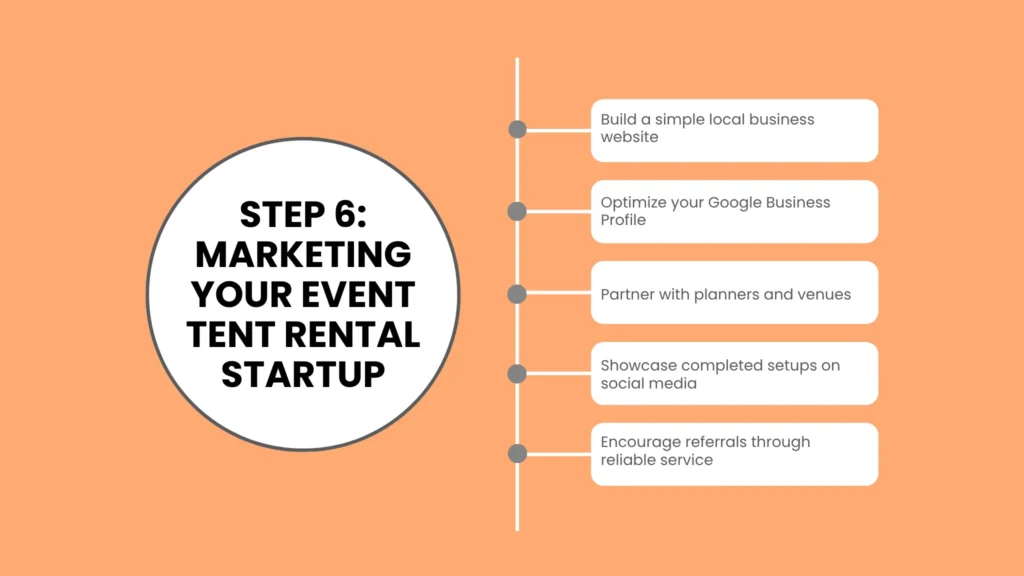
Start by building a clean, simple website with clear photos, active phone numbers, and simple quote forms.
Set up a complete Google Business Profile with local photos and your exact service radius.
Partner with local wedding planners, venue owners, caterers, and party DJs who get asked for gear recommendations daily.
Post clean, well-lit photos of completed setups on social media platforms to showcase your work.
Offer discounted rates to local charity galas or community fairs in exchange for banner placement and direct flyer drops.
Word-of-mouth spreads fast in the event industry. If you show up on time, treat property with respect, and deliver spotless gear, customers will happily recommend you to neighbors and friends.
Step 7: Streamlining Setup Operations and Logistics
Efficiency is where your real profit hides. If it takes four workers five hours to pitch a simple 20×20 frame, your labor costs will eat your margins alive. Train your crew on organized packing systems so every strap, stake, and side wall sits in its assigned spot inside your trailer.
Always drop heavy tarps or drop cloths onto the grass before unfolding clean vinyl tops. Dragging vinyl across gravel or dirty dirt ruins expensive gear and forces extra washing hours back at the shop. Clean and dry your inventory thoroughly after rainy weekend jobs to prevent mold and mildew from ruining your fabric.
Step 8: Scaling Inventory and Growing Long-Term
As your bookings fill up, you can start re-investing your rental profits back into higher-margin add-ons. Tables and folding chairs are natural additions that take minimal extra space in your truck while adding solid profit to every ticket.
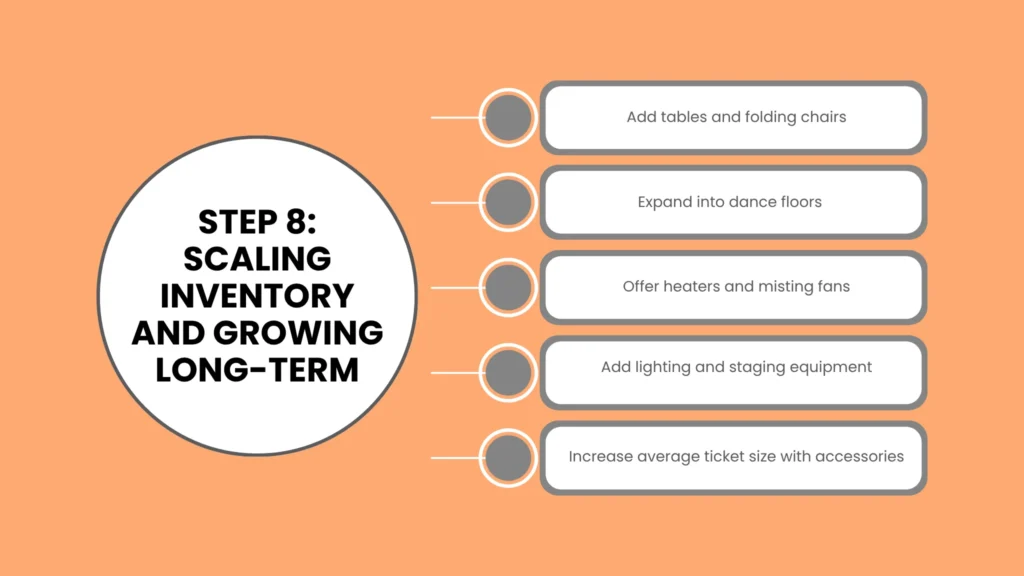
When evaluating your initial tent rental equipment cost, budget a portion of your revenue toward expanding inventory into complementary items:
Portable dance floors and sub-flooring
Outdoor patio heaters and misting fans
Perimeter string lights and LED uplighting
Table linens, chair covers, and staging platforms
Adding high-demand accessories lets you increase your average ticket size without driving to multiple job locations. Leveraging business scaling frameworks from reliablestartup.com can guide your inventory expansion without overextending your cash flow.
How Smart Pricing Keeps Your Inventory Profitable
Let us take a closer look at how smart pricing strategies protect your bottom line. Many new operators make the mistake of setting prices too low just to win early jobs. This creates a dangerous trap where you work double time for tiny returns.
Ensure your base tent rental pricing accounts for overhead, cleaning labor, and equipment depreciation. If a client asks for a discount, consider throwing in free chair upgrades instead of slashing canopy rates.
This preserves your brand’s value while keeping your cash balance healthy for future equipment upgrades.
Building a Lasting Local Business
Starting a tent rental company takes physical effort, solid planning, and careful asset management. By starting small, securing proper insurance, and pricing services fairly, you create a sustainable business that generates reliable income season after season.
Focus on delivering clean gear on time, treating customers like neighbors, and reinvesting profits wisely. Before long, your equipment will be shelter to your community’s favorite celebrations—one successful event at a time.
Frequently Asked Questions
What insurance do I need for a tent rental business?
You generally need general liability insurance ($1M–$2M coverage) plus commercial auto insurance for your delivery vehicles.
How much inventory should a startup purchase first?
Start with 2–3 versatile canopy frames, basic sidewalls, and 50–100 folding chairs to keep early costs manageable.
How do I clean and maintain commercial event tents?
Wash vinyl tops using mild soap, soft brushes, and clean water, then dry completely before folding to prevent mold.
What is the average payback period for rental equipment?
In most cases, commercial canopy inventory pays for itself within 4 to 8 rentals, depending on your local market rates.