Pop-Up Shop Rental Business: How Brands Pay Big for Temporary Retail Space
The modern retail landscape is undergoing a massive shift. E-commerce brands are finding that online ads are increasingly expensive, while physical brick-and-mortar stores require risky, multi-year commercial leases. The solution that bridges this gap is the pop-up shop rental business.
Based on available commercial real estate data, the global pop-up market has scaled past $16 billion annually. For property owners and sharp entrepreneurs, hosting a temporary store rental income stream has become an incredibly high-yield venture. By securing desirable spaces and leasing them to brands for days or weeks at a time rather than years, local operators are generating double or triple the traditional monthly market rent.
Why Brands Pay Premium Rates for Temporary Space
Traditional commercial real estate relies on long-term stability, but modern brands crave flexibility and high-impact presence. This micro-leasing framework thrives because it caters to direct-to-consumer digital brands that need a physical touchpoint but do not want a five year commitment.
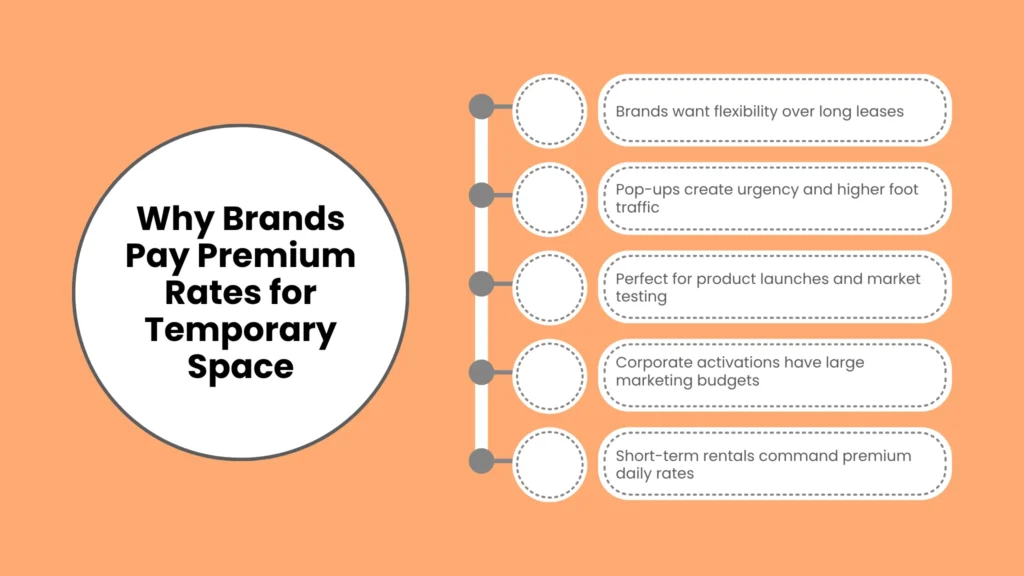
When a company wants to launch a new product, test a local market, or host an experiential marketing event, they look for a retail pop-up rental. These temporary storefronts create a sense of urgency. Because customers know the shop will only be open for a limited window, foot traffic and conversion rates naturally spike.
Furthermore, major corporations utilize these short-term locations for an upscale brand activation rental. For these enterprises, the temporary space is not just a store. It is a live-action marketing billboard designed to generate social media buzz, capture consumer data, and build long-term brand equity. Because the objective is marketing rather than simple retail sales, these corporate clients possess massive budgets and willingly pay premium daily rates for prime locations.
Calculating Your Startup Investment
Launching a short-term retail space business does not necessarily require you to own a multi-million dollar commercial building. Many successful independent operators utilize a master-lease model. In this setup, you lease a vacant commercial property from a traditional landlord on a standard monthly rate, secure the rights to sublease, and then partition or rent out the space to short-term users.
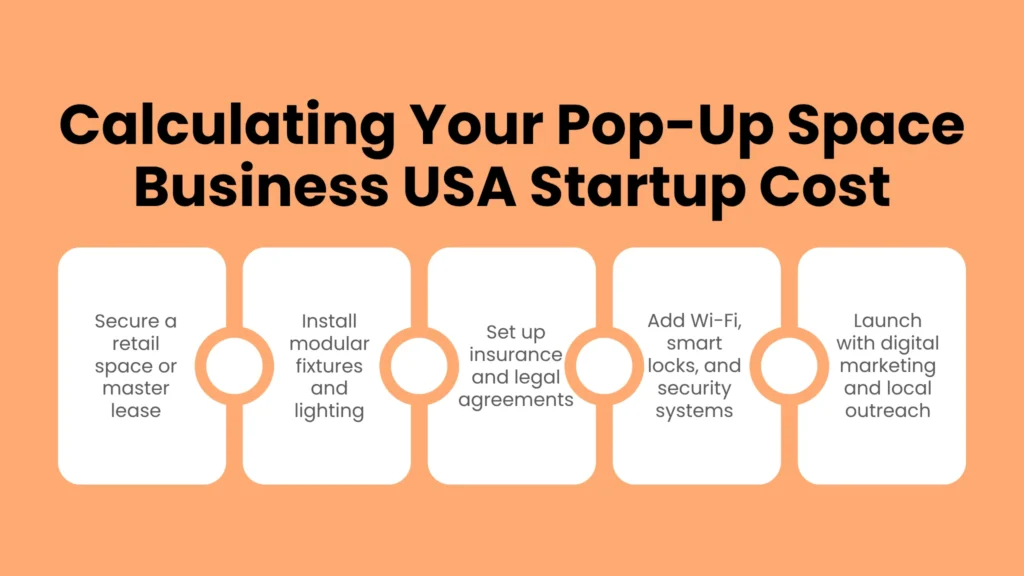
Whether you utilize a master lease or transform a property you already own, you must budget for specific initial setup expenses to make the space attractive to premium brands. If you want to see how these localized launch metrics compare to running automated logistics workflows, you can read our previous detailed analysis on a trailer rental business startup cost structure to scale your asset portfolio efficiently.
Below is an estimated capital breakdown required to launch a localized temporary retail space venue within the expanding pop-up space business usa sector.
| Expense Category | Small Vanilla Shell Space (500–1,000 sq ft) | Premium Experiential Space (1,500–3,000 sq ft) |
| Property Master Lease Deposit & First Month | $3,500 – $6,000 | $8,000 – $15,000 |
| Modular Fixtures, Lighting & Minimalist Decor | $2,000 – $4,500 | $7,000 – $14,000 |
| Commercial Liability Insurance & Legal Sublease Contracts | $1,500 – $2,500 | $2,500 – $4,500 |
| High-Speed Wi-Fi, Smart Locks & Security Cameras | $600 – $1,200 | $1,500 – $3,000 |
| Digital Marketing, Website & Local PR Launch | $800 – $1,800 | $2,000 – $5,000 |
| Total Estimated Startup Capital | $8,400 – $16,000 | $21,000 – $41,500 |
The Economics Behind Six-Figure Temporary Rentals
To see how a local operator can scale this business to six figures, look at the contrast between traditional lease rates and short-term daily rates. A standard retail space in a mid-sized American city might rent for $30 per square foot annually. For a 1,500-square-foot space, that amounts to $45,000 per year, or roughly $3,750 per month.
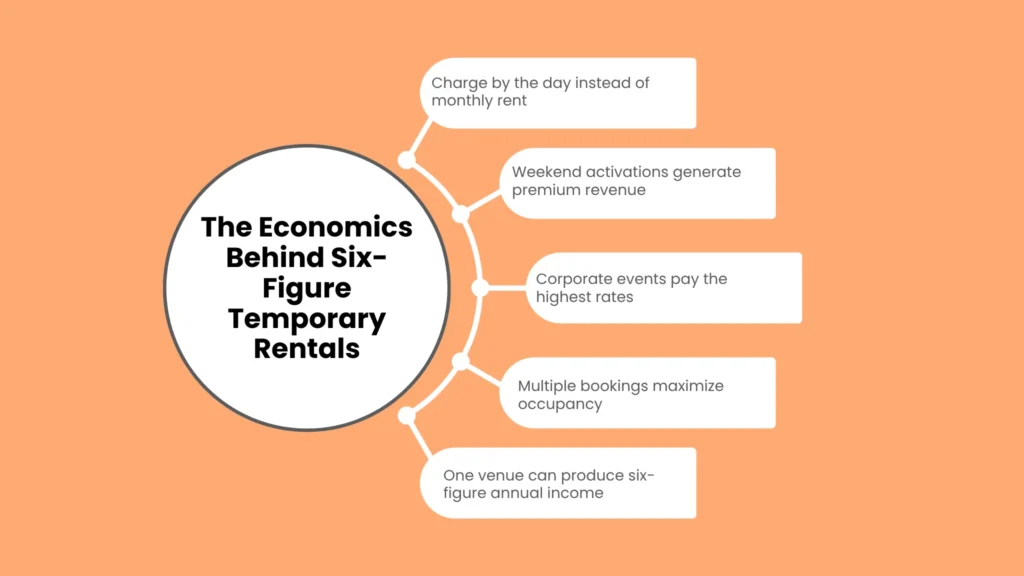
In this field, space is monetized like a hotel room rather than an apartment. Instead of charging by the year, you charge by the day or weekend, maximizing your long-term temporary store rental income potential.
Average Rental Rates by Event Type
Weekend Fashion Pop-Ups: Independent apparel designers looking to clear inventory or showcase a seasonal collection. These typically rent for $400 to $700 per day.
Corporate Brand Activations: High-end tech, beauty, or beverage brands creating an immersive media experience. These command premium rates of $1,200 to $2,500 per day due to high utility use and customization requirements.
Mid-Week Art Galleries or Sample Sales: Utilizing slower weekdays to host community art shows or discount inventory clearings. These fetch roughly $300 to $500 per day.
Revenue Breakdown Example
Imagine you operate a 1,500-square-foot premium venue. Your total monthly overhead, including your master lease rent, insurance, and utilities, sits at $5,000. If you book the space for just three weekend activations per month (9 days total) at an average corporate rate of $1,500 per day, plus two mid-week sample sales (4 days total) at $400 per day, your numbers look like this:
Annually, this modest occupancy schedule translates to over $180,000 in gross revenue and more than $120,000 in take-home profit from a single well-positioned property.
Blueprint to Launching Your Pop-Up Rental Space
Succeeding as a short term retail landlord requires a combination of prime real estate curation and polished business operations. Brands are paying for convenience, visibility, and foot traffic.
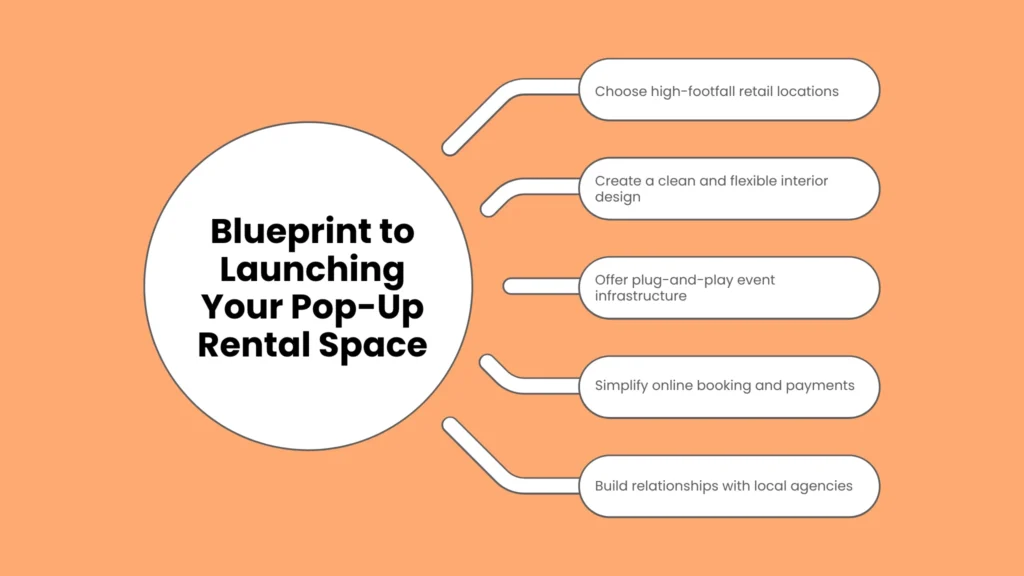
1. Scout High-Footfall Locations
Location is everything. Look for street-level commercial spaces with large glass windows in walkable shopping districts, historic downtown cores, or trendy neighborhoods near popular restaurants. High visibility means the brand renting your space gets immediate exposure without spending thousands extra on local advertising, making your brand a top choice in the localized pop-up space business usa market.
2. Maintain a “Vanilla Shell” Design
Keep the interior design clean, modern, and neutral. White walls, polished concrete or light wood flooring, and adjustable track lighting are ideal. This flexible aesthetic allows an incoming brand to quickly set up their signage, vinyl wraps, and product displays without clashing with existing decor.
3. Streamline the Onboarding Logistics
Make it incredibly simple for brands to rent from you. Your venue should offer a plug-and-play experience. Provide high-speed commercial internet, an integrated sound system, accessible storage space, and standardized digital payment terminals. The faster a brand can move in, launch, and move out, the more attractive your venue becomes.
4. Build Relationships with Local Agencies
To keep your calendar full, connect with local marketing, public relations, and event planning agencies. These firms are constantly hired by corporate clients to design a memorable brand activation rental experience. If an agency knows your space is clean, reliable, and easy to book, they will repeatedly recommend your venue to their high budget corporate clients.
To keep track of structural spatial safety codes or local zoning laws when designing your storefront floor plan, you can review current guidelines on the official International Code Council web registry to ensure complete building compliance.
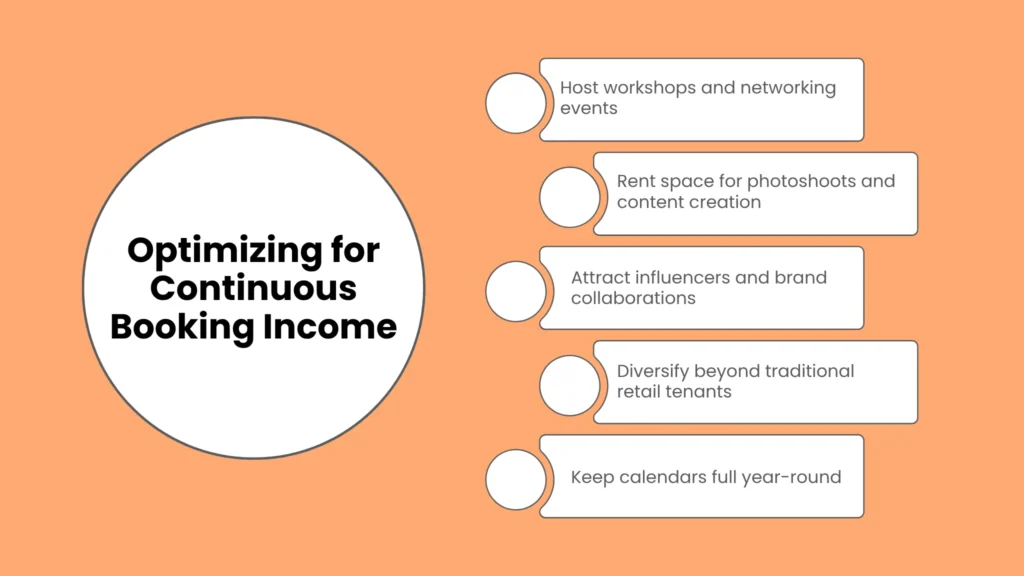
Optimizing for Continuous Booking Income
To secure maximum revenue throughout the slower months of the year, focus your marketing on diversification. When the space is not occupied by luxury retail lines, market it as an upscale venue for corporate workshops, photography studio bookings, private VIP dinners, or influencer meet-and-greet events.
Additionally, implement a comprehensive insurance verification process. Every single tenant who utilizes your retail pop-up rental space must provide a certificate of insurance listing your business as an additional insured party for the duration of their stay. This structural step shifts the operational risk away from your venue, ensuring that your building, your assets, and your primary cash flow remain completely protected.
Conclusion
The pop-up shop rental business represents an innovative fusion of traditional real estate and modern experiential marketing. With lower long-term risk than standard commercial investments, it offers a scalable framework for generating premium cash flow from localized retail assets. By providing direct-to-consumer brands with a frictionless, high-visibility storefront, you solve a critical marketing problem while maximizing your underlying real estate value.
Consistency, minimalist design, and strong local networking are the foundations of building a highly profitable venue. If you are ready to explore more step-by-step startup frameworks and cutting-edge business blueprints, visit our platform at the official Reliablestartup homepage to launch your next successful venture today.
Frequently Asked Questions
What type of insurance is needed for a pop-up space?
You must maintain a commercial general liability policy that explicitly covers short-term rental and event operations. In addition to your own policy, you should require every incoming brand or corporate tenant to hold their own temporary commercial general liability policy. This protects your business from building damage or guest slip-and-fall incidents during the active rental window.
Can I run this business if I do not own commercial property?
Yes, many operators use the master-lease or property management model. You sign a standard lease agreement with an independent property owner who has a vacant storefront, ensuring the contract explicitly includes a clause allowing you to sublease the space for short-term retail events. You then manage the marketing, maintenance, and booking logistics, pocketing the difference between your flat monthly rent and the premium daily rates.
How do brands handle point-of-sale systems in a temporary space?
Modern e-commerce brands use mobile cellular or web-based point-of-sale platforms like Shopify, Square, or Clover. As long as your venue provides exceptionally reliable, high-speed Wi-Fi, incoming retailers can sync their portable card readers and inventory software to process customer payments seamlessly on their own accounts.
What industries book short-term retail pop-ups the most?
Fashion and apparel brands represent the largest share of the market, followed closely by cosmetics, gourmet food and beverage concepts, consumer electronics launches, and independent art exhibitions. Online direct-to-consumer businesses are the most consistent clients, using physical spaces to bypass high digital advertising costs.