How to Start a Fintech Startup From Scratch in 2026
The financial technology sector is moving through a profound era of capital discipline. In previous years, the industry was flooded with single-product consumer apps that prioritized growth at all costs. However, the current landscape belongs to financial operating systems that integrate AI automation, real-time payment rails, and enterprise compliance protocols. Consequently, bold builders are researching exactly how to start a fintech startup that can captures real-world transaction value while staying capital-efficient.
Importantly, launching a financial application is not like launching standard software. Because you are handling real capital movement, global regulators demand exceptional security protocols right from your first line of code. Therefore, following an exact, compliant fintech startup step by step guide is essential if you want to pass third-party audits and attract banking partners without blowing your early seed runway. Founders should also understand the broader capital-raising landscape, including how fintech startup funding actually works before approaching investors.
This foundational blueprint details how to take a web3 or traditional financial product from early concept to stable revenue. We will outline realistic development costs, analyze historical vertical margins, and break down the explicit requirements you must fulfill to win in the modern financial technology landscape.
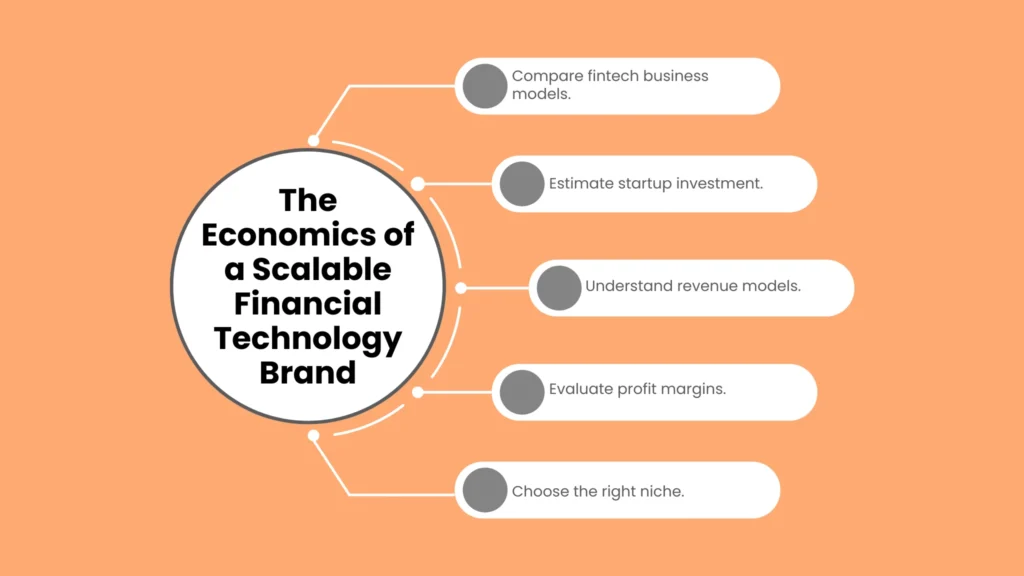
The Economics of a Scalable Financial Technology Brand
Before assembling an engineering team, founders must master the real unit economics that govern modern financial applications. Historically, entering this market required millions of dollars to build localized transaction ledger engines. Today, mature Banking-as-a-Service (BaaS) platforms and open banking APIs allow you to plug your software directly into pre-approved clearing networks, significantly reducing initial infrastructural overhead.
| FinTech Software Vertical | Estimated Fintech Startup Cost | Expected Fintech Startup Profit Margin | Core Monetization Strategy |
| AI Bookkeeping & AP Automation | $40,000 to $100,000 | 75% to 85% | Recurring Monthly SaaS Subscriptions |
| Micro-Lending & Embedded Credit | $50,000 to $120,000 | 50% to 65% | Interest Spreads, Origination Fees |
| Payment Gateway & Wallet Tech | $40,000 to $100,000 | 55% to 70% | Interchanges, Per-Transaction Fees |
| Wealth Tech & B2B Treasury | $70,000 to $180,000 | 65% to 80% | Assets Under Management (AUM) Fees |
When answering the primary industry question of is fintech startup profitable, macro market metrics confirm that platforms focusing on niche business-to-business workflows achieve profitability much faster than mass retail apps. Because corporate clients are willing to pay premium prices for tools that prevent fraud or optimize yield, your fintech startup profit margin remains heavily insulated against user churn. This B2B-first approach mirrors patterns seen across the broader B2B fintech startups landscape, where enterprise clients consistently pay a premium for reliability.
The Ultimate Fintech Startup Step by Step Guide
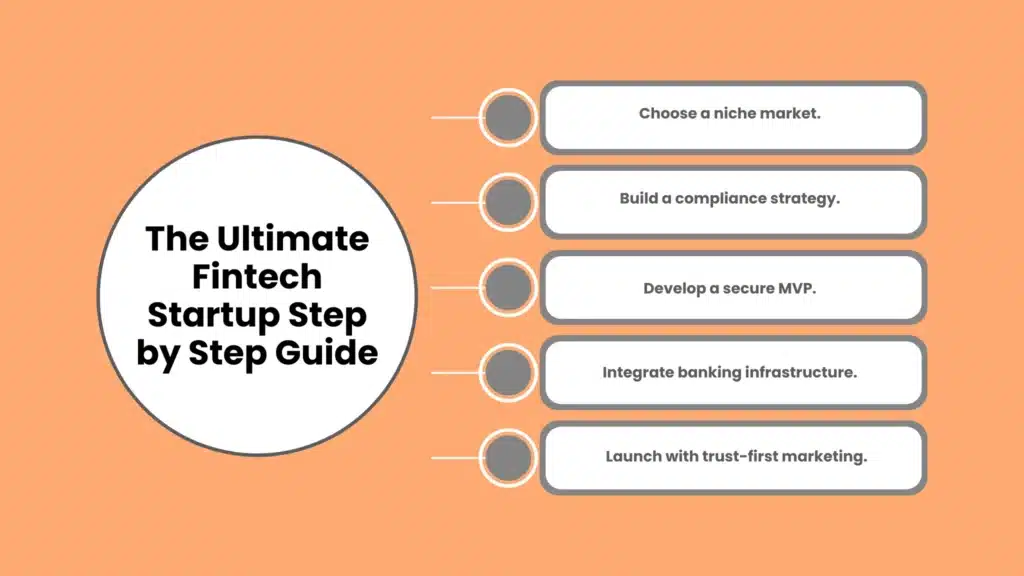
Step 1: Select a High-Utility Subculture Niche
Never attempt to build a generic platform for everyone. Instead, find a highly specific, underserved user base or a painful B2B operational bottleneck. For example, focus on automated cross-border treasury management for mid-market software companies or customized financial wellness engines for gig workers. If you’re still exploring your niche, our roundup of fintech startup ideas can help narrow down a high-potential vertical before you commit resources.
Step 2: Establish Your Compliance Blueprint
Before writing software, consult with experienced legal counsel to identify the exact regulatory rules that apply to your product. Determine whether your product requires state-by-state money transmitter licenses or if you can fast-track development by partnering with an existing sponsor bank.
Step 3: Architect a Secure Minimum Viable Product (MVP)
Build a highly disciplined version of your application that solves exactly one major problem flawlessly. Avoid complex secondary features and prioritize core data encryption, secure wallet authorization loops, and stable payment processing links.
Step 4: Secure Strategic Infrastructure Partners
Connect your platform to modern open banking APIs and fraud detection networks. Utilizing pre-built infrastructure ensures that your transactional data remains compliant with strict international safety standards right out of the gate.
Step 5: Execute Trust-First Organic Distribution
Because consumers are highly protective of their capital, your early marketing must emphasize security and deep industry authority. Build a client acquisition engine using educational search engine optimization, in-depth technical whitepapers, and hyper-targeted corporate pilot programs.
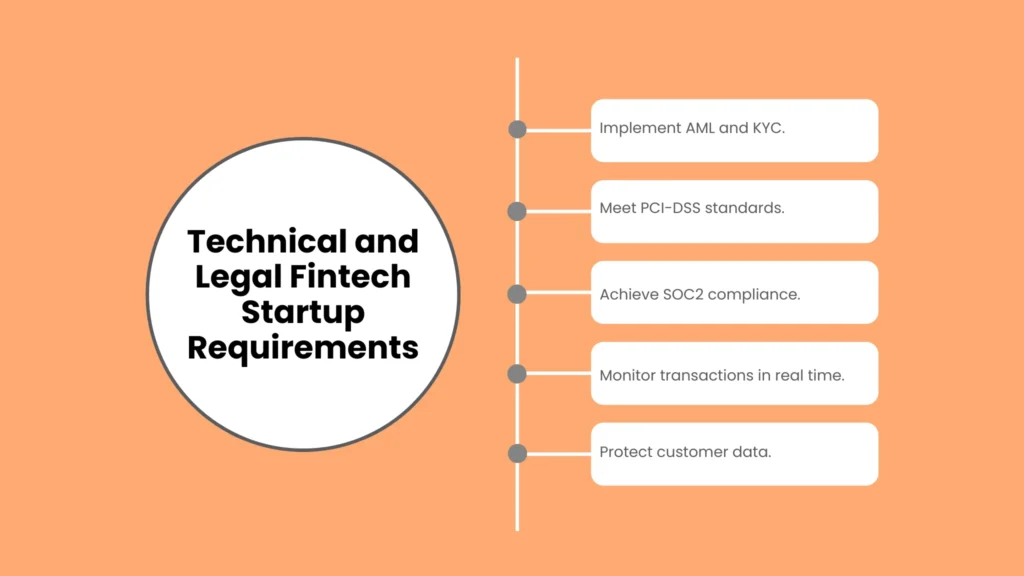
Technical and Legal Fintech Startup Requirements
Securing institutional trust and passing rigorous bank audits requires implementing a clean, highly structured compliance stack across your entire organization.
1. Data Security and Encryption Infrastructure
Your engineering team must treat data safety as a core feature rather than a late-stage checklist:
PCI-DSS Level 1 Compliance: Mandatory if your platform processes, stores, or transmits credit card data across network nodes, per official PCI Security Standards Council guidelines.
SOC2 Type II Certification: Essential for B2B financial tools to prove your cloud infrastructure handles client data securely over extended operating periods.
2. Identity Verification and Fraud Interception
To protect your network from bad actors, your onboarding flow must feature robust verification systems:
Automated KYC / AML Loops: Integrate identity verification modules that instantly verify user identities and screen against global financial watchlists.
Real-Time Transaction Monitoring: Deploy algorithmic scanning to detect anomalous transaction patterns and block fraud attempts before settlement occurs.
Navigating the Capital Allocation Maze: Code Over Hype
A critical mistake made by early-stage founders is spending the majority of their initial funding on high-profile marketing campaigns or elaborate corporate offices. In the financial technology landscape, flash promotions will never salvage a platform plagued by frequent transaction errors or slow settlement times.
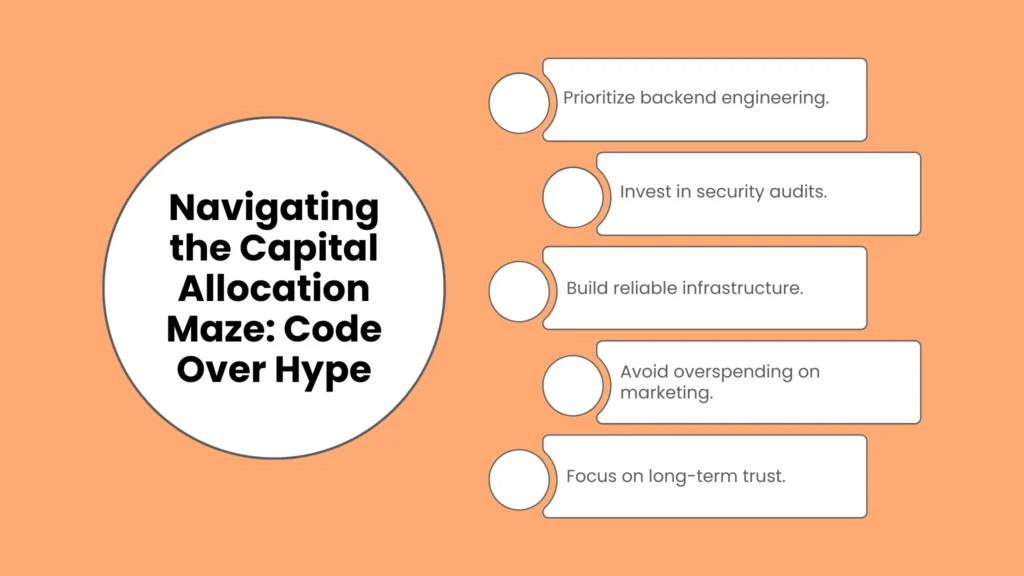
Therefore, you must tilt your capital allocation strategy heavily toward backend engineering and defensive code development. Invest in building a flawless transaction ledger, implementing extensive automated test coverage, and maintaining a redundant database architecture.
By prioritizing technical performance over short-term vanity metrics, you build an unshakeable foundation of customer trust. This unmatched technical stability ultimately acts as your primary marketing asset, converting early pilot users into lifetime brand advocates.
Build Your Financial Technology Future Successfully
You do not need an extensive legacy background on Wall Street to build a dominant, cash-flow-positive financial platform. By identifying an isolated transaction bottleneck in an industry you know well, integrating secure open banking APIs, and maintaining relentless compliance discipline, you can scale a software empire completely on your own terms.
Begin your creation process by mapping out the exact data flow of your minimum viable product. Validate your core value proposition through structured customer discovery interviews, establish your foundational banking alliances, and use immediate client feedback to continuously refine your security interfaces.
If you are looking for more actionable business blueprints, compliant platform design templates, and step-by-step customer acquisition playbooks for modern independent founders, explore our full library of startup resources at reliablestartup.com to accelerate your entrepreneurial path.
Frequently Asked Questions
Is fintech startup profitable for small, bootstrapped teams?
Yes, it is highly profitable if you target specialized B2B software niches. By leveraging Banking-as-a-Service APIs to process transactions, a lean team can entirely avoid the multi-million dollar costs of building core banking architecture from scratch. This keeps your ongoing operational costs low, allowing your margins to scale rapidly as your transaction volume grows.
What is the true average fintech startup cost to build an MVP?
A functional financial technology minimum viable product typically requires an initial investment of $40,000 to $150,000 depending on your exact vertical. Payment applications stay on the lower end of this range, while wealth management platforms or algorithmic credit tools demand higher budgets to satisfy rigorous data auditing rules.
Do I need a full banking license to launch a fintech product?
No, you do not need a banking license to start. The vast majority of modern brands partner with established, fully regulated sponsor banks. The partner bank handles the regulatory holding of customer funds, while your startup focuses entirely on building the user interface and software experience.
How long does it take to take a financial software brand from concept to launch?
An agile team can generally build and launch a verified fintech MVP within four to seven months. This timeline is heavily influenced by how quickly you secure your infrastructure partnerships and clear your mandatory third-party data safety evaluations.
Which fintech sectors are attracting the highest institutional investment?
Currently, investment capital is flowing heavily into embedded business lending, automated accounts payable networks, and corporate treasury optimization systems. Investors favor platforms that deliver measurable, immediate cost reductions for enterprise clients over consumer-facing apps.