Cottage Food Laws: What You Can Legally Sell From Home
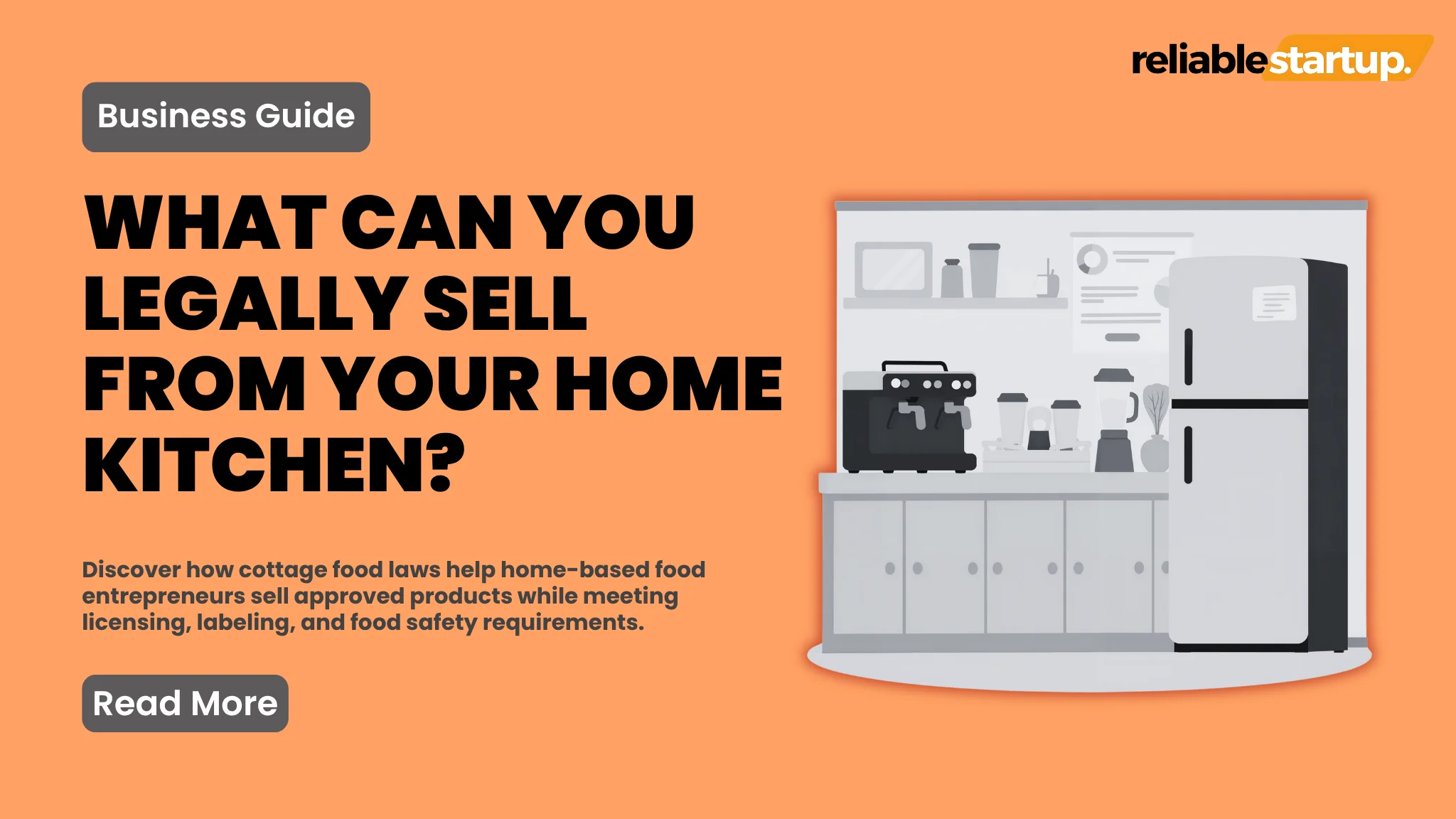
Starting a home-based food business offers an easy path for passionate bakers and food entrepreneurs. You can test new recipes and earn income without renting expensive commercial spaces. Under state regulations known as cottage food laws, individuals legally prepare low-risk foods in home kitchens. As a result, you can package these items at home and sell them directly to local buyers.
These state regulations build a clear bridge between home cooking and commercial production. By removing high real estate costs, cottage food rules help small producers start faster.
Entrepreneurs exploring different opportunities can also consider these food and beverage business ideas before choosing a suitable home-based food venture.
What Are Cottage Food Laws?
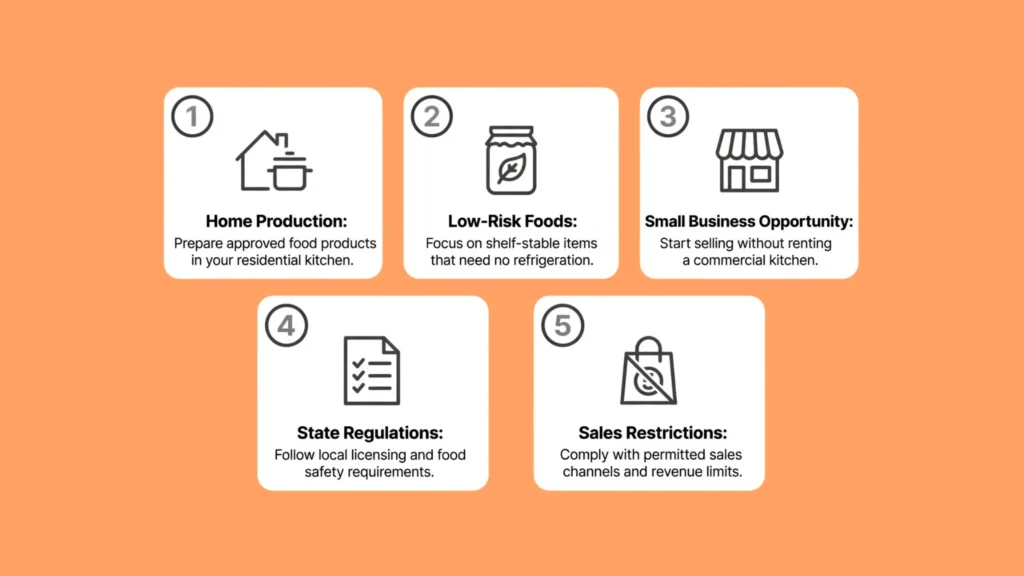
Cottage food laws are state rules that allow people to make safe food items at home for public sale. In the past, health codes forced all sellers to use commercial kitchens with complex sanitation gear. However, modern cottage food exemptions recognize that shelf-stable items carry very low safety risks. Therefore, home cooks can safely make these specific foods in domestic kitchens.
The main focus of these regulations rests on time and temperature controls. Permitted goods stay safe at room temperature and do not host dangerous bacteria. Because each area sets its own rules, cottage food state rules vary across the country. Consequently, some states allow open markets with high income limits, while other regions require strict permits before your first sale.
Allowed Foods List: What You Can Legally Sell
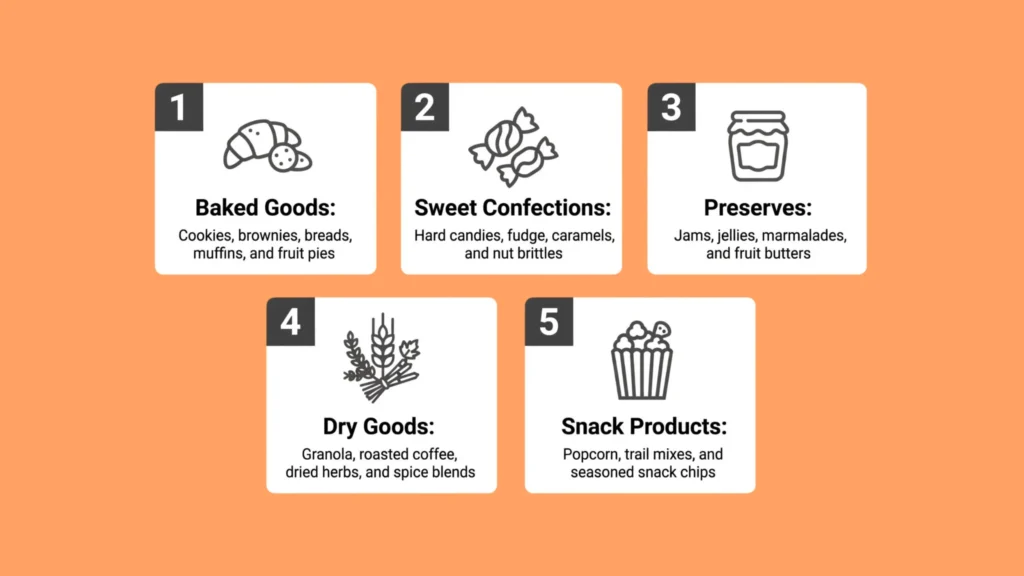
While specific state regulations differ, shelf stability remains the core requirement for every home kitchen. Below are the primary food categories found on most approved allowed foods lists.
Non-Refrigerated Baked Goods
If you plan to specialize in homemade sweets, cakes, and other baked products, exploring how to start a dessert business from home can help you understand the practical requirements of launching a small baking venture.
Yeast breads, dinner rolls, sourdough, and soft biscuits
Classic cookies, chocolate brownies, and dessert bars
Cakes and cupcakes with shelf-stable frostings like traditional buttercream or fondant
Fruit pies and tarts made with high-acid choices like apples, berries, and cherries
Breakfast muffins, sweet scones, and quick breads
Candies and Sweet Confections
High sugar levels preserve confections by binding water molecules. Thus, this simple process prevents bacterial growth naturally.
Hard candies, fruit lollipops, and drop sweets
Rich fudge, soft toffee, and chewy caramels
Crunchy nut brittles and pralines
Chocolate-covered pretzels, roasted nuts, or dried fruits
Preserves, Jams, and Fruit Butters
High-acid preserves stop bacteria growth when you process them correctly.
Traditional fruit jams, jellies, and marmalades
High-acid fruit spreads like apple or pear butter
Pure raw honey, filtered honey, and sorghum syrups
Dry Goods, Grains, and Seasonings
Low-moisture items are very safe for home kitchens because they lack water activity.
Whole or ground coffee beans and loose tea blends
Crunchy granola, trail mixes, and roasted nuts
Dried kitchen herbs, spice blends, and seasoning salts
Dry baking mixes, soup mixes, and raw pasta
Fresh popcorn, kettle corn, and snack chips
Prohibited Foods and Safety Exclusions
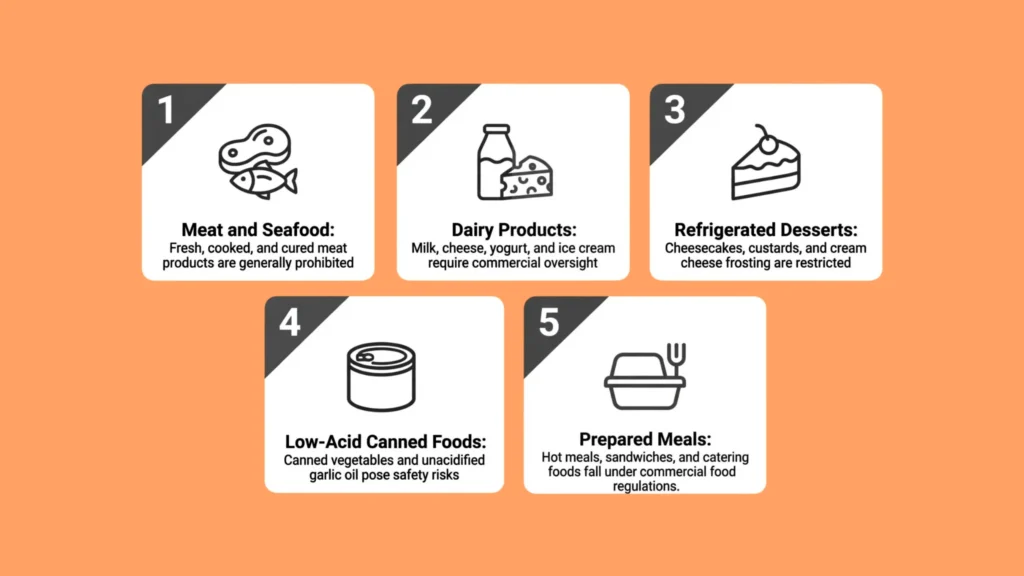
To protect public health, agencies strictly forbid foods that spoil quickly or require cold storage. If you try to sell restricted items without commercial gear, health officers can issue heavy fines.
Meat, Poultry, and Seafood: Jerky, sausage, and meat pastries carry severe safety risks, so state laws ban them.
Fresh Dairy Products: You cannot sell fluid milk, real cheese, butter, yogurt, or ice cream under basic home licenses.
Refrigerated Desserts: Pastries with cream cheese frosting, whipped cream, or pumpkin filling need constant cold storage, which makes them illegal at home.
Low-Acid Canned Foods: Canned vegetables, soups, and garlic oils can cause botulism if you do not process them in commercial pressure tanks.
Prepared Hot Meals: Hot dishes, lunch sandwiches, and catering platters fall under commercial health codes rather than home food rules.
Navigating Licensing and State Rules
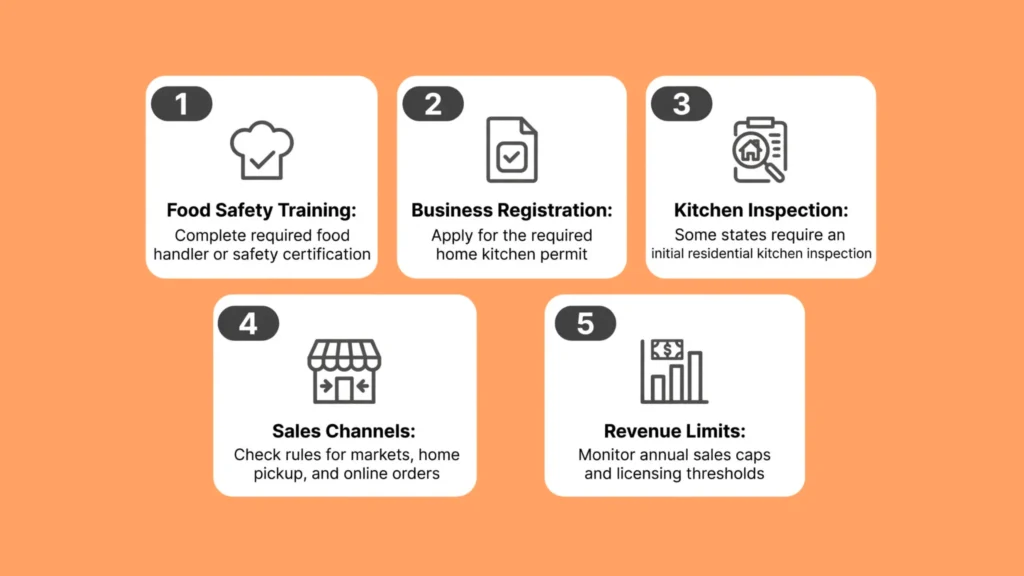
While a few states use open rules with few forms, most cities require a home kitchen food license. Therefore, understanding the basic legal path keeps your home business safe.
Licensing and Permitting Steps
Depending on your business structure and location, reviewing the small business licensing requirements can help you identify additional registrations and permits needed before accepting customer orders.
After that step, you might need to submit floor plans, complete registration forms, test your well water, or host a quick home inspection.
Sales Channels and Location Limits
Cottage food rules control where and how you deliver your goods. Entrepreneurs interested in expanding beyond packaged baked goods can also explore how to start a home catering business, although catering operations may require separate permits and approved kitchen facilities.
Furthermore, many states allow local online orders with direct delivery. On the other hand, selling to grocery stores, shipping across state lines, or using commercial post services often breaks local rules.
Annual Revenue Caps
States place yearly sales caps on home kitchens. These limits range from $20,000 to over $250,000, while a few states set no caps at all. Once your sales cross your local limit, you must move your work into a commercial kitchen space.
Packaging and Labeling Requirements
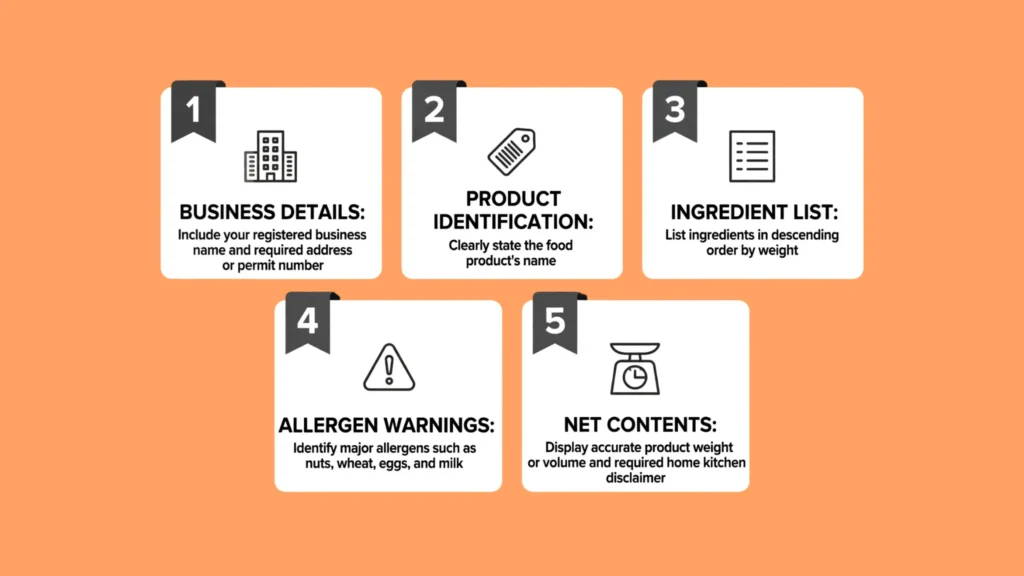
Proper product packaging is a critical part of cottage food rules. Clear labels protect buyers from dangerous allergens and show that you made the food at home. As a result, standard labels should include the following details:
Business Details: Print your business name, home address, or state permit number clearly on the box.
Product Identification: Use the common name of the food, such as “Cinnamon Nut Granola.”
Complete Ingredient List: List ingredients by weight, and highlight major allergens like nuts, soy, wheat, eggs, or milk.
Net Content Statement: Show the exact weight or volume in both US units and metric values (e.g., 8 oz / 226 g).
Mandatory State Disclaimer: Include exact state warning lines, such as: “Made in a home kitchen that has not been inspected by the Department of Health.”
Practical Tips for Starting Your Home Kitchen Business
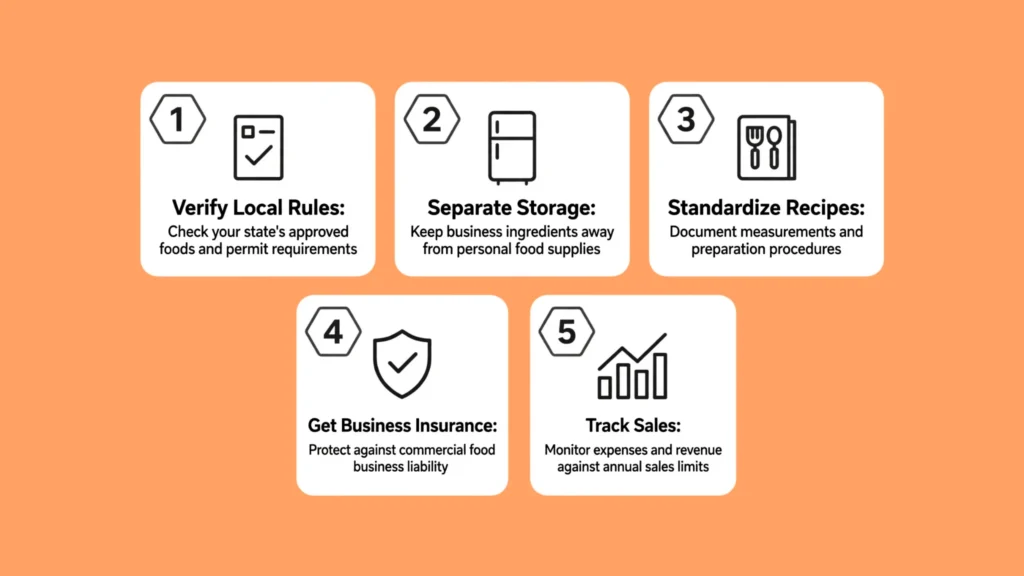
Launching a successful home kitchen requires smart business habits alongside great cooking skills. By using clear operational steps early, you protect your buyers and strengthen your brand.
Check Local Rules First: Before buying tools or ingredients, talk with your state agriculture department to review their allowed foods list.
Separate Storage Spaces: Keep business ingredients on designated pantry shelves so you avoid mixing them with personal groceries.
Standardize Your Recipes: Use exact metric measurements and written steps so every batch stays safe and tastes great.
Buy Business Insurance: Home policies usually ignore commercial work, so getting specialized home business insurance protects your personal savings.
Track Your Sales Numbers: Record all ingredient bills and sales receipts carefully so you stay under your state sales cap and prepare for tax season.
Common Mistakes to Avoid
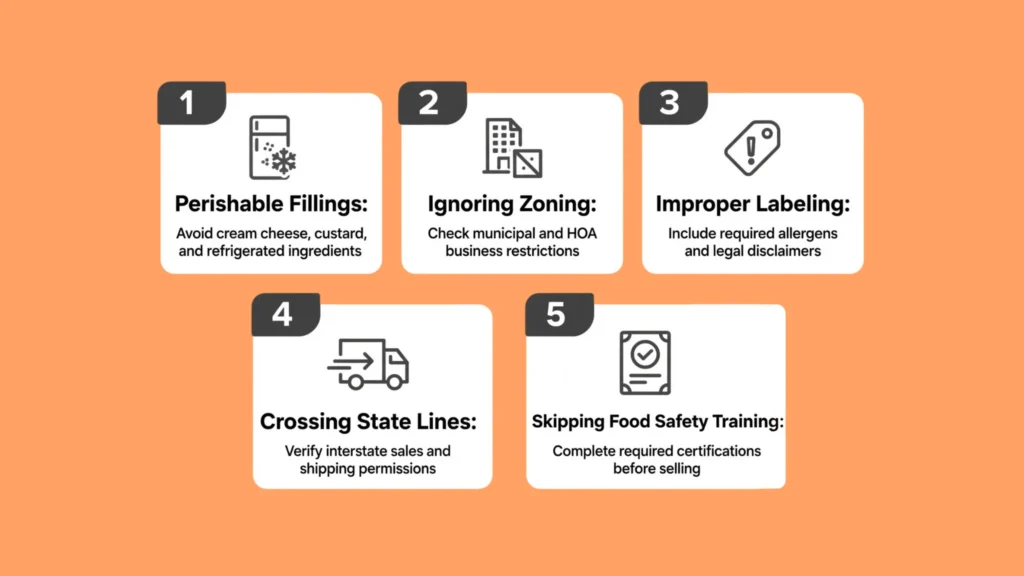
Using Perishable Fillings: Adding fresh cream or custard to a simple cake makes the item illegal under home rules.
Ignoring Local Zoning: Even if state laws allow home baking, local city codes or HOA rules might block extra traffic and home signs.
Skipping Label Rules: Leaving out allergen warnings or state disclaimer lines leads to fast product recalls or lost permits.
Crossing State Lines: Sending cottage foods across state borders breaks federal rules unless specialized trade agreements cover your product.
Frequently Asked Questions
Do I need a commercial kitchen to sell baked goods from home?
No, you can legally bake allowed items at home as long as they stay safe without cold storage. However, items that require refrigeration still need a commercial space.
Can I sell homemade food online?
Most states allow online orders for local buyers, provided you deliver the food in person at markets, home pickups, or local drop-offs. Meanwhile, shipping items across state lines remains restricted.
Are pet treats covered under cottage food laws?
In most regions, cottage food rules cover human food items only. State agriculture boards regulate commercial pet treats under separate animal feed laws.
What happens if I exceed my state’s annual sales limit?
When your income passes the state limit, you must leave the cottage food setup. Therefore, you will need a commercial license and an inspected kitchen to keep selling.
Can I sell cream cheese frosting under a cottage food license?
In almost every state, cream cheese frosting remains banned because it spoils quickly without continuous cold storage. Instead, use shelf-stable sugar or shortening buttercreams for your home cakes.
Do I need food safety training to get a home kitchen food license?
Many state agencies require home cooks to complete a basic food handler course or safety manager test before approving a permit.
Final Thoughts
Cottage food laws open a clear, low-risk path for passionate cooks to start real businesses from home. By selling non-perishable baked items, dry seasonings, candies, and fruit jams, homemakers build solid brands with small starting funds. To stay safe, always check your state-allowed foods list, apply accurate product labels, follow basic safety habits, and track your income as your business grows.
About The Author