How to Start a Drywall Business With One Truck: Complete Guide

To start a drywall business with just one truck, you need basic hanging and finishing tools, a dependable truck or cargo van with a rack, contractor licensing, and commercial liability insurance. Operating as a single-vehicle solo trade contractor keeps your monthly overhead exceptionally low while allowing you to target high-margin residential repairs, basement finishes, and small commercial drywall contracts. Starting lean lets you establish cash flow quickly before scaling into multi-crew operations.
Demand for skilled drywall installation, repair, and texturing contractors remains high across both residential renovation and commercial construction sectors. Whether you plan to stay a solo operator or build a larger crew over time, this practical guide outlines every step required to build a compliant and profitable drywall company from a single service vehicle.
What Is a One-Truck Drywall Business?
A one truck drywall business is a streamlined specialty contracting business centered around a single mobile unit. Instead of renting commercial warehouse space or leasing a large vehicle fleet, the business owner uses one truck or utility van to transport tools, materials, and ladders directly to job sites.
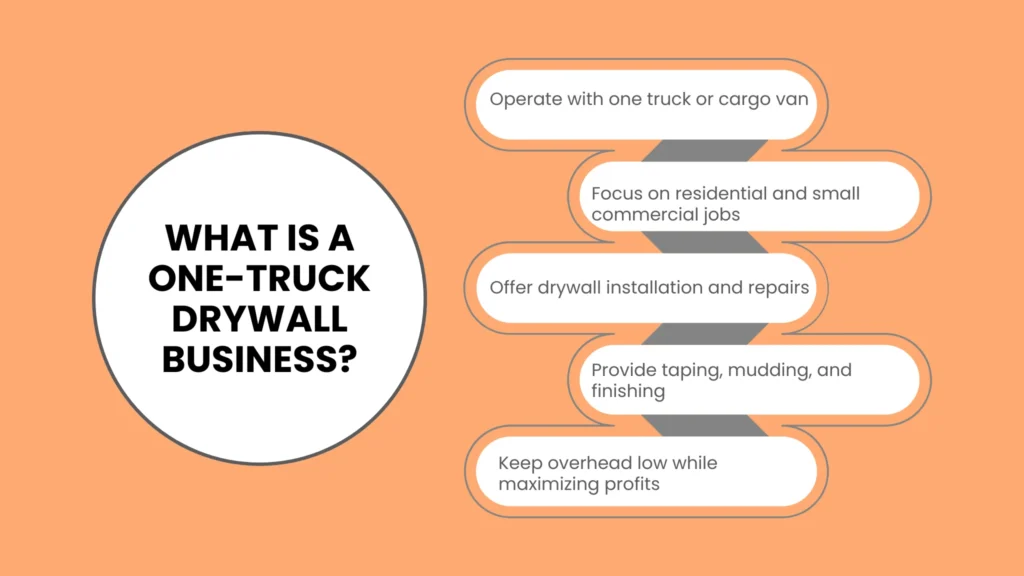
One-truck drywall contractors typically specialize in high-value, fast-turnaround services:
Residential Sheetrock Installation: Hanging drywall sheets for room additions, home remodels, and basement finishes.
Taping and Finishing (Mudding): Applying joint compound, taping seams, and sanding surfaces to achieve smooth Level 4 or Level 5 finishes.
Patching and Water Damage Repairs: Replacing damaged drywall sections caused by plumbing leaks, stress cracks, or accidental impact.
Popcorn Ceiling Removal & Texturing: Scraping outdated ceiling textures and applying fresh knock-down, orange peel, or smooth textures.
Small Commercial Subcontracting: Partnering with general contractors to handle retail build-outs or office partition walls.
Focusing on small to medium-sized projects allows a single operator to complete jobs quickly without needing large crews or massive material staging areas.
Key Drywall Business Requirements
Before taking on your first hanging or taping job, you must meet key legal and operational standards. Specific trade regulations vary by region, but core drywall business requirements remain essential across most markets.
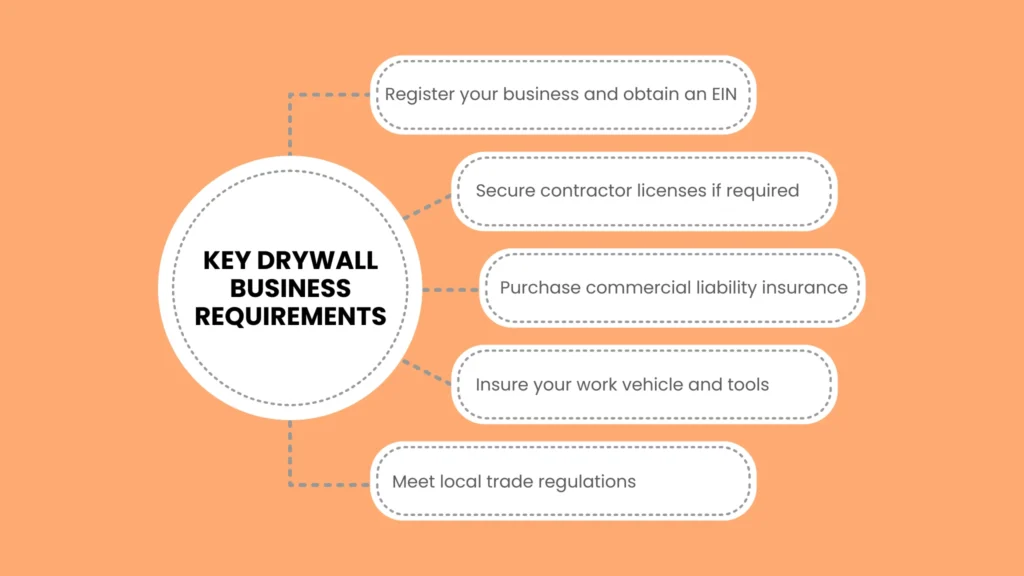
1. Business Registration & Employer Identification
Establish a formal legal entity for your trade operation. Registering as a Limited Liability Company (LLC) is ideal for specialty contractors because it isolates personal assets from job site liabilities. You will also need to obtain an Employer Identification Number (EIN) from the IRS for business banking and tax filings.
2. Trade Licensing and Contractor Registration
Many states and municipalities require specialty trade contractors to pass a licensing exam or register with the local contractor licensing board. Check your state’s requirements for drywall, insulation, or general specialty trade licenses.
3. Commercial Auto & General Liability Insurance
Working on construction sites carries physical risks. Standard personal auto insurance will not cover accidents that occur while transporting tools or materials for commercial use. Secure:
General Liability Insurance: Protects against accidental property damage or third-party injuries (minimum $1,000,000 policy recommended).
Commercial Auto Insurance: Covers your service truck, material racks, and hauled equipment.
Tools and Equipment Floater: Protects specialized power tools, stilts, and lifts against theft or damage.
Drywall Business Cost Breakdown
Launching a trade business requires minimal upfront capital compared to heavy excavation or land clearing businesses. Your primary drywall business cost involves outfitting your truck, purchasing hand and power tools, and covering legal setup fees.
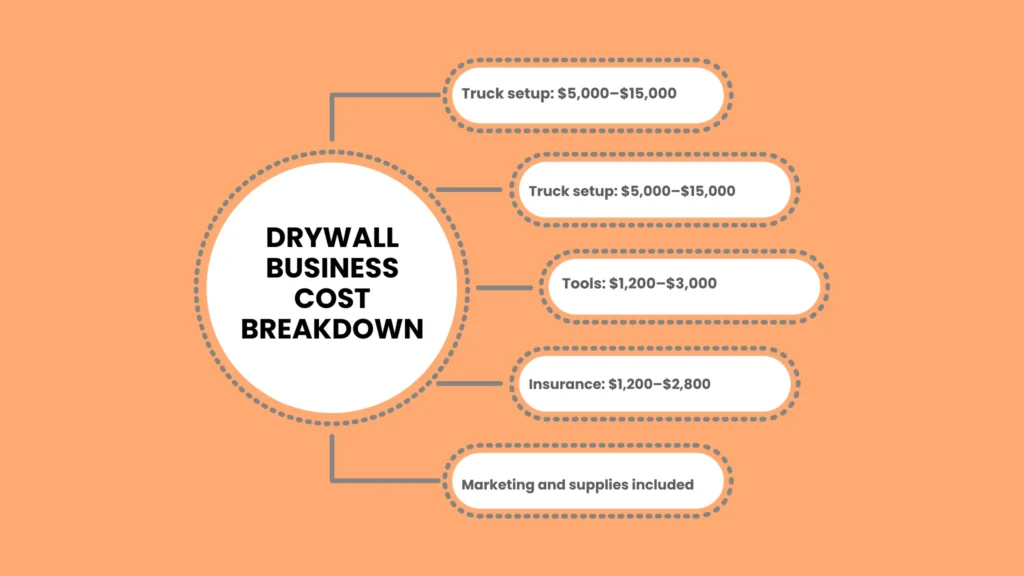
Based on available market data, the table below breaks down estimated setup and ongoing operational costs for a one-truck drywall contractor:
| Expense Category | Startup Cost Range (Estimated) | Ongoing Monthly Cost (Estimated) | Notes & Details |
| Service Truck / Van Setup | $5,000 – $15,000 | $350 – $700 | Reliable pre-owned pickup/van with ladder rack |
| Hand & Power Tools | $1,200 – $3,000 | $100 – $250 | Screw guns, drywall lifts, trowels, stilts, sanders |
| Business Registration & Licensing | $300 – $1,000 | $0 (Annual renewals) | LLC registration, contractor license, bond fees |
| Commercial Insurance & Bond | $1,200 – $2,800 | $120 – $260 | General liability, commercial auto, and trade bond |
| Initial Safety Gear & Supplies | $300 – $600 | $150 – $300 | Respirators, dust containment, joint tape, compound |
| Marketing & Digital Presence | $250 – $1,000 | $50 – $150 | Logo, business cards, site hosting, local listings |
| Estimated Totals | $8,250 – $23,400 | $770 – $1,660 | Varies by vehicle ownership and existing tool inventory |
If you already own a reliable pickup truck or cargo van, initial capital requirements drop significantly, allowing you to launch for under $5,000.
Profit Margins: Is a Drywall Business Profitable?
When evaluating skilled trade opportunities, prospective contractors frequently ask: is drywall business profitable when operating with just one vehicle?
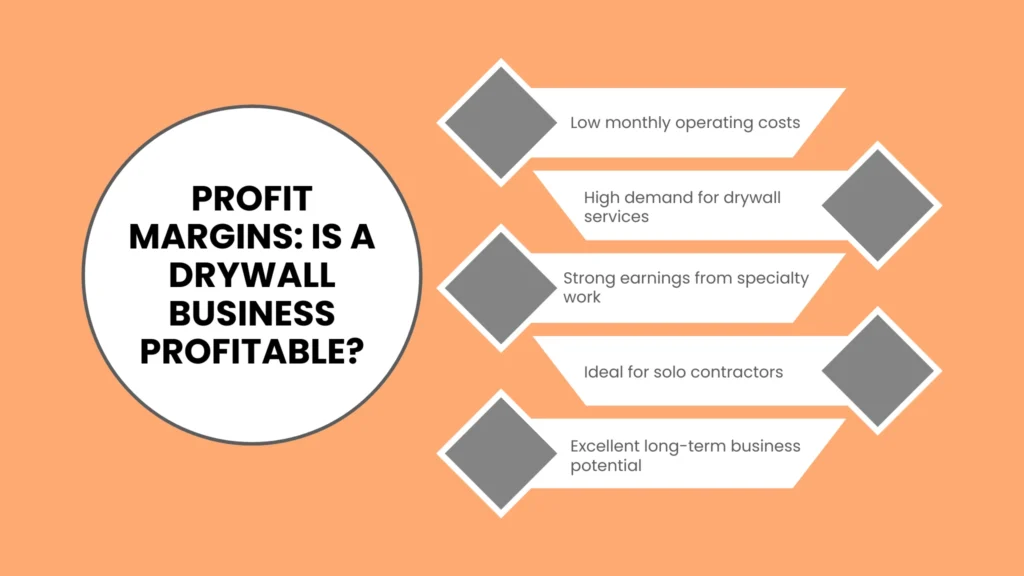
Yes, operating a solo or small-crew drywall service can be exceptionally lucrative. Because overhead is tied almost entirely to fuel, consumable supplies, and tool maintenance, a high percentage of project revenue stays in the business.
Analyzing Your Drywall Business Profit Margin
A well-managed one-truck operation typically achieves an estimated drywall business profit margin ranging between 35% and 55% after covering job materials, fuel, insurance, and wear-and-tear costs.
Consider this estimated monthly earnings scenario for a solo contractor:
Completed Projects: 4 small-to-medium drywall projects per month (e.g., basement remodels, room additions, or repair contracts)
Average Project Contract Value: $3,200
Gross Monthly Revenue: $12,800
Job Materials (Drywall sheets, mud, tape, screws): $2,800
Operating Overhead (Fuel, Insurance, Tool Upkeep, Software): $1,200
Estimated Net Monthly Earnings: $8,800 (Net Profit Margin ~68% before owner taxes and wages)
By offering specialized services such as dustless sanding or decorative ceiling texturing, you can command higher square-foot pricing while maintaining lean operations.
Step-by-Step Blueprint to Launch Your One-Truck Business
Starting your trade business requires systematic planning to move smoothly from initial setup to your first job site.
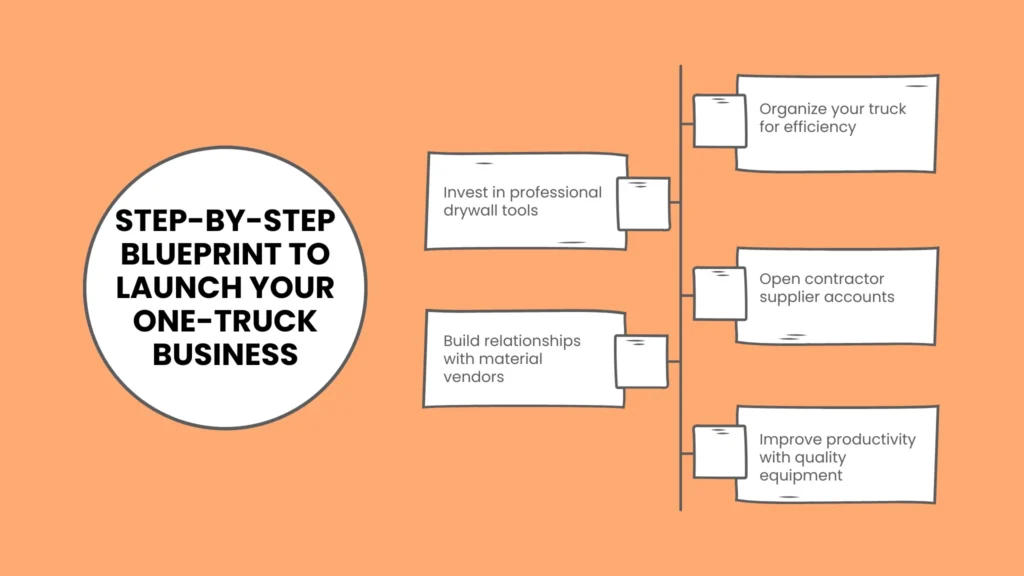
Step 1: Outfit Your Truck Efficiently
Your vehicle is your mobile shop. Install a heavy-duty ladder rack capable of carrying 4×8 or 4×12 foot sheetrock panels safely. Organize interior van shelves or truck toolboxes so joint compounds, taping knives, drywall screws, and dust containment sheets remain clean, dry, and easily accessible.
Step 2: Acquire Professional-Grade Tools
High-quality tools increase job speed and finishing precision. Invest in:
Auto-feed drywall screw guns and cordless cut-out tools.
Ergonomic taping knives, mud pans, hawks, and corner trowels.
Aluminum drywall stilts and adjustable work platforms.
Dustless drywall sanders connected to HEPA vacuum systems to keep customer homes clean.
Panel lifts for ceiling installation work.
Step 3: Establish Trade Supplier Credit Accounts
Open commercial accounts with local building supply yards and drywall distributors. Supply houses offer contractor volume discounts, delivery services directly to job sites, and flexible payment terms that improve cash flow management.
Marketing Strategies for One-Truck Contractors
To keep your project calendar full, combine direct trade networking with local digital marketing efforts.
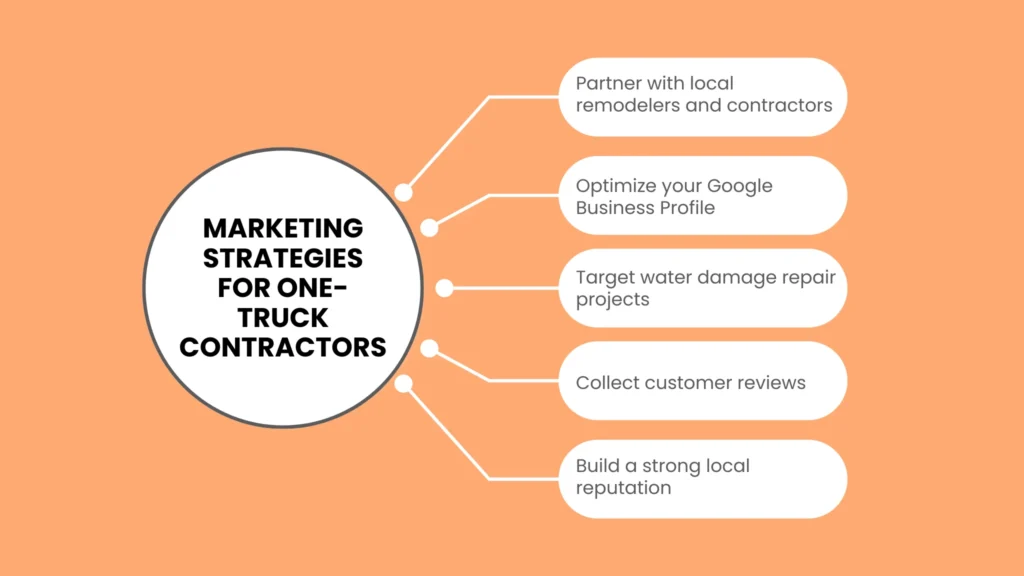
Partner with General Contractors and Remodelers: Reach out to local home renovation contractors, plumbers, and electricians who regularly need drywall repairs following their trade work.
Build a Strong Local Search Footprint: Set up and verify your Google Business Profile. Encourage satisfied homeowners to post reviews highlighting your punctuality, clean work sites, and smooth finishing.
Market Water Damage Repair Services: Connect with local water restoration companies that dry out damaged properties but subcontract out sheetrock replacement and finishing work.
Conclusion
When you start a drywall business with one truck, you leverage a valuable trade skill into a flexible, low-overhead enterprise. By securing proper contractor licenses, outfitting your vehicle efficiently, maintaining lean expenses, and building relationships with local general contractors, you create a sustainable foundation for ongoing trade growth.
As you launch your contractor brand, having a clean, professional online presence helps build credibility with local property owners and commercial builders. For expert web development, digital branding, and online marketing tailored to growing trade contractors, visit reliablestartup to build a high-converting website for your business.
Frequently Asked Questions
What size truck or van is best for a drywall business?
A full-size 1/2-ton or 3/4-ton pickup truck equipped with an overhead rack, or a high-roof cargo van, is ideal. Your vehicle must safely transport 12-foot drywall panels, ladders, joint compound buckets, and dust control gear.
Can one person hang drywall alone?
Yes, a single operator can hang drywall by using a mechanical drywall panel lift for ceilings and upper walls. However, for large commercial jobs or whole-house projects, hiring a temporary helper speeds up production significantly.
How do drywall contractors price their jobs?
Drywall installation is typically priced per square foot of drywall installed, per sheet, or as a flat project fee for repair work. Pricing must factor in hanging, taping, sanding, material costs, and site prep/cleanup labor.
How can I make my one-truck business stand out from competitors?
Differentiate your service by offering dustless sanding, maintaining exceptionally clean job sites with protective floor plastic, arriving punctually, and delivering flawless Level 5 finishes.