How to Get Commercial Cleaning Contracts with Offices
Key Takeaways
Direct outreach to property managers yields the fastest results
Accurate walkthrough measurements prevent underbidding traps
Proof of insurance builds instant commercial trust
Strategic pricing beats race-to-the-bottom rates
Consistent follow-ups close most office contracts
Want to land stable, recurring revenue for your business? Learning how to get commercial cleaning contracts with office buildings is one of the smartest ways to scale. Unlike residential jobs where clients might cancel on a whim, commercial clients stick around for years when you do great work.
If you are wondering where to even start, don’t worry. You don’t need a huge team or a massive marketing budget to secure your first few office cleaning contracts. In this guide, we will break down the exact steps to locate prospective clients, pitch with confidence, and nail your proposals every single time.
Learning how to get commercial cleaning contracts comes down to targeted local prospecting, professional property walkthroughs, and transparent bidding. Office managers look for reliability, proper liability insurance, and fair pricing above all else. By building local relationships and mastering janitorial bidding tips, cleaning business owners can secure consistent monthly contracts with local commercial properties.
Why Target Office Buildings for Cleaning Contracts?
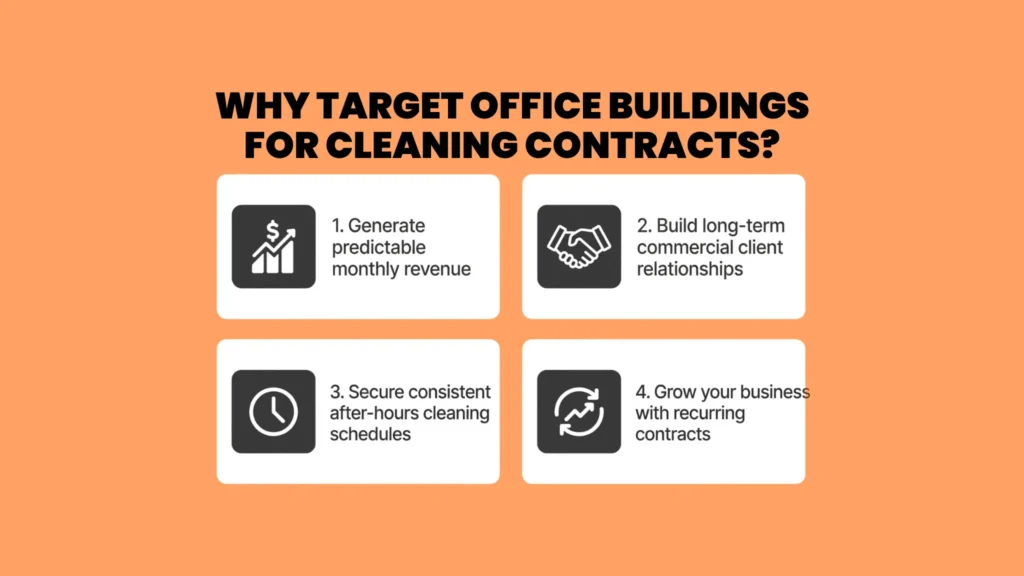
Office buildings offer predictable revenue and regular working hours. Most office teams want cleaning done after business hours, which gives you clear, uninterrupted access to the space. Offering commercial office cleaning services can help you secure recurring contracts and build a reliable cleaning business.
| Feature | Commercial Office Contracts | Residential Cleaning Jobs |
| Income Predictability | High (Fixed monthly retainer) | Variable (Pay per job) |
| Cancellation Rate | Low (Generally multi-month) | Higher (Subject to schedule) |
| Work Schedule | Consistent (After-hours) | Daytime flexibility required |
| Average Contract Value | High ($1,000 – $10,000+/mo) | Moderate ($150 – $300/visit) |
When you target commercial cleaning clients, you are building predictable income that keeps your schedule full month after month.
Step 1: Find Commercial Cleaning Clients
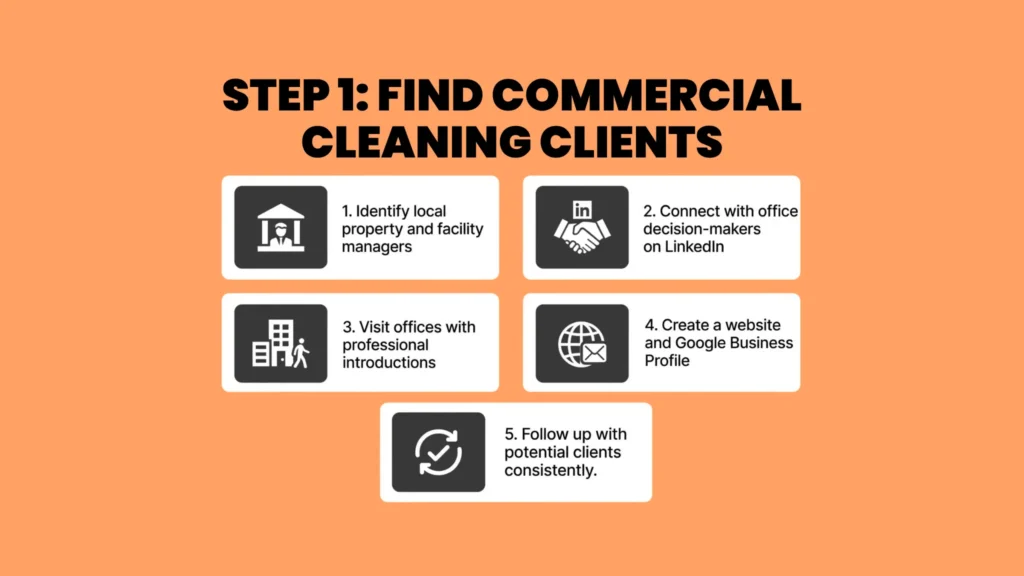
Finding office managers who need cleaning services is easier than you think. You don’t need expensive leads to start filling your pipeline.
Identify Local Decision Makers
Look for facility managers, property managers, and office supervisors on LinkedIn or local business directories. Property management companies are especially valuable because a single manager often handles multiple commercial buildings. Learning how to secure commercial cleaning clients can help you connect with decision-makers and build long-term business relationships.
Cold Calling and Direct Visits
Dropping by small to mid-sized commercial offices with a clean business card and a brief introduction works remarkably well. Keep it simple and friendly. Ask who handles building maintenance and leave your contact details.
Build Digital Presence
At Reliablestartup, we always recommend setting up a basic website and a Google Business Profile right away. When local office managers look for nearby janitorial services, your business needs to show up in search results.
Step 2: Master the Client Walkthrough
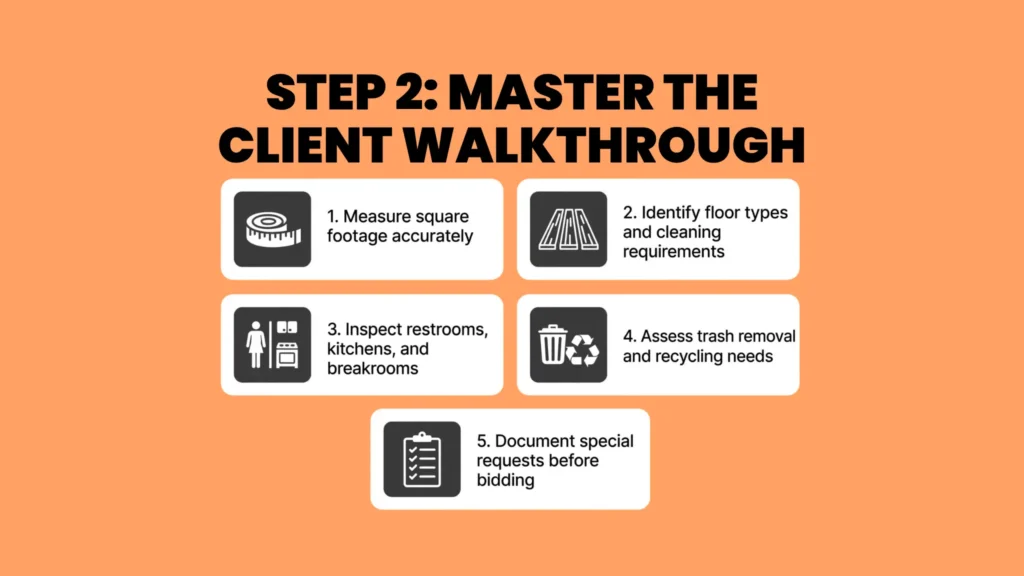
Once an office manager shows interest, they will invite you for a building walkthrough. This is your chance to evaluate the space and build personal rapport.
Total square footage and floor types (carpet, tile, hardwood)
Number of restrooms and fixtures
Kitchens, breakrooms, and high-traffic areas
Trash removal volume and recycling needs
Desks, glass doors, and special requests
Take detailed notes and measure square footage accurately. Asking thoughtful questions during the walk shows prospective commercial cleaning clients that you take pride in thoroughness.
Step 3: Price Office Cleaning Contracts
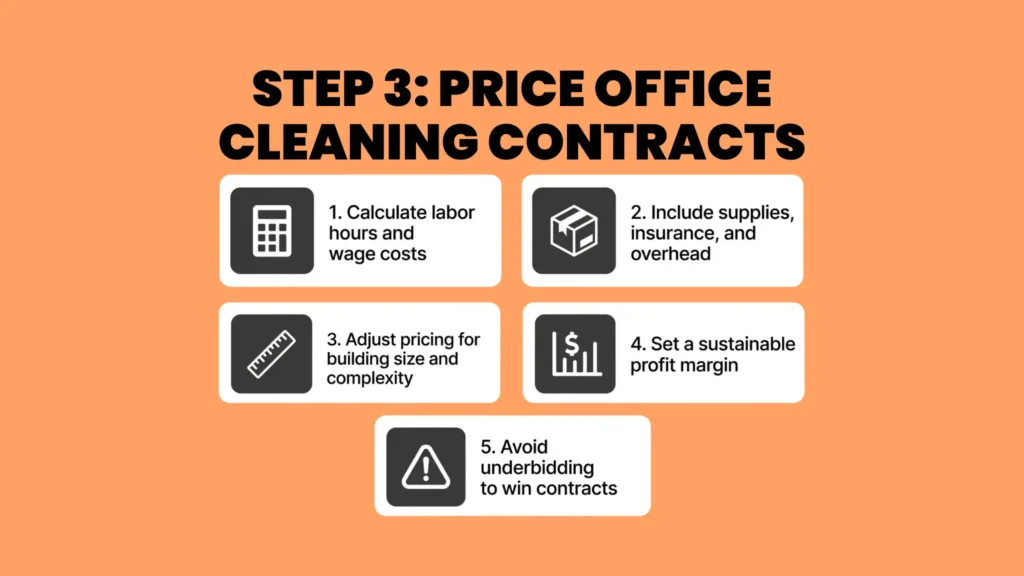
Pricing your proposal correctly is critical. Bidding too high loses you the contract, while bidding too low eats your profits.
| Cost Component | Calculation Method | Standard Industry Margin |
| Labor Costs | Hours required x Hourly rate | Baseline direct cost |
| Cleaning Supplies | 3% – 7% of total job estimate | Direct expense line |
| Overhead & Insurance | 10% – 15% of job total | Fixed business cost |
| Profit Margin | 20% – 30% added on top | Business growth margin |
Apply Essential Janitorial Bidding Tips
Calculate how many production hours the job requires based on the building’s square footage. For standard offices, a single cleaner generally covers 2,500 to 4,000 square feet per hour, depending on complexity. Multiply the total estimated hours by your target hourly rate, add supply costs, and include your profit margin. Using structured tools and templates from Reliablestartup for cleaning job cost estimation can simplify job calculations and help you draft accurate bids quickly.
Step 4: Win Office Cleaning Contracts
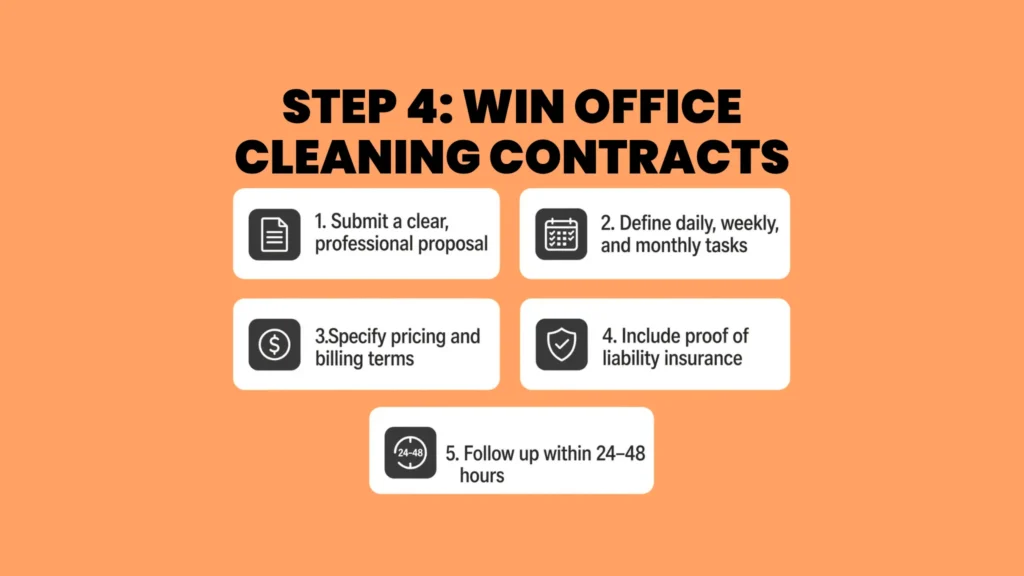
Your contract proposal should look polished, clear, and professional. Avoid lengthy jargon and lay out exact scopes of work so there is zero confusion.
Scope of Work: Detail daily, weekly, and monthly cleaning tasks.
Pricing Structure: Show clear monthly rates and billing terms.
Insurance Proof: Attach your general liability insurance certificate.
Quality Guarantee: Explain how you handle missed spots or feedback.
Following up within 24 to 48 hours after sending your proposal keeps momentum high. Many office cleaning contracts are won simply by being the most responsive bidder.
Step 5: Deliver Quality and Retain Clients
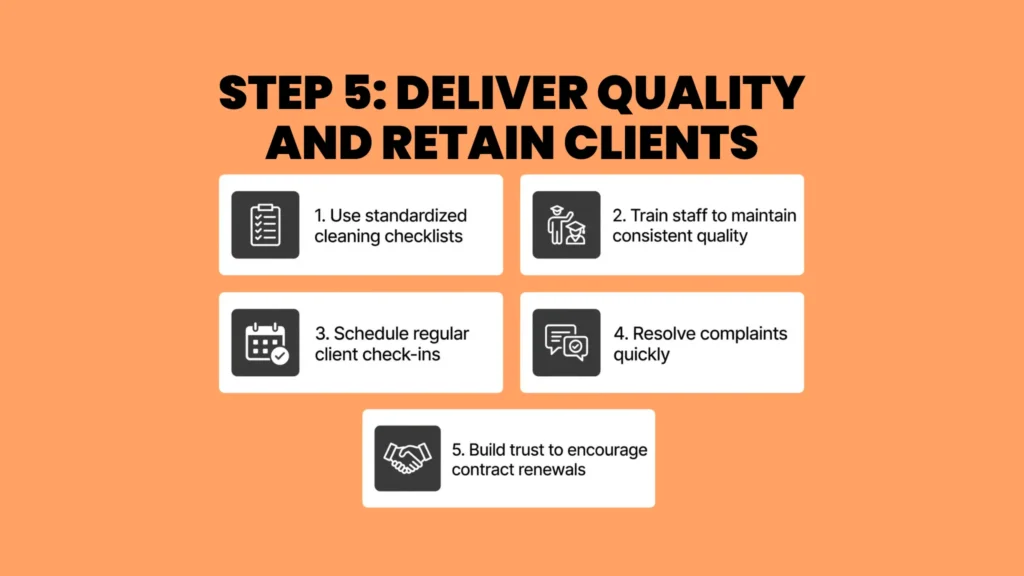
Winning the bid is only half the battle. Keeping office cleaning contracts long-term requires consistent quality control.
Establish Regular Check-Ins
Schedule monthly calls or quick walk-throughs with the facility manager. Asking for feedback early prevents minor complaints from turning into contract cancellations.
Train Your Crew with Standardized Worksheets
Equip your cleaning team with detailed checklists tailored to each office layout. When cleaning teams follow standard procedures, quality stays high even as your staff grows. At reliablestartup.com, maintaining strong client communication is consistently highlighted as the primary factor in retaining long-term commercial cleaning clients.
Conclusion
Learning how to get commercial cleaning contracts is about consistent outreach, accurate bidding, and dependable service. By targeting local office managers, conducting thorough walkthroughs, applying practical janitorial bidding tips, and delivering top-tier cleaning, you can build a thriving roster of long-term commercial cleaning clients. Start reaching out to local businesses today to grow your commercial pipeline!
Frequently Asked Questions
How do I land my first commercial cleaning contract?
Reach out directly to local property managers and small office supervisors with a clear business card and introduction. Follow up quickly after conducting a professional walkthrough to present your competitive pricing bid.
What is the average price for office cleaning contracts?
Commercial cleaning generally costs between $0.08 and $0.25 per square foot per month depending on frequency. You can also calculate bids using an estimated hourly rate of $30 to $50 per cleaner.
Do I need insurance before bidding on commercial contracts?
Yes, nearly all property management firms require proof of general liability insurance before accepting a bid. Carrying proper coverage protects your business and builds immediate trust with potential commercial clients.
How often should an office building be cleaned?
Most commercial offices schedule professional cleaning services anywhere from two to five nights per week. The exact frequency depends on employee headcount, total foot traffic, and specific client preferences.
What is the best way to keep commercial cleaning clients long-term?
Maintain consistent service quality by training your crew with standardized daily cleaning checklists for every building. Schedule brief monthly check-ins with facility managers to address minor feedback before it becomes an issue.