How to Start a Dessert Business From Your Home Kitchen
Turning your passion for baking into a profitable enterprise is one of the most accessible paths to small business ownership. With growing demand for custom treats, micro-bakery items, and specialized dietary options, learning how to start a dessert business from home allows you to build a brand with minimal overhead.
If you are eager to start a dessert business from home, this step-by-step guide walks you through every stage of launching a legal and profitable operation. Succeeding with a home bakery requires understanding cottage food laws, managing ingredient costs, setting profitable prices, and establishing a local customer base. When executed with clean systems and consistent marketing, a home kitchen enterprise can achieve strong profit margins while serving sweet creations to your community.
Below is an extensive home based dessert business guide detailing setup costs, legal requirements, profit expectations, and practical operational steps.
What Is a Home-Based Dessert Business?
A home-based dessert business involves preparing, packaging, and selling sweet goods such as custom cookies, cakes, brownies, pastries, or candies—directly from your residential kitchen. Rather than renting expensive commercial space or managing physical storefront overhead, home bakers leverage existing appliances to produce small-batch treats.
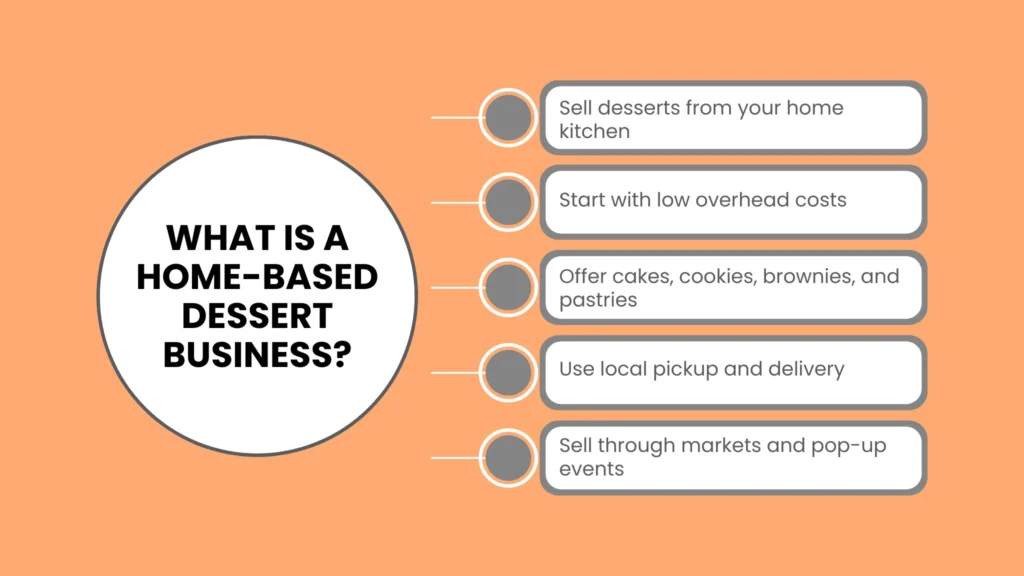
Most home dessert creators operate under regional “cottage food laws”. These state and municipal regulations allow individuals to bake and sell non-perishable baked goods safely without needing a full commercial facility license. Orders are typically fulfilled through direct customer pickups, local farmers’ markets, pop-up events, or localized drop-off deliveries.
Is Dessert Business From Home Profitable?
Before buying specialized baking pans and bulk ingredients, every entrepreneur asks: is dessert business from home profitable? The answer is yes; home-based baking often delivers higher profit margins than traditional brick-and-mortar bakeries because your fixed overhead expenses remain low.
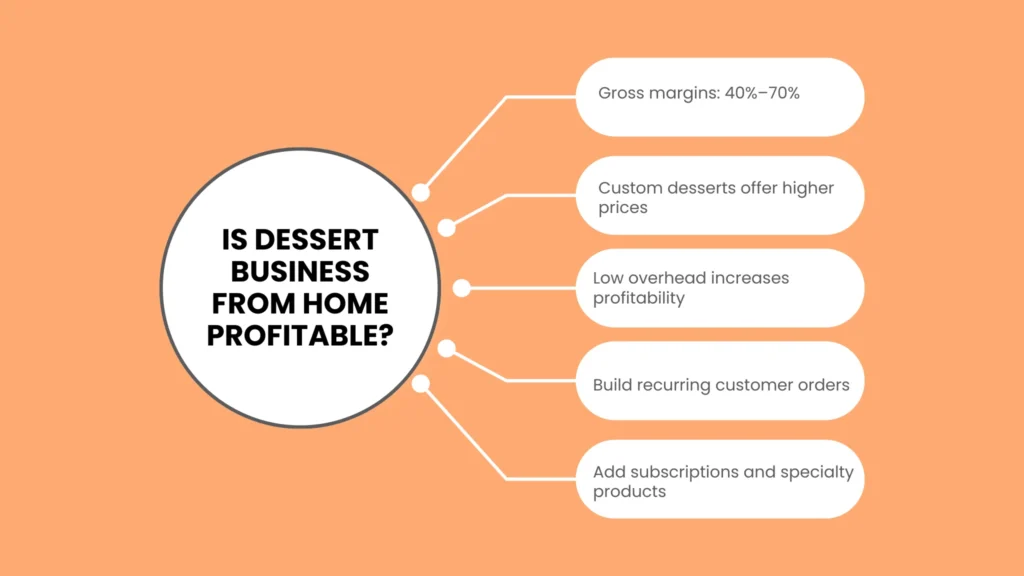
Because you are not paying commercial rent, utility surcharges, or a large storefront staff, a significant portion of your sales goes straight toward covering ingredient costs and paying yourself for labor. Specialty desserts such as custom royal-icing sugar cookies, multi-tiered celebration cakes, and gluten-free pastries—command high retail prices relative to their raw material costs.
When evaluating is dessert business from home profitable, look closely at the numbers. An established operator maintaining controlled material costs can achieve an average dessert business from home profit margin ranging from 40% to 70% on gross menu prices.
Core Income Categories
Custom Celebration Orders: Premium cakes, themed cupcakes, and detailed sugar cookies for birthdays, weddings, and baby showers.
Farmers’ Markets & Pop-Up Events: Cash-and-carry sales of high-margin items like gourmet brownies, cookies, sourdough pastries, and specialty breads.
Corporate & Local Wholesale: Supplying local coffee shops, boutiques, or corporate meetings with weekly sweet treats under permissible regional distribution laws.
Subscription Dessert Boxes: Weekly or monthly specialty menu drops offered to repeat neighborhood subscribers.
Dessert Business From Home Cost Breakdown
Understanding your total dessert business from home cost allows you to budget effectively and avoid running out of capital. Luckily, starting from your residential kitchen requires far less upfront cash than traditional retail setups.
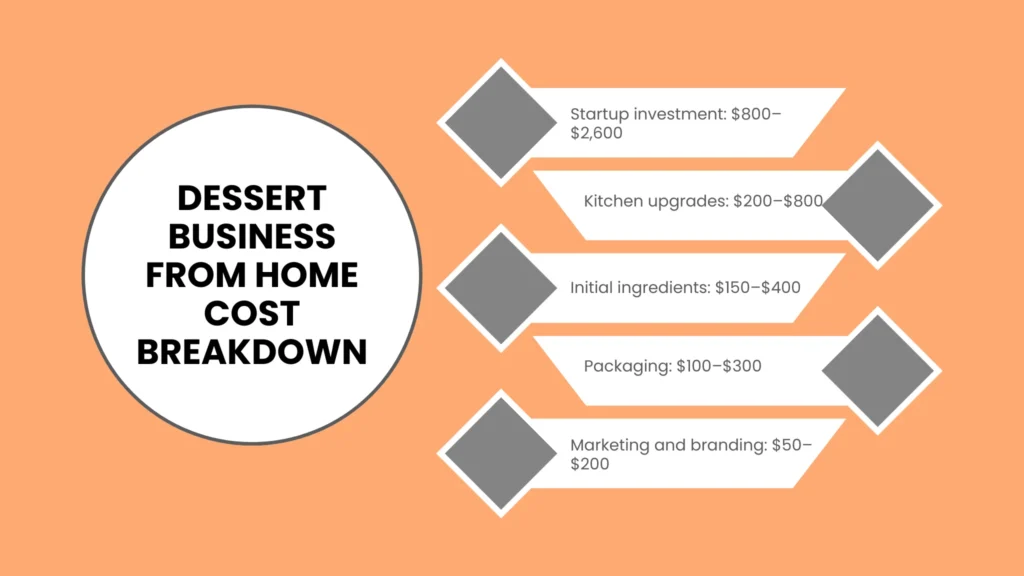
Based on available industry data, most home dessert entrepreneurs launch for an initial investment ranging between $500 and $2,500, assuming they already own a functional home oven and refrigerator.
Estimated Startup Capital Breakdown
| Expense Category | Estimated Cost Range | Key Details and Components |
| Permits & Food Safety Certification | $50 – $250 | Food handler permit, business license, local cottage food registration. |
| Business Entity & Registration | $50 – $200 | LLC filing fees or DBA registration to protect personal liability. |
| Commercial Kitchenware Upgrades | $200 – $800 | Heavy-duty stand mixer, high-grade sheet pans, cooling racks, digital scales. |
| Initial Ingredients Stock | $150 – $400 | Bulk flour, high-fat butter, specialty extracts, chocolates, food colorings. |
| Packaging & Labeling Supplies | $100 – $300 | Custom bakery boxes, greaseproof liners, ribbon, ingredient labels. |
| General Liability Insurance | $200 – $450 | Annual food business liability policy to protect against claims. |
| Branding & Local Marketing | $50 – $200 | Logo design, business cards, domain name, sample boxes. |
| Total Estimated Startup Investment | $800 – $2,600 | Total initial budget needed to launch legally and safely. |
Ongoing operational costs will focus primarily on food ingredients, decorative packaging, utility electricity/gas usage, and routine marketing activities.
Important Dessert Business From Home Requirements
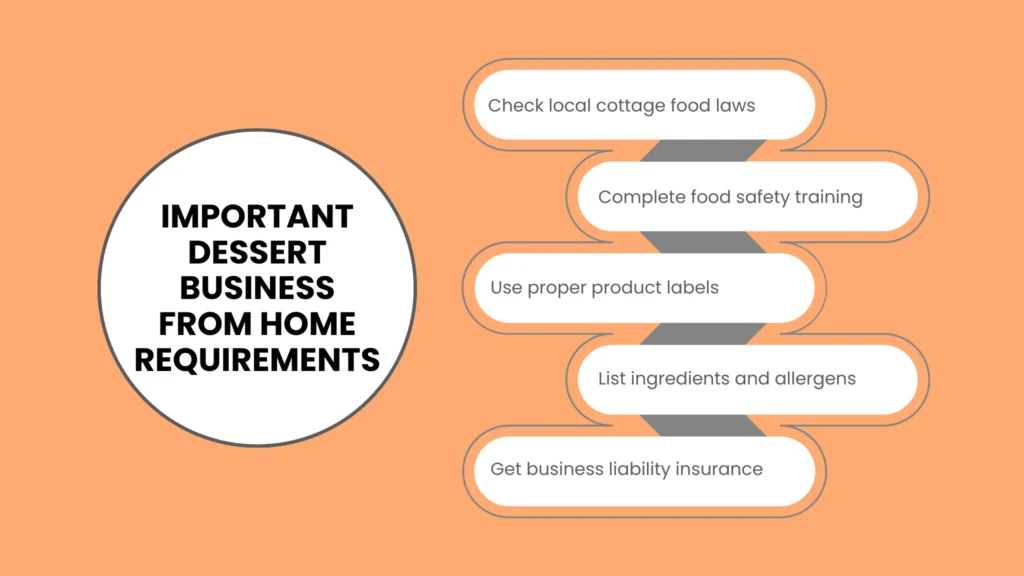
Before taking menu orders, you must satisfy essential administrative, safety, and operational standards. Meeting these dessert business from home requirements keeps your business fully compliant with public health regulations.
1. Cottage Food Law Compliance
Cottage food laws dictate what items you can legally sell from a residential kitchen.
Allowed Items: Most states allow shelf-stable, non-potentially hazardous desserts such as cookies, fruit pies, breads, dry-stored frosted cakes, and candies.
Restricted Items: Desserts requiring strict refrigeration—such as cheesecakes, cream-filled pastries, or real custard fillings—often require a commercial kitchen license or specific temperature testing.
Revenue Caps: Many states limit annual home-bakery sales (for example, between $25,000 and $75,000 annually), though several regions have no cap at all.
2. Food Handler Certification
Most local health departments require home bakers to complete an accredited Food Handler safety course. These short online programs cover cross-contamination prevention, foodborne pathogen control, proper handwashing standards, and safe storage practices.
3. Clear Product Labeling
Cottage food rules require proper product labeling on every package. Your labels must usually display:
Your business name and physical home address (or registration permit number).
The common name of the dessert.
A complete ingredient list arranged in descending order by weight.
Clear major allergen disclaimers (wheat, eggs, milk, soy, peanuts, tree nuts).
The required state disclaimer (for example: “Made in a home kitchen not subject to public health inspection”).
4. Business Insurance Coverage
Standard homeowner or renter insurance policies rarely cover business-related claims. Securing a dedicated home-bakery liability insurance policy protects your personal assets if a customer experiences an allergic reaction or foodborne illness.
How to Launch Your Home Dessert Business Step by Step
Launching an organized home kitchen business requires clear execution. Follow this step-by-step framework to launch smooth, compliant, and profitable operations.
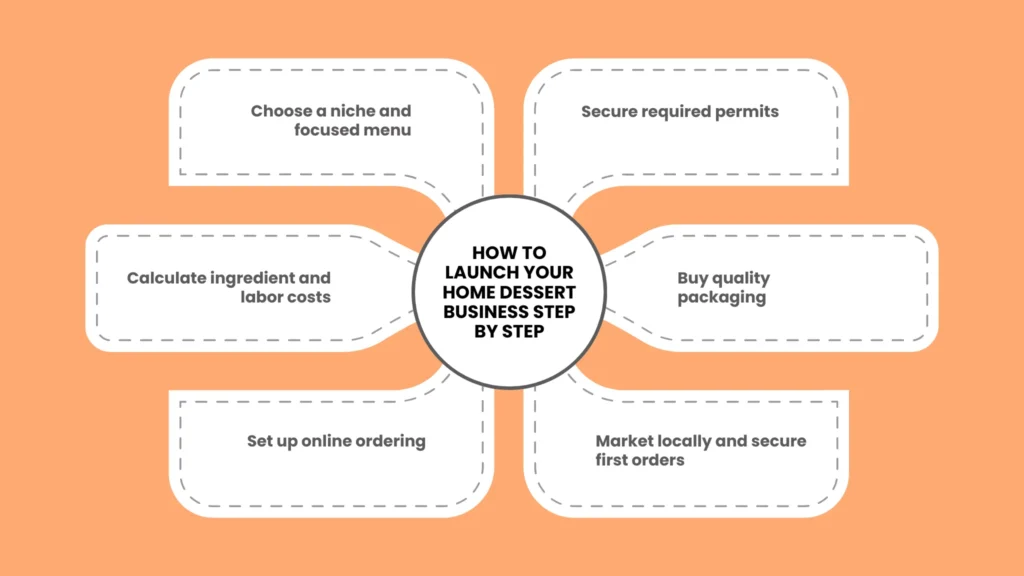
Step 1: Define Your Niche and Signature Menu
Avoid trying to bake everything. Focusing on a specific niche allows you to streamline ingredient purchasing, build specialized decorating skills, and stand out in your market. Consider niches like:
Intricate custom sugar cookies for special occasions.
Gourmet stuffed cookies and thick-cut brownies.
Gluten-free, vegan, or allergy-friendly baked goods.
Artisanal macarons or French-style pastries.
Limit your initial menu to 3 to 5 core products so you can master batch production and keep ingredient waste low.
Step 2: Fulfill Legal and Safety Filings
Check with your state Department of Agriculture or local county health department to verify cottage food rules in your area. Complete your food handler certification, register your business name (DBA or LLC), and apply for any required local cottage food permits.
Step 3: Calculate Your Ingredient Costs and Prices
Underpricing is the most common reason home bakeries fail. Calculate the exact cost of every ingredient and packaging material down to the penny.
A standard home baking pricing formula looks like this:
Ensure your menu prices cover your time, utility usage, and profit expectations—not just the cost of butter and flour.
Step 4: Secure Quality Packaging
Your packaging represents your brand image before the customer takes their first bite. Invest in sturdy, food-safe boxes, clear window bags, greaseproof liners, and custom brand stickers. Well-packaged treats arrive safely and look professional on social media.
Step 5: Establish Online Ordering and Payment Methods
Make ordering easy for customers. Set up simple digital order forms through tools like Google Forms, Square, or Shopify. Avoid taking complex custom orders over unstructured messaging apps. Require advance deposits (often 50% to 100%) for custom orders to protect against last-minute cancellations.
Step 6: Market Your Business Locally
Your best early customers are nearby neighbors, family friends, local co-workers, and community members.
Social Media: Share high-quality photos and video clips of your baking process, cake decor, and finished menu drops.
Sampling: Distribute sample boxes to local businesses, hair salons, or real estate agents to encourage word-of-mouth referrals.
Community Markets: Apply for booths at weekend farmers’ markets or seasonal pop-up fairs to build brand awareness.
Common Challenges and Solutions
Operating out of a home kitchen brings distinct practical challenges that require proactive solutions:
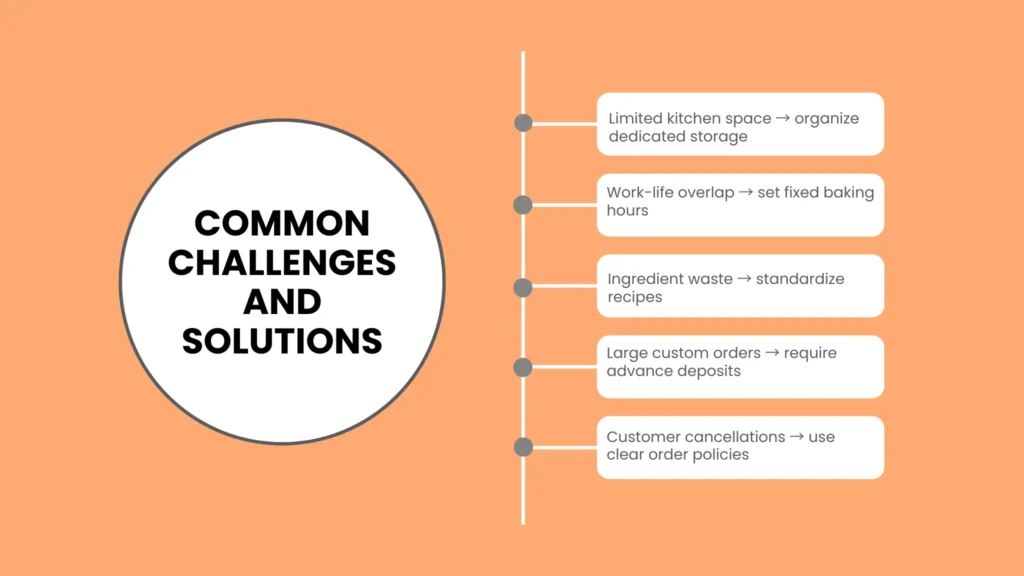
Limited Kitchen Space and Storage: Residential kitchens can clutter quickly during large orders.
Solution: Store non-perishable ingredients in dedicated plastic bins, practice strict clean-as-you-go habits, and schedule production in organized batches.Separating Business from Personal Life: Working from home makes it easy to bake at all hours.
Solution: Establish strict baking hours, set clear customer pick-up windows, and stick to your routine.Managing Ingredient Waste: Unused perishable ingredients quickly eat into profits.
Solution: Standardize your menu recipes so overlapping ingredients (like vanilla, butter, sugar, and eggs) are shared across multiple offerings.
Final Thoughts: Building Your Home Bakery
Learning how to start a dessert business from home offers a rewarding blend of creative freedom and flexible entrepreneurship. By leveraging cottage food laws, choosing a distinct menu niche, managing ingredient expenses, and pricing your work for real profit, you can build a thriving home kitchen brand.
Focus on clean presentation, deliver consistent taste, and prioritize outstanding customer service. Over time, repeat orders and word-of-mouth recommendations will help your home kitchen business grow smoothly. For complete business plan templates, pricing calculators, and home startup strategy guides, explore additional resources at reliablestartup.com.
Frequently Asked Questions
How much money can I make running a home-based dessert business?
Earnings depend on your menu pricing, production capacity, and marketing effort. Part-time home bakers often earn between $500 and $2,000 per month, while full-time dedicated home bakers with high-ticket custom offerings can generate $3,000 to $6,000+ per month.
Do I need a commercial kitchen to sell baked goods?
In most states, no. State cottage food laws permit individuals to prepare shelf-stable, non-hazardous desserts directly in residential kitchens without needing commercial equipment or dedicated commercial space.
Can I ship my home-baked desserts across state lines?
Generally, no. Most state cottage food laws restrict sales to direct, in-state transactions (such as local pickups, hand deliveries, or local event sales). Crossing state lines usually triggers federal FDA regulations that require a licensed commercial facility.
How far in advance should I take customer orders?
For custom items like celebration cakes or detailed iced cookies, require orders at least 1 to 2 weeks in advance with a non-refundable deposit. This gives you time to order specialty supplies and schedule batch production efficiently.