How to Find and Vet a Co Packer for Your Food Business
Scaling a food or beverage brand from a commercial kitchen to commercial distribution is one of the most exciting milestones for any founder. However, manufacturing at scale requires specialized equipment, regulatory compliance, quality control systems, and significant capital investment. For most growing brands, building and operating a dedicated manufacturing facility is neither practical nor financially viable.
This is where a co-packer—short for contract packer or contract manufacturer becomes an essential partner. A reliable co-packer takes your proprietary recipe, scales it to industrial production runs, packages it to safety standards, and ensures your product hits retail shelves consistently. This partnership is particularly important when you want to launch a beverage brand and expand beyond small-batch production.
Finding the right partner requires careful research, rigorous vetting, and strategic negotiations. This guide breaks down exactly how to find a co packer, vet potential partners, manage co packing minimums, and secure a protective contract manufacturing agreement.
What Is a Co-Packer?
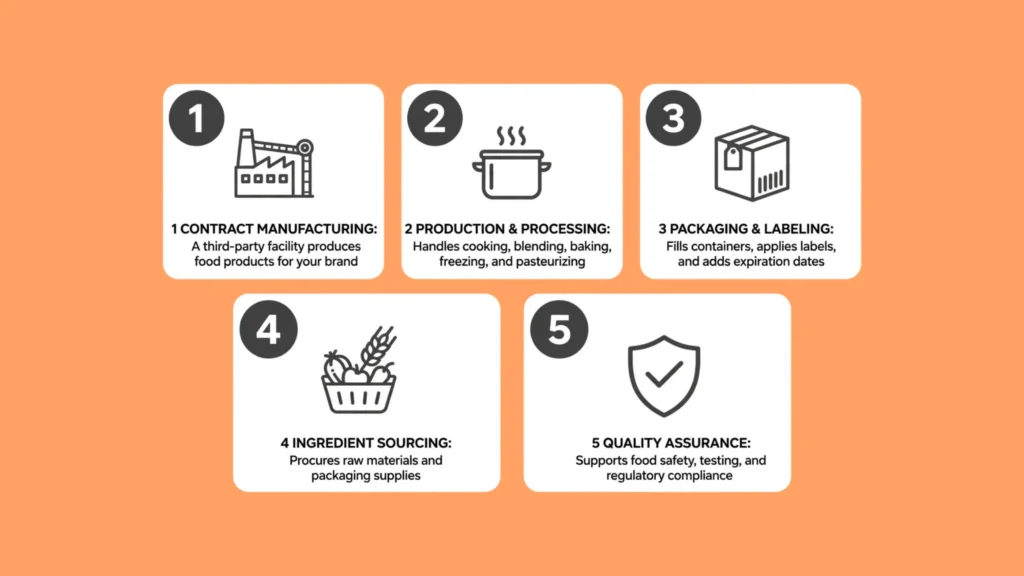
A co-packer (contract packer or contract manufacturer in the food industry) is a third-party processing plant that manufactures, packages, and labels food or beverage products according to a brand’s exact specifications.
Co-packers range from small-scale regional processors specializing in niche items (like artisanal hot sauces or organic jams) to massive industrial plants capable of churning out millions of units per month for major national brands.
Key Services Offered by Co-Packers
Production & Processing: Blending, cooking, baking, pasteurizing, freezing, or extruding raw ingredients.
Packaging & Labeling: Filling bottles, pouches, cans, or boxes, applying tamper-evident seals, and printing lot numbers and expiration dates.
Ingredient & Packaging Sourcing: Utilizing their bulk purchasing power to procure raw materials at lower rates.
Quality Assurance & Regulatory Compliance: Ensuring adherence to FDA, USDA, SQF (Safe Quality Food), or HACCP safety regulations.
Research & Development (R&D): Helping brands adapt kitchen recipes for commercial-scale machinery.
Step 1: Prepare Your Brand Before Reaching Out
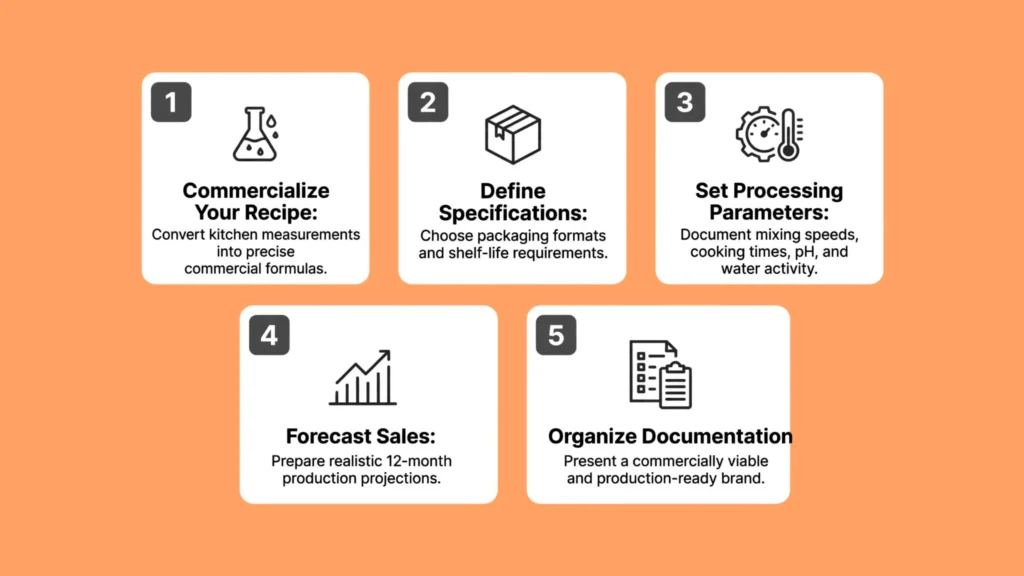
Before contacting potential manufacturing partners, you must have your product development and business operations organized. Experienced contract manufacturers receive dozens of inquiries weekly from early-stage founders; having your documentation ready proves that your brand is commercially viable.
1. Commercialize Your Recipe
A kitchen recipe using cups and teaspoons will not translate to an industrial batching system. Even entrepreneurs who start a meal prep business need standardized recipes, accurate ingredient measurements, and consistent preparation methods to maintain product quality as operations grow.
You must convert your formula into percentages by weight (a commercial formula) and establish precise processing parameters (cook times, mixing speeds, target pH, and water activity levels).
2. Define Packaging Specifications
Know your desired packaging format—such as glass jars, flexible pouches, or aluminum cans—and understand your shelf-life requirements.
3. Establish Realistic Sales Projections
Co-packers prioritize clients whose volume expectations align with their production capacities. Be prepared to share your 12-month volume forecast.
Step 2: How to Find a Co Packer
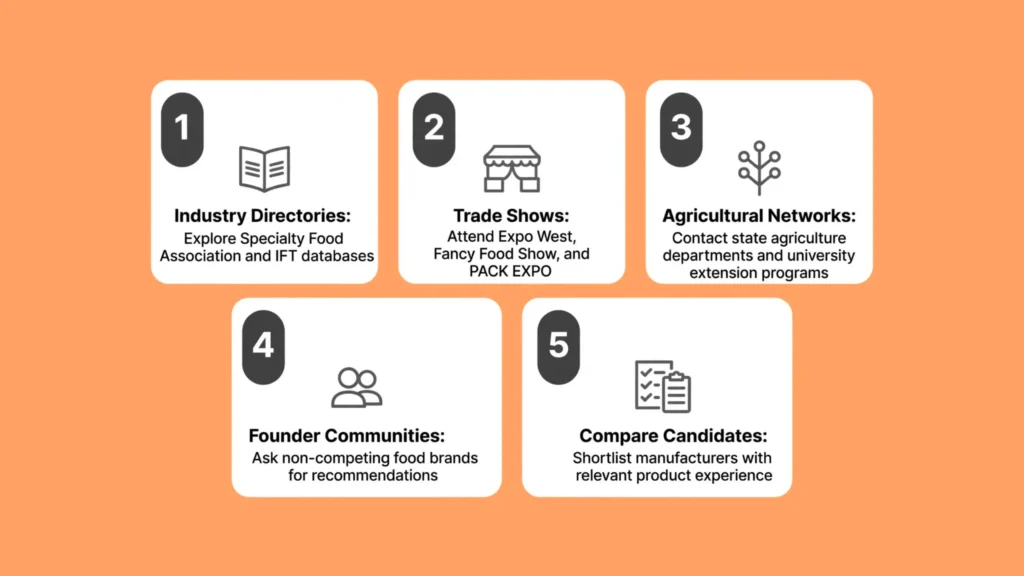
Finding qualified contract manufacturers requires targeted research across industry networks, databases, and trade events. Here are the most effective channels to locate candidates:
1. Industry Databases and Directories
Specialty Food Association (SFA): Offers searchable supplier directories featuring verified contract processors.
Institute of Food Technologists (IFT): A valuable resource for finding food scientists, co-manufacturers, and development labs.
State Department of Agriculture & University Extension Programs: Many land-grant universities (such as Cornell, UC Davis, or Purdue) maintain databases of regional food processors and pilot plants.
2. Industry Trade Shows
Attending major trade events allows you to meet contract manufacturers face-to-face and inspect samples of their work. Key events include:
Expo West / Expo East (Natural and organic products)
The Fancy Food Show (Specialty foods and gourmet products)
PACK EXPO (Processing and packaging machinery suppliers who often maintain co-packer networks)
3. Network Within the Founder Community
Reach out to non-competing food founders who produce similar product formats. For example, if you make a sparkling beverage, ask founders of non-competing functional sodas or craft teas about their co-packing partners.
Step 3: Understanding Co Packing Minimums and Costs
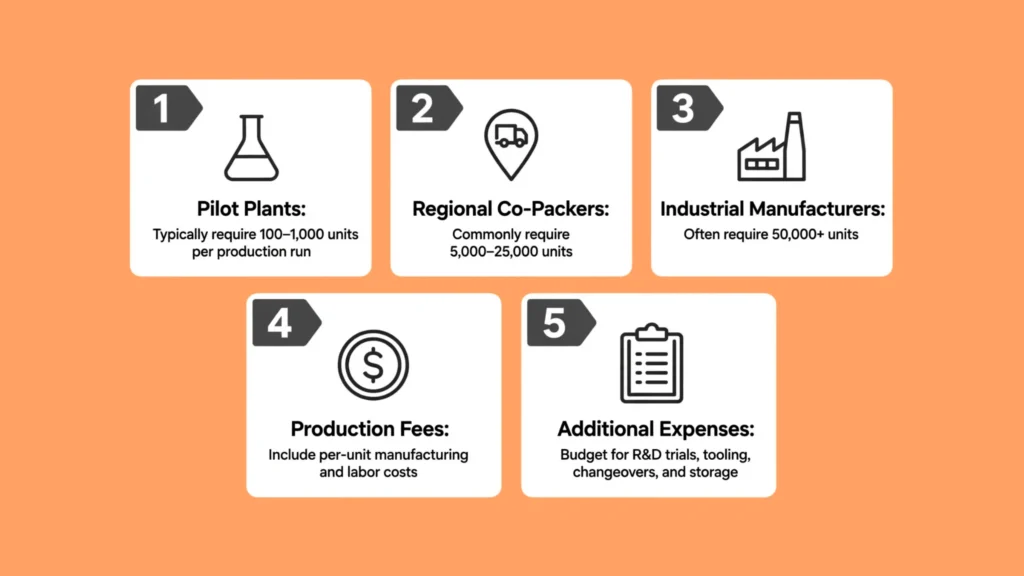
One of the most critical factors when selecting a partner is navigating co packing minimums commonly referred to as Minimum Order Quantities (MOQs).
MOQs represent the smallest volume of product a facility will manufacture in a single production run. Understanding these constraints early prevents costly mismatches.
| Facility Type | Typical MOQs | Best Suited For | Key Advantages |
| Pilot Plants & Commercial Incubators | 100 – 1,000 units | R&D runs, recipe testing, early local retail validation | Low financial risk, high flexibility |
| Mid-Tier Regional Co-Packers | 5,000 – 25,000 units | Growing regional brands, expanding DTC operations | Balance of reasonable volume and professional certifications |
| Large Industrial Manufacturers | 50,000+ units | National retail distribution, established enterprise brands | Lowest cost per unit, maximum scalability |
Cost Structure Breakdown
When budgeting for contract manufacturing, expect to encounter the following fee categories:
Initial Trial / R&D Run Fees: Flat fees for test runs to calibrate machinery to your recipe.
Per-Unit Production Cost: The fee charged per finished product (covering labor, facility overhead, and machine time).
Tooling or Changeover Fees: Charges associated with adjusting machine line setups for your specific container size.
Storage Fees: Warehousing charges if raw ingredients or finished goods remain on-site beyond agreed holding periods.
Step 4: How to Vet Potential Co-Packers
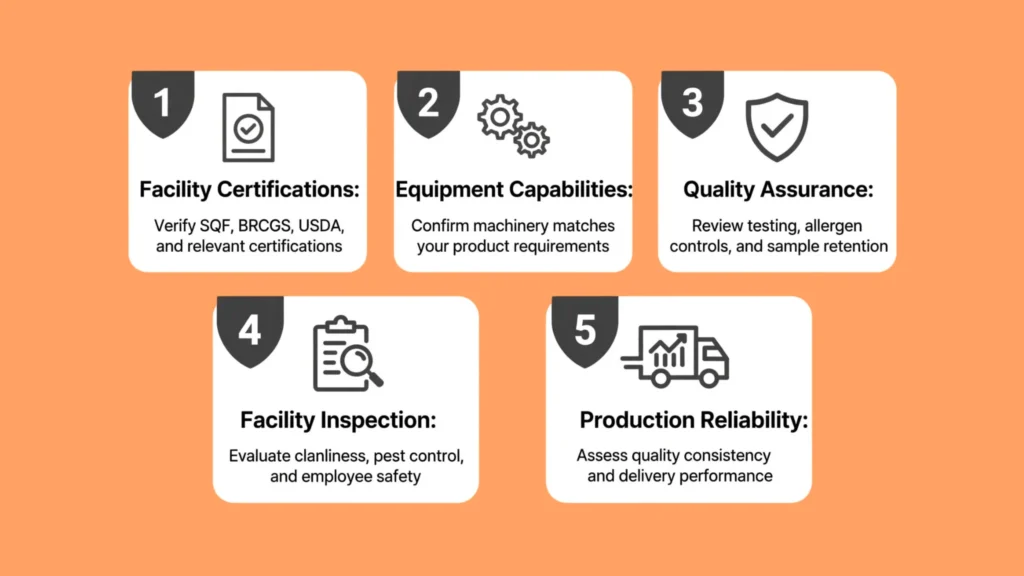
Once you build a shortlist of prospective partners, conduct a thorough vetting process. Working with an underqualified manufacturer can lead to product recalls, inconsistent quality, or missed delivery deadlines.
Essential Vetting Checklist
1. Facility Certifications and Food Safety
Confirm that the facility holds the certifications required by your target retail channels:
SQF (Safe Quality Food) or BRCGS Certification: Standard requirements for major grocery chains.
USDA Inspection: Mandatory if your product contains meat or poultry.
Organic, Kosher, Halal, or Non-GMO Project Verification: Required if your brand positioning relies on these claims.
2. Processing Capabilities and Equipment
Does the facility possess the exact thermal processing, filling, and sealing technology your product demands? For example, founders familiar with a juice bar startup should understand that commercial beverage production may require specialized juicing, refrigeration, pasteurization, and packaging equipment. A hot-fill beverage facility cannot process cold-press juices unless equipped with High-Pressure Processing (HPP) systems.
3. Quality Assurance (QA) Protocols
Inquire about their in-house testing capabilities:
Do they retain product samples from every lot?
What are their protocols for managing allergen cross-contamination?
How do they handle micro-testing and environmental monitoring?
4. Audit the Facility in Person
Never sign an agreement without touring the production floor. Pay attention to plant cleanliness, employee safety practices, pest control measures, and overall operational discipline.
Step 5: Structuring a Co Packer Agreement
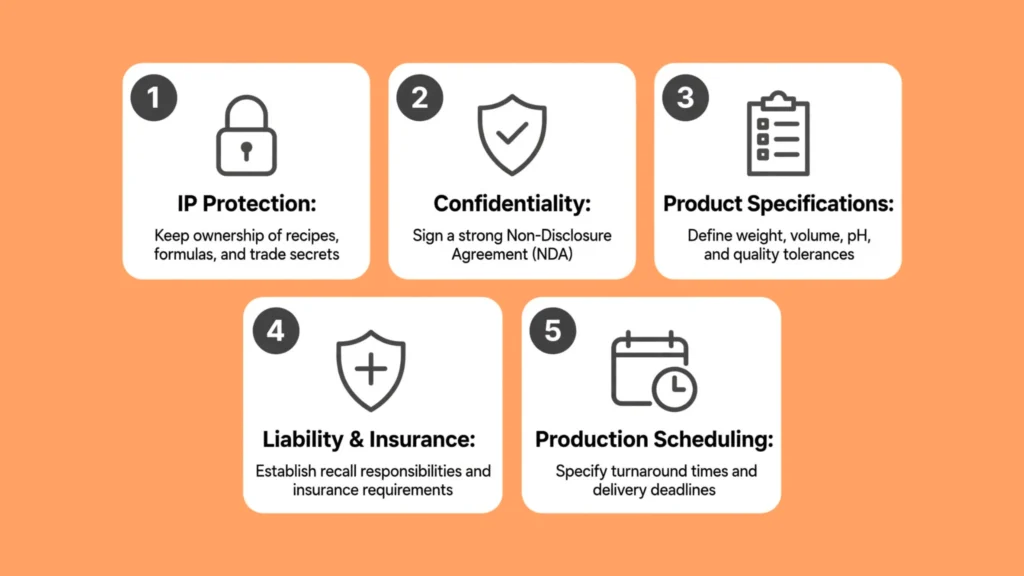
A comprehensive co packer agreement (or contract manufacturing agreement) protects your intellectual property, defines quality standards, and establishes legal liability. Work with an experienced food industry attorney to draft and review all documentation.
Core Elements of a Co-Packing Contract
1. Intellectual Property (IP) Protection
The agreement must explicitly state that your recipe, process flow, brand assets, and trade secrets remain 100% your property. Ensure the contract includes a robust Non-Disclosure Agreement (NDA).
2. Product Specifications and Tolerances
Define precise parameters for acceptable product quality, including:
Target weight, volume, pH, Brix, and moisture levels.
Allowable color or texture variances.
Acceptable scrap/defect percentages during a run.
3. Liability, Recalls, and Insurance
Recall Allocation: Define who bears the cost of a product recall if the cause stems from manufacturer negligence versus raw material failure.
Insurance Requirements: Ensure the co-packer carries sufficient Product Liability Insurance and Commercial General Liability Insurance.
4. Turnaround Times and Scheduling
Establish clear lead times for ordering, production schedules, and penalties for unexcused delays in order fulfillment.
Common Mistakes to Avoid
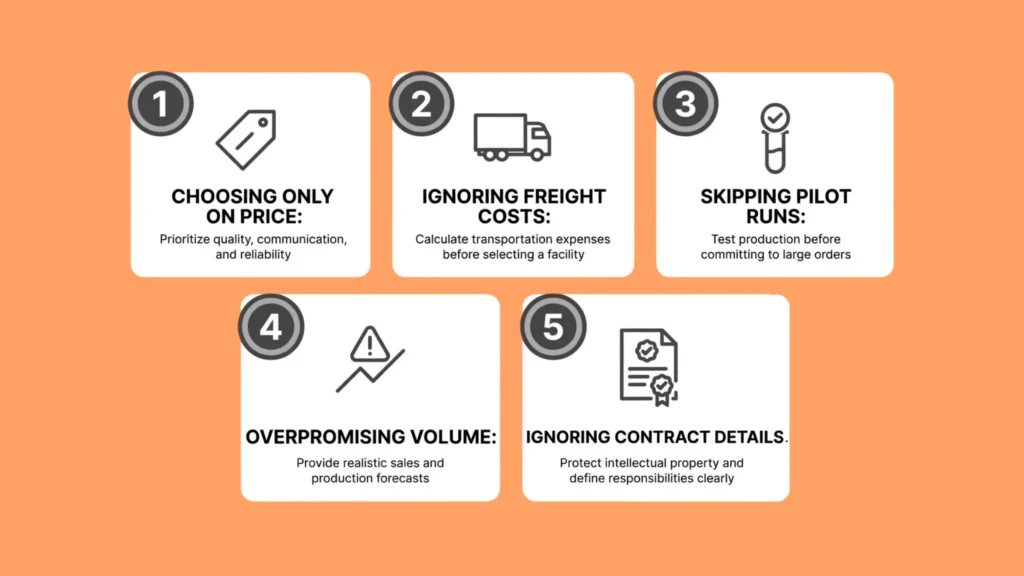
Choosing Solely on Price: The cheapest per-unit cost often comes at the expense of quality control, communication, or reliability.
Ignoring Freight and Logistics: A facility located across the country may offer lower production rates, but high shipping costs for raw materials and finished goods can erase your profit margins.
Failing to Run a Pilot Production Run: Always conduct a small test run before committing to full commercial production volumes to catch process errors early.
Over-Promising Volume: Do not inflate your sales projections to secure lower MOQs. Be honest about your current scale to build a foundation of trust.
Frequently Asked Questions
How long does it take to find and onboard a co-packer?
The process typically takes 3 to 9 months. This timeline includes initial outreach, executing NDAs, conducting recipe benchtop trials, running pilot tests, negotiating contracts, and scheduling production runs.
Can a co-packer help reformulate my home recipe for commercial scale?
Many co-packers offer in-house R&D services or work directly with food scientists to adapt kitchen recipes for commercial processing equipment. However, some charge separate fees for formula development.
What happens if a co-packer ruins a production run?
A well-structured contract manufacturing agreement outlines acceptable defect thresholds and financial remediation. If the batch fails due to facility error or failure to follow agreed specifications, the co-packer is typically responsible for replacing the batch at their expense.
Do co-packers supply the raw ingredients and packaging materials?
It varies. Some facilities offer turnkey solutions where they source all ingredients and packaging using their supplier networks. Others operate on a tolling basis, where you supply all raw materials, and they charge only for labor and processing.
What is the difference between a co-packer and a private label manufacturer?
A private label manufacturer produces pre-formulated standard recipes that brands white-label under their own name. A co-packer manufactures a custom recipe owned exclusively by your brand.
How do I protect my recipe when working with a co-packer?
Always execute a mutual Non-Disclosure Agreement (NDA) before sharing proprietary formulas. Additionally, ensure your final contract manufacturing agreement clearly stipulates that all formulas, processes, and trade secrets remain your exclusive intellectual property.
Final Thoughts
Partnering with the right co-packer is one of the most critical decisions you will make for your food or beverage business. The right manufacturer does not just pack your product they serve as an operational engine that allows you to focus on marketing, sales, and distribution.
By commercializing your recipe early, conducting thorough vetting across facility certifications and minimum order quantities, and securing a clear contract manufacturing agreement, you protect your brand’s quality, financial health, and long-term growth.
About The Author