Food and Beverage Business Ideas: Profitable Opportunities to Start in 2026
The global food and beverage market is undergoing a seismic shift driven by changing consumer behaviors, technological integration, and a massive demand for health-conscious, convenient options. Today’s consumers are no longer just looking for sustenance; they want functional ingredients, hyper-personalized nutrition, eco-friendly sourcing, and digital-first ordering experiences.
Navigating the food and beverage industry can feel overwhelming given its scale. However, high-margin niches, lower-overhead models, and specialized consumer demands offer exceptional opportunities for new entrepreneurs. Whether you want to launch a physical venue, a direct-to-consumer brand, or a mobile unit, understanding market dynamics is the first step toward building a sustainable brand.
In this comprehensive guide, you will explore high-demand food business ideas, innovative beverage business ideas, and essential strategies for food and beverage startups aiming to achieve rapid profitability in 2026.
Executive Summary: The 2026 Food and Beverage Landscape
Launching a venture in the food and beverage sector requires balancing consumer demand with operational efficiency. The rise of off-premise dining, functional wellness drinks, and virtual dining models has rewritten the traditional restaurant playbook.
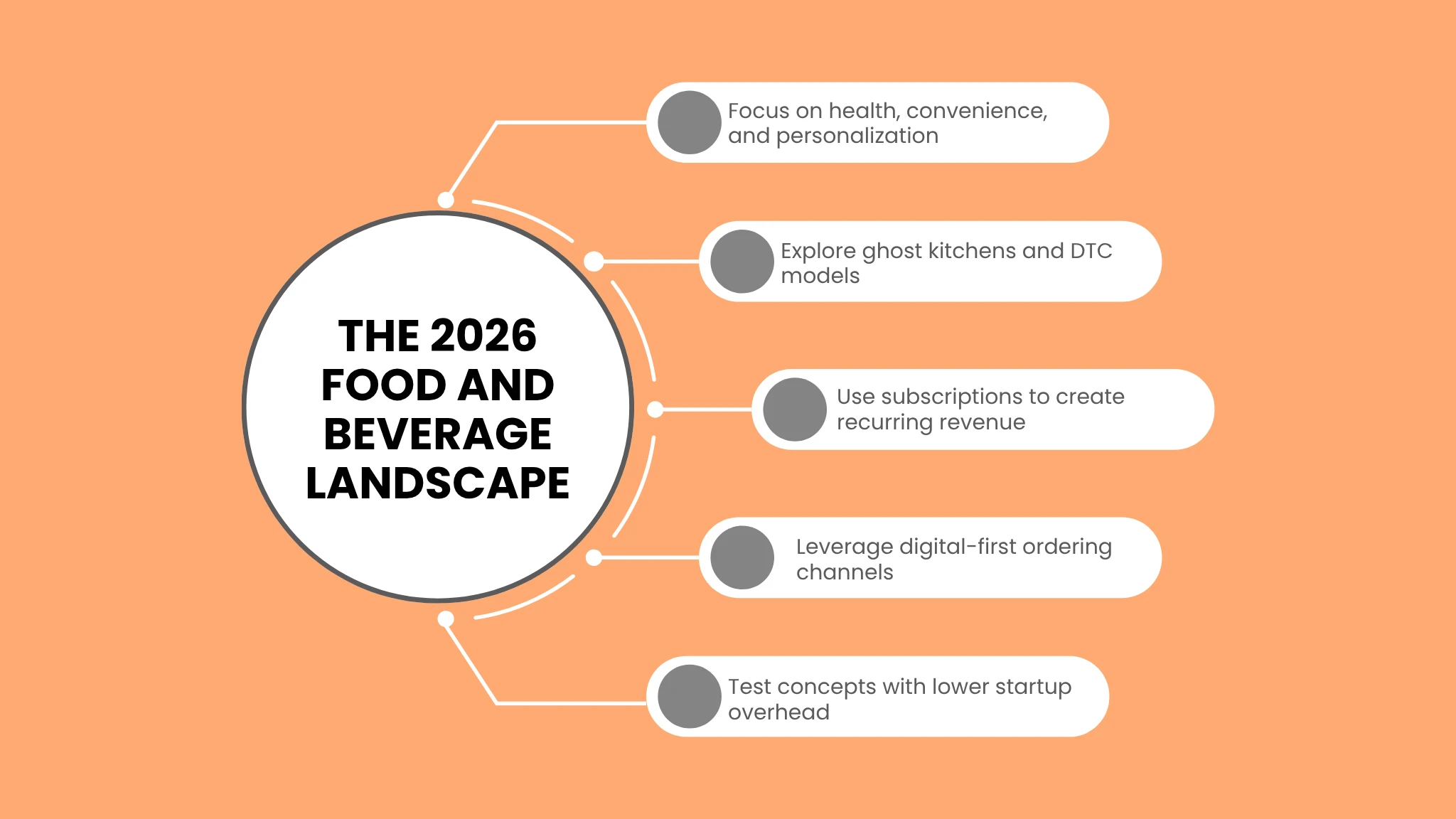
Modern entrepreneurs benefit from four primary market advantages:
Lower Barriers to Entry: Virtual kitchens, co-packing facilities, and cottage food laws allow founders to test concepts with minimal capital.
High Customer LTV via Subscriptions: Meal kits, specialty coffee, and functional beverages generate recurring monthly revenue.
Shift to Functional Wellness: Consumers actively seek products infused with adaptogens, gut-health probiotics, and clean protein.
Digital-First Ordering: Mobile ordering platforms, social commerce, and AI-driven recommendations shorten the path to purchase.
Tapping into these shifts allows new brands to reduce risk while building loyal customer bases.
Market Fundamentals: Choosing the Right Business Model
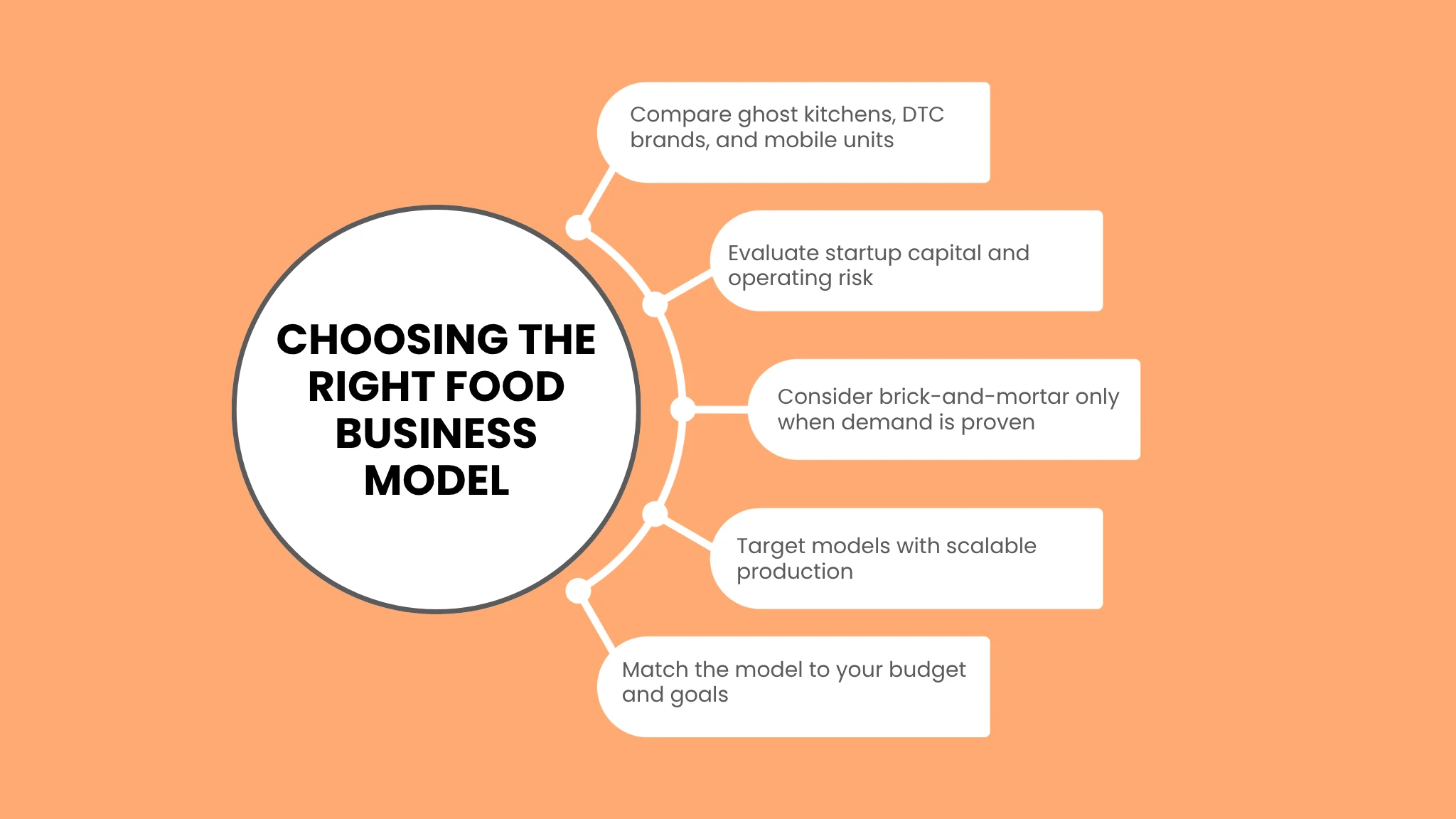
Before picking a product, you must select an operational structure that matches your budget, risk tolerance, and scaling goals. The structure determines your profit margins, capital requirements, and regulatory requirements. If the ghost kitchen model appeals to you, our detailed guide on starting a cloud kitchen business walks through setup costs, licensing, and delivery-platform partnerships in depth.
1. Delivery-Only & Virtual Models (Ghost Kitchens)
Ghost kitchens operate exclusively through delivery platforms and direct digital ordering. By removing the costly front-of-house dining room, service staff, and prime retail lease, operators achieve significantly lower overhead and faster break-even periods.
2. Direct-to-Consumer (DTC) Consumer Packaged Goods (CPG)
Packaging shelf-stable sauces, snacks, or functional drinks enables national or global distribution without physical store limitations. Utilizing contract manufacturers (co-packers) lets founders focus entirely on brand strategy, digital marketing, and product formulation.
3. Mobile and Experiential Units
Food trucks, trailer pods, and pop-up bars offer maximum flexibility. They allow founders to validate menu concepts, build immediate cash flow at events, and establish local brand equity before committing to commercial leases.
High-Profit Food Business Ideas to Launch
The food sector rewards hyper-specialization and lean operational models. Focus on concepts that solve specific dietary needs, save busy consumers time, or offer distinct culinary experiences.
Top Food Business Concepts
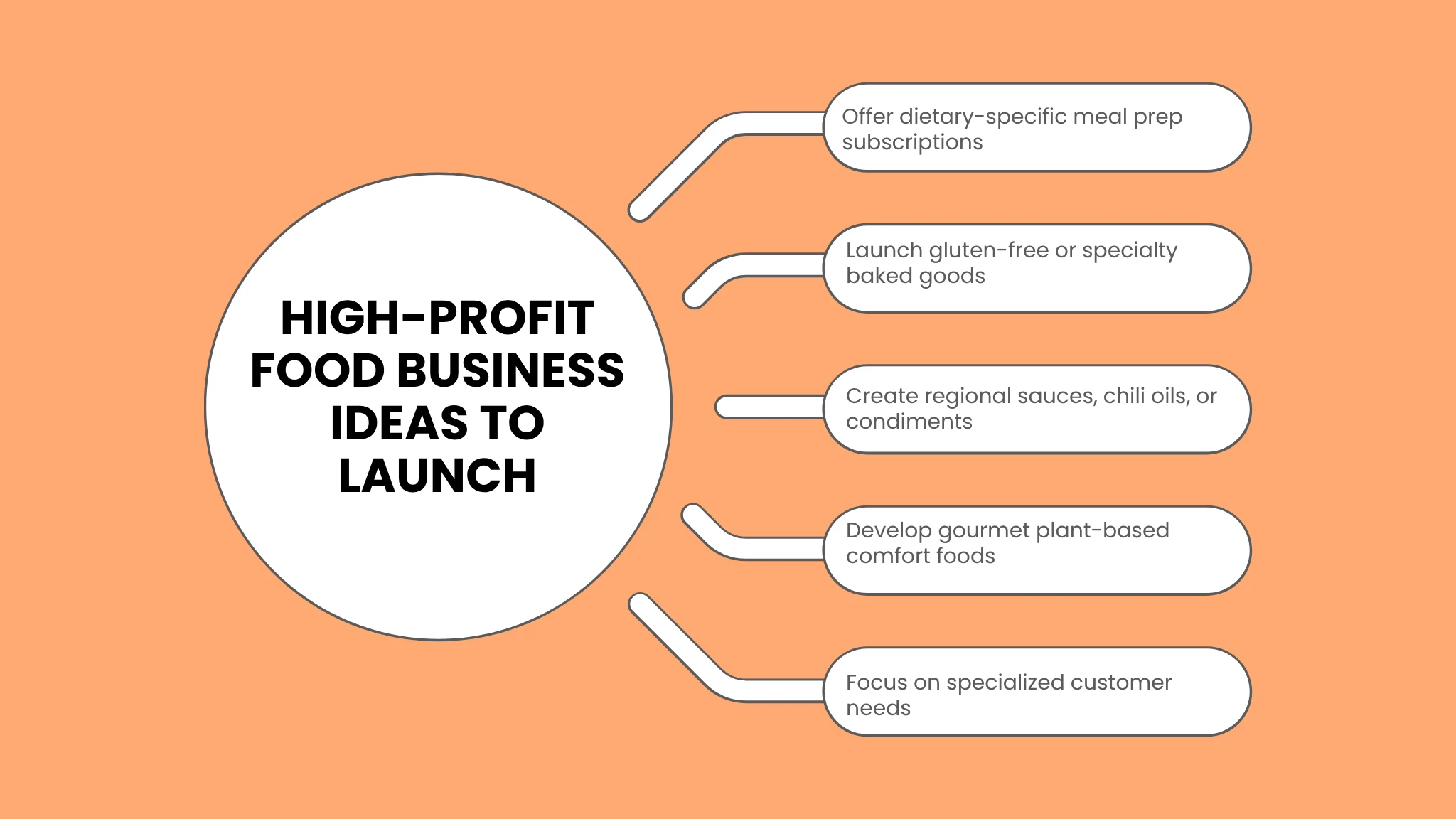
Dietary-Specific Meal Prep Subscriptions: Create portion-controlled, pre-cooked meals tailored to niche lifestyles like high-protein, low-glycemic, or gut-health protocols. Recurring billing builds predictable cash flow and reduces waste.
Gluten-Free & Specialty Artisanal Bakeries: Traditional bakeries face steep competition, but specialized bakeries targeting gluten-free, vegan, or keto diets command premium pricing and high customer loyalty.
Regional & Authentic CPG Condiments: Launch a brand centered on small-batch chili oils, authentic regional hot sauces, fermented dressings, or craft rubs. These products enjoy long shelf lives, simple shipping logistics, and strong gross profit margins.
Gourmet Plant-Based Comfort Foods: Move past basic meat imitations to embrace whole-food, plant-forward cooking using mushrooms, legumes, and ancient grains.
Lucrative Beverage Business Ideas with High Margins
Beverages consistently rank among the highest-margin categories in the food and drink industry. Fluid production scales efficiently, and consumers willingly pay premium prices for functional and wellness benefits.
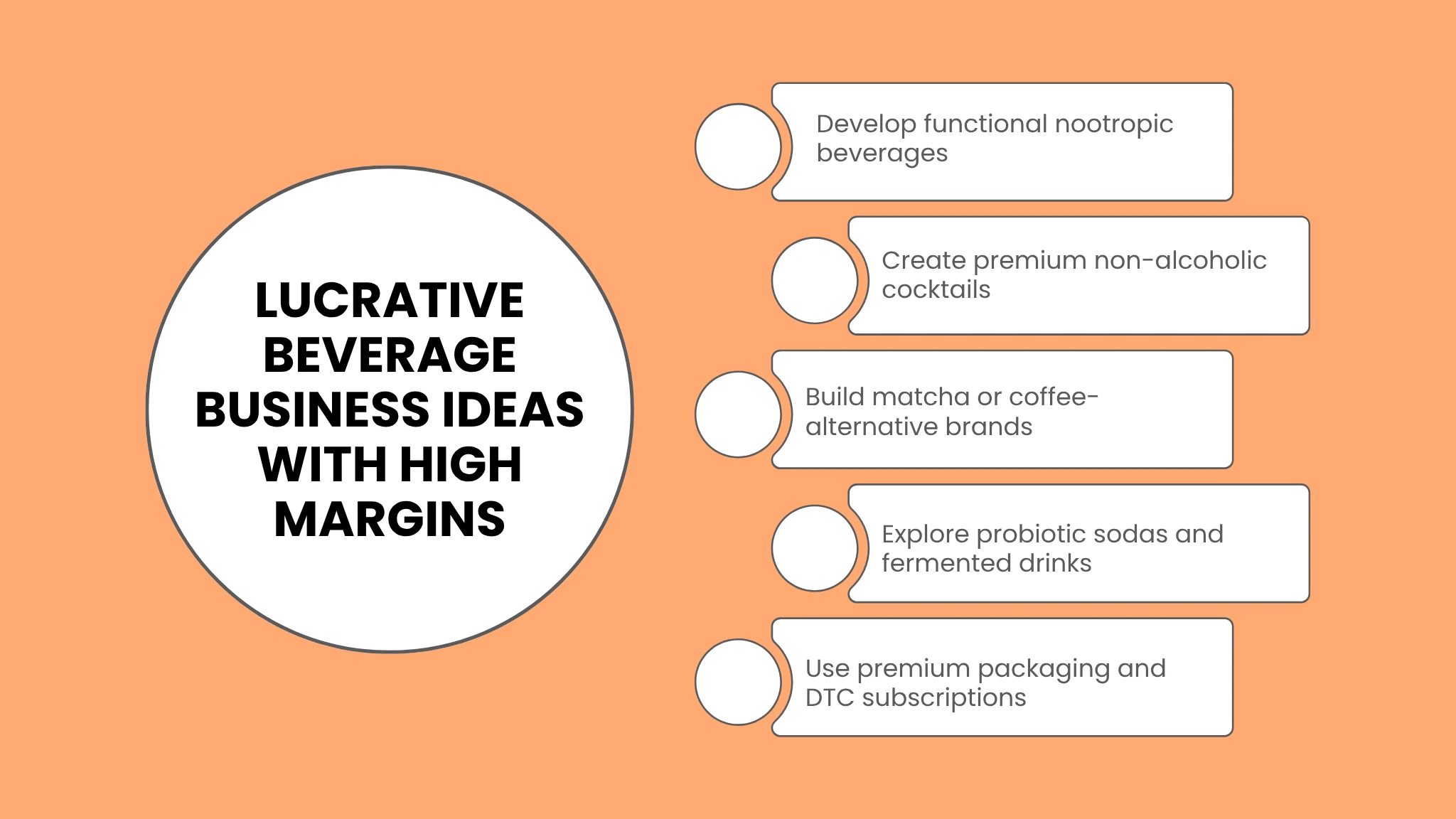
Top Beverage Business Concepts
Functional Nootropic Drinks: Formulate ready-to-drink (RTD) sparkling teas, adaptogenic tonic waters, or botanical elixirs featuring lion’s mane, ashwagandha, and L-theanine for stress relief and focus.
Sophisticated Non-Alcoholic Cocktails & Spirits: The “mindful drinking” movement continues to expand. Craft complex, dealcoholized botanical spirits, zero-proof aperitifs, or premium canned mocktails that deliver adult flavor profiles without the hangover.
Functional Coffee Alternatives & Matcha Bars: Launch a retail concept or direct-to-consumer brand centered on premium ceremonial matcha, mushroom coffee blends, or yerba mate. These products offer sustained energy with lower acidity.
Gut-Health Probiotic Sodas & Kefirs: Modern consumers are replacing traditional high-sugar sodas with sparkling prebiotic plant fibers and fermented botanical kefirs.
Blueprint for Launching Food and Beverage Startups
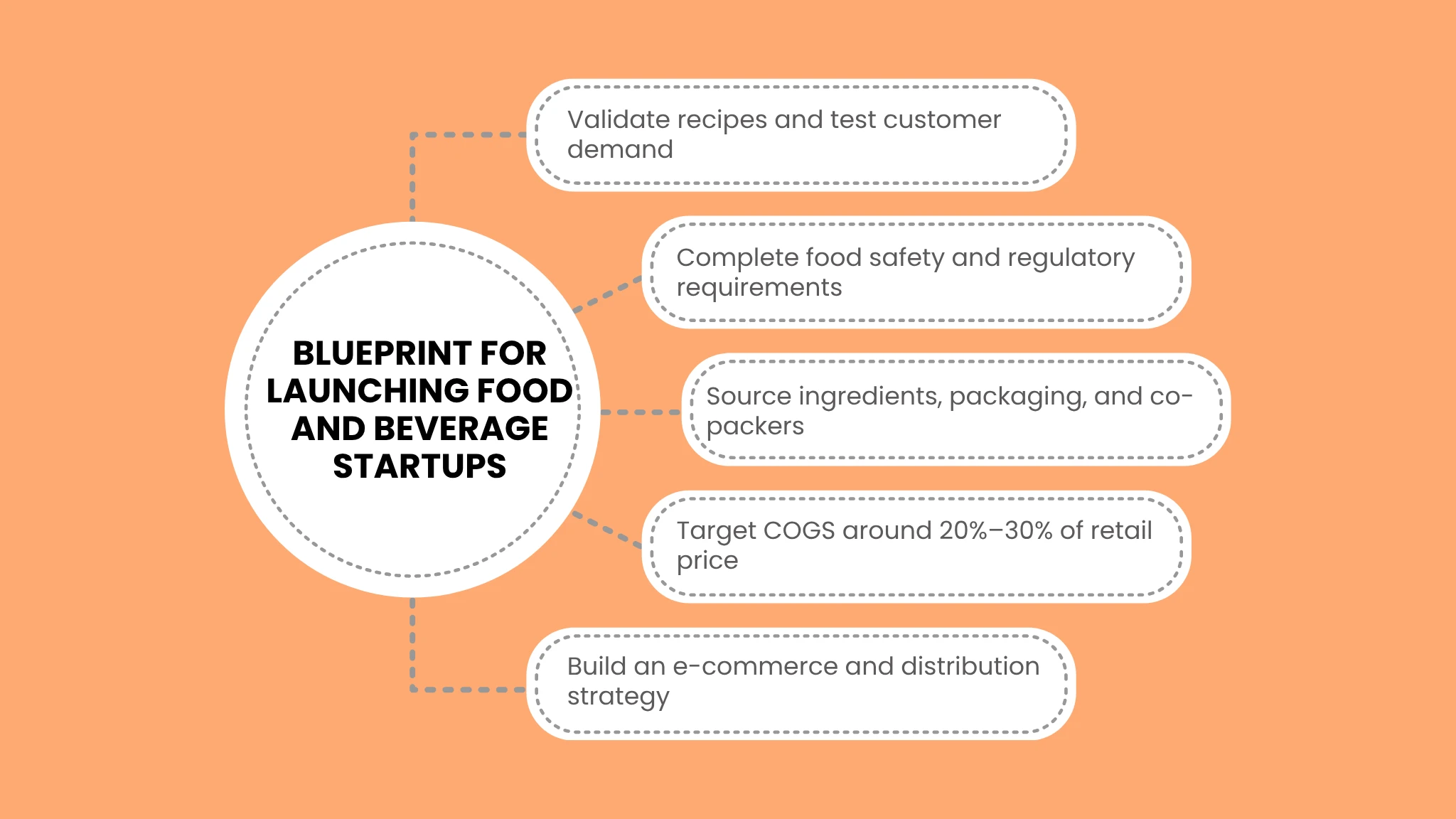
Moving from a recipe concept to a compliant, profitable brand requires a step-by-step strategy. Mistakes early in product development can cause expensive batch recalls or regulatory compliance issues.
| Launch Phase | Key Operational Tasks | Critical Milestones |
| 1. Validation & R&D | Refine recipes, determine shelf life, run focus groups | Approved formulation, nutritional analysis |
| 2. Compliance & Safety | Secure health permits, FDA/USDA approvals, liability insurance | ServSafe certification, facility licensing |
| 3. Supply Chain Setup | Source bulk ingredients, select co-packers, finalize packaging | Cost of Goods Sold (COGS) under 30% target |
| 4. Go-To-Market Execution | Build e-commerce platform, setup distribution, launch marketing | Initial sales run, customer feedback loop |
Step 1: Optimize Cost of Goods Sold (COGS)
Your COGS—which includes raw ingredients, primary packaging, labels, and manufacturing fees—should ideally stay between 20% and 30% of your retail price. Keeping production costs low ensures sufficient margin for distributor cuts, marketing, and retail slotting fees.
Step 2: Master Food Safety and Regulations
Regulatory compliance is non-negotiable in the food and drink sector. You must register with local health departments, understand FDA labelling guidelines (including allergen disclosures), and implement strict Hazard Analysis Critical Control Point (HACCP) plans. Before launching, make sure you understand which food safety certifications apply to your specific product category and production method.
Digital Marketing and Scaling Strategies
Product quality alone won’t guarantee success in a crowded marketplace; you need strong brand visibility and reliable customer acquisition channels.
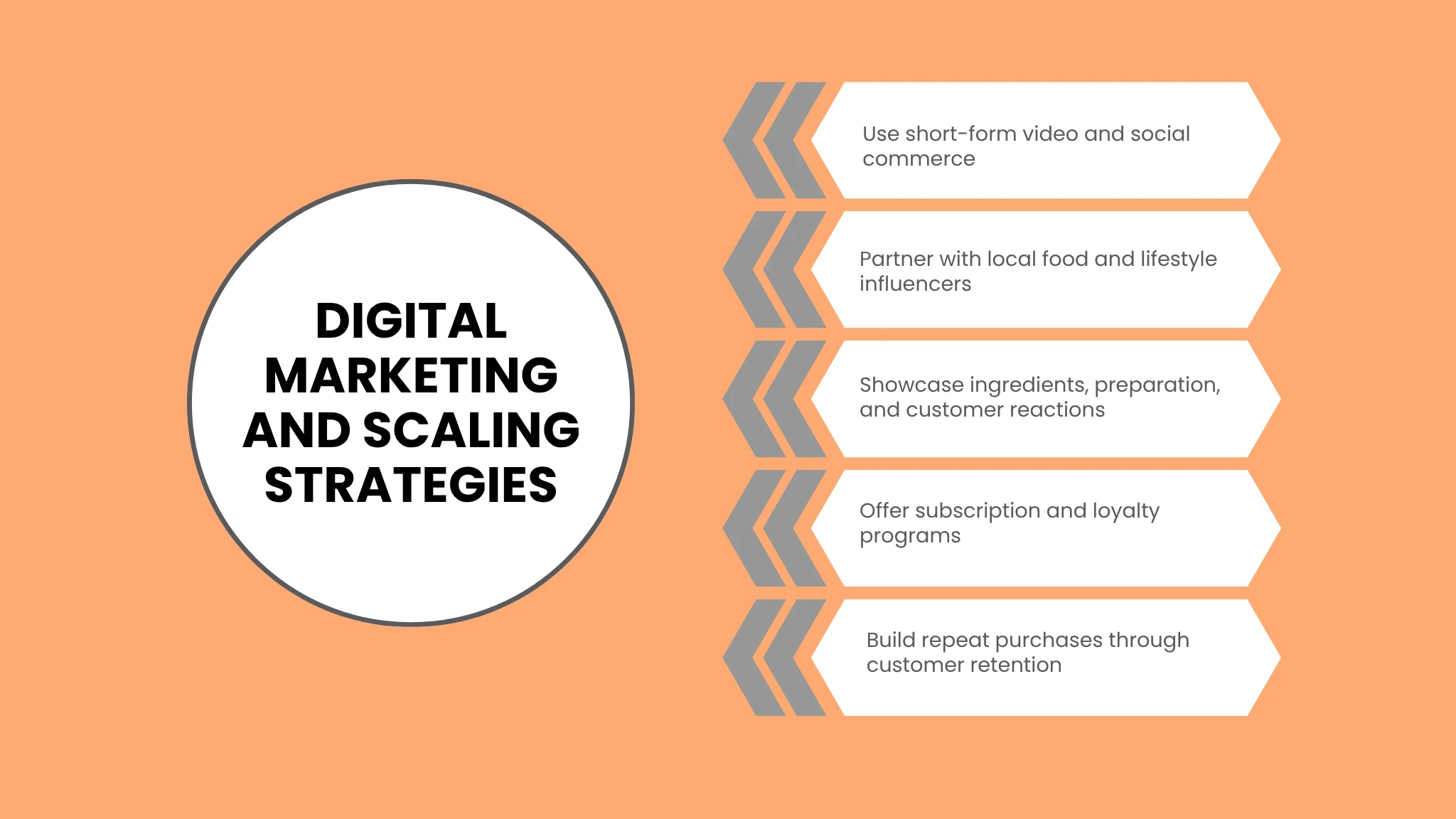
Essential Growth Channels
Short-Form Video & Social Commerce: Demonstrate product preparation, highlight natural ingredients, and showcase authentic customer reactions on platforms like TikTok and Instagram. Direct integration with social shops accelerates sales conversions.
Local Micro-Influencer Partnerships: Partner with regional food bloggers, fitness coaches, and lifestyle creators to build social proof and drive local foot traffic or site visits.
Subscription & Loyalty Retention: Offer simple “Subscribe & Save” options (saving 10–15%) for everyday staples like coffee, meal plans, or functional sodas to boost customer lifetime value.
Final Thoughts on Building a Lasting Brand
The food and beverage industry offers vast rewards for entrepreneurs who combine great product quality with sound unit economics. By focusing on high-margin product categories, leveraging digital ordering channels, and meeting consumer demand for health and convenience, you can launch a profitable, sustainable business.
Take action today: validate your product recipe, calculate your production margins, and build an agile go-to-market strategy. To explore more business playbooks, startup frameworks, and growth guides, visit reliablestartup.
Frequently Asked Questions
What are the most profitable food business ideas to start in 2026?
The most profitable options typically feature low physical overhead and high recurring sales, such as ghost kitchens, dietary-specific meal prep subscriptions, specialty CPG condiments, and niche online bakeries.
Is launching a beverage business better than a food business?
Beverage products often yield higher gross profit margins (frequently 60% to 80%) and offer smoother shipping logistics when canned or bottled. However, food products can command immediate local demand and higher initial transaction values.
How much capital do food and beverage startups need?
Startup costs vary widely by model. Cottage food home businesses can start under $3,000, food trucks and ghost kitchens range from $30,000 to $100,000, while commercial brick-and-mortar restaurants or large-scale retail CPG runs can require $250,000 to $500,000+.
How do I protect my food or beverage recipe legally?
Recipes themselves cannot be patented unless they involve a unique, highly inventive processing technology. Instead, protect your business using non-disclosure agreements (NDAs) with co-packers, strict trade secrets, strong trademarking for your brand name, and unique trade dress/packaging designs.