How to Start a Wedding Venue Rental Business From Scratch
The global events industry has returned with incredible strength, driving massive demand for beautiful event spaces. For entrepreneurs with a passion for hospitality and property development, learning how to start a venue rental business is a highly lucrative move. If you are asking is venue rental business profitable in today’s market, the financial data reveals a clear yes. Operating a specialized wedding or event space is exceptionally rewarding. Most owners achieve an average venue rental business profit margin of 30% to 50% on seasonal bookings. Since couples actively search for unique, photogenic destinations to host their ceremonies, a well managed property can easily secure a full return on its initial startup investment within its first two to three years of active operation.
However, building a successful event space from the ground up requires significant preparation, careful property selection, and a deep understanding of local hospitality compliance.
This comprehensive wedding venue rental business guide outlines the exact launch steps, real world cost expectations, and municipal rules you must master to turn a piece of land into a thriving, high profit destination.
The Ultimate Wedding Venue Rental Business Guide
The modern event landscape is highly focused on experiential, visually stunning locations. Consequently, traditional, sterile banquet halls are losing popularity. Today, modern couples actively prefer unique environments such as renovated rustic barns, historic industrial warehouses, or beautiful outdoor gardens.
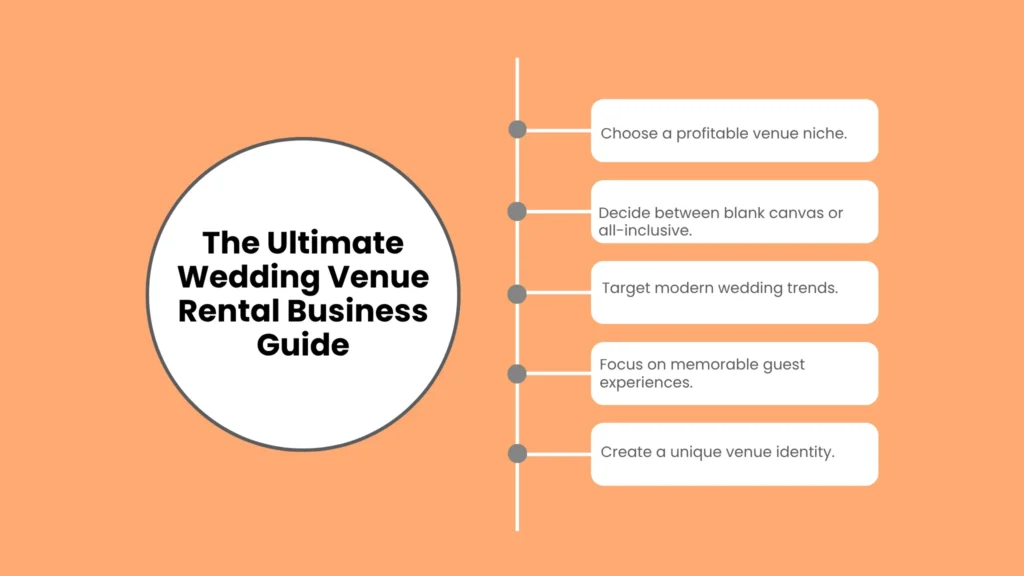
To succeed in this field, you must identify a specific market niche in your local area. Specifically, you need to decide whether your venue will operate as a blank canvas space or an all inclusive destination. A blank canvas space simply rents out the physical property, meaning clients must hire external caterers, decorators, and coordinators. Conversely, an all inclusive venue provides complete packages that include in-house dining, bar services, furniture, and coordination staff.
While all inclusive models demand much more operational management, they also generate significantly higher average transaction values and bigger profit returns.
Analyzing the True Venue Rental Business Cost
Launching a physical event space is a capital intensive venture. Your total venue rental business cost depends heavily on whether you already own a suitable property or if you need to buy and renovate a new location.
For an independent entrepreneur launching a medium-sized wedding venue capable of hosting 150 guests, the estimated startup cost typically ranges from $150,000 to $450,000. This estimate assumes you are leasing or renovating an existing structure rather than building a brand new estate from scratch.
Property Purchase and Structural Renovations
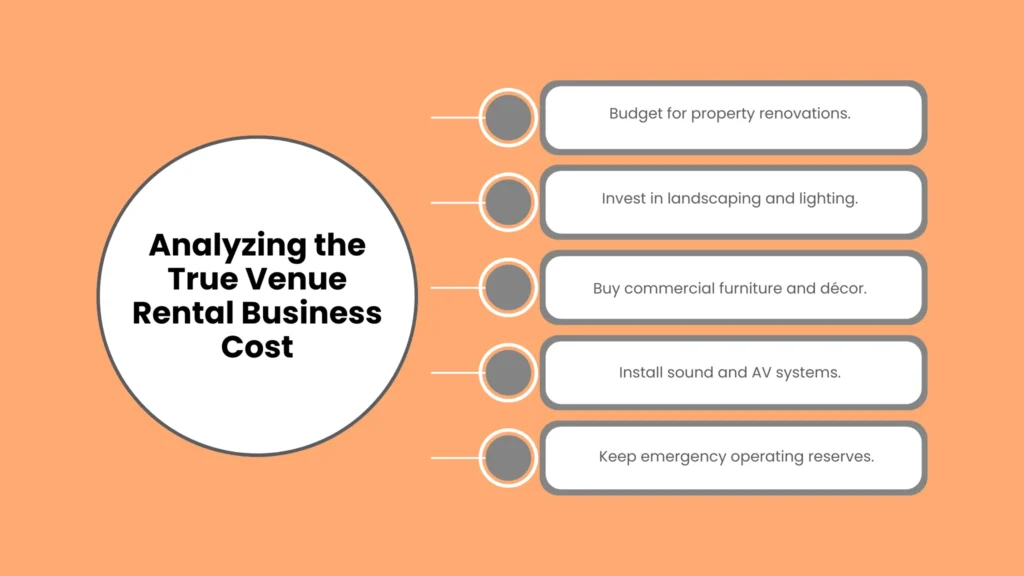
First, your largest capital outlay will go toward physical infrastructure. If you are renovating an older barn or an industrial warehouse, you must invest in heavy-duty HVAC systems to ensure guest comfort during extreme summer or winter weather. Furthermore, you will need to construct high capacity public restrooms, build a dedicated staging kitchen for external caterers, and establish spacious bridal suites for pre-ceremony preparation.
Landscaping and Photogenic Backdrops
Second, you must invest heavily in professional landscaping and outdoor lighting. Since wedding photography is a primary selling point, your property must feature stunning visual backdrops. This setup includes manicured gardens, paved walkways, elegant water features, and atmospheric string lighting for evening receptions.
Detailed Startup Capital Estimates
The table below provides a realistic capital breakdown for establishing a 150-guest wedding venue using a leased or renovated property:
| Expense Category | Low-End Estimate | High-End Estimate | Budget Details & Material Notes |
| Property Lease Deposit & Prep | $15,000 | $40,000 | Securing the location and initial zoning reviews. |
| Interior & Exterior Renovations | $60,000 | $180,000 | HVAC, commercial restrooms, catering prep area. |
| Landscaping & Outdoor Lighting | $10,000 | $35,000 | Paved pathways, ceremony archways, gardens. |
| Furniture & Decor Inventory | $15,000 | $45,000 | Tables, commercial cross-back chairs, bar setups. |
| AV Systems & Acoustic Panels | $5,000 | $15,000 | Multi-zone sound systems, microphones, acoustics. |
| Licensing, Permits, & Legal Fees | $3,000 | $10,000 | LLC formation, liquor licenses, occupancy permits. |
| Branding, Website, & Initial Marketing | $2,000 | $7,000 | Professional photography, SEO, launch ads. |
| Operational Cash Reserves | $20,000 | $50,000 | Essential cash runway to cover slow winter months. |
| Total Estimated Startup Capital | $130,000 | $382,000 | Average independent startup total is around $250,000 |
Step-by-Step Guide to Launching Your Venue
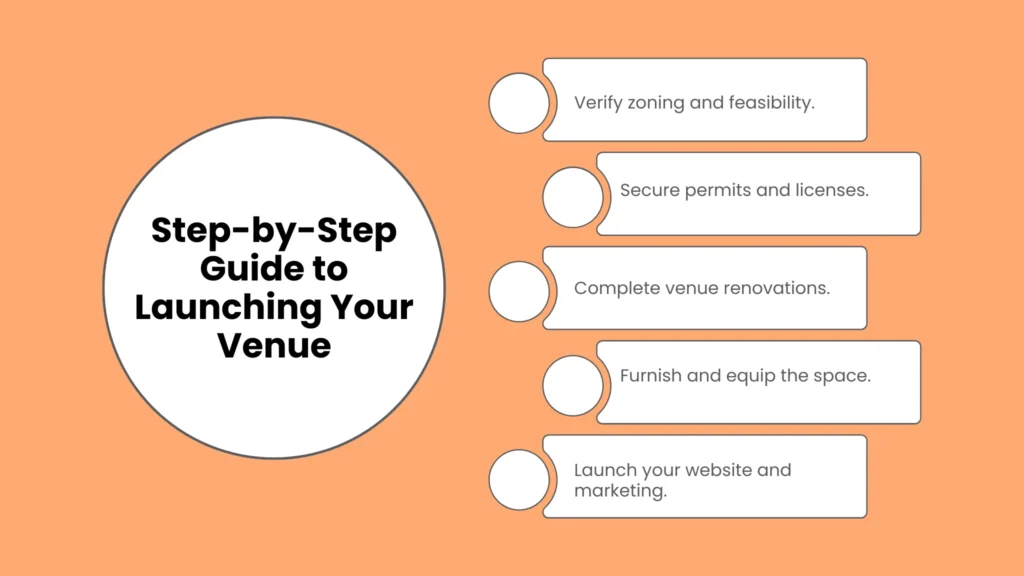
To ensure your business launch is successful, you must execute your setup tasks in a highly structured order. Skipping early steps, such as zoning verification, can lead to catastrophic financial losses later.
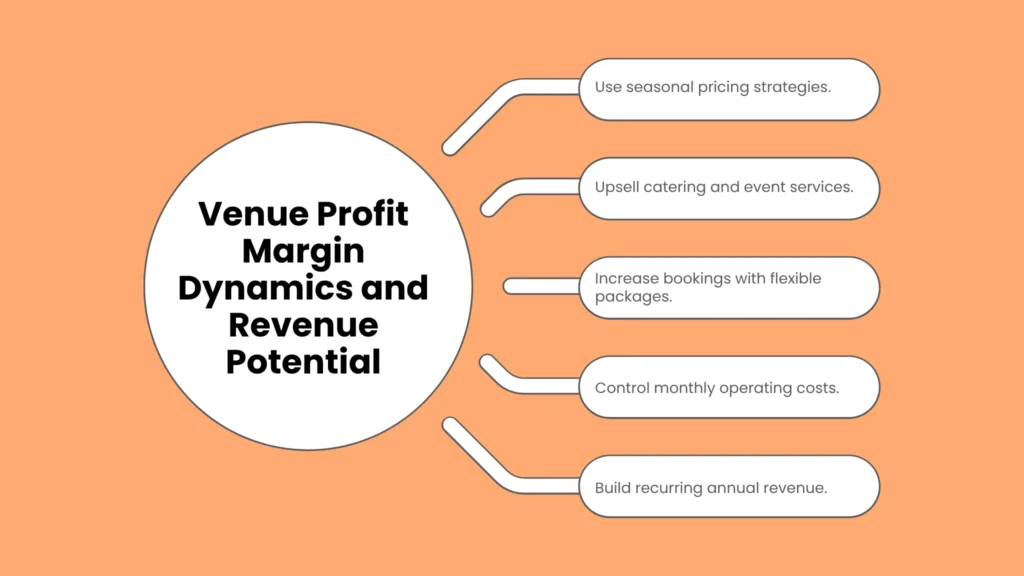
Venue Profit Margin Dynamics and Revenue Potential
Understanding the financial returns of a wedding venue requires looking closely at booking rates and seasonal pricing models. Fortunately, the recurring variable cost associated with each individual event is relatively low, which is why the venue rental business profit margin remains exceptionally high. For a broader breakdown of margins across the wedding and event space, see our detailed guide on wedding rental business profit.
Rental Pricing Frameworks
Most successful venue operators utilize dynamic pricing structures to maximize their sales throughout the year. For instance, Saturdays during the peak summer months command premium rates, while Fridays, Sundays, and off-season winter dates are offered at a discount to keep utilization high.
Peak Saturday Rental (May to September): $6,000 to $12,000 per day.
Peak Friday / Sunday Rental: $4,500 to $8,000 per day.
Off-Peak Weekend Rental (November to March): $3,000 to $5,500 per day.
Midweek Corporate Event Rental: $1,500 to $3,500 per day.
Practical Revenue Example
Let us evaluate a realistic scenario for a newly established event property. Suppose your venue manages to book 35 weddings during its first full year of operation. If your average rental fee sits at a modest $6,500, your venue generates $227,500 in gross rental revenue.
Now, let us assume you upsell additional services. By offering in-house beverage packages, table linen rentals, and coordination support, you add an average of $3,000 in extra value to each booking. Consequently, your total gross annual revenue increases to $332,500.
Ongoing Monthly Operating Overhead
To protect your net returns, you must manage your recurring overhead carefully. Your typical monthly operational expenses will include the following items:
Property Lease or Mortgage: $3,500 to $7,500 per month.
General Liability & Event Insurance: $400 to $1,000 per month.
Property Maintenance & Landscaping: $500 to $1,500 per month to keep the grounds immaculate.
Marketing & Directory Subscriptions: $300 to $800 per month for continuous lead generation.
Utilities & Waste Management: $400 to $1,200 per month, especially during peak air conditioning seasons.
If your total operational overhead averages roughly $10,000 per month, your total annual operating cost sits near $120,000. Subtracting this from your $332,500 gross revenue leaves you with a net annual profit of $212,500 before taxes, proving the business model is highly lucrative when managed efficiently.
Essential Venue Rental Business Requirements
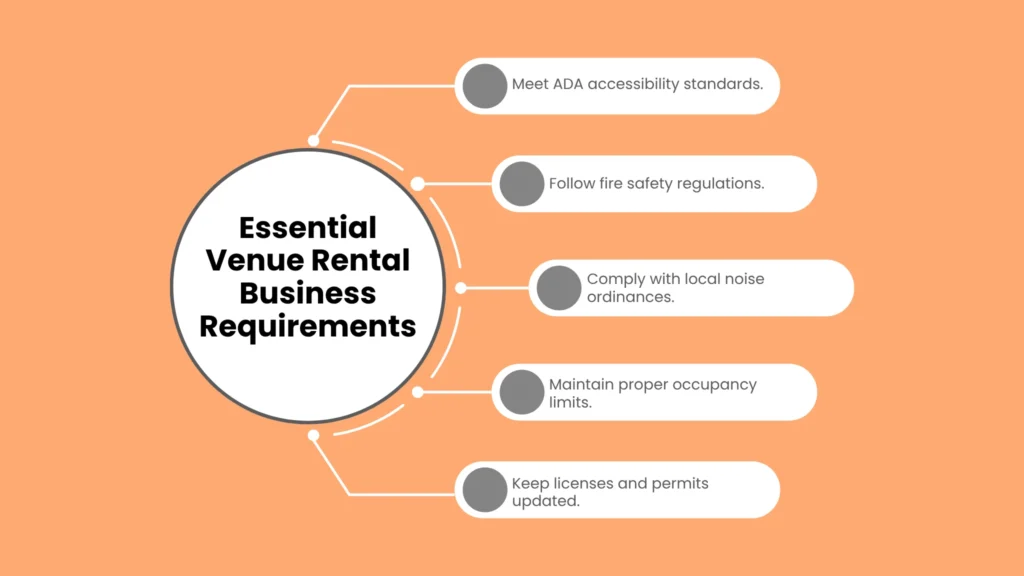
Operating a public assembly space introduces serious legal and structural obligations. Fulfilling these critical venue rental business requirements is mandatory to keep your business safe from municipal fines or sudden closure.
1. ADA Accessibility Compliance
Under federal and local laws, any public commercial venue must be accessible to individuals with disabilities. Specifically, this means you must install wheelchair ramps, offer dedicated accessible parking spaces, and construct ADA compliant restroom stalls with proper grab bars. According to ADA.gov’s official guidance for public accommodations, almost all businesses that serve the public regardless of size or building age must follow accessibility standards, making early compliance planning essential rather than optional.
2. Strict Fire Safety Regulations
Your local fire marshal will enforce strict rules before granting your business license. Specifically, your building must feature clearly marked emergency exit signs, hardwired fire alarms, visible fire extinguishers, and a certified maximum occupancy limit that you must never exceed during an event.
3. Noise and Sound Ordinances
Because wedding receptions frequently feature loud DJs and live bands, noise complaints from neighbors are a common threat. Therefore, you must research your local county noise laws. Many municipalities require outdoor music to cease by 10:00 PM, which means you must design your indoor layouts to handle late-night celebrations without disturbing nearby residents.
Actionable Operations Strategies to Maximize Bookings
To outpace traditional competitors and secure consistent year-round bookings, implement these professional event management practices:
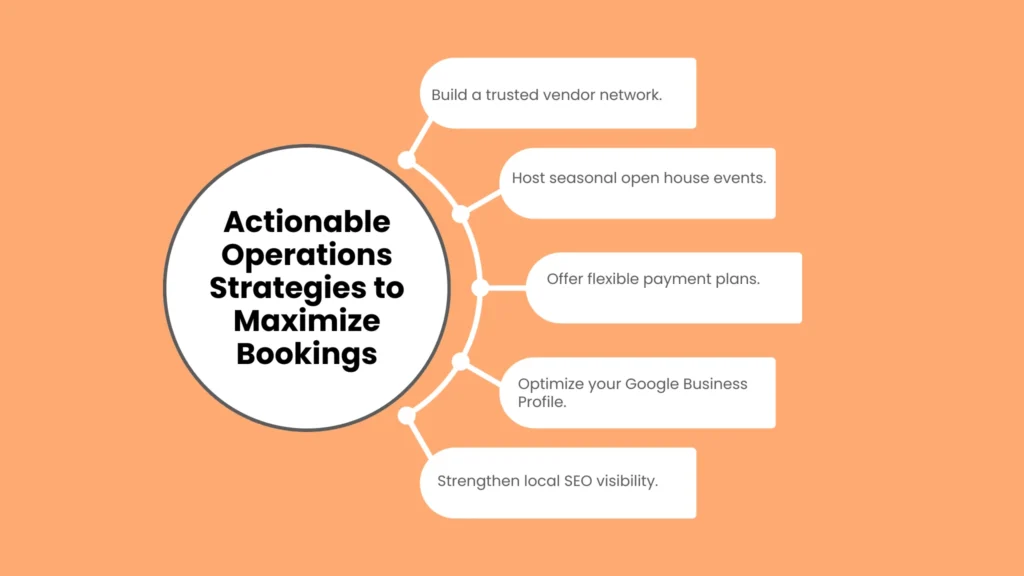
Build a Preferred Vendor Network: Establish strong relationships with local planners, florists, caterers, and DJs. By recommending these professionals to your clients, you build a valuable network. In return, these vendors will actively recommend your space to their own client lists.
Host Seasonal Open Houses: Do not rely solely on digital tours. Organize free seasonal open houses where you dress up the venue with beautiful tablescapes and invite local couples to tour the space. This approach allows them to visualize their big day in person, which dramatically increases your conversion rates.
Offer Flexible Payment Plans: Weddings are incredibly expensive milestones. By offering structured, interest-free payment plans over a 12-month period, you make your venue much more accessible to budget-conscious couples, helping you outpace rigid competitors.
Optimize for Hyper-Local Event SEO: Most couples search for venues using geographic terms like “rustic barn wedding venues near me.” Claim your Google Business listing instantly, keep your operating hours accurate, and post high-resolution photos of real weddings at your site to dominate local search results. For a complete roadmap on getting discovered online, our guide on digital marketing strategies covers proven tactics for rental and event businesses.
Conclusion
Learning how to start a venue rental business is a powerful path to securing high-margin, recurring seasonal cash flows. While your initial venue rental business cost requires careful preparation and physical renovations, the long-term returns are highly rewarding. By selecting a scenic property, staying fully compliant with local fire and zoning codes, and automating your customer bookings, you can build a highly resilient hospitality brand.
For more operational roadmaps, financial planning templates, and tested marketing guides designed to launch your next enterprise smoothly, join us at reliablestartup.
Frequently Asked Questions
Do I need to provide food and alcohol directly to be profitable?
No, you do not. Many successful owners operate very simple “blank canvas” venues where they only rent out the physical space and the furniture. This approach keeps your staffing needs and inventory costs incredibly low, though you should still maintain a list of preferred caterers to ensure quality.
What is the average amount of land required to start a wedding venue?
If you are planning an outdoor garden or farm venue, you should look for at least 3 to 5 acres of land. This size ensures you have plenty of room for scenic ceremony sites, guest parking, and buffer zones to protect your neighbors from event noise.
How do I protect my venue property from damage caused by guests?
To protect your physical assets, you must include a mandatory damage deposit fee in your rental contract. Furthermore, you should require every booking couple to purchase a temporary day-of-event liability insurance policy that names your venue as additionally insured. To understand the different coverage options available, check out our guide on insurance policies for rental businesses.