Wedding Rental Business Profit 2026: How Much Owners Earn

Most guides lie about wedding rental business profit. They throw out fluffy numbers, skip the math, and call it a day. Here is the truth. Wedding rental business profit in 2026 sits between 30 and 55 percent net for small operators, and the income depends on what you stock and how you price.
At reliablestartup, we cracked open the numbers, talked to real owners, and pulled the data competitors keep hiding. Inside this guide you get the real wedding rental business profit breakdown by inventory, the hidden revenue streams, the profit killers, and the 2026 angles nobody else covers.
Quick Profit Answer
- Profit margins land between 30 and 55 percent
- Small operators net $40,000 to $150,000 a year
- Bigger tent companies clear $250,000 net easily
- Best ROI items are tents, Chiavari chairs, and specialty decor
- Most owners break even somewhere between month 12 and month 24
What Is the Average Wedding Rental Business Profit in 2026?
Owners hate vague numbers, so here are the real ones. A small wedding rental shop brings in $60,000 to $120,000 a year. A more settled operator runs $150,000 to $350,000. Mid-size tent companies push past $500,000. Net wedding rental business profit per wedding lands at $1,500 to $5,000 for small shops.
Bigger setups with tents and lighting often clear $8,000 to $20,000 per event. The event hire business 2026 trend leans hard into luxury rentals and sustainable inventory, both of which lift margins.
Real Wedding Rental Business Profit Breakdown by Inventory
Not every rental item pays the same. Some get rich in five events. Others bleed you slow. Here is the honest breakdown.
Tent and Canopy Wedding Rental Business Profit Margins
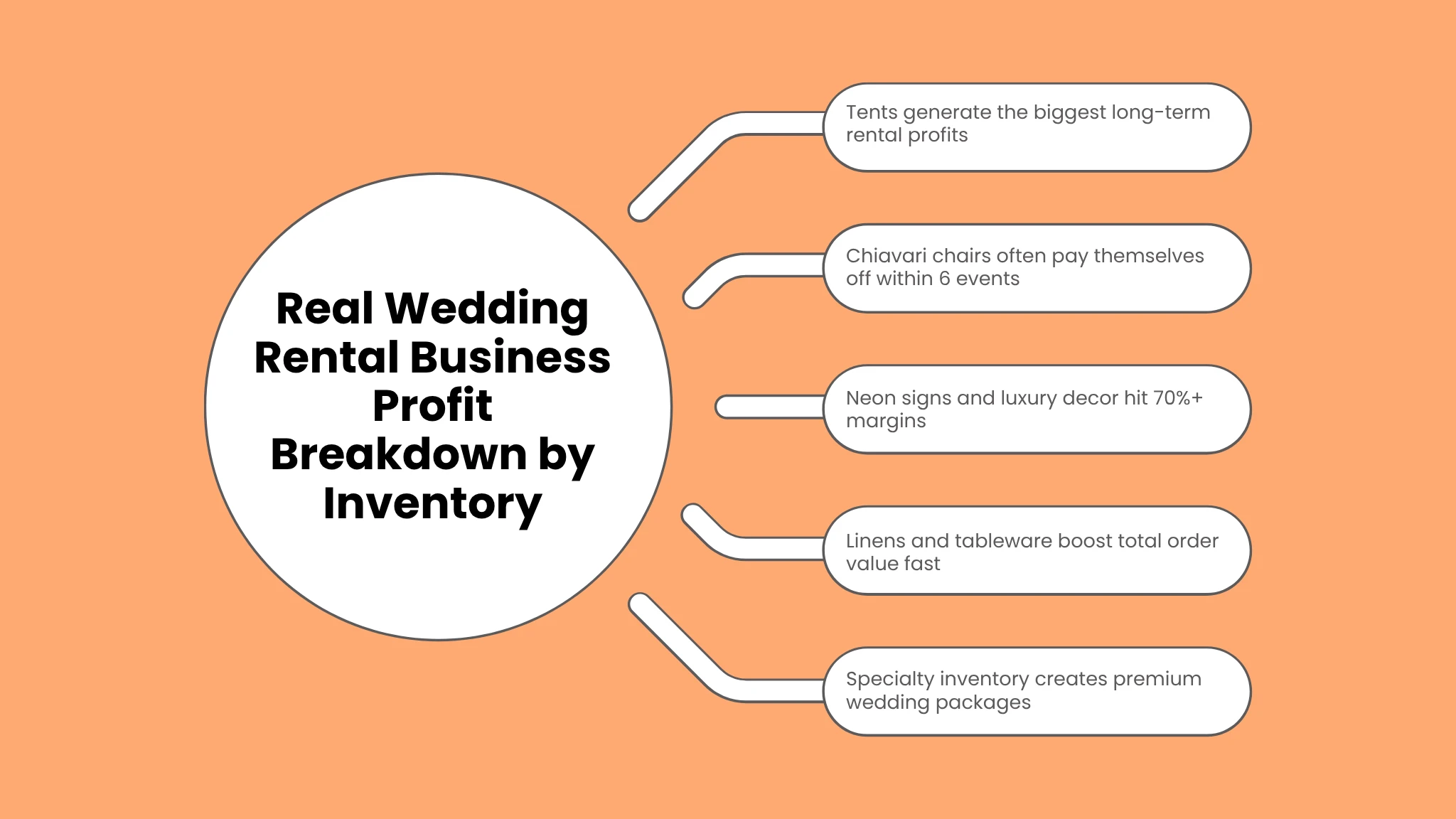
Tents are the cash cow. A 40 by 80 pole tent costs around $15,000 to buy. It rents for $2,500 to $4,000 a weekend. You pay it off in 4 to 6 rentals. After that, it prints money every Saturday from April through October.
Chair and Seating ROI
Chiavari chairs cost $40 to $80 each and rent for $8 to $15 a chair. Stock 150 of them and the spend gets covered in 5 to 7 events. Ghost chairs and crossback chairs sit higher on the menu since couples pay extra for the look.
Wedding Decor Rental Business High-Margin Items
This is where the margins fly. The wedding decor rental business lives on arches, neon signs, lounge sets, and vintage furniture. Margins hit 60 to 80 percent. A custom neon sign costs $200 to build and rents for $250 to $400 a night. Three rentals and that sign is pure profit forever.
Linens, Glassware, and Tableware
These items earn smaller per piece but they move in bulk. Margins sit at 40 to 50 percent. They matter because they pull the average order value up.
| Item | Buy Cost | Rent Fee | ROI Cycle | Margin |
|---|---|---|---|---|
| Pole tent 40×80 | $15,000 | $3,000 | 5 rentals | 55% |
| Chiavari chair | $60 | $12 | 6 events | 60% |
| Custom neon sign | $200 | $350 | 1 event | 75% |
| Linen set (10) | $80 | $40 | 2 events | 50% |
Party Rental Startup Cost vs Wedding Rental Business Profit Potential
Money in, money out. Let us be real about it. Your party rental startup cost depends on how big you swing. A micro setup runs $5,000 to $15,000 if you stick to decor only. A small full-service shop costs $25,000 to $60,000.
A medium tent operator needs $100,000 to $250,000. Most owners hit break even between month 12 and month 24. Year one is lumpy. Bookings cluster in May, June, September, and October. The off-season hurts cash flow if you skip the planning.
Hidden Revenue Streams That Boost Event Rental Income
The base rental fee is just the warm-up. Smart owners stack income on top. Delivery and setup fees add 18 to 25 percent to every contract. Damage waivers (10 to 12 percent of the subtotal) bring in $30,000 to $36,000 a year on $300,000 of rentals. Design consultations run $150 to $500 each. Rush orders carry a 25 to 50 percent surcharge.
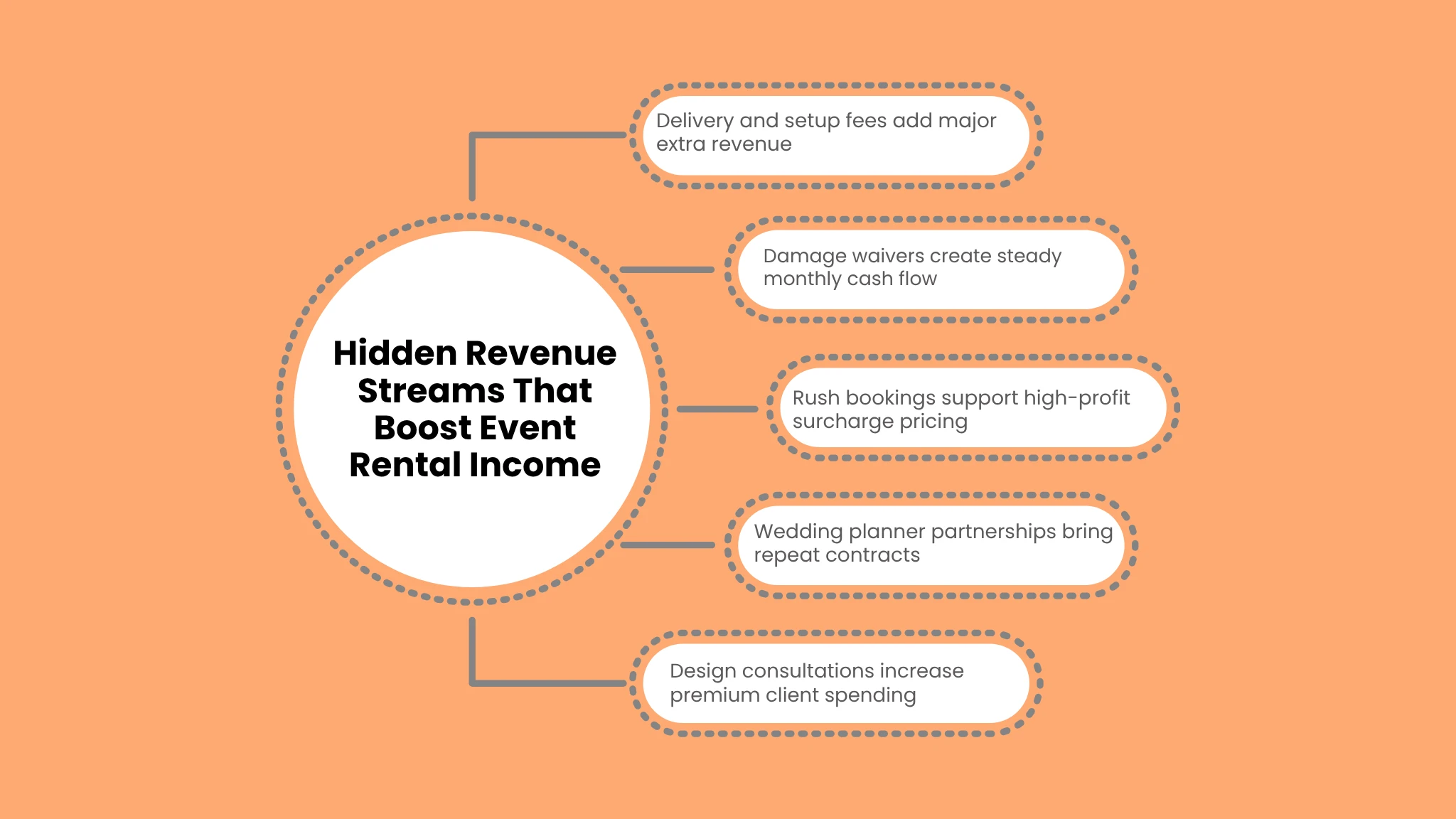
Subscription packages with repeat wedding planners lock in steady event rental income all year. White-label deals with smaller competitors fill empty calendar weeks too. None of this shows up in the usual blog posts, and that is exactly why most new owners leave money on the table.
Profit Killers Every Wedding Decor Rental Business Owner Must Avoid
Profit gets eaten alive if you ignore these. Inventory damage and replacement chew through 5 to 8 percent of revenue. Storage rent surprises most beginners. Insurance premiums climb after every claim. Off-season cash flow gaps (November to February) wipe out savings if you did not stash enough.
Last-minute cancellations without strict deposit rules cost you a whole weekend. Late returns turn into double-booking nightmares. Truck fuel, repairs, and driver hours pile up fast. The wedding decor rental business also bleeds slow when owners underprice a la carte items just to look competitive on Google.
Regional Wedding Rental Business Profit Differences
Where you set up matters way more than people admit. New York, Los Angeles, Atlanta, Nashville, Austin, and Dallas pay the highest average order values. Coastal markets charge 40 to 60 percent more but overhead is brutal. Midwest and rural shops price lower yet often beat the coasts on margin because rent and labor cost less.
Destination wedding hubs like Charleston, Napa, and Savannah pull premium contracts year-round. Small towns with no real competitor? Those are quiet goldmines most people walk past.
Event Rental Income From Micro-Weddings and Elopements
Micro-weddings (under 50 guests) grew 22 percent year over year. Couples spend less on guest count and way more per guest. Elopement packages priced at $2,500 to $7,500 are flying off the shelf in 2026. Smaller events use less inventory but pay premium rates. Setup and teardown happen fast, so labor cost stays low.
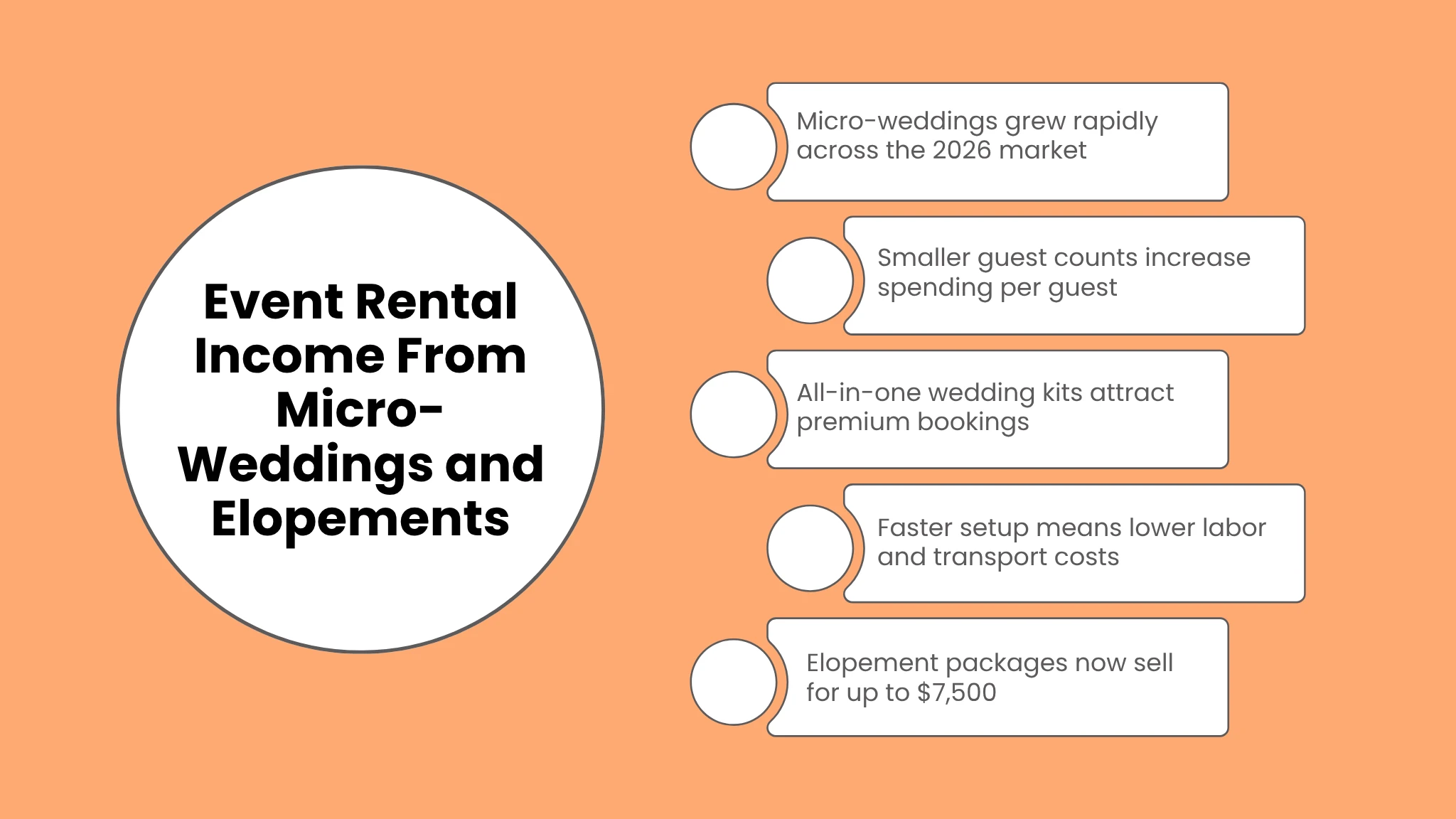
Most rental owners still ignore this segment, which is exactly why it works. Package an all-in-one micro-wedding kit (arch, 30 chairs, sweetheart table, linens, signage) and you own a corner of the market your competitors cannot even see.
How to Scale Your Event Hire Business 2026 for Maximum Profit
Scaling is not about hoarding more inventory. It is about smarter systems. Package pricing beats a la carte every single time and lifts average order 30 to 40 percent. Rental management tools like Booqable or Goodshuffle Pro save 60 percent of admin hours. Wedding planner partnerships drive 40 to 60 percent of repeat bookings once you earn their trust.
Corporate gigs and brand activations fill the empty November to February slots. Reinvest 15 to 20 percent of yearly revenue into new inventory or you fall behind. The event hire business 2026 winners are the ones running tight systems, not the ones with the biggest warehouse.
Conclusion
Wedding rental business profit is real money if you stock smart, price packages right, and dodge the silent profit killers. Big tents and specialty decor pay the bills. The add-on revenue covers the surprises. Reliable Startup walks new owners through the inventory math, the pricing playbook, and the scaling moves that turn a side hustle into a steady seven-figure shop. Browse more rental guides or grab the free 7-day business plan and start your build the smart way.
Frequently Asked Questions
How much profit does a wedding rental business make per event?
A small operator nets $1,500 to $5,000 per wedding. Larger tent companies pull $8,000 to $20,000 per event once their inventory is paid off.
What is the average wedding rental business profit margin?
Most shops sit at 30 to 55 percent net. Specialty decor items can hit 70 to 80 percent gross margin if priced right.
How long until a wedding rental business becomes profitable?
Most owners reach positive cash flow in 12 to 18 months. Full ROI usually shows up between month 18 and month 24.
What is the most profitable item in a wedding decor rental business?
Specialty tents win on absolute dollars. Neon signs, arches, and lounge sets win on margin percentage and turnaround speed.
Is starting an event hire business 2026 still worth it?
Yes. The US wedding rental market crossed $7 billion. Micro-weddings and luxury bookings keep the demand strong straight through 2026.