Jet Ski Rental Business: Licensing, Insurance, and Safety Rules

The tourism and coastal recreation sector is experiencing a major boom as travelers look for exciting outdoor experiences. For entrepreneurs who love the water, starting a personal watercraft (PWC) business is an excellent opportunity. If you are asking is jet ski rental business licensing profitable when considering strict maritime laws, the response from market data is a clear yes. Operating a waterfront watercraft service is highly lucrative. Owners frequently see an average jet ski rental business licensing profit margin of 35% to 50% during peak holiday seasons. For comparison across the broader watersports rental space, check out our breakdown of real kayak rental business numbers and margins. Because beachgoers willingly pay premium rates for high-speed thrills, an optimized fleet can recover its initial capital quickly.
However, operating motorized watercraft involves navigating rigorous regulatory frameworks. Specifically, you must master strict wildlife protections, local harbor rules, and complex liability coverages.
This comprehensive guide breaks down the true jet ski rental business licensing cost metrics, insurance essentials, and safety requirements you need to build a secure brand.
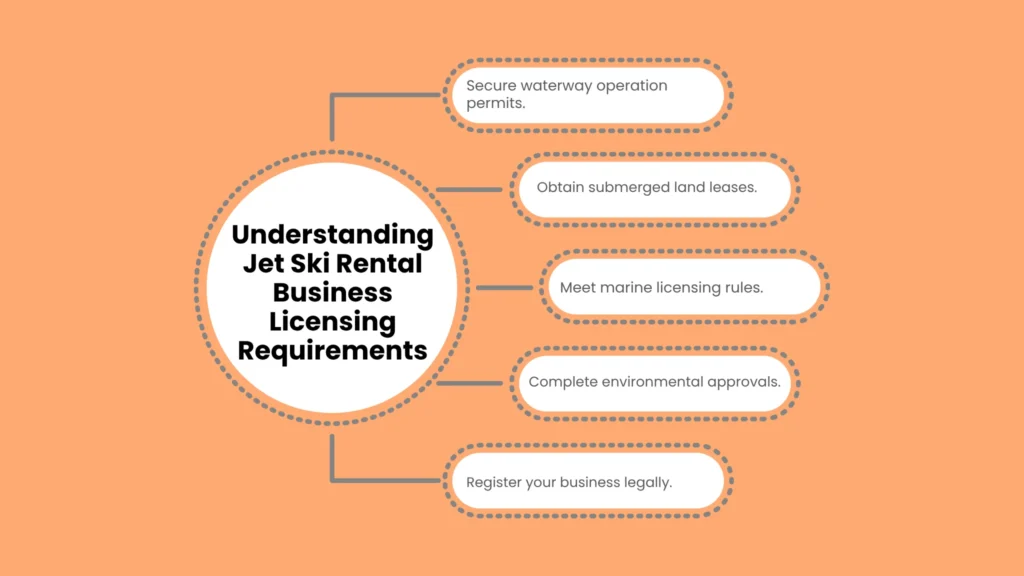
Understanding Jet Ski Rental Business Licensing Requirements
Before purchasing a fleet, you must understand the multi-layered legal frameworks that govern commercial waterways. Unlike land-based rental companies, watercraft businesses face scrutiny from local, state, and federal maritime agencies. You can review the complete federal boating regulations directly through the official U.S. Coast Guard boating safety resource, which outlines the compliance framework every commercial operator must follow. Fulfilling these core jet ski rental business licensing requirements is the most critical stage of your startup roadmap.
1. Waterway Encroachment and Submerged Land Leases
If you plan to operate from a physical dock, a public boat ramp, or a private beachfront resort, you must secure a submerged land lease or a commercial waterway encroachment permit. Local environmental protection agencies issue these agreements to ensure your fleet will not damage local marine habitats, coral reefs, or protected underwater vegetation.
2. Commercial Marine Captain and Guide Licenses
Depending on your local jurisdiction, the owner or your on-site ride marshals may need to hold official United States Coast Guard (USCG) Master Captain licenses or state-level marine guide credentials. Even if your customers are driving the watercraft independently, having a certified captain on staff is often a mandatory rule for businesses that guide tours out into open ocean waters.
3. Business Operational Permits and Environmental Clearances
Finally, you must secure standard local business licenses alongside specialized environmental clearances. For example, many popular coastal zones enforce strict caps on the total number of motorized commercial watercraft allowed on the water simultaneously to protect local marine wildlife like manatees, sea turtles, or coastal birds.
The Complete Jet Ski Rental Business Licensing Cost Breakdown
Launching a watercraft service requires a notable amount of upfront capital. Your total jet ski rental startup cost is heavily weighted toward purchasing high-quality, durable marine hardware and securing specialized commercial dock space.
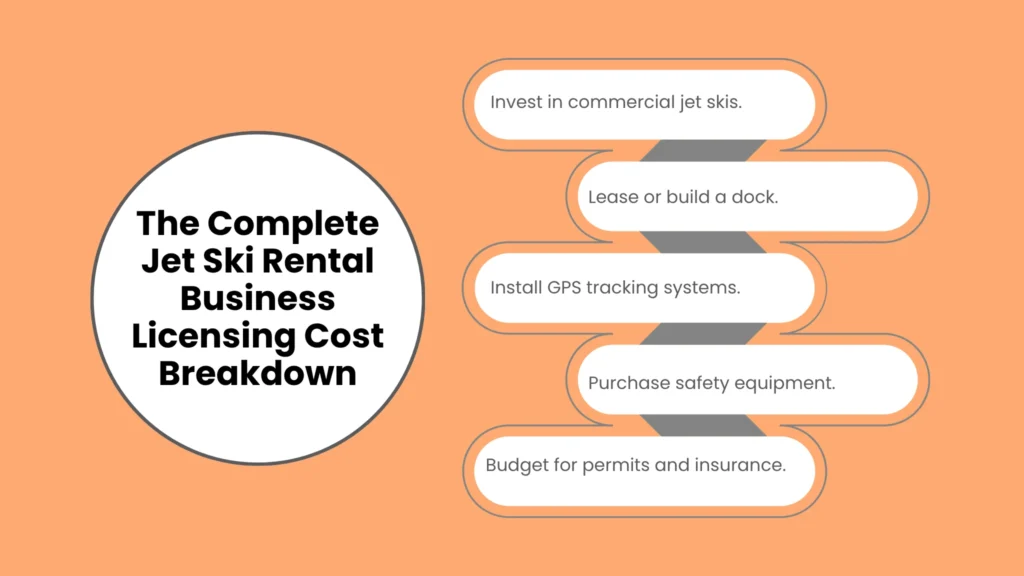
For an independent entrepreneur launching a startup with a fleet of 6 commercial-grade watercraft, your estimated initial investment ranges from $95,000 to $195,000.
Core Watercraft Fleet Investments
You must never buy cheap, consumer-grade personal watercraft for a commercial rental business. Instead, look for fleet-grade units from trusted manufacturers like Yamaha or Sea-Doo. These models are designed with heavy-duty hull materials, reliable closed-loop cooling systems, and digital speed-limiter controls. Brand new commercial units equipped with these safety features generally cost between $12,000 and $17,000 per craft.
Electronic Safety and Tracking Tools
Furthermore, you must invest heavily in tracking technology to protect your assets. Every watercraft should be equipped with a waterproof, marine-grade GPS tracking device featuring remote engine shut-off capabilities. This tool allows your shore staff to disable a unit instantly if a customer violates speed limits or drives into dangerous shallow waters.
Detailed Fleet Startup Capital Estimates
The table below outlines the realistic capital requirements for establishing a 6-unit jet ski rental fleet based on current marine industry averages:
| Expense Category | Low-End Estimate | High-End Estimate | Budget Details & Material Notes |
| Commercial Fleet (6 Units) | $72,000 | $102,000 | High-durability fleet models with speed limiters. |
| Multi-Craft Marine Trailers | $4,000 | $9,000 | Heavy-duty aluminum trailers with salt protection. |
| Commercial Dock Lease & Setup | $5,000 | $15,000 | Waterfront staging space with floating drive-on docks. |
| Marine GPS & Remote Kill Switches | $1,500 | $4,500 | Waterproof IoT tracking hardware and software setup. |
| Safety Equipment & Life Jackets | $1,200 | $3,000 | USCG Type III vests, whistles, and marine radios. |
| Licensing, Permits, & Maritime Fees | $2,000 | $7,500 | Submerged land leases, city permits, and DMV registrations. |
| Insurance Down Payment & Legal Fees | $4,000 | $10,000 | Initial premium deposit and maritime waiver reviews. |
| Local Search Marketing & Launch Ads | $1,500 | $5,000 | Local search engine optimization, beach signs, and flyers. |
| Total Estimated Startup Capital | $91,200 | $156,000 | Average initial investment centers around $125,000 |
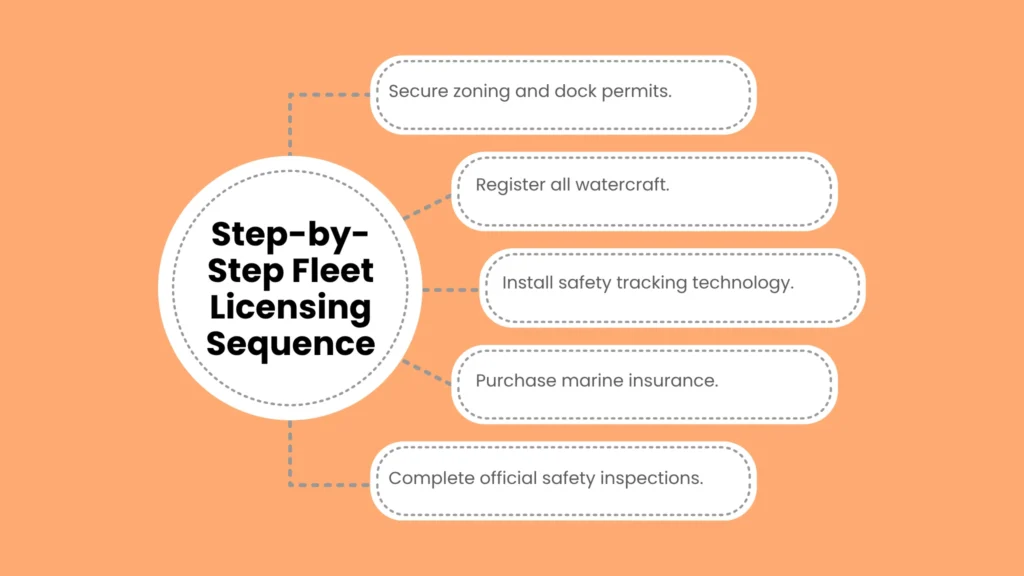
Step-by-Step Fleet Licensing Sequence
To ensure your marine business launches without legal delays, you must execute your compliance tasks in a highly structured order.
Navigating Jet Ski Rental Insurance Requirements
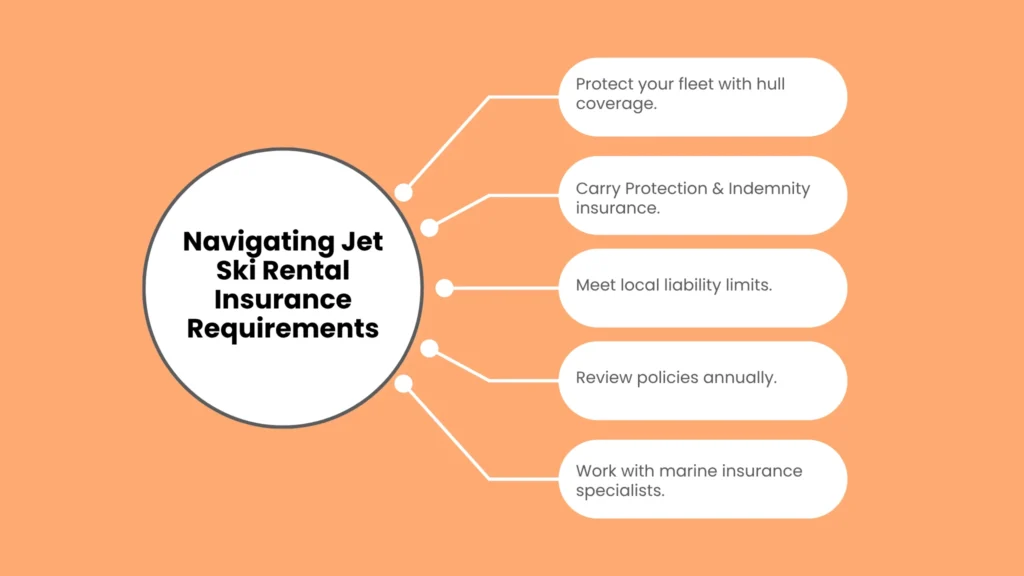
Because motorized watercraft operate at high speeds in mixed public swimming areas, insurance coverage is non-negotiable. Standard commercial auto or general business liability policies will completely exclude marine activities. For a broader comparison of coverage types across watercraft businesses, see our boat rental business insurance guide. Therefore, you must work with a niche broker to fulfill specific jet ski rental insurance requirements.
Hull and Machinery Coverage
First, this asset protection coverage insures your physical fleet against accidental damage, collisions with docks, or sinking events. Because rental customers frequently misjudge water depths or scrape against rocks, keeping a comprehensive hull policy prevents a single accident from destroying your capital investments.
Protection and Indemnity (P&I) Coverage
Second, P&I coverage is the core marine equivalent of third-party bodily injury and property damage liability. If a customer accidentally strikes a swimmer, crashes into a private yacht, or causes a fuel spill, this policy shields your company from devastating legal judgments. Most tourist cities require a minimum P&I limit of $1 million per occurrence.
Safety Rules and Operational Best Practices
Implementing strict daily field safety rules is essential to protect your customers, preserve your fleet, and keep your insurance premiums manageable.
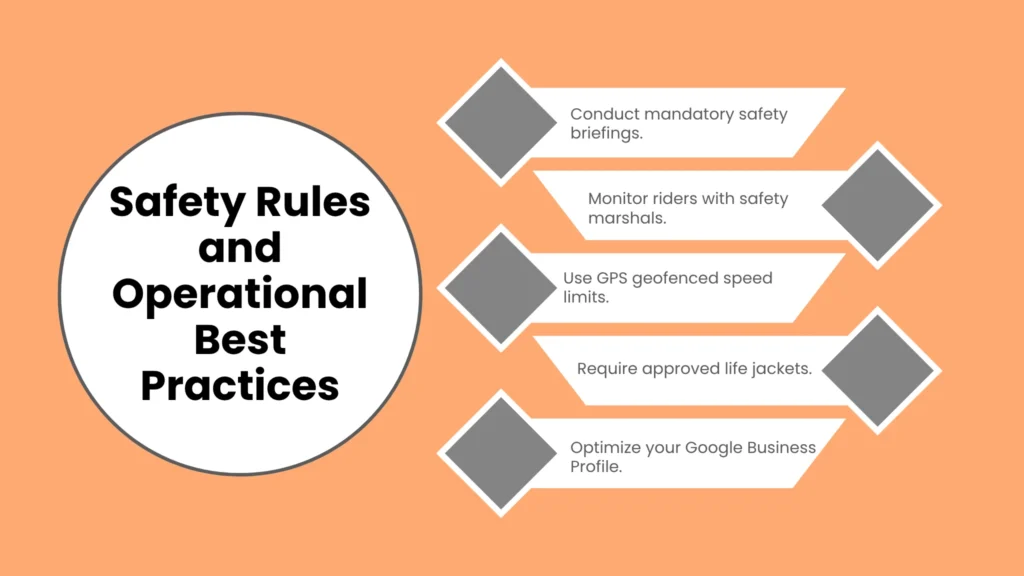
Enforce Mandatory On-Water Safety Briefings: Before giving anyone a key, require your staff to conduct a 10-minute operation briefing. Show riders how to balance, explain how the watercraft handles without throttle steering, and review the local waterway markers and slow-no-wake zones.
Implement an On-Water Ride Marshal System: Never allow customers to roam completely unsupervised in high-traffic waters. Keep a trained employee out on the water on a dedicated safety craft. This ride marshal can watch for reckless behavior, keep riders away from swimmers, and assist anyone who capsizes. If you’re building out your onboarding process, our guide on safety training programs for kayak rental customers offers a useful framework that applies well to watercraft rentals too.
Utilize Geofenced Speed Controls: Leverage your GPS software to create digital boundaries around swimming beaches and shallow sandbars. If a customer attempts to drive into a restricted zone, the software can automatically drop the watercraft’s speed down to idle, preventing accidents before they occur.
Optimize for Hyper-Local Mobile SEO: Most vacationers look for watersports spontaneously from their phones while sitting on the beach. Claim your Google Business listing instantly, use clear target phrases like “jet ski rentals near me,” and display your safety badges prominently on your site to capture high-intent walk-in bookings.
Conclusion
Learning how to navigate jet ski rental business licensing pathways is the foundation of building a successful coastal watersports company. While your initial hardware investments and jet ski rental insurance requirements demand thorough preparation and a solid capital layout, the financial returns are exceptionally resilient. By selecting reliable, fleet-grade vessels, using strict geofenced tracking software, and adhering to local harbor safety rules, you can scale a highly secure and lucrative lifestyle brand.
For more marine operations blueprints, financial planning tools, and tested marketing guides designed to launch your next enterprise smoothly, check out our latest resources over at reliablestartup.
Frequently Asked Questions
Do customers need a special boating license to rent a jet ski?
In many states and coastal regions, anyone born after a certain year must complete an approved boater safety course to operate a motorized vessel. To accommodate this rule, top operators integrate a link to a temporary, state-approved 15-minute digital boater exam directly into their website’s checkout process.
How do you handle mechanical maintenance for a commercial fleet?
Commercial watercraft require intense, preventative upkeep. Your team must flush every engine with fresh water at the end of every operating day to prevent salt crystallization. Furthermore, you should change the engine oil, inspect the wear rings, and check the impellers every 50 operating hours to avoid costly mid-season breakdowns.
What is the average lifespan of a commercial rental watercraft?
Under demanding commercial rental conditions, a high-quality personal watercraft will provide roughly 300 to 500 hours of peak operation. This usually translates to 2 to 3 busy summer seasons before it makes financial sense to sell the unit to a private buyer and upgrade your fleet.