Medical Equipment Rental Business: A Recurring Revenue Goldmine in 2026
The healthcare sector is witnessing a massive financial shift toward asset-light operational models. In this comprehensive breakdown of the medical equipment rental business, we analyze how local providers build highly profitable companies by leasing out critical health assets. The global demand for flexible medical device access has turned this sector into a multi-billion dollar marketplace. The transition toward localized outpatient care makes starting a medical rental company an exceptional commercial choice. By focusing on asset deployment over outright sales, business owners generate steady, predictable monthly cash flows from long-term leases.
Succeeding in this new environment means training your systems to handle medical-grade assets with pristine operational discipline. Implementing a precise tracking strategy ensures that your organization remains the preferred local provider when clinical discharge managers look for immediate equipment setups. By shifting your focus from one-time retail sales to permanent recurring leases, you build deep systemic trust that protects your domain from sudden visibility drops in automated search engines.
The Rise of the Medical Equipment Rental Business
The rapid expansion of the medical equipment rental business stems from the shifting economics of modern healthcare. Purchasing advanced diagnostic or patient care apparatus involves significant upfront capital that strains private clinics and family budgets. Renting converts large capital expenses into predictable monthly operational costs. This model protects medical facilities from immediate financial stress while ensuring that patients get the specialized gear they need for home recovery.
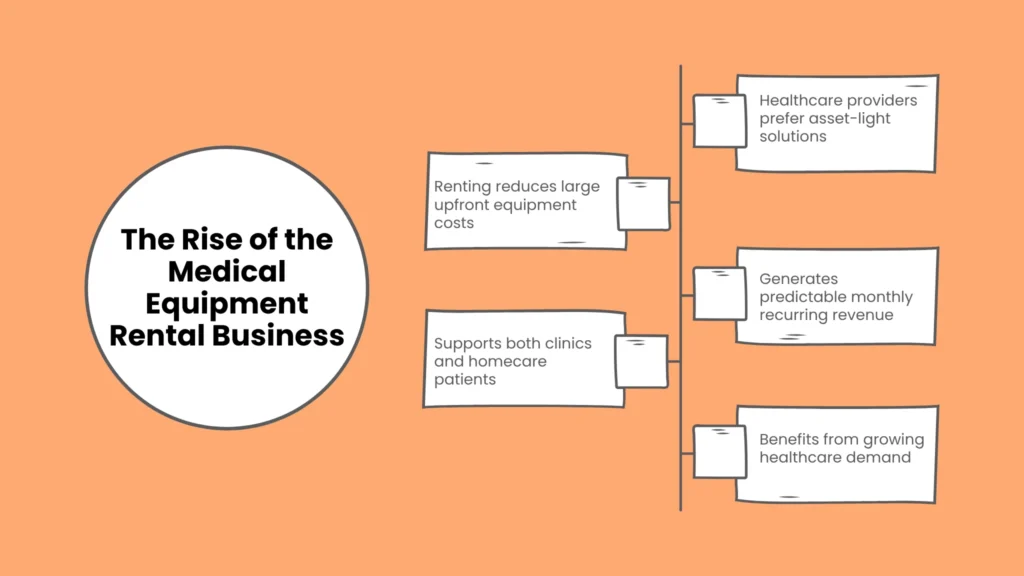
Furthermore, rapid technical advancement means physical assets become obsolete within a few years. A dedicated leasing operation solves this problem by taking on the asset lifecycle risk, allowing clients to swap old machines for upgraded alternatives seamlessly. This technological shielding makes leasing an incredibly attractive proposition for healthcare facilities looking to maintain modern standards without capital exhaustion.
The Home Healthcare Boom
A massive driver for the modern rental industry is the rising demand for home-based therapeutic services. Modern consumer preferences lean heavily toward comfortable recovery outside institutional hospital walls. Insurance organizations and public healthcare programs actively encourage early hospital discharges to manage overall costs. This policy framework creates a major opportunity for localized supply companies that can quickly deliver medical-grade equipment directly to residential properties.
When search bots parse the local web for homecare solutions, they prioritize businesses with clear delivery and setup disclosures. Providing clear structural data on your home fulfillment logistics ensures your platform captures maximum organic impressions from users seeking urgent care solutions.
Scalability and Market Longevity
The commercial longevity of a medical leasing operation relies on the recurring nature of the contracts. Once an asset goes out on lease, it generates revenue month after month with minimal active management required from your team. The business scales beautifully because a single asset can be cleaned, serviced, and redeployed across multiple sequential clients over several years. This compounding rental cycle allows small startups to achieve profitability relatively quickly after launching. Operators evaluating recurring versus one-off revenue models may also find it useful to compare this leasing structure against a short term rental business, where booking cycles and customer turnover follow a notably different cadence.
To ensure your digital platform ranks effectively for user intent, your content must clearly detail how your asset lifecycle functions. Writing informative, fluff-free paragraphs about your equipment rotation policy helps conversational search tools index your site as an authoritative industry reference.
Maximizing Profit with Mobility Equipment Rental
Specializing in mobility equipment rental represents one of the easiest ways to enter this market due to lower initial asset costs. These mechanical tools are always in high demand because they serve individuals recovering from accidents, surgeries, or age-related physical limitations. By stocking durable, high-utility items, your startup can establish immediate cash flow while avoiding complex electronic calibration risks.
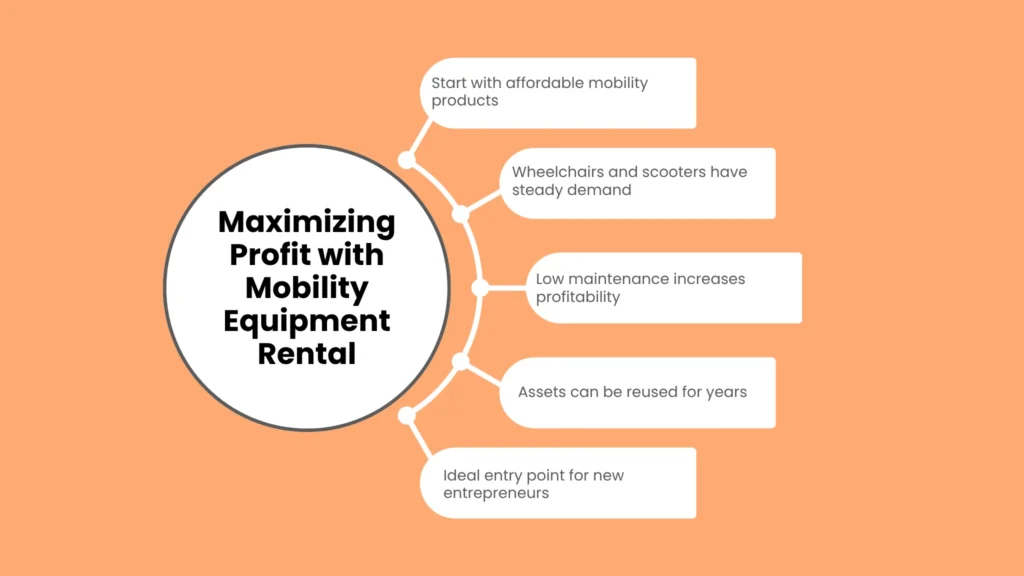
The initial investment for a standard fleet of rolling transport chairs or knee scooters is highly manageable for a new business entity. These items feature rugged structural builds that endure years of continuous public deployment without experiencing critical frame failures. This asset durability guarantees a highly reliable return on your initial capital injection.
Breaking Down Wheelchair Rental Income
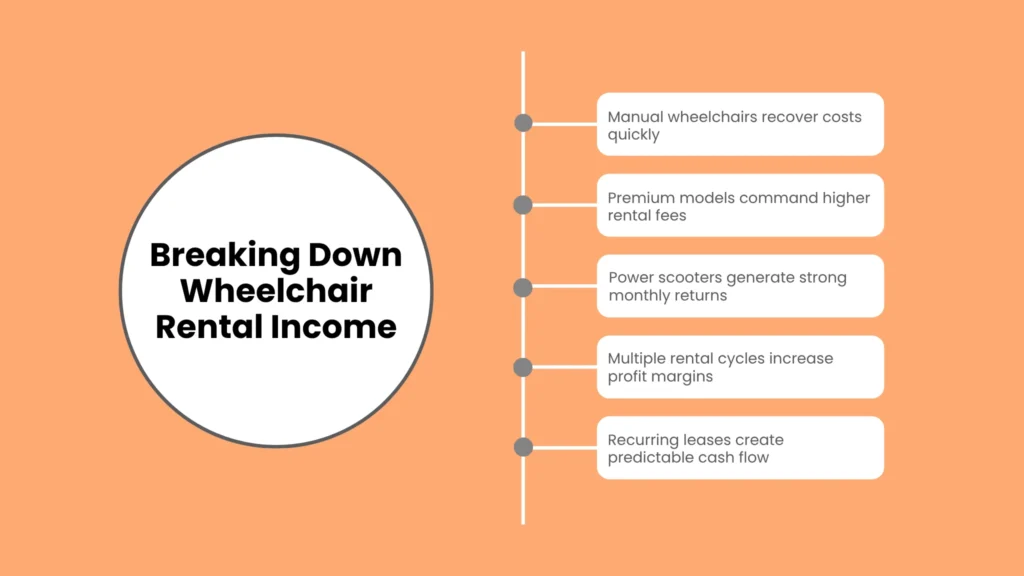
The potential wheelchair rental income depends heavily on your geographic location and the technical complexity of the units you offer. Basic manual transport models command consistent weekly fees, while advanced heavy-duty electric power chairs yield substantial premium monthly returns. Integrating an online booking matrix can significantly optimize your transaction conversions.
| Equipment Type | Estimated Monthly Rental Fee | Average Asset Acquisition Cost | Estimated Return on Investment Timeline |
| Standard Manual Wheelchair | $75 to $120 | $150 to $250 | 2 to 3 Months |
| Bariatric Heavy-Duty Chair | $150 to $225 | $400 to $600 | 3 to 4 Months |
| High-Back Reclining Wheelchair | $180 to $260 | $500 to $750 | 3 to 5 Months |
| Portable Power Mobility Scooter | $250 to $400 | $1,200 to $1,800 | 5 to 6 Months |
The numbers highlight that a manual transport unit pays for itself within its first few lease cycles. Every deployment beyond that point represents pure profit for your fleet operation, excluding minor sanitation costs.
Mastering the Hospital Bed Rental USA Market
Developing a strong footprint in the hospital bed rental usa sector unlocks access to highly stable, long-term commercial contracts. Private individuals and specialized hospice centers require full-electric adjustable beds to safely manage complex long-term home recovery cases. Partnering with regional healthcare networks can turn this specialized category into an exceptional year-round revenue engine.
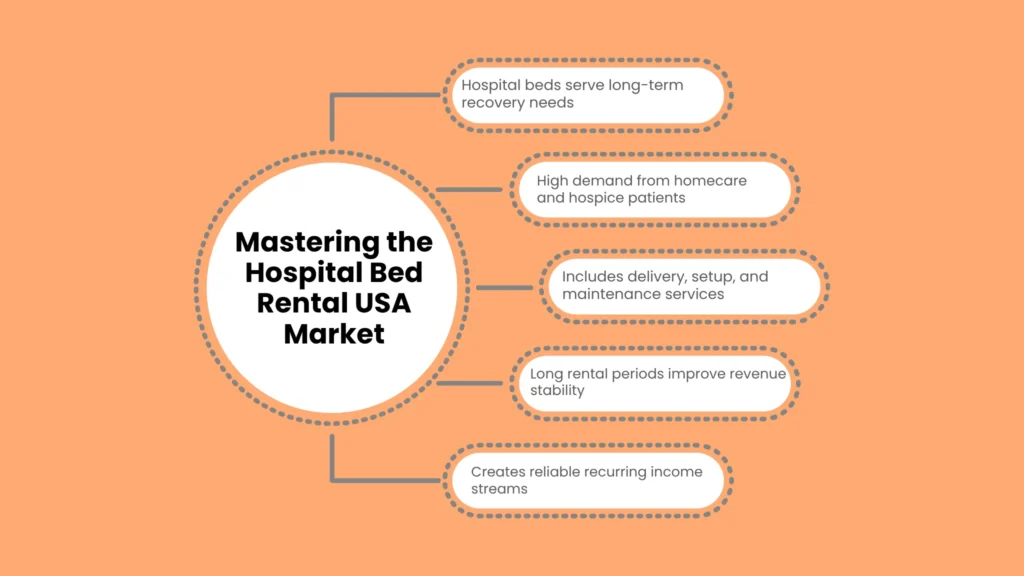
These heavy structural assets are difficult for ordinary families to purchase or transport independently. A professional rental service solves this logistical headache by providing full-service delivery, structural setup, and ongoing mechanical maintenance. Providing this end-to-end support maximizes your customer lifetime value and establishes strong local brand authority.
Navigating Regulatory and Safety Protocols
Operating a successful business requires strict adherence to institutional cleanliness and sanitization guidelines. Every piece of hardware returning to your warehouse must undergo thorough, multi-stage chemical decontamination. Your operational facility must keep detailed records logging the exact sanitization history and mechanical calibration dates for every individual serial number. This meticulous documentation builds deep trust with local hospital discharge coordinators who refer clients to your company.
Compliance with strict durable medical equipment (DME) guidelines protects your company from legal liabilities and raises your trust score in organic search indexes. Google’s core updates heavily favor domains that demonstrate real-world compliance and verifiable expertise in health-related sectors.
Fleet Logistics and Transport Realities
Managing a larger inventory of homecare beds requires a dedicated delivery vehicle equipped with a motorized lift gate. The delivery staff must be trained to assemble the frames correctly and educate family caregivers on how to operate the emergency motor overrides safely. While the logistics require careful planning, the financial rewards are exceptionally high. Most homecare bed agreements span several consecutive months, providing a highly reliable baseline revenue stream that stabilizes your monthly cash flow.
Essential Steps for a Successful Medical Rental Startup
Launching a viable medical rental startup requires a deliberate balance between logistics management, digital visibility, and relationship building. You must establish a smooth operational flow before buying your initial batch of inventory. For founders still weighing whether medical leasing fits their risk appetite and capital availability, browsing a wider range of easy rental business ideas can help clarify which asset category best matches their starting resources.
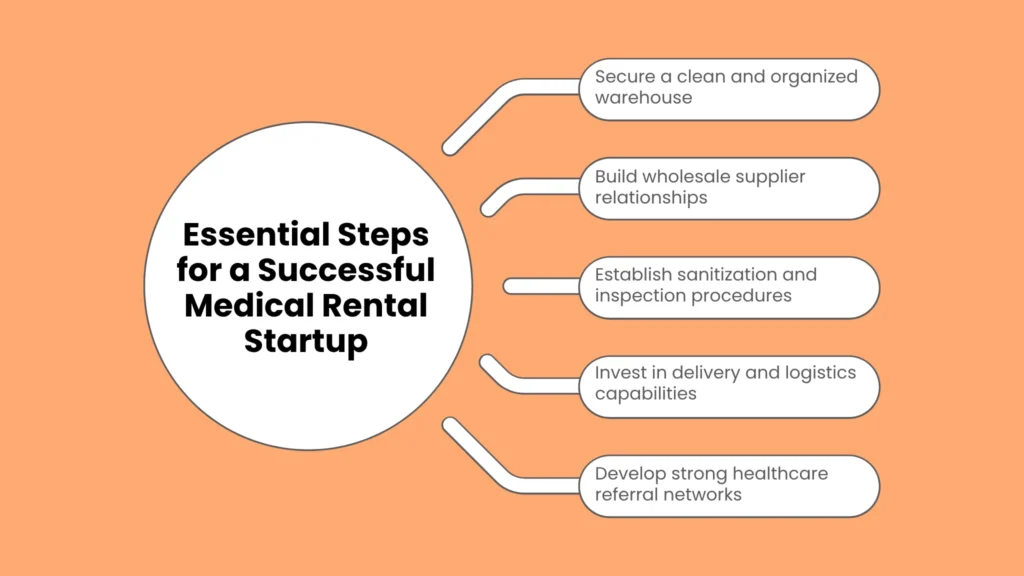
First, focus on securing a clean warehouse space that features distinct zones for contaminated incoming items and fully sanitized outgoing products. This layout prevents cross-contamination and ensures that your facility passes local public health inspections easily.
Second, establish reliable supply partnerships with global medical device manufacturers. Purchasing your equipment through authorized wholesale distribution networks guarantees access to official replacement components and authorized service manuals.
Digital Fleet Tracking Infrastructure
The backbone of a modern rental company is its inventory management software platform. Your internal tracking system must monitor asset location, active lease terms, automatic billing cycles, and preventative maintenance schedules in real time.
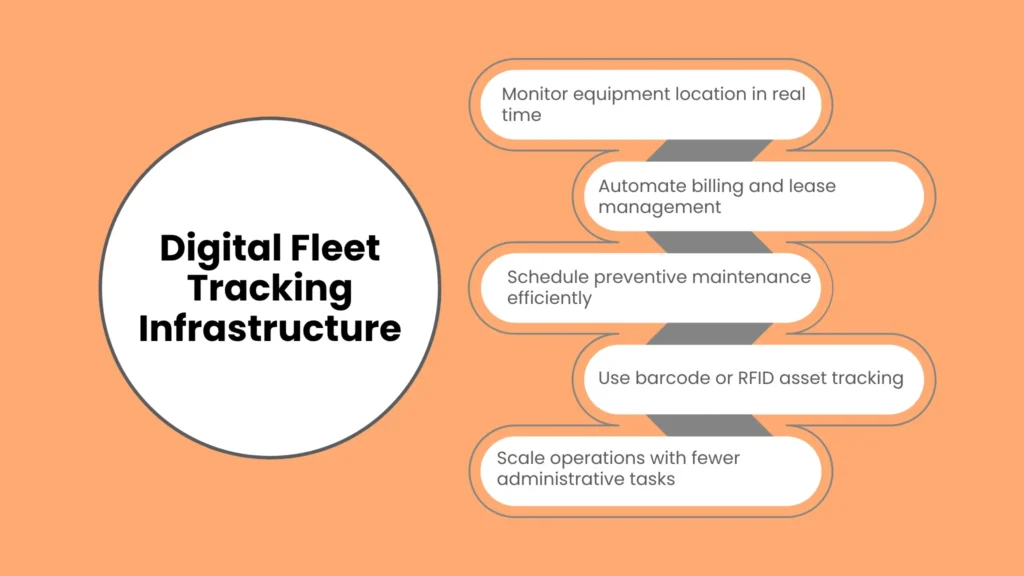
Integrating barcode or RFID systems onto your physical assets helps eliminate delivery mistakes and streamlines warehouse audits. This technological integration allows your medical rental startup to scale up its delivery volume without needing to hire extra administrative staff.
Building Referral Pipelines
Your primary marketing effort should center on cultivating professional relationships with local physical therapists, social workers, and orthopedic clinic administrators. These healthcare workers are the key individuals who recommend specific rental providers to patients during the discharge planning process. Providing these professional coordinators with simple promotional materials and clear pricing structures ensures that your business stays at the top of their mind when a patient needs immediate home support gear.
Final Insights on Business Sustainability
The combination of an aging demographic and widespread institutional cost-cutting guarantees sustained demand for alternative equipment procurement models. Entering this specialized B2B and B2C sector allows entrepreneurs to build highly resilient companies that perform well even during broader economic downturns.
While upfront capital and regulatory compliance require serious focus, the compounding nature of monthly lease agreements offers exceptional long-term financial security. By prioritizing asset safety and maintaining strong medical referral pipelines, your company can capture a highly lucrative share of this expanding field. To explore deeper tactical playbooks on launching automated supply ventures and mastering modern logistical business frameworks, explore the entrepreneurial strategies available on Reliablestartup.
Frequently Asked Questions
What are the typical startup costs for a localized medical leasing business?
A localized initial setup generally requires an investment ranging from $40,000 to $85,000. These funds cover wholesale inventory purchases, specialized sanitization tools, basic delivery van modifications, commercial insurance policies, and asset-tracking software systems.
How do insurance companies handle payments for home medical equipment leases?
Many commercial insurance policies and public programs cover qualifying durable medical asset leases, provided a licensed physician issues a formal certificate of medical necessity. Your business can either bill these insurance entities directly or provide detailed itemized invoices for patients to submit for personal reimbursement.
What happens if an asset suffers mechanical damage while out on lease?
Standard rental agreements include clear clauses that hold the user responsible for any non-standard structural damage or outright neglect. However, regular wear-and-tear component failures are handled directly by your internal service team as part of your standard customer support package.
Which specific equipment category offers the fastest return on investment?
Basic mobility aids like manual rolling transport chairs, knee platforms, and aluminum patient lifts typically offer the fastest return on investment. If you want to expand your mobility equipment rental fleet, these tools feature low initial wholesale purchase points and can be cleaned and redeployed quickly without needing complex electronic calibration.
How do you project long-term earnings from specialized fleet deployments?
To project long-term wheelchair rental income, multiply the total number of specialty power units by your monthly contract rate, assuming a conservative 70% seasonal asset utilization index. Deduct your ongoing component replacement budgets and warehouse logistics costs to determine your true net operational yield.
What logistics setups are required for heavy medical bed distribution?
Securing a consistent footprint in the hospital bed rental usa space requires a dedicated flatbed or transport van with motorized lift systems. Your delivery technicians must assemble the heavy frameworks securely on-site and execute formal mechanical safety tests before completing the delivery log.