How to Start a Golf Cart Rental Business at the Beach (Step-by-Step Guide)
Coastal communities, island resorts, and beachfront boardwalks rely heavily on open-air micro-mobility options. For vacationers carrying coolers, umbrellas, and beach chairs, a passenger vehicle is often cumbersome and difficult to park. If you are looking to tap into tourist traffic and wondering is golf cart rental business beach profitable, the data points directly to yes. Beach-based operations are incredibly lucrative, frequently yielding a premium golf cart rental business beach profit margin of 25% to 40% due to concentrated, high-intent seasonal demand.
However, scaling a fleet along the coast requires strategic planning around harsh saltwater environments, tight municipal zoning laws, and severe seasonal traffic swings.
This expert guide details how to start golf cart rental business units, calculate your true golf cart rental business beach cost, fulfill regulatory benchmarks, and secure reliable cash flows. similar in structure to launching a scooter rental business in high-tourist-traffic areas.
The Initial Golf Cart Rental Business Beach Cost Breakdown
Launching a rental operation next to the ocean demands substantial upfront capital, largely focused on fleet acquisition and vehicle customization. A commercial coastal fleet requires specialized configurations, including rust-resistant chassis, heavy-duty suspension, and street-legal safety packages.
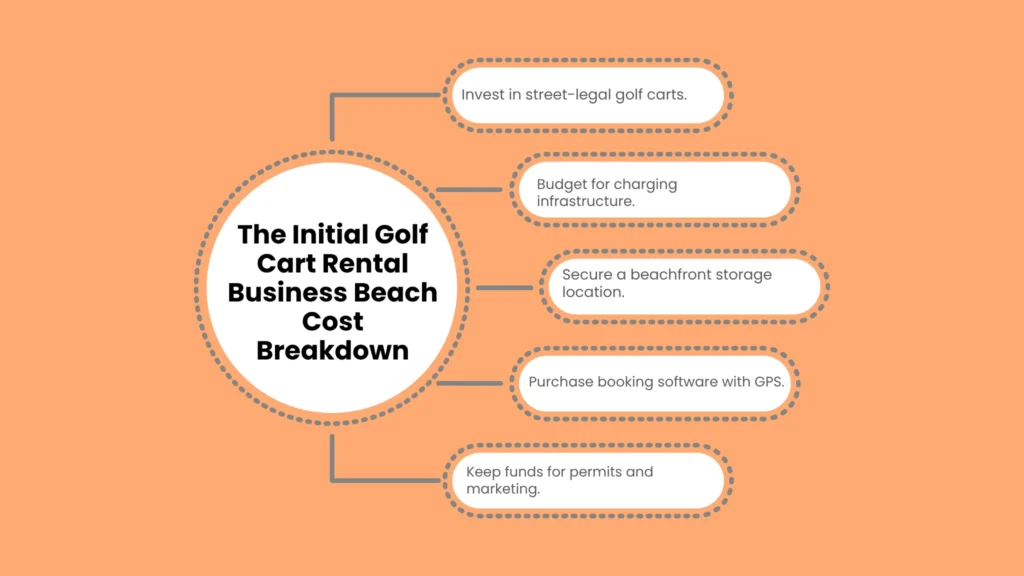
For a standard, localized launch consisting of 10 commercial-grade golf carts, your estimated startup cost will range from $65,000 to $145,000 depending on your purchasing strategy.
Upfront Vehicle Capital
A basic, standard golf cart meant for a golf course will not survive rental wear or satisfy public road laws. You must focus on Low-Speed Vehicles (LSVs) or street-legal carts equipped with seatbelts, windshields, turn signals, and headlights. A mix of 4-seater and high-capacity 6-seater units ensures you can accommodate both couples and large family groups. New fleet-grade LSVs average $9,000 to $14,000 per unit, while high-quality refurbished options average $6,000 to $8,500 including updates.
Infrastructure and Tech Deployment
Beyond the physical fleet, your capital must cover automated logistics platforms and a secure staging area. You will need digital booking software to prevent double-bookings, secure liability waivers, and track active rentals via integrated GPS units.. A secure storefront location or gated holding yard equipped with heavy-duty commercial charging outlets is also necessary to maintain fleet readiness.
Detailed Fleet Startup Capital Estimates
The table below provides a realistic cost projection for launching a 10-cart beachfront rental fleet based on current industry operational figures:
| Expense Category | Low-End Estimate | High-End Estimate | Budget Details & Fleet Notes |
| Fleet Acquisition (10 Units) | $60,000 | $110,000 | Mix of street-legal 4-seat and 6-seat LSVs. |
| Rust & Beach Modifications | $2,000 | $5,000 | Marine-grade vinyl, undercoating, and lift kits. |
| Real Estate Lease & Deposit | $4,000 | $10,000 | Secure staging yard near high foot-traffic hubs. |
| Rental Software & GPS Setup | $1,000 | $3,000 | Booking software integration and IoT trackers. |
| Charging Station Infrastructure | $1,500 | $4,500 | Dedicated electrical upgrades for rapid charging. |
| Licensing, Permits, & Legal Fees | $1,000 | $3,500 | LLC formation, municipal permits, and DMV tags. |
| Initial Marketing & Signage | $1,500 | $4,000 | Local SEO setup, beach flyer printing, and banners. |
| Operational Contingency Fund | $5,000 | $10,000 | Financial cushion for unexpected mid-season repairs. |
| Total Estimated Startup Capital | $76,000 | $150,000 | Average initial deployment centers around $95,000 |
Beach Profit Margin Dynamics and Revenue Potential
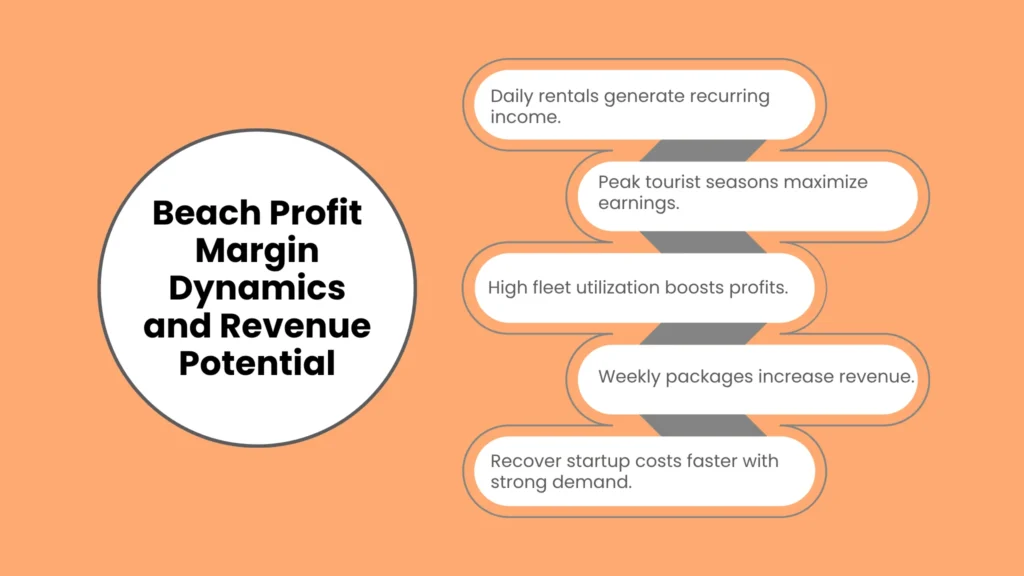
Understanding the financial returns of a coastal mobility venture requires looking closely at daily rental utilization rates and highly compressed seasonal schedules. The primary asset of this business model is the strong golf cart rental business beach profit margin, driven by the reality that guests willingly pay substantial premiums for local parking convenience and open-air holiday experiences.
Coastal Rental Pricing Frameworks
Beachfront operations typically command excellent rates compared to inland options. Pricing scales naturally based on seating capacities and duration metrics:
Daily 4-Seater Rental: $100 to $150 per day.
Daily 6-Seater Rental: $150 to $220 per day.
Weekly Tourist Packages: $600 to $950 per week.
Your annual income will depend heavily on your utilization rate during the peak travel months, which generally run from May through September in most temperate beach markets. Top operators in busy coastal towns routinely hit 75% to 85% fleet utilization during these core summer months.
Realistic Revenue Example
Let us examine a grounded financial scenario for a small business. Suppose you operate a 10-cart fleet consisting entirely of street-legal units. During a 150-day peak summer season, your team maintains a steady 70% average utilization rate, meaning 7 out of your 10 carts are consistently rented out every day.
At an average rental rate of $140 per day across your mixed fleet, your business brings in $980 in gross revenue daily. Over the course of the 5-month summer peak, this single seasonal window generates $147,000 in gross revenue.
Ongoing Monthly Operating Costs
To protect your net returns, you must manage your recurring overhead carefully against seasonal cash flow changes. Your monthly coastal operational expenses typically include the following line items:
Commercial Storage Space: $1,500 to $3,500 per month for a secure yard out of the direct salt air.
Fleet Rental Insurance: $800 to $2,000 per month for custom commercial liability coverage covering public road use.
Preventative Maintenance Reserves: $400 to $900 per month for brake pads, tires, corrosion control sprays, and battery cleanings.
Software Subscriptions: $150 to $400 for live GPS fleet mapping and automated booking platforms.
Electricity and Charging Utilities: $200 to $500 for heavy overnight recharging cycles.
If your total fixed and variable operational overhead averages roughly $5,000 per month across the year, your total annual operational cost sits near $60,000. Subtracting this from your seasonal gross intake leaves a net annual profit of $87,000 before taxes, confirming that a well-run beach fleet can recoup its entire initial capital investment within its first fourteen months of continuous operation.
Regulatory Golf Cart Rental Business Beach Requirements
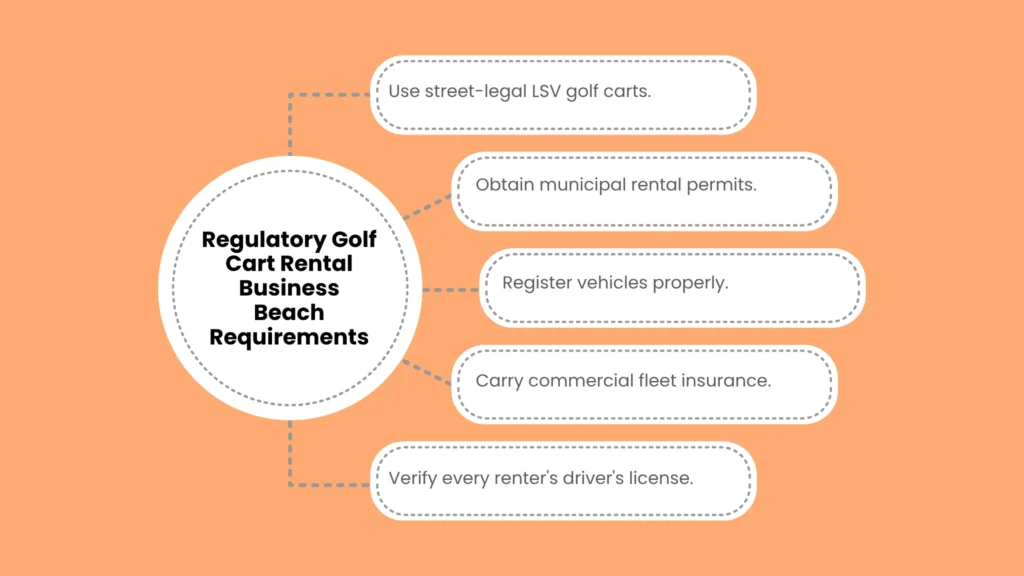
Operating a motorized rental fleet in close proximity to public beaches introduces distinct local legal obligations. Fulfilling these critical golf cart rental business beach requirements is mandatory to safeguard your business from costly police impounds and liability issues.
1. Street-Legal LSV Compliance
Many beach towns strictly prohibit standard golf carts on roads, requiring all rental units to be registered as Low-Speed Vehicles (LSVs). According to Department of Transportation standards, an LSV must feature a maximum design speed between 20 mph and 25 mph, along with a valid 17-digit Vehicle Identification Number (VIN), proper license plates, and essential safety equipment. It must also feature a valid 17-digit Vehicle Identification Number (VIN), proper license plates, and essential safety equipment including seatbelts, mirrors, and shatterproof windshields.
2. Municipal Medallions and Caps
To combat heavy summer traffic congestion, popular coastal destinations frequently place strict caps on the number of commercial rental vehicles allowed to operate within town limits. You must contact your local city council or town hall to secure commercial rental permits or fleet medallions. Do not buy a fleet until you verify that your chosen municipality is actively accepting applications for new micro-mobility vendors.
3. Specialized Commercial Fleet Insurance
Standard commercial auto policies do not cover peer-to-peer or public vehicle rentals. You must acquire a dedicated commercial rental fleet insurance policy that explicitly protects the business when the vehicle is operated by a third-party renter. Most coastal cities require a minimum of $1 million in general liability coverage alongside documented renter verification processes, ensuring every operator holds a valid, unrestricted driver’s license.
Actionable Fleet Management Practices for Coastal Success
To protect your equipment from ocean degradation and secure high search visibility, focus your daily operations on these industry best practices.
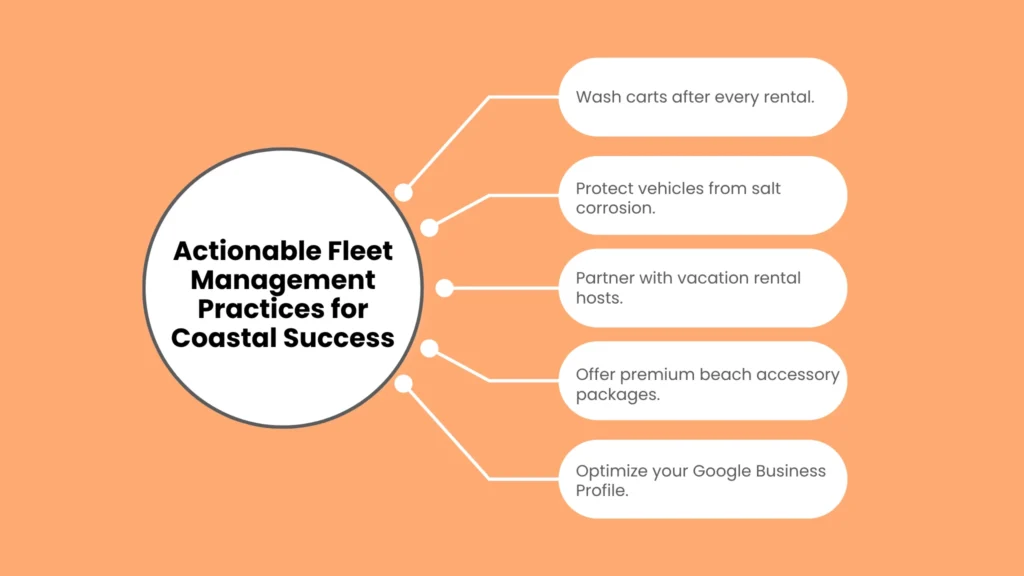
Deploy Daily Anti-Corrosion Routines: Salt air and sand accelerate chassis rust and destroy electrical connections within weeks. Implement a strict daily maintenance checklist requiring staff to rinse the undercarriage of every returned vehicle with fresh water and apply anti-corrosion barrier sprays to exposed metal joints weekly.
Build Direct Partnerships with Vacation Rental Hosts: Do not spend all your money on expensive digital ads. Connect directly with local Airbnb, Vrbo, and boutique property managers. Supply them with digital booking links and custom discount codes to include in their automated guest check-in emails, turning local property owners into an active commission-based sales team.
Offer Premium Beach Packages: Maximize your average transaction size by bundling rentals with bulky beach accessories. Equipping your carts with custom rear-mounted cargo racks allows you to upsell heavy coolers, Bluetooth speakers, and high-end beach umbrellas directly through your checkout screen.
Leverage Hyper-Local Map SEO: Most tourists look for transportation options on their mobile devices immediately after arriving at their hotels. Claim your business listing on all major mapping platforms, keep your operating hours accurate during seasonal transitions, and post high-resolution photos of your carts near local coastal landmarks to capture immediate walk-in demand.
Conclusion
Learning how to start golf cart rental business frameworks at the beach is an excellent opportunity to capture predictable, high-margin tourist spending. While your upfront golf cart rental business beach cost demands careful preparation around street-legal compliance and weather protection, the steady seasonal demand delivers an exceptionally strong golf cart rental business beach profit margin. By selecting reliable vehicles, staying fully compliant with local coastal laws, and automating your customer reservations, you can build a highly resilient seasonal business.
For more operational roadmaps, financial templates, and tested marketing guides designed to launch your next enterprise smoothly, join us at reliablestartup.
Frequently Asked Questions
Which option is better for a beach rental business, gas or electric golf carts?
Electric carts are highly preferred for coastal operations. They run quietly, appeal to environmentally conscious travelers, face fewer municipal noise complaints, and carry significantly lower daily fuel costs. However, you must ensure your storage location features an electrical setup capable of overnight charging.
How do you handle off-season months when tourist traffic drops?
Successful beach operators use the quiet winter months to perform major mechanical overhauls and fleet updates. You can also smooth out seasonal revenue dips by offering discounted long-term winter leases to local residents, securing corporate event partnerships, or renting fleets to local holiday festivals and weddings.
At what age do rental golf carts need to be retired or replaced?
Under demanding beachfront rental use, a high-quality commercial cart will typically offer three to five years of optimal service before maintenance expenses rise. Implementing a structured fleet rotation program allows you to sell off your older models to private buyers while they still hold 40% to 50% of their initial asset value.