How to Find Investors for a Rental Business: Pitch Deck & Funding Guide

Starting or expanding an equipment, event, or vehicle rental operation requires a significant amount of upfront capital. If you are wondering how to secure the necessary capital to purchase inventory and scale your operations, you need a clear strategy to attract equity partners and lenders.
To secure rental business funding, you must prove to backers that your inventory will generate consistent, recurring revenue. You can find rental startup investors by presenting a structured asset management plan, targeting local angel networks, utilizing specialized equipment lenders, or applying for asset-backed rental business loans usa. Navigating the funding landscape requires a professional approach, a validated market niche, and a data-backed pitch presentation.
This comprehensive guide will show you how to fund rental business operations successfully, build a compelling rental business pitch deck, and connect with the right financial partners to launch your company.
Understanding the Rental Business Funding Landscape
The rental economy is highly capital intensive because you must buy your inventory before you can rent it out to customers. This dynamic makes the funding process for a rental asset company very different from a standard software startup or a traditional retail store. Investors look closely at asset depreciation, maintenance overhead, and utilization rates.
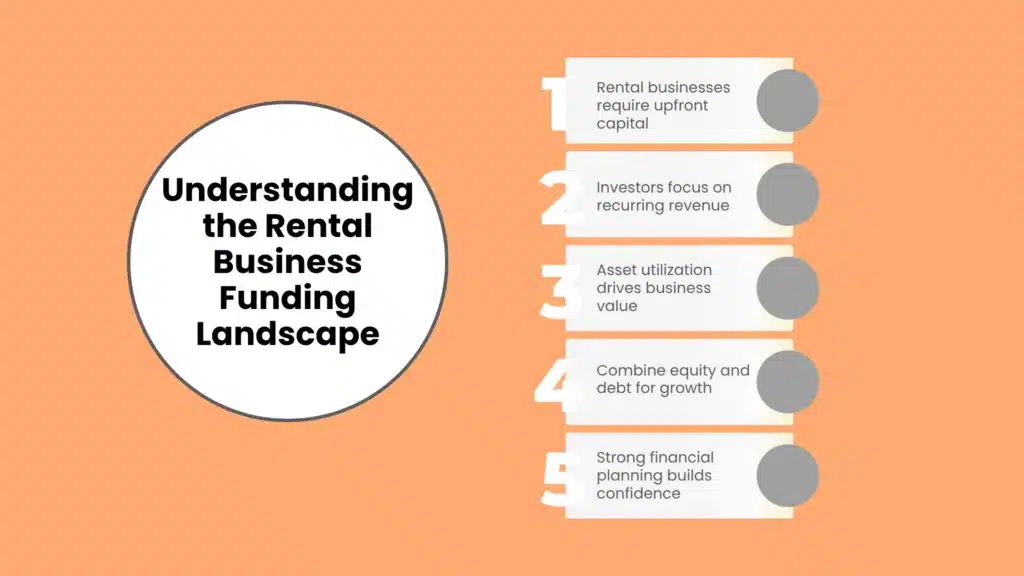
To get backing, you need to understand the distinct funding avenues available to your business. Most rental founders use a combination of equity investments and debt financing to build their fleets without diluting too much ownership.
Before approaching any lender or equity partner, founders should have a clear operational foundation in place, and our detailed guide on how to start an equipment rental business walks through the exact niche selection, asset acquisition, and maintenance planning steps that strengthen any funding application.
Equity vs. Debt Financing for Rental Startups
Choosing between equity investors and debt financing depends heavily on your current operating history and your total capital requirements.
Equity Investors: Venture capital firms, angel investors, and private equity syndicates provide capital in exchange for partial ownership of your business. They do not require monthly repayments, which frees up cash flow during your early growth phase. They look for highly scalable rental models, such as specialized B2B equipment marketplaces or tech-enabled vehicle platforms.
Debt Financing: Commercial lenders, equipment leasing companies, and specialized government programs provide capital that you must repay with interest. Because your rental inventory serves as physical collateral, securing debt is often easier for asset-heavy rental companies than it is for service-based startups.
Top Sources of Funding for a Rental Business
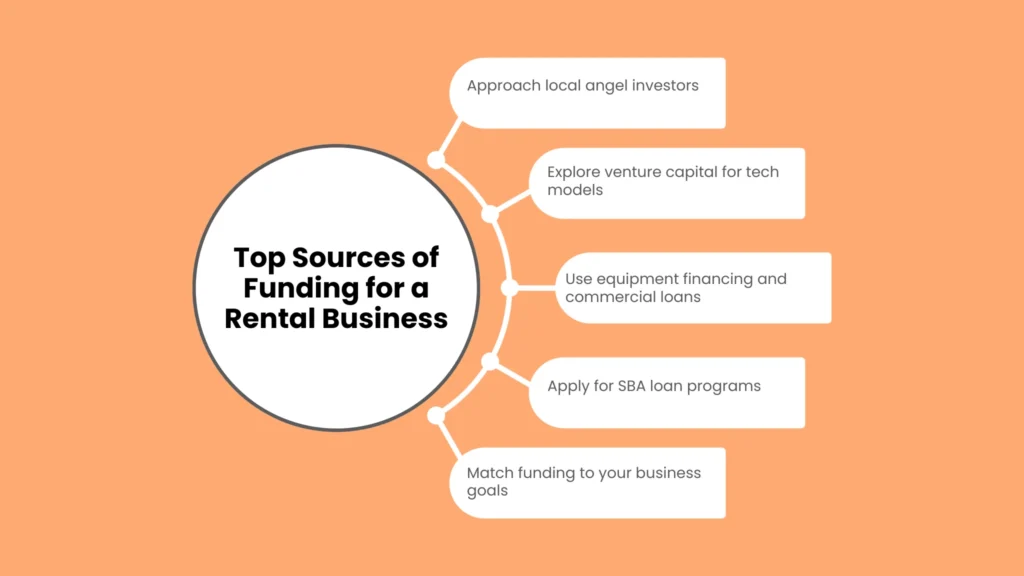
Securing capital requires you to pitch your business to the specific types of backers who understand asset utilization models. The most reliable funding sources for modern rental businesses include private equity, commercial loans, and strategic asset networks.
1. Private Angel Investors and Syndicates
Local angel investors are often business owners themselves who understand the logistics of asset management. They are excellent targets for event rental companies, local tool hire shops, or regional medical equipment providers. Look for investors through online platforms or local business networks who have a history of investing in logistics or supply chain businesses.
If you are still deciding which rental niche to pursue before committing to a funding strategy, exploring a curated list of easy rental business ideas can help you identify asset categories with the lowest startup capital requirements and the fastest paths to positive utilization rates.
2. Venture Capital for Tech-Enabled Rental Models
If your business uses software to automate asset delivery, peer-to-peer sharing, or fleet management, you can target early-stage venture capital firms. These investors are looking for tech-enabled operations that can scale across multiple cities rapidly without linear cost increases.
Founders targeting premium clientele should also review our complete breakdown of how to start a luxury rental business, as high-end asset categories such as exotic vehicles, yachts, and designer event equipment often unlock access to private equity syndicates and family office investors who prefer tangible, appreciating collateral.
3. Equipment Financing and Commercial Loans
Traditional banks and online commercial lenders offer loans specifically structured to purchase inventory. With equipment financing, the physical items you buy serve as the security for the loan itself. If your business credit score is solid, you can secure competitive rates from commercial banks or specialized alternative financing institutions.
4. Small Business Administration (SBA) Loans
For founders operating within the United States, seeking rental business loans usa through the Small Business Administration is a highly reliable path. The SBA 7(a) and 504 loan programs offer competitive, long-term financing options that can fund physical asset purchases and provide working capital.
Before submitting your application, reviewing the official SBA 7(a) loan requirements for small businesses ensures your business plan, credit history, and collateral documentation meet the exact eligibility criteria that underwriters will evaluate before approving your capital request.
Creating a Winning Rental Business Pitch Deck
When you present your business to financial backers, your pitch presentation must focus heavily on operational efficiency, utilization metrics, and physical asset protection. Your presentation needs to be highly scannable, visually professional, and focused on financial returns.
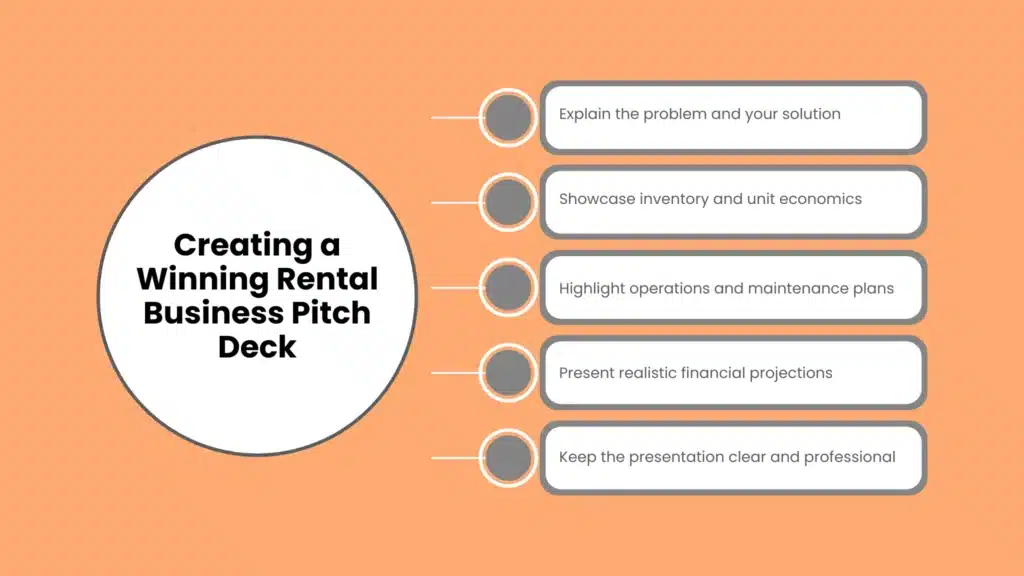
A successful pitch presentation for an asset-based business should contain these essential slides:
The Problem and the Solution
Clearly explain the market gap your business fills. For example, show that local contractors are losing money by purchasing heavy machinery they only use twice a month. Your solution is a reliable, on-demand delivery rental service that eliminates their storage and maintenance headaches.
The Inventory and Unit Economics
Detail exactly what assets you will buy, what they cost upfront, and how quickly they pay for themselves. Investors want to see your estimated Payback Period for each asset class.
Operational Logistics and Maintenance
Explain how you will store, transport, clean, and service your rental items. Show that you have an active maintenance schedule to minimize asset downtime and maximize lifecycle value.
The Financial Projections
Provide clear projections based on conservative utilization rates. If you assume your inventory will be rented out 100% of the time, investors will view your plan as unrealistic. Aim for realistic utilization targets based on regional industry benchmarks.
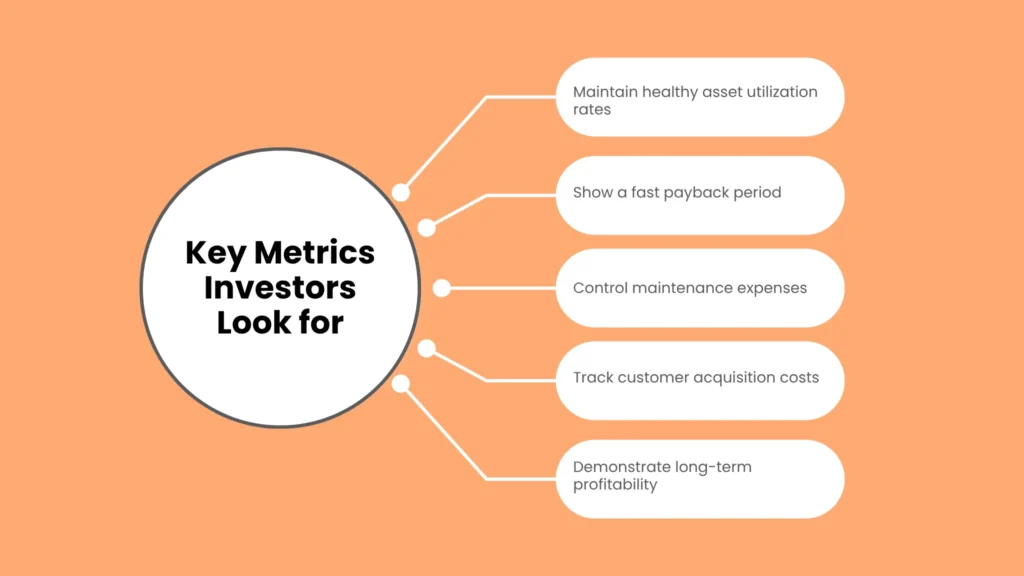
Key Metrics Investors Look for in a Rental Business
Before signing a funding agreement, private investors and commercial lenders will analyze specific financial ratios to verify that your business model is sustainable.
| Metric | What It Measures | Why Investors Care | Target Benchmark |
| Utilization Rate | The percentage of your inventory rented out at any given time. | Proves market demand and capital efficiency. | 65% to 80% based on industry |
| Time to Payback (TTP) | How many months of rental revenue it takes to recover the asset purchase cost. | Determines how quickly the business generates true profit. | Under 12 to 18 months |
| Maintenance Ratio | Ongoing repair and cleaning costs compared to total rental revenue. | Shows how well you preserve inventory value. | Below 10% of gross revenue |
| Customer Acquisition Cost (CAC) | The total marketing spend required to land a new rental contract. | Reveals the scalability and efficiency of your marketing campaigns. | Varies by rental niche |
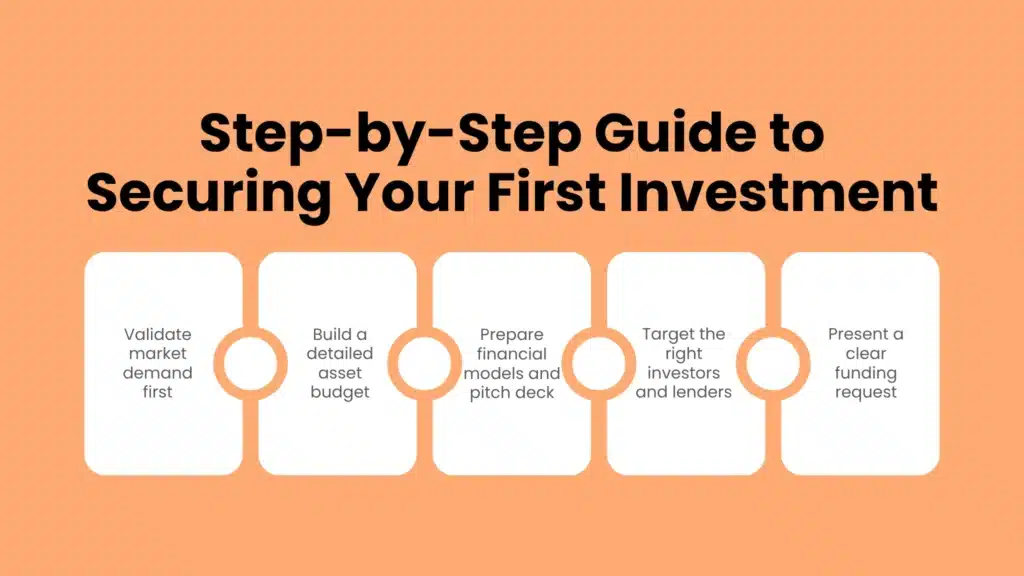
Step-by-Step Guide to Securing Your First Investment
Securing capital is a procedural journey that requires careful organization. Missing steps or pitching lenders out of order can damage your professional credibility.
Step 1: Validate Your Target Rental Market
Before asking for a single dollar, run a small test to prove that customers actually want to rent your inventory. You can build a simple landing page, run local search advertisements, and collect pre-bookings or inquiries to prove that real market demand exists.
Step 2: Build a Detailed Asset Acquisition Spreadsheet
Create a comprehensive inventory list that outlines the exact purchase price, delivery fees, initial setup costs, and required insurance premiums for every item you intend to buy. Lenders need to see exactly where their capital is going.
Step 3: Package Your Pitch Deck and Financial Models
Combine your market research, unit economics, asset lifecycles, and growth plans into a clean, professional presentation. Ensure your financial models allow investors to see how changes in your daily rental rates or utilization percentages impact your overall cash flow.
Step 4: Build a Targeted Prospect List
Do not blast your presentation to every venture capitalist or bank in your region. Research and target angel investors who have backed logistics companies, or reach out to commercial lenders who specialize in your specific industry niche.
Step 5: Deliver a Clear Capital Request
When you sit down with financial partners, clearly state the exact amount of capital you need, how you will allocate the funds across asset classes, and the precise financial return or repayment terms you are offering.
Conclusion
Securing the right funding for an inventory-focused business requires a deep understanding of asset economics and a clear strategy for managing physical equipment. By blending equity partners with asset-backed commercial loans, you can build a valuable rental fleet without giving away excessive ownership of your startup.
Whether you are pitching a local angel syndicate or applying for traditional commercial financing, your success depends entirely on demonstrating strong utilization rates, efficient maintenance practices, and structured financial control. Prepare your presentation documents thoroughly, focus heavily on your unit economics, and build a scalable operational foundation. For more expert guides, pitch strategies, and growth resources to launch your next enterprise, visit our platform at reliablestartup.
Frequently Asked Questions
Can I get an SBA loan for a brand-new rental business?
Yes, you can secure an SBA 7(a) loan for a new rental business, but you will need a strong personal credit score, a detailed business plan, and a cash down payment that is usually between 10% and 20% of the total project cost. The physical inventory you buy will also serve as security to backup the loan.
What is a realistic utilization rate to present to investors?
A realistic utilization rate to showcase in your financial models is generally between 60% and 75%. Projecting a 90% or 100% utilization rate looks amateurish to experienced backers because it fails to account for seasonal demand shifts, routine maintenance turnarounds, delivery logistics, and unexpected inventory repairs.
How do I protect my rental inventory from being stolen or destroyed?
You can protect your physical fleet by implementing a strict customer screening protocol, installing GPS tracking devices on all high-value items, and requiring security deposits. Additionally, you must carry a comprehensive commercial inland marine insurance policy, which covers physical equipment while it is rented out or in transit.
How much equity should I give up in a rental startup pitch deck?
For an early seed funding round, founders typically give up between 15% and 25% of their equity. Because rental companies own physical, appreciating, or depreciating tangible assets, you should try to use debt financing or equipment leasing for your actual inventory purchases, reserving equity sales for software development, marketing, and core team hiring.