How to Start a Scooter Rental Business in a Small Town
When you hear the term “micromobility,” your mind probably jumps straight to massive, chaotic fleets of GPS-tracked e-scooters cluttered across metropolitan sidewalks. Over the last several years, venture-backed tech giants have dumped millions of scooters into major cities. But behind the scenes, a quiet shift has happened. The big-city micromobility market has become hyper-saturated, intensely regulated, and incredibly expensive to enter.
Today, the real, untapped opportunity lies in a completely different landscape: small towns, historic coastal villages, scenic resort communities, and active college towns.
If you are wondering is scooter rental business profitable when you aren’t operating in a massive city, the answer is a resounding yes. This mirrors the growing interest we’ve seen in our guide to launching a mobility scooter rental business in tourist cities, where smaller markets often outperform saturated urban ones. Starting a scooter rental business small town model allows you to sidestep corporate turf wars entirely. Instead, you get to serve a highly concentrated, relaxed audience of vacationers, weekend explorers, and local students who just want a fun, breezy way to get around.
This comprehensive guide breaks down the true scooter rental business cost structures, essential scooter rental business requirements, licensing pathways, and operational strategies to build a highly profitable small-town fleet.
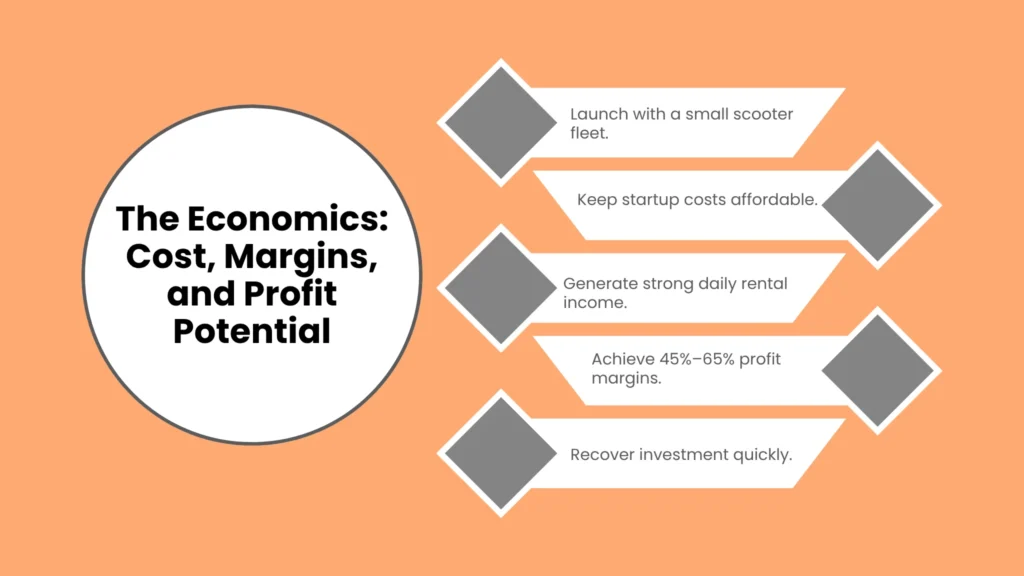
The Economics: Cost, Margins, and Profit Potential
Let’s start with the cold, hard numbers. Unlike launching a traditional car rental agency or even a jet ski business, the capital required to start a scooter rental business is exceptionally manageable.
Upfront Capital Requirements
For a focused, highly optimized small-town fleet of 15 commercial-grade electric scooters, your realistic initial scooter rental business cost will range between $20,000 and $35,000.
This conservative layout prioritizes acquiring high-durability, fleet-grade vehicles. At the same time, it keeps a healthy cash buffer for insurance and legal compliance.
Profit Margins and Unit Economics
Because the cost of electricity required to charge these batteries is practically negligible (costing roughly $0.05 to $0.15 per full charge), your variable operational overhead is incredibly low. Consequently, a well-run small-town operation can consistently clear a scooter rental business profit margin of 45% to 65%.
To see how the daily math plays out, let’s look at a typical summer weekend scenario in a tourist-heavy town:
Average Rental Fee: $30 per hour (or a $5 unlock fee + $0.35 per minute).
Average Daily Utilization: 2 hours of riding per scooter.
Daily Revenue per Scooter: $60.
Daily Fleet Revenue (15 Scooters): $900.
Monthly Revenue (assuming 20 active days/month): $18,000.
Under this model, a single scooter completely pays for its own acquisition cost in less than 25 operating days. Therefore, once that hardware cost is cleared, the vast majority of your rental revenue flows directly to your bottom line. For a side-by-side comparison of unit economics across micromobility formats, see our breakdown of e-bike rental business profitability and costs.
Core Scooter Rental Business Requirements
To operate legally, safely, and smoothly, you must meet several non-negotiable regulatory and structural requirements before dropping your first scooter on the street.
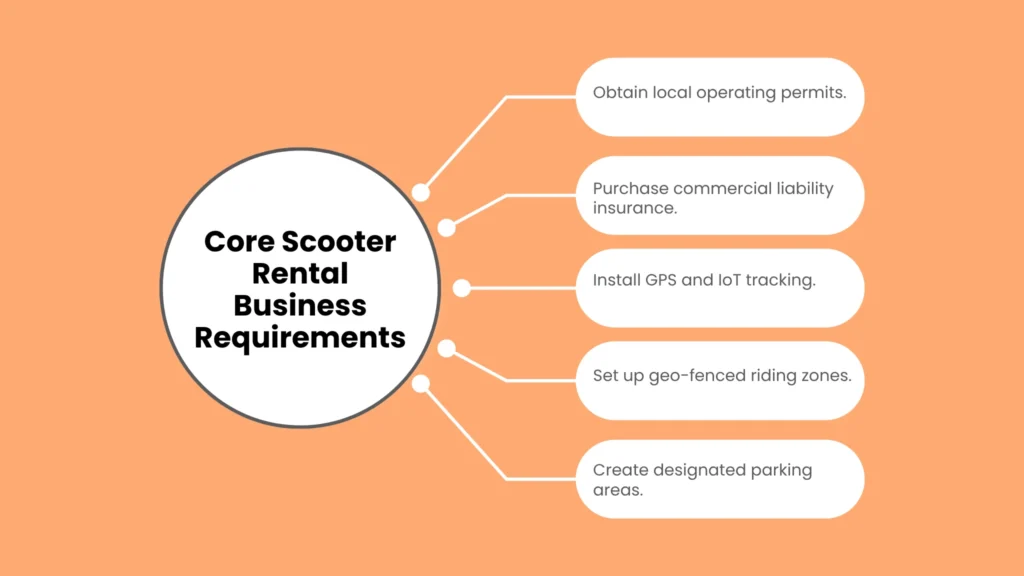
1. Local Municipal Permits and “Right of Way” Approvals
Small towns are protective of their public spaces, historic sidewalks, and local charm. For this reason, you cannot simply deploy a fleet of dockless scooters without explicit permission from the town council or harbor master.
To win them over, pitch your business as a solution to local pain points:
Congestion Relief: Explain how scooters reduce the number of cars searching for parking in congested historic downtown cores.
Tourism Boost: Show how scooters help tourists easily travel from peripheral hotels and parking lots to local shops, cafes, and restaurants.
Clean Green Energy: Emphasize the zero-emission nature of your fleet, helping the town meet its local environmental goals.
For a deeper understanding of how cities typically structure these permits, NACTO’s official Guidelines for Regulating Shared Micromobility offers a useful framework that many small-town councils reference when drafting local rules.
2. Specialized Commercial Liability Insurance
Do not make the mistake of assuming a standard general business insurance policy will cover your scooter fleet. Instead, you must work with a niche marine or specialty micromobility broker to secure a policy that specifically covers motorized vehicle rentals.
Typically, towns will require you to carry a $1 million to $2 million general liability policy. This policy must cover third-party bodily injury and property damage, shielding your business if a customer accidentally collides with a pedestrian or scrapes a parked car.
3. Integrated IoT Fleet Software and Geo-Fencing
Modern rental operations rely entirely on Internet of Things (IoT) hardware embedded inside the scooters. This hardware connects directly to a central cloud dashboard and your customer-facing mobile app.
Through this software, you can program digital boundaries called geo-fences:
No-Go Zones: Prevent scooters from operating on high-speed highways, nature trails, or private pedestrian plazas.
Slow-Speed Zones: Automatically throttle the scooter’s speed down from 15 mph to 5 mph when entering busy sidewalk cafes or crowded boardwalks.
Designated Parking Bays: Require riders to end their rides inside virtual painted parking boxes on the app, preventing them from scattering scooters across public walkways.
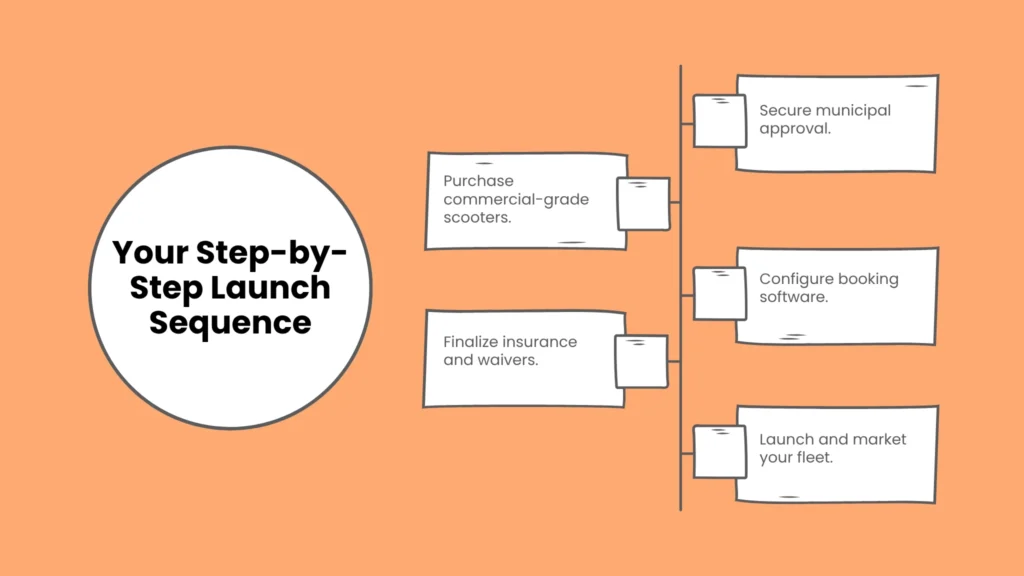
Your Step-by-Step Launch Sequence
To successfully launch without expensive legal delays or community backlash, you must execute your startup steps in a logical, structured sequence.
Selecting Your Operational Model
How you manage your fleet day-to-day will heavily impact your initial expenses and daily labor requirements. In a small town, you have two highly successful models to choose from:
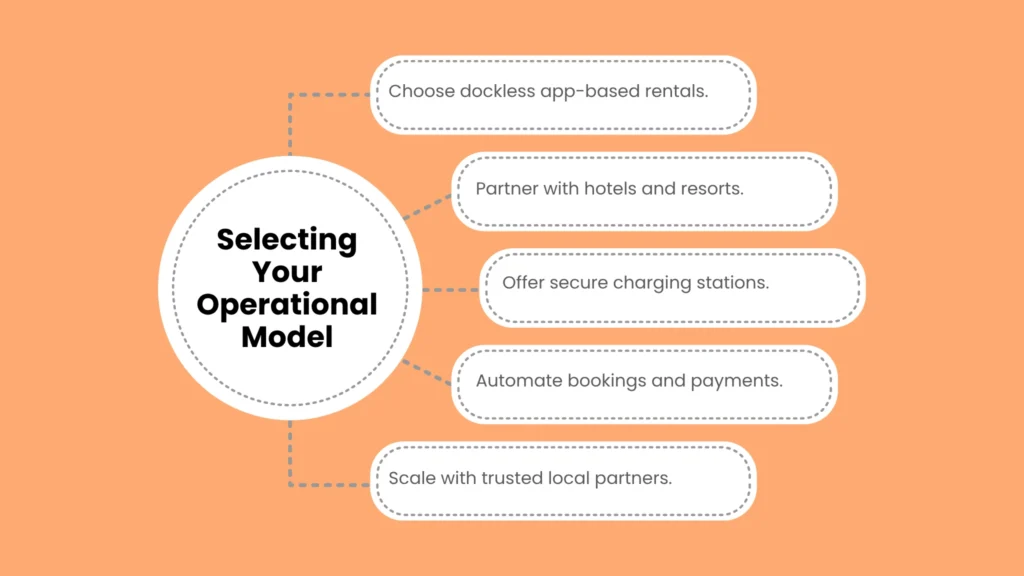
Model A: The App-Based “Free-Floating” Model
In this setup, your scooters are distributed at various designated parking zones around town. Riders download your app, scan a QR code on the handlebar to unlock the scooter, and ride. When they are finished, they park the scooter in an approved zone and end the ride in the app.
Pros: Extremely low daily labor; no need to pay rent for a physical retail storefront; runs entirely in the background.
Cons: Requires higher software integration fees; leaves assets exposed to the elements and potential vandalism; requires a highly reliable local cellular network.
Model B: The “Hosted Partnership” Model (Recommended for Small Towns)
Instead of going completely dockless, you partner with existing, high-foot-traffic local businesses such as beachside hotels, popular bed & breakfasts, bike repair shops, or downtown tourist information centers.
You place a small rack of 4 to 6 scooters outside their property. Their staff handles the rental check-ins, hands out helmets, and plugs the scooters in to charge. In exchange, you give the host business a 15% to 25% cut of the rental revenue generated from their location.
Pros: Secure overnight storage; instant local trust and physical presence; zero storefront rent; host staff manages the daily charging and upkeep.
Cons: Revenue is shared with partners; scaling is limited to the physical locations of your business partners.
This hosted approach closely resembles the model many operators use in our guide on starting a golf cart rental business at the beach, where local partnerships drive most of the bookings.
Marketing Your Small-Town Rental Fleet
Because you are operating in a smaller, highly targeted geographic area, you don’t need to spend thousands on generic social media ads. Your marketing strategy should focus entirely on high-intent, hyper-local visibility.
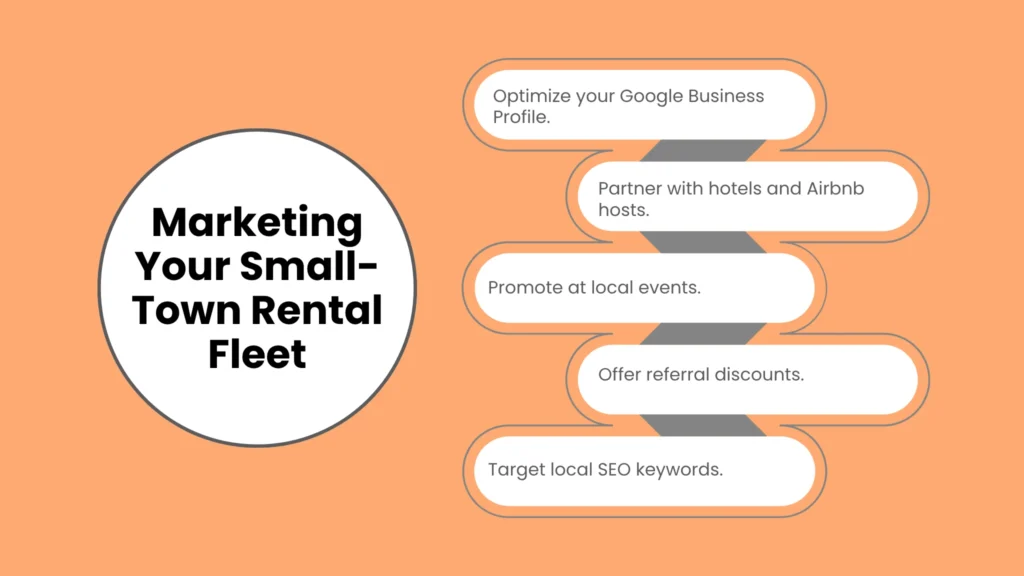
Dominating Local Mobile SEO
When tourists arrive in a new town and want to explore, they pull out their phones and search: “things to do in [Town Name]” or “scooter rentals near me.”
Claim and optimize your Google Business Profile instantly.
Include clear photos of your scooters parked near recognizable town landmarks.
Keep your operating hours updated and prompt happy riders to leave positive Google reviews.
Establishing the Hotel and Airbnb Concierge Network
First, visit every local hotel, bed and breakfast, and major vacation rental manager in the area. Hand them custom, high-quality rack cards to place at their front desks. Print a unique 10% discount QR code on each partner’s card. When a tourist scans that code and rents a scooter, your software tracks the source, and you send a cash referral commission straight to the host or concierge who recommended you.
Leveraging High-Foot-Traffic Events
Position your fleet directly outside major local events like weekend farmers’ markets, historic home tours, coastal seafood festivals, or outdoor concerts. Having clean, ready-to-ride scooters visible right as crowds are leaving a crowded venue is the fastest way to drive high-margin, spontaneous impulse rentals.
Conclusion
If you want to enter the booming green transit sector, starting a scooter rental business small town model is one of the most accessible, low-overhead pathways. By focusing on a community-first approach, choosing highly durable commercial hardware, and using smart geo-fencing to keep the peace on local sidewalks, you can build a highly profitable startup that adds genuine value to your local economy.
For more hands-on startup blueprints, detailed financial models, and digital marketing workflows, join our community of active founders over at reliablestartup.
Frequently Asked Questions
Do riders need a specialized license to rent a scooter?
In the vast majority of jurisdictions, standard electric kick scooters that travel under 15–20 mph do not require a specialized motorcycle or moped license. However, to satisfy your commercial insurance requirements, you should enforce a strict rule requiring all riders to be at least 16 or 18 years old with a valid driver’s license or state-issued ID.
How do you prevent theft and vandalism in a small town?
By combining multiple security layers, you can make theft incredibly rare:
Live GPS Tracking: Every scooter features a highly accurate GPS tracker hardwired directly into the frame.
Automatic Wheel Locking: If a scooter is moved without a paid rental session, the internal hub motor automatically locks the wheel and sounds an audible alarm.
Card Pre-Authorizations: Require a valid credit card on file and hold a security deposit before a rider can unlock a vehicle.
How do you handle battery charging efficiently?
The golden rule of modern rental operations is to only buy scooters with hot-swappable batteries. Instead of loading heavy, dirty scooters into a truck every night to bring them back to a charging warehouse, your team simply drives around with a backpack of fully charged batteries. You slide the dead battery out, pop a fresh one in, and the scooter is instantly ready to generate revenue again.