RV Rental Business Profit in 2026: ROI Data and Owner Earnings
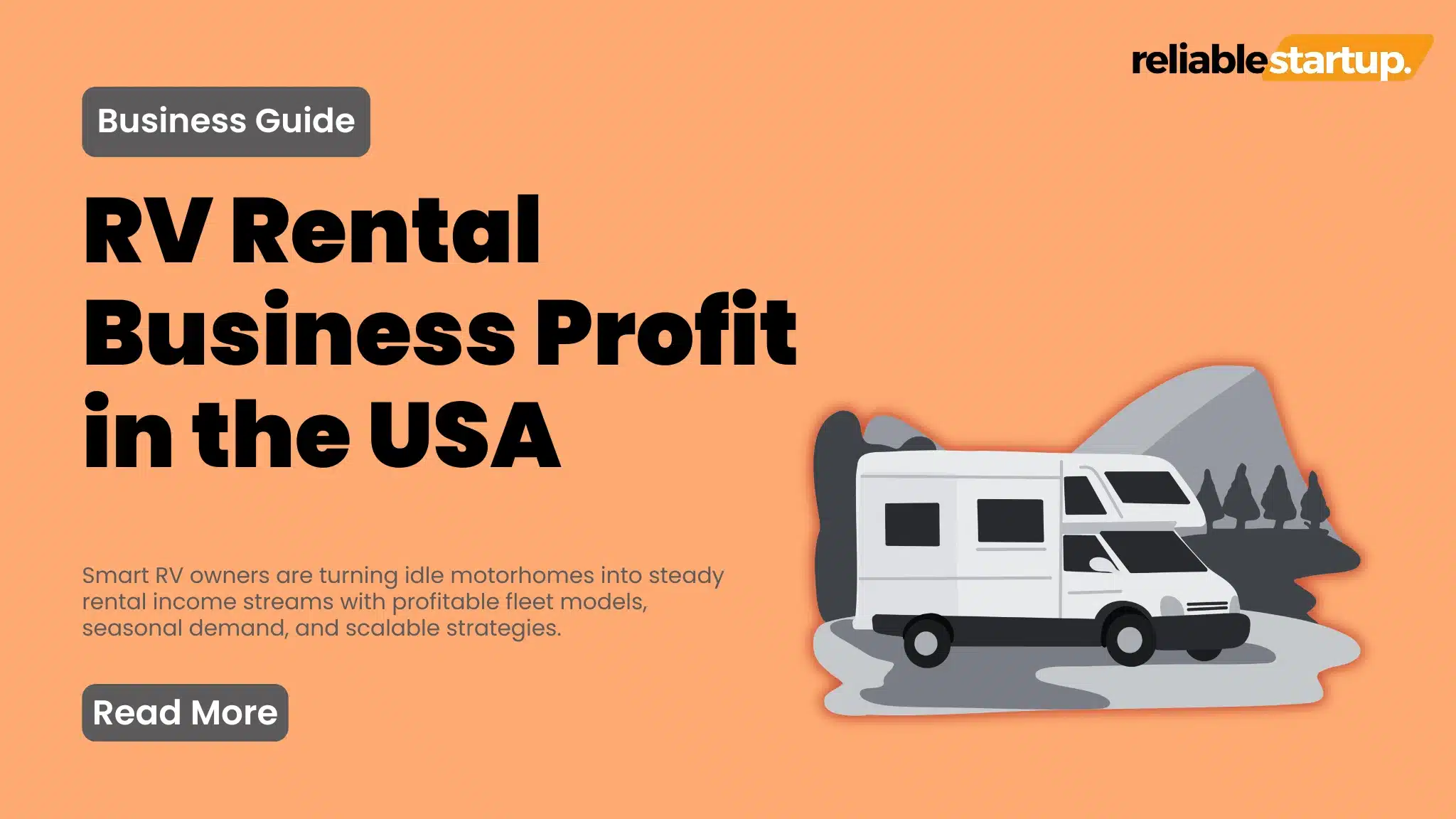
RV rental business profit ranges from $6,000 to $50,000 yearly for a single RV. Fleet owners earn $50,000 to $150,000+. Net margins land between 15% and 25% after insurance, maintenance, platform fees, and storage. Florida, Arizona, Texas, and Colorado deliver the highest rv rental income in the United States.
Most blogs promise you will bank $50,000 a year renting out an RV. The real rv rental business profit picture looks different. A single rig pulls in $500 to $1,500 in monthly profit during peak season. Fleet owners stretch that to $50,000–$150,000 a year.
At Reliable Startup, we cut through hype and hand you the actual ROI math, state profit data, and the hidden costs that drain bank accounts. Read on and you’ll know exactly what to expect before spending a dollar.
What Is RV Rental Business Profit in 2026?
Profit equals what stays in your pocket after every expense. Revenue is the gross rental income. Big difference.
The global RV rental market hit $820 million in 2021. It is climbing toward $1.55 billion by 2030, growing 7.4% a year. Meanwhile, the average RV owner uses their rig only 19 days a year. That means your motorhome sits idle for roughly 50 weeks. Renting it out flips a depreciating asset into a cash-producing one.
Profit depends on three levers, rig type, location, and how often you book. Get those right and the numbers work in your favor.
How Much RV Rental Income Can You Actually Earn?
Realistic owners book 150 days a year, not 365. Cleaning, maintenance, and personal use eat the rest. Here is what real rv rental income looks like across rig types.
| RV Type | Avg Nightly Rate | Monthly Income (10 nights) | Annual Income (150 nights) | Net Profit Margin |
|---|---|---|---|---|
| Pop-Up Camper | $70–$90 | $700–$900 | $10,500–$13,500 | 35–45% |
| Travel Trailer | $100–$150 | $1,000–$1,500 | $15,000–$22,500 | 25–35% |
| Class B Camper Van | $150–$200 | $1,500–$2,000 | $22,500–$30,000 | 20–28% |
| Class C Motorhome | $175–$250 | $1,750–$2,500 | $26,000–$37,500 | 18–25% |
| Class A Motorhome | $250–$500 | $2,500–$5,000 | $37,500–$75,000 | 15–22% |
| Luxury / Vintage Rig | $300–$900 | $3,000–$9,000 | $45,000–$135,000 | 20–30% |
Notice the inverse pattern. Pop-ups earn less per night yet keep more profit per dollar. Class A rigs gross big numbers but bleed margin to fuel, insurance, and depreciation.
Real RV Rental Business Profit by State
Geography shapes earnings more than most owners realize.
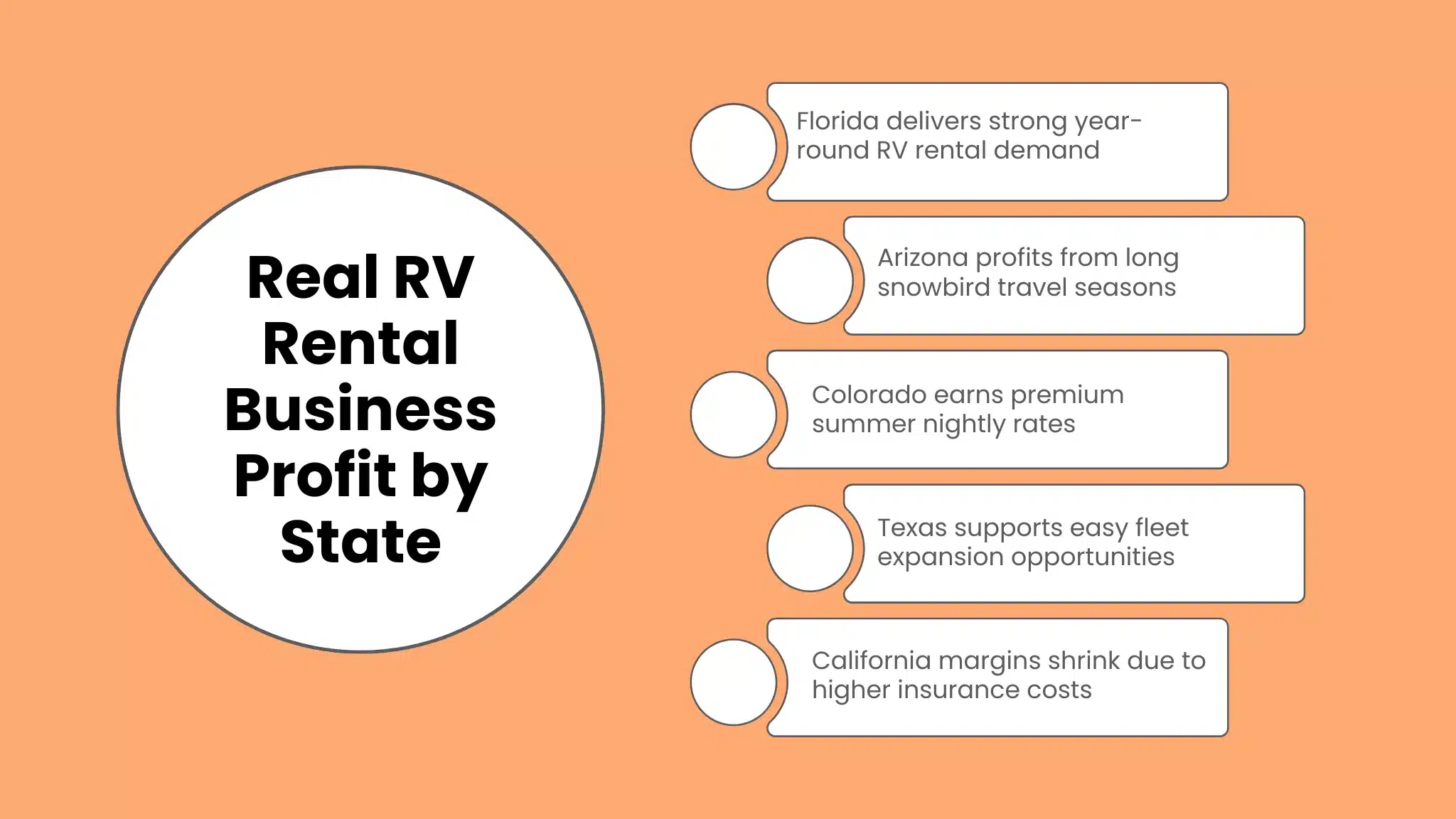
- Florida: Year-round demand keeps Class C rigs earning $40,000+ a year.
- Arizona: Snowbird season runs nine months; expect $35,000+ per unit.
- Colorado: Summer rates spike past $300/night, but the season is short.
- Texas: High fleet density means lower per-unit margin but easier scaling.
- California: Strict insurance rules shave 8% to 12% off net profit.
So your zip code matters as much as your rig.
How to Start RV Rental USA: 5 Profit-First Steps
Wondering how to start rv rental usa without losing money in year one? Follow this exact order.
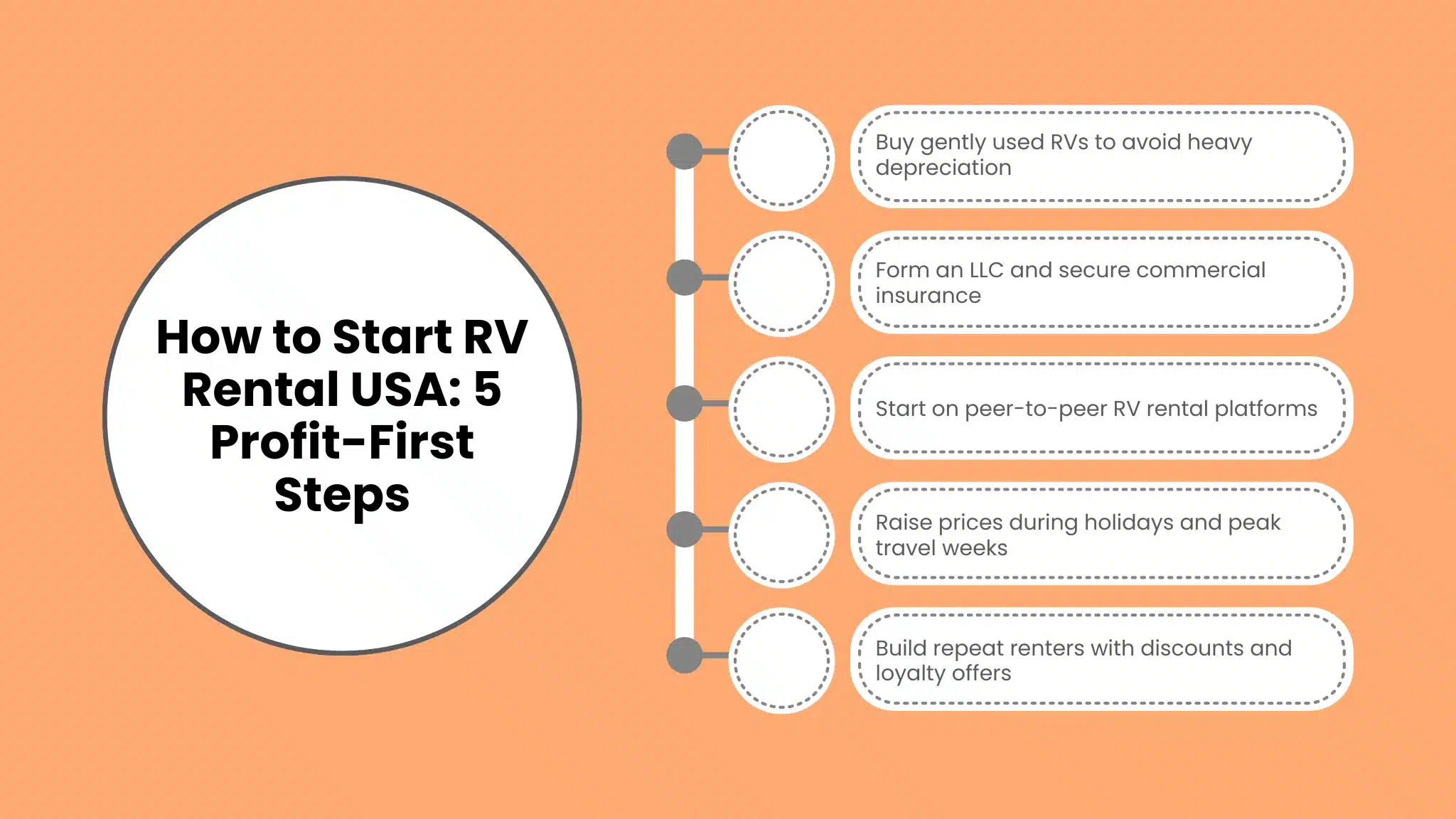
1: Pick the Right RV for Maximum Rental Profit
Buy a gently used Class C or travel trailer. A two-year-old rig costs 25–30% less than new yet rents at the same rate. New RVs lose 20% of value the day you drive off the lot. That alone wipes out a year of profit.
2: Form an LLC and Get Commercial Insurance
An LLC shields personal assets from renter lawsuits. State filing fees run $50 to $500. Commercial RV insurance costs $2,000 to $5,000 yearly. Skip personal auto coverage; it won’t pay out on rental claims.
3: Choose the Right RV Share Business Model
The rv share business model comes in three flavors:
- Peer-to-peer (Outdoorsy, RVshare): Easy launch, 20–25% commission.
- Delivered-only: You drop the trailer at the campground. Lower damage risk.
- Traditional fleet: You run the show, keep 100% of revenue, handle everything.
Beginners win with peer-to-peer. Scale into delivered-only or fleet later.
4: Price for Profit, Not Bookings
Many new owners undercut to win bookings. Bad idea. Aim for 15–20% net margin minimum. Raise rates on holiday weeks by 30%. Drop them midweek to fill empty days.
5: Build a Repeat-Renter System
Repeat renters cost zero to acquire. Send a thank-you email, offer a 10% return discount, and lock off-season dates with long-term rates. Easy money.
True Cost Breakdown That Cuts Into RV Rental Business Profit
Most guides skip this part. Here is what nobody tells you about real expenses.
- Commercial insurance: $200–$400/month
- Storage: $50–$300/month
- Platform commission: 15–25% per booking
- Cleaning and turnover: $75–$150 per rental
- Maintenance reserve: 10% of gross income
- Depreciation: $3,000–$8,000/year
Add these up. A $2,500/month gross suddenly becomes $1,400 net. Plan with these numbers in front of you and the rv rental business profit picture stays realistic.
Campervan Rental Business vs Traditional RV: Profit Comparison
The campervan rental business is winning Millennials and Gen Z renters fast. Why? Lower entry cost. A used Class B van runs $40,000 versus $80,000 for a Class A. Camper vans also deliver tighter margins because fuel, storage, and maintenance all cost less.
A Class A might gross $5,000/month but net just $900. A camper van grosses $2,000 and nets $600. Per-dollar invested, the van wins. So if you want returns over status, go small.
6 Mistakes That Kill RV Rental Business Profit
Smart owners avoid these traps:
- Buying new instead of used. Depreciation eats year-one profit.
- Underestimating insurance. Personal policies do not cover commercial use.
- No renter vetting. One bad booking can total your rig.
- Ignoring winter. Snowbird leases keep money flowing in January.
- Skipping the delivered model. Towing accidents disappear when you deliver.
- Mixing personal and business books. The IRS hates this. So will your CPA.
How to Scale From One RV to a Profitable Fleet
Add a second RV only when your first hits 70%+ occupancy for a full year. Buy each rig at one to two years old. Run it for three years. Sell at four to five years old for roughly what you paid. Wear-and-tear stays manageable, and you write off depreciation along the way.
Fleet owners hitting five to ten rigs report $50,000 to $150,000 in annual rv rental business profit. Consistent RV models also slash maintenance costs because parts and repairs become predictable.
Off-Season RV Rental Income Strategies Nobody Talks About
Peak season carries the year for most owners. Still, smart operators squeeze income out of winter:
- Traveling nurse leases: 13-week contracts at $1,500–$2,500/month.
- Snowbird rentals: Three to six months in warm states.
- Film and photo shoots: $500+/day for production crews.
- Corporate offsites: Companies rent rigs as mobile meeting rooms.
These angles convert dead months into 4-figure paychecks.
Final Thoughts
The real rv rental business profit story sits between the hype and the doubt. One RV, smartly priced and consistently rented, pays for itself and tosses thousands into your pocket each year. Scale into a fleet and six-figure income becomes realistic. Reliable Startup gives you the data, frameworks, and honest numbers to launch without guesswork. Pick the right rig, run the math, and let your RV stop sitting in storage.
Frequently Asked Questions
Is an RV rental business profitable in 2026?
Yes. A single RV earns $6,000 to $50,000 yearly. Fleet operators clear $150,000+ at 15–25% net margins.
How much does it cost to start an RV rental business in the USA?
If you own an RV already, plan for $2,000 to $5,000 in insurance, LLC, and listing setup. Buying a used rig pushes startup costs to $20,000–$60,000.
What is the best RV share business model for beginners?
Peer-to-peer platforms like Outdoorsy and RVshare carry the lowest risk. They handle payments, insurance riders, and renter vetting.
How long does it take to break even on RV rental income?
Most owners break even in 12 to 18 months. Renting 100+ nights a year speeds this up. Cash purchases speed it up even more.
Can I run an RV rental business as a side hustle?
Absolutely. Booking just 8 to 10 nights a month covers loan, insurance, and storage costs. After that, every dollar is profit.