How to Run a Home Based Rental Business With No Office: 2026 Operations Guide
The traditional commercial storefront is no longer a requirement for starting a successful company. Driven by shifting consumer habits and advanced logistics networks, thousands of entrepreneurs are discovering how to start a profitable home based rental business without paying for expensive commercial real estate.
If you are wondering if it is possible to build a scalable asset fleet from your spare bedroom, garage, or driveway, the answer is yes. You can launch a highly profitable rental business from home by utilizing a lean setup, cloud automation, and digital customer service strategies.
This comprehensive operational blueprint will show you exactly how to select assets, automate bookings, manage logistics, and scale your business without ever leaving your home office.
The Rise of Lean Asset Management
The modern economy rewards flexibility. Recent shifts in consumer behavior show that people prefer access over ownership. Customers want the utility of specialized tools, high-end electronics, and event equipment without the long term storage burdens.
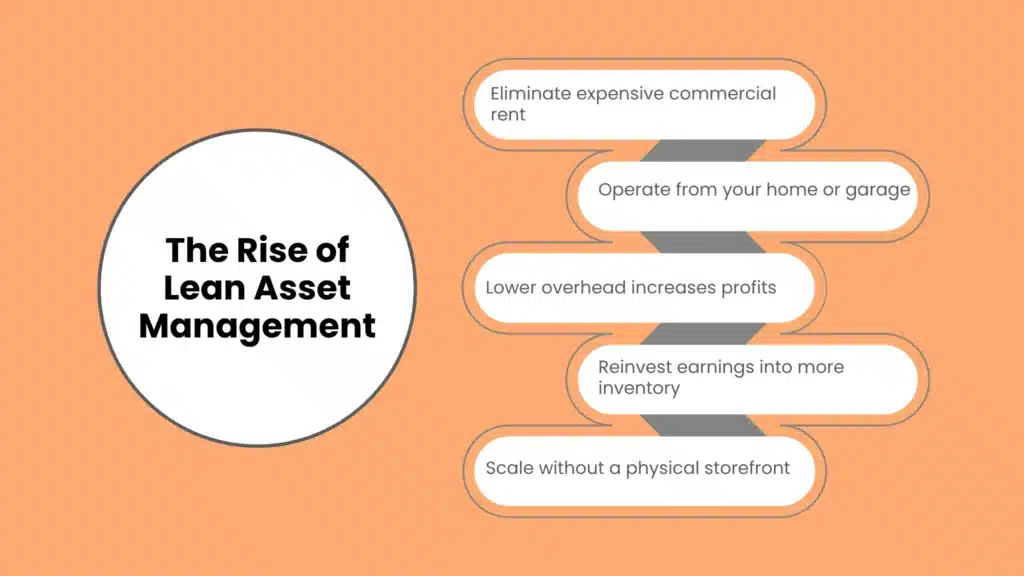
Operating a home based rental business allows you to strip away the largest fixed cost of traditional retail which is commercial rent. By eliminating storefront utilities and on-site staff salaries, your operational margins remain incredibly high.
This structural advantage allows you to reinvest your revenue directly into buying more inventory. It also lets you outprice larger competitors who are weighed down by expensive real estate leases.
4 Profitable Work From Home Rental Ideas
Success begins with choosing inventory that fits your physical space and structural capacity. Here are four highly profitable work from home rental ideas designed for low footprint operations.
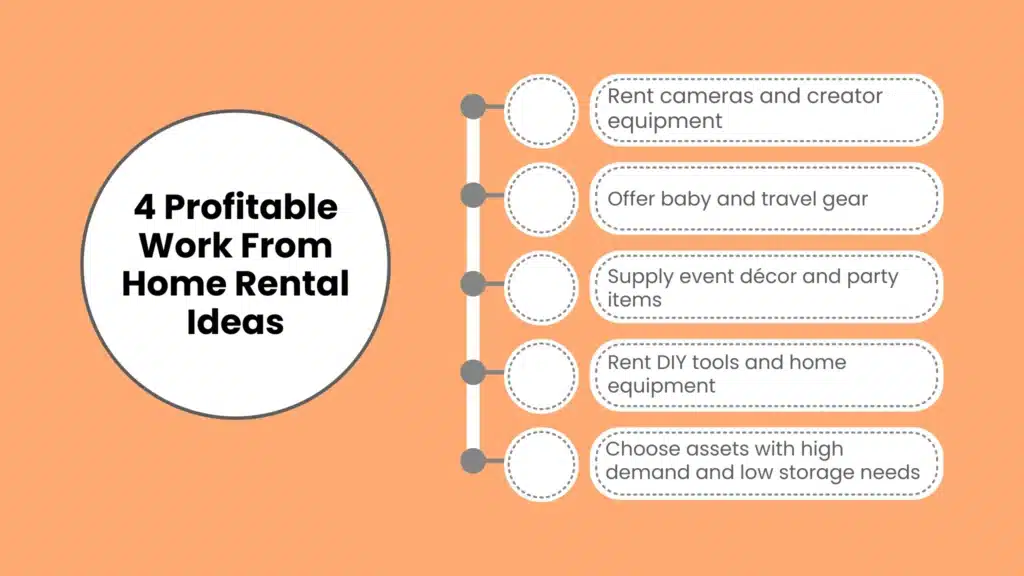
1. AV & Content Creator Equipment
The explosive growth of independent media production means that local businesses, podcasters, and videographers frequently need premium equipment. Storing high-end mirrorless cameras, wireless microphones, and portable LED lighting kits requires nothing more than a secure closet.
2. Specialized Baby and Travel Gear
Traveling families rarely want to pack bulky strollers, car seats, and portable cribs. By focusing your marketing on regional transport hubs or vacation communities, you can deliver premium baby equipment directly to hotels or airport terminals, storing the clean inventory in a spare bedroom.
Traveling families represent one of the most underserved rental audiences in the country, and if you want a complete operational breakdown of this niche, our dedicated guide on launching a baby equipment rental service covers exactly how to structure delivery zones, pricing tiers, and sanitization protocols for strollers, cribs, and car seats.
3. Compact Event & Party Micro-Rentals
Instead of renting massive party tents and heavy dance floors, focus on high-value niche decor. Think custom neon signs, vintage arches, boho picnic setups, or premium table linens. These curated items command premium pricing and fit neatly onto standard garage shelving.
4. Professional DIY Power Tools
Homeowners frequently need specialized tools like carpet cleaners, industrial dehumidifiers, lawn aerators, and pressure washers for weekend projects. These durable assets generate steady local demand and can be stored easily in a backyard shed or residential garage.
If you are still narrowing down which asset category best fits your available home storage space and budget, our curated breakdown of easy rental business ideas covers over 29 proven rental niches with details on startup costs, customer demographics, and scalability potential for each model.
Mapping Asset Types to Home Storage Solutions
Before purchasing inventory, you must match your items to the space you actually have available. The table below outlines how common assets fit into different home environments.
| Inventory Category | Storage Footprint | Ideal Asset Examples | Delivery Method |
| Tech & Media | Small closet or cabinet | Cameras, drones, VR headsets, mixers | Shipping or locker pickup |
| Niche Event Decor | Dedicated garage shelving | Neon signs, tabletop centerpieces, linens | Local delivery or curbside |
| Home Maintenance | Garage floor or shed | Pressure washers, carpet extractors, air purifiers | Curbside trunk drop |
| Mobility & Travel | Clean closet or utility room | Strollers, travel cribs, mobility scooters | Delivery to transit hubs |
Setting Up Your Digital Storefront
When you do not have a physical office, your website serves as your front door. Customers expect to view real-time availability, select their rental dates, sign liability waivers, and submit payments in a single session.
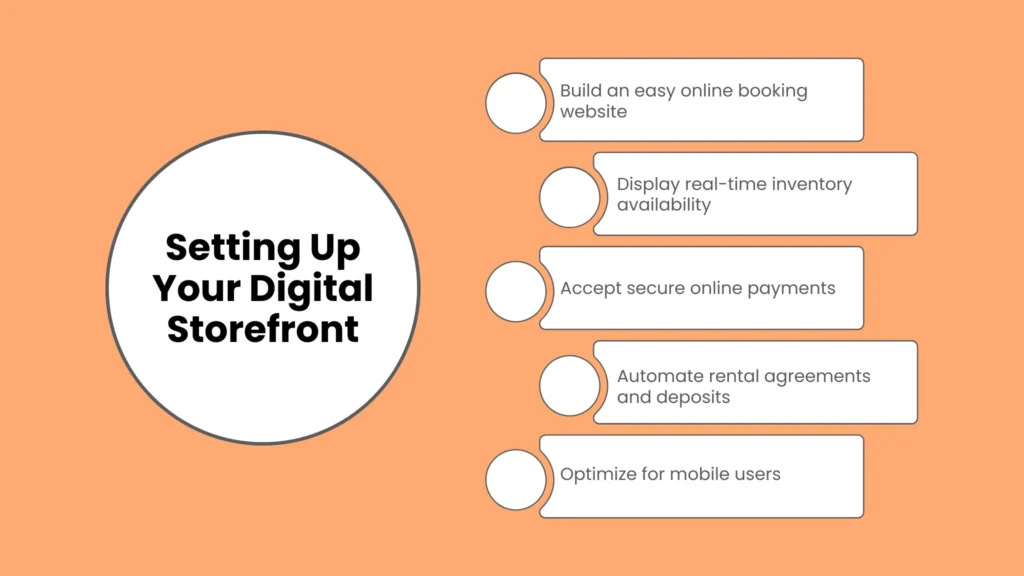
Implementing dedicated online rental management software is the foundation of this setup. Modern platforms integrate inventory tracking with your web checkout. This means that when a customer books a specific camera lens for a weekend, that item automatically shows as unavailable for those specific dates across your entire platform.
Your digital storefront should prioritize mobile responsiveness, clear asset imagery, and upfront security deposit processing. This friction-free browsing experience builds immediate digital trust.
Executing Lean Rental Operations
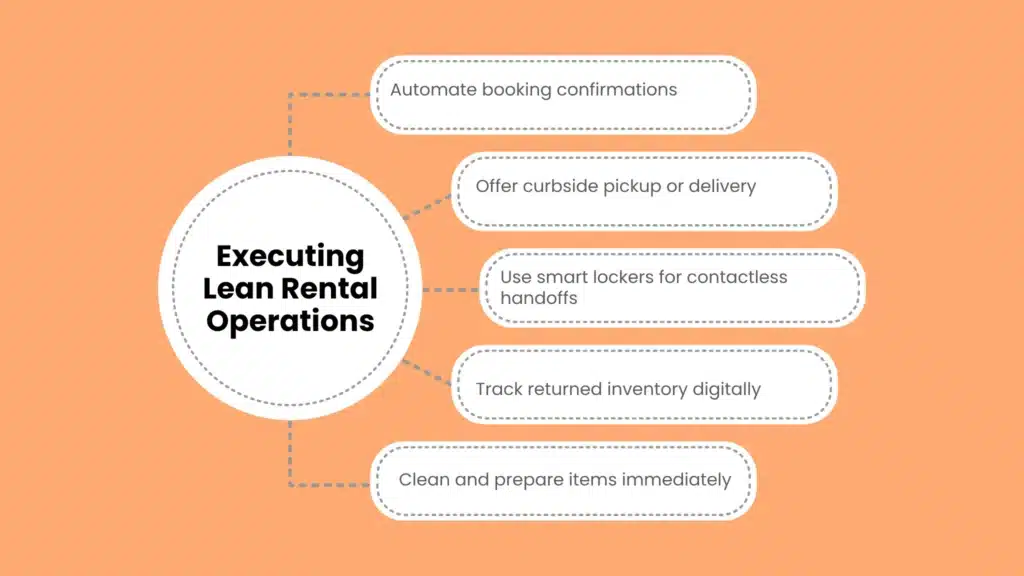
Running a decentralized business requires intelligent asset handling. To maintain lean rental operations without an office, you must design a structured, automated system for handoffs and maintenance.
Automated Scheduling & Customer Self-Service
To avoid constant back-and-forth communication, use your platform to send automated pickup confirmations and digital calendar reminders. Customers should receive automated text messages with exact instructions on how and when their rental experience begins and ends.
Smart Logistics: Curbside, Lockers, and Delivery
Since you are operating from a residential address, you may not want customers knocking on your front door. Successful home operators generally choose one of three smart handoff strategies:
Curbside Trunk Drop: The customer pulls into your driveway at a scheduled time, and you place the sanitized asset directly into their vehicle.
Smart Lockers: You install a secure, code-activated locker system on your porch or property exterior, allowing contact-free pickups at any time.
Premium Delivery: You include a delivery fee and drop off the items directly at the customer’s specified event location or home.
Digital Inspection and Automated Cleaning Routines
Protecting your inventory is critical. When assets return, document their condition using a standard smartphone photo checklist.
Create a dedicated workspace in your garage or utility room stocked with appropriate sanitizing agents. This ensures that every piece of gear is cleaned, tested, and repackaged for the next client immediately upon return.
E-E-A-T and Legal Protections for Home Operators
Building a trustworthy brand is essential for modern search engine visibility and long term customer retention. When running a business from a residential property, you must pay close attention to structural professionalism.
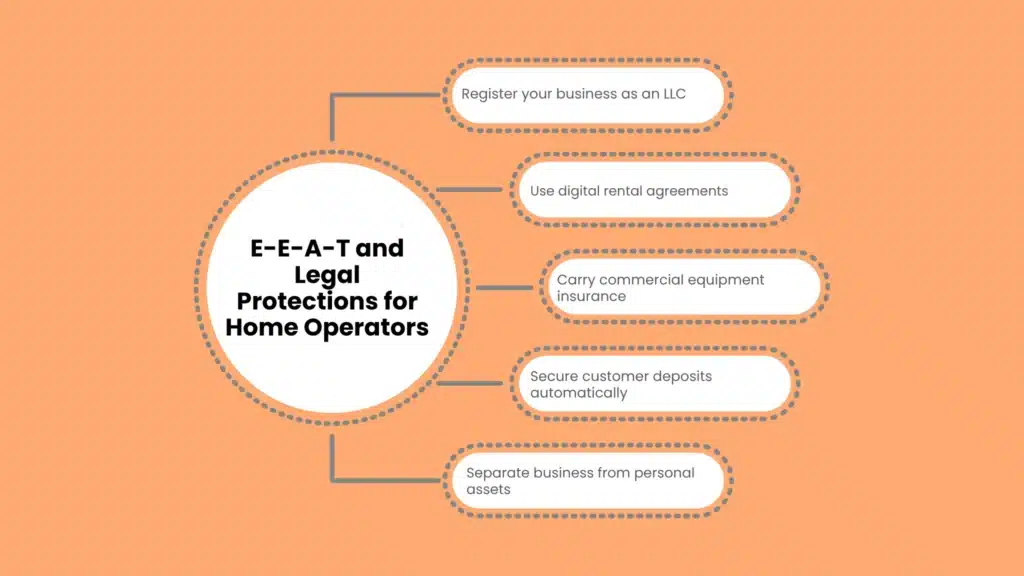
To establish authoritativeness and trust, protect your business with these foundational steps:
Form an LLC: Establish a Limited Liability Company to separate your personal assets from your business activities. Before accepting your first customer, verify your local compliance obligations, as home occupation permit requirements by state vary significantly and operating without the correct residential business license can expose your LLC to fines that eliminate your early profit margin entirely.
Draft Robust Digital Waivers: Require customers to sign digital liability and damage waivers during the online checkout process.
Secure Commercial Inland Marine Insurance: This specialized insurance covers your equipment while it is in storage, during transit, and while it is in the possession of your renters. Choosing the right coverage is one of the most important decisions a home operator will make, and our in-depth guide to insurance policies for rental businesses breaks down the exact difference between inland marine, general liability, and equipment-specific policies so you can match your coverage to your specific asset class.
Utilize Automated Security Deposits: Implement an automatic pre-authorization hold on your customer’s credit card to cover minor damages or late returns.
Conclusion: Building Your Lean Asset Empire
Launching a home based rental business is one of the most efficient, low-overhead paths to financial independence. By focusing on smart asset selection, implementing robust online rental management systems, and maintaining lean rental operations, you can build a highly profitable business from your couch.
Prioritize customer safety, invest in automated systems, and protect your investments with commercial insurance. If you are ready to explore step-by-step guides, tactical business blueprints, and verified growth strategies for modern entrepreneurs, visit our resource center at reliablestartup to launch your new venture with confidence.
Frequently Asked Questions
Do I need a commercial license to run a rental business from home?
Licensing requirements vary based on your city, state, and inventory type. Most municipalities require a standard home occupation permit or general business license. Always verify your local residential zoning laws before launching.
How do I handle asset handoffs without giving out my personal home address?
Many operators utilize local delivery models or partner with local businesses to serve as secure pickup spots. Alternatively, you can install secure porch lockers or coordinate specific meeting locations in public, well-lit parking lots.
What happens if a customer damages or steals my rental equipment?
Your digital contract should include a binding credit card authorization for security deposits. For expensive items, require renters to provide proof of insurance or purchase an optional damage waiver fee during checkout. Significant losses should be covered under your commercial insurance policy.
What is the most profitable asset type to rent out from a home environment?
Based on available industry data, compact, high-value tech gear like drones, cinema cameras, and specialized event decor offer the highest return on investment. These items combine high rental rates with incredibly small storage footprints.