How to Start a Nonprofit Fundraising Platform Startup
The digital philanthropy landscape is undergoing an aggressive structural shift. Previously, charities and non-profit organizations relied on basic online forms or standard payment buttons to collect web contributions. However, in 2026, the global charity fundraising platform market has expanded significantly to an estimated $8.75 billion, driven by the rapid adoption of peer-to-peer (P2P) campaigns and machine-learning-driven donor analytics. Consequently, starting a specialized software venture in this sector offers an exceptional opportunity for technical founders. Because legacy financial software remains rigid and expensive, utilizing a modern nonprofit fundraising startup guide allows lean development teams to solve major workflow inefficiencies while capturing enterprise recurring revenue.
Importantly, building a successful application requires looking past generic crowdfunding templates. Modern charitable organizations operate under extreme regulatory scrutiny, require deeply personalized storytelling mechanics, and demand highly automated tax logging processes. Therefore, mapping out your initial build around the precise nonprofit fundraising platform requirements is essential to establish trust with charitable boards and ensure long-term corporate viability.
This in-depth operational blueprint details the exact steps to build, secure, and monetize a dominant digital donation system. We will break down baseline creation budgets, evaluate industry profit margins, and outline the technical frameworks necessary to confidently start a nonprofit fundraising platform.
The Financial Framework of Philtech Startups
Before deploying engineering resources, founders must understand the financial metrics governing the “Philtech” (philanthropy technology) industry. While client acquisition loops take time due to non-profit board approval structures, user retention rates are exceptionally stable, yielding strong lifetime software valuations.
| Specialized Platform Archetype | Estimated Nonprofit Fundraising Platform Cost | Expected Nonprofit Fundraising Platform Profit Margin | Core Monetization Strategy |
| Enterprise Peer-to-Peer (P2P) Hub | $85,000 to $195,000 (Dev & Audits) | 75% to 88% | SaaS Tier + 1% Optional Donor-Tip Model |
| Automated Grant-Prospecting Nodes | $70,000 to $150,000 (Data Scraping) | 82% to 94% | Recurring Annual Subscription Tiers |
| Recurring Donor Engagement Engine | $90,000 to $210,000 (SMS/API Rails) | 78% to 90% | Usage-Based Per-Message & Transaction Tiers |
| Virtual Event & Auction Rails | $65,000 to $140,000 (Real-time Sockets) | 70% to 85% | Percentage Fee Per Completed Auction Lot |
When analyzing the foundational business question of is nonprofit fundraising platform profitable, market data reveals massive net efficiency for software operators. This directly ties into broader questions of how nonprofit businesses make money, since your platform acts as a digital infrastructure layer that keeps overhead naturally low. Once your core code handles transaction volume securely, processing an incremental $1,000,000 in monthly charitable contributions costs your startup virtually nothing in additional computing overhead, dropping straight-line revenue directly to your bottom line.
4 Crucial Features Modern Charities Demand
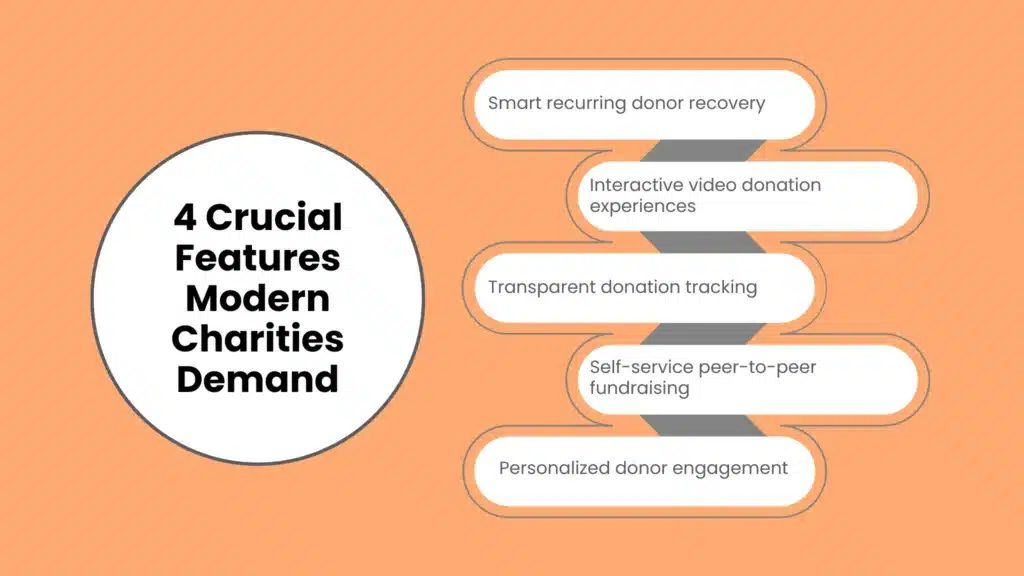
1. Agentic Recurring Donor Recovery Loops
Charities lose thousands of dollars annually to passive donor churn caused by expired credit cards, broken banking linkages, and administrative errors.
The Problem: Traditional payment systems simply trigger a cold, automated email alert when a donation fails, which donors routinely ignore.
The Solution: Build a proactive machine-learning recovery framework. Your software should track transaction attempt patterns, automatically adjust retries based on issuing bank behavior, and seamlessly deploy highly personalized SMS updates to prompt fast payment verification.
2. High Conversion Storytelling & Video Checkouts
Modern donors particularly younger generations—demand interactive, emotionally engaging donation paths rather than clinical multi-page web forms.
The Problem: Standard checkout flows force users through extensive data input fields, causing up to 60% of interested supporters to abandon the cart before completion.
The Solution: Develop a ultra-streamlined popup donation module that directly integrates portrait video clips from the field. Allowing donors to watch a quick impact clip directly inside a one-click digital wallet checkout path keeps conversions high.
3. Transparent Blockchain Enabled Donation Ledgers
Corporate donors, major foundations, and community advocates require explicit evidence that their capital is reaching the final destination.
The Problem: Traditional accounting setups isolate financial records inside private corporate databases, leaving donors blind to true asset deployment.
The Solution: Build an optional public-facing transparency layer that pairs standard accounting software entries with secure cryptographic receipts. This creates an unalterable proof ledger showing exactly how funds match up to physical milestones.
4. Zero-Friction Peer-to-Peer Team Infrastructure
Grassroots social sharing is the primary driver of digital donation scaling. Nonprofits need a way to let their ambassadors launch micro-campaigns safely under the main brand.
The Problem: Most systems require complex administrative setup from the charity’s main office to grant sub-campaign access to individual volunteers.
The Solution: Implement self-service ambassador onboarding. Volunteers can spin up custom, mobile-responsive team pages with personalized metrics tracking in under five minutes, with all data syncing automatically to the main non-profit database.
Architectural and Security Requirements for Philtech
Building a platform that processes charitable funds requires matching the rigid data protection and operational metrics of modern fintech systems.
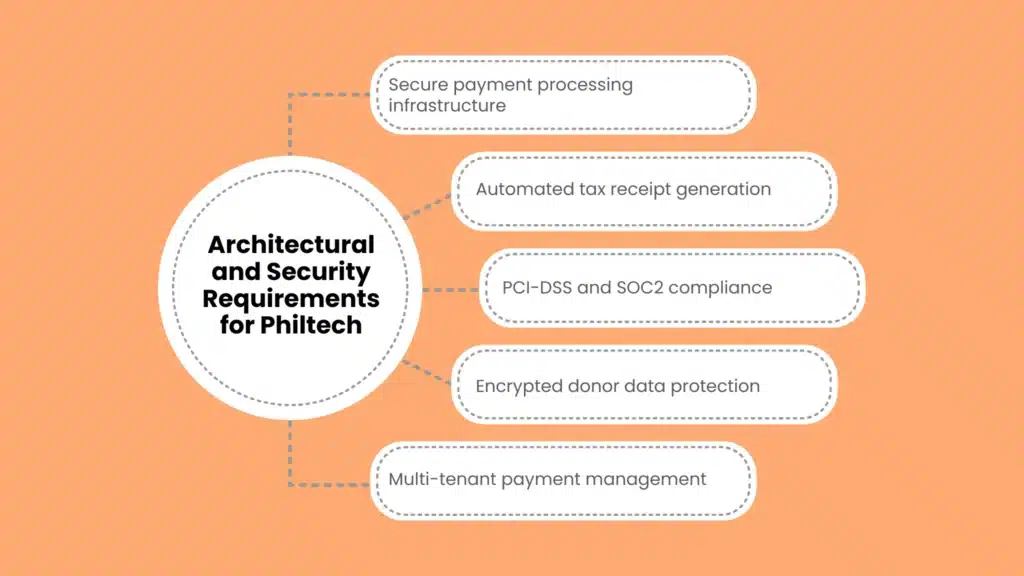
1. Advanced Payment Cleardown and Splitting
Your application must handle multi-tenant financial settlements with absolute precision:
Instant Sub-Merchant Provisioning: Integrate specialized financial infrastructure APIs (such as Stripe Connect or Finix) to allow newly registered charities to pass onboarding verification and accept donations immediately.
Automated Fee Allocation: Program your checkout rails to isolate platform fees, processing costs, and local tax elements cleanly before routing the core donation directly into the charity’s connected bank account.
2. Strict Global Privacy & Compliance Badges
Because your system stores sensitive donor contact information, giving histories, and banking variables, you must secure mandatory security frameworks early:
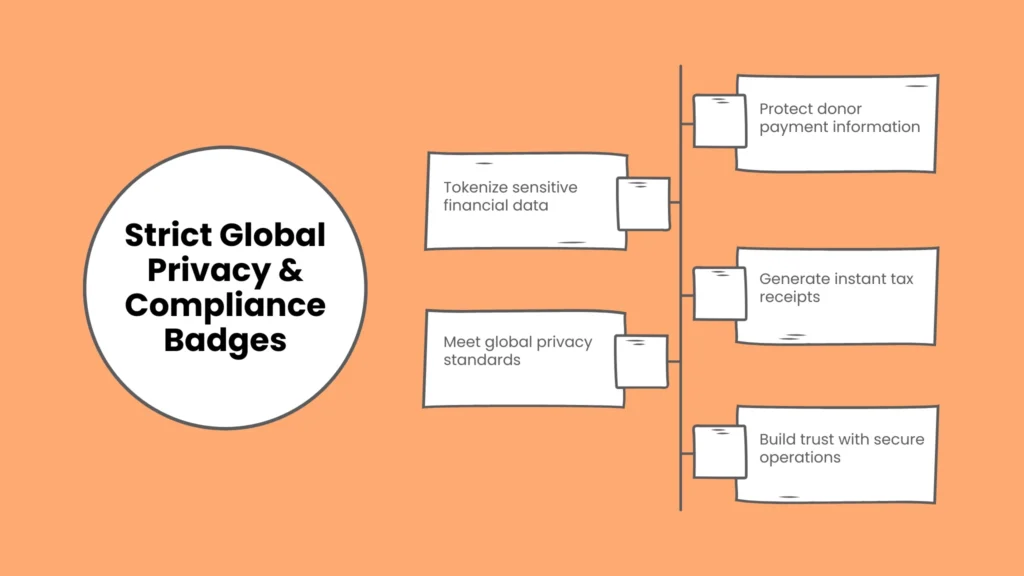
PCI-DSS Level 1 Certification: Encrypt all payment details through secure tokenization strategies, ensuring raw credit card strings never touch your primary application database servers.
Automated Regulatory Documents: Build a reliable document generation engine that instantly fires compliant, structured tax-deductible receipts to donors the moment an inbound transfer clears the processing gateway.
Step-by-Step GTM Execution Plan for Founders
To bypass extensive corporate procurement timelines, your startup should utilize a targeted customer acquisition strategy.
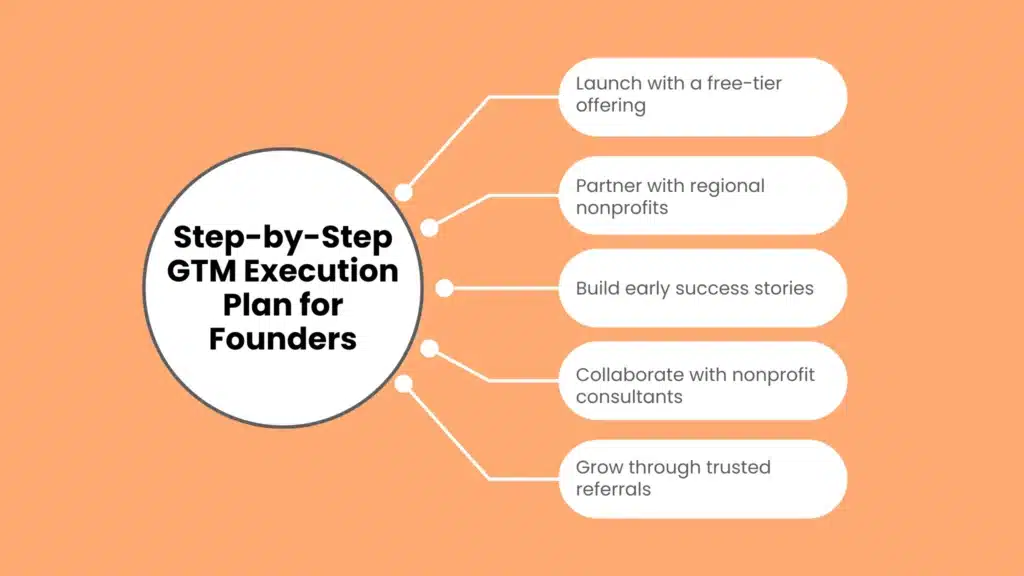
1. Build a Free-Tier Validation Loop
Target local, community-driven nonprofits that are burdened by high upfront software fees. Offer them your core donation forms for zero monthly cost, utilizing a small transaction-percentage fee or an optional donor “tipping” model to generate early cash flow. This strategy allows you to easily accumulate processing data, squash initial bugs, and create compelling case studies without forcing cash-strapped charities to risk upfront capital.
2. Target Regional Chapters of National Brands
Do not attempt to pitch the national headquarters of massive organizations immediately. Instead, present your software solution directly to regional chapters, local food banks, or independent animal shelters. Because local directors possess independent discretionary budgets, they can authorize software changes quickly if you can prove your system shortens administrative tasks and increases donor retention.
3. Form Strategic Alliances with Nonprofit Consultants
Form partnerships with local fundraising consultants, agency web developers, and specialized compliance firms who build digital setups for emerging charities. Offer these advisors a recurring revenue-share incentive for every client they onboard onto your donation rail. This creates a scalable distribution engine that positions your platform as a trusted recommendation.
Establish Your Software Enterprise
Building a highly valuable digital donation brand does not require a massive venture capital runway. This principle mirrors advice found across bootstrapped software startup journeys, where founders focus entirely on resolving manual tracking errors and user experience friction points instead of chasing large funding rounds early.
Begin your development process by interviewing regional development directors and donor care teams. Pinpoint their most repetitive administration bottlenecks, build a secure minimum viable product to resolve those specific errors, and continuously reinvest your software gains into your core product security.
If you are looking for more technical architecture blueprints, go-to-market strategies, and actionable client acquisition models designed specifically for modern independent developers, explore our full library of technical resources at reliablestartup.com to accelerate your platform growth.
Frequently Asked Questions
Is nonprofit fundraising platform profitable during the early validation phase?
Yes, it is highly profitable if you maintain a lean engineering core and focus entirely on automated digital donation infrastructure. Because your software avoids handling manual field operations or physical inventory management, your baseline running costs remain incredibly low, which allows your company to achieve cash-flow-positive status early.
What is the primary expense item within the nonprofit fundraising platform cost?
The largest cost components include implementing robust database encryption, completing third-party security audits, and engineering specialized payment API integrations. Investing heavily in security protocols early on ensures your platform avoids damaging data vulnerabilities that could permanently ruin client trust.
How do modern philtech startups compete with established giants like GoFundMe or Donorbox?
Emerging startups win by building highly specialized, niche solutions rather than generic crowdfunding pages. By focusing on deep, specific automation challenges—such as complex enterprise CRM data syncs, automated grant tracking, or custom localized event checkouts—you can command high premium pricing.
Is a specific legal banking charter required to start a nonprofit fundraising platform?
No, you do not need a banking license because your platform acts as an optimization software layer rather than a deposit-taking bank. By building your payment engine directly on top of fully compliant, established sponsor networks and clearing houses, you pass the core regulatory and licensing burden onto the underlying financial institution.
How do you maximize donation checkout form conversion rates?
You must ruthlessly eliminate unnecessary input options. Limit your initial screen to three primary choices: donation amount, recurring frequency selection, and express payment options like Apple Pay or Google Pay. You can collect supplementary donor marketing details through smart, automated tracking sequences on the post-purchase confirmation page.